Last week I asked you to imagine how your relationship grew with your best friend. You probably found that this special friendship was formed during hours andhours of talking.
I’m going to guess that at first your conversation was a little on the superficial side. You talked about “tame” topics like sports teams, or your job, or the city you lived in. But at some point you took a huge risk—you became vulnerable by sharing something really personal. Perhaps you shared a time that you got hurt, or something that makes you anxious, or maybe a big dream you carry around in your heart. But if that friend is still your friend, that means they treated what you shared reverently. They didn’t laugh at you, belittle your hurts or dreams, nor did they share with others what you said.
The relationships became deeper and more special because you now knew each other on a more intimate level.
Prayer is a conversation with a Friend. Of course, that Friend is God, so some people wonder, “What do I talk to God about?” The simple answer is anything and everything!
Time and time again God calls us to come closer to Him (see Isaiah 55:1-3), to discuss with Him things we don’t understand (Jeremiah 33:3), or to be assured that He is intimately tuned in to what’s happening in our life (Psalm 139:17; 1 Peter 3:12).
How do we get there? A good place to start is with our Bible. Dwight Moody said:
“The two first and essential means of grace are the Word of God and Prayer. … If we read the Word and do not pray, we may become puffed up with knowledge, without the love that buildeth up. If we pray without reading the Word, we shall be ignorant of the mind and will of God, and become mystical and fanatical, and liable to be blown about by every wind of doctrine.”
Scripture was written to point us to Jesus. So we don’t read the Bible just to read it; we read it to get to know God.
We don’t want to know the Word of God; we want to know the God of the Word.
A great place to start is in the book of the Psalms. Many of these were written as prayers, so it’s a good way to start our conversation with God. You can also search in the New Testament for all the places that biblical writers said, “I pray…” or “This is my prayer….”
I share a personal example of this in this video, especially if you want to fast forward to the 36:00 minute mark.
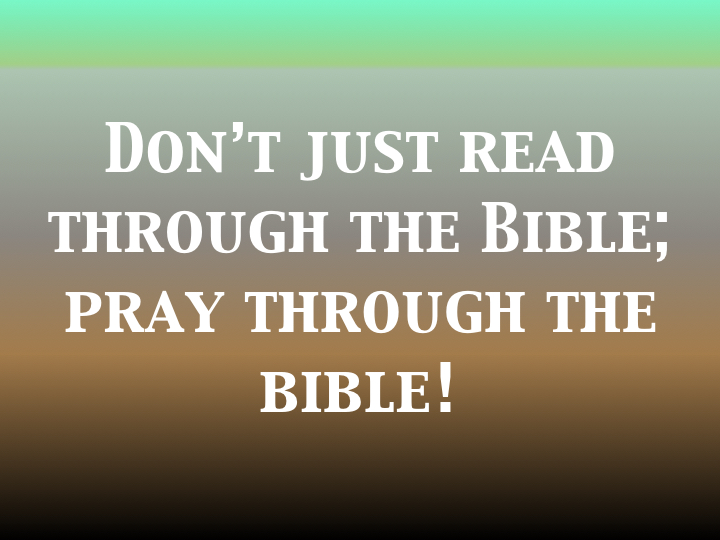
Don’t just read through the Bible this week—pray through the Bible. Use it as a means to have a conversation with the very Best Friend you could ever know!
I encourage you this week, as you think about this topic, to get together with an earthly friend and discuss these questions:
How can I use my Bible as a “conversation starter” with God?
How can I get into the regular practice of talking to God as a Friend?
John Maxwell, in his book Think On These Things, challenges us to think differently about the world around us. Here are six quotes on how we should think differently about those who are in need.
“The beauty of genuine concern is its willingness to become involved without being influenced by the ‘price tag.’”
“How many lives are wasted and destroyed because the world’s attitudes and actions toward needy people say ‘I couldn’t care less’? How beautiful this world would be if this unchristian philosophy was replaced with Christian attitudes until people would begin saying, ‘I couldn’t care more.’ If I am to say to my world, ‘I couldn’t care more,’ I must open my eyes and look for hurting people.”
“Jesus was concerned that others would see the hurts of humanity and respond with care. Too many times we, like the disciples, see only the problems of people. We feel the frustration of their failures and the weight of their weaknesses. We remember only the reliance upon our strength and forget our obligation to freely give what we have received.”
“My helping hand to a needy world is empty unless love is the motive. Material handouts are a poor substitute for love and understanding. People do not need more trinkets, they need more tenderness.”
“It is sad to realize that many people have needs that very few can meet. The reason? Most people concentrate their efforts on picking fruit instead of producing it.”
“The next time you want to help someone who is in difficulty, stop and think. Why not change your approach? Instead of ‘telling it like it is’ why not ‘tell it like it could be.’ Before you begin to question my motives, let me state that I am not asking you to be dishonest. I did not say, ‘Tell it like it could never be.’ I said, ‘Tell it like it could be!’ … When you ‘tell it like it could be’ you help others to see things more clearly. There is no better way to change a problem than to help someone see a solution. Many times people with problems become slaves to their situation because they can see nothing but problems.”
To read more quotes from Think On These Things, click here. To read a review of this book, click here. And to see quotes from John Maxwell and other notable thinkers that I post daily, please follow me on Twitter and Tumblr.
Christian, are you ready to do spiritual battle? You need to make sure you are properly equipped with all the armor God has for you. Check out my review of William Gurnall’s The Christian In Complete Armour by clicking here, and then enjoy this first set of quotes.
“Christ’s blood is the only wine which gladdens God’s heart and satisfies His justice at the same time. … No grape of our own harvest is pressed into this sweet cup. It is as if Christ says, ‘When [God] comes to comfort you with the forgiveness of your sins, He will take of mine, not anything of yours. I purchased your peace with God with My blood, not by your tears of repentance or morning for your sins.’”
“Unbelief is a sin-making sin. … It is a sin which holds out last on the battlefield, the one which the sinner is least aware of, and which the saint ordinarily conquers last. It is one of the chief fortresses to which the devil retreats when other sins are routed.”
“Do you take pleasure in choosing Christ? Do you go to Him not only for safety but also for delight? As the lover said of her bridegroom, ‘I sat down under his shadow with great delight’ (Song of Solomon 2:3). This must be a deliberate choice, wherein the soul seriously weighs the covenant Christ offers and then chooses Him.”
“Faith puts forth an assisting act in prayer. … It assist the soul with persistence. Faith is the wrestling grace. It comes up close to God, reaches out to Him, and will not easily take a denial. … Never before could the Christian know what to do with a promise in prayer until faith teaches him to press in to God with it, humbly yet boldly. … Prayer is the very breath of faith.”
“If a group of men and children were to wade through a brook no deeper than a man’s head, the men would have a definite advantage over the children. But if they tried to cross the ocean, the men as well as the children would need a ship to carry them. And only the insane would try to wade through without the help of a ship just because they are a little taller than the rest.”
“Beware of opposing the Spirit. Does He beam light from His Word into your understanding? Be careful what you do with this candle of the Lord that lights your mind; do not pride yourself in this new insight, or it may be snuffed out in an instant. If the Holy Spirit confirms the light in your understanding so that it sets your conscience on fire with the awareness of sin, do not resist Him. … satan longs for you to quench the Spirit by trying to calm your own conscience.”
“Christian, there are many delights which saints traveling to heaven meet on their way there, besides what God has for them at the journey‘s end. It is the Christian whose faith is strong enough to act upon the promise who finds and possesses these pleasures.”
“A person should no more sit down and be content in his unresolved doubt than one who thinks he smells fire in his house would go to bed and sleep. He will look in every room and corner until he is satisfied that everything is safe. … In spite of his doubts the true believer leans on and desires still to cling to Christ. While Peter’s feet were faltering beneath the water he was lifting up prayer to Christ.”
“Have you ever freely given yourself up to Christ? Everybody professes this, but the presumptuous soul, like Ananias, lies to the Holy Ghost by keeping back the most important part of what he promised to lay at Christ’s feet. The enjoyment of lust is entwined about his heart and he cannot persuade himself to deliver it up to God’s justice. His life is bound up in it, and if God will have it from him He must take it by force; there is no hope of gaining his consent. Is this the picture of your faith? If it is, you have blessed yourself in an idol; you have mistaken a bold face for a believing heart.”
“Faith strips away the veil from the Christian’s eyes so he can see sin in its nakedness before satan disguises it with flattering costumes. Faith enables the soul to recognize not only the nature of sin void of all true pleasure, but also the temporal quality of its frivolous elation. Faith persuades us not to give up God’s sure mercies for satan’s transient thrills.”
I will be sharing more quotes from this book soon. To be notified as soon as those quotes are posted, be sure to subscribe to my blog. In the meantime, every day I share inspiring quotes on Twitter and Tumblr, so make sure you follow me there too!
When I saw both John Newton and Charles Spurgeon put William Gurnall on their “must read” lists (I’ll share their quotes in a moment), I thought, “I have to get this book!” Although The Christian In Complete Armour was written by Gurnall over 360 years ago, the words ring just as true for Christians today.
In summary, The Christian In Complete Armour is an intensive look at the spiritual warfare preparations that the Apostle Paul lists in Ephesians 6:10-18. Gurnall opens his book with these sobering challenges to Christians:
“All may have a desire to be successful soldiers, but few have the courage and determination to grapple with the difficulties that accost them on the way to victory.”
“The fearful are those who march for Hell (Revelation 21:8); the valiant are those who take Heaven by force (Matthew 11:12). Cowards never won Heaven. Do not claim that you are begotten of God and have His royal blood running in your veins unless you can prove your lineage by this heroic spirit: to dare to be holy in spite of man and devils.” (emphasis mine in both quotes)
So piece by piece, step by step, William Gurnall explains the value of each of the Christian’s armaments. He tells us what we can expect when we employ them as God intended, and what we should fear if we fail to make use of each and every piece of equipment God has made available for His soldiers.
John Newton said, “If I might read only one book besides the Bible, I would choose The Christian In Complete Armour.”
And Charles Spurgeon noted, “Gurnall’s work is peerless and priceless; every line is full of wisdom; every sentence is suggestive…the best thought-breeder in all our library.”
Although a very old text, James S. Bell, Jr. has done a marvelous work in preserving Gurnall’s message, but presenting it to us in modern-day English. This is an excellent work for every Christian soldier to have on their shelf.
Leadership Promises For Every Day is a devotional book for leaders and aspiring leaders. A passage from the Bible is combined with a passage from one of John Maxwell’s outstanding books. It’s an excellent way to start your day! If you haven’t already, check out my review of this book here, and then enjoy a few quotes—
“How many leaders have ruined their lives and damaged the lives of others through immorality? Character has become a crucial issue today precisely because of the myriad of leaders in the political, business, and religious worlds who have fallen morally. No doubt they fall partly because the enemy has targeted leaders for attack. Leaders need to remember that they influence many others beyond themselves; they never fall in a vacuum. They also need to realize that replacing fallen leaders is a slow and difficult process.”
“Our goal among brothers should not be to punish or excommunicate, but to restore. Confrontation is a redemptive act of leadership.”
“Leaders need to respond to individuals based on their needs rather than their faults. … Good leaders do this well. They don’t lead out of a predetermined package of behaviors, but size up every situation and discern what must happen to reach the desired goal.”
“People rise or fall to meet our level of expectations for them. If you express skepticism and doubt in others, they’ll return your lack of confidence with mediocrity. But if you believe in them and expect them to do well, they’ll wear themselves out trying to do their best.”
“Leaders must constantly ask if their plans fit God’s revealed will for them and their organization. Then they must ask if their plans remain relevant to the needs of their mission, their values, their vision, and their long-range objectives. Finally, they need to ask if their plans fit the needs of their culture and time.”
“We need to remember that when people follow behind us, they can only go as far as we go. If our growth stops today, our ability to lead will stop along with it. Neither personality nor methodology can substitute for personal growth. We cannot model what we do not possess. Begin learning and growing today, and watch those around you begin to grow.”
“Servanthood is not about position or skill. It’s about attitude.”
“People who blame others for their failures never overcome them. They simply move from problem to problem. To reach your potential, you must continually improve yourself, and you can’t do that if you don’t take responsibility for your actions and learn from your mistakes.”
“Laughter breeds resilience. Laughing is the quickest way to get up and get going again when you’ve been knocked down.”
I am always sharing great quotes from John Maxwell and others on Twitter and Tumblr. If you’re not following me there, please do so!
“‘They have washed their robes and made them white in the blood of the Lamb.’ Not only the man, but his garments are made white. This is more than cleansing. It is the word used regarding Christ’s transfiguration-garments (Matthew 17:2); the angel-robes (Matthew 28:3); the heavenly clothing (Revelation 4:4); the judgment throne (Revelation 20:2). Whiter than snow or wool, white as the garments of Christ—nay, the ‘head and hair’ of Christ (Revelation 1:14). This is the result of the application of the blood to those who were ‘blacker than the coal,’ redder than crimson. What potency, what virtue, what excellency does this blood contain! How it beautifies and glorifies!
“He gives us this blood as our right of entrance is sprinkled and consecrated by His blood. Let us draw near! The blood removes all cause of dread, all possibility of rejection, nay, gives the certainty of reception. Let us go in! We are sure of a welcome. It gives boldness as well as right of entrance. It says, ‘Draw near boldly.’” —Horatius Bonar, in Light And Truth—Revelation
Other quotes from this book may be read here and here.
Have you ever been stumped by someone’s argument against Christianity or the Bible? Has anyone ever made fun of you because the Bible sounds like a fairy tale? Over 100 years ago Oswald Chambers described how our post-Christian world was beginning to treat Christianity and the Bible on which it’s based—
“We have made ambition and competition the very essence of civilized life. No wonder there is no room for Jesus Christ, and no room for the Bible. We are all so scientifically orthodox nowadays, so materialistic and certain that rationalism is the basis of things, that we make the Bible out to be the most revolutionary, unorthodox and heretical of books.”
It’s that “rationalism” that we need to address. We need to ask scoffers and seekers alike, “What makes you so sure of your beliefs? How did you come to that conclusion?”
Every human being exercises some sort of faith—that the chair will hold them when they sit down, that their spouse will honor their marriage vows, and that their worldview is correct. We need to explore what kind of faith they (and we) have:
Unreasonable faith—believing in something in spite of the evidence.
Blind faith—believing in something without any evidence.
Reasonable faith—believing in something because of the evidence.
I want to show evidence that makes it reasonable to believe in the Bible.
Empirical evidence—
The bibliographical test: determining whether the text of the historical record has been transmitted accurately.
Josh McDowell states, “No other work in all literature has been so carefully and accurately copied as the Old Testament.” He can make this claim because the profession of “scribe” was one of the most professional and exacting of all professions. The rigorous standards employed to prove the accuracy of a copy of a biblical manuscript was higher than for any other literature.
Most of our modern-day Bibles are based on a 1000-year-old manuscript. But after the Dead Sea scrolls were discovered, we found biblical manuscripts going back to 250 B.C. that confirmed the accuracy of the manuscripts we already had. This led Dr. Peter Flint to conclude: “The biblical Dead Sea Scrolls are up to 1,250 years older than the traditional Hebrew Bible, the Masoretic text. We have been using a one-thousand-year-old manuscript to make our Bibles. We’ve now got scrolls going back to 250 BC. … Our conclusion is simply this—the scrolls confirm the accuracy of the biblical text by 99 percent.”
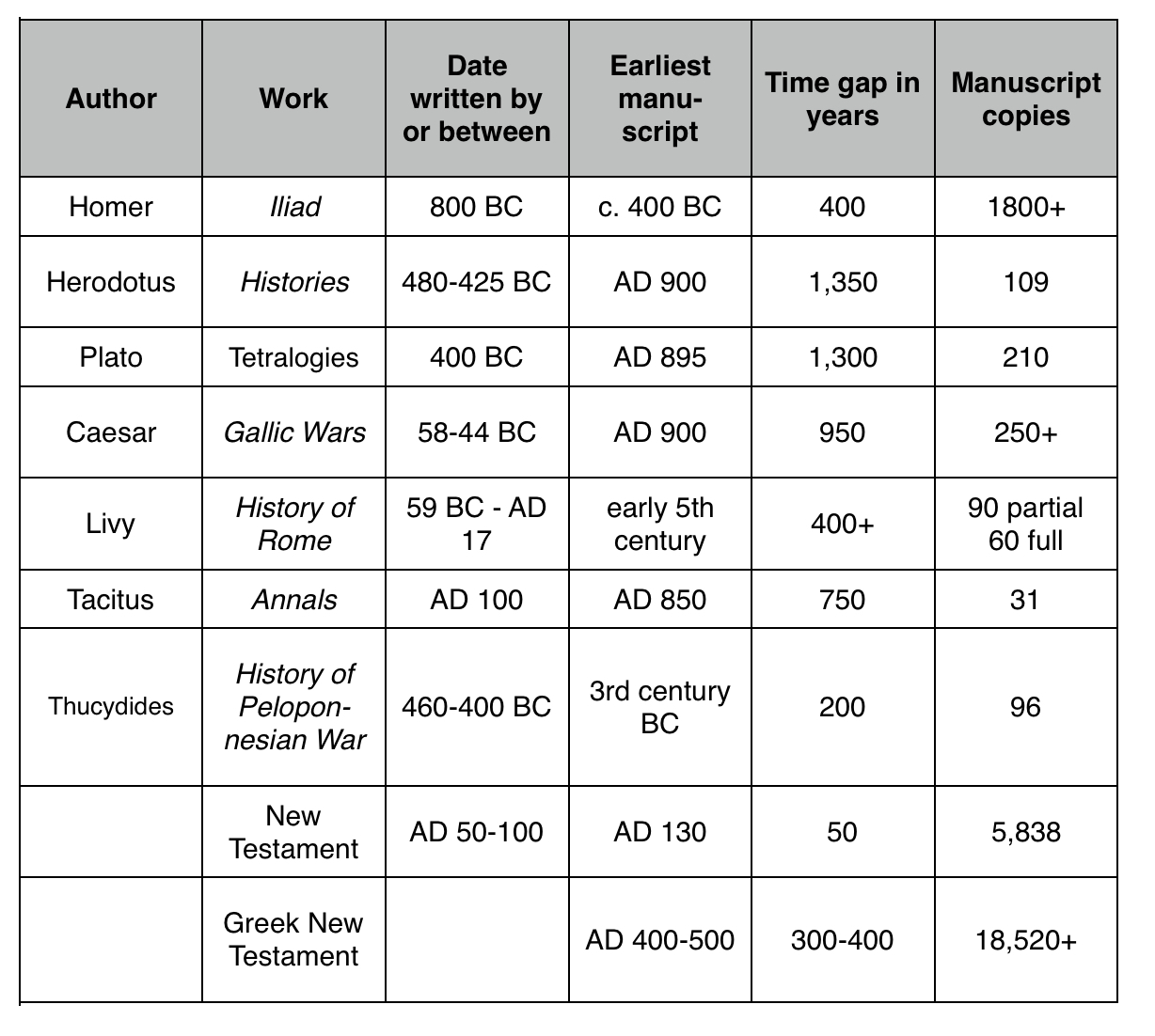
Then regarding the New Testament, Josh McDowell says, “I believe there is more evidence for the reliability of the New Testament than for any other ten pieces of classical literature put together.” Check out this chart reproduced from McDowell’s book God-Breathed to see by comparison to other literature, how close in dating the earliest biblical manuscripts are, and how many of those manuscripts have been discovered!
2. The external evidence test: determining whether the historical record has been verified or affirmed by data outside of itself.
Over one-fourth of the Bible is prophetic, and two-thirds of its prophesies have already been fulfilled. For example, 700 years before His birth, the city in which Jesus was to be born was identified by a man named Micah.
Time and time again archeologists discover articles that verify the claims in the Bible. This led archeologist Nelson Glueck to conclude, “It may be stated categorically that no archeological discovery has ever controverted a single biblical reference. Scores of archeological findings have been made which confirm in clear outline or in exact detail historical statements in the Bible.”
3. The internal evidence test: determining how of the historical record stands up to the test of internal validity.
The Bible was written by 45 different authors, over a span of 1500 years, on 3 different continents, and in 3 different languages. Yet there are no contradictions!
Anecdotal evidence—
Changed lives. My life is one that has been amazingly impacted by the God of the Bible, as was a man named Saul, who had a total about-face after encountering Jesus. As a result, Christianity was spread far and fast through his writings and world travels.
2. Changed societies. Wherever the Christian faith of the Bible has been put into practice, societies improve. Leonard Sweet notes—
“Before Christianity, there were cults that practiced all sorts of human sacrifice as well as self-mutilation and self-castration. Before Christianity, the weak were despised, the poor maligned, the handicapped abandoned. Before Christianity, infanticide was rampant, slavery run-of-the-mill, and gladiatorial combat a form of entertainment. In Jesus’ day, Corinth was famous for its temple prostitutes, continuing a long-standing tradition symbolized by the Corinthian athlete Xenophon.… Aristotle…not only condoned institutionalized slavery but provided an elaborate argument in favor of it. As if that weren’t enough, Aristotle called man ‘begotten’ and woman ‘misbegotten,’ and because a woman’s reasoning was ‘without authority’ accepted no female students.
“Only Jesus and His followers known as the church insisted on the concept of human dignity and the value of every human soul. Only the church built hospitals and took care of the abandoned and disabled. Only the church celebrated charity and selflessness as the highest virtue and elevated the status of women.”
Is all of this “proof positive” that the Bible is God’s Word? No, it’s not. But I think the evidence is compelling enough that it is certainly reasonable to reach this conclusion.
Here are some great application questions from this lesson:
Other than because it says so in the Bible, how do I know that it is God’s Word?
“If you should get up some morning and hear men on your house tearing off the tiles and taking down the roof with hammers and axes, you might think a gang of vicious enemies had come to destroy your home. But as soon as you understand that these workmen have been sent by your father to mend your house, you gladly endure the noise and trouble. Indeed, you thank your father for his care and expense. The very hope of the advantage that will come from the repairs makes you willing to dwell awhile in the inconvenient rubble of the old house.
“The promise [in Romans 8:28] assures the believer that the Heavenly Father intends no harm, only good, as He rebuilds the ruined frame of your soul into a glorious temple. And afflictions have a hand in the work. This insight frees you to pray, ‘Lord, cut and shape me however You will, that at last I may be framed according to the pattern which Your love has drawn for me!’” —William Gurnall (emphasis added)
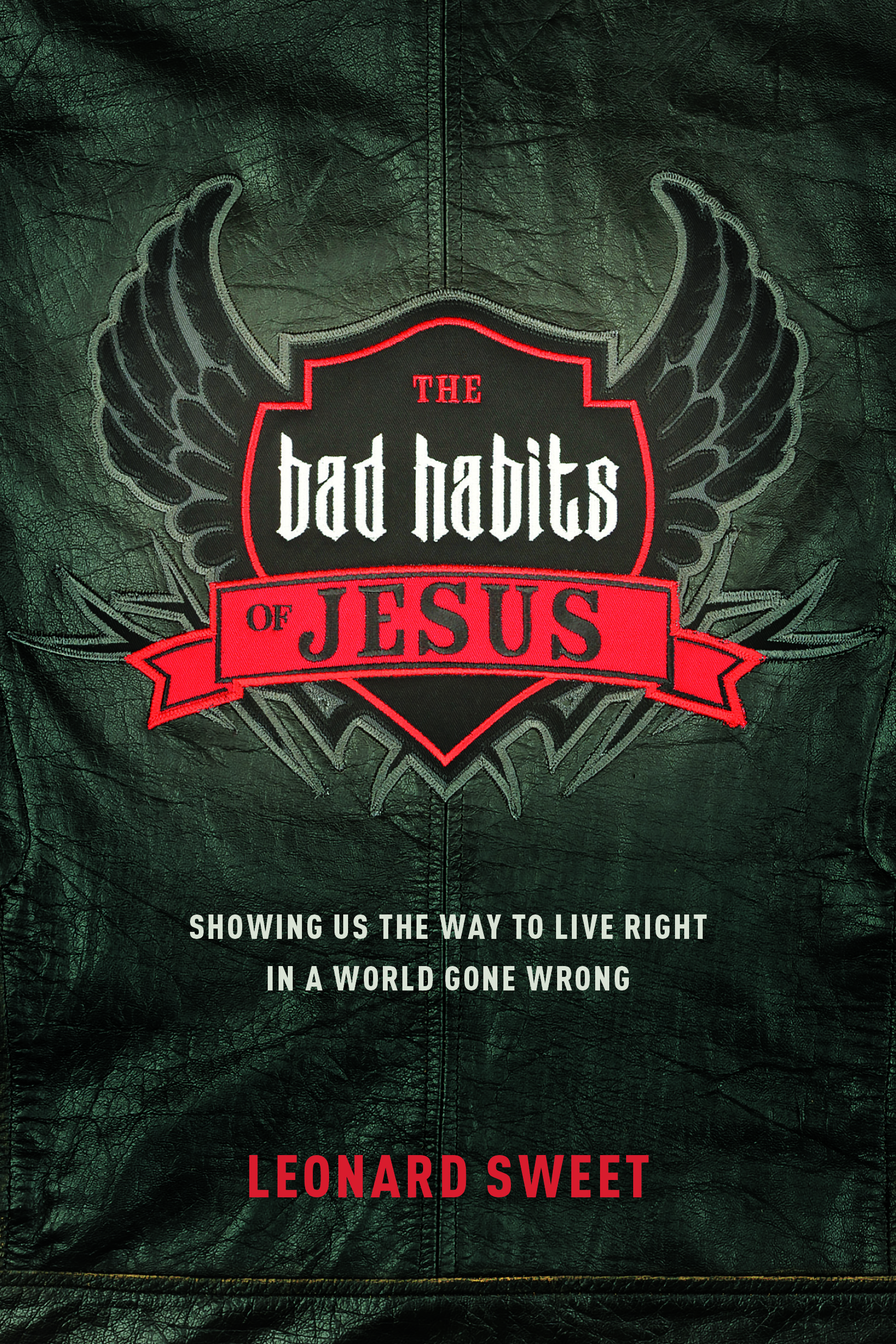
Leonard Sweet explores how revolutionary Jesus Christ’s public ministry was in his outstanding book The Bad Habits Of Jesus. Check out my book review by clicking here, and then enjoy some of these quotes I especially liked.
“As the church we can be Jesus to the world, but only if we are not afraid of the spit in the dirt. To lose our earthiness is to lose our humility, which, in the end, is to lose our humanity.”
“It’s easier to donate money than to put our hand in the hand of a man or a woman who looks dirty, down, and drowned with mud. Yet the church of Jesus is not meant to be a hideaway but a hostel for all of God’s dirtiest who need restoration and healing.”
“Jesus didn’t procrastinate due to slackness or indecision or perfectionism or fear of moving forward. Jesus delayed doing what He wanted or needed to do because the timing wasn’t right, because He was telling time by His Father’s clock and making the most of the time His Father had given Him.”
“Sometimes delay is the best strategy for dealing with a problem, especially problems that have not been prayed over enough in the heart or played about enough in the mind.”
“We especially need to learn to wait on Jesus, which has both a Martha and a Mary meaning. There is the ‘waiter’ meaning of ‘waiting on Jesus,’ which means serving Him by serving others. To put the interests of others before our own is not to be weak but to be strong enough to transcend selfishness. That’s why love is only for the strong, not for the weak. Only the strong can love. … Then there is the ‘await’ meaning of ‘waiting on Jesus,’ which means patiently waiting without hating or wearing out the carpets with our pacing and fretting, sitting at His feet upon His arrival, leaning into His presence, and learning to put on the mind of Christ.”
“We all need the pendulum swing of snatching spaces of solitude and setting tables of sociability. In fact, the more plugged in and connected we are, the more we need to unplug and disconnect. A world of presence needs a time of absence.”
“Sometimes the Prince of Peace was a disturber of the peace so that He could be God’s purveyor of true peace.”
“When political correctness takes over in the church, it’s no longer about Jesus. … The Gospel becomes not God’s Good News but our own good intentions. … Jesus’ bad habit of not being afraid to offend so offends our PC sense of rectitude that He would be liable to be arrested for indecency.”
“When people today work for the church instead of working for God, love a denomination more than they love God, cherish their traditions more than they cherish their relationship with God, then they steal what is due only God.”
I will be sharing more quotes from this book soon. If you would like to be notified as soon as these quotes are posted, simply enter your email address in the box in the right column and click “Sign me up!” You can also follow me on Twitter and Tumblr where I share inspiring and thoughtful quotes ever day.
This is the fourth set of quotes I’ve shared from Josh McDowell and Sean McDowell’s book The Beauty Of Intolerance. You can check out the other quotes here, here, and here; and if you missed my review of this book, please click here to read that.
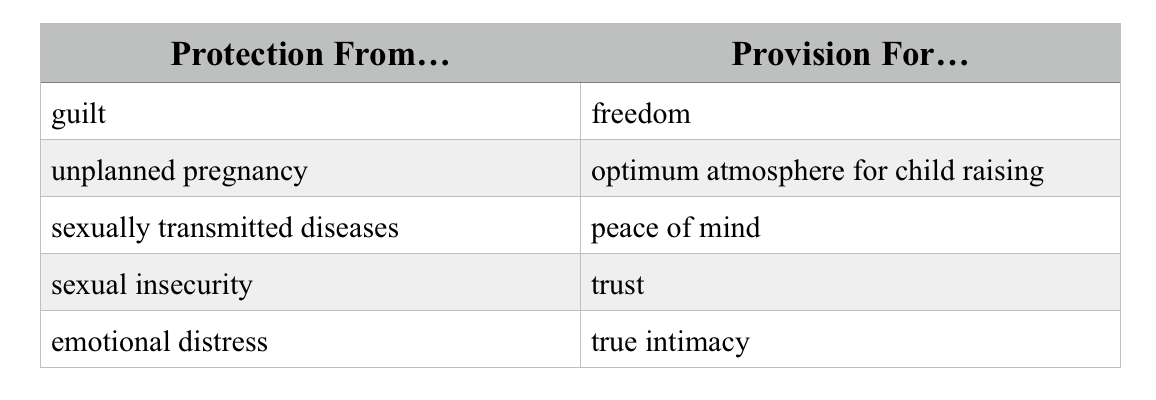
“Respecting the boundaries of sexual morality and prohibitions for extramarital and premarital sex does bring protection and provision. Here are just a few ways it does this:
“Although sin has separated us from God, His original intent for us and the reality that we were created in His image have not changed. What we do or don’t do may distort that image, but our worth to God as human beings never changes.”
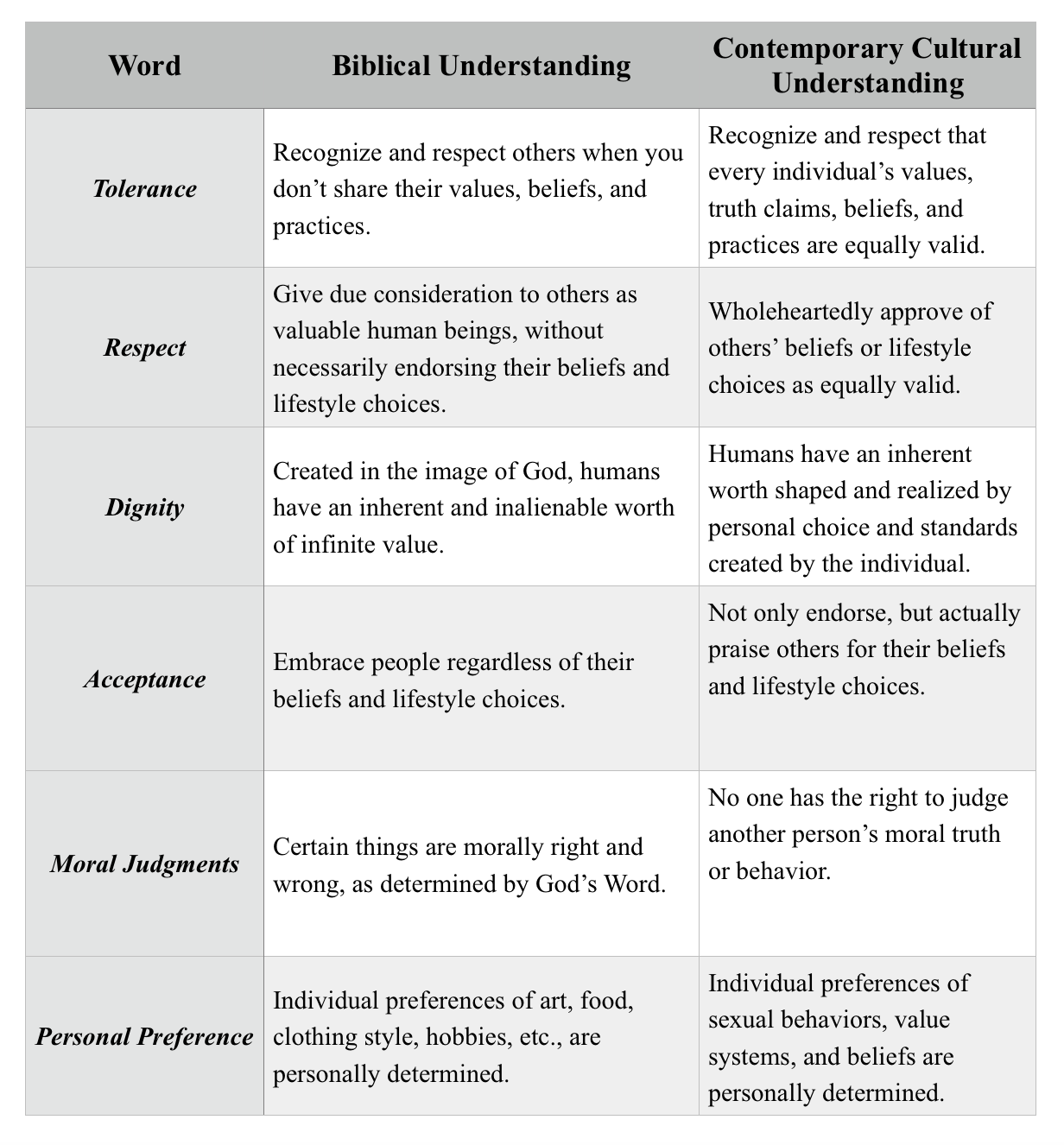
“So how has Christ loved you? He values all people for their inherent worth and offers grace freely to all people without exception. Cultural tolerance, on the other hand, claims to accept everyone’s differing beliefs, values, and lifestyles, yet it qualifies that acceptance. … What distinguishes God’s unconditional acceptance from that of our culture is authentic love. His love is intended to make the security, happiness, and welfare of another as important as His own. It is other-focused, not performance-focused. … Real valuing of another’s personhood expressed in the context of authentic love separates doing from being and sees the acts of sin distinct from the sinner (which, by the way, is all of us).”
“The beauty of intolerance is its opposition to wrong and evil in the world—in alignment with God’s righteous and perfect standard of justice, equality, human rights, and caring for others. Intolerance of evil is not mean-spirited and condemnatory; it is actually the only way to be loving and caring. Far from being judgmental, it advances God’s righteous kingdom.”
“Most people in America subscribe to a view of morality called ‘cultural ethics.’ In other words, they believe that whatever is acceptable in that culture is moral; if the majority of people say a thing is right, then it is right. … But there’s a problem with that. If that is true, then how can we say the ‘aborting’ of six million Jews in the Holocaust was wrong? In fact, the Nazis offered that very argument as a defense at the Nuremberg Trials. They argued, ‘How can you come from another culture and condemn what we did when we acted according to what our culture said was acceptable?’ In condemning them, the tribunal said that there is something beyond culture, above culture, that determines right and wrong.”
“We are all entitled to our own beliefs, but this doesn’t mean each of us has our own truths. Our beliefs describe the way we think the world is. Truth describes the objective state of the world regardless of how we take it to be. Beliefs can be relative, but truth cannot. … Moral truth was never meant to be spoken or understood outside of a loving relationship. Being like Christ and speaking the truth in love are synonymous.”



 Last week I asked you to imagine how your relationship grew with your best friend. You probably found that this special friendship was formed during hours and hours of talking.





 Craig T. Owens