Not Forsaken

Listen to the podcast of this post by clicking on the player below, and you can also subscribe on AppleSpotify, or Audible.

Although some people are afraid of this, the Bible makes it clear that God doesn’t forsake us. But the Bible also makes it equally as clear that we can forsake God. 

Listen to the words God spoke through Moses—

     And the Lord said to Moses, “Behold, you shall sleep with your fathers, and this people will rise up and play the harlot after the strange gods of the land where they go to be among them; and they will forsake Me and break My covenant which I have made with them. Then My anger will be kindled against them in that day, and I will forsake them and hide My face from them. And they shall be devoured, and many evils and troubles shall befall them, so that they will say in that day, ‘Have not these evils come upon us because our God is not among us?’ And I will surely hide My face in that day because of all the evil which they have done in turning to other gods.” (Deuteronomy 31:16-18 AMPC)

To forsake means to depart from someone or to neglect them. 

While we are following God, He will never forsake us. But when His people turn aside in fascination of sinful things, they forsake God by no longer following Him. We read this in the words of God’s people, “Our God is not among us.” 

When we don’t follow God, He still never forsakes us. However, God refuses to bless people who persist on doing their own thing. 

God’s blessing is reserved for those who continue to follow Him. In the language of the New Testament, God’s blessing only flows into the branches that continue to abide in Jesus (see John 15:1-8). 

When we forsake God, we cut ourselves off from His life flow. It is not the Vine who has left us, but we who have severed ourselves from the Vine. 

If God feels distant from you, be assured that He hasn’t forsaken you. Perhaps you could pray a couple of prayers that David prayed. Maybe a prayer asking for the Holy Spirit to reveal to you where you may have detached yourself from the Vine of God (Psalm 139:23-24). Or perhaps a prayer of forgiveness and assurance of God’s forgiveness and restoration (Psalm 51:1-10). 

Don’t give into the feelings of despair, but run back into the embrace of the One who loves you—the One who never leaves you nor forsakes you:

     Be strong, courageous, and firm; fear not nor be in terror before them, for it is the Lord your God Who goes with you; He will not fail you or forsake you. (Deuteronomy 31:6) 

►► Would you please prayerfully consider supporting this ministry? My Patreon supporters get behind-the-scenes access to exclusive materials. ◀︎◀︎

Praying Against Or For Slanderers

Listen to the podcast of this post by clicking on the player below, and you can also subscribe on AppleSpotify, or Audible. 

Quite a few psalms in the Bible are prayers against our attackers. Is that an acceptable prayer for us to still pray today? 

The Scriptures I reference in this clip are Psalm 58:6-8; Luke 23:34; Luke 6:28. 

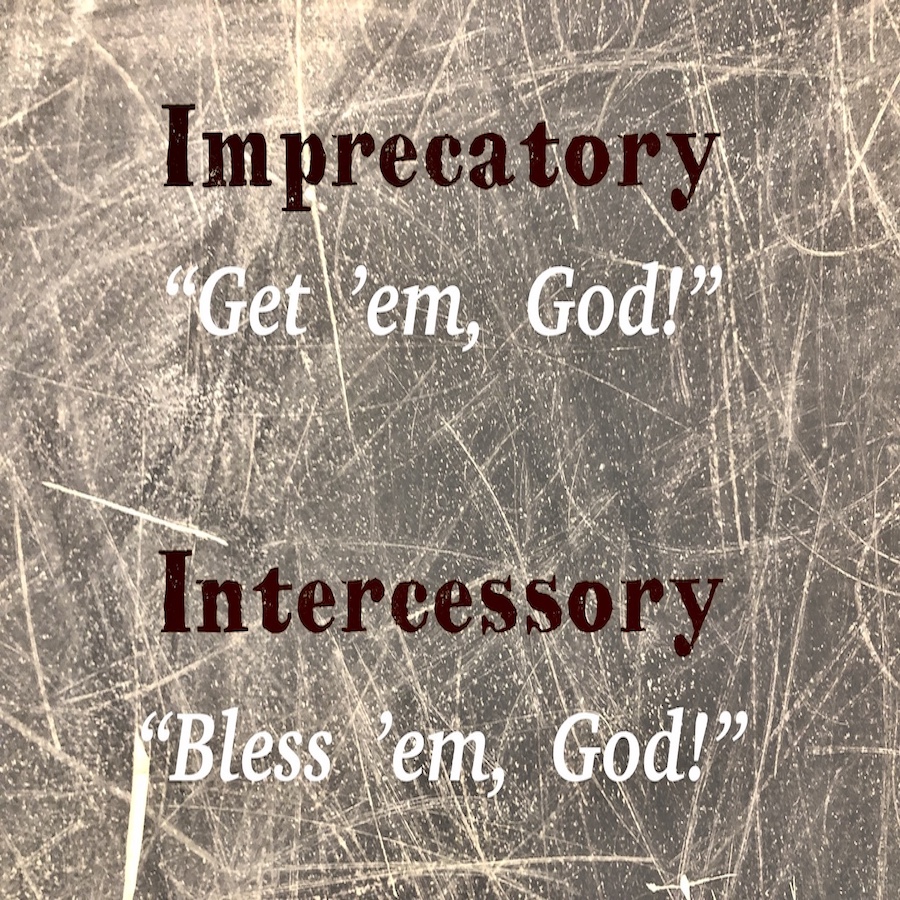
Imprecatory prayers are, “Get ’em, God!” prayers. Intercessory prayers are, “Bless ’em, God!” prayers. 

Since both of these prayers are in the Bible, both of them have their place in our healing from the bites we have received from others, but the intercessory prayers are the ones we need to strive to pray. 

You can read more about this kind of praying in my posts: Still Maturing, Trespassers, and When You’re Unfairly Attacked. 

The full sermon about dealing with slanderers is here, and you can also go much deeper with this subject in my book When Sheep Bite. 

►► Would you please prayerfully consider supporting this ministry? My Patreon supporters get behind-the-scenes access to exclusive materials. ◀︎◀︎
The Malicious Attack

Listen to the podcast of this post by clicking on the player below, and you can also subscribe on AppleSpotify, or Audible.  

You may have noticed that the intensity of the pain of these sheep bites has been escalating—from flattery, to criticism, to gossip. Now we come to probably the most painful of bites: slander. This is the bite that will have the strongest pull toward the natural response, which will require our greatest reliance on the Holy Spirit to respond supernaturally. 

Remember that gossip has a veneer of truth on it; slander has no truth at all. They are outright lies. They are flimsy lies. They are malicious lies. One of the Hebrew words translated slander means scandal-monger: someone who trades in lies (Jeremiah 6:28 NLT; Leviticus 19:16).

(Check out all of the biblical references in this post by clicking here.) 

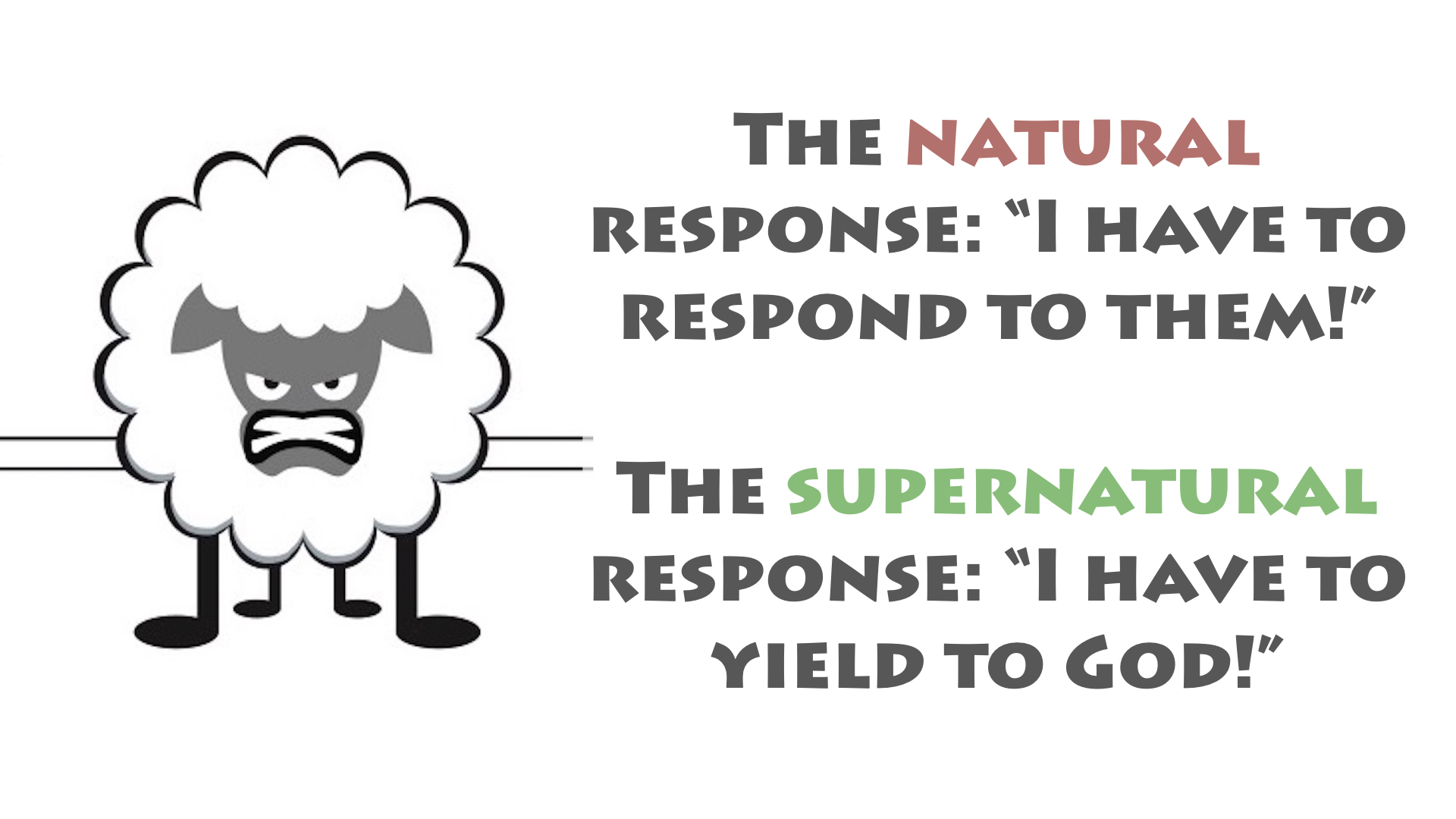
The natural response to slander is, “I have to respond to them!” The supernatural response to slander is, “I have to yield to God!” 

The natural response, however, is fueled by my wounded pride. On the other hand, the supernatural response is fueled by humility toward God. 

Slanderers are arrogant people too (remember Jeremiah said “they are as hard as bronze and iron” [Jeremiah 6:28]). God’s people are learning to humble themselves to wait for God (Psalm 38:12-15). These humble people are the ones who get God’s help, and not His laughter (James 4:6; Proverbs 3:34 NLT). 

Look at how Jesus dealt with the very natural urge to respond to those who slandered Him. After Jesus was arrested by the temple guards, He was hauled before one group after another and each time the slanderous lies were spitefully spit at Him. In front of the Sanhedrin, before Roman governor Pontius Pilate, and in the throne room of King Herod Antipas, angry men unleashed their venomous claims—none of which were true.  

There are two common themes we can notice in all of these settings.

  1. The lies were seen for what they were: complete fabrications without any truth behind them—Mark 14:55. Governor Pilate said “I find no basis for a charge against Him” (Luke 23:4), and he added, “Herod came to the same conclusion and sent Him back to us” (v. 15). 
  2. The silence of Jesus: “Jesus remained silent and gave no answer” (Matthew 27:13-14; Mark 14:61, 15:5). The only red letters in this interaction with both the Sanhedrin and Pilate are when Jesus is asked a direct question. Jesus quickly answers the questions, “Are You the Messiah,” “Are You a King,” and “Don’t You know the power I have?” (Mark 14:61, 15:2; John 19:10), but He never responds to the slander. 

Let me repeat: Our supernatural response can only come from yielding to the Holy Spirit’s influence. 

  1. We cannot treat slanderers as anything less than people created in the image of God (Genesis 1:27; Psalm 15:1, 3). 
  1. We must take our pain into God’s presence. This is what Jesus did (1 Peter 2:21-23). We can help ourselves by praying imprecatory prayers. These are words for God’s ears only (Jude 1:9; Psalm 58:6-8). 
  1. We have to learn to pray for our slanderers. We have to mature from praying against them to praying for them. Look at how Jesus interceded for His slanderers (Luke 23:34), which He calls us to as well (Luke 6:28). 
  1. We have to live as overcomers. We overcome by NOT responding to slander in the natural way (Romans 12:21). But we allow our supernatural response to be used as a powerful testimony (2 Corinthians 6:3-10; Colossians 3:1-2, 8, 12-14). 

We can do this—the Holy Spirit is empowering us to do this. Let’s not get down in the mud with those who slander us, but let’s yield to God and allow Him to handle this painful situation far better than we ever could. 

If you’ve missed any of the messages in this series, you can find them all here. And if you are a pastor, please check out my book When Sheep Bite, which will help you both respond to sheep bites and teach others how to respond as well. 

►► Would you please prayerfully consider supporting this ministry? My Patreon supporters get behind-the-scenes access to exclusive materials. ◀︎◀︎
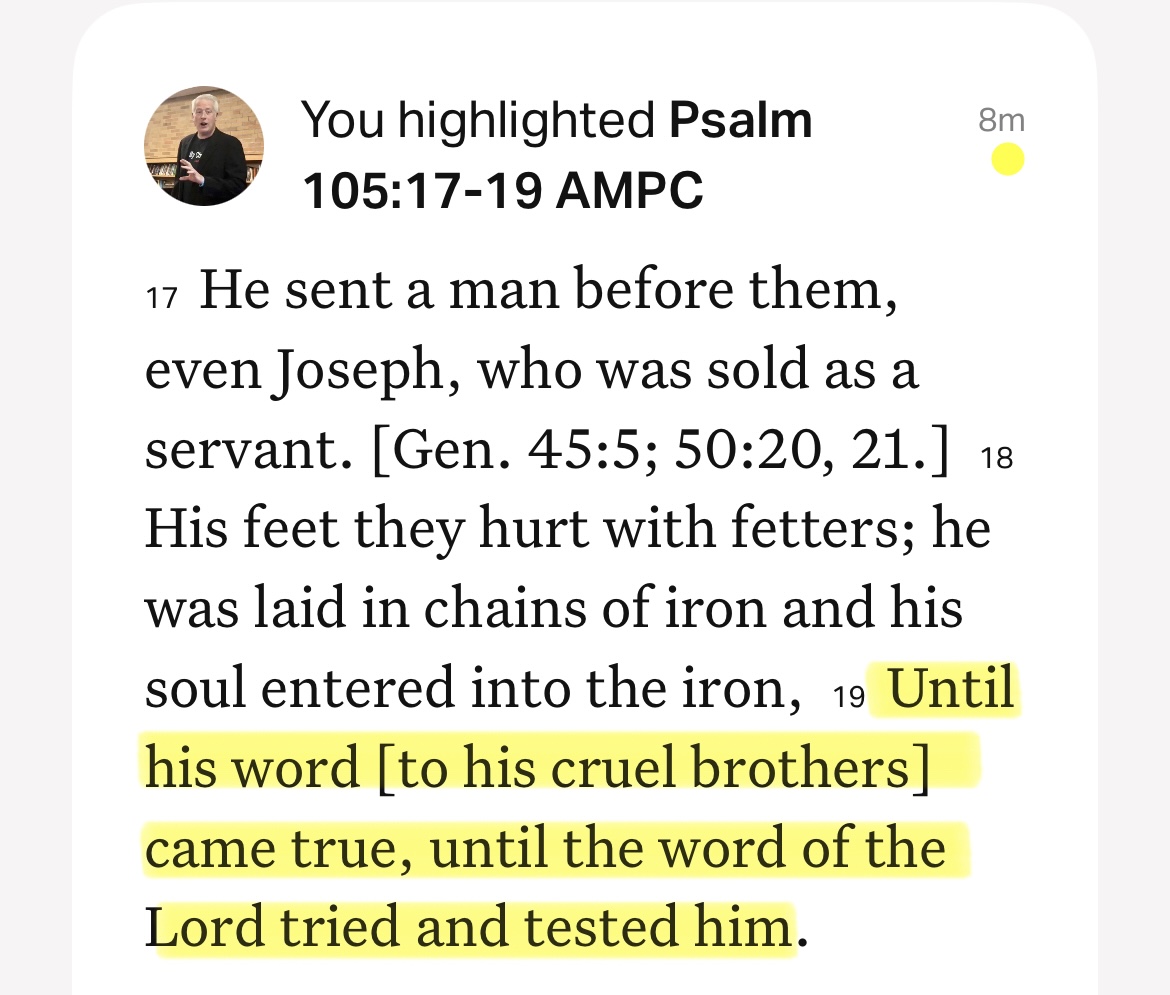
Let God Hear Your Voice Continually

Evening and morning and at noon will I utter my complaint and moan and sigh, and He will hear my voice. (Psalm 55:17) 

Let God hear your voice all day long. You can never weary Him by coming to Him too often—He loves when your eyes are on Him alone and your cries for help are for His ears only. 

As you cast your burden on Him, try to leave your burden with Him. Don’t pick it up again (Psalm 55:22). 

But if you find that you are again fretting over a nagging problem, bring that burden to Him again. He wants to bear your burden for you—He wants to answer your prayer in His perfect way and in His perfect timing. 

You may also want to check out a couple of other posts based on Psalm 55:

Should We Listen To Critics?

Listen to the podcast of this post by clicking on the player below, and you can also subscribe on AppleSpotify, or Audible. 

Do you know this pair of cantankerous men from the Muppets? Statler and Waldorf sit in the balcony of the theatre and criticize everything that is happening on the stage. I mean everything! They have a good laugh at their barbs, but no one on the stage seems to find it humorous. 

Have you ever met people like this? How do you typically respond to their criticism? 

Unfortunately, those who are trying to do the right thing are often the targets of almost constant criticism. Abraham Lincoln said, “If I were to attempt to answer all the criticisms and complaints I receive, I would have no time for any other business.” 

President Lincoln was a great leader but he wasn’t without fault, so to certain extent we could expect a little bit of criticism from people who didn’t like his policies. But what about Jesus? It was prophesied about Him that He would be the target of criticism (Isaiah 53:3). 

(Check out all of the Scriptures in this post by clicking here.) 

Those out to get Jesus even criticized those who attended to Him. In Mark 14:1-5, they are criticizing a woman who poured perfume on Jesus out of her sincere desire to honor Him. Yet they spoke about her and her actions “indignantly” (v. 4), and they rebuked and criticized her (v. 5). The Greek word in this verse literally means he snorting of horses! 

Jesus stepped in to protect this God-fearing woman, “Why are you bothering her? Why are you criticizing this beautiful thing she had done for Me?” 

Notice that Jesus responded to the critics, but the woman did not respond. Does that mean that we never answer critics? Are we supposed to ignore them? 

First, let’s go back in time to the origin of the words critic and criticism. These words originally meant someone capable of giving a meaningful—perhaps even constructive or helpful—judgment. Think of a trained and skilled chef critiquing your recipe, as opposed to someone who cannot tell the difference between nutmeg and ginger. 

The natural response is to ignore all criticism. The supernatural response is prayerfully evaluate criticism. Solomon says there is such a thing as valid criticism (Proverbs 25:12). 

So who is a valid critic? 

(1) Someone who loves me (Proverbs 27:17; Ephesians 4:15). Paul loved Peter and respected his leadership role in the church, but he still criticized Peter when he messed up (Galatians 2:9, 11).  

(2) Someone who has experience or godly wisdom that we don’t yet have (Ecclesiastes 7:5). Micaiah had a word from God, even though King Ahab thought Micaiah simply didn’t like him (1 Kings 22:1-18). 

(3) Someone who wants to hurt me. Really!? Dick Brogden wrote, “The Lord uses critics to show us our own hearts, even if what they say is not fully true, informed, or even fair. There is almost always a germ of truth in what our critics (in their own pain and disappointment) shout at us. The wise [person] will humble himself and look for the truth embedded in every oppositional interaction.” As we saw previously from Psalm 26:2, when we hear words of criticism, we need to make it a matter of prayer. 

Jesus told the woman’s critics to “leave her alone” but He never defended Himself against the childish barbs (Isaiah 53:7; Matthew 27:13-14). I think we would do well to follow His example. So when criticized, take a deep breath, smile, hear them out, ask clarifying questions, and then say, “Thank you for sharing that with me. I’ll make this a matter of prayer.” 

They might accuse you, but you should turn it over to God (Psalm 109:4). 

The natural response is to respond all critics. The supernatural response is to respond like Jesus (see 1 Peter 2:21-23). 

Remember that quote from Abraham Lincoln we saw earlier? Here’s the rest of his quote—

“From day to day I do the best I can and will continue to do so till the end. If in the end I come out all right, then the complaints and criticisms and what is said against me will make no difference. But, if the end brings me out wrong, then ten angels coming down from heaven to swear I was right would still make no difference.” 

Ultimately, we are longing to hear Jesus say, “Well done.” If He cannot say that to us, does it really matter if everyone else praised us? But if Jesus says, “Well cone,” does it really matter the criticism others said about us? 

Let’s ask the Holy Spirit to help us respond supernaturally to our critics—listen prayerfully to ever critic, but only respond to them as Jesus did. 

If you have missed any of the other messages in this series When Sheep Bite Sheep, you can find them all here. And if you’re a pastor, be sure to check out my book When Sheep Bite. 

►► Would you please prayerfully consider supporting this ministry? My Patreon supporters get behind-the-scenes access to exclusive materials. ◀︎◀︎

Links & Quotes

Why do you love the power? Servant leaders love what their leadership role allows them to do for other people.

I have a lot of new video content on my YouTube channel every week. Please check it out and subscribe so you don’t miss anything.

“Friendship is a path that leads very close to the perfection which consists of the enjoyment and knowledge of God, such that a man who is a friend of man is made into a friend of God, according to what the Savior said in the gospel: ‘Now I will not call you servants, but My friends [John 15:15].’” —Aelred of Rievaulx

In studying the intense volcanic activity on Jupiter’s moon Io, the ICR concludes, “Since 2013, evidence of a youthful solar system has only gotten stronger. Scientists have been forced to acknowledge that Saturn’s rings are indeed young, and belief in deep time continues to pose real problems for conventional scientists.” The prestigious Nature concurs, saying, “Some such proposals make planetary researchers uncomfortable, because it is statistically unlikely that humans would catch any one object engaged in unusual activity—let alone several.”

Parents and teachers trying to keep up with the ever-changing lexicon of today’s youth will really appreciate this list of slang from Axis.

“Those who are really in earnest must be willing to be anything or nothing in the world’s estimation.” —Susan B. Anthony 

The story of Esther in the Bible is one of my all-time favorites. “While Esther herself has not been identified, nor has the plot to destroy the Jewish people been confirmed, the absence of evidence is not evidence of absence.” To that point, here are 10 pieces of archeological evidence related to this amazing story. 

Charisse Compton asks, “When was the last time meditating on your body elicited worship?” She goes on to make this case from Psalm 139: “Your body, as much as your soul, is one of God’s glorious works. It bears the unmistakable signature of the divine Artist so that, like creation, your body ‘declare[s] the glory of God’ (Psalm 19:1).”

There Is Only One

Why should I fear when evil days come, when wicked deceivers surround me—those who trust in their wealth and boast of their great riches? No one can redeem the life of another or give to God a ransom for them—the ransom for a life is costly, no payment is ever enough—so that they should live on forever and not see decay. (Psalm 49:5-9)

There is only One who can ransom me from my death sentence. Jesus tasted death for me that I may live. Jesus became my sin and imputed to me His righteousness. It is only to Him that I look for my rescue! 

It is…

Sola Scriptura tells me the truth

Sola Christo fulfills the promises

Sola fide in Christ’s finished work 

Sola gratia that God’s favor is imparted to me

Sola Deo gloria that all of this is done

But God will redeem me from the power of Sheol (the place of the dead); for He will receive me. Selah—pause, and calmly think of that! (Psalm 49:15 AMPC)

Beware Of The Sneaky Bite

Listen to the podcast of this post by clicking on the player below, and you can also subscribe on AppleSpotify, or Audible. 

Check out a couple of ways I could greet you in this post:

  1. It’s great to see all of you today. I am really glad you stopped by my blog. 
  2. In fact, no one is as astute as you are. No one digs into the Scripture the way you do. There is no one else in the world that I would want visiting my blog today. 

What did I just do? I went from genuinely complimenting you to flattering you. I bit you. Flattery is a sneaky bite that we need to be aware of. 

A compliment is simply defined as an expression of praise or admiration. 

Flattery, on the other hand, crosses the line. It’s defined as trying to please someone by excessive or insincere praise. The reason why I call flattery a bite is because the flatterer is only thinking about himself, not about you. 

Flatterers are trying to get something for themselves. See how the rich young man tried to do this by flattering Jesus in Mark 10:17. The Amplified Bible brings out the man’s flattery more clearly: Teacher, You are essentially and perfectly morally good. 

(You can read all of the Scriptures I reference in this post by clicking here.)

This man was looking for the secret formula that would get him into Heaven, so he wasn’t complimenting Jesus but flattering Him to get a favorable answer. 

Jude described these pseudo-religious people as ones who “flatter others for their own advantage” (Jude 1:16). The NKJV says they use “great swelling words.” Peter describes these same kinds of people as speaking “great swelling words of emptiness” (2 Peter 2:18). 

Flatterers are trying to trip you up so they are recognized as your superior. Once again, we can see how tricksters tried this tactic on Jesus in Mark 12:14. We know they are insincere because of the background information Mark gives us in vv. 12-13. 

David described flatterers in Psalm 12:1-3. The AMPC says they talk “with flattering lips and double heart” and The Message paraphrases it, “Lies slide off their oily lips. They doubletalk with forked tongues” (v. 2). 

Solomon warns us of the net they are setting for us: Those who flatter their neighbors are spreading nets for their feet (Proverbs 29:5). 

Flatterers are trying to cover up their own sinfulness. David again diagnoses this in Psalm 36:1-4. This also means that sometimes we can flatter ourselves to avoid dealing with our own sin. 

It’s natural to want to hear a compliment, but we need supernatural discernment to protect ourselves from the sneaky bite of flattery. 

Look how Jesus did this in Mark 10:17-18. Remember the Amplified Bible that laid it on so thick? Jesus responded correctly: “There is no one essentially and perfectly morally good—except God alone” (v. 18). If we are going to do any comparing at all, let’s compare ourselves to our perfect God and Savior. Remember, we have done a self-check (Psalm 26:2) so we know what’s really there! 

Swallowing this flattery only fuels the pride inside us. C.S. Lewis warned, “It was through Pride that the devil became the devil; it is the complete anti-God state of mind. … Pride is a spiritual cancer: it eats up the very possibility of love, or contentment, or even common sense.” 

Look at the other example from Jesus in Mark 12:12-15. When Jesus sensed their flattery, He called it what it was: hypocrisy! 

What we all need instead is God-fearing friends who speak the truth in love (Proverbs 27:6, 9). 

Flattery makes you feel like you’re on top of the world. Flattery makes you forget the things the Holy Spirit has revealed to you that needs work. But Jesus asked, “What do you benefit if you gain the whole world but lose your own soul?” (Mark 8:36 NLT). 

The sincerest compliment we should all be living to hear is, “Well done, good and faithful servant! Enter into your Master’s happiness forever and ever!” No other voice matters! 

Check out the other messages in this series called When Sheep Bite Sheep by clicking here. And if you are a pastor, check out my book When Sheep Bite. 

►► Would you please prayerfully consider supporting this ministry? My Patreon supporters get behind-the-scenes access to exclusive materials. ◀︎◀︎

Time For A Self-Check

Listen to the podcast of this post by clicking on the player below, and you can also subscribe on AppleSpotify, or Audible. 

Have you ever heard this little saying: “To live above with saints we love, oh, that will be glory. But to live below with saints we know, well, that’s a different story”? I’ve found that it’s sometimes true! 

We love Psalm 133:1-3 when the saints are all together. What a great “selling point” to invite someone to be a part of the Christian community! But Psalm 41:7-9 is kind of embarrassing as David talks about former friends who have hurt him deeply. 

(Check out all of the Scriptures in this post by clicking here.)

But being bitten by a fellow sheep is a reality we all have experienced, and, sadly, we will probably have to deal with again in the future. There is a natural way we tend to react when we’ve been bitten, but there is also a supernatural response that the Bible consistently calls us to. This is the God-glorifying way we all need to strive for. 

In Acts 23, Paul is standing before the Sanhedrin. He opens his remarks by simply saying he has a clear conscience before God, and the high priest immediately orders that Paul be smacked on the mouth! That seems like a bit of an over-reaction on the part of the high priest, but maybe it was a bit of show of force to let Paul know who was really in charge. Paul responded with an immediate—and natural—reaction when he says, “God will slap you!” 

Paul is an old man by this time. He’s been through shipwrecks, beatings, imprisonments, gone without food, traveled more miles than he can count, and preached more sermons than he can remember. His body was giving out on him, and his eyesight was especially weak. Clearly, Paul didn’t realize to whom we was addressing his remarks. But when he became aware, he immediately owned up to his mistake. Paul offered no excuses or justifications, just a quick, simple, sincere apology. 

When you have been bitten (slapped) by another sheep, you should ask: 

  • Could I have provoked them by something I said or did? 
  • Could I have hurt them by something I didn’t say or do? 

David prayed a great prayer in Psalm 139:23. But this prayer is only effective if we are willing to accept that we may have been the agitator that led to the bite. In the last words that Job speaks in the Book of Job, he is very introspective. Check out all of the “If I have” statements throughout Job 31. 

In Psalm 26:2, David invites the Holy Spirit to check him three times! 

  • test me = scrutinize me 
  • try me = assay me 
  • examine me = refine me in the fire 

When we are bitten, we should be open to the possiblity that God is using this bite to get my attention—to make me aware of a fault in my life or something that’s been in a blind spot. 

So we should consider the following: 

  1. Has this kind of bite happened more than once? From different sheep? 
  2. Has a spiritually wise person attempted to address this with me before? 
  3. Do I ever admit that I’m at fault, or is it always the other person’s fault? 
  4. Do I find myself making a list of why they should apologize to me? 
  5. When was the last time I apologized to someone else? 

If the Holy Spirit reveals something in us, He will also empower us to make the change and make amends. The natural response is to place all the blame on others. The supernatural response to pray Psalm 26:2 before responding. 

If we react only the natural way, it is a lose-lose for us and for the whole pasture. But if we learn to respond in a supernatural way, it becomes a win-win for everyone. Listen to the wise words of King Solomon—

He who heeds instruction and correction is not only himself in the way of life but also is a way of life for others. And he who neglects or refuses reproof not only himself goes astray but also causes to err and is a path toward ruin for others. (Proverbs 10:17 AMPC) 

Let’s all strive for the supernatural response that is a win-win for the whole Kingdom of God! 

Please follow along with all of the messages in this series by clicking here. 

P.S. If you are a pastor, you may want to check out my book When Sheep Bite.

►► Would you please prayerfully consider supporting this ministry? My Patreon supporters get behind-the-scenes access to exclusive materials. ◀︎◀︎
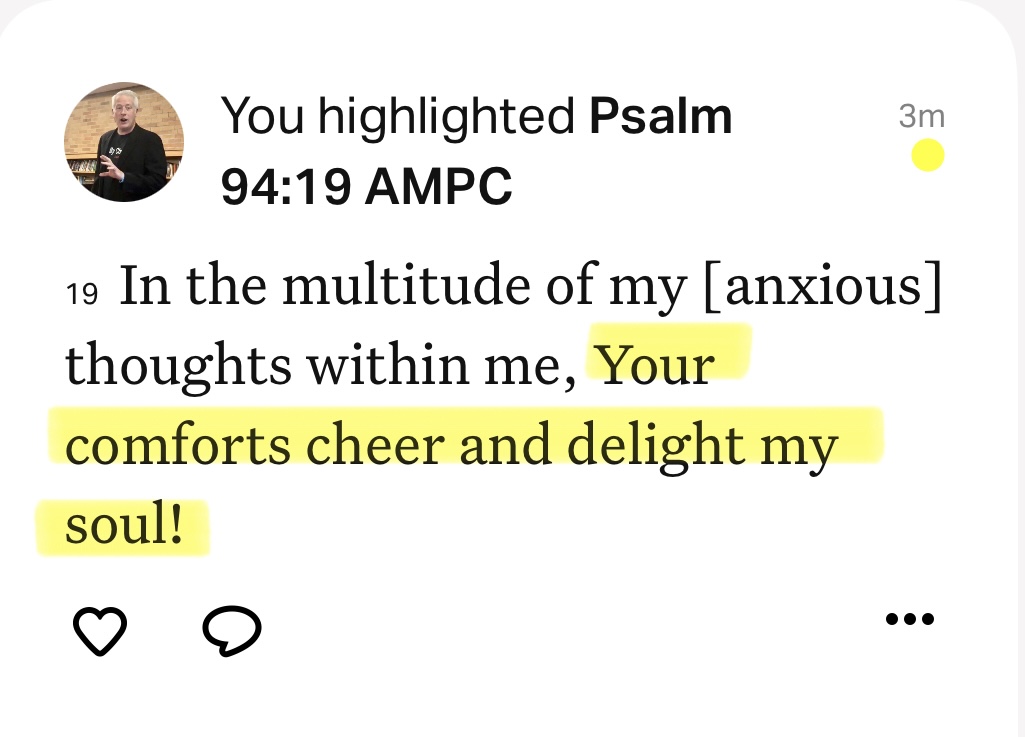
Praying For Our Fellow Saints

Listen to the podcast of this post by clicking on the player below, and you can also subscribe on AppleSpotify, or Audible. 

We tend to be pretty self-centered creatures, filtering everything through our lens. This becomes especially true when we are going though a difficult time. 

When I walked through a dark valley, I battled both physical and spiritual forces. People attacked me, but so did my own thoughts. “Why me?” and “I didn’t do anything to deserve this!” led to prayers like, “God, why didn’t You protect me from this? Why won’t you get me out of this?” 

Do you hear a common theme? I didn’t while I was in the midst of the battle, but perhaps you hear it—“Why me? I didn’t do anything to deserve this! God, why didn’t You protect me from this? Why won’t You get me out of this?” 

In his book Winning With People, John Maxwell shared ‘The Big Picture Principle’: “The entire population of the world, with one minor exception, is composed of others.” 

On the other side of my dark valley I learned something about my time in the dark valley—I had grown:

  • I could help others diagnose depression 
  • I could empathize with others
  • I could share helpful strategies to those who were struggling 
  • I could intercede for them in prayer 

My definition for intercede is to pray for people in a meaningful way because they are too beat up to pray for themselves. 

In order to pray for them, I have to know what and how to pray. I can’t know what and how to pray unless I have firsthand experience. So perhaps my dark valley wasn’t for me, but for someone else (see Romans 8:28; 2 Corinthians 1:3-11). 

(Check out all of the Scriptures in this post by clicking here.)

As Christians, we’re in this life together. 

I have talked and blogged so many times about the phrases “one another” and “each other” throughout Scripture. That means that Christian faith is best seen when we are with each other, supporting one another. 

Jesus taught us to pray, “Our Father” (Matthew 6:9). The “our” signifies we are praying…

  • …with Jesus—John 14:13-14 
  • …with other saints—Matthew 18:18-20 

Even more than praying with us, Jesus intercedes for us (Hebrews 4:15-16). And Jesus gives us the Holy Spirit (John 14:26) who also intercedes for us and with us (Romans 8:26-27). 

We join with our High Priest, helped by our Advocate, as we pray to our Heavenly Father on behalf of our brothers and sisters.  

Listen to the interceding and expectation of a joyful answer that David writes in Psalm 20, and also notice how the saints are together—

    May the LORD answer you when you are in distress; may the name of the God of Jacob protect you. May He send you help from the sanctuary and grant you support from Zion. May He remember all your sacrifices and accept your burnt offerings. May He give you the desire of your heart and make all your plans succeed. May we shout for joy over your victory and lift up our banners in the name of our God. May the LORD grant all your requests. Now this I know: The LORD gives victory to His anointed. He answers him from His heavenly sanctuary with the victorious power of His right hand.  Some trust in chariots and some in horses, but we trust in the name of the LORD our God. They are brought to their knees and fall, but we rise up and stand firm. LORD, give victory to the king! Answer us when we call!

My cousin Dick Brogden wrote, “Jesus never intended us to suffer alone. We may not physically be able to cross oceans or deserts and sit in lonely cells with colleagues—but we are intended to traverse that distance spiritually and to bear the burdens of our brothers in prayer. Followers of Jesus under duress are empowered to bear unimaginable suffering when they know that they do not agonize alone.” 

In your prayer time, I encourage you to ask the Spirit to show you lessons you have learned in your dark valleys, and then begin to intercede for your fellow brothers and sisters with the help you have already received. 

If you’ve missed any of the messages in this prayer series, you can find them all here. 

►► Would you please prayerfully consider supporting this ministry? My Patreon supporters get behind-the-scenes access to exclusive materials. ◀︎◀︎