Listen to the podcast of this post by clicking on the player below, and you can also subscribe on Apple, Spotify, or Audible. Check out the video content in this post by clicking here.
It’s amazing to think that the way I pray could result in Jesus saying, “Amen” at the end of my prayer!
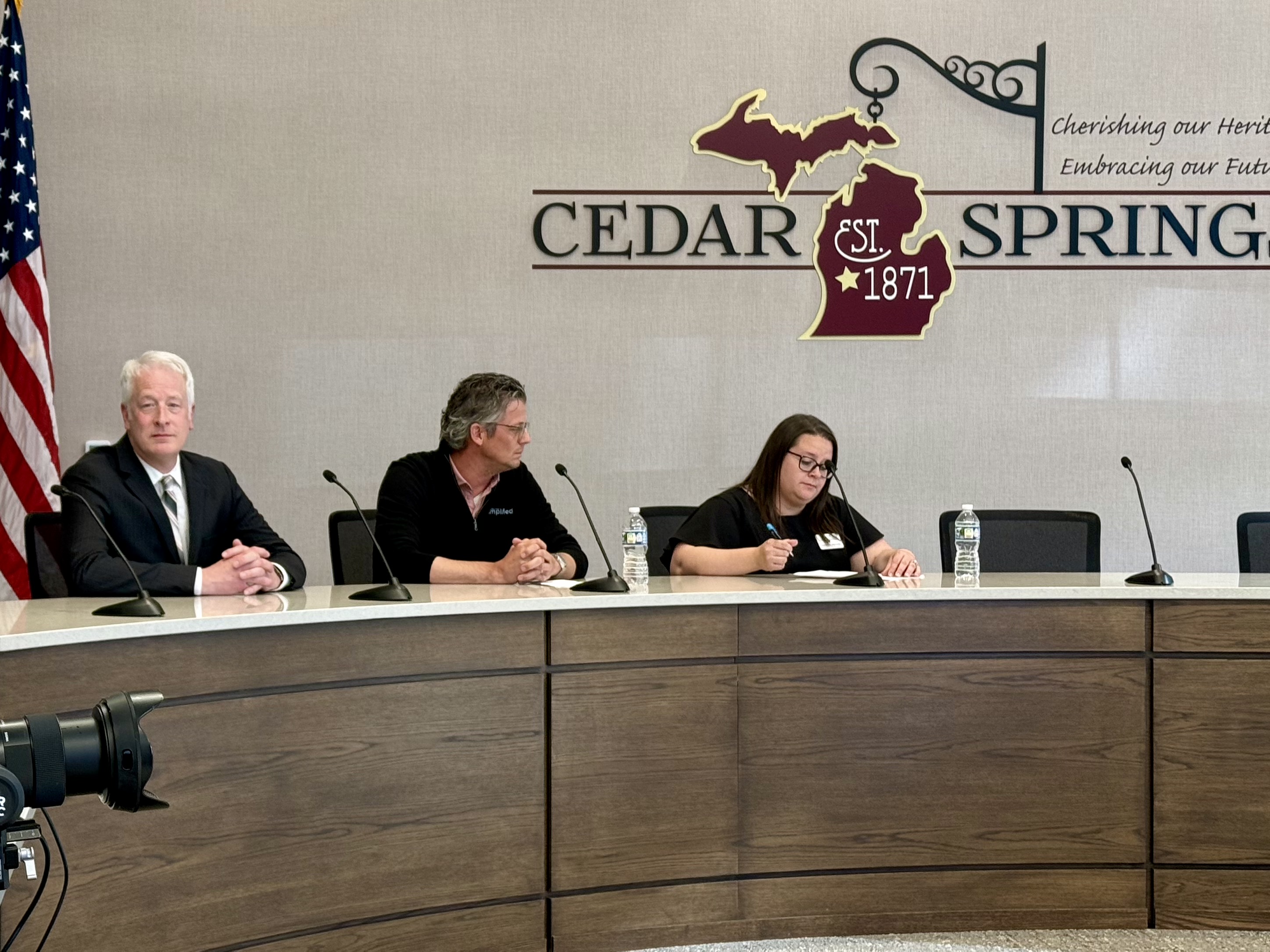
I had the honor of offering the prayer of dedication for the building that will be home to City Hall in Cedar Springs, MI. In our City’s long history, this is only the fourth building which they have occupied, with the previous building being their home for 50 years. So I was probably given a once-in-a-generation opportunity!
Here is the text of my remarks and prayer.
When the Constitutional Convention convened, Benjamin Franklin rose and said, “I therefore beg leave to move, That henceforth Prayers, imploring the Assistance of Heaven, and its Blessing on our Deliberations, be held in this Assembly every Morning before we proceed to Business.”
Prayer before legislative deliberations has been ingrained in our Nation since her inception. So in that spirit, I humbly offer this prayer of dedication for our new City Hall.
Almighty God, Your servant Paul told us to “pray this way for kings and all who are in authority so that we can live peaceful and quiet lives marked by godliness and dignity” [1 Timothy 2:2]. We are also told that those in civic leadership positions are Your servants that You have appointed to do Your work [Romans 13:1].
There are so many issues that are before both our elected officials and our City staff that need a wise and prudent answer. We believe that You delight in giving us Your counsel which is far above the counsel of mere humans.
Therefore, I humbly ask for wisdom for Your servants who serve us in the City of Cedar Springs. You have told us that wisdom will be “given generously” to all who ask You for it [James 1:5]. And that by Your wisdom officials “rule wisely” [Proverbs 8:15]. Give these civil servants such wisdom to deliberate and to decide in a fashion that pleases Your righteousness and Your justice. May the City of Cedar Springs—and all of her citizens—be blessed because of Your wisdom that guides the deliberations and the decisions that will be made made in this building.
Listen to the podcast of this post by clicking on the player below, and you can also subscribe on Apple, Spotify, or Audible.
In Philippians 4, Paul links together two important words: God and peace.
And the peace of God, which transcends all understanding, will guard your hearts and your minds in Christ Jesus. … Whatever you have learned or received or heard from me, or seen in me—put it into practice. And the God of peace will be with you. (Philippians 4:7, 9)
In Greek it’s the same two words: eirene Theos and Theos eirene.
God gives me a peace that is beyond what my natural mind can conceive, and it’s a peace that guards me and accompanies me wherever I go. Given the fact that the verse between these two mentions of the God of peace are about our thought life, it would seem that we need peace in our mind more than anywhere else. That sandwiched verse says:
Finally, brothers and sisters, whatever is true, whatever is noble, whatever is right, whatever is pure, whatever is lovely, whatever is admirable—if anything is excellent or praiseworthy—think about such things. (v. 8)
Peace is my protection from moving from contentment to crisis, or from focus on God to anxiety about His ability to provide for me. Crisis and anxiety are both peace robbers.
How is this protection of peace established? Verses 4-6 highlight two vital aspects:
Gratitude for what I have
Prayer for what I need
So if I find myself in crisis mode or feeling anxious, that means I have moved outside of the protection of peace that God wants to give me. In this place, if I were totally honest, my thoughts are probably the exact opposite of the list in verse 8. My peace-robbing thoughts are things that are false, feeble, and self-centered.
To step back into that place where peace protects me and guards my mind and heart, I have to focus on two vital aspects:
Gratitude for what I have
Prayer for what I need
God wants me to live in a place protected by His peace because it brings Him glory. Think of it this way: Is my life a better testimony when I live perpetually in crisis mode or when I am content with God’s blessings? When I am anxious about God’s ability to meet my needs, or when my attention is focused on the all-sufficiency of my loving Heavenly Father?
The next time you feel yourself slipping into a crisis or feeling anxious, check your thoughts: Are they good and lovely, or are they dark and ominous? If they are the latter, take time to intentionally express your gratitude for your blessings, and then expectantly take your needs to God in prayer. Then watch as the God of peace brings you back into a place where your contentment and your focus on Him becomes your protection and also a winsome testimony to draw others to the Prince of Peace.
Listen to the podcast of this post by clicking on the player below, and you can also subscribe on Apple, Spotify, or Audible.
Paul salutes his friend Titus, “Grace, mercy, and peace from God the Father and the Lord Jesus Christ our Savior” (Titus 1:4).
I’m not sure why several English translations of the Bible leave the word mercy out of this verse, because the Greek clearly says charis, eleos, eirene. Especially when we consider that this was an intentional word Paul was inspired to pen to a specific person.
In every letter Paul writes to a church (plus in his personal letter to his friend Philemon), he greets the saints with “grace and peace” (Romans 1:7; 1 Corinthians 1:3; 2 Corinthians 1:2; Galatians 1:3; Ephesians 1:2; Philippians 1:2; Colossians 1:2; 1 Thessalonians 1:1; 2 Thessalonians 1:2; Philemon 3). This is also the greeting of Peter and John to the churches (1 Peter 1:2; 2 Peter 1:2; Revelation 1:4).
But in Paul’s three pastoral letters, he says, “Grace, mercy, and peace” (1 Timothy 1:2; 2 Timothy 1:2; Titus 1:4). Only John in the New Testament uses this salutation in a personal correspondence to another church leader (2 John 3).
From this, I think we would be wise to note that Paul feels his pastoral proteges need to keep mercy in the forefront of their minds. Not that pastors—and the “dear lady” in John’s second letter—don’t know that God has been merciful to them, but as a reminder of just how importantmercy truly is to both pastors and to the saints under their care.
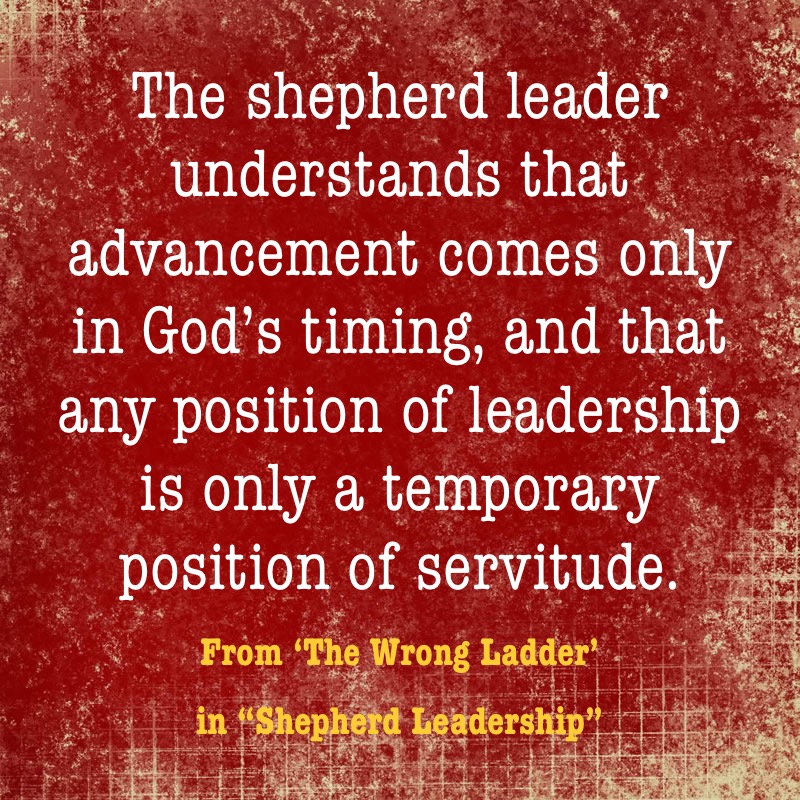
Charles Spurgeon wrote that pastors need to be reminded of mercy “as if the higher the office, the greater the liability to sin.” I think one of the biggest temptations for leaders is to believe their elevated title means they are to be served by others, rather than to continually take the role of a servant serving others.
Pastoral leaders will also do well to recall that “all we like sheep have gone astray” (Isaiah 53:6; 1 Peter 2:25), and that “all” includes both pastors and saints. Pastors need to quickly recognize anytime they may be straying from their servant’s role, repent, and receive God’s mercy.
Shepherd leaders also need to guard against the frustration that can creep into their heart when they see the sheep in their flock going astray. Paul and John are reminding these pastors to keep in mind how merciful the Chief Shepherd has been to them, and how this should stir up their mercy toward the flock around them.
Shepherd leaders have a vital need to keep mercy always in mind.
I think a good prayer for pastors might be—
Holy Spirit, in my moments of frustration, remind me of the “grace, mercy, and peace from God the Father and the Lord Jesus Christ [my] Savior” which has been extended to me innumerable times. May that recollection awaken in me increased depths of mercy toward the flock around me, despite how frequently they may stray. In Jesus’ name. Amen!
P.S. If you are interested in going deeper on the topic of pastors as leaders, please check out my book Shepherd Leadership.
Is it possible for you to accurately judge whether or not you are being honest with yourself? Probably not. You need something or someone else to help you see yourself clearly.
“The Christian optimism is based on the fact that we do not fit in to the world. … That is what makes life at once so splendid and so strange. We are in the wrong world. When I thought that was the right town, it bored me; when I knew it was wrong, I was happy. So the false optimism, the modern happiness, tires us because it tells us we fit into this world. The true happiness is that we don’t fit. We come from somewhere else.” —G.K. Chesterton
“It is easy enough to remove the particular kinds of graft or bullying that go on under the present system: but as long as men are twisters or bullies they will find some new way of carrying on the old game under the new system. You cannot make men good by law: and without good men you cannot have a good society.” —C.S. Lewis
Del Tarr’s life “embodied a simple conviction: to preach Christ well, one must first listen and learn well.” Tarr was a missionary and a linguist. His legacy is empowering for all Christians, not just those missionaries who minister in other countries.
The ICR reports, “According to the online Smithsonian magazine, ‘The calls and songs of some species in these groups [parrots, songbirds, and hummingbirds] appear to have even more in common with human language, such as conveying information intentionally and using simple forms of some of the elements of human language such as phonology, semantics and syntax.’” There are numerous corroborating studies that tell of the complex language of birds that never could have developed by chance, but were designed by an all-wise Creator.
“In Biblical times, farmers would put olives in the trough of a stone olive press, and then roll the large, heavy circular stone over them. The enormous weight of the stone crushed the olives, allowing the oil inside to pour out through a spout cut into the stone. The first pass of the heavy stone produced the most precious, pure drops of olive oil. This oil was extremely expensive and was used to anoint kings. In Hebrew, this sort of olive press is called a ‘gat shemanim’ (גתשמנים pronounced ‘geth-sem-uh-nim’), which we translate in English as ‘gethsemane.’ Sound familiar?” —Dave Adamson [see Mark 14:32-36]
“To overcome the world takes faith and faith comes when we hear the Word quickened by the Holy Spirit. Be faithful in prayer and reading your Bible. It sounds like a Sunday school answer, but it is quite literally the application for every verse in the Bible.” —YouVersion reading plan Uncommen: Holy Connection
Listen to the podcast of this post by clicking on the player below, and you can also subscribe on Apple, Spotify, or Audible.
Does this sound familiar? “We live in difficult times. Pray for this nation. We have all the marks of a declining civilization. Pray that the God who hears and answers the prayers of His people might intervene on behalf of our country and bring a spiritual renewal that might save the nation.”
What if I told you that an esteemed and influential politician wrote this?
What if I told you that he wrote this in 1797?
The politician was England’s William Wilberforce, the man who tirelessly led the crusade to abolish the British slave trade, but the topics he addressed in Real Christianity sound as though they are topics that we are still wrestling with today.
Throughout this book, Wilberforce contrasts the many ways that cultural Christianity—or people who are Christian in name only—differ from the real Christianity that is outlined in the pages of the Bible. Wilberforce wrote, “I find it necessary to affirm that the problems we face nationally and internationally are a direct result of the decline of faith and morality in our nation. My only hope of a prosperous future for this country rests not on the size and firepower of our military, nor on the wisdom of its leaders, nor on the spirit of her people, but only on the love and obedience of the people who name themselves after Christ, that their prayers might be heard and for the sake of these, God might look upon us with favor.”
I found this book encouraging, in that I can see how human nature has remained the same and that the answers we so desperately seek are still found in the Holy Bible.
I also found this book convicting, as Wilberforce continually challenged me to review my own life to ensure I wasn’t unknowingly slipping into a cultural Christian mindset. I was also confronted by the numerous calls to prayer that Wilberforce made throughout this book.
It’s a relatively short read, but it is power-packed. I recommend Real Christianity to anyone who is frustrated by the state of affairs in our nation, and is desperate to see a true return to the biblical values of Christianity.
Even though this father knew his daughter was dead, he kept walking with Jesus and saw the miracle of resurrection! That’s a great lesson for us: don’t stop praying—keep believing!
“Swimming lessons are better than a lifeline to the shore.” —C.S. Lewis
“If we do not transform our pain, we will most assuredly transmit it.” —Richard Rohr
“The greatness that Jesus demonstrated wasn’t about performative generosity or how we might want to post our good deeds online for others to see. His was about genuine sacrifice that often went unnoticed and unrecorded. He showed up for people in their darkest moments, gave time He didn’t have to spare, and consistently chose others’ needs over His own comfort. This kind of greatness and love isn’t about grand gestures or viral moments of kindness. It’s about the daily choice to put others first, even when it costs you something valuable.” —‘What is Greatness?’ reading plan on YouVersion
“[The Trinity] is indeed a fathomless mystery of theology. …. This thing that bewilders the intellect utterly quiets the heart.” —G.K. Chesterton
I have always enjoyed studying nature and discovering the unparalleled genius of our Creator! In a report on the complexities of insect eyes, the Institute for Creation Research noted, “God has designed photoreceptor cells, and others cells within the compound eyes and brains of insects, with the coordinated ability to take on several tasks. With this hawkmoth research, biologists have observed something amazing—individual cells are able to undertake diverse tasks and switch between them.”
Listen to the podcast of this post by clicking on the player below, and you can also subscribe on Apple, Spotify, or Audible.
May the Lord direct your hearts into God’s love and Christ’s perseverance. (2 Thessalonians 3:5 NIV)
God’s love and the patient steadfastness of Jesus is the winning combination, and is the prayer Paul desires us to pray for ourselves and others.
I like some of the aspects of this verse that are amplified in different translations:
May the Lord direct your hearts into realizing and showing the love of God and the steadfastness and patience of Christ and in waiting for His return. (AMPC)
May the Lord lead your hearts into a full understanding and expression of the love of God and the patient endurance that comes from Christ. (NLT)
And check out what Jesus said to the Church at Ephesus about not losing hold of their first love as they patiently endure (Revelation 2:3-4).
The agape love of our Heavenly Father
+ The patient endurance of Jesus
+ The instruction and encouragement of the Holy Spirit
= My loving endurance which is a testimony to others
Greg and I unpack a quote from Andy Murray which says, “Culture happens through crisis. Unfortunately, many team environments have structured the crisis out.” We make the case that your team needs some tough times to bring them together and bring out their best.
Earlier this week I shared some thoughts about childlikeness, and then I read this insight from the ‘What is Greatness?’ reading plan on YouVersion: “Children approach life with genuine curiosity and authenticity. They haven’t learned to filter their joy or calculate their responses for maximum social or career advantage. They’re fully present in each moment, eager to learn, and unafraid to show their need for help. Jesus’ teaching wasn’t about being childish or wild; it was about recapturing the genuine, open, vulnerable approach to life, embodied by kids, that so many of us often lose in our rush toward our own ideas of success and greatness.”
“We live in difficult times. Pray for this nation. We have all the marks of a declining civilization. Pray that the God who hears and answers the prayers of His people might intervene on behalf of our country and bring a spiritual renewal that might save the nation. People of unbelief might think you are kidding yourself to think that prayer can make a difference. They might think you are like some superstitious pagan who depends on God because you are weak. They might compare you to those who really are a bit out of touch. The fact is that God cares for the nations in which His servants live and serve Him. He favors and blesses the land of the righteous (see Proverbs 3:33).I find it necessary to affirm that the problems we face nationally and internationally are a direct result of the decline of faith and morality in our nation. My only hope of a prosperous future for this country rests not on the size and firepower of our military, nor on the wisdom of its leaders, nor on the sprit of her people, but only on the love and obedience of the people who name themselves after Christ, that their prayers might be heard and for the sake of these, God might look upon us with favor.” —William Wilberforce
“A new discovery of 18,000 individual dinosaur tracks in the Bolivian El Molino Formation contains the highest number of theropod dinosaur tracks in the world.” These tracks also show dinosaurs heading for what may have been the last high ground during the global Flood recorded in the Bible.
Adolofo Kaminsky may have kept upwards of 10,000 Jews alive during Wold War II by his masterful forgeries.
Listen to the podcast of this post by clicking on the player below, and you can also subscribe on Apple, Spotify, or Audible.
In the day when I cried out, You answered me, and made me bold with strength in my soul. (Psalm 138:3 NKJV)
Prayer requires stick-to-it-iveness, which means it takes strength to pray.
Therefore, being physically or emotionally drained makes it challenging to be alert and attentive in prayer. When we’re tired, our thoughts often drift; it’s hard to stay focused.
Sometimes one of the most helpful things you can do for your spiritual growth is to get a good night’s sleep (or take a nap).
Jesus did this (Matthew 14:22-23). He was very aware of His physical and emotional levels. When He was tired, He took a nap; when He was drained from ministry, He got alone with His Heavenly Father for refreshing (Mark 1:35, Luke 5:16).
Jesus told His disciples to pray so they wouldn’t give in to temptation (Luke 22:40, 45-46). Prayer does strengthen us against the enemy’s attack, but physical and emotional stamina helps us too.
Notice the full cycle—we need physical and emotional strength to pray persistently and consistently, and prayer enhances our physical and emotional reserves to help us pray. So do all three:
When all three components of your being—spirit, body, soul—are alert and healthy, you will find your prayer life fully engaged. If one area becomes depleted, listen to the always-practical counsel of the Holy Spirit. Pray, rest, talk to a friend or a counselor so you can return to the optimal position of strength.
Yes, it takes strength to pray, but in prayer your strength is renewed.