Listen to the podcast of this post by clicking on the player below, and you can also subscribe on Apple, Spotify, or Audible.
Jude calls Christians to contend for the faith without contention and without compromise. As we wrap up this series, there is one final question that we should ask: What are we contending for?
I believe the bottom line for Jude is that we are contending with saints for people. In other words, we have to be united in our efforts as we seek to expand the Kingdom of God.
The first hurdle we need to overcome is eliminating the dividers. Paul told the Ephesian elders about these people (Acts 20:29-30). And Jude describes them in verses 12, 16-19 as…
blemishes
self-serving and boasting about themselves
unfruitful
grumblers and faultfinders
ungodly desires
following natural instincts = governed by their appetites
Jude then makes a stark distinction—saints are to be different! Saints are to be united in their love for Jesus and their love for each other. In fact, this is what Jesus said would distinguish His followers (John 13:35) and Paul elaborates on this in Philippians 2:1-4.
In verses 20-25, Jude calls saints to live in contrast to “these men” who divide. He challenges saints to—
keep being built up in our faith (see also Ephesians 2:20; Colossians 2:7)
praying in the Holy Spirit
keeping ourselves in God’s love
waiting in assurance for Christ’s imminent return
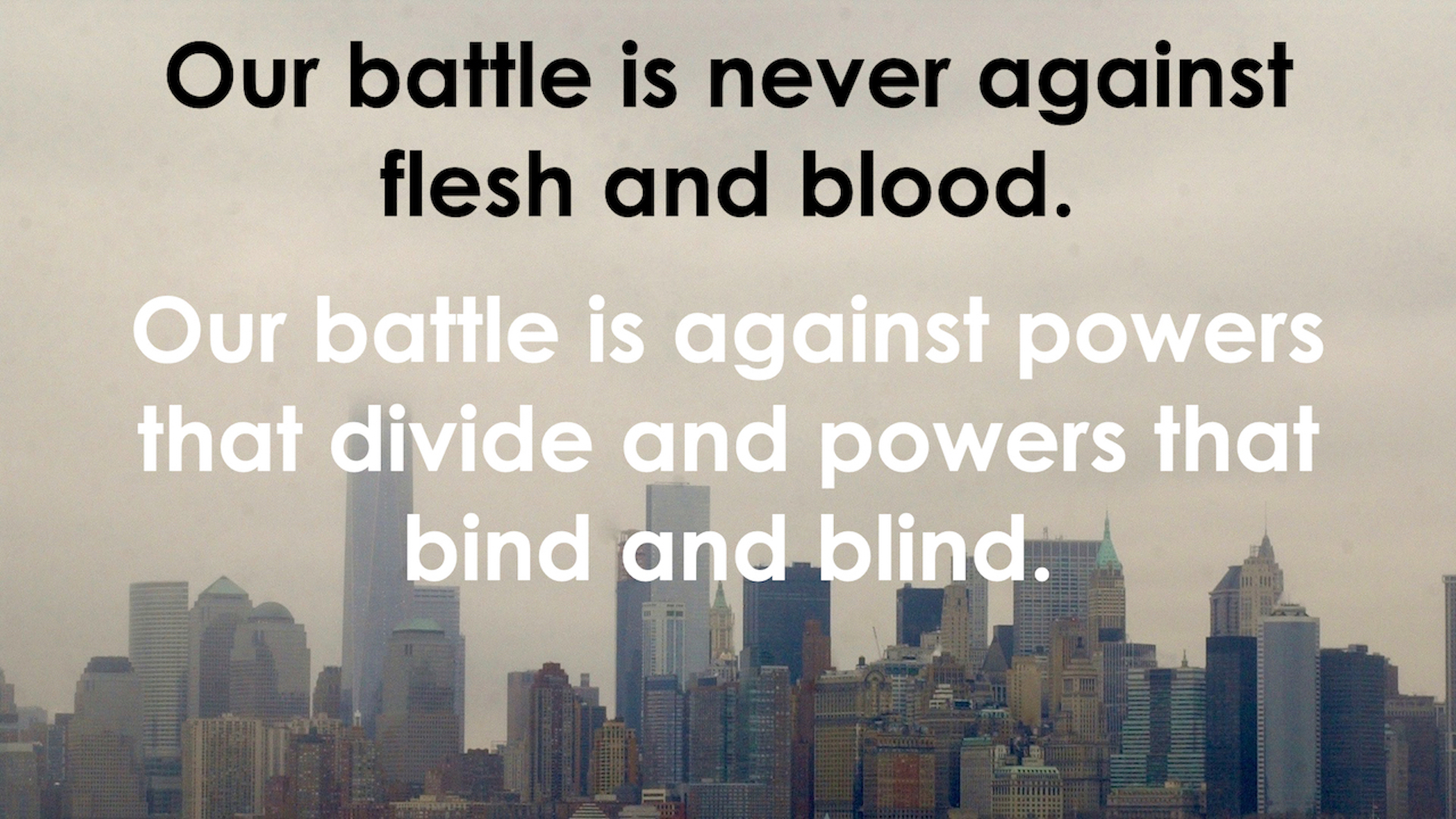
And as we are building, praying, keeping, and waiting, we must also be rescuing people from their path toward Hell. Our battle is never against flesh and blood. Our battle is against those powers that divide and those powers that bind and blind (Ephesians 6:12; 2 Timothy 2:26).
We must not get sidetracked or distracted, we must not contend in a contentious way, but we must remain united with Jesus and united with fellow saints as we seek to expand the Kingdom of God.
If you’ve missed any of the previous messages from this series on the Book of Jude, you can find them all here.
Listen to the podcast of this post by clicking on the player below, and you can also subscribe on Apple, Spotify, or Audible.
On this episode of The Podcast, let’s talk about seeing something brighter in the darkest of times.
Check out all of the Scriptures I reference in this video here.
You may seem some glimmers of light in your dark place—like Paul did in the Roman prison—but even if you don’t see anything but darkness, make the choice to worship. I need to remind myself that God has a plan for my life and that He is working out all the details for my good and to bring glory to Himself.
Let’s change our self-focused “Why me?” to God-focused worship as we say, “Thank You, Jesus, that You are using me to build Your kingdom!”
Don’t rejoice when your enemies fall; don’t be happy when they stumble. Don’t fret because of evildoers; don’t envy the wicked. (Proverbs 24:17, 19 NLT)
We don’t rejoice when evildoers stumble, nor do we fret when evildoers succeed. Why? Because our attention should be captivated by our Savior.
God’s peace shall be yours—that tranquil state of a soul assured of its salvation through Christ, and so fearing nothing from God and being content with its earthly lot of whatever sort that is—that peace which transcends all understanding shall garrison and mount guard over your hearts and minds in Christ Jesus. (Philippians 4:7 AMPC)
God’s transcendent peace comes into our heart like an elite special forces team to guard our heart from enemies. We are the ones who welcome in this special force by being content with all God is for us in Jesus. That means we can dismiss this special force by being discontent.
Listen to the podcast of this post by clicking on the player below, and you can also subscribe on Apple, Spotify, or Audible.
Near the end of his letter to the saints in Galatia, Paul takes a minute to talk about “those who want to impress people” (Galatians 6:12). Check out how some of the other translations render this phrase—
NLT: want to look good to others
AMPC: make a good impression
NASB: make a good showing
There’s only one way that I can think of for men to look good to other men, and that is to create a man-made program that plays to my strength so that others are impressed with how good I am. It’s only playing a game.
Paul calls out this foolish pursuit, saying, “the only reason they do this is to avoid being persecuted for the Cross of Christ” (v. 12). In other words, they think that if they are popular with men, men will leave them alone, not troubling them for their belief in Jesus.
In Paul’s letter to the saints at Philippi, he says that these earthly-minded people might make themselves look good to other earthly-minded people, but they really “live as enemies of the Cross of Christ” (Philippians 3:18).
Doesn’t this put my desire to look good to other people in a different light when I realize that earthly popularity may make me an enemy of the Cross?
Listen to the podcast of this post by clicking on the player below, and you can also subscribe on Apple, Spotify, or Audible.
Last week we were reminded that sanctification (or as I call it “saint-ification”) is an ongoing process that usually involves the help of other saints. There is something else we need to do with other saints: serve them.
We are all a part of the same Body so it is beneficial for the whole Body if we care for every part of the Body (1 Corinthians 12:25 AMPC; Ephesians 5:30).
In order to serve others, we are going to have to check our attitude. We have been called to have the attitude that Jesus had about the Church (Ephesians 5:29; Philippians 2:3-7; John 13:3-5, 14-17).
We must all know:
I have a gift—notice the phrase each of you in 1 Peter 4:10
I must use my gift to serve the Body of Christ (Luke 17:10)
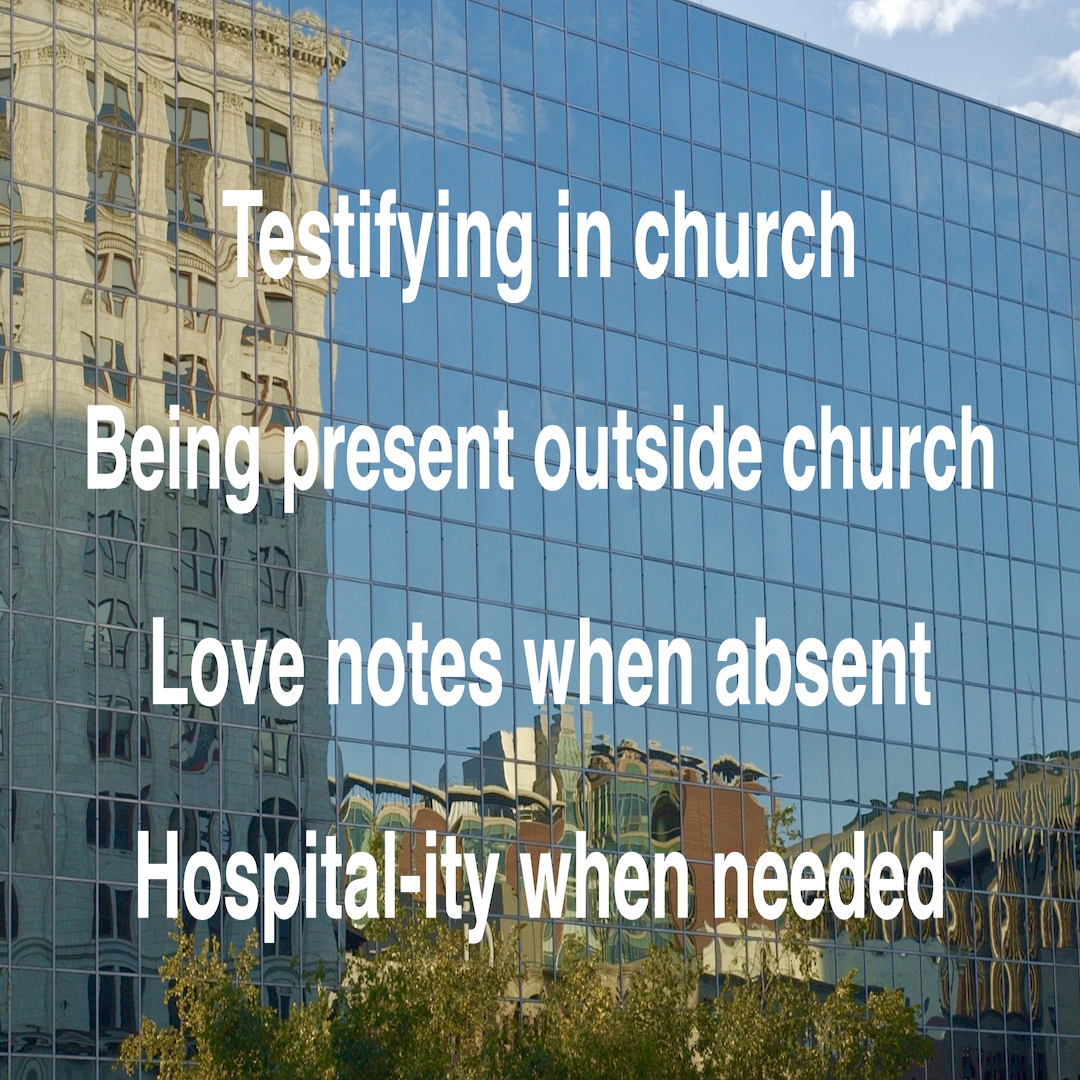
In the early Church, we see so much togetherness that they rewrote the definition of the Greek word koinonia (see Acts 2:42). Here’s what koinonia looks like in the Church:
(1) Testifying in church (Psalm 40:9-10 NLT)
(2) Being present with saints outside of church. From Acts 20-28, the pronouns “we” and “us” are used over 80 times! Paul was blessed simply by Luke being with him, just as saints are blessed when you are truly with them.
(3) Love notes when a saint is absent. The apostle John was brilliant at this. Look at his three epistles:
dear children 9x in 1 John
chosen / dear lady 2x in 2 John
dear friend 4x in 3 John
(4) Hospital-ity whenever it’s needed. Be a place of healing and refreshment for the saints God has placed in your life, just as Philemon did (Philemon 2-7, 22).
What a testimony it is when we live this way (Romans 12:10, 13)!
Remember the saint-ification process brings fruitfulness, joy-fullness, and an enhanced testimony. I love this quote from Richard Stearns, “The beautiful simplicity of our faith is that it distills down to the exact same bottom line for both the brilliant theologian and the five-year-old child: love God and love each other—period. Everything else derives from that.”
Listen to the podcast of this post by clicking on the player below, and you can also subscribe on Apple, Spotify, or Audible.
The apostle Paul asked himself a question which is also a great question for every Christian to ask themselves: “Am I trying to please people?” (Galatians 1:10).
Trying to please people is a trap, and the inevitable result is frustration. Why frustration? Because it is impossible to please everyone. Even Jesus couldn’t do that!
If I am trying to win support from people, I will have to be like a politician who is angling for votes. I will have to make concessions and modifications based on which group I may be speaking to. For a Christian trying to live by the Bible, there are no concessions or modifications that can be made.
In Galatians 1:10, Paul goes on to say, “If I were still trying to please people, I would not be a servant of Christ.” That is because trying to please people is not serving people but serving my own ego.
Let’s zoom-in on the question Paul uses to open this verse: “Am I now trying to win the approval of human beings, or of God?”
He is not saying, “I hope God approves of me.” When we have welcomed Jesus into our life as our Lord and Savior, we are already fully accepted and approved of by our Heavenly Father—
Blessed be the God and Father of our Lord Jesus Christ, who has blessed us with every spiritual blessing in the heavenly places in Christ, just as He chose us in Him before the foundation of the world, that we should be holy and without blame before Him in love, having predestined us to adoption as sons by Jesus Christ to Himself, according to the good pleasure of His will, to the praise of the glory of His grace, by which He made us accepted in the Beloved. (Ephesians 1:3-6)
We do not have to try to earn God’s approval, but we will have to stand before Him someday to give an account of how we lived our lives and how we proclaimed the Gospel to others. Looking ahead to this “finish line” will keep us disciplined (Philippians 3:12–14) so that we can rejoice in our reward as our end draws near (2 Timothy 4:6–8).
Let us live, and talk, and work for the applause of nail-scarred Hands. There is only one Voice that we want to hear saying, “Well done, good and faithful servant.” Don’t fall into the people pleasing trap, but keep your eyes and ears solely on your Savior.
Listen to the podcast of this post by clicking on the player below, and you can also subscribe on Apple, Spotify, or Audible.
Our Royal Psalms take us from King David to King Jesus. David went from the anointed king on the run from King Saul, to being king over Judah (2 Samuel 2:4), to being king over “all the tribes” (2 Samuel 5:1-3; 8:15).
David’s kingdom stretched far and wide (1 Chronicles 22:14-16; 29:10-13). This absolute control King David now wields over every nation surrounding Israel puts fear into the hearts of Israel’s enemies. Fear of David brings freedom for the people of his kingdom.
As the Sons of Korah think about this fear that brings them freedom, they look beyond their earthly king to the King of Heaven and compose this Royal Psalm recorded in Psalm 47. This psalm has majestic terminology for God in almost every verse; including, Lord Most High, great King over all the earth (vv. 2, 7, 9), God reigns over the nations; and God is seated on His holy throne.
I’m especially intrigued by the word awesome in verse 2. The KJV says “the Lord Most High is terrible” because it does take two Hebrew words to give us the full definition of awesome. First, “Most High” is best thought of with the suffix -est: greatest, highest, noblest. In other words, there is nothing above Him. Then “terrible” is to be held in awe, to be honored, to be reverenced.
Just as the Israelites had no fear of enemies because David was on the throne, God says the same thing to us: Because the Most High is on the throne, His people have no fear of their enemies.
When we fear God we need not fear anything else.
When we fear God:
…we hate our own sin (Psalm 36:1-3)
…we love His mercy that forgives our sin (Psalm 103:2-3, 10-12)
…we hate sin in the world (2 Timothy 2:26)
…we love sinners (2 Timothy 2:24-26; Acts 10:38; Jude 20-23)
…we hate the darkness that traps people (2 Corinthians 4:4)
…we love shining the light of King Jesus (Philippians 2:15-16)
…we hate this life (John 12:25)
…we love eternal life (Romans 3:23-24, 8:18)
When the people of Israel reverenced David as their king, they would be able to know his blessings. When we fear our awesome God, we will also receive His blessings. Take a look at the amazing blessings Jesus Himself—the King of kings—lists for those who reverence His awesome Kingship (Revelation 2:7, 11, 17, 26-28; 3:5, 11-12, 21)!
God is awesome and asks us to reverence Him and then enjoy life in His freedom.
Listen to the podcast of this post by clicking on the player below, and you can also subscribe on Apple, Spotify, or Audible.
I don’t know when the last was that you may have tried to get a dozen little kids lined up, but it’s quite an experience! Everyone is vying for their spot. Someone gets mad and yells out, “He cut!” And then the reply is yelled back, “No, I didn’t. She was saving my spot!” This usually results in lots of pushing and shoving as each person tries to reclaim their rightful place in line.
This is the backdrop for Psalm 7. The introduction tells us that Cush is causing David grief. Maybe because Cush is from the tribe of Benjamin like King Saul, and he doesn’t want David cutting in line so he is shoving him back to his proper place.
There’s a musical term David uses, which isn’t used in any other psalm: shiggaion. This means a rhythm that isn’t normal—it’s a freewheeling, irregular, impassioned beat. This also helps set the atmosphere for what’s happening in David’s life. The root word for shiggaion implies a shakeup (or a shoving and pushing) that could lead to someone losing their way.
David tries to do the right thing. He asks for God’s help (v. 1) so that he doesn’t get ripped to shreds (v. 2). He even takes time to ask himself if he has done anything that led to Cush’s shoving (vv. 3-5). But notice these are all David’s attempts to make things right.
Remember that this is a Royal Psalm, but we haven’t heard anything about God as King yet. But now we come to the end of v. 5, which is also the end of David’s own striving. It’s marked by the word Selah.
My little friends push and shove to try to get their place. But all of that stops when I say, “Johnny is my line leader, and this is the way the rest of you are going to line up behind him.” David’s Selah pause was a call to switch from doing things on his own to yielding to the King to sort things out. He was saying, “The King of kings is the Leader and He knows my place in line.”
It’s only after the Selah that we see the royal terms for the Undisputed Leader:
He is the One who will decree justice (v. 6)
He will rule…from on high (v. 7)
He is the Supreme Judge (vv. 8, 11) so David yields his introspection to Him (vv. 3-4, 8-9)
He is God Most High (vv. 10, 17)
Our King has no rival. No one can shove Him. No one can contradict Him. No one can hide anything from Him (vv. 11-16).
We must bow only to the King of kings (Philippians 2:10-11).
We mistakenly bow our knee to man when…
…we aren’t willing to own our mistakes
…we try to administer our own “shove” of justice
…we make our own refuge
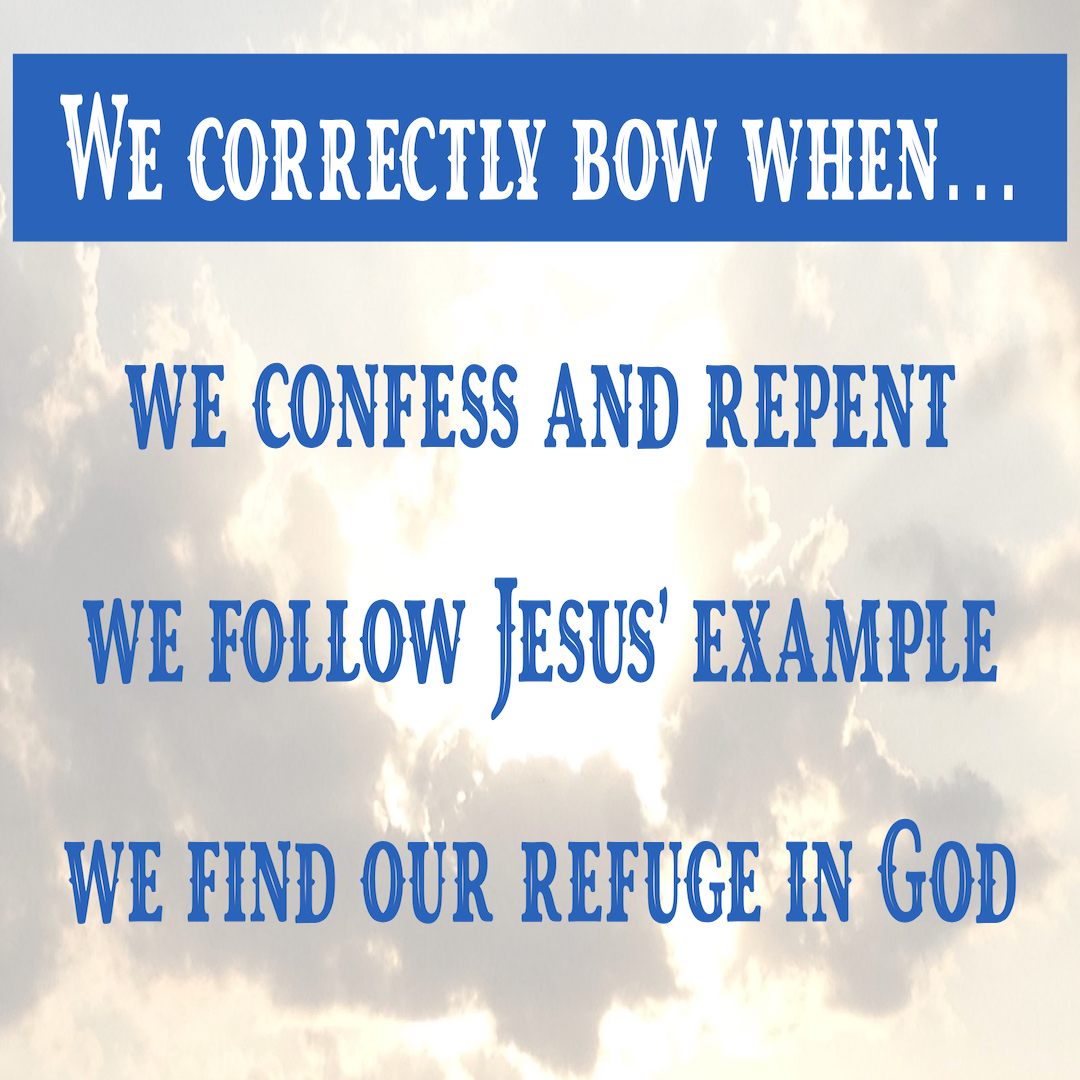
So we bow to the King when…
…we acknowledge, confess, and repent of our sins (vv. 3-5; Psalm 19:12, 69:5)
…we follow the example of Jesus when we’re shoved around (1 Peter 2:21-23)
…find our refuge solely in God (v. 1; c.f. 2:12; Ephesians 6:12; James 4:7)
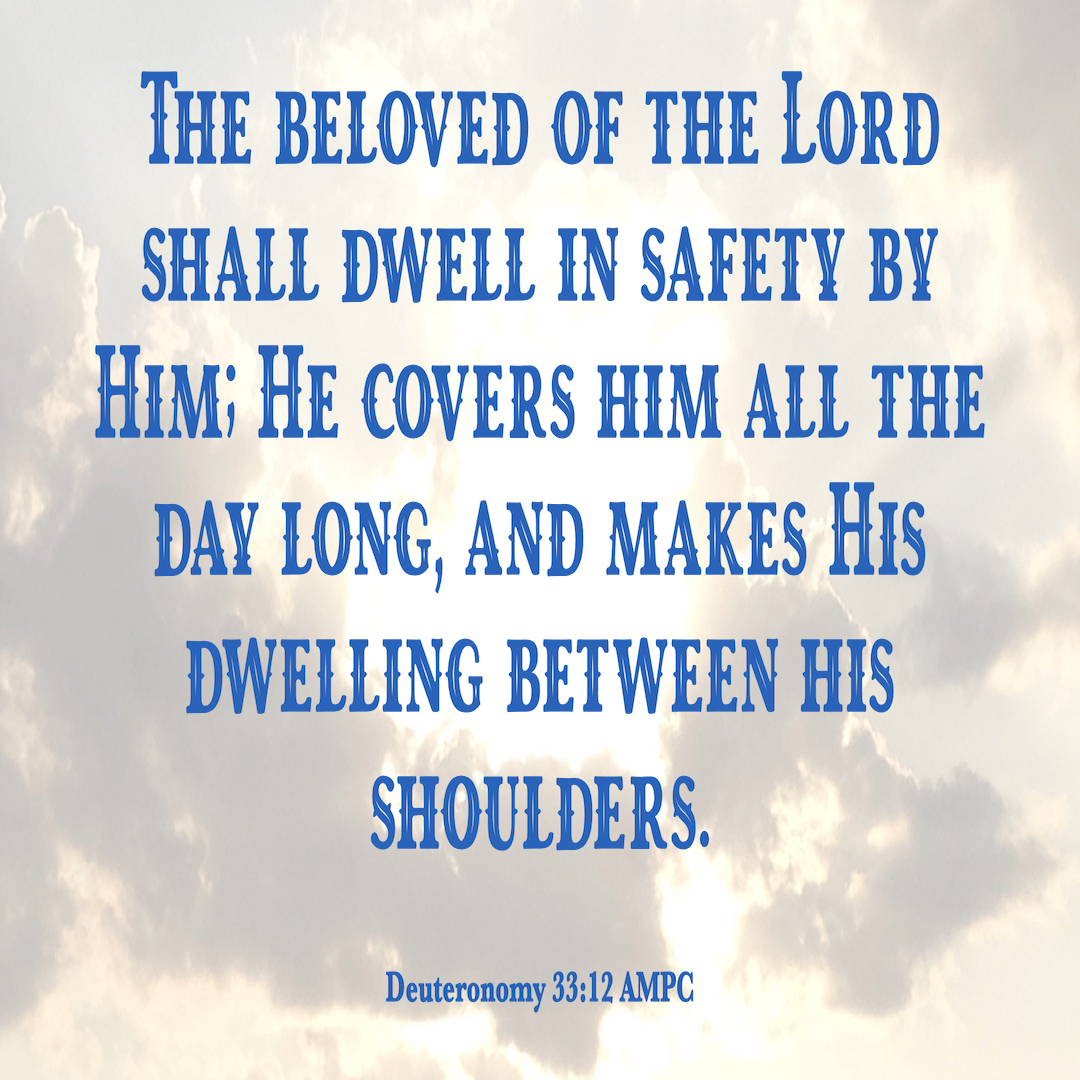
Our best response in troublesome times—when you feel like you are being shoved around—is to fall to your knees in reverence to the King of kings (v. 17)! The beloved of the Lord shall dwell in safety by Him; He covers him all the day long, and makes His dwelling between his shoulders (Deuteronomy 33:12 AMPC).
Don’t judge your creative efforts by the world’s likes (or even by its silence). If you did your best with the talents that God gave you, the applause from nail-scarred hands is all that really matters.
“It will be vain for me to stock my library, or organize societies, or project schemes, if I neglect the culture of myself; for books, and agencies, and systems, are only remotely instruments of my holy calling; my own spirit, soul, and body, are my nearest machinery for sacred service; my spiritual faculties, and my inner life, are my battle axe and weapons of war.” —Charles Spurgeon
“A man who has faith must be prepared not only to be a martyr, but to be a fool.” —G.K. Chesterton
The paleontological evidence of dinosaur fossils is most easily explained by the Flood described in the Bible. ICR reports, “Virtually every dinosaur fossil ever found is ensconced in sedimentary or (rarely) volcanic sediments, indicating a sudden and catastrophic deposition. … So why would paleontologists entertain bizarre extinction explanations such as slipped discs, sunspots, or magnetic reversals? Because if a scientist dismisses the global Flood out of hand, then anything goes when trying to explain the dinosaur demise.”
Listen to the podcast of this post by clicking on the player below, and you can also subscribe on Apple, Spotify, or Audible.
There are several psalms that are regal in their focus—talking about the King’s coronation, or the King ruling on His throne, or the ultimate victory of the King that is coming in the future. Although these royal psalms are extolling God as King, many of these psalms use King David as an object lesson. The idea is seeing how a man after God’s heart (1 Samuel 13:14) became the standard by which all other kings were measured:
Asa did what was right in the eyes of the Lord, as his father David had done (1 Kings 15:11)
Amaziah did what was right in the eyes of the Lord, butnot as his father David had done (2 Kings 14:3)
Unlike his father, Ahaz did not do what was right in the sight of the Lord, as his father David had done (2 Chronicles 28:1)
The people followed their king in both righteousness and evil. They were fiercely loyal to their monarch. We don’t really get that loyalty today. “We’re Americans,” we cry, “We live in the land of the free and don’t ever bow our knee to a king!”
That’s an appropriate response for those living in a democratic republic, but we would do well to learn to bow our knee to a true King.
After the United States Constitution was adopt adopted, Elizabeth Willing Powel asked Benjamin Franklin, “Well, Doctor, what have we got, a republic or a monarchy?“ Franklin replied, “A republic, if you can keep it.” Franklin went on to say, “In these sentiments, Sir, I agree to this Constitution, with all its faults, if they are such; because I think a General Government necessary for us, and there is no form of government, but what may be a blessing to the people if well administered; and believe further, that this is likely to be well administered for a course of years, and can only end in despotism, as other forms have done before it, when the people shall become so corrupted as to need despotic government.”
Because of our defiance as free people in our government, we have become lacking in our loyalty, which shows itself in a lack of proper reverence or respect. Just listen to how people talk so disrespectfully or even hatefully about those in “the other political party.” Benjamin Franklin also said, “Only a virtuous people are capable of freedom. As nations become corrupt and vicious, they have more need of masters.”
Where are the days of the armor bearer who said to Prince Jonathan, “Do all you have in mind. I’m with you heart and soul,” even though Jonathan was proposing an impossible task? Or the loyalty of the men around David who heard him sigh about the water in Bethlehem, and they put their lives at risk to bring him a drink? This was even before he was on a throne, and yet they showed their loyalty to him. I fear that our lost culture of reverence for earthly leaders has eroded our reverence for the King of kings, and vice versa.
The first royal psalm (Psalm 2) practically open the Psalter. This psalm calls us to consider the differences between earthly kings and the King of kings.
Notice that earthly kings “conspire”—they angrily boast and rage. They plot (v. 1b) and scheme (AMPC). They take their stand together (v. 2).
Against Whom? Against the LORD (Jehovah) and against His Anointed One (the Messiah)!
Much like the fiercely independent people I described us as earlier, these earthly rulers want to call their own shots—they don’t want to take directions from anyone else because they think they know best (v. 3). But notice in v. 1 that the peoples have followed their leaders in their plot.
God doesn’t rage at them, but He laughs, He scoffs, He rebukes, and the people are terrified when they realize that they cannot overcome Him. In v. 1 we see their plots are “in vain.”
There is nothing men can do—no matter how powerful they may seem or how many of them “take their stand…together”—to thwart or even delay the plans of Jehovah.
All of History is His Story. Notice the phrase that God speaks, “I have … I will” (in vv. 6-7; c.f. Daniel 4:25).
In vv. 7-9 God speaks to His Son—the Messiah, the Anointed One, the King of kings. We hear this repeated in Acts 13:32-33 and in God’s own voice in Matthew 3:17. Then we see the fulfillment of this in passages like Philippians 2:9-11 and Revelation 11:17-18.
This royal psalm ends with an important conclusion: Therefore (vv. 10-12):
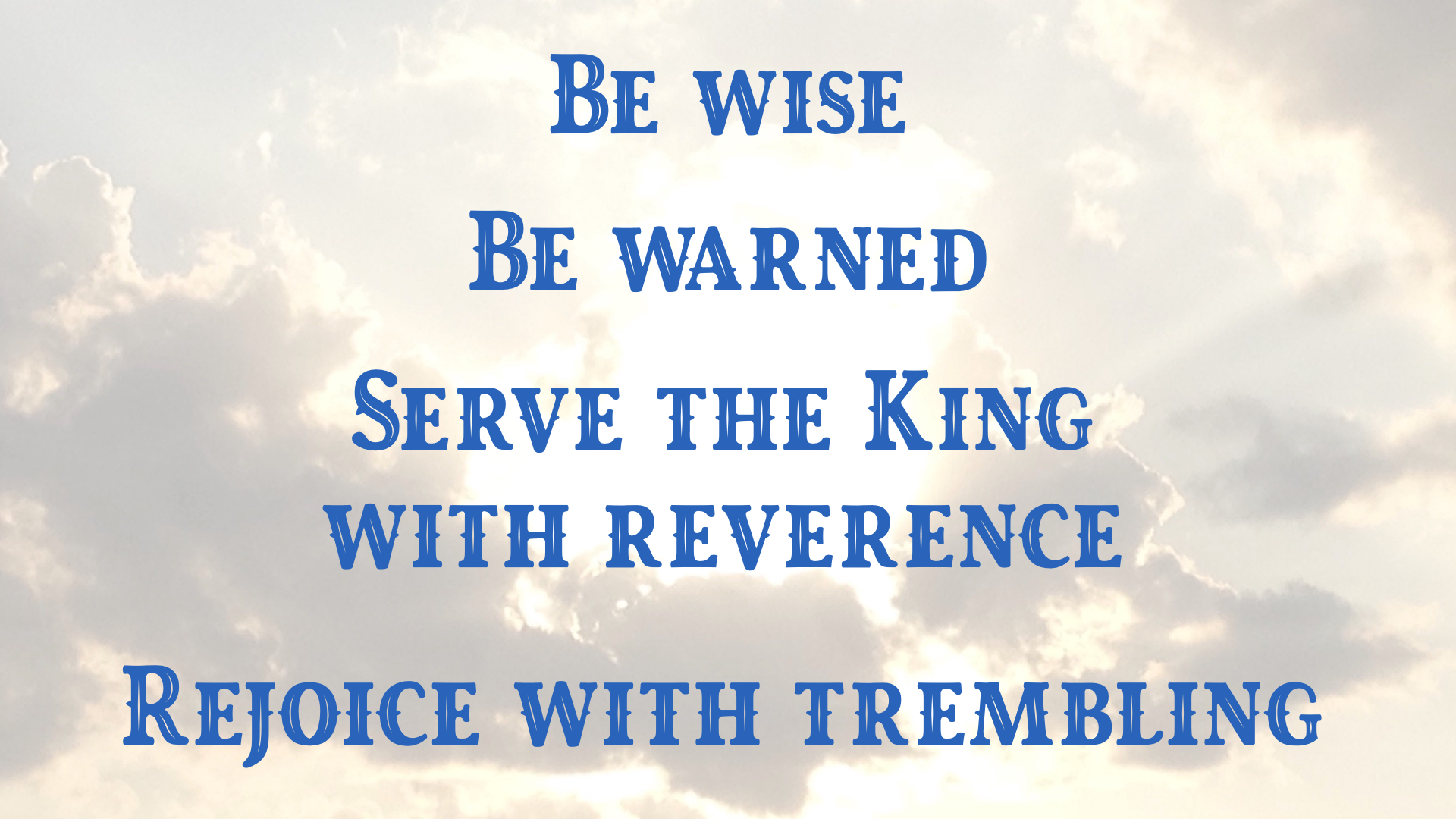
Be wise
Be warned
Serve the King with reverential fear
Rejoice with trembling
Kiss the Son with absolute loyalty and joyful reverence
Check out another “therefore” in Philippians 2:12-16. This is a call for righteous, reverent living for those who have acknowledged Jesus as their King. It’s only those who live this way who will know the blessed refuge in Him that is unshakable for ever and ever!
Follow along with our look at all of the royal psalms by clicking here.



 Jude calls Christians to contend for the faith without contention and without compromise. As we wrap up this series, there is one final question that we should ask: What are we contending for?