7 Quotes From “Did Jesus Rise From The Dead?”

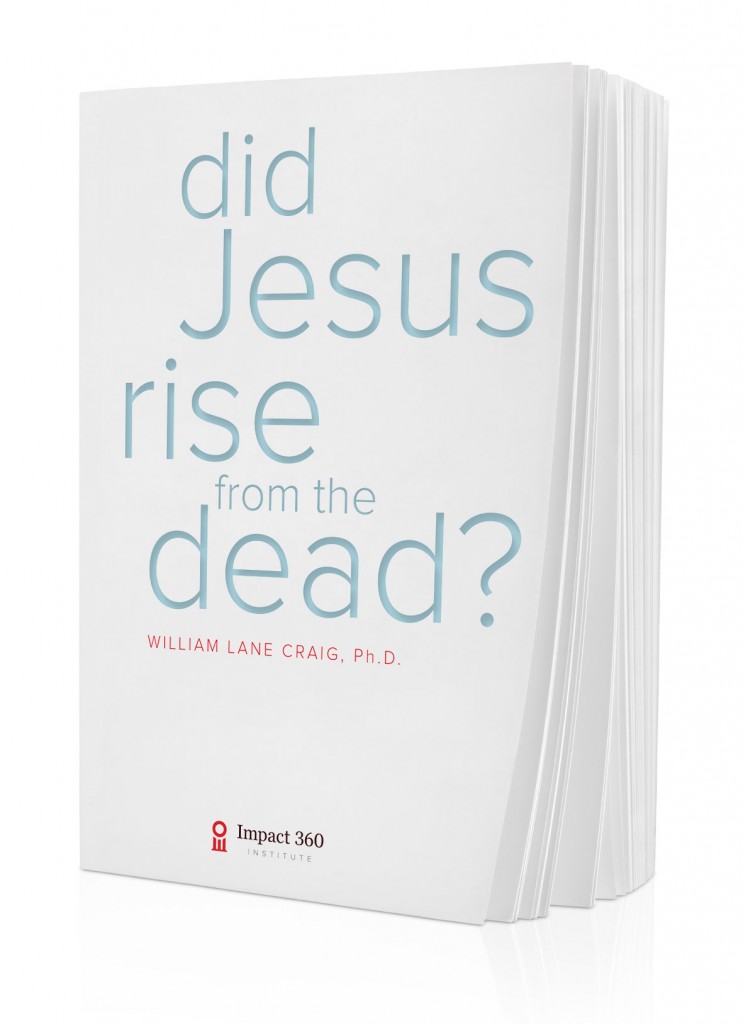
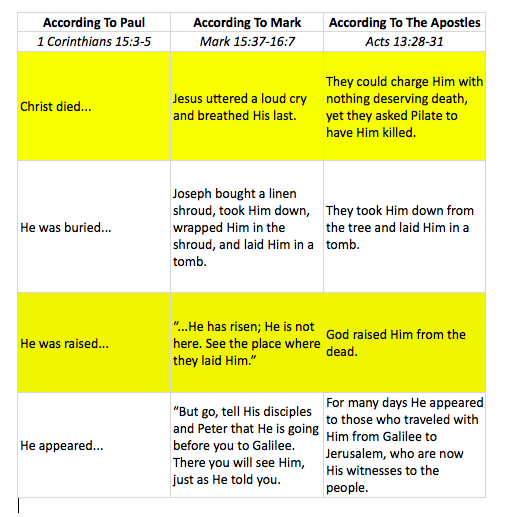
Did Jesus Rise From The DeadDid Jesus Rise From The Dead? is an excellent apologetic for both the biblical skeptic and the biblical student. You can read my full book review by clicking here. Below are seven noteworthy quotes and one infographic from this fascinating book.

“One of the most noteworthy facts about the early Christian belief in Jesus’ resurrection was that it flourished in the very city where Jesus had been publicly crucified. So long as the inhabitants of Jerusalem thought that Jesus’ corpse lay in the tomb, few would have been prepared to believe such silliness as the claim that God had raised Jesus from the dead.”

“We have the extraordinary number of at least five independent sources for Jesus’ burial, some of which are extremely early. The Gospels describe Joseph as a rich man, a member of the Jewish Sanhedrin. As a member of the Jewish Sanhedrin that condemned Jesus, Joseph of Arimathea is unlikely to be a Christian invention. The Sanhedrin was a sort of Jewish high court made up of seventy of the leading men of Judaism, which presided in Jerusalem. There was an understandable hostility among early Christians toward the Jewish Sanhe-drists, for Christians blamed the Sanhedrists for engineering a judicial murder of Jesus at the hands of the Romans. … Therefore, Jesus’ burial by Joseph is very probably historical, since it would be almost inexplicable why Christians would invent a story about a Jewish Sanhedrist who gives Jesus a proper burial.”

“Matthew is clearly working with an independent source, for he includes the story of the guard at the tomb, which is not derived from Mark and is unique to his Gospel; moreover, his comment that the rumor that the disciples had stolen Jesus’ body, ‘And this story has been spread among the Jews to this day,’ (Matthew 28:15) shows that the guard is not Matthew’s own creation, but was part of prior tradition. Luke also has an independent source, for he tells the story, not found in Mark, of two disciples’ inspecting the tomb to verify the women’s report that the tomb was vacant. This story cannot be regarded as Luke’s own creation, since the incident is independently reported in John’s Gospel. And, again, given John’s independence of the other three Gospels, we have yet another independent report of the empty tomb.”

Did Jesus Rise From The Dead infographic

(click image for a larger view)

“To appreciate how restrained Mark’s narrative is, we need only read the account in the second-century apocryphal Gospel of Peter. It describes Jesus’ triumphant exit from the tomb as a gigantic figure whose head reaches above the clouds, supported by giant angels, followed by a talking cross, heralded by a voice from heaven, and all witnessed by a Roman guard, the Jewish leaders, and a multitude of spectators! This is how real legends look: They’re richly decorated with theological and apologetical motifs. By contrast, Mark’s account is stark in its simplicity.”

“Think about that: ‘His disciples came by night and stole Him away’ [Matthew 28:13]. The Jewish authorities did not deny the fact that Jesus’ tomb was empty; instead they entangled themselves in a hopeless series of absurdities, trying to explain it away. In other words, the Jewish claim that the disciples stole the body presupposes that the body was, in fact, missing. Therefore, we have evidence from the very adversaries of the early Christian movement for the fact of the empty tomb.”

“All the followers of those first century messianic movements were fanatically committed to the cause…. But in no case right across the century before Jesus and the century after Him do we hear of any Jewish group saying that their executed leader had been raised from the dead, and he really was the Messiah after all.” —N.T. Wright

“A supernatural explanation of the empty tomb, the resurrection appearances, and the origin of the Christian faith is not contrived given the context of Jesus’ own unparalleled life, ministry, and personal claims.”

Links & Quotes

link quote

Some great reading I came across today.

“If your household is not the better for your Christianity—if men cannot say, ‘This is a better house than others,’ then be not deceived—ye have nothing of the grace of God.” —Charles Spurgeon

The pain of Christ’s crucifixion: A Medical Account Of Jesus’ death.

How do we know Jesus was the Messiah? A Look At Old Testament Prophesies.

“Nothing is too great and nothing is too small to commit into the hands of the Lord.” —Arthur Pink

“God is having a difficult time getting through to us because we are a fast-paced generation. We seem to have no time for contemplation. We have no time to answer God when He calls.” —A.W. Tozer

“Gravity explains the motions of the planets, but it cannot explain who set the planets in motion. God governs all things and knows all that is or can be done.” —Isaac Newton

Links & Quotes

link quote

These are links to articles and quotes I found interesting today.

[INFOGRAPHIC] I love the resources from uknowkids.com. Check out this one on Online Identity Theft.

So you thought you were learning something during your all-night cramming session? Oops! Pulling All-Nighters Can Kill Brain Cells.

[INFOGRAPHIC] The New Testament church loved being together! Check out all the “one another” statements.

“Jesus Himself says, ‘Not every one that saith unto Me, Lord, Lord, shall enter into the kingdom of heaven’ (Matthew 7:21). Sadly, multitudes of Christians are not troubled at all by their sin; their besetting habit does not bother them in the least. They have convinced themselves that God is so merciful and full of grace, He will pardon them even if they stubbornly continue in sin.” —David Wilkerson. Read more of his post Only By Faith.

Over the last 2000 years, look The Christian Contribution To Medicine.

Links & Quotes

link quote

These are links to articles and quotes I found interesting today.

Planned Parenthood announces their plans for the 2014 election, and Michigan is on the list.

Rush Limbaugh’s take: Religious Liberty Defeated In Arizona …

…and the Gospel Coalition’s look at the same topic: When Tolerance Turns To Coerced Celebration

Here are some good ideas for supporting missionaries: Heart For The World

[VIDEO] Constitutional law professor slams Obama’s use of executive orders.

“You are not leading or teaching a child. You are leading a future adult. Everything you do and say will either serve to prepare them or prevent them from being ready. The more you maintain that focus, the better choices you’ll make as a mentor” (Tim Elmore). Read more: Two View Points To Avoid and check out Elmore’s book Generation iY.

“The full, literal meaning of the word ‘repent’ in the New Testament is ‘to feel remorse and self-reproach for one’s sins against God; to be contrite, sorry; to want to change direction.’ The difference in meanings here rests on the word ‘want.’ True repentance includes a desire to change!” —David Wilkerson

How the media misrepresents what scientists say about climate change

Chinese police break up child-trakkicking ring and save hundreds of babies 

[VIDEO] Cecile Richards (the president of Planned Parenthood) isn’t sure when life begins

Miracles (book review)

MiraclesReading C.S. Lewis elaborate on theology is no easy task. But for those willing to work through his profound thoughts, a treasure trove of new insights into Scripture await. Miracles: How God Intervenes In Nature And Human Affairs is no exception to this.

“Miracle” is directly mentioned so 30 times in Scripture, but the Bible never explicitly defines miracle. Lewis gives this definition: “I use the word Miracle to mean an interference with Nature by supernatural power.” He then proceeds to explain what philosophers such as Socrates, Plato and Aristotle meant by “nature” and “super-nature” and how those understandings have been dismissed, adapted or corrupted throughout history.

Lewis moves through several chapters without admitting miracles are probable (or even possible) and without ascribing any possible miracles to God. When he finally reveals that there is a God, he states, “From the admission that God exists and is the author of Nature, it by no means follows that miracles must, or even can, occur.” He then moves to the Scripture to show how God could—and indeed, does—work miraculously.

Even after all of Lewis’ brilliant arguments, I appreciate one of his final admissions in this book: “If you find that [these ideas] so distract you, think of them no more. I most fully allow that it is of more importance for you or me today to refrain from one sneer or to extend one charitable thought to an enemy than to know all that angels and archangels know about the mysteries of the New Creation.”

Even for those who accept his arguments, Lewis offers this counsel: “My work ends here. If, after reading it, you now turn to study the historical evidence for yourself, begin with the New Testament and not with the books about it.” Ultimately I recommend this book for this one reason—Miracles creates a hunger to study God’s Word more.

Pentecost (book review)

PentecostI grew up with this stuff: I’m a fourth-generation Pentecostal, so I cut my teeth on this distinctive doctrine. But I was still amazed at the depth of insight into this dynamic theology that Dr. Robert Menzies shares in Pentecost: This Story Is Our Story.

Although Dr. Menzies shares a number of anecdotal stories to help illustrate certain points, this book is really a serious doctrinal work. Many people have written-off the operational gifts of the Holy Spirit seen in the book of Acts as something that ceased at the death of the apostles, or at the closing of the cannon of Scripture. But Dr. Menzies points out from the outset that Luke’s writings in the Gospel that bears his name and in the book of Acts are not just historical, but doctrinal too.

Many times people look at Paul’s writings as doctrinal, and the four Gospels and Acts as simply historical; thus giving more “weight” to the Pauline epistles. Dr. Menzies persuasively shows that Luke’s writing in Luke-Acts is just as doctrinal, and just as Holy Spirit-inspired, as every other book of the New Testament. In fact, he really goes beyond that to show how Luke’s writing is heavily influenced by Old Testament prophesies about the coming of the Messiah and the subsequent outpouring of the Holy Spirit.

This is not a sensational book, but a scholarly work. It is extensively referenced, as evidenced by the ample endnotes. But don’t let this scare you off as a book just for pastors and theologians, as Dr. Menzies’ writing style is very readable by all.

Anyone who is interested in this distinctive doctrine of the Holy Spirit should read Pentecost.

24 Quotes from “Andrew Murray’s Daily Reader”

Andrew Murray Daily ReaderOver the course of the last year in reading Andrew Murray’s Daily Reader, I literally took down over 40 pages of Murray’s quotes! The quotes I have listed below are not my favorites, but just some of the quotes from the first few pages of my notes. You can read my book review of this truly amazing devotional book by clicking here.

“The true practice of Christianity strives toward having the character of Christ so formed in us that in our most common activities His temper and disposition will be displayed.”

“May this high privilege awaken your desire for relationship with God, to dwell in sweet fellowship with Him and He with you. May it become impossible for you to be satisfied with anything less.”

“The power to believe a promise depends entirely on our faith in the one who promises. It is only when we enjoy a personal loving relationship with God Himself that our whole being is opened up to the mighty influence of His holy presence and the capacity will be developed in us for believing that He gives whatever we ask.” 

“Sin consists in nothing but this, that man determined to be something and would not allow God to be everything.”

“Even as believers we often make it our first aim to find out who we are, what we desire, what pleases us and makes us happy. Then we bring in God in the second place to secure this happiness.” 

“Nothing except constant fellowship with God can teach you as His child to hate sin as God hates it. Nothing but the close fellowship of the living Christ can make it possible for you to understand what sin is and to detest it. Without this deeper understanding of sin, we cannot truly appropriate the victory that Christ made possible for us.”

“To pray constantly only for ourselves is a mark of failure in prayer. It is in intercession for others that our faith and love and perseverance will be stirred up and that the power of the Spirit will be found to equip us for bringing salvation to people.” 

“Here is God’s provision for our holiness, God’s response to our question ‘How can we be holy?’ When we hear the call ‘Be holy, even as I am holy,’ it seems as if there is, and ever must be, a great gulf between the holiness of God and that of humankind. But in Christ is the bridge that spans the gulf—or better, His fullness has filled it up.”

“To worship is our highest privilege. We were created for fellowship with God: of that fellowship, worship is the most sublime expression. All the disciplines of the Christian life—meditation and prayer, love and faith, surrender and obedience—culminate in worship. Recognizing what God is in His holiness, His glory, and His love; realizing what I am as a sinful creature and as the Father’s redeemed child, in worship I gather up my whole being and present myself to my God. I offer Him the adoration and the glory that is due Him. The truest, fullest, and nearest approach to God is worship.”

“We are in such a habit of evaluating God and His work in us by what we feel that it is very likely that on some occasions we will be discouraged because we do not feel any special blessing. Above everything, when you wait on God, do so in the spirit of hope. It is God in His glory, His power, and His love who is longing to bless you.”

“I would like to convince every believer that Jesus loves you; He does not wish to be separated from you for a moment. He cannot bear it. No mother has delighted more in the baby in her arms than does Christ delight in you. He wants both intimate and unceasing fellowship with you. Receive it, dear believer, and say, ‘If it is possible, God helping me, I must have this filling of the Holy Spirit so that I may know and sense the presence of Jesus always dwelling in my heart.’” 

“Discovering the New Testament standard of commitment is not an easy matter. Our preconceived opinions blind us; our surroundings will exercise a powerful influence. Unless there is a sincere desire to truly know the entire will of God, and a prayerful dependence on the Holy Spirit’s teaching, we will search in vain.”

“If you would be full of the Spirit, be full of the Word. … Just as the Scriptures were spoken and written down as men were moved by the Spirit of God, it is only by the Spirit of God that they can be fully understood.” 

“Our waiting on God can have no higher goal than to have His light shine on us and in us and through us all day.”

“May our daily lives be the bright and blessed proof that a hidden power dwells within, preparing us for the glory to be revealed. May our abiding in Christ the Glorified One be our strength to live to the glory of the Father, our enabling to share in the glory of the Son.” 

“Take every opportunity to humble yourself before God and man. Accept with gratitude everything that God allows from within or without, from friend or enemy, in nature or in grace, to remind you of your need for humbling and to help you in it. Reckon humility to be the mother-virtue, your very first duty before God, the one perpetual safeguard of the soul, and set your heart upon it as the source of all blessing. The promise is divine and sure: He that humbles himself shall be exalted.”

“Love for God and love for our neighbor are inseparable; prayer from a heart that is not right with God or that cannot get along with others can have no real effect. Faith and love are interdependent.”

“In the annoyances of daily life, we must be careful not to excuse a hasty temper, sharp words, or rash judgment by saying that we meant no harm, that we did not hold the anger long, or that it is too much to ask of our human nature not to behave in such a manner. Instead, we must seek to forgive as God in Christ has forgiven us, diffusing anger and judgment.”

“God has called us to live a life in the supernatural. Allow your devotional time each day to be as the open gate of heaven through which light and power stream into your waiting heart and from which you go out to walk with God all day.”

“Every soul is worth more than the world and nothing less than the price paid for it by Christ’s blood. Each is within reach of the power that can be tapped through intercession. We have no concept of the magnitude of the work to be done by God’s intercessors or we would cry out to God for an outpouring of the Spirit of intercession.”

“Prayer and the Word are inseparably linked; power in the use of either depends upon the presence of the other. The Word gives you a subject for prayer. It shows you the path of prayer, telling you how God would have you come. It gives you the power for prayer—courage in the assurance that you will be heard. And it brings you the answer to prayer as it teaches what God will do for you. On the other hand, prayer prepares your heart to receive the Word from God himself, to receive spiritual understanding from the Spirit, and to build faith that participates in its mighty working.” 

“God’s purpose was to bring us back to Himself as our Creator, in whose fellowship and glory our happiness can alone be found. God could attain His purposes and satisfy the love of His own heart only by bringing us into complete union with Christ, so that in Him we can be as near to God as Christ is. Oh, the mystery of the love of God!”

“The knowledge of God’s Father-love is the first and simplest—but also the last and highest—lesson in the school of prayer. It is in personal relationship to the living God and fellowship with Him that prayer begins.” 

“As one of His redeemed ones you are His delight, and all His desire is to you, with the longing of a love that is stronger than death, and which many waters cannot quench. His heart yearns for you, seeking your fellowship and your love. If it were needed, He would die again to possess you. As the Father loved the Son, and could not live without Him—this is how Jesus loves you. His life is bound up in yours; you are to Him inexpressibly more indispensable and precious than you can ever know.”

Jesus Is The Supernova

Listen to the podcast of this post by clicking on the player below, and you can also subscribe on AppleSpotify, or Audible. 

In astronomical terms, a supernova is an explosion almost beyond compare. For a brief moment the explosion is the brightest point in the universe, sending enriching energy reverberating in every direction.

There was a supernova in the opening words of the Old Testament—in the beginning God created (Genesis 1:1). There was an explosion of God’s love that was the brightest spot in the universe He just created. But shortly after a supernova explodes, it appears to go dark for a period of time.

In history this could be seen as the time in-between the in the beginning of the Old Testament and the time before Jesus is born. Isaiah describes this as a people walking around in darkness and gloomy distress. Then all of sudden Isaiah says a great light explodes on the scene—

Nevertheless, there will be no more gloom for those who were in distress…. The people walking in darkness have seen a great light; on those living in the land of deep darkness a light has dawned. … For to us a Child is born, to us a Son is given, and the government will be on His shoulders. And He will be called Wonderful Counselor, Mighty God, Everlasting Father, Prince of Peace. (Isaiah 9:1-2, 6)

The reverberation of God’s supernova in the opening words of the Old Testament show up again in the opening words of the New Testament—A record of the genealogy of Jesus Christ (Matthew 1:1). The light of Jesus exploded on the scene!

And the Christ became flesh and tabernacled among us; and we actually saw His glory, such glory as an only begotten Son receives from His Father, full of grace and truth. (John 1:14)

Because of the energy released in the supernova of Creation and the reverberation of Christ’s First Advent, we are the beneficiaries. Astronomers tell us that the explosion of a supernova makes it possible for other stars to be born. That’s you and me!

Live clean, innocent lives as children of God, shining like bright stars in a world full of crooked and perverse people. (Philippians 2:15)

May this Advent season remind you of the supernova explosion of love of Jesus Christ, and our ability to shine brightly because of His life in us. Shine brightly!

Check out the other ways Jesus shined brightly at His Advent in our series The Star Of CHRISTmas.

►► Would you please prayerfully consider supporting this ministry? My Patreon supporters get behind-the-scenes access to exclusive materials. ◀︎◀︎

Sacrifice

Christ in youSometimes people get bogged down in some of the Old Testament books because it seems so tedious. And, honestly, some of it can seem irrelevant to today’s Christian. B.B. Warfield described the Old Testament as a richly furnished but dimly lit house. Only when the lights are turned on can we appreciate the beauty that was there all along. In Jesus Christ the light is on, and we can see the beauty of the Old Testament!

In the first seven chapters of Leviticus the sacrifices are described in detail. There are some repeating phrases that we should note: without defect … without yeast … of the proper value. The sacrifices were to be of the best quality, without any “strings attached,” and well thought-out.

Sacrifices were not only physically given, but given emotionally and mentally too. They shouldn’t be given begrudgingly as a “have to” sacrifice, but joyfully as a “get to” sacrifice.

The Archeological Study Bible has an interesting commentary on the sacrifices: “The sacrificial system was not magical. Its efficacy depended not upon the offering of a particular animal… but on God Himself, Who ordained these sacrifices. Fully as important, without an attitude of repentance, perfunctory observation of sacrificial rituals was meaningless.”

Jesus was the once-for-all sacrifice. And if you have accepted Him as your Lord and Savior, the Bible says Christ is now in you and you are new creation. You are blameless in God’s sight!

So today the best sacrifice you can give God is: YOU. When you joyfully give God your life and talents as a living sacrifice with a grateful attitude, God sees Christ’s sacrifice in you as perfect—no defect, no hypocrisy, a sacrifice of inestimable value!

If Jesus Christ is in you, you are a perfect sacrifice, so don’t hesitate to give yourself to God.

I Am Jehovah

Listen to the podcast of this post by clicking on the player below, and you can also subscribe on AppleSpotify, or Audible.

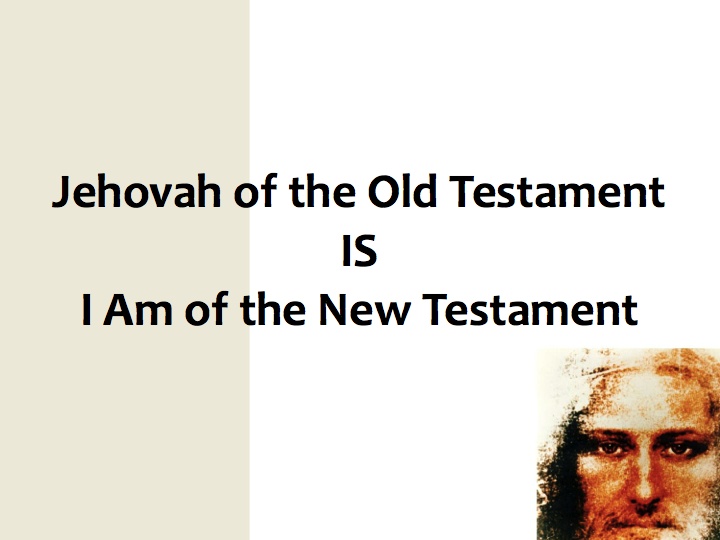
One of the misconceptions about Jesus is that He first appears on the scene in a manger in Bethlehem. Nothing could be further from the truth! Jesus appears in the opening words of the BibleIn the beginning God created—and in the last words of the BibleYes, I am coming soon. And He appears in every word in between!

It was Christ’s claims of being one with the Father that enraged the Jewish religious leadership. When He proclaimed His “I Am” statements in the New Testament, they knew He was tying Himself to the “Jehovah” titles of the Old Testament.

B.B. Warfield has a great picture of the Old Testament being a mansion with richly-decorated, beautifully-ornate rooms, but which are dimly lit. So with just the Old Testament by itself, it is hard to appreciate the magnificent beauty that’s there. In Jesus, the light is turned on, and we can now appreciate the glory and majesty that was always there!

So notice how the “I Am” statements shine a bright light on the titles of “Jehovah”

  • Jehovah Jireh (I Am Your Provider) → I am the Bread of Life (John 6:35)
  • Jehovah Rapha (I Am Your Healing) → I am the Resurrection and the Life (John 11:25-26)
  • Jehovah Nissi (I Am Your Source) → I am the Vine (John 15:5)
  • Jehovah Shalom (I Am Your Peace) → I am the Light of the world (John 8:12)
  • Jehovah Raah (I Am Your Shepherd) → I am the Good Shepherd (John 10:11)
  • Jehovah Sabaoth (I Am Your Wall Of Protection) → I am the Gate (John 10:9)
  • Jehovah Tsid-kenu (I Am Your Righteousness) → I am the Way, Truth, and Life (John 14:6)
  • Jehovah Shammah (I Am Here) → I am the Alpha and Omega (Revelation 1:8; 22:13).

(Check out all of the above Scriptural references here.)

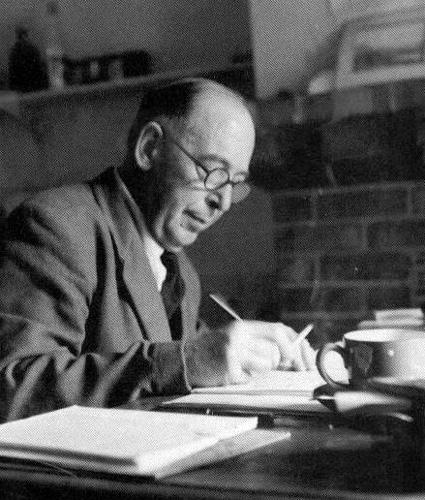
In essence Jesus is saying “I Am Jehovah in all His fullness.” So what are we to make of that? What are we to make of Jesus Christ? Here’s how C.S. Lewis addressed that very question:

   “This is a question which has, in a sense, a frantically comic side. For the real question is not what are we to make of Christ, but what is He to make of us? The picture of a fly sitting deciding what it is going to make of an elephant has comic elements about it. But perhaps the questioner meant what are we to make of Him in the sense of ‘How are we to solve the historical problem set us by the recorded sayings of this Man?’ 

  “The problem is to reconcile two things. On the one hand you have got the almost generally admitted depth of sanity of His moral teaching, which is not very seriously questioned, even by those who are opposed to Christianity. In fact, I find when I am arguing with very anti-God people that they rather make a point of saying, ‘I am entirely in favor of the moral teaching of Christianity….’ 

  “On the one side clear, definite moral teaching. On the other, claims which, if not true, are those of a megalomaniac, compared with whom Hitler was the most sane and humble of men. There is no halfway house and there is no parallel in other religions. If you had gone to Buddha and asked him, ‘Are you the son of Bramah?’ he would have said, ‘My son, you are still in the vale of illusion.’ If you had gone to Socrates and asked, ‘Are you Zeus?’ he would have laughed at you. If you had gone to Mohammed and asked, ‘Are you Allah?’ he would first have rent his clothes and then cut your head off. If you had asked Confucius, ‘Are you Heaven?’ I think he would have probably replied, ‘Remarks which are not in accordance with Nature are in bad taste.’ 

  “The idea of a great moral teacher saying what Christ said is out of the question. In my opinion, the only person who can say that sort of thing is either God or a complete lunatic suffering from that form of delusion which undermines the whole mind of man.” (emphasis mine)

In this quote, C.S. Lewis gives us three choices about Jesus. We can either say (1) He is a liar, (2) He is a lunatic, or (3) He is who He says He is.

What do you say about Him?

(You may also be interested in my post and sermon about the divinity and humanity of Jesus.)

If you have missed any of the messages in this series called Who Is Jesus?, you can find them all here.

►► Would you please prayerfully consider supporting this ministry? My Patreon supporters get behind-the-scenes access to exclusive materials. ◀︎◀︎