The Freedom In Fear

Listen to the podcast of this post by clicking on the player below, and you can also subscribe on AppleSpotify, or Audible. 

Our Royal Psalms take us from King David to King Jesus. David went from the anointed king on the run from King Saul, to being king over Judah (2 Samuel 2:4), to being king over “all the tribes” (2 Samuel 5:1-3; 8:15). 

(Check out all of the Scriptures in this post by clicking here.) 

David’s kingdom stretched far and wide (1 Chronicles 22:14-16; 29:10-13). This absolute control King David now wields over every nation surrounding Israel puts fear into the hearts of Israel’s enemies. Fear of David brings freedom for the people of his kingdom.

As the Sons of Korah think about this fear that brings them freedom, they look beyond their earthly king to the King of Heaven and compose this Royal Psalm recorded in Psalm 47. This psalm has majestic terminology for God in almost every verse; including, Lord Most High, great King over all the earth (vv. 2, 7, 9), God reigns over the nations; and God is seated on His holy throne. 

I’m especially intrigued by the word awesome in verse 2. The KJV says “the Lord Most High is terrible” because it does take two Hebrew words to give us the full definition of awesome. First, “Most High” is best thought of with the suffix -est: greatest, highest, noblest. In other words, there is nothing above Him. Then “terrible” is to be held in awe, to be honored, to be reverenced. 

Just as the Israelites had no fear of enemies because David was on the throne, God says the same thing to us: Because the Most High is on the throne, His people have no fear of their enemies. 

When we fear God we need not fear anything else. 

When we fear God: 

…we hate our own sin (Psalm 36:1-3) 

…we love His mercy that forgives our sin (Psalm 103:2-3, 10-12) 

…we hate sin in the world (2 Timothy 2:26) 

…we love sinners (2 Timothy 2:24-26; Acts 10:38; Jude 20-23) 

…we hate the darkness that traps people (2 Corinthians 4:4) 

…we love shining the light of King Jesus (Philippians 2:15-16) 

…we hate this life (John 12:25) 

…we love eternal life (Romans 3:23-24, 8:18)

When the people of Israel reverenced David as their king, they would be able to know his blessings. When we fear our awesome God, we will also receive His blessings. Take a look at the amazing blessings Jesus Himself—the King of kings—lists for those who reverence His awesome Kingship (Revelation 2:7, 11, 17, 26-28; 3:5, 11-12, 21)! 

God is awesome and asks us to reverence Him and then enjoy life in His freedom. 

If you have missed any of the other royal psalms we have covered, you can find the full list by clicking here. 

►► Would you please prayerfully consider supporting this ministry? My Patreon supporters get behind-the-scenes access to exclusive materials. ◀︎◀︎

Use Your Spiritual Gifts Well

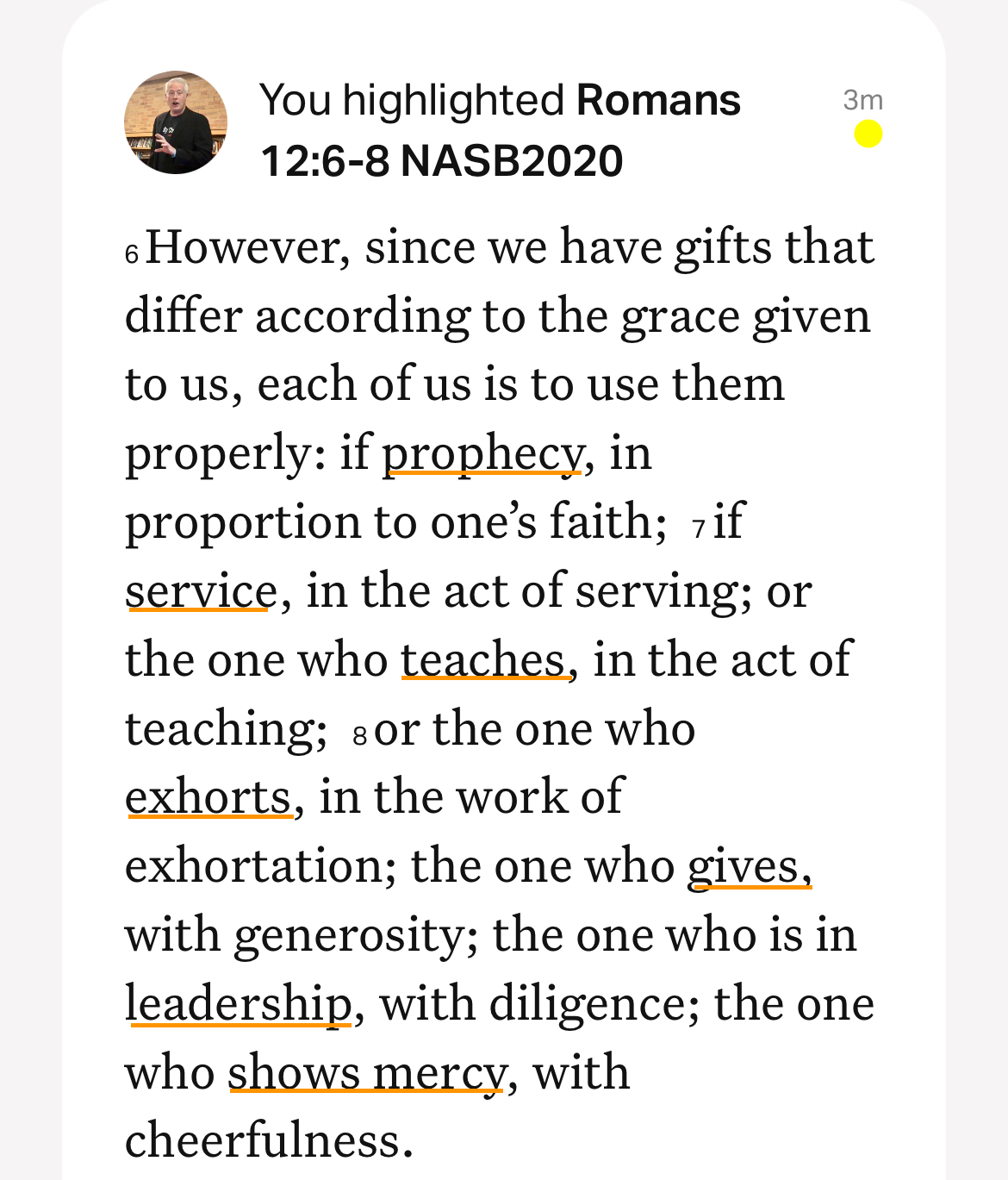
However, since we have gifts that differ according to the grace given to us, each of us is to use them properly: if prophecy, in proportion to one’s faith; if service, in the act of serving; or the one who teaches, in the act of teaching; or the one who exhorts, in the work of exhortation; the one who gives, with generosity; the one who is in leadership, with diligence; the one who shows mercy, with cheerfulness. (Romans 12:6-8)

As God has gifted you…

  • Prophesy faithfully
  • Serve wholeheartedly 
  • Teach skillfully 
  • Exhort encouragingly 
  • Give generously 
  • Lead diligently 
  • Restore cheerfully 

I taught a series of classes on these motivational gifts. Check out the videos and downloadable materials here.

Links & Quotes

It’s easy to get along with those we like. But God calls on Christians to do the hard—but rewarding—work of getting along with everyone! Check out this full sermon about the strength in Christian unity.

I have lots of new content every week, which you can check out on my YouTube channel.

“Dad always said you could fall off the same ladder you climbed up.” —Hank Aaron

Paleontologists have noted that what Creationists would call pre-Flood mammals lived longer than similar mammals today. “This research should be of interest to Bible-believing Christians because, as chronicled in Genesis 5, humans in the pre-Flood world were experiencing much greater lifespans. Moreover, the advanced ages of the Genesis 5 patriarchs at the births of their sons strongly suggest delayed sexual maturation and possible delayed skeletal maturation, too. The Bible gives no hint that this amazing longevity was in any way supernatural.”

“If we leave our failure, we don’t learn from our failure. If we learn from our failure, we seldom have to leave because of our failure.” —John Maxwell 

Dr. Steve Nichols hosts a great podcast called 5 Minutes In Church History. In the episode this week, he talked about the church politics Jonathan Edwards had to confront when he first arrived in Stockbridge. It came to a head in a letter Edwards received: “All it did was go into, again, politics, accusing Edwards of mis-running the school, which wasn’t true, and deflecting the blame and the focus away from the Williams family. And now Edwards needs to vindicate himself. Well, all that to say, we think of these church history figures, and we see their portraits, we sometimes forget that they’re actually people, and they had to deal with challenges too.” These types of faultfinding accusations are what I address in my book When Sheep Bite.

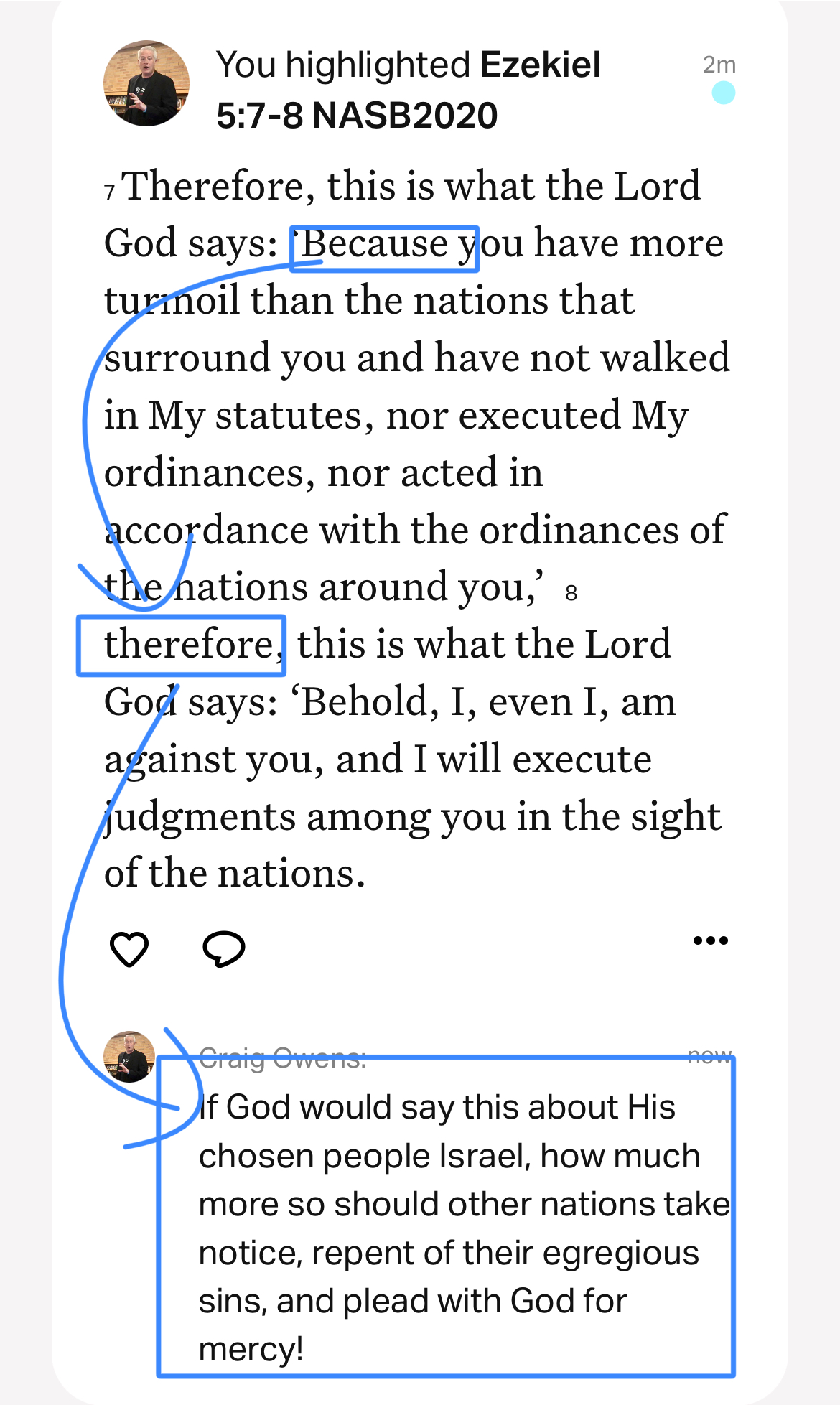
If God would say this (Ezekiel 5:7-9) about His chosen people Israel, how much more so should other nations take notice, repent of their egregious sins, and plead with God for mercy!

Rules Can Be Overbearing—Love Never Is

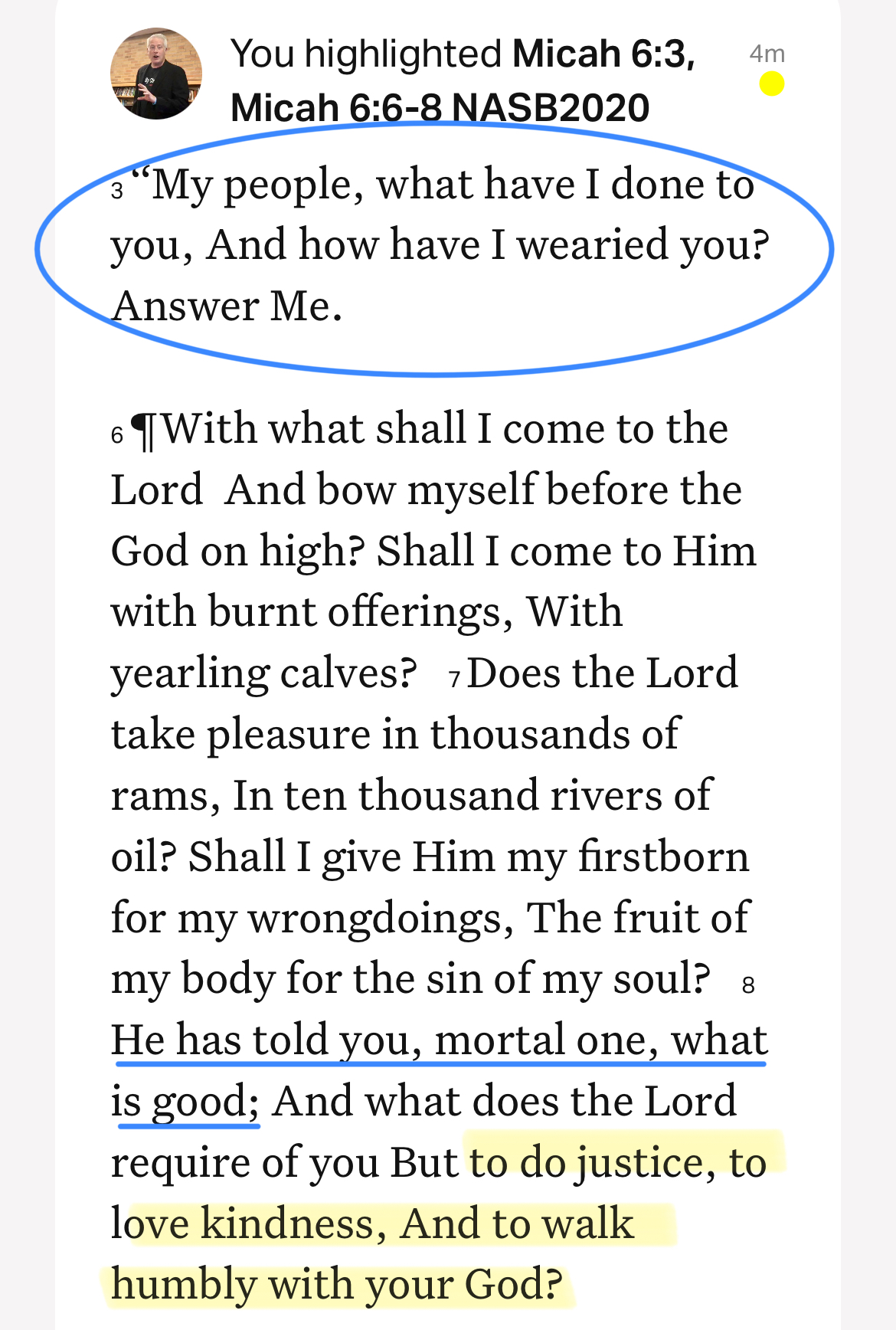
My people, what have I done to you, and how have I wearied you? Answer Me. … With what shall I come to the Lord and bow myself before the God on high? Shall I come to Him with burnt offerings, with yearling calves? Does the Lord take pleasure in thousands of rams, in ten thousand rivers of oil? Shall I give Him my firstborn for my wrongdoings, the fruit of my body for the sin of my soul? He has told you, mortal one, what is good; and what does the Lord require of you but to do justice, to love kindness, and to walk humbly with your God? (Micah 6:3, 6-8)

God doesn’t weary us with constantly changing or overbearing rules!

What God asks of us is that we give Him our heart (love the Lord your God with all your heart, soul, mind and strength), and then we live a life that shows His love to others (love your neighbor as yourself). 

That’s it: Love God, and then let justice, love, and humility flow out from that Source of love.

On a related note, check out these posts :

The Goals Of Confrontation

Listen to the podcast of this post by clicking on the player below, and you can also subscribe on AppleSpotify, or Audible. 

Say the word “confrontation” and many people cringe. “I try to avoid confrontations with others,” people will quickly say. 

The origin of the word comes from a derivative of the word for “forehead.” The original intent of confrontation was simply putting the facts in front of someone’s face so that they could acknowledge them. 

The problem for most of us (myself included) is two-fold: 

  1. I don’t like to be confronted with things I may be doing incorrectly or incompletely. 
  2. I don’t like making others defensive when I confront them with the things they may be doing incorrectly or incompletely.

As a result, we usually don’t confront others and they usually don’t confront us. Sadly, this can keep us from maturing in areas where we may be able to soar if we could only make some minor changes. 

Christians should be especially open to confrontation from a brother or sister. After all, Solomon told us, “Wounds from a friend can be trusted, but an enemy only multiplies kisses” (Proverbs 27:6). And Jesus warned us, “Woe to you when all men speak well of you, for so did their fathers to the false prophets” (Luke 6:26 NKJV). 

The best confrontation is self-confrontation in the presence of the Holy Spirit. After we have submitted to that loving spotlight, then we can proceed with our loving confrontation with our brothers and sisters. 

Remember this: 

The goals of Christian confrontation are restoration and maturity. 

We want to see wandering saints return to God’s path, and we want those saints who are immature to blossom into Christ-like maturity that brings glory to God. 

I have prepared a flowchart that can help you with a biblical framework for the work of confrontation. Please work through this flowchart slowly and prayerfully. Don’t rush any step, but make sure you can answer an honest “yes” to each question. When you get to the last step, keep in mind these three Ms:

  1. Maturity—self-confrontation and confrontation of others should always be moving us toward maturity. 
  2. Mutual accountability—agree to stay involved in this process, with each of you remaining accountable to each other. 
  3. Mercymercifully restore the one who has strayed so that the entire Christian body of believers can be strengthened.

Here are some resources to help you:

►► Would you please prayerfully consider supporting this ministry? My Patreon supporters get behind-the-scenes access to exclusive materials. ◀︎◀︎

Forgive Like You’ve Been Forgiven

Listen to the podcast of this post by clicking on the player below, and you can also subscribe on AppleSpotify, or Audible. 

Jesus said that the devil’s agenda was to steal, kill, and destroy (John 10:10). We see this on full display in the aftermath of the first sin in the way relationships humans had with each other changed. 

God said to Eve, “Your desire will be for your husband, and he will rule over you” (Genesis 3:16). Dr. Henry Halley commented, “The last two lines of this verse could be paraphrased, ‘You will now have a tendency to try to dominate your husband and he will have the tendency to act as a tyrant.’” And to Adam, God said that he would now have to work harder than ever before to harvest the food he needed for survival, which undoubtedly caused stress in his relationship with Eve. In the very next chapter, the strained relationship between Cain and Able resulted in the first homicide (Genesis 3:17-19, 4:1-8). 

In these relationships, intimacy was stolen, closeness was killed, and life was destroyed. 

An irreplaceable tool for avoiding this heartache and destruction that sin causes in our relationships is forgiveness. 

Peter asked Jesus, “How many times should I forgive my brother or sister who sins against me? Up to seven times?” (Matthew 18:21). In reply, Jesus told a story about a man who owed the equivalent of 20 years of a day laborer’s wages and a man who owed about three months of a day laborer’s wages. The first man who owed so much was forgiven entirely of his debt, but he wouldn’t forgive the paltry amount that was owed to him by the second man. 

To the forgiven but unforgiving man, Jesus said, “Shouldn’t you have had mercy on your fellow servant just as I had on you?” (see Matthew 18:22-35). 

That should be our standard: Not how others treat me, but how God has treated me! Not how much others owe me, but how much God has forgiven me!

Do I want God to put a quota on how many times I can be forgiven? Do I want there to be a limit on how big of an offense God will forgive in me?

Of course not!

That’s my standard. I must show the same mercy to others as I have been shown by God. 

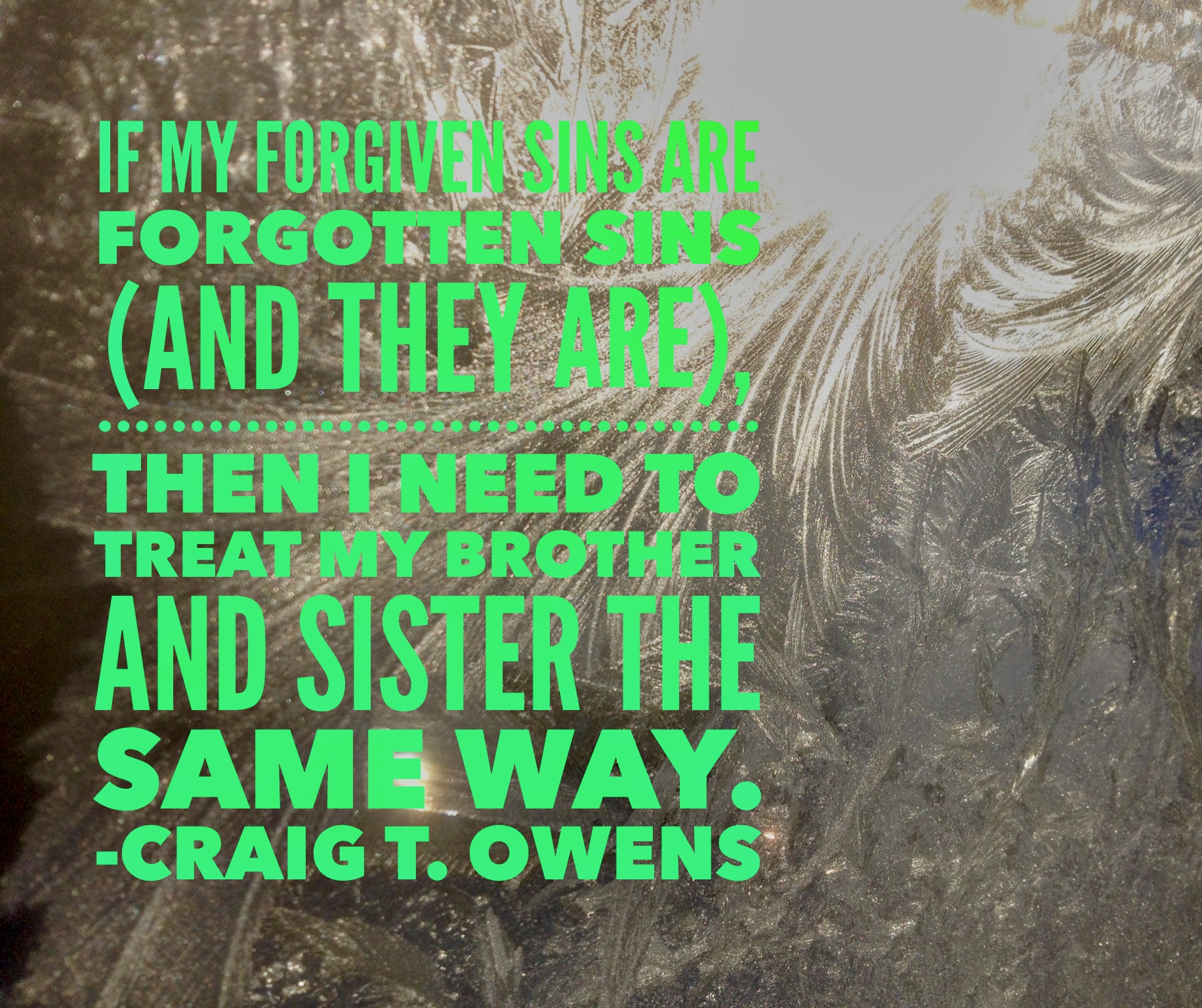
If my forgiven sins are forgotten sins (and they are), then I need to treat my brother and sister the same way. This is why Jesus told Peter to stop counting the number of offenses. We are to treat every offense as though it was the first and only offense.

The man who owed so much money asked for more time to repay his debt. But the master did more than that: He forgave the debt—he wiped it off the books completely, as though it had never happened! 

When God forgives our sin, He separates our sin from us as far as the east is from the west. He keeps no record of the offense ever having occurred (Psalm 103:10-12). 

This is to be our standard too. We are to forgive others as God has forgiven us. Forgiveness will restore intimacy, closeness, and life to our relationships. 

This is difficult to do. As Peter pointed out, a brother or sister—someone close to his heart—had sinned against him. But this is why Jesus taught us to pray, “Forgive us our sins, as we have forgiven those who sin against us” (Matthew 6:12). Or as Eugene Peterson paraphrases that verse in The Message, “Keep us forgiven with You and forgiving others.” 

May the Holy Spirit help us in this important work of ongoing, complete, and restoring forgiveness!

►► Would you please prayerfully consider supporting this ministry? My Patreon supporters get behind-the-scenes access to exclusive materials. ◀︎◀︎
There’s Still Time, America

Listen to the podcast of this post by clicking on the player below, and you can also subscribe on AppleSpotify, or Audible. 

This is what the Lord Almighty says: “Cut down the trees and build siege ramps against Jerusalem. This city must be punished…” (Jeremiah 6:6). 

When I read these 2500-year-old words it makes me shudder. Why? Because if we changed “Jerusalem” to “Washington, D.C.” and “Judah” to “America,” the sins of the people sound eerily the same: 

  • arrogantly closed ears refusing to listen to God’s Word 
  • people calling the loving message of the Bible “offensive” 
  • the predominance of greed 
  • deceptive “prosperity” preachers who are only in it for their own personal gain 
  • shameless, detestable lifestyles 
  • open rebellion against God’s laws 
  • constant slandering of God and of people created in God’s image (vv. 10-28)

God says, “This city must be punished.” 

But still, a hope remains. God also says, “Take warning, Jerusalem [or America], or I will turn away from you” (v. 8). 

There is still time for repentance! There is still time to take heed of this loving warning and turn away from sin. That’s what repentance truly means—seeing our sins as disgusting in God’s sight, asking for forgiveness, and turning away from those sins. 

Repentance means an about-face, so that instead of the catalog of sins that I just listed, we instead see:

  • a humility that hears and obeys God’s Word 
  • living in contentment with God’s blessings and not lusting for anything more 
  • listening to preachers who faithfully, lovingly, and boldly speak exactly what God has spoken to their hearts 
  • being ashamed of our former sinful lifestyle, and gratefully receiving the forgiveness that Jesus purchased for us
  • and having a passion to help everyone live in this God-glorifying way

Repent, America! There is still time before God’s judgment falls on us. The historical record is there for all to read: Unrepented sin received God’s righteous judgment. But in His mercy, God is still giving us time to repent today. Don’t miss this golden opportunity! 

►► Would you please prayerfully consider supporting this ministry? My Patreon supporters get behind-the-scenes access to exclusive materials. ◀︎◀︎

Go Deep—Mercy And Wrap-up

According to Romans 12, all Christians have been given a unique gift package by God. We are to use these motivational gifts to make God’s Kingdom more visible and more desirable. 

This week we discuss the gifts of teaching and exhortation. You may download the participant’s notes and the gifts assessment I use in this lesson:

If you missed any of the lessons in this class, you can find them all here.

If you would like to join us in person for this class, here is where you can find us.

Be The One

Listen to the podcast of this post by clicking on the player below, and you can also subscribe on AppleSpotify, or Audible. 

John Maxwell was right: “Everything rises and falls on leadership.” 

As the leader goes, so goes the family, the neighborhood, the business, the church, the country. Just as Israel’s leaders fell into sin and took the people down with them, so too the religious and political leaders in America are leading people to sin. 

God told Ezekiel, “See how each of the princes of Israel who are in you uses his power to shed blood” (Ezekiel 22:6). These ungodly leaders were described as:

  • disintegrating the family 
  • mistreating orphans and widows 
  • despising God’s holiness 
  • slandering the righteous 
  • promoting idolatry 
  • living lewdly
  • winking at sexual depravity 
  • being dishonest in their business dealings
  • defrauding their neighbors 
  • treating people like possessions 
  • pursuing immoral gain
  • whitewashing evil (vv. 6-12, 25-28)

The bottom line: God says, “You have forgotten Me” (v. 12). 

This kind of evil must be punished by an All-Righteous God. 

But God is still merciful. He is still looking for just one who will turn away from the sins of the culture and live righteously. He is looking “for someone among them who would build up the wall and stand before Me in the gap on behalf of the land so I would not have to destroy it” (v. 30). 

God is looking for just one leader who will seek God’s glory and not personal gain, who will stand for righteousness even if he has to stand alone. 

Will you be that one? 

I pray I may be that one! 

I pray for godly leaders to stand up! “Holy God, may we stand for You in this evil culture. May Your Holy Spirit strengthen us to stand unmoved against the onslaught of depravity. Strengthen us against the evil one and against evil people, knowing that greater are You in us than the evil that is in the world. May we be the ones that refuse to bend our knee to anyone or anything but You. In the powerful name of Jesus, I pray this. Amen!” 

►► Would you please prayerfully consider supporting this ministry? My Patreon supporters get behind-the-scenes access to exclusive materials. ◀︎◀︎

It’s Just Not Fair

Listen to the podcast of this post by clicking on the player below, and you can also subscribe on AppleSpotify, or Audible. 

It’s not uncommon to hear children on the playground complaining, “That’s not fair!” Common but somewhat expected. 

Unfortunately, it still seems to be common among adults who feel they got the short end of the deal to grouse, “That’s not fair!” Common but immature. Sadly, I have to admit that there are times that I find myself complaining that I didn’t get a fair deal. 

If anyone could complain about not getting His “fair share” it would be God. He gives His all to people who easily forget His blessings, quickly chase after other things, and still grumble that they aren’t getting a fair deal. 

God never complains, but He does ask questions: “My people, what have I done for you? How have I burdened you? Answer Me” (Micah 6:3). In the next two verses, God twice calls on His people to “remember” all that He has done for them. 

We must answer God. But it seems to me that our obedience to Him is the only reasonable response to all of the blessings He has poured out on us. God doesn’t demand burdensome sacrifices from us, but He simply wants us to act justly, love mercy, and walk humbly before Him (v. 8). 

What God asks of me is out of all proportion with what He has given me, who He is for me today, and the future He has secured for me. 

Fair? No way, it’s completely unfair. God gives me everything and what He asks in return is so minor. Let’s make it our daily joy to act justly, to love mercy, and to walk humbly before our loving God! 

►► Would you please prayerfully consider supporting this ministry? My Patreon supporters get behind-the-scenes access to exclusive materials. ◀︎◀︎