Never forget that we live among giants. Greg and I would like to encourage you to honor those who gave their lives so we could enjoy the freedom that we have today 🇺🇸 And be sure to check out all of my videos on my YouTube channel.
I am always fascinated by the latest discoveries that scientists are making. Especially when the complexities show the intimate involvement of a loving, all-wise Creator! The Institute for Creation Research reported a new discovery: “Who isn’t curious, at some level at least, about how human brains process all the complicated inputs and outputs that our daily lives require? Neurobiologists take that curiosity to the top floor. Their recent discovery of a new function for certain neurons has suddenly added a new dimension to these tiny processors along with a new take on how they came to be in the first place.”
“All life is an experiment. The more experiments you make, the better.” —Ralph Waldo Emerson
Listen to the podcast of this post by clicking on the player below, and you can also subscribe on Apple, Spotify, or Audible.
On Resurrection Sunday, Christians celebrate an event that is the foundational truth for all of the Bible and for the Christian faith which springs from the Scriptures: The resurrection of Jesus.
If Jesus wasn’t resurrected, this is a terrible, cruel lie we are perpetuating. If Jesus was resurrected, we have been given the key to eternal life. No one has ever made the bold claims that Jesus made about His own death and resurrection and then backed them up!
On the Sunday morning after Jesus was crucified, some women arrived at His tomb to finish preparing His body for burial, but Luke records something fascinating: “They did not find the body of the Lord Jesus” (Luke 24:1-8).
Think about this in a modern-day setting. If you were at the bedside of your loved one when they took their last breath, if you heard the doctor pronounce them dead, if you were at the funeral and saw their body in a casket, and if you saw that casket closed, sealed, and lowered into the ground, you would have every reason to find a body if that casket were re-opened.
These women were on Golgotha when Jesus died, they saw the Roman soldiers verify His death, they witnessed Joseph and Nicodemus wrap His body in linen strips, and they saw His body placed in a sealed tomb.
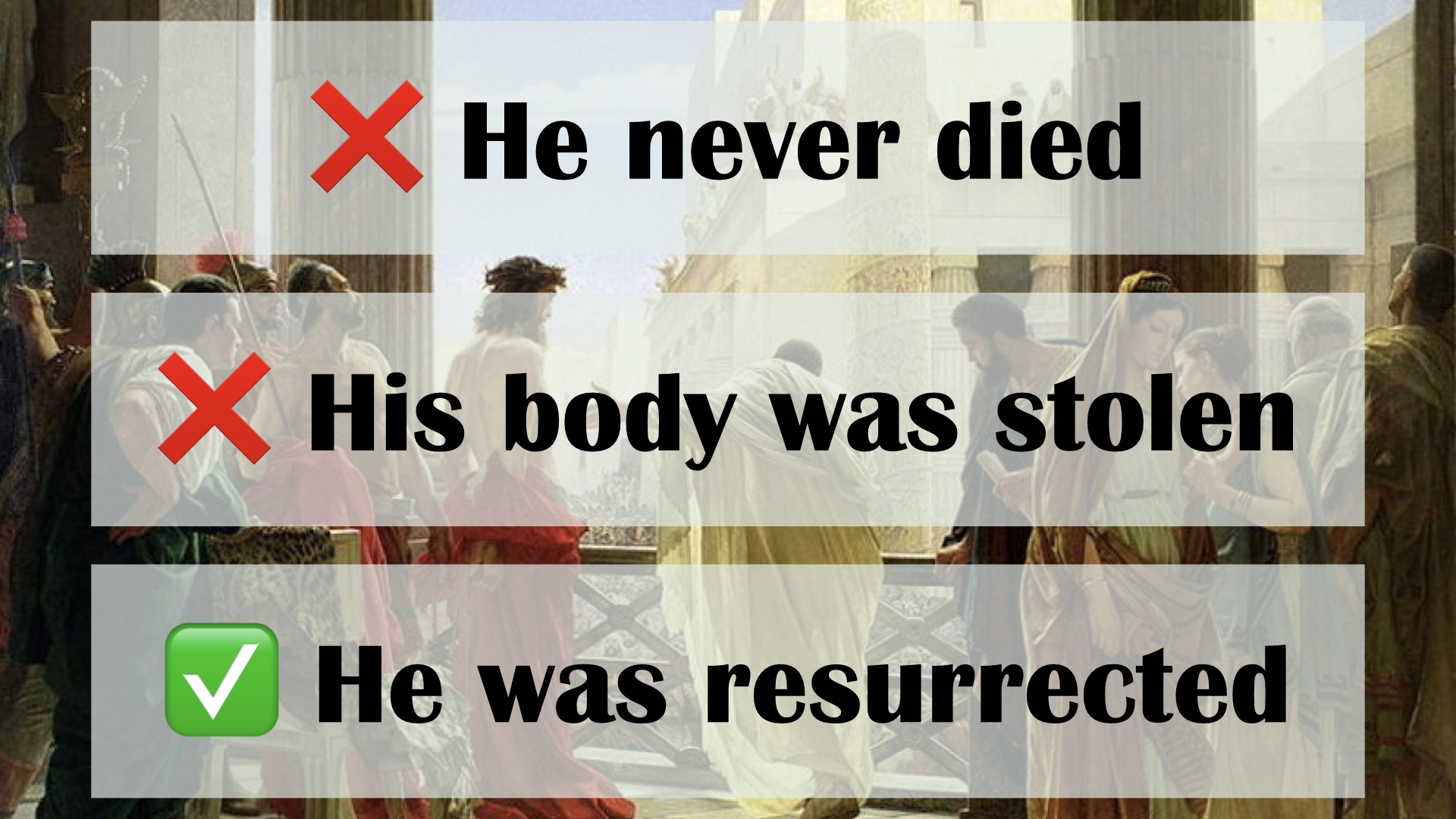
Then when there is no body where the dead body of Jesus is expected, there are only three possibilities:
(1) He never died
Medical experts have concluded that the horrific torture that Jesus endured prior to even being crucified resulted in significant blood loss, and would have put His body in shock. Then the strain on His weakened body during crucifixion would have resulted in His body experiencing either pleural effusion or cardiac effusion, which is attested to by the flow of “blood and water” from Jesus’ dead body when His side was pierced by a Roman spear (John 19:34).
The dead body of Jesus was thoroughly examined by both the Romans who conducted the crucifixion and His friends who prepared His body for burial (Mark 15:43-45; John 19:38-40). And two contemporary historians—Tacitus and Josephus—who were unfriendly to the cause of Christianity both attested to Christ’s death by crucifixion.
(2) His body was stolen
The Sanhedrin was so insistent on Jesus being crucified, they wouldn’t have left the “conspiracy” option open. So they convinced Governor Pontius Pilate to allow them to both seal the tomb and place a group of soldiers outside the tomb to guard it (Matthew 27:62-66). It is highly unlikely that the disciples who fled before the temple guard and who were now locked in a room because they were quaking with fear would somehow gain the courage to undertake a mission to steal Jesus’ body. Nor is it likely that they could have escaped the notice of the highly-trained Roman soldiers guarding the tomb.
(3) He was resurrected
The angels at the empty tomb reminded the women that Jesus had foretold both the manner of His death and the assurance of His resurrection. Jesus described His death in detail multiple times, including such key details as His death would be in Jerusalem, the religious leaders would pronounce a death sentence but the Romans would crucify Him, and that He would be resurrected three days later (Matthew 20:18-19; Luke 18:31-33). In addition, Paul tells us that there were hundreds of eyewitnesses to the resurrected Jesus (1 Corinthians 15:3-8).
Jesus said, “The reason my Father loves Me is that I lay down My life—only to take it up again. No one takes it from Me, but I lay it down of My own accord. I have authority to lay it down and authority to take it up again. This command I received from My Father” (John 10:17-18).
If Jesus foretold this and fulfilled this, we can also trust His other promises. Assurances such as:
He is preparing an eternal home for us and He will come back to take His followers there
That He alone holds the keys to Death and Hades
And that only those who have been cleansed from their sins will be able to enter Heaven
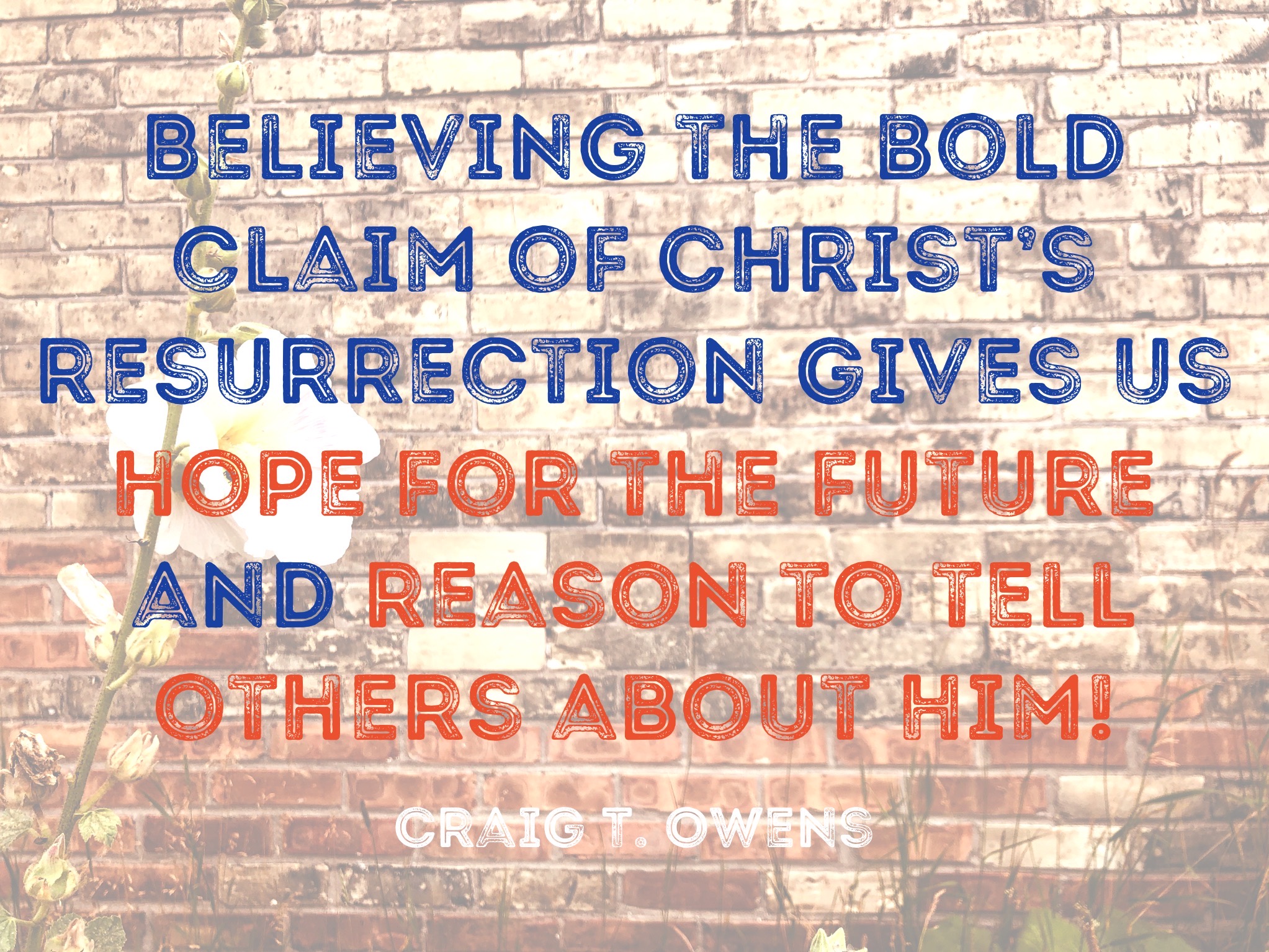
The bold claim that Jesus would be resurrected back to life is adequately backed up by the events on Resurrection Sunday! So now we can say that believing the bold claim of Christ’s resurrection gives us hope for the future and reason to tell others about Him!
Don’t rush through your Bible reading time. Slow down to savor the good stuff. And if there’s something you don’t understand, ask the “Chef”—the Holy Spirit loves to make God’s Word clear to you.
On a recent Breakpoint broadcast, John Stonestreet reported, “Even while many nations pump the brakes on radical transgender ideology and healthcare practices, Americans at both the state and federal level continue to push culture-wide affirmation, social transition of minors, hormone therapies, and harmful surgeries. Advocates frequently claim that so-called and misnamed ‘gender-affirming’ treatments—including surgery—‘save lives,’ that gender dysphoria is a permanent condition even among minors, and that regret by those who undergo such treatments are minimal or non-existent. Increasingly, research suggests otherwise.”
“Hazael’s historicity has never truly been in doubt; there are far too many inscriptions from the ancient world testifying to his existence.” Check out this archeological biography of King Hazael who appears several times in the Bible.
John Piper explains that there are three levels of how to live with material things. He then dives deeper into what the purpose of prosperity really is.
T.M. Moore has a stern word for pastors: “If we are faithful in telling the whole truth of the Gospel, not everyone will be thrilled with our preaching. We need to make sure Jesus is. When it comes to sin, let’s not mince words, and let’s not act like it’s not the big deal it is. No progress in faith can be made where sin is not consistently and thoroughly confessed, repented of, and forsaken.”
We have a new kitten in our home and the places she shows up cracks me up!
In the Wall Street Journal, Andy Kessler said that without the discoveries and influence of Michael Faraday, “there would be no modern economy.” John Stonestreet built on this by explaining that “Faraday is an example of how Christians can balance the constructive purposes of science with an accurate understanding of scientific authority.” Indeed, Faraday’s Christian faith made his scientific findings even more powerful.
“For many years, evidence has been found showing that humans were surprisingly intelligent in times that were only supposed to reveal simple, ‘primitive’ man in his brute, evolving condition.” Now a new discovery has shown a surgical amputation that took place about 7000 years ago.
There’s a cool story in three of the Gospels where some creative, persistent friends took their paralyzed friend to Jesus. The Bible notes that “when Jesus saw *their* faith” He healed their friend. Wow! Which of your friends or family are too weak to pray for themselves? Who do you know that feels paralyzed and cannot get to Jesus? Be that friend who has faith for someone else. And be sure to check out more of my Monday Motivation videos too.
We have seen it in countless science fiction movies, but is it possible for artificially intelligent machines to take over the world? This is a great video from Science Uprising—
If you have known someone who has battled cancer, you know that their liver is quite vulnerable to metastatic cancer since everything in our body is filtered through the liver at some point. Researchers have discovered the mechanism by which this metastasis happens, opening the door for defensive measures that can be employed. Let’s pray for divine insight for these researchers!
Is Christianity rational? Cold-case detective J. Warner Wallace explains how Christianity stands up to intense scrutiny—
Listen to the podcast of this post by clicking on the player below, and you can also subscribe on Apple, Spotify, or Audible.
I just love it when science catches up with what God has already pronounced in the Bible!
I’ve blogged previously about psychology, archeology, and astronomy uncovering truths that have already been stated in the Bible, but there are also numerous recent medical discoveries that confirm what Scripture has already been telling us.
Like the fact that there is a healthy way to relieve stress, and that retaining the stress hormone cortisol in our bodies for too long has serious implications. The apostle Paul tells us to not “be anxious about anything” but to enjoy “the peace of God which transcends all understanding” (Philippians 4:4-7).
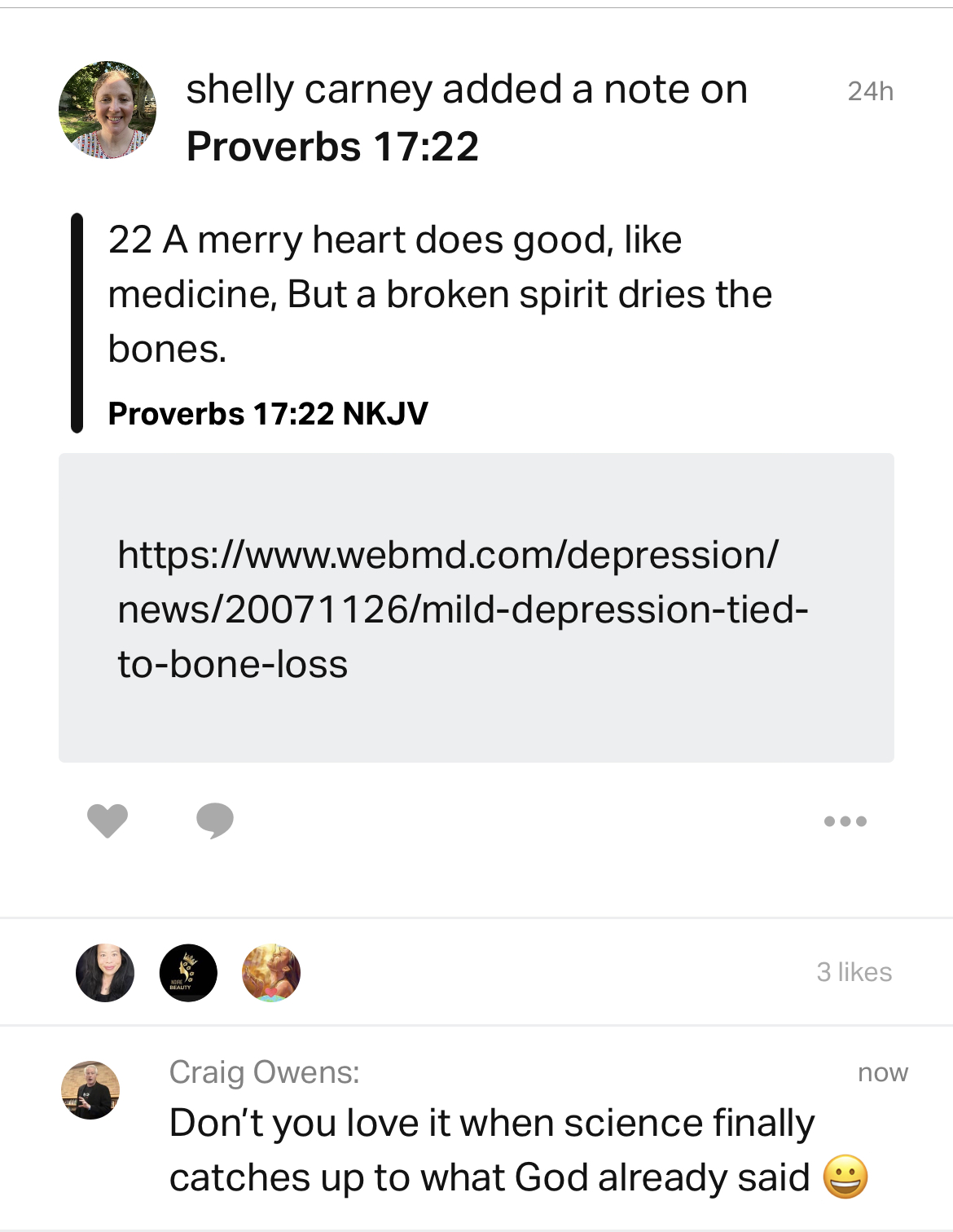
And then there is this finding that my YouVersion friend Shelly pointed out. “A happy heart is good medicine and a cheerful mind works healing, but a broken spirit dries up the bones” (Proverbs 17:22 AMP).
In a WebMD article, medical science confirms this truth of dried-up bones resulting from depression. They wrote, “Even mild depression may significantly increase a woman’s risk for developing osteoporosis. … The level of bone density loss attributed to depression in the study was similar to that previously associated with other well-known osteoporosis risk factors, including smoking cigarettes and getting little or no exercise. … Bone mineral density testing revealed that 17% of the depressed women showed evidence of bone thinning at a particularly vulnerable area of the thigh bone, compared to 2% of women who were not depressed.”
The Bible is God’s inspired Word to humankind, which means it is never out of date. The principles God has shared with us stand the test of time and are continually verified by the brightest scientific minds.
So here is my challenge to you: Take God at His Word, and apply the principles He has given you. I think you will find how much better your life will go when you live God’s way.
The patellar reflex is a helpful diagnostic tool for a doctor to check the health of your central nervous system. It’s commonly called the knee-jerk response. But beyond the medical world, it’s also come to mean “an immediate unthinking emotional reaction to certain stimuli.” This has implications for the health of our prayer life too.
When Jesus talked about praying He never said, “If you pray,” but always “When you pray.” He assumed it would be a vital part of a Christian’s life. He also used a verb tense which would add an “ing” to the verb, so He was really saying, “When you are maintaining an ongoing dialogue with your Father.”
So when something unexpected happens to us, Jesus wants us to say, “Why, my Father already knows about this!” This is the knee-jerk reaction Jesus wants to see.
We see this on full display when Peter and John are told by the Jewish religious authorities not to talk about Jesus publicly anymore. When these men reported this threat to the rest of the church, notice their knee-jerk response: “When they heard this, they raised their voices together in prayer to God.”
There are two interesting things I notice in their prayer. The first thing is how they used the Lord’s Prayer (Matthew 6:9-13) as the template of their prayer.
Our Father in Heaven—Sovereign Lord.
Hallowed be Your name—You made the heaven and the earth and the sea, and everything in them.
Your kingdom come, Your will be done on earth as it is in heaven—Your power and will decided beforehand what would happen.
Forgive us our debts, as we also have forgiven our debtors—“Consider their threats”was like saying, “Forgive us for inappropriate thoughts and forgive them for speaking ignorantly against Your name.”
Give us today our daily bread—Enable Your servants to speak Your word with great boldness today.
Lead us not into temptation, but deliver us from the evil one. For Yours is the kingdom, and the power and the glory forever—Stretch out Your hand to heal and perform miraculous signs and wonders.May Your name be glorified!
The second thing I see in their prayer is that they stood on a biblical promise. They quoted the words of David from Psalm 2—words that had been penned nearly 1000 years earlier—and applied them to their present situation.
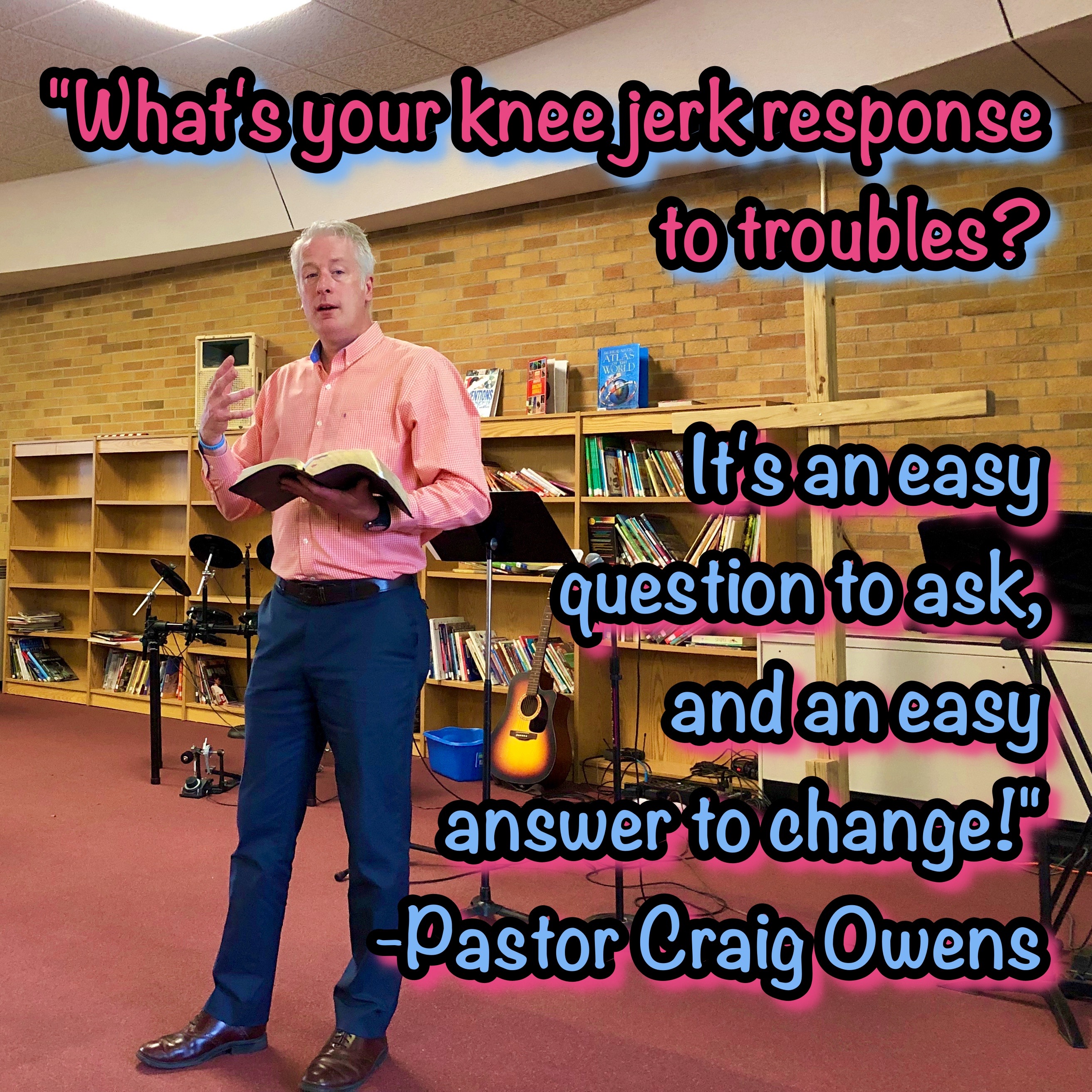
What’s your knee jerk response to troubles? It’s an easy question to ask, and an easy answer to change.
When something comes at you from out of the blue, learn to say, “Why, my Father already knows about this!” Then find a biblical promise you can claim and turn that promise into a prayer modeled on Christ’s prayer. Pray that again and again until God provides the answer.
Let’s make prayer our first response and not our last resort!
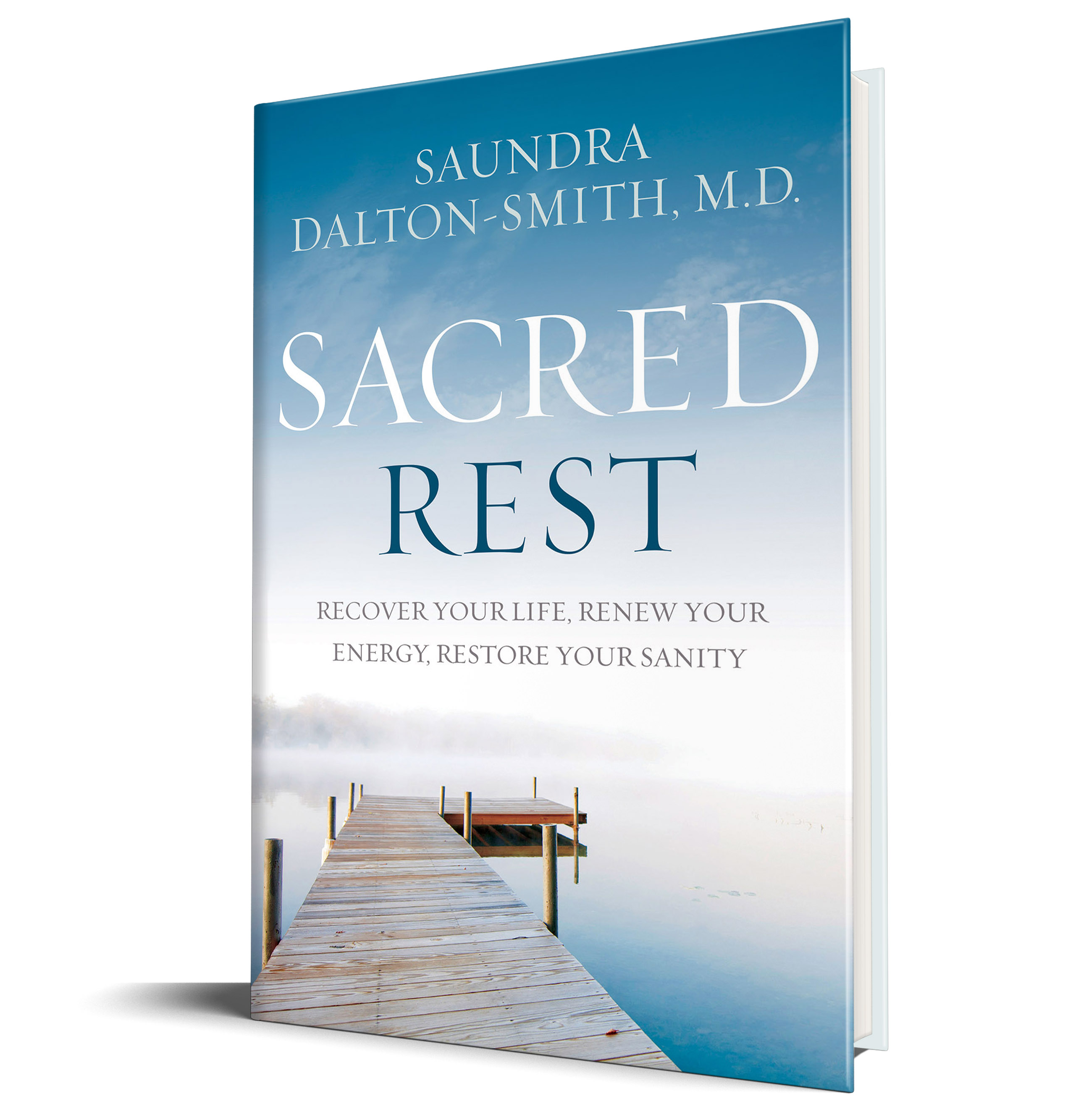
Medical doctor Saundra Dalton-Smith opens her book Sacred Rest with a telling line: “Let’s be honest; we are all just too busy. I am too busy to write this book, and you are probably too busy to read this book.” How true that is! We desperately need quality rest to recuperate from our busy lives, but we’ve fooled ourselves into thinking that rest is a waste of time.
Some people mistakenly think that sleep is rest. But, as Dr. Dalton-Smith quickly points out, that isn’t true. Sleep is required for our good health, but sleep is a natural by-product of rest. Rest isn’t just taking a nap; it goes so much deeper and wider than that.
A good portion of this book is built-around Dr. Dalton-Smith’s acrostic R-E-S-T. She says, “Let me share a little medical secret with you. The most underused, chemical-free, safe, effective, alternative medicine is spelled R-E-S-T: Recognize your risk, Evaluate your current position, Science and research, Today’s application.”
In Sacred Rest, you will learn not only what parts of our lives need rest, but also some highly practical ways to get that rest we so desperately need. This book is not written in medical terminology, but in easy-to-understand principles that anyone can grasp.
Dr. Dalton-Smith shares how she has followed her own prescription for rest, and the difference it has made in her life. Quite simply she says, “What I am promising is that as you begin to understand the role rest plays in your life you will do the following: replace the stress of intense living with the peace of intentional rest, and identify your rest deficit and discover which types of rest you need most.”
Please!—Make time in your busyness to read this book on rest so that you can learn how to be the most you can be without burning yourself out.
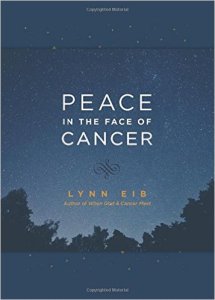
My Mom has cancer. Chances are very good that you or someone very close to you will be rocked with a cancer diagnosis during your lifetime. What do you say? What do you do when it feels like the bottom just dropped out of your life? Here is an excellent resource you simply must have close at hand: Peace In The Face Of Cancer by Lynn Eib.
Lynn is both a cancer survivor and a long-time patient advocate in an oncologist’s office, so right from the opening pages you will feel the compassionate care and knowledgeable insight Lynn brings to those with this medical turmoil swirling around them.
Lynn is also a seasoned writer, so she brings her word craft to this book, making it accessible for anyone. Whether you are the one with cancer, a caregiver to a loved one with cancer, or just someone who wants to be an empathetic friend, Lynn writes in a style that benefits everyone.
And, most importantly for me, Lynn is a committed Christian. Her faith in Jesus Christ brought her a solid hope in the midst of cancer’s uncertainty, and she has a way of imparting this sense of peace in page after page.
Peace In The Face Of Cancer is written in 40 short chapters, each targeting a specific aspect of cancer that both patients and caregivers will find extremely helpful.
“Pornography is based on and fed by always needing to see something new. It works neurologically to create an obsessive demand for more of something you’ve never seen before. The promise of something new is what gets you excited and interested, which means, by definition, that you can never be fully satisfied. That’s the opposite of cherish. Pornography works off volume, not individuality; it works off the novel, not the known. Learning to cherish a solo picture of a unique mate shapes our hearts and minds to cherish a particular individual above all others.” —Gary Thomas, in Cherish
“Pornography, by its very nature, is an equal opportunity toxin. It damages the viewer, the performer, and the spouses and the children of the viewers and the performers. It is toxic mis-education about sex and relationships. It is more toxic the more you consume.” —Dr. Mary Anne Layden
“We can’t fill up our eyes with our wives if our eyes have been previously filled with someone else. One of the many dangers of porn is that it neurologically trains us to find our wives less beautiful.” —Gary Thomas, in Cherish
“When it comes to porn, it turns an intimate relationship love-connection into a rehearsed performance that’s less about the emotional bonding that happens when people have sex. No emotional connection, no commitment, no kissing and cuddling, just performing and self-focusing. Porn fails to emphasize the most real parts in relationships. It doesn’t depict real people with real bodies with real (and beautiful) flaws. In fact, it tries to sell the complete opposite—a photoshop fantasy that reality should never have to compete with. So it only makes sense that those who are exposed to porn have their perceptions of sex twisted and warped. Soon, real people don’t measure up, and partners are considered less exciting when compared to an exaggerated production on a computer screen.” —Fight The New Drug
A man named Luke recorded a couple of amazing things about the life of Jesus. As both a doctor and an historian, Luke was an excellent “noticer.”
In first-century biographies, a person’s early life usually wasn’t mentioned. So it’s not uncommon that two of the four Gospel writers don’t pick up Jesus Christ’s life story until He was about 30 years old. Even Matthew, who did record something about the birth of Jesus, didn’t go into much detail.
Luke, however, notices two important things.
First, in covering the first 12 years of Christ’s life Luke says, “The Child grew and became strong…” (Luke 2:40).
The Greek word Luke uses for grew means a continual process of increasing. Sometimes we mistakenly think this means a continual movement on a graph upward and to the right. But I’ll give you one instance where this is not the case—when we record someone’s height, we do so in feet not in years. In other words, we say someone is 6’4” tall, but we don’t say they are 6-years and 4-months fall. We understand there is a limit to that sort of growth.
What Luke is referring to is a different kind of continual increasing. All of us go through four quadrants as we learn:
unconscious incompetence—we’re no good in an area but we don’t even know it
conscious incompetence—we know that we’re no good in an area
conscious competence—we’re good in an area but we still have to think about what we’re doing
unconscious competence—we’ve gotten so good in an area that we no longer need to think about it
When Luke said Jesus grew, he meant not upward and to the right, but a continual cycle of learning what He didn’t know and increasing His competence in that area. When Luke said Jesus grewand became strong, he was saying that Jesus learned how to apply the lessons He was continually learning.
Second, in covering Christ’s next 18 years Luke says, “Jesus grew” (Luke 2:52), but he uses an entirely different word. This Greek word means to be hammered out, as a blacksmith hammers metal into shape. Notice that Jesus is not the One doing the hammering, but He is the One submitting to His Father’s hammering. He is letting God the Father shape Him into what He needs to be.
Luke says that Jesus grew in…
…wisdom—mental health
…stature—physical health
…favor with God—spiritual health
…favor with men—emotional (or social) health
In other words, Jesus was growing in a wholly healthy way. God wants us to be wholly healthy too. He wants us to continually allow Him to point out areas where we are lacking, and then submit to His guidance on how we can improve in those areas.
I’ll be exploring these four areas—mental, physical, spiritual and emotional—over the next few weeks. But in the meantime, why don’t you pray the prayer David prayed and ask God’s Spirit to search out any areas where you are falling short of optimal health. And then submit to God’s work of helping you get wholly healthy in every area of your life.