This is a weekly series with things I’m reading and pondering from Oswald Chambers. You can read the original seed thought here, or type “Thursdays With Oswald” in the search box to read more entries.
Is Jesus My Master?
To have a master and to be mastered are not the same thing, but diametrically opposed. If I have the idea that I am being mastered, it is a sure proof that I have no master. If I feel I am in subjection to someone, then I may be sure that that someone is not the one I love. To have a master means to have one who is closer than a friend, one whom I know knows me better than I know myself, one who has fathomed the remotest abyss of my heart and satisfied it, one who brings me the secure sense that he has met and solved every perplexity of my mind—that, and nothing less, is to have a master. …
Our Lord never takes measures to make us obey Him. Our obedience is the outcome of a oneness of spirit with Him through His Redemption. That is why, whenever Our Lord talked about discipleship, He prefaced it with an “IF”—“you do not need to unless you like”; but—“If any man will be My disciple, let him deny himself.”
From So Send I You
After reading Oswald Chambers’ definition of a loving master, would you say Jesus is your Master?
After reading what Chambers says about obedience being an expression of love, would you say you obey your master out of love or out of duty?
How you answer these questions makes all the difference in how you live as a disciple of Jesus.
Live Dead Journey are notes from missionaries on the front lines. You can check out my book review by clicking here. One of the things that stood out to me was the focus of these “tour guides” on their time abiding with Jesus. Here are some quotes that share their heart on this.
“Abiding time is extravagant daily time with Jesus.” –Dick Brogden
“Jesus spent close to 90 percent of His life in a village of twelve families, and even His three years of ministry were characterized by time alone with the Father. Moses spent forty years in Midian and had multiple trips to the mountain with God. Paul spent thirteen years in preparation, some of it in the Arabian Desert, and prayed constantly. Adam, Joseph, David, Elijah, Daniel, Mary, John, and others all gave God extravagant time. When we examine the lives of any heroes of the faith, we can see that they lingered daily with Jesus.” –Dick Brogden
“Jesus has become my safe place. When stability is not present in life here, I can lean on Him. When friends are not constant, Jesus is. He knows what I need and provides everything. Jesus is enough for me.” –Joy Hawthorne
“I’ve learned that not spending time with Jesus today is one step in not spending time with Him tomorrow.” –Miriam Davis
“One thing I have discovered is that I can’t survive throughout the day on just one block of time with Jesus. So at some other point in my day, I spend time basking in His presence. … Abiding is a lifestyle.” –Eva Bridges
“To help draw out the lessons from a passage, I now look for the following. Is there:
A command for me to obey?
A promise for me to claim?
A sin for me to avoid or repent of?
An example for me to follow (good) or avoid (bad)?
A truth to believe?
A prayer to pray?” –Jeff Griffin
“I’ve realized that what I desire I become–Jesus is my desire, and I want to be like Him.” –Cathy Stone
“How extravagant are you toward Jesus with your time? Do you lavish time on Jesus? Do you give Jesus the most energetic and focused times of your day? Or do you tend to give Jesus the crumbs of your schedule?” –Dick Brogden
How do you handle a hard passage in the Bible? Peter wrote this about Paul, “His letters contain some things that are hard to understand….” But if we don’t take the time to wrestle with that passage, Peter says this is what happens next: “…which ignorant and unstable people distort, as they do the other Scriptures, to their own destruction” (2 Peter 3:16).
So here’s a 5-step plan I use when I am working through a challenging passage of Scripture.
Ask the Holy Spirit to help you
All Scripture is inspired by the Holy Spirit (2 Timothy 3:16), and the same Holy Spirit lives in a Christian (1 John 2:20). Think about that: the same Holy Spirit that inspired an author to write the words of Scripture is the same Spirit that will illuminate them to you!
Read the difficult passage in context
We will make our task much easier when we “zoom out” from the difficult text and read the whole passage surrounding the difficult verse/phrase. Perhaps we need to “zoom out” even farther to understand why the whole chapter or book was written.
Identify the parts that are clear
Start off by identifying the parts that you do understand, and then see what light that shines on the tricky text.
Cross reference with other Scriptures
Never, ever, ever draw a conclusion from just one passage of Scripture. Paul reminded his audience that he used the “whole counsel of God’s Word” (Acts 20:27) in forming his sermons. If the challenging passage contains an Old Testament passage, look it up; if it references an historical event, read that history. I also like to use biblegateway.com’s excellent search feature to find cross references.
Draw conclusions on what appears to be the main point
Only after you have done step #1-4 should you attempt to draw some conclusions. You will set yourself up for error if you draw a conclusion first, and then try to find other texts in the Bible that agree with you.
The Apostle Peter writes something rather challenging in his first letter. In fact, Martin Luther said this about 1 Peter 3:18-22: “A wonderful text is this, and a more obscure passage perhaps than any other in the New Testament, so that I do not know for a certainty just what Peter means.” If you would like to see how I walk through the 5-step plan on this “obscure passage,” please check out the video below.
This is a weekly series with things I’m reading and pondering from Oswald Chambers. You can read the original seed thought here, or type “Thursdays With Oswald” in the search box to read more entries.
Ordinary Preparation For Extraordinary Service
What are the workshops that supply the munitions for God’s enterprises? The workshop of missionary munitions is the hidden, personal, worshiping life of the saint. …
We imagine we should be all right if a big crisis arose; but the crisis only reveals the stuff we are made of, it does not put anything into us. “If God gives the call, of course, I shall rise to the occasion.” You will not, unless you have risen to the occasion in the workshop. If you are not the real article before God there, doing the duty that lies nearest, instead of being revealed as fit for God when the crisis comes, you will be revealed as unfit. …
“Jesus, knowing that the Father had given all things into His hands, and that He came forth from God and goeth unto God…”—we might have expected the record to go on: “He was transfigured before them”; but we read that the next thing Our Lord did was of the most menial commonplace order—“He took a towel, and girded Himself. Then He began to wash the disciples’ feet.” Can we use a towel as Our Lord did? Towels and basins and feet and sandals, all the ordinary sordid things of our lives, reveal more quickly than anything what we are made of. It is not the big occasions that reveal us, but the little occasions.
Are you spending time every day abiding with Jesus and worshiping Him? Are you willing to do “the little things” that God gives you to do?
These are the things that will make God’s saints ready for “the big things” that come along. Don’t look for the big things, just do the ordinary things God desires of you every day, and then you will be more than ready for the extraordinary things in which God places you.
Give to Caesar what belongs to Caesar, and give to God what belongs to God (Matthew 22:21).
The Bible has much to say to God-followers about how to interact with earthly governments:
Wise King Solomon told us to “fear the Lord and the king” and not go along with rebels against the government (Proverbs 24:21)
Daniel said several times that “the Most High is sovereign over all kingdoms on earth and gives them to anyone He wishes” (Daniel 4 & 5)
The Apostle Paul declared he was no rebel to either the civil or religious governors: “I have done nothing wrong against the Jewish law or against the temple or against Caesar” (Acts 25:8)
Later on, Paul reminded the church that government officials are God’s servants, and that we need to give them the respect that is owed to them (see Romans 13:1-7)
Peter counseled Christians: “Submit yourselves for the Lord’s sake to every human authority: whether to the emperor, as the supreme authority, or to governors … Show proper respect to everyone, love the family of believers, fear God, honor the emperor” (1 Peter 2:13-17)
But a man that exemplifies this balance between fearing God and honoring the king best is Mordecai. Mordecai was a Jew who served the Babylonian king faithfully—
He protected the king from would-be assassins
But disobeyed the king when the law of the land conflicted with God’s law
Then Mordecai helped the king get out of a bad law written by an evil man
A mark of a godly leader is one who knows the difference between fearing God and honoring earthly kings.
How can today’s leaders live out this principle? This is something that should lead us to prayerfully search the Scriptures, and then boldly live out what the Holy Spirit reveals to us.
This is Part 13 in my series on godly leadership. You can check out all of my posts by clicking here.
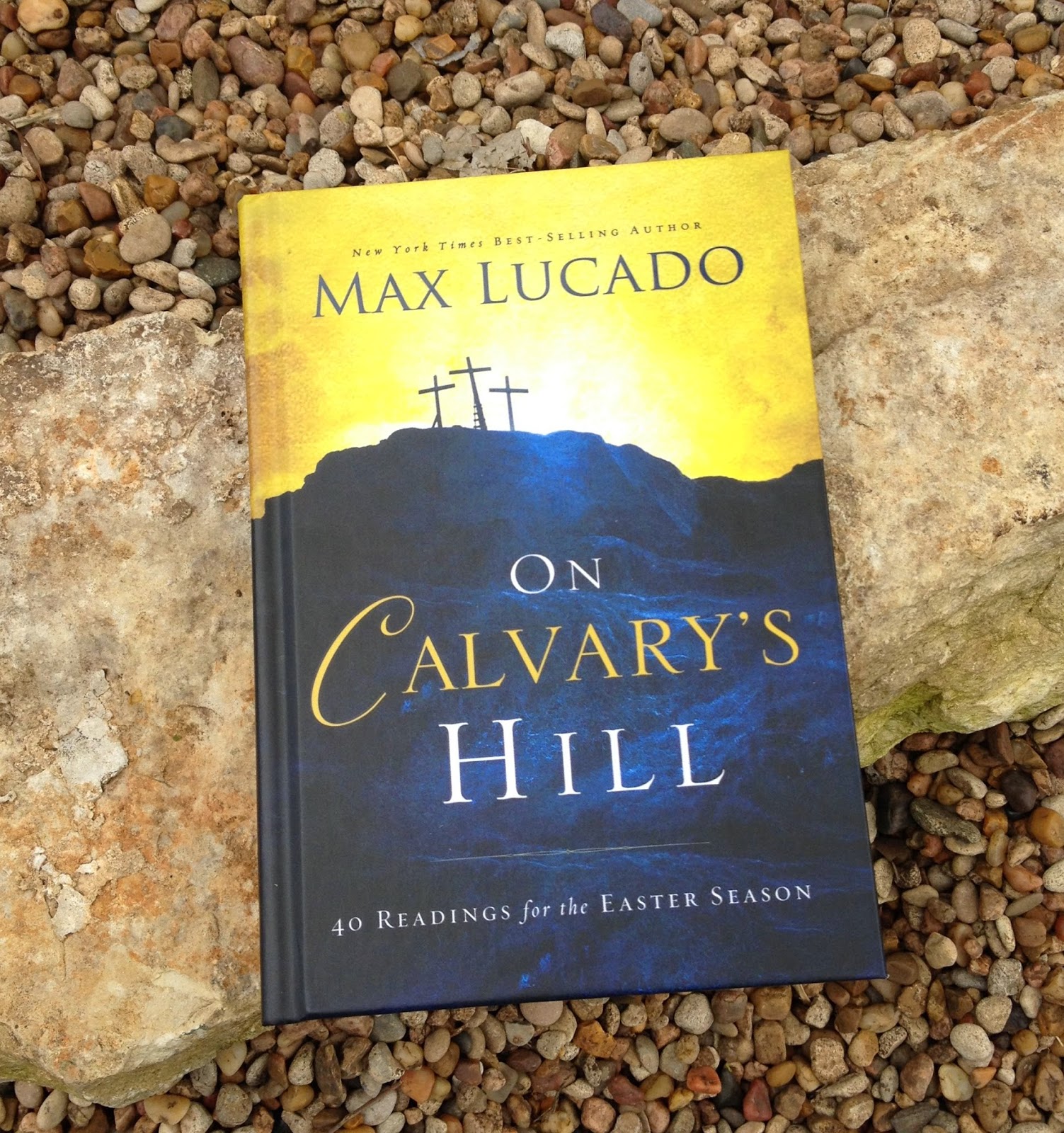
“Jesus hasn’t left us with an unapproachable God. ‘There is one God and one mediator between God and men, the Man Christ Jesus” (1 Timothy 2:5). When Jesus’ flesh was torn on the Cross, the curtain was torn in two. It was as if the hands of heaven had been gripping the veil, waiting for this moment. One instant it was whole; the next it was ripped in two from top to bottom. No delay. No hesitation. We are welcome to enter into God’s presence—any day, any time. God has removed the barrier that separates us from Him. The barrier of sin? Down. No more curtain. But we have a tendency to put the barrier back up with the curtain of our heart. Sometimes, no, oftentimes, we allow our mistakes and guilty conscience to keep us from God. Don’t allow a veil of guilt to keep you from your Father. Trust the Cross. The curtain is down, the door is open, and you are welcome in God’s presence.” —Max Lucado, On Calvary’s Hill(emphasis mine)
This is a weekly series with things I’m reading and pondering from Oswald Chambers. You can read the original seed thought here, or type “Thursdays With Oswald” in the search box to read more entries.
What Is A Missionary?
A missionary is a saved and sanctified soul detached to Jesus. The one thing that must not be overlooked is the personal relationship to Jesus Christ and to His point of view; if that is overlooked, the needs are so great, the conditions so perplexing, that every power of mind and heart will fail and falter. We are apt to forget that the great reason for missionary enterprise is not first the elevation of the people; nor first the education of the people; nor even first the salvation of the people, but first and foremost the command of Jesus Christ—“Go ye therefore, and make disciples of all the nations.” If we are going to remain true to the Bible’s conception of a missionary, we must go back to the source—a missionary is one sent by Jesus Christ as He was sent by the Father. …
In revising the lives of men and women of God and the history of the Church of God, there is a tendency to say—“How wonderfully astute those men and women were! How perfectly they understood what God wanted of them!” The truth is that the astute mind behind these men and women was not a human mind at all, but the mind of God. We give credit to human wisdom when we should give credit to the Divine guidance of God through childlike people who were foolish enough in the eyes of the world to trust God’s wisdom and supernatural equipment, while watching carefully their own steadfast relationship to Him. …
The special person called to do missionary work is every person who is a member of the Church of Christ. The call does not come to a chosen few, it is to everyone of us.
From So Send I You
Are you a Christian? Then Jesus calls you His missionary too!
Do you feel equipped to be a missionary? Jesus said all that is required for missionary service is a total reliance on Him.
With that in mind, go be Christ’s missionary to your world today!
There was a story circulating that a physicist once claimed that the bumblebee was defying the laws of physics and aerodynamics in its flight. Apparently, he calculated that the ratio of the bumblebee’s wing size in comparison to his body size just didn’t make the math work.
But entomologists and physicists quickly jumped in to say, “Hey, look, the bumblebee is flying, so clearly it works!” And then they went to work to try to explain it. They figured out that the bumblebee flaps its wings more back-and-forth than up-and-down, creating tiny hurricanes the propel them through the air. But then that created a whole new set of problems, like how does the bumblebee control a hurricane so precisely as it turns, stops, dives, and climbs. So then they had to create a new explanation, which they named dynamic stall.
All the while, the bumblebee is flapping its too-small wings 230 times per second(!), and going about its daily activities without being able to explain tiny hurricanes, the laws of physics or aerodynamics, or even knowing what dynamic stall is. It simply flies!
The ultimate argument for anything is doing something that critics say is impossible.
Peter tells Christians to be prepared to answer anyone for the reason for the hope that they have (1 Peter 3:15-16). The Greek word for “give an answer” is apologia, from which we get our word apologetic. Here are three apologetics for Christians to use for the hope that they have.
It really comes down to this: My hope is based on the resurrection from the dead of Jesus Christ, which I believe because of the Bible AND because of the change in my life.
The Bible’s authenticity
“No other work in all literature has been so carefully and accurately copied as the Old Testament. The particular discipline and art of the Jewish scribes came out of a class of Jewish scholars between the fifth and third centuries BC. They were called the Sopherim, from a Hebrew word meaning ‘scribes.’ The sopherim, who initiated a stringent standard of meticulous discipline, were subsequently eclipsed by the Talmudic scribes, who guarded, interpreted, and commented on the sacred texts from AD 100 to AD 500. In turn, the Talmudic scribes were followed by the better-known and even more meticulous Masoretic scribes (AD 500-900).” —Josh McDowell, God-Breathed
“No other ancient text is substantiated by such a wealth of ancient textual witnesses as is the New Testament. Roughly 5,500 separate manuscripts are available, variously containing anything from the entire New Testament corpus to a slight fragment of a single verse. … This textual support is far superior to that available for any other ancient documents, such as the classical texts from Greek and Roman writers (e.g., Plato, Aristotle, and Cicero). Only partial manuscripts have survived for many works of antiquity, and it is not unusual to find that the only complete manuscript for some ancient writing is a copy dating from 1,000 years after its composition.” —Archaeological Study Bible, “The New Testaments Texts” (page 1859)
“The biblical Dead Sea Scrolls are up to 1,250 years older than the traditional Hebrew Bible, the Masoretic text. We have been using a one-thousand-year-old manuscript to make our Bibles. We’ve now got scrolls going back to 250 BC. … Our conclusion is simply this—the scrolls confirm the accuracy of the biblical text by 99 percent.” —Dr. Peter Flint
I have shared other apologetic evidence for the authenticity of Scripture here and here.
Christ’s resurrection
In1 Corinthians 15:1-8 Paul lists all of the eyewitnesses to Christ’s resurrection, giving critics ample opportunity to challenge these witnesses in person. If these witnesses would have been perpetrating a hoax, skeptics of their day would have been able to uncover the inconsistencies in their story. If the account of Christ’s resurrection was made-up, it’s doubtful the early Christian martyrs would have “stuck to their story” as they were being tortured, but none recanted.
Josh McDowell notes, “By AD 100, the apostles had died, but the Christian Church was still in its infancy, with fewer than twenty-five thousand proclaimed followers of Christ. But within the next two hundred years, the fledgling church experienced explosive multiplication of growth, to include as many as twenty million people. This means the church of Jesus Christ quadrupled every generation for five consecutive generations!”
My personal experience
“I am a changed person. I am not who I was before I met Jesus” and “My life tends to go better when I live by biblical principles” are both excellent apologetics!
Let others argue that God doesn’t exist, or that you shouldn’t have hope, and then you—like the bumblebee—just keep flying with Jesus! (see 2 Timothy 3:14)
This is a weekly series with things I’m reading and pondering from Oswald Chambers. You can read the original seed thought here, or type “Thursdays With Oswald” in the search box to read more entries.
Second Mile Christianity
To go the second mile means always do your duty, and a great deal more than your duty, in a spirit of loving devotion that does not even know you have done it. … The supreme difficulty is to go the second mile with God, because no one understands why you are being such a fool. The summing up of Our Lord’s teaching is that it is impossible to carry it out unless He has done a supernatural work in us. …
The interests of the Son of God and of the disciple are to be identical. How long it takes to manifest that identity depends on the private history of the disciple and his Lord. …
We do not need the grace of God to stand crises; human nature and pride will do it. We can buck up and face the music of a crisis magnificently, but it does require the supernatural grace of God to live twenty-four hours of the day as a saint, to go through drudgery as a saint, to go through poverty as a saint, to go through an ordinary, unobtrusive, ignored existence as a saint, unnoted and unnoticeable. The “show business,” which is so incorporated into our view of Christian work today, has caused us to drift far from Our Lord’s conception of discipleship. It is instilled in us to think that we have to do exceptional things for God; we have not. We have to be exceptional in ordinary things, to be holy in mean streets, among mean people, surrounded by sordid sinners. That is not learned in five minutes.
Jesus calls His disciples to go the second mile. Others won’t understand us, and few (if any) people will applaud us for doing so.
Like a novice runner, maybe we can’t go the whole second mile the first time out. Maybe not even the second or third time. But can we go a bit further the second time than we did the first? And a bit further the third time than we did the second? That’s what discipleship is all about: Letting Jesus help us go a bit further each time.
If you stick with it, soon you will be going the second mile and not even realize it. Other may not realize it either, but God always sees when we do, and He is pleased!
“Our Lord told of two men who appeared before God in prayer, a Pharisee who recited his virtues and a publican who beat on his breast and pleaded for mercy. The first was rejected, the other justified [see Luke 18:9-14].
“We manage to live with that story in some degree of comfort only by keeping it at full arm’s length and never permitting it to catch a hold of our conscience. These two men are long ago dead and their story has become a little religious classic. We are different, and how can anything so remote apply to us? So we reason, on a level only slightly above our unconscious, and draw what comfort we can from the vagueness and remoteness of it all.
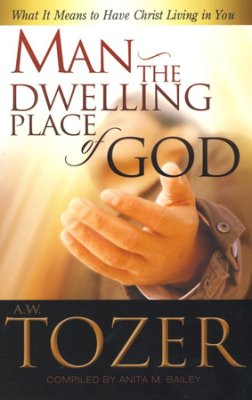
“But why should we not face up to it? The truth is that this happens not a long while ago, but yesterday, this morning; not far away, but here where some of us last knelt to pray. These two men are not dead, but alive, and are found in the local church, at the missionary convention and the deeper life conference here, now, today.” —A.W. Tozer, from Man—The Dwelling Place Of God



 This is a weekly series with things I’m reading and pondering from Oswald Chambers. You can read the original seed thought here, or type “Thursdays With Oswald” in the search box to read more entries.






 Craig T. Owens