Thursdays With Oswald—Love Like God Loves

Oswald ChambersThis is a periodic series with things I’m reading and pondering from Oswald Chambers. You can read the original seed thought here, or type “Thursdays With Oswald” in the search box to read more entries.

Love Like God Loves

     There is only one Being who loves perfectly, and that is God, yet the New Testament distinctly states that we are to love as God does; so the first step is obvious. If ever we are going to have perfect love in our hearts we must have the very nature of God in us. In Romans 5:5 the apostle Paul tells us how this is possible; he says, “The love of God is shed abroad in our hearts by the Holy Spirit which is given unto us.” …

     That means I have to identify myself with God’s interests in other people, and God is interested in some extraordinary people: in you and in me, and He is just as interested in the person you dislike as He is in you. … 

     God grant we may not only experience the indwelling of the love of God in our hearts, but go on to a hearty abandoned to that love so that God can pour it out through us for His redemptive purposes for the world. He broke the life of His Son to redeem us, and now He wants to use our lives as a sacrament to nourish others.

From Conformed To His Image (emphasis mine)

Quite simply: we need to love God more, so we can love others more. Will I let the Holy Spirit shed that love in me? Will you?

14 Quotes From “The Printer And The Preacher”

The Printer And The PreacherI loved this book! It’s a great historical story of how Benjamin Franklin and George Whitefield’s lives intertwined at such a pivotal time in history. America exists the way it does politically and religiously today because of the influence of these two titans. You can read my full book review here. Below are a few quotes from this remarkable book.

“The Faith you mention has doubtless its use in the world…. But I wish it were more productive of good works than I have generally seen it: I mean real good works, works of kindness, charity, mercy, and public spirit; not a holiday-keeping, sermon-reading or hearing, performing church ceremonies, or making long prayers. … Your great Master thought much less of these outward appearances and professions than many of His modern disciples. He preferred the doers of the Word to the mere hearers…and those who gave food to the hungry, drink to the thirsty, raiment to the naked, entertainment to the stranger, and relief to the sick.” —Benjamin Franklin, in a letter to pastors

There are many who “perhaps fear less the being in Hell, than out of the fashion.” —Benjamin Franklin

“The alteration in the face of religion here is altogether surprising. Never did the people show so great a willingness to attend sermons, nor the preachers greater zeal and diligence in performing the duties of their function. Religion is become the subject of most conversations. No books are in request but those of piety and devotion; and instead of idle songs and ballads, the people are everywhere entertaining themselves with Psalms, hymns and spiritual songs. All of which, under God, is owing to the successful labors of the Reverend Mr. Whitefield.” —Benjamin Franklin, in a newspaper article

The Body of
B. Franklin
Printer;
Like the Cover of an old Book,
Its Contents torn out,
And stript of its Lettering and Gilding,
Lies here, Food for Worms.
But the Work shall not be wholly lost:
For it will, as he believ’d, appear once more,
In a new& more perfect Edition,
Corrected and Amended
By the Author. —Benjamin Franklin, the Epitaph he wrote for himself at age 22

“I have seen your Epitaph. Believe on Jesus, and get a feeling possession of God in your heart, and you cannot possibly be disappointed of your expected second edition finally corrected, and infinitely amended.” —George Whitefield 

“You blame me for weeping, but how can I help it when you will not weep for yourselves, though your immortal souls are on the verge of destruction?” —George Whitefield

Those who hear the gospel “have more need of heat than light. Would to God we had as much warmth in our hearts, as light in our understandings!” —George Whitefield

“If we are truly converted, we shall not only be turned and converted from sinful self, but we shall be converted from righteous self. That is the devil of devils: For righteous self can run and hide itself in its own doings, which is the reason self-righteous people are so angry with gospel preachers.” —George Whitefield

“Let your practice correspond to your profession.”—George Whitefield

“Oh pray, dear Mr. H., that God would always keep me humble, and fully convinced that I am nothing without Him, and that all the good which is done upon earth, God doth it Himself.” —George Whitefield, in a letter to Gabriel Harris, when his popularity was growing

“Will it not in the end destroy brotherly love, and insensibly take from us that cordial union and sweetness of soul, which I pray God may always subsist between us? … How glad would the enemies of the Lord be to see us divided? How many would rejoice, should I join and make a party against you? And in one word, how would the cause of our common Master every way suffer by our raging disputes about particular points of doctrines? … I write not this, honored Sir, from heat of spirit, but out of love. At present, I think you are entirely inconsistent with yourself, and therefore do not blame me, if I do not approve of all that you say.” —George Whitefield, in correspondence with John Wesley over doctrinal differences

“I find that you grow more and more famous in the learned world. As you have made a pretty considerable progress in the mysteries of electricity, I would now humbly recommend to your diligent unprejudiced pursuit and study the mystery of the new-birth. It is a most important, interesting study, and when mastered, will richly answer and repay you for all your pains. One at Whose bar we are shortly to appear, hath solemnly declared, that without it, ‘we cannot enter the kingdom of heaven.’ You will excuse this freedom. I must have aliquid Christi [something of Christ] in all my letters.” —George Whitefield, in a letter to Benjamin Franklin

“satan is angry. I am now mimicked and burlesqued upon the public stage. All hail such contempt! God forbid that I should glory, save in the Cross of Jesus Christ.” —George Whitefield, in a letter after a play was produced in London making fun of him

“Whitefield and Franklin were not just the two most famous people in America in their time—they were also the most significant. The effects of their lives and their work are still being felt today … If America was born as a Christian nation, it’s because many of its people were genuinely, powerfully Christians. It had less to do with the language in any founding documents and more to do with the fact that George Whitefield had been tromping from town to town, inviting people to hear the call of God. It had even less to do with church membership. God was grabbing lives. People’s hearts were flying open. No one was imposing Christianity on society. The power came from within.” —Randy Peterson

F.E.A.R

PreachingI read something really cool in my personal devotional time this morning, and I took to Periscope to share it live. (Are you on Periscope yet? Check it out, and please consider following me at @craigtowens.)

Please take a look at the well-known stories in Luke 8, and then listen to what the Holy Spirit was showing me this morning about F.E.A.R. = False Evidence Appearing Real. The verse I really focus on is Luke 8:37.

Links & Quotes

link quote

“The Apostle Paul tells us that a temple of God, properly adorned and maintained, grows in unity and maturity in the Lord Jesus, as pastors and teachers equip church members to do the work of ministry (Ephesians 4:11-16). A building and other facilities can aid in this process, but they are not essential. Indeed, in many ways they can actually distract us from our task by so defining and confining what we do in the name of ministry that our endeavors consistently look more like the ways of the world than the work of the Lord, more like maintaining and maximizing an institution than seeking and advancing a Kingdom not of this world. … As we build our churches let us not lose sight of the fact that what matters most to the Lord is not the number, shape, and usability of the buildings we erect, but the health, growth, and ministries of the people in whom He has come to dwell.” —T.M. Moore

“When we blindly adopt a religion, a political system, a literary dogma, we become automatons. We cease to grow.” —Anais Nin

“The Lord’s Prayer contains 56 words; the Gettysburg Address, 266; the Ten Commandments, 297; the Declaration of Independence, 300; and a recent U.S. government order setting the price of cabbage, 26,911. At the state level, over 250,000 bills are introduced each year. And 25,000 pass the legislatures to disappear into the labyrinths of the law.” —Al Ries and Jack Trout

“For some (even for some Christians), faith is best defined as ‘believing in something that lacks supporting evidence.’ But this is not the definition of faith that is presented on the pages of Christian Scripture.” Read more from J. Warner Wallace on how Christianity Promotes Rational (and Evidential) Exploration.

Frank Turek points out, “Remember, Moses was on the wrong side of the golden calf. And [Abraham] Lincoln’s Emancipation Proclamation was on the wrong side of Dred Scott.…” In this post he shares why same-sex “marriage” proponents are on the wrong side of God, evolution and humanity.

[VIDEO] This 5-minute clip of noted New Testament scholar N.T. Wright on homosexuality is well worth your time—

My son tipped me off to a thought-provoking post on dating relationships: How Our Dating Culture As Already Broken Your Future Wife’s Heart.

C.S. Lewis On Marriage

C.S. Lewis at his deskTwo powerful passages on marriage from C.S. Lewis’ book Mere Christianity—

“The Christian idea of marriage is based on Christ’s words that a man and wife are to be regarded as a single organism—for that is what the words ‘one flesh’ would be in modern English. And the Christians believe that when He said this He was not expressing a sentiment but stating a fact—just as one is stating a fact when one says that a lock and its key are one mechanism, or that a violin and a bow are one musical instrument. The inventor of the human machine was telling us that its two halves, the male and the female, were made to be combined together in pairs, not simply on the sexual level, but totally combined. The monstrosity of sexual intercourse outside marriage is that those who indulge in it are trying to isolate one kind of union (the sexual) from all the other kinds of union which were intended to go along with it and make up the total union. The Christian attitude does not mean that there is anything wrong about sexual pleasure, any more than about the pleasure of eating. It means that you must not isolate that pleasure and try to get it by itself, any more than you ought to try to get the pleasures of taste without swallowing and digesting, by chewing things and spitting them out again.”

“My own view is that the Churches should frankly recognize that the majority of the British [or American] people are not Christian and, therefore, cannot be expected to live Christian lives. There ought to be two distinct kinds of marriage: one governed by the State with rules enforced on all citizens, the other governed by the church with rules enforced by her on her own members. The distinction ought to be quite sharp, so that a man knows which couples are married in a Christian sense and which are not.”

Holy Rescuers

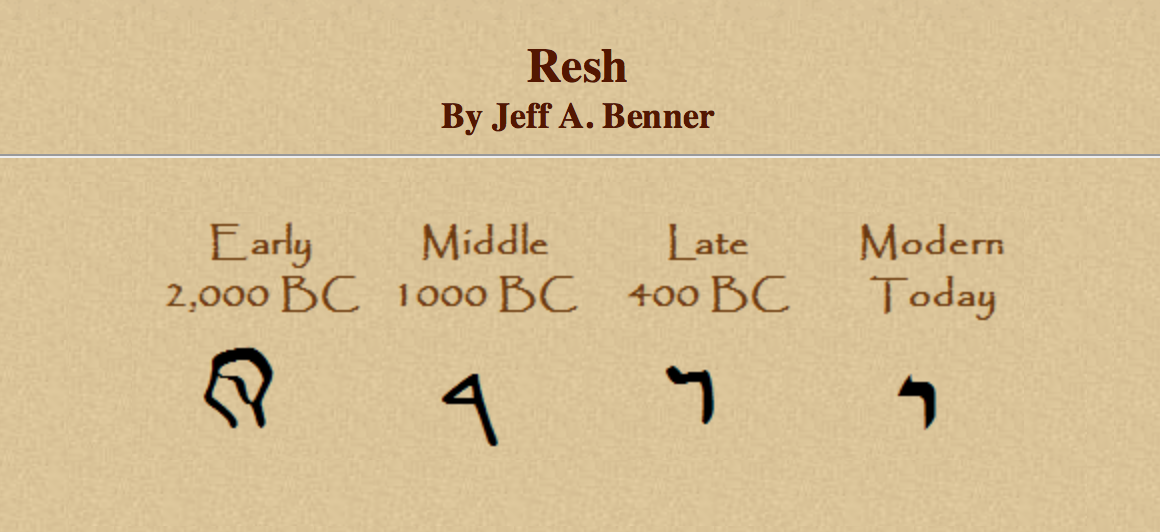
QophThe Hebrew Aleph-Bet is nothing like the English alphabet. First of all, in English, letters are just letters; they don’t really mean anything. In Hebrew, every letter has its own definition and imagery. Second, in the English alphabet, the order of the letters doesn’t have any significance; but the order in Hebrew is of vital importance.

It is significant that qoph (vv. 145-152) comes after tsadhe (vv. 137-144) in Psalm 119. Tsadhe tells us about God’s righteousness, and how the Word gives us a reliable way to approach All-Righteous God as a humble, obedient servant. This must come before qoph, which encourages us to stay in the presence of Holy God for a specific reason.

Qoph is the second of two Hebrew letters that has two pen strokes that don’t touch. This is a reminder for us to stay close to God. But qoph is the only Hebrew letter that goes below the line. This is a reminder that God came down to rescue us!

Qoph is the first letter in the Hebrew word for holy. When Isaiah saw God, and heard the angels shouting, “Holy, Holy, Holy is the Lord God Almighty,” he saw himself unworthy to come into God’s presence, until his sin had been atoned for. After that, he was ready to be sent out as God’s messenger. (see Isaiah 6:1-8).

In the last book of the Bible, the picture in Heaven is similar, with angels still crying, “Holy!” (Revelation 4:8). As Christians, Jesus Christ has become our Atonement, so we can approach holy God’s throne with humble confidence.

Not only that, but Jesus sent us out as holy witnesses. He sent us “below the line.” Just like He came down to rescue us, He has commissioned us as holy rescuers (Proverbs 24:11-12; Jude 21-25).

As you stay close to God’s holiness, you become a more effective witness for Christ, a holy rescuer! What a privilege to be used by God in this way.

If you would like to watch the message I delivered yesterday on being holy rescuers, check this out—

If you have missed any of the messages in our P119 series, you can access them all by clicking here.

Links & Quotes

link quote

“Sing, O heavens! and rejoice, O earth! Man’s extremity is God’s opportunity.” —George Whitefield

“Health for sick humanity! Medicine for a diseased world! A Physician for a dying race! Such are the messages which we bring. All of them overflowing with God’s great love to sinners.” —Horatius Bonar

TAKE ACTION: House Democrats have introduced a bill to force American taxpayers to pay for the murder of children! Contact your House representative to encourage them to vote NO.

This is very clever: Gregg Farah summarized every chapter of the Bible in two words or less.

So excited for our local high school teacher Dave Stuart, who is a finalist for Teacher of the Year!

Patrick Morley has a great suggestion for making deposits in your spouse’s emotional bank account.

8 Quotes From Horatius Bonar

Horatius BonarThere is a series of book by Horatius Bonar called Light And Truth. I am currently reading one of the books in the series as I read through the New Testament in my personal devotional time. Typically I post a book review after I’ve finished a book (which I will do with Light And Truth [update: the review is posted here]), and then I share some quotes from that book. In this case I’m mixing things up a bit: I’m sharing some quotes from the first half of this book today, and then I’ll post a review and more quotes after I finish the book. Enjoy!

(Note: Scripture references appearing in brackets following the quote reflects the passage or verse on which Bonar was commenting.)

“What is at the bottom of all the persecutions of various ages? It is Christ troubling the world. If He would let it alone, it would let Him alone. What means the outcry, and alarm, and misrepresentation, and anger, in days of revival? It is Christ troubling the world. What means the resistance to a fully preached gospel? It is Christ troubling the world. A fettered gospel, a circuitous gospel, a conditional gospel—a gospel that does not truly represent Christ—troubles no man; for in such cases it is another Christ that is announced, and not the Christ, the King of the Jews, that troubled Jerusalem. But a large, free, happy, unconditional gospel, that fully represents Jesus and His grace, Jesus and His completeness, does trouble men. It troubles all to whom it comes, in some measure. Some it troubles and then converts; some it only troubles. … The world’s only hope is to be ‘troubled’ by Christ. … Yet all this troubling is in love. He sounds His trumpet to awake the sleepers.” [Matthew 2:3]

“The Lord ends speaking and begins working; He comes down from the pulpit and enters the hospital. Such is His whole life: words and deeds intermingled; words of health and deeds of health. His lips breathe fragrance, and in His hand is the balm of Gilead. … [The leper] wants to be made clean, and he casts himself on Christ for this. He is the hyssop, the water, the blood, the ashes, the priest, the physician, all in one. Thus we still come, doubting neither the willingness nor the power, yet casting ourselves on the will of the Lord; not presuming to dictate, yet appealing to His sovereign Grace. As the needy, the sick, the unclean, we come; for the whole need not a physician, but they that are sick.” [Matthew 8:1-3]

“It is the voice of authority. It reminds us of Genesis 1:2-3. He speaks as one who knew that He could cure. Not hesitatingly. Nor are the words a prayer, but a command. He speaks, and it is done. … Thus love, authority, and power are all conjoined. It is the voice of Omnipotence. … He is the same Christ still; with the same love, and authority, and power. He is still a Healer, and the worst of diseases fly from His touch and voice. Let us go to Him with all that afflicts us. He calls and He will heal us of all. … Be persuaded to present thyself to Him, just as thou art give this divine Healer thy simple confidence. Take Him for what He is, and He will take thee for what thou art. Thus shalt thou meet in love; thou to be healed, and He to heal; thou to have the joy of being healed, and He to have the joy of healing thee, and to announce to heaven, in the presence of the angels of God, that another leper has been healed!” [Matthew 8:1-3]

“And is not this oftentimes the very point of the difficulty we experience in believing? We cling to the visible, the palpable prop—the human rope which we hold in our hand, unwilling to let go. We speak of our inability to believe; but what is this save our tenacity in holding on to the very things which God asks us to quit? We say that we ‘cannot lay hold’; should we not rather say that we ‘cannot let go’? We complain that we have no power to cling and grasp; whereas it should be that we have no will to let go.”

“As iniquity increases, faith decreases. … As iniquity increases, truth decreases. … As iniquity increases, righteousness and holiness decrease. … As iniquity increases, religion decreases. … As iniquity increases, delight in the things of God decreases. … But the special thing of which Our Lord predicts the decrease is love—love to God, love to himself, love to one another.” [Matthew 24:12]

“Our Lord will come! This is one of the great certainties of the unknown future. He may tarry, but He will come at last. Many obstacles made seem to rise up, but He will come. Men may not desire Him, but He will come. The Church may be cold, but He will come. Earth may think she has no need of Him, but He will come! The scoffer may say, where is the promise of His coming? but He will come. satan may do His utmost to oppose; but He will come. This is the great future certainty which Christ and His apostles have proclaimed to us. Our Lord will come! … The hour is, no doubt, fixed in God’s purpose, but the knowledge of that time is kept from us. They do wrong, then, who try to fix the hour, thus seeking to extract a secret from God. They do wrong who neglect the whole subject because this secret is connected with it. They do wrong who scoff at the whole subject because of the rash attempts or wretched failures of some pretended interpreters of prophecy. Thus, ‘we know,’ and ‘we know not’: we know that He will come, we do not when. … Beware of falling under any influences that would make you indifferent to the Lord’s appearing. Beware of worldly arguments; beware of pretended spiritual arguments; beware of confounding death and Christ’s coming; beware of the errors and seductions of the age.” [Matthew 22:42, 44]

“Ah, does not our faith often thus fail just at this point? We can go to Him for a little thing; we cannot go to Him for a great thing. We count it presumption to expect much. Instead of feeling that the worse the case, the greater the glory to His power and love, we stop short, and cease to expect anything from Him at all. I need not trouble the Master, we say, my case is so desperate; instead of saying, because my case is so desperate, I will trouble Him, I will give Him this opportunity of magnifying His skill and grace.” [Mark 5:36]

“Understand what is passing day by day; interpret events; connect them with the coming of the Son of Man. You see false Christs; you hear a Babel of opinions; you mark the new forms of immorality and infidelity; you are startled with the bold assaults made on Scripture, and on the Christ of God, on His blood, and Cross, and righteousness—connect all these with the coming of the Lord; interpret them as signs of the last days; do not treat them as common things; do not close your eyes upon them; do not be indifferent to them; do not admire them as tokens of intellectual development and human progress. Understand them all according to God’s purpose and mind. Examine them in the light of apostolic teachings and warnings. Be not deceived concerning them. Beware of the strong delusion. … Pray, then, for a needy church, that in all these respects God would visit her; raising her up; reviving her; rekindling her light; reinvigorating her strength; re-adorning her with all gifts and graces; reclothing her in apostolic raiment, and sending her forth to do His work with the old power and success of primitive days. Pray for a needy world. It is blind, and knows it not; poor, and thinks itself rich; foolish, and thinks itself wise. It is doubly needy. It is not aware of the extent of its ruin, and alienation, and depravity; not alive to its danger and hopeless prospects; not anticipating its doom. There is a hardening, and searing, and blinding process going on in connection with ‘modern progress.’” [Mark 13:33]

Sometimes Your Silence Says A Lot

Silence speaks“Pilate [knew] it was out of envy that the chief priests had handed Jesus over to him” (Mark 15:9, 10).

There was no credible evidence against Jesus, and Pilate knew it! Yet, “wanting to satisfy the crowd, Pilate released Barabbas to them. He had Jesus flogged, and handed Him over to be crucified” (v. 15). Even without evidence, Pilate was still swayed by the noise of the crowd.

How eerily similar to our culture today: Noise trumps evidence; emotions trump facts; the “popular crowd” gets their way.

It was not Christ’s words at this time—but His silence—that had the lasting impact. He did not try to defend Himself of the false charges before Pilate, but committed Himself to God (John 19:11; Luke 23:46). It was this that both amazed Pilate (Mark 5:5), and prompted the centurion to say, “Surely this Man was the Son of God!” (v. 39).

When I simply share the gospel, God will confirm His Word with miracles (Mark 16:20). I don’t need to match volume levels with the crowd, nor sink to their base rhetoric, nor defend myself—I commit myself to my God and His directive for me to be His witness (16:15). He will take care of the results!

Links & Quotes

link quote

“Don’t hold onto anything so tightly that Jesus can’t take it from you.” —Corrie ten Boom

“Forgiveness doesn’t diminish justice; it just entrusts it to God. He guarantees the right retribution.” —Max Lucado

“History is a vast early warning system.” —Norman Cousins

“How do we develop such trust? We seek the Lord in prayer, meditate on His Word, and walk in obedience. You may object, ‘But those things are all works.’ I disagree. They are all acts of faith. As we observe these disciplines, we are trusting that the Holy Spirit is at work in us, building up a reservoir of strength for our time of need.” Read more of David Wilkerson’s post Entering God’s Rest.

A couple of thousand years ago Socrates called the youth generation lazy, disrespectful, and lacking responsibility. Tim Elmore points out that there are 7 changes that affect every generation. Parents, teachers, coaches, and others that work with youth need to check this out.

Every summer in Cedar Springs all of the churches combine together for a huge worship service called UNITED. This year we have a special project: united to change the world.

[VIDEO] This morning I launched my first live broadcast on Periscope. You can find me there at username @craigtowens. Here is the video from my live feed—