Thursdays With Oswald—Is Your Christianity Actual Or Only Ideal?

Oswald ChambersThis is a weekly series with things I’m reading and pondering from Oswald Chambers. You can read the original seed thought here, or type “Thursdays With Oswald” in the search box to read more entries.

Is Your Christianity Actual Or Only Ideal? 

     Christianity is not adherence to a set of principles—righteousness, goodness, uprightness—all these things are secondary. The first great fundamental thing about Christianity is a personal relationship to Jesus Christ which enables a man to work out the ideal and actual as one in his own personal life. … 

     We are not built for mountains and dawns and artistic affinities; they are for moments of inspiration, that is all. We are built for the valley, for the ordinary stuff of life, and this is where we have to prove our mettle. A false Christianity takes us up on the mount and we want to stay there. “But what about the devil-possessed world?” “Oh, let it go to hell! We are having a great time up here.” … It is a great thing to be on the mount with God, and the mountains are meant for inspiration and meditation; but a man is taken there only in order that he may go down afterwards among the devil-possessed and lift them up. … 

     God won’t clear up our social conditions; Jesus Christ is not a social Reformer, He came to alter us first, and if there is any social reform done on earth, we will have to do it. … 

     If we cannot live in the demon-possessed valley, with the hold of God on us, lifting up those who are down by the power of the thing that is in us, our Christianity is only an abstraction.

From The Shadow Of An Agony

Jesus Christ did not stay on the mountaintops with His Father, aloof from the needs of people. He went away for times of refreshing, but always came back to the messiness of people’s lives.

Can the same be said of our Christianity? Are we content with merely knowing we are going to Heaven? Or are we daily going into the valleys to rescue those oppressed and held captive by the devil?

Ideal Christianity wants to be alone with Jesus on the mountain. Actual Christianity—that Jesus modeled for us—meets with Christ on the mountain only to be strengthened for the work in the valley. 

Is your Christianity actual, or only ideal?

T.M. Moore On Prayer

T.M. Moore“God has provided us with inspired scripts to guide us in our prayers. When words fail us in prayer—and they will fail us often—we have God’s own Word to guide us…. The Psalms offer us words to guide our praise and thanks, words to express our fears and failures, words to enlarge the scope of our prayers, enrich the power of them, and rest the hope of them in the mighty and saving works of God. …

“God has given us three great helps to assist us in our prayers. His Spirit groans for us; His Word guides us; and His Son governs and intercedes for us. …

“If we’re not praying, if prayer is not the defining discipline of believers and their churches, then what are we doing in the Name of the Lord? All those programs. All that frenzied activity. Those buildings and staff, budgets and grounds—what’s all this for, if not to promote and practice prayer without ceasing?

“Prayer, in the last analysis, is not about the things of men, but the things of God. It’s not about seeing things or making requests as we see or want them to be, but as God does, according to His agenda in Christ Jesus. If we keep trying to make prayer be about the things of men, we’ll never get to the things God really wants us to realize through prayer. A precondition for effective prayer, therefore, is that we make up our minds going in, that what we want in prayer is God’s will, not ours—the world and our lives as God intends them, not as we might wish they could be. …

“You cannot pray in Jesus’ Name if all you’re really seeking is to add a little comfort, convenience, or pleasure to your life. …

“The grace gained in prayer will flow through us like rivers of living water to touch others with life.” —T.M. Moore

Is The Bible Outdated?

A.W. Tozer“Today’s world was entirely unimaginable to the people of those times [those living in Christ’s day]. Have these changes forced God to modify His plans for His church and for mankind? Here is where we have fallen by the wayside. Here is where we need a reformation, a purgation, a removal of the faults, and the restoration again of the faith of Christians to believe in the truth. … ‘Do you think God has been forced to change His mind?’ I do not think anybody would quite have the courage to say yes. Nevertheless, they do say it little by little until they have brainwashed their people. In effect, they say that the Bible must be interpreted in the light of new developments. A Book that was written in the day when people rode donkeys must be reinterpreted to mesh with contemporary society. They say that the prophets and apostles mistook what God intended to do. The Bible is outdated and largely irrelevant. … I challenge the idea that we are any further advanced than they were in the days of Jesus. If we are so advanced, then I want to ask some questions. Why do we kill thousands of human beings each year with automobiles? Because we ride automobiles instead of donkeys, we are advanced? If we are so advanced in our day, why are the penitentiaries packed full and the mental hospitals crowded? If we are so advanced, why is the whole world a powder keg? If we are so advanced, how is it that we have weapons that can annihilate the world? If we are so advanced, why is it that people cannot walk alone in the parks anymore? Why is it that workers who get out at midnight never walk home alone anymore? Why is it in this advanced age that drugs, violence, abortion, and divorce are soaring?

“We have been brainwashed to believe that we cannot read the Bible as we used to. We must now read it through glasses colored by change. We have been hypnotized by the serpent, the devil, into believing that we no longer have a trustworthy Bible.

“Has God changed? Are we going to accept it? Is there a change in the purpose of God? Have the changes in human society startled or shocked God? … We believe that God Almighty has not changed and that Jesus Christ is the same. He is victorious, and we do not have to apologize for Him. We do not have to modify, adjust, edit, or ame

nd. He stands as the glorious Lord, and nobody needs to apologize for Him.” —A.W. Tozer

Thursdays With Oswald—Out Of The Soup And Into God

Oswald ChambersThis is a weekly series with things I’m reading and pondering from Oswald Chambers. You can read the original seed thought here, or type “Thursdays With Oswald” in the search box to read more entries.

Out Of The Soup And Into God

     As long as we have our morality well with in our own grasp, to talk about Jesus Christ and His Redemption is “much ado about nothing”; but when a man’s thick hide is pierced, or he comes to his wits’ end and enters the confines of an agony, he is apt to find that there is a great deal from which he has been shut away, and in his condition of suffering he discovers there is more in the Cross of Christ than intellectually he had thought possible.

     Beware of believing that the human soul is simple; look at yourself, or read the 139th Psalm, and you will soon find the human soul is much too complex to touch. When an intellectualist says that life is simple, you may be sure he is sufficiently removed from facts to have no attention paid to him. Things look simple as he writes about them, but let him get “into the soup,” and he will find they are complicated. The only simple thing in human life is our relationship to God in Christ.

     Circumstances are the things that twist a man’s thinking into contortions. … 

     The problem I am up against is the muddle inside. Can I see a way out there? Is the God I have only an abstraction? If so, don’t let me treat Him as anything else. Or is He One with Whom I can get into a personal relationship, One Who will enable me to solve my problems? 

From The Shadow Of An Agony

Problems tend to make crystal-clear the difference between how we thought things worked and how they actually work.

This is equally true of those who think they have God all figured out. Then along comes a trial, a pain, a tragedy and they realize they don’t have all the answers. What then?

Then it’s time, as Chambers suggests, to return to something like Psalm 139 to see how intimately God knows you, and to see that your dark time did not take Him by surprise. Getting “into the soup” may be just the thing to help you get into God. It’s so true: “The only simple thing in human life is our relationship to God in Christ.”

May all your problems draw you deeper into Jesus Christ!

Don’t Settle For Low Expectations

isaac-newtonSome of the greatest discoveries and revelations came about because people were curious. They refused to just go along with what they had always been told, what they grew up believing, or what the conventional wisdom told them was impossible.

Archimedes had his “Eureka!” moment because he refused to believe that it was impossible to measure the volume of an irregularly-shaped object.

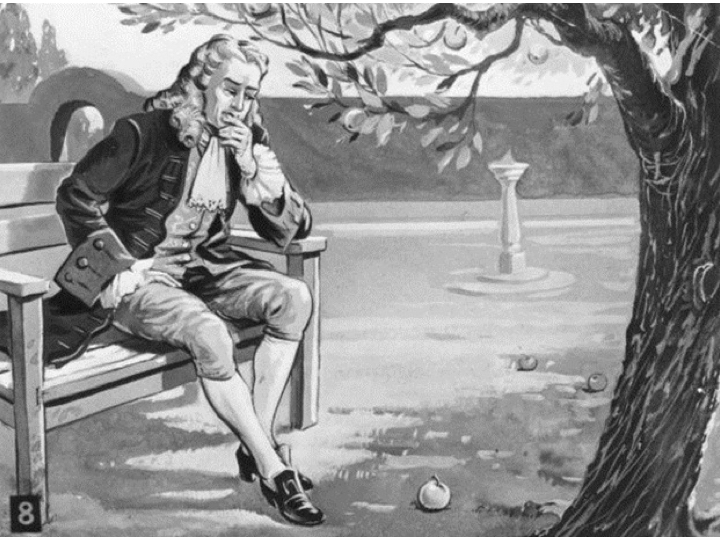
Isaac Newton formulated the laws of gravitation because he curiously wondered about why apples fell perpendicular and at the same velocity.

The Apostle Peter saw a vision from God with animals, but didn’t stop there. His openness helped him realize that God didn’t have “favorites.”

Far too many people live their lives cursed with low expectations. They say, “That’s all there is.” and they put a period on it.

God wants us to soar above those low expectations! He tells us things like:

  • Come now, let us reason together… (Isaiah 1:18).
  • Call to Me and I will answer you and tell you great and unsearchable things you do not know (Jeremiah 33:3).
  • Are you listening to this? Really listening? … The knowledge of the secrets of the kingdom of heaven has been given to you… (Matthew 13:9, 11)

great-expectationsBut we are trapped in the curse of low expectations when we put a period on things, when we refuse to learn more, see more, hear more.

  • Most people—“That’s all there is.” (period)
  • What if we changed it up—“Is this all there is?” (question mark)
  • Perhaps you might get—“There is so much more!” (exclamation point)

For example, Paul uses the word “mystery” multiple times in his letter to the Ephesians. He explains that a mystery is something hidden from those who have it all figured out (the “period” people), but is revealed to those who will ask God (the “question mark” people). Only the “question mark” people get to see the “exclamation points” God has for them. Things like…

  • God has a plan, and it is His pleasure to reveal it to me (Ephesians 1:9-10; 2:10).
  • God’s revelation is fully revealed to me in His Word (3:3-5).
  • Faith in Jesus makes Christians co-heirs and sharers in all God’s promises (3:6).
  • I have access to God’s inexhaustible riches, His immense wisdom, and I may approach Him with freedom and confidence (3:8-12).

Don’t stop with “.” but go on to “?” and experience “!

With great expectation, read God’s Word, approach His throne, dig into His riches, wrestle with the difficult things, learn more of God’s purpose for your life. He wants to give you so much more “!” 

Thursdays With Oswald—Making Saints

Oswald ChambersThis is a weekly series with things I’m reading and pondering from Oswald Chambers. You can read the original seed thought here, or type “Thursdays With Oswald” in the search box to read more entries.

Making Saints 

     It is not sufficient for a Christian to walk in the light of his conscience; he must walk in a sterner light, in the Light of the Lord. … 

     I am not judged by the light I have, but by the light I have refused to accept. … This is the condemnation, that the Light, Jesus Christ, has come into the world, and I preferred darkness, i.e., my own point of view. The characteristic of a man who begins to walk in the light is that he drags himself into the light all the time. He does not make excuses for things done in the dark, he brings everything to the light, and says, “This is to be condemned; this does not belong to Jesus Christ,” and so keeps in the light. … 

     The New Testament view of a saint is a more rugged type. You and I are a mixture of dust and Deity, and God takes that sordid human stuff and turns it into a saint by Regeneration. A saint does not mean a man who has not enough sin to be bad, but a man who has received from Jesus Christ a new heredity that turns him into another man. … 

     Conscience and character in the saint, then, means the disposition of Jesus Christ persistently manifested.

From The Shadow Of An Agony 

In order to become the saints God intends for us to be, Oswald Chambers says one big thing is required of Christians: Constantly bringing our thoughts and actions into the Light of Jesus.

I think this is what Paul means when he tells us to take captive every thought to make it obedient to Christ (2 Corinthians 10:5). And this is certainly what David invited when he prayed, Search me, O God, and know my heart; test me and know my anxious thoughts. See if there is any offensive way in me, and lead me in the way everlasting (Psalm 139:23-24).

I pray we will always be bringing our thoughts and actions into the Light, and never preferring the darkness of our own point of view!

10 Quotes From “Light & Truth—Revelation”

light-and-truth-revelationHoratius Bonar gives excellent insights into the themes in Scripture. Having him as a guide through a challenging text like the Book of Revelation is a precious resource. Check out my review of his commentary Light & Truth—Revelation by clicking here.

“The tendency of the present age is to set aside prophecy as specially belonging to the supernatural, and therefore the incredible and impossible. Let us stand aloof from this incredulity, and welcome the prophetic word as all the more precious because supernatural and specially divine. … Prophecy is a sure word, and it is as blessed as it is sure. Woe to him who slights it! Blessed are all they who meditate on it, seek to know it, and take it for guidance and counsel in the evil day!” 

“Have we realized our own dignity? Do we feel the honour, the privilege, the responsibility of being kings and priests? Do we act, live, speak, feel accordingly? Do our glorious prospects tell upon us now? Are we walking daily in the anticipation of what shall be? Are we working, praying, praising, giving, suffering, denying self, under the influence of that honour which shall so soon be ours?”

“The world scoffs at the message, and believes in no advent save the advent of gold and silver, of commerce and science, of luxury and pleasure. The Church has lost sight of it, and says, ‘My Lord delayeth His coming.’” 

“Is the Church ready for this glorious day? Has she put on her apparel? Has she trimmed and lighted her lamp? Has she filled her vessel with oil? Is she sitting loose from the world? Is she remembering her coming Lord, and seeking to be faithful to Him in His absence? He has entrusted to her His cause, His truth, His honour. Is she alive to her responsibility, and acting accordingly? Is she realizing His nearness and His glory? Is she daily influenced by His sure world of promise, ‘Behold, I come quickly, and my reward is with Me?’ Is she labouring and suffering for Him? Or is she self-indulgent, worldly, indolent?”

“Be patient under wrong, and suffering, and weariness, and hope deferred! Fret not! He that believeth doth not make haste; the Lord is at hand; the kingdom is about to come; the tribulation will soon cease; the joy will soon begin; and once begun, it will never end.”

“Live, and act, and walk as sons of morning. Let the world recognize you as such. Let there be streaks of dawn seen upon you.”

“Pity a dark world, and its dark children, that have no hope and no morning before them. Point out the Morning-star to them; bid them look at it; tell them what its anticipated brightness has done for you. Win souls to Christ. Draw many into the kingdom by your words and by your walk. There is little time to lose; for the coming of the Lord draweth nigh.”

“It is not lukewarmness occasioned by the cold passing gradually into heat, but that produced by the heat passing into the cold. … Church of the living God, beware of letting your temperature sink even one single degree.”

“Be separate from the world. Abstain from fleshly lusts. Lay aside all filthiness. Walk soberly. Beware of earth’s folly and idle laughter. Set your affection on things above. Be prepared for suffering. Endure hardness. Take up your cross daily and bear it aloft, and be not ashamed of it. The footsteps of the old saints are still visible on the sands of time. Follow them. Their voice is still heard, and their hand still waves, beckoning you to follow. Believe what they believed.”

“Watch, for satan tries to lull you asleep. Watch, for the world, with it riches, and vanities, and pleasures, is trying to throw you off your guard. Watch upon your knees. Watch with your Bibles before you. Watch with wide-open eye. Watch for Him Whom not having seen you love.”

I will be sharing more quotes from this powerful book in the near future. You can enter your email address by the box that says “Sign me up!” to be notified immediately when these quotes are posted. And be sure to follow me on Tumblr and Twitter for a daily dose of notable quotes.

T.M. Moore On Considering Jesus

T.M. Moore“We cannot follow what we do not know. And if we do not know Jesus, if our vision and understanding of Him are vague or merely general, following Him, in any sense, will be an act of self-deception. …

“The writer of Hebrews understood this. Twice in his epistle he instructs us to ‘consider Jesus.’ We must consider Jesus if we have any hope of persisting in the faith, no matter the struggle or threat that comes our way (Hebrews 3:1). And we must consider Jesus if we are to run our own particular race as fully and swiftly as possible (Hebrews 12:3). Following Jesus, it seems, means considering Him carefully. The writer uses two different words which we translate by the term consider.

“The first, in Hebrews 3:1, is the same word Jesus used to instruct us to consider the lilies of the field. It seems to have an aesthetic sense to it, implying wonder, admiration, mystery, and awe. To consider Jesus in this way is to wonder at His beauty, majesty, mystery, and power, and to delight in meditating on Him and lingering in His presence.

“The second use of consider, in Hebrews 12:3, encourages a more analytical, logical, and even theological consideration of Jesus Christ. We must study Jesus, think about all the implications of His life, death, and resurrection, and apply our minds to taking every thought captive for obedience to Him (2 Corinthians 10:3-5).” —T.M. Moore

Thursdays With Oswald—Get Rid Of Jargon!

Oswald ChambersThis is a weekly series with things I’m reading and pondering from Oswald Chambers. You can read the original seed thought here, or type “Thursdays With Oswald” in the search box to read more entries.

Get Rid Of Jargon! 

     The New Testament is not written to prove that Jesus Christ is God Incarnate; the New Testament does not prove anything; it simply confirms the faith of those who believe beforehand. Christian evidences don’t amount to anything; you can’t convince a man against his will. … 

     Creeds are the effects of our belief, not the cause of it. I do not have to believe all that before I can be a Christian; but after I have become a Christian I begin to try and expound to myself Who Jesus Christ is, and to do that I must first of all take into consideration the New Testament explanation. “Blessed art thou, Simon bar Jonah: for flesh and blood hath not revealed it unto thee, but My Father which is in heaven.” … 

     Jesus Christ did not come primarily to teach; He came to make it possible for us to receive His heredity, to have put into us a new disposition whereby we can live totally new lives. … The Sermon on the Mount is impossible to a man, and yet it is what our Lord taught. Jesus Christ did not come to teach man to be what he cannot be, but to reveal that He can put into him a totally new heredity; and all He requires a man to say is—“I need it.” … Jesus Christ cannot begin to do anything for a man until he knows his need; but immediately he is at his wits’ end through sin or limitation or agony and cannot go any further, Jesus Christ says to him, “Blessed are you; if you ask God for the Holy Spirit, He will give Him to you.” God does not give us the Holy Spirit until we come to the place of seeing that we cannot do without Him (Luke 11:13). … 

     We have been taken up with creeds and doctrines, and when a man is hit we do not know what to give him; we have no Jesus Christ, we have only theology. For one man who can introduce another to Jesus Christ by the way he lives and by the atmosphere of his life, there are a thousand who can only talk jargon about Him.

From The Shadow Of An Agony

Oswald Chambers is reminding Christians that we only learn more about Jesus by confessing “I need You!” Then the Holy Spirit can begin to reveal real-life truths to us from God’s Word.

Peter reminded us that in order to be ready to give an answer to anyone who asks a Christian the reason for the hope they had, we must first make Jesus the Lord of our life (see 1 Peter 3:15). Creeds and doctrines and theories are of no help to a friend who is in trouble. Let’s not be one of the thousands “who can only talk jargon about Him,” but let’s really know Jesus as Lord, so that we have something real and tangible to pass on to our friends.

Get rid of the jargon! Go deeper in your personal relationship with Jesus Christ!

2 Life-Changing Words

whose-you-areThere’s an interesting story recorded in Acts. Seven sons of a priest named Sceva attempt to cast out a demon by saying, “In the name of Jesus whom Paul preaches, come out!” To which the demon replies, “Jesus I know and Paul I know, but who are you?”

Not only was the demon not exorcised, but the seven men came running out of the house bloodied and naked from the beating they received!

Think about it: If you spoke to the devil and said, “Get away from me!” would he be afraid of you? The simple answer is “No!” Why? Because you have no power in yourself.

It’s not about who you are, it’s about Whose you are.

john-14-20Jesus talked about our place in Him in John 14:20. Notice the word “in” in this verse:

  • Jesus is in the Father
  • The Christian is in Jesus
  • The Spirit of Christ is in the Christian

Here are the two life-changing words for any Christian to remember…

IN CHRIST

The devil wants to get you second-guessing your identity. He wants you to be uncertain if you are worthy of coming into God’s presence. He wants you doubting if you are truly forgiven and worthy of God’s attention. He wants you unsure if you can stand up against him in a spiritual fight.

This uncertainty and doubt is erased by faith in this: I am IN CHRIST!

in-christ-i-amPlease print out this list from Ephesians of all the “in Christ” statements Paul shares with us. (You may download a PDF version by clicking here → in-christ-i-am)

Keep this list handy, and the next time satan whispers doubts in your ear like, “Jesus I know and Paul I know, but who are you?” say—

“It’s not who I am, but Whose I am! I am Christ’s. I am in Him and He is in me. I have been forgiven. I am a part of His family. I have a purpose. I am holy and blameless. I am the recipient of all God’s blessings. And you can never defeat me because I AM IN CHRIST!”

If you don’t have a home church, join us next week as we continue our series in the book of Ephesians called Sit Walk Stand.