Maybe Not Straight, But Always Best

Listen to the podcast of this post by clicking on the player below, and you can also subscribe on AppleSpotify, or Audible.

Now when Pharaoh had let the people go, God did not lead them by the way of the land of the Philistines, even though it was near; for God said, “The people might change their minds when they see war, and return to Egypt.” (Exodus 13:17 NASB)

The age-old maxim has been, “The shortest distance between two points is a straight line.” It might be the shortest route, but not necessarily the best route. 

God always knows the best path for us. This is what David means when he says to his Good Shepherd, “You guide me in paths of righteousness for Your name’s sake“ (Psalm 23:3). This is also what Solomon means when he tells us, “Trust in the Lord with all your heart and lean not on your own understanding; in all your ways acknowledge Him, and He will make your paths straight“ (Proverbs 3:5-6).

Our idea of “straight“ isn’t necessarily the best for us. God can see better and farther than we ever can, so we need to always trust His guidance. 

He will speak to us, “Whether you turn to the right or to the left, your ears will hear a Voice behind you, saying, ‘This is the way; walk in it’“ (Isaiah 30:21). 

►► Would you please prayerfully consider supporting this ministry? My Patreon supporters get behind-the-scenes access to exclusive materials. ◀︎◀︎
An Unlikely Convert

There is a man that we meet in just a couple of verses of Scripture. We know that he is a Roman centurion. I gave him an appropriate Roman name of Vitellius. I created a fictional backstory for this centurion, but all of the events are well documented in both biblical history and contemporary history books of the time. I have listed below all of the scripture references that you may want to consult, along with some quotes from notable historians. 

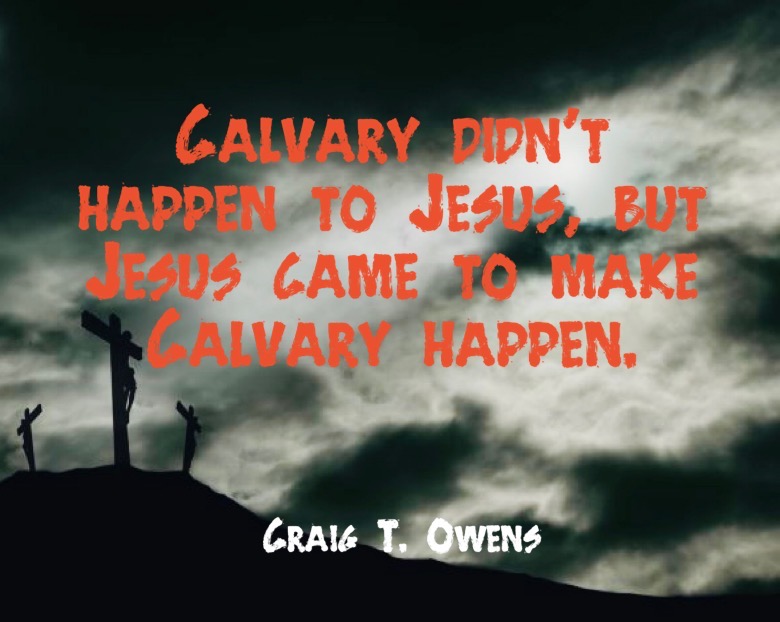
What isn’t fictional is the fact that the Cross didn’t happen to Jesus, but He came to make Calvary happen. 

Jesus said this about His crucifixion, “And I, when I am lifted up from the earth, will draw all people to Myself” (John 12:32). That’s what happened to the thief, and to the centurion Vitellius, and to me, and to all who have acknowledged that Jesus is the Savior. 

Vitellius’ bold claim on the day Jesus was crucified still rings true 2000 years later: “Certainly this was a righteous Man!” 

Looking at Jesus who was lifted up on that Cross, we can appreciate the beauty of the 700-year-old prophecy about Him:

He had no beauty or majesty to attract us to Him, nothing in His appearance that we should desire Him. He was despised and rejected by mankind, a man of suffering, and familiar with pain. Like one from whom people hide their faces He was despised, and we held Him in low esteem. Surely He took up our pain and bore our suffering, yet we considered Him punished by God, stricken by Him, and afflicted. But He was pierced for our transgressions, He was crushed for our iniquities; the punishment that brought us peace was on Him, and by His wounds we are healed. (Isaiah 53:2-5)

Which is what we celebrate in Communion still to this day. “And [Jesus] took bread, gave thanks and broke it, and gave it to them, saying, ‘This is My body given for you; do this in remembrance of Me.’ In the same way, after the supper He took the cup, saying, ‘This cup is the new covenant in My blood, which is poured out for you’” (Luke 22:19-20). 

The way Christians live today can still lift Jesus up for all to see. Jesus told His followers, “Whoever wants to be My disciple must deny themselves and take up their cross and follow Me. For whoever wants to save their life will lose it, but whoever loses their life for Me will find it” (Matthew 16:24-25). 

When we live this way, our lives become the aroma of life to even sin-hardened thieves and war-hardened soldiers.  

Check out this video of Vitellius’ personal experience—

Here are some further resources for you to check out:

  • The Bible verses that form the background for this centurion’s story—Luke 23:1-47; Matthew 27:11-54; Mark 15:1-39; John 18:28-19:34
  • Historian William Barclay wrote this about the centurions, “The centurions were the backbone of the Roman army. In a Roman legion there were 6,000 men; the legion was divided into sixty centuries, each containing 100 men, and in command of each century there was a centurion. These centurions were the long-service, regular soldiers of the Roman army. They were responsible for the discipline of the regiment, and they were the cement which held the army together. … A centurion was the equivalent of a regimental sergeant-major; and the centurions were the backbone of the Roman army.”
  • The horrific torture of crucifixion

If you have missed any of the other messages in our series of Bold Claims, you can find them all my clicking here.

Our Perfect King

Listen to the podcast of this post by clicking on the player below, and you can also subscribe on AppleSpotify, or Audible. 

Our country has a policy of separation of church and state, and that appears to be a good thing. When the head of the government starts telling the church how to worship, or when the head of the church starts telling the government how to run its affairs, strife typically results. 

There have been some notable examples of wise kings who were God-fearing rulers, and some examples of religious leaders who had the wisdom to make just laws. But history has most often shown us that when a king imposes on the church a mode of worship or a pastor imposes on the king religious ways of governing, clashes result. Some of them have been bloody civil wars and some have spread into international conflicts. 

That being said, wouldn’t it be better for everyone if there was a way that one person could hold both of those offices simultaneously? If only there was some way to bring those different offices together. Very few people could ever accomplish this because it would require a perfect person with both absolute wisdom and complete God-honoring selflessness, someone so confident in both their wisdom and their relationship with God that they would never be swayed unfairly one way or the other. 

Last week we saw the first bold claim from Jesus: “I am the I AM.” With this title and authority, Jesus claimed to be the Head of the Church. This is a title Paul uses several times in his letter to the church at Ephesus (Ephesians 1:22, 5:23). Paul goes on to remind us that our aim as the Church body is to grow into maturity under the Headship of Jesus (Ephesians 4:15). 

Consider two other notable rulers during this same time period. As the high priest, Caiaphas would have laid claim to the title of “head of the church.” As the Roman governor, Pilate would have laid claim to the title of “head of the government in Judea.” Yet both of them clearly demonstrated that they had “become the symbol of those who make religious decisions based on political expediency rather than truth and justice,” as Dr. Donald Stamps noted. 

Paul goes father than calling Jesus simply the Head of the Church—

And He [Jesus] is the head of the body, the church; He is the beginning and the firstborn from among the dead, so that in everything He might have the supremacy. (Colossians 1:18) 

Not just Headship over the Church, but Headship over “everything.” 

After the bold claim of Jesus that He was the I AM, the Sanhedrin wanted to have Him put to death, so they took Jesus to Pontius Pilate (Luke 22:71—23:2; Matthew 27:1-2; John 18:28-37). 

Pilate “knew it was out of self-interest that they had handed Jesus over to him” (Matthew 27:18), but he still asked Jesus, “Are You the king of the Jews?” Just as Caiaphas was trying to save his position of power by keeping a delicate balance between the Jews and the Romans, Pilate was also trying to save his skin. Pilate was trying to appease both the Sanhedrin and Tiberius Caesar. 

Jesus answers Pilate’s question in a way Pilate never expected. Twice Jesus says “My kingdom,” noting that His kingdom is other-worldly. His kingdom comes from outside this world and therefore supersedes any government of this world. Pilate clearly has never heard anything like this, so after hearing this statement he announces, “You are a king, then!” 

Just as Jesus had answered the Sanhedrin with, “You are right in saying I am the Messiah,” now He answers Pilate, “You are right in saying I am a king.” 

Combining those two bold claims—“I am God” and “I am a King”—Jesus is the only One who can perfectly hold both offices without any conflict. This is what the prophecy in Isaiah 9:1-7 foretold, and this is the fulfillment that John shows us at the end of time (Revelation 17:14, 19:11-16). 

What does this mean for us? How are we now supposed to live knowing Jesus as our God and as our King? We should live confidently before our King and humbled before our God. We don’t fear earthly kings, but neither do we fight them. We don’t have to try to convince earthly kings to rule a certain way because they are God’s servants to accomplish God’s plan. We don’t have to get caught up in the politics of the day because this day will come to an end. 

We are subjects of a kingdom not of this world, so the kings of this world don’t get to decide our final destiny!

(If you would like to explore this topic further, check out my series of messages from 1 Peter called Aliens and Strangers.)

If you’ve missed any of the messages in our series called Bold Claims, you can find the full list of messages by clicking here. 

►► Would you please prayerfully consider supporting this ministry? My Patreon supporters get behind-the-scenes access to exclusive materials. ◀︎◀︎

Don’t Try To Get Even

Listen to the podcast of this post by clicking on the player below, and you can also subscribe on AppleSpotify, or Audible. 

When I work with students I frequently find that conflicts between them are really one-upmanship. Here’s what I mean: one student intentionally or unintentionally tweaks another student, that student then responds with a decidedly intentional verbal or physical shove, which is responded to by the initial student with a louder and more intentional reprisal. And on and on it escalates until someone steps in to stop it.

I often ask these students who are upset with each other, “What did you think was going to happen when you treated the other person that way?” The quick response is almost always, “I don’t know.” And I believe that because most of us don’t think through the counter-reaction to our reaction. 

So I will ask a follow-up question: “Did you think that by shoving him in response to his insult that he was going to say, ‘Oops, my bad. I’m sorry for that and I won’t do it again’?” 

Usually, the student answers quite honestly, “No, I didn’t think that would happen.” They were just so upset that they wanted to let the other person know that they had been hurt.

This idea of getting even is the longing of so many of the psalms: How long until we see victory? (see Psalms 6, 13, 35, and 94 as examples). It’s the cry of the martyrs before God’s throne: How long until we see justice? It’s the desire of every Christian wrongly accused and condemned: God, how long until Your truth prevails? 

Matthew quotes a passage from Isaiah 42:1-4 that is fulfilled in the ministry of Jesus. Part of that description says, “A bruised read He will not break, and a smoldering wick He will not snuff out, till He leads justice to victory. In His name the nations will put their hope” (Matthew 12:20-21). Notice this key word: till HE leads justice to victory

Jesus is Justice and Truth, and He does ultimately triumph. But notice how Jesus accomplishes this because it is to be our model too: 

  • No quarreling 
  • No shoving back on those who have hurt us
  • No attacking those who have attacked me

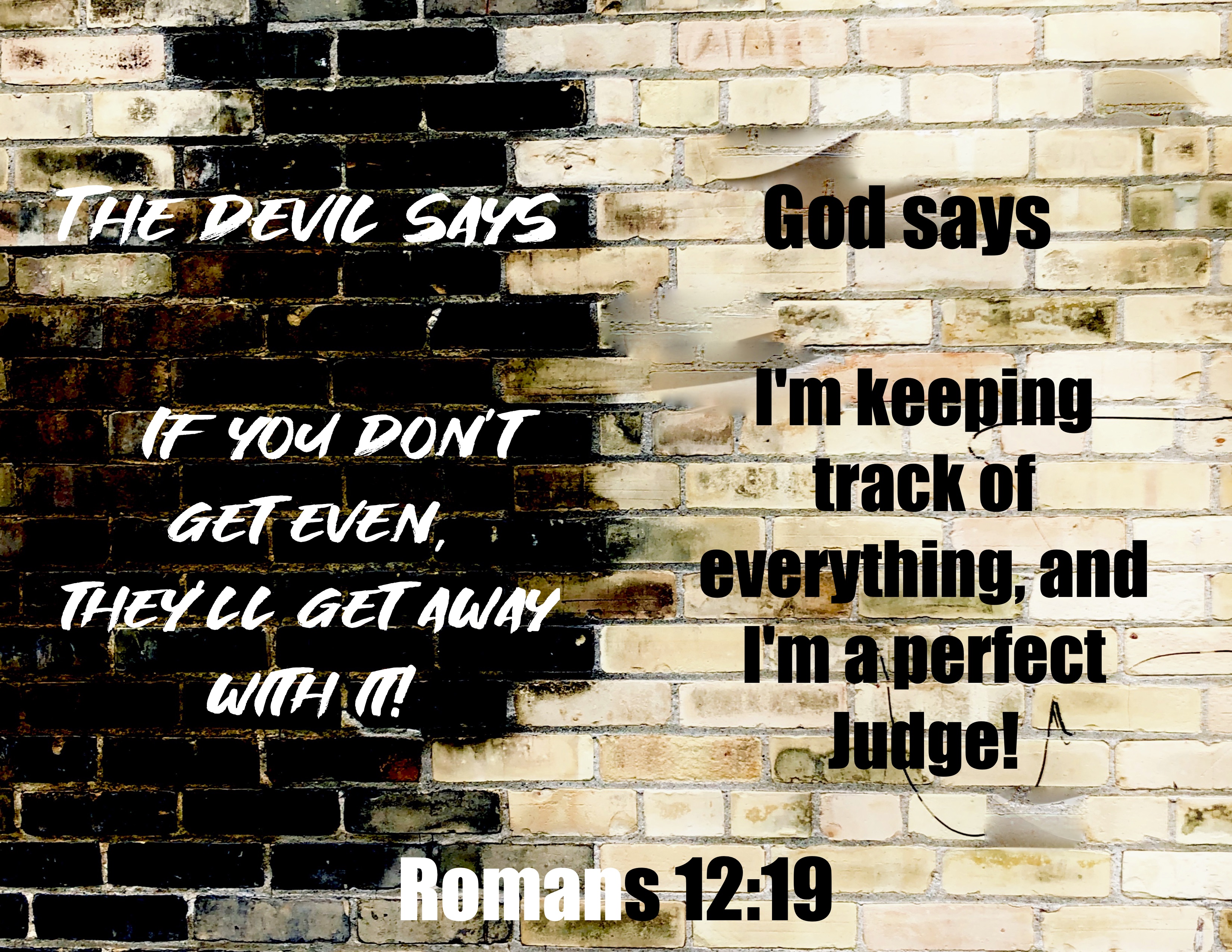
Victory comes only through Jesus. I have to relent trying to balance the scales of justice—this is never my place. If I try to make things right on my own, my so-called justice only sets off a one-upmanship shoving match that continues to escalate in very ungodly ways. 

Vengeance is God’s. Justice is God’s. My hope—my immovable hope—is only in what Jesus has accomplished. Remember what Matthew quoted: “In His name the nations” [and all those who have been persecuted, wronged, and martyrd] “will put their hope”! 

Let’s all ask the Holy Spirit to remind us of this the next time we want to shove back the person who just shoved us. 

►► Would you please prayerfully consider supporting this ministry? My Patreon supporters get behind-the-scenes access to exclusive materials. ◀︎◀︎

Come To God And Keep Walking With Him

Listen to the podcast of this post by clicking on the player below, and you can also subscribe on AppleSpotify, or Audible. 

I have been so grateful for the insights of Dr. Gary Chapman in his book The Five Love Languages. I have found this book to be of immense value in helping couple prepares for marriage, and in helping married couples get beyond a place where intimacy has become stuck. 

In short, the five love languages are words of affirmation, quality time, gifts, acts of service, and physical touch. The goal of learning the other person’s love language—and learning to speak it consistently and fluently—is an increased level of intimacy. In the book of Amos, God asks, “Can two people walk together without agreeing on the direction?” (Amos 3:3 NLT), and speaking the right love language definitely helps people agree! 

The whole reason we come to God in prayer as a Father, as a Brother, and as a Counselor is so that we can hear Him speaking our love language and we can continue to walk in deeper intimacy with Him. 

When my then-girlfriend Betsy and I first met, we spent hours and hours getting to know each other. We would ask questions, share stories, and tell things we did and didn’t enjoy. This is the epitome of intimate conversation: getting to know the other person’s heart as you open up your heart to them as well.

I’ve shared this analogy before, but intimacy grows stale and can eventually disappear altogether if those in a relationship are no longer walking together. It doesn’t work if I say, “Betsy, I’m looking forward to spending an hour with you each week,” or even if I say, “I’ll give you 15 minutes each morning.” Instead, our relationship needs to be one of continual walking. 

It’s the same thing for us as Christians: we cannot only give God an hour at a church service on Sunday mornings, nor is intimacy going to increase if I only walk and talk with my Savior for a few minutes in my morning devotions. 

Walking closely with Him is what God has desired right from the beginning. He walked with Adam and Eve each evening. This phrase “walking with God” is used consistently throughout the Bible of those who had an intimate relationship with their Father, Brother, and Counselor—Noah, Abraham, Isaac, the people of Israel (Genesis 3:8, 6:9, 17:1, 48:15; Leviticus 26:12). And even as the New Testament era dawns, we read, “And they [Zechariah and Elizabeth] were both righteous before God, walking in all the commandments and ordinances of the Lord blameless” (Luke 1:6 NKJV). 

But I’m especially intrigued by the story of Enoch in Genesis 5:21-24. Twice in four short verses, we read “Enoch walked with God.” Remember that verse in Amos—“Can two people walk together without agreeing on the direction?”—so Enoch and God had to be in agreement. In fact, that’s exactly what we read about Enoch in the Book of Hebrews: 

By faith Enoch was taken from this life, so that he did not experience death: “He could not be found, because God had taken him away.” For before he was taken, he was commended as one who pleased God. And without faith it is impossible to please God, because anyone who comes to Him must believe that He exists and that He rewards those who earnestly seek Him. (Hebrews 11:5-6)

If you’ve taken Dr. Chapman’s love language assessment, you probably found that you were pretty lopsided: maybe you scored very highly in one love language and then barely registered in another. We may be lopsided in our love language skill, but God speaks every language perfectly! 

  • Words of affirmation—Hosea 2:14; Isaiah 40:2 
  • Quality time—Deuteronomy 31:6; Psalm 23:3-4
  • Gifts—James 1:17; 2 Peter 1:3
  • Acts of service—Philippians 2:13; Romans 8:28
  • Physical touch—Psalm 139:13-15; Luke 24:39 

(Click here to check out all of those verses.) 

Dr. Chapman noted that when our love language is being spoken to us sincerely and consistently, our love tank is filled, and all of the love languages begin to become more meaningful. 

Just as God walked with Enoch until the day He brought him Home, so He wants to walk with us. 

  • Walk in obedience to all that the Lord your God has commanded you, so that you may live and prosper. (Deuteronomy 5:33) 
  • The Lord will establish you as His holy people, as He promised you on oath, if you keep the commands of the Lord your God and walk in obedience to Him. (Deuteronomy 28:9) 
  • May He turn our hearts to Him, to walk in obedience to Him and keep the commands. (1 Kings 8:58) 
  • Blessed are all who fear the Lord, who walk in obedience to Him. (Psalm 128:1) 
  • And this is love: that we walk in obedience to His commands. As you have heard from the beginning, His command is that you walk in love. (2 John 6) 

When we walk in loving intimacy with Him, our intimacy grows deeper and more mature. Sometimes they will say of couples who have been married for a long time and walk in increasingly deeper intimacy with each other, “They seem to know each other’s thoughts.” That’s because they know each other’s hearts—and that’s what God wants to do with us. He did it with Enoch, and He will do that with us too (Jude 14; Jeremiah 33:3; Habakkuk 3:19). 

Enoch walked intimately with God for 365 years. Let us walk intimately with God for 365 days a year, for as many years as He gives us until God takes us away with Him forever! 

If you’ve missed any of the messages in our prayer series called Intimate Conversation, you can find all of the messages by clicking here. 

►► Would you please prayerfully consider supporting this ministry? My Patreon supporters get behind-the-scenes access to exclusive materials. ◀︎◀︎

How To Honor Our King

Listen to the podcast of this post by clicking on the player below, and you can also subscribe on AppleSpotify, or Audible. 

Merry Christmas! 

When the Magi came to Jesus at His first advent they brought gifts. Isaiah also prophesies all peoples bringing gifts at the second advent of Jesus. Have you ever wondered what gift is appropriate for the King of kings? Fortunately, the Bible tells us the gift He is happy to receive from you! 

Check out the Bible verses I mention: 

If you’ve missed any of the messages in this Advent series, you can find a list of all of those messages by clicking here. 

►► Would you please prayerfully consider supporting this ministry? My Patreon supporters get behind-the-scenes access to exclusive materials. ◀︎◀︎
Verifiable Facts About The Birth Of Jesus

Listen to the podcast of this post by clicking on the player below, and you can also subscribe on AppleSpotify, or Audible. 

Check out the resources I mention in this video:

►► Would you please prayerfully consider supporting this ministry? My Patreon supporters get behind-the-scenes access to exclusive materials. ◀︎◀︎

Mighty Deliverer

Listen to the podcast of this post by clicking on the player below, and you can also subscribe on AppleSpotify, or Audible. 

The world can marshal its weapons of war. They may gain a temporary victory. They may build strongholds, and cast spells, and appear to be the unquestioned ruler. But God always gets the final word, the decisive word, and the best word! 

Don’t despair in the middle of the Story! All of History is His Story. No matter how dark it seems, we are assured of God’s victorious outcome! 

Bethlehem is our proof:

  • 700 years before it happened, Bethlehem is named as the birthplace of Jesus (Micah 5:2; Luke 2:1-7) 
  • 700 years before Jesus was born in Bethlehem, His titles were given and then fulfilled in the way that Jesus lived (see for example Isaiah 9:6 and Hebrews 13:20) 

Sometimes God has to let the darkness fall so heavy so that it seems hopeless. In fact, in human power alone it is hopeless and impossible. So God foretells His victory—

“Listen to this, you descendants of Jacob, you who are called by the name of Israel and come from the line of Judah, you who take oaths in the name of the Lord and invoke the God of Israel—but not in truth or righteousness—you who call yourselves citizens of the holy city and claim to rely on the God of Israel—the Lord Almighty is His name: I foretold the former things long ago, My mouth announced them and I made them known; then suddenly I acted, and they came to pass. … Therefore I told you these things long ago; before they happened I announced them to you so that you could not say, ‘My images brought them about; my wooden image and metal god ordained them.’” (Isaiah 48:1-5) 

We have seen how Micah prophesied our Messiah coming as the Great Shepherd and as the Prince of Peace, but He also comes as our Mighty Deliverer (Micah 5:1-6). He comes at an incredibly dark time that is described like this: “He will rescue us from the Assyrians when they pour over the borders to invade our land” (Micah 5:6 NLT). 

Darkness may appear to have a stranglehold even now in our time. One of the verses in the New Testament that pretty accurately sums up a Christ-less culture says, “The god of this world has blinded the unbelievers’ minds that they should not discern the truth, preventing them from seeing the illuminating light of the Gospel of the glory of Christ” (2 Corinthians 4:4 AMP) . 

But this is only temporary darkness. When the mob came to arrest Jesus, He said, “This is your hour—when darkness reigns” (Luke 22:53). Darkness only gets an hour, but the Light of God shines for all of eternity! 

One of my favorite Advent texts is found in Hebrews 2:14-15:

Since the children have flesh and blood, [Jesus] too shared in their humanity so that by His death He might destroy him who holds the power of death—that is, the devil—and free those who all their lives were held in slavery by their fear of death. 

Our Mighty Deliverer came to destroy satan’s power and free those held hopelessly in darkness. The word “destroy” is a powerful, all-encompassing word. Imagine a tyrannical ruler who sent one of his strongest police officers with an arrest warrant, who then grabbed onto you and subdued you with his vice-like grip. 

Only someone stronger than that officer can release you from that grip. That’s what Jesus did when He destroyed satan’s ironclad grip on your soul. Paul asks mockingly, “Where, O death, is your victory? Where, O death, is your sting? The sting of death is sin, and the power of sin is the law. But thanks be to God! He gives us the victory through our Lord Jesus Christ!” (1 Corinthians 15:55-57)

Now you may be free of the grip of that officer, but the arrest warrant still remains—you are still subject to the penalty. But that word “destroy” also means that the charges against you have been set aside so that there is no penalty outstanding against you. The apostle Paul again addressed this when he wrote, “For we know that our old self was crucified with [Jesus] so that the body ruled by sin might be done away with, that we should no longer be slaves to sin. … Who will bring any charge against those whom God has chosen? It is God who justifies” (Romans 6:6, 8:33). 

You are now set completely and irrevocably free! “But it has now been revealed through the appearing of our Savior, Christ Jesus, who has destroyed death and has brought life and immortality to light through the gospel” (2 Timothy 1:10). 

The Messiah—our Mighty Deliverer—destroys darkness and delivers those who believe in Him! 

No matter how hopeless it may seem, the Mighty Deliverer always prevails! Jesus has destroyed every enemy that has opposed God’s people! Jesus our Champion shines a light so brightly that nothing in satan’s arsenal can ever diminish it. 

The Light shines in the darkness, and the darkness can never extinguish it (John 1:5 NLT). 

So allow me to repeat: Don’t despair in the middle of the Story! All of History is His Story. No matter how dark it seems, Bethlehem is our proof that Jesus has destroyed our enemy and removed from him all grounds for charging us with sin. Bethlehem is our proof that we can live assured of God’s victorious outcome! 

What a great Christmas gift that truly is! 

If you’ve missed any of the messages in this Advent series, you can find a list of all of those messages by clicking here. 

►► Would you please prayerfully consider supporting this ministry? My Patreon supporters get behind-the-scenes access to exclusive materials. ◀︎◀︎

The Prince Of Peace

Listen to the podcast of this post by clicking on the player below, and you can also subscribe on AppleSpotify, or Audible. 

Last week we saw the dark times in which Micah lived as he prophesied the advent of the Messiah. Israel was both surrounded by enemies as well as lots of practices within their borders that were heartbreaking to God. Many times, our lives can feel the same way: enemies of God all around us and our own turmoil and doubts inside our hearts and minds.      

In this dark, hopeless time, the Messiah came as our Great Shepherd. Take a look at what this Shepherd brings us:

He will stand and shepherd His flock in the strength of the Lord, in the majesty of the name of the Lord His God. And they will live securely, for then His greatness will reach to the ends of the Earth. And He will be their peace. (Micah 5:4-5)

We see this idea of Jesus our Great Shepherd bringing peace to our hearts in the New Testament as well: 

May the God of peace, who through the blood of the eternal covenant brought back from the dead our Lord Jesus, that Great Shepherd of the sheep, equip you with everything good for doing His will, and may He work in us what is pleasing to Him, through Jesus Christ, to Whom be glory for ever and ever. Amen. (Hebrews 13:20-21) 

This peace is also implied in Psalm 23:1 when David wrote, “The Lord is my Shepherd, I shall not be in want.” That phrase “I shall not be in want” really captures the definition of peace. 

The Hebrew word for peace is shalom. An easy-to-remember definition of shalom is “nothing lost, nothing missing.” Our Great Shepherd makes sure nothing is lost or missing that would cause us anxiety or doubt, so we can have total peace—we can have shalom!

Jesus said the devil’s agenda was for everything to be lost or missing—“the thief comes only to steal and kill and destroy”—but our Great Shepherd’s agenda is for there to be nothing lost or missing—“I have come that they may have life, and have it to the full” (John 10:10). 

Isaiah, who was prophesying at the same time as Micah, sounded a similar note:

Therefore the Lord Himself will give you a sign: The virgin will conceive and give birth to a Son, and will call Him Immanuel. … And He will be called Wonderful Counselor, Mighty God, Everlasting Father, Prince of Peace. (Isaiah 7:14, 9:6) 

When this Great Shepherd was born in Bethlehem, the shepherds in the field were the first to hear the good news. Notice what the angels announced: “Glory to God in the highest heaven, and on earth peace to those on whom His favor rests” (Luke 2:14). 

Who has God’s favor? Those with faith in Him: “Without faith it is impossible to please God” (Hebrews 11:6). So those with faith in God have God’s favor. 

Faith in what? In all that Jesus purchased for us by His blood shed on the Cross: “Therefore, since we have been justified through faith, we have peace with God through our Lord Jesus Christ” (Romans 5:1). 

Check this out: The root word of shalom is a word that means, “It is finished.” These are the exact same words our Price of Peace announced from the Cross! Jesus finished the work that brings us peace from the turmoil and anxiety of sin! 

Faith comes from believing that God has made the promise of peace, that God has fulfilled the promise of peace through Jesus, and that God is bringing us to His eternal peace. So now our lives of peace in a world of turmoil can serve as a testimony to others. 

Jesus called His followers to be peacemakers (Matthew 5:9) but we cannot do this while we are experiencing anxiety or doubts. To be peacemakers we must be full of peace because of our relationship with the Prince of Peace, who has ensured that nothing is lost and nothing is missing! 

If you feel anxious, remember that Bethlehem is your proof that the Prince of Peace has come to remove doubts, anxiety, fear, and inner turmoil. Let every pang of anxiety be immediately a call to run to the Prince of Peace. He has paid an incalculable price to purchase your peace, so don’t leave this gift unopened and unused. A dark, anxious world is looking for peace. Know the author of shalom so that you can introduce others to this Prince of Peace. 

If you’ve missed any of the message in this series, please check them out by clicking here. 

►► Would you please prayerfully consider supporting this ministry? My Patreon supporters get behind-the-scenes access to exclusive materials. ◀︎◀︎
Attitude Adjustment

Listen to the podcast of this post by clicking on the player below, and you can also subscribe on AppleSpotify, or Audible. 

Imagine if 700 years before you were born there was a prophecy given about you (Matthew 3:3). Or if on the day of your birth your father said, “And you, my child, will be called a prophet of the Most High; you will go on before the Lord to prepare the way for Him” (Luke 1:76). 

This was John the Baptist.

With these kinds of announcements and the stamp of approval from God Himself, it’s really quite astounding how humble John remained:

  • “After me comes One Who is more powerful than I, Whose sandals I am not worthy to carry” (Matthew 3:11). 
  • “[Jesus] must increase, but I must decrease” (John 3:30). 

The confidence that he was God’s man for the hour gave John boldness to speak truth to religious leaders, wealthy people, and Roman soldiers (Matthew 3:7-12; Luke 3:7-20). Yet his humility was almost his undoing. 

John preached boldly, fulfilling the prophecies that were made about him. But when Jesus came to him to be baptized, John’s humility caused him to defer initially. Then Jesus reminded him that His baptism was necessary “to fulfill all righteousness. Then John consented” (Matthew 3:13-15). 

Whether I am lacking confidence to speak or lead boldly, or lacking humility to let someone else take the lead, I need to return to the Word of God—just as John did. Both his confidence and his humility were balanced by words spoken over him by God. So it must be for you and me too. 

Confidence without humility or humility without confidence can trip me up and cause me to miss out on all that God needs me to do. So my daily prayer must be: Holy Spirit, may I be sensitive to every correction and adjustment You need to make in me. Illuminate the Scriptures that I need to apply to my life that will keep me in a healthy, balanced place. 

I wrote about this tension between confidence and humility in my book Shepherd Leadership. This was also a topic of conversation in two interviews I did, which you can find here and here. Healthy leaders need the proper balance of confidence and humility to keep their leadership in a place that God can use powerfully. 

►► Would you please prayerfully consider supporting this ministry? My Patreon supporters get behind-the-scenes access to exclusive materials. ◀︎◀︎