Still Maturing

Listen to the podcast of this post by clicking on the player below, and you can also subscribe on AppleSpotify, or Audible. 

Have you ever said to yourself… 

  • …I should have known better?  
  • …why I am going through this again?  
  • …I thought I was over this hurdle? 
  • …you would think I would have matured enough by now to not have to deal with this?  

Maybe the author of Psalm 129 felt this way: “Here I am on the 10th step and I’m still having to deal with this! When will I finally arrive at the top and be done with these issues?” (compare Psalm 129:1-2 with 124:1-5). 

(Check out all of the Scriptures I use in this post by clicking here.) 

I think those statements—“I should have known better” or “I thought I was over this”—pre-suppose that we will reach a point in our life where we “arrive.” If nothing else, this psalm is a reminder that we are still on the journey, that we are still a work-in-progress, that the saint-ification process is still ongoing. It’s clear from Scripture that we never “arrive” until we arrive in Heaven and hear our Master say, “Well done, good and faithful servant.” 

While we are ascending up toward our heavenly home, these great oppressions and plowings remind us that there is still work to be done in us and through us to bring glory to God (Romans 5:3-4; James 1:2-4, 12). 

Of his Soviet prison, Alexander Solzhenitsyn said, “I bless you, prison—I bless you for being in my life—for there lying on rotting prison straw, I learned the object of life is not prospering as I had grown up believing, but the maturing of the soul.” 

The reality is God is using all of those things for my good and for His glory (Romans 8:28). 

What happens as I am oppressed and plowed? 

(1) I am refined—Psalm 66:8-12, 16-20. God is removing the impurities from my life. 

(2) My prayers are matured. Psalm 129:5-8 is an imprecatory prayer, a prayer that says, “Get ‘em, God!” These have their place, but for us they are to be our emergency release valve (which I discuss in more depth in my book When Sheep Bite). But Jesus calls for our prayers to mature from imprecatory to intercessory (Matthew 5:43-45). In my book I write, “This is the highest level of Christian maturity: To pray like Jesus did for those who insulted Him, slandered Him, and crucified Him, ‘Father, forgive them for they don’t understand what they are doing’ (Luke 23:34)” 

(3) I develop more intimate God-dependence—2 Corinthians 1:8-10. 

(4) I am better equipped to help others—2 Corinthians 1:3-6.  

(5) Others feel more inclined to pray for me—2 Corinthians 1:7, 11.  

“God uses broken things. It takes broken soil to produce a crop, broken clouds to give rain, broken grain to give bread, broken bread to give strength.” —Vance Havner 

Oppressed? Yes! Defeated? No! 

Plowed? Yes! Enslaved by the plow’s cords? No! 

God uses this to bring us closer and closer to Him until He can eventually say to us face-to-face, “Well done, good and faithful servant!” That’s when we truly arrive! Until then, we keep on ascending. 

If you’ve missed any of the other messages in our series looking at these songs of ascent, you can check them all out here. 

►► Would you please prayerfully consider supporting this ministry? My Patreon supporters get behind-the-scenes access to exclusive materials. ◀︎◀︎

Links & Quotes

Peter described the ministry of Jesus as “doing good and healing all who were under the power of the devil.” Historical records tell us the first Christians lived this exact same way! This clip is from our current series of sermons on prayerI have lots of new content every week, which you can check out on my YouTube channel.

John Piper has some great advice for finding the main point of a chapter in the Book of Psalms.

Belshazzar was unknown outside the Bible for quite awhile, prompting one biblical skeptic to say, “the whole story [in the Book of Daniel] is disfigured and falsified by the author, who was neither an eye-witness of the occurrences, nor accurately acquainted with the history of them.” Once again, archeology has confirmed the historicity of both Belshazzar and Daniel.

On YouVersion I shared this on Job 1:20-22. The Old English spelling of worship is “worthship.” We worship God because He has infinitely greater worth than any other person or thing. It’s not that Job wasn’t sad about his losses, but He saw Jehovah as the One of greatest worth in spite of his earthly losses.

“Leaders are responsible for building organizations where people continually expand their capabilities to understand complexity, clarify vision, and improve shared mental models—that is, they are responsible for learning.” —Peter M. Senge, in The Fifth Discipline

Never stopping praying for your loved ones. It could be that with their very last breath they will call on Jesus as their Savior!

Links & Quotes

We have a new kitten in our home and the places she shows up cracks me up!

In the Wall Street Journal, Andy Kessler said that without the discoveries and influence of Michael Faraday, “there would be no modern economy.” John Stonestreet built on this by explaining that “Faraday is an example of how Christians can balance the constructive purposes of science with an accurate understanding of scientific authority.” Indeed, Faraday’s Christian faith made his scientific findings even more powerful.

This year marks the centennial anniversary of Central Bible College, the first educational institute opened by the Assemblies of God to train ministers and missionaries.

“For many years, evidence has been found showing that humans were surprisingly intelligent in times that were only supposed to reveal simple, ‘primitive’ man in his brute, evolving condition.” Now a new discovery has shown a surgical amputation that took place about 7000 years ago.

There’s a cool story in three of the Gospels where some creative, persistent friends took their paralyzed friend to Jesus. The Bible notes that “when Jesus saw *their* faith” He healed their friend. Wow! Which of your friends or family are too weak to pray for themselves? Who do you know that feels paralyzed and cannot get to Jesus? Be that friend who has faith for someone else. And be sure to check out more of my Monday Motivation videos too.

We have seen it in countless science fiction movies, but is it possible for artificially intelligent machines to take over the world? This is a great video from Science Uprising—

If you have known someone who has battled cancer, you know that their liver is quite vulnerable to metastatic cancer since everything in our body is filtered through the liver at some point. Researchers have discovered the mechanism by which this metastasis happens, opening the door for defensive measures that can be employed. Let’s pray for divine insight for these researchers!

Is Christianity rational? Cold-case detective J. Warner Wallace explains how Christianity stands up to intense scrutiny—

Contented To Intercede

Listen to the podcast of this post by clicking on the player below, and you can also subscribe on AppleSpotify, or Audible. 

There is a sportswear company called ActiveFaith. I have a warmup shirt I wear sometimes in preparing for my workout. The front of the shirt says, “I can do all things,” and on the back it says, “through Christ.” I think that phrase is supposed to help me muscle through when I want to back off in my workouts. Perhaps reminding myself, “I can do all things through Christ” will help me persevere. 

As we continue our series asking, “Is that in the Bible?” we have come to statement #8—I can do everything through Christ. Is that in the Bible? Yes, but.…  

Yes, this verse is in the Bible in Philippians 4:13, but we need to as what exactly is the “everything” Paul is referencing. 

Remember that context is king, so we need to look at this whole letter to the church at Philippi, and especially the verses surrounding this statement. Let’s consider verses 10-19. 

In verse 10, Paul says he is glad that the Philippian Christians have had an opportunity to meet his material and financial needs again. This church was famous for its generosity (see 2 Corinthians 8:1-4), and when they heard Paul was in prison, they wanted to help. 

Prison was actually house arrest for Paul. He wasn’t allowed to leave the house, but he was responsible for all of his living expenses. Quite simply put: no money, no food. Epaphroditus brought the necessary funds from Philippi to Rome. He so invested himself in this mission to help Paul that he nearly died in the process (Philippians 2:25-30). 

Paul expresses his gratitude for the way these friends supplied for his needs, and he tells them twice that he has learned contentment during this ordeal. He says that he knows what it is to have plenty, and he knows what it is to have nothing. 

Did you catch that: Paul says that contentment is a learned attitude. It is learned through appetites satisfied and appetites thwarted, it is learned by looking back to recall God’s past mercies and then reassuring an anxious mind—that may become a discontented mind—that God is still God and that His future grace has not diminished one iota (see Philippians 4:4-7).  

Bottom line: Contentment is learned by being assured (or reassured) that I can get through this season of life by my unwavering faith in Christ’s ability to supply my needs. So Paul concludes, “I can do everything through Him who gives me strength.” 

I like the way the Amplified Bible translates this verse: I have strength for all things in Christ Who empowers me—I am ready for anything and equal to anything through Him Who infuses inner strength into me; I am self-sufficient in Christ’s sufficiency. 

Contentment is keeping my eyes on Jesus regardless of the circumstances. Contentment brings an assurance to my heart to keep trusting God regardless of my circumstances. And contentment then helps me pray for others. 

How does contentment help us pray—or intercede—for others? 

Before I answer that, let me have you consider another “Is that in the Bible” statement. Statement #9—My God will meet all my needs according to His glorious riches in Christ Jesus. Is that in the Bible? No! 

Paul is not praying for himself, but for his friends. Listen carefully to the pronouns in this verse: And my God will meet all YOUR needs according to the riches of His glory in Christ Jesus (Philippians 4:19). 

So back to my earlier question: How does contentment help us intercede for others?

It’s hard for me to pray for others to be blessed and have their needs supplied when my heart is discontented, isn’t it? When I have learned contentment—especially when I learned it by having all my needs supplied in a time of want—then I know how to both empathize with my friends who are in need and how to intercede for them. 

To the church at Corinth Paul said, “Praise be to the God and Father of our Lord Jesus Christ, the Father of compassion and the God of all comfort, who comforts us in all our troubles, SO THAT we can comfort those in any trouble with the comfort we ourselves receive from God” (2 Corinthians 1:3-4). 

The Holy Spirit teaches me contentment through these difficult circumstances SO THAT I am strong, and SO THAT I can pray for that strength for others in their difficult circumstances. My contentment helps me empathize and intercede for my brothers and sisters. 

To check out other “Is that in the Bible” phrases we have explored, please click here to check out the full list. 

►► Would you please prayerfully consider supporting this ministry? My Patreon supporters get behind-the-scenes access to exclusive materials. ◀︎◀︎

Poetry Saturday—The True Aaron

Listen to the podcast of this post by clicking on the player below, and you can also subscribe on AppleSpotify, or Audible. 

See Aaron, God’s anointed priest,
Within the veil appear;
In robes of mystic meaning dressed,
Presenting Israel’s prayer.

The plate of gold which crowns his brows,
His holiness describes;
His breast displays, in shining rows,
The names of all the tribes.

With the atoning blood he stands,
Before the mercy-seat;
And clouds of incense from his hands,
Arise with odor sweet.

Urim and Thummim near his heart,
In rich engravings worn;
The sacred light of truth impart,
To teach and to adorn.

Through him the eye of faith descries,
A greater Priest than he;
Thus Jesus pleads above the skies,
For you, my friends, and me.

He bears the names of all His saints,
Deep on His heart engraved;
Attentive to the state and wants
Of all His love has saved.

In Him a holiness complete,
Light and perfections shine;
And wisdom, grace, and glory meet;
A Savior all divine.

The blood, which as a Priest He bears
For sinners, is His own
The incense of His prayers and tears
Perfume the holy throne.

In Him my weary soul has rest,
Though I am weak and vile
I read my name upon His breast,
And see the Father smile. —John Newton [Levitcus 8:7-9]

►► Would you please prayerfully consider supporting this ministry? My Patreon supporters get behind-the-scenes access to exclusive materials. ◀︎◀︎

Poetry Saturday—Praise To The Redeemer

Listen to the podcast of this post by clicking on the player below, and you can also subscribe on AppleSpotify, or Audible. 

Prepare a thankful song
To the Redeemer’s name
His praises should employ each tongue
And every heart inflame!

He laid His glory by,
And dreadful pains endured;
That rebels, such as you and I,
From wrath might be secured.

Upon the Cross He died,
Our debt of sin to pay;
The blood and water from His side
Wash guilt and filth away.

And now He pleading stands
For us, before the throne;
And answers all the Law’s demands,
With what Himself hath done.

He sees us, willing slaves
To sin, and satan’s pow’r;
But, with an outstretched arm, He saves,
In His appointed hour.

The Holy Ghost He sends.
Our stubborn souls to move;
To make His enemies His friends,
And conquer them by love.

The love of sin departs,
The life of grace takes place,
Soon as His voice invites our hearts
To rise and seek His face.

The world and satan rage,
But He their pow’r controls;
His wisdom, love, and truth, engage
Protection for our souls.

Though pressed, we will not yield,
But shall prevail at length,
For Jesus is our sun and shield,
Our righteousness and strength.

Assured that Christ our King,
Will put our foes to flight;
We, on the field of battle, sing
And triumph, while we fight. —John Newton

►► Would you please prayerfully consider supporting this ministry? ◀︎◀︎

Thursdays With Spurgeon—Never Give Up On Grace And Mercy

This is a weekly series with things I’m reading and pondering from Charles Spurgeon. You can read the original seed thought here, or type “Thursdays With Spurgeon” in the search box to read more entries.

Listen to the podcast of this post by clicking on the player below, and you can also subscribe on iTunes or Spotify.

Never Give Up On Grace And Mercy

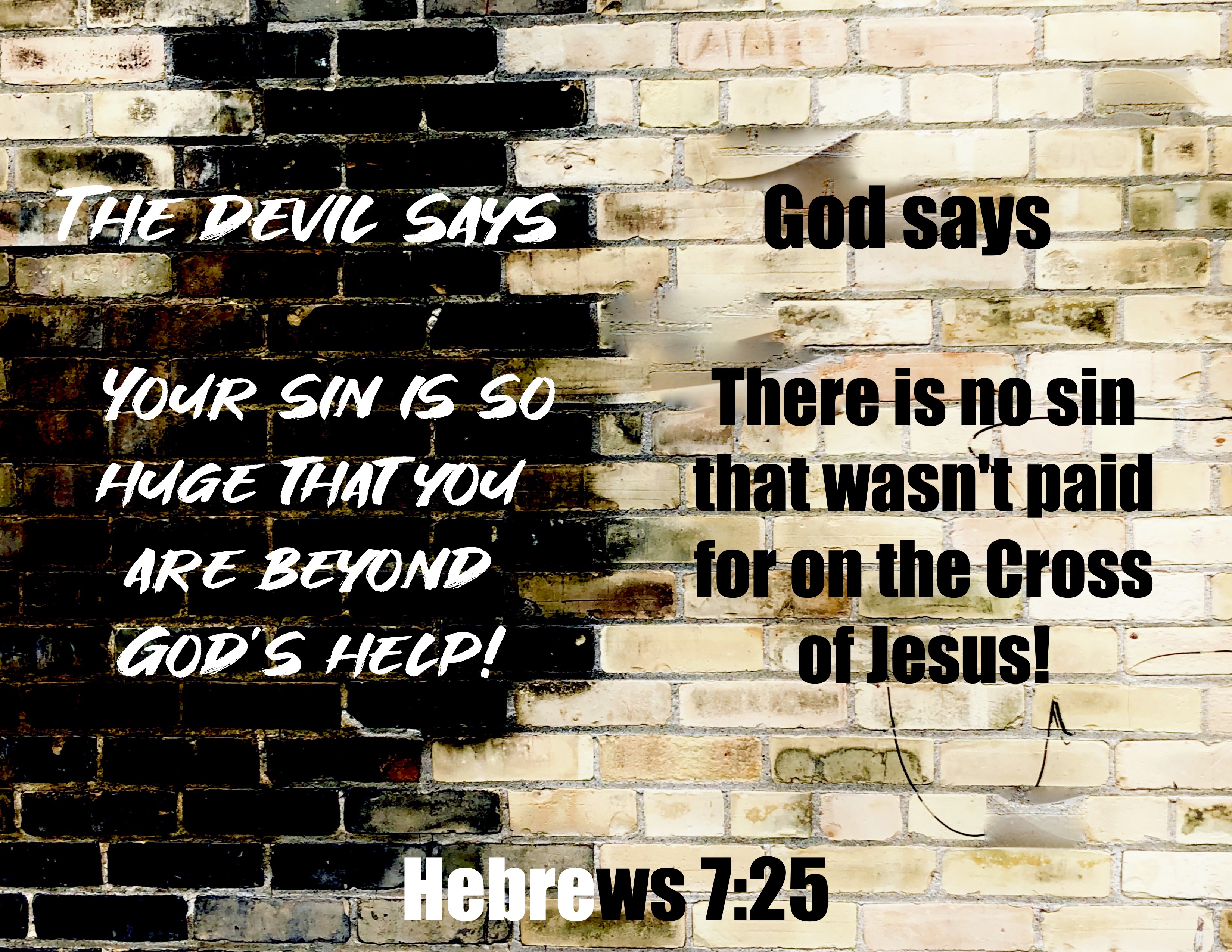
Therefore He is also able to save to the uttermost those who come to God through Him, since He always lives to make intercession for them. (Hebrews 7:25) 

     My friends, it is one thing to go to church or chapel. It is quite another thing to go to God. …

Coming to God is not what some of you suppose, that is, now and then sincerely performing an act of devotion but giving to the world the greater part of your life. You think that if sometimes you are sincere, if now and then you put up an earnest cry to heaven, God will accept you. And though your life may be still worldly and your desires still carnal, you suppose that for the sake of this occasional devotion God will be pleased, in His infinite mercy, to blot out your sins. I tell you, sinners, there is no such thing as bringing half of yourselves to God and leaving the other half away. …  

     If I should see a sinner staggering on his progress to hell, I would not give him up, even when he had advanced to the last stage of iniquity. Though his foot hung trembling over the very edge of perdition, I would not cease to pray for him. And though he should in his poor drunken wickedness go staggering on till one foot was over hell and he was ready to perish, I would not despair of him. Till the pit had shut its mouth upon him I would believe it is possible that divine grace might save him. See there! He is just upon the edge of the pit, ready to fall. But before he falls, free grace bids, ‘Stop that man!’ Down mercy comes, catches him on her broad wings, and he is saved—a trophy of redeeming love. 

From Salvation To The Uttermost 

My friend, if you don’t have a personal relationship with God through the forgiving work that Jesus accomplished on the Cross, I implore you to come to Him before another minute passes. When Jesus said from this Cross, “It is finished,” He told you that He paid in full your debt that would have kept you separated from God forever. 

Now you just need to come to Him in faith. Simply pray something like this: “God, I acknowledge that I am a sinner separated from You. But I believe that Jesus paid the penalty for all of my sins when He died on the Cross. Because of that payment, I am asking You to forgive me and bring me into a full relationship with You. I pray this in the name of Jesus. Amen.” 

And let me speak to you, my Christian brother or sister who has been praying earnestly for the salvation of someone dear to you. Let me encourage you to not give up! God’s mercy and God’s grace are so swift that even with the last breath they can swoop in to save. Never cease to pray for them and know that Jesus is interceding for them before God’s throne too!

►► Would you please prayerfully consider supporting this ministry? ◀︎◀︎


10 Quotes From The Ten Booms

Listen to the podcast of this post by clicking on the player below, and you can also subscribe on Apple or Spotify.

I recently shared my book review on the heroic story of the ten Boom family during the Nazi occupation of Holland, as told in the story The Hiding Place. This story is a must-read! Please check out my full book review by clicking here. 

These are some quotes from these godly sisters. 

“Worry does not empty tomorrow of its sorrow. It empties today of its strength.” —Corrie ten Boom 

“Any concern too small to be turned into prayer is too small to be made into a burden.” —Corrie ten Boom 

“When Jesus Christ tells us to forgive our enemies, He gives us the power He demands of us.” —Corrie ten Boom 

“We must tell people how good God is. After the war, we must go around telling people. No one will be able to say that they have suffered worse than us. We can tell them how wonderful God is, and how His love will fill our lives, if only we will give up our hatred and bitterness.” —Betsie ten Boom 

“At that moment when I was able to forgive, my hatred disappeared. … Forgiveness is the key which unlocks the door of resentment and the handcuffs of hatred. It is a power that breaks the chains of bitterness and the shackles of selfishness. What a liberation it is when you can forgive.” —Corrie ten Boom 

“Never be afraid to trust an unknown future to a known God.” —Corrie ten Boom 

“When a train goes through a tunnel and it gets dark, you don’t throw away the ticket and jump off. You sit still and trust the engineer.” —Corrie ten Boom 

“If they can be taught to hate, they can be taught to love.” —Betsie ten Boom, speaking to Corrie about the Nazi prison guards 

“We never know how God will answer our prayers, but we can expect that He will get us involved in His plan for the answer. If we are true intercessors, we must be ready to take part in God’s work on behalf of the people for whom we pray.” —Corrie ten Boom 

“Holiness is the Holy Spirit, a holy God in my heart, which makes me similar to Jesus.” —Betsie ten Boom 

►► Would you please prayerfully consider supporting this ministry? ◀︎◀︎

By the way, another great book of recollections from Corrie is I Stand At The Door And Knock. 

Thursdays With Spurgeon—Poetic Groans

This is a weekly series with things I’m reading and pondering from Charles Spurgeon. You can read the original seed thought here, or type “Thursdays With Spurgeon” in the search box to read more entries.

Our Prayer Helper 

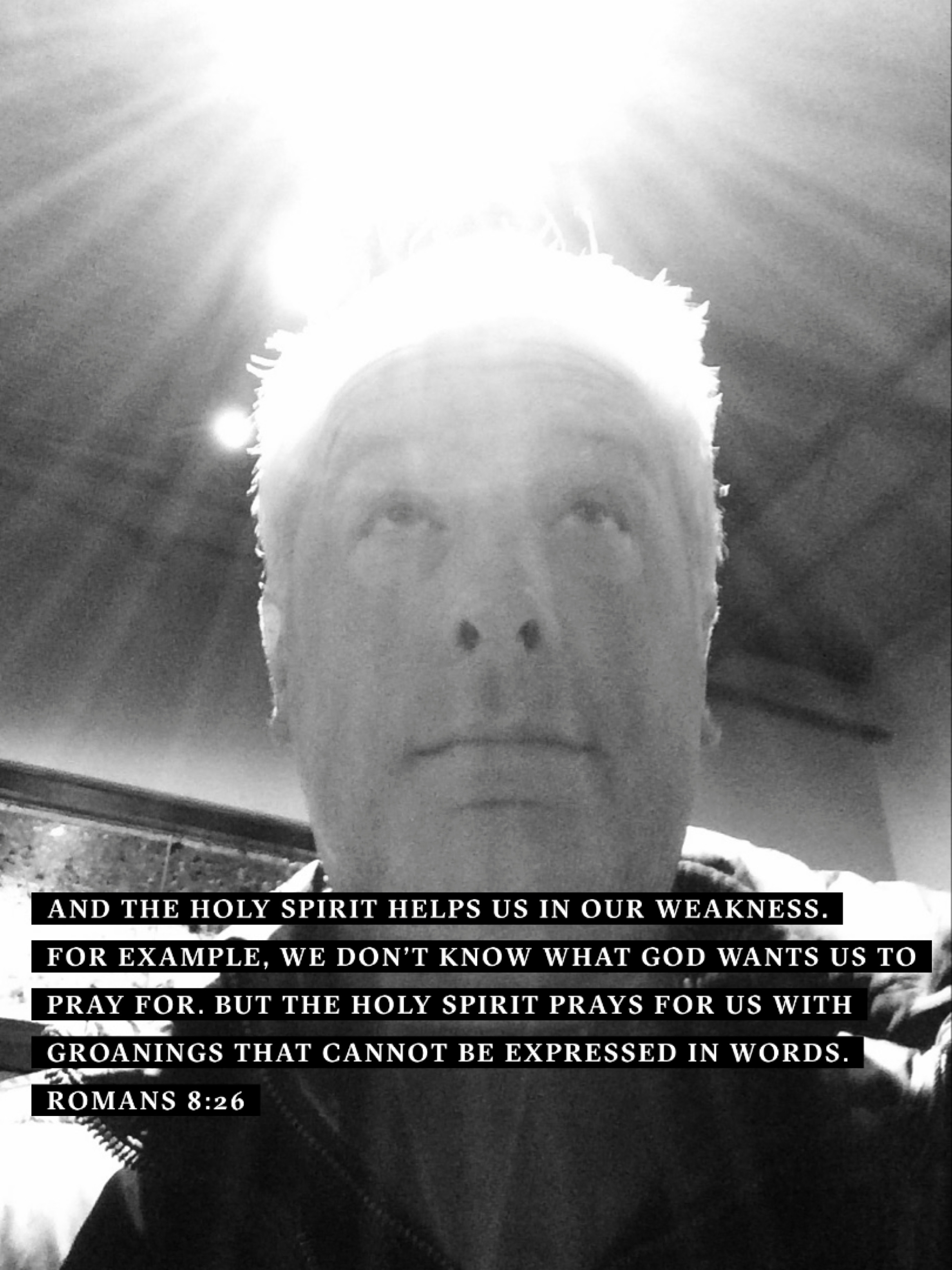
Likewise the Spirit also helps in our weaknesses. For we do not know what we should pray for as we ought, but the Spirit Himself makes intercession for us with groanings which cannot be uttered. (Romans 8:26) 

     A man’s heart is moved when he groans. A groan is a matter about which there is no hypocrisy. A groan comes not from the lips, but from the heart. A groan, then, is a part of prayer that we owe to the Holy Spirit, and the same is true of all the prayer that wells up from the deep fountains of our inner life. [see also Jeremiah 4:19; Isaiah 38:14; Psalm 77:4, 38:8-9] … 

     That which is thrown up from the depths of the soul, when it is stirred with a terrible tempest, is more precious than pearl or coral, for it is the intercession of the Holy Spirit! … 

     Beloved, what a different view of prayer God has from that which men think to be the correct one! You may have seen very beautiful prayers in print and you may have heard very charming compositions from the pulpit, but I trust you have not fallen in love with them. Judge these things rightly. I pray you never think well of fine prayers, for before the thrice-holy God it ill becomes a sinful supplicant to play the orator! … The tail feathers of pride should be pulled out of our prayers, for they need only the wing feathers of faith. The peacock feathers of poetical expression are out of place before the throne of God. … God looks at the heart. To Him fine language is as sounding brass or a tinkling cymbal, while a groan has music in it! 

From The Holy Spirit’s Intercession

God is not looking for well-polished prayers; He’s looking for real prayers. Let’s be honest: Not even the most educated person in the world has a vocabulary sufficient enough to accurately communicate with The Almighty God! 

Our Heavenly Father wants us to come to Him in simple, childlike anticipation. Notice I didn’t say childish anticipation—there is a huge difference. What Paul is telling us in Romans 8 is that the Holy Spirit can make the most eloquent, childlike, sincere prayer out of our deepest longings in our hearts. 

Jesus reminded us, “Your Father knows the things you have need of before you ask Him” (Matthew 6:8). Our Father wants to answer our prayers, and He has given us His Holy Spirit to help us pray in a way that He can answer. 

Don’t try to spruce up your vocabulary before you come to God in prayer. Just come to God in prayer, trusting that the Holy Spirit will make a beautiful prayer even out of your childlike groanings! The Holy Spirit turns our groans into prayerful poetry in our Heavenly Father’s ears!

Thursdays With Spurgeon—Our Prayer Helper

This is a weekly series with things I’m reading and pondering from Charles Spurgeon. You can read the original seed thought here, or type “Thursdays With Spurgeon” in the search box to read more entries.

Our Prayer Helper 

Likewise the Spirit also helps in our weaknesses. For we do not know what we should pray for as we ought, but the Spirit Himself makes intercession for us with groanings which cannot be uttered. Now He who searches the heart knows what the mind of the Spirit is, because He makes intercession for the saints according to the will of God. (Romans 8:26-27) 

     God helps our infirmity, and with a Helper so divinely strong, we need not fear the result! … We take our burden to our heavenly Father and tell Him in the accents of childlike confidence, and we come away quite content to better whatever His holy will may lay upon us. … 

     We bathe our wounds in the lotion of prayer and the pain is lulled; the fever is removed. But the worst of it is that in certain conditions of heart we cannot pray. We may be brought into such perturbation of mind and perplexity of heart that we do not know how to pray. … We fall into such heaviness of spirit and entanglement of thought that the one remedy of prayer, which we have always found to be unfailing, appears to be taken from us. Here, then, in the nick of time, as a very present help in time of trouble, comes in the Holy Spirit! He draws near to teach us how to pray, and in this way He helps our infirmity, relieves our suffering, and enables us to bear the heavy burden without fainting under the load. … 

     He will guide you both negatively and positively. Negatively, He will forbid you to pray for such and such a thing, even as Paul essayed to go into Bithynia, but the Spirit would not allow him. And, on the other hand, He will cause you to hear a cry within your soul that will guide your petitions, even as He made Paul hear the cry from Macedonia, saying, ‘Come over to Macedonia and help us’ (Acts 16:6-10). …  

     If I am a true believer, there dwells the Holy Spirit, and when I desire to pray, I may ask Him what I should pray for as I ought and He will help me! He will write the prayers that I ought to offer upon the tablets of my heart, and I will see them there and so I will be taught how to plead! It will be the Spirit’s own Self pleading in me and by me and through me before the throne of grace!

From The Holy Spirit’s Intercession

Oh, how many times I’ve been in desperate need but cannot find the right words to pray. The Holy Spirit understands even groans that come from my anguished heart and can help me turn those groans into perfect prayers. 

Jesus said the Holy Spirit would remind us of His words and would guide us into truth. I’ve experienced this for myself: I’m at an utter loss of what or how to pray, and then a passage of Scripture comes to my mind. I start there with that phrase. Often I will begin to read the surrounding passage from the Bible out loud and feel the gentle affirmation from the Holy Spirit as I begin to personalize that portion of Scripture into my own prayer. As Spurgeon put it, this is “the Spirit’s own Self pleading in me and by me and through me before the throne of grace!” 

What a Helper we have in the Holy Spirit!