Listen to the podcast of this post by clicking on the player below, and you can also subscribe on Apple, Spotify, or Audible.
In the first ten verses of Ephesians 2 Paul talks about the amazing transformation from who we WERE before we met Jesus to who we ARE now with Jesus as our Lord and Savior.
Before Jesus we…
were dead
used to live in sin
used to follow the world
were living to gratify fleshly cravings
were following only earthly desires
The result of this lifestyle is quite clear: We WERE deserving of God’s wrath (see vv. 1-3).
Verse 4 opens with an amazing word: “But” here is what our new life looks like. We are…
made alive with Christ
rescued from death
raised up with Christ
seated with Jesus in heavenly realms
benefitting from God’s kindness
The bottom line: We ARE saved by God’s grace from God’s wrath (vv. 4-8)!
It’s only now that we can realize that we ARE God’s handiwork, created to be in Jesus, to do good works, and to bring God glory. Our lives now ARE a display of the “incomparable riches of His grace” (v. 7)—we ARE a living testimony of His love for lost people.
Being transformed from what we WERE to who we ARE allows us to echo the words of the psalmist—Come and see what our God has done, what awesome miracles He performs for people! (Psalm 66:5 NLT).
(1) God allows the humble to know Him more intimately. For though the Lord is high, yet has He respect to the lowly—bringing them into fellowship with Him—but the proud and haughty He knows and recognizes only at a distance (Psalm 138:6).
(2) God gives the humble help to overcome evil. But He gives us more and more grace—power of the Holy Spirit, to meet this evil tendency and all others fully. That is why He says, “God sets Himself against the proud and haughty, but gives grace continually to the lowly (those who are humble enough to receive it)” (James 4:6).
(3) God gives His favor to the humble. …Clothe (apron) yourselves, all of you, with humility—as the garb of a servant, so that its covering cannot possibly be stripped from you…. For God sets Himself against the proud—the insolent, the overbearing, the disdainful, the presumptuous, the boastful—and He opposes, frustrates, and defeats them, but gives grace (favor, blessing) to the humble (1 Peter 5:5).
The bottom line—God mocks proud mockers but shows favor to the humble and oppressed (Proverbs 3:34).
Listen to the podcast of this post by clicking on the player below, and you can also subscribe on Apple, Spotify, or Audible.
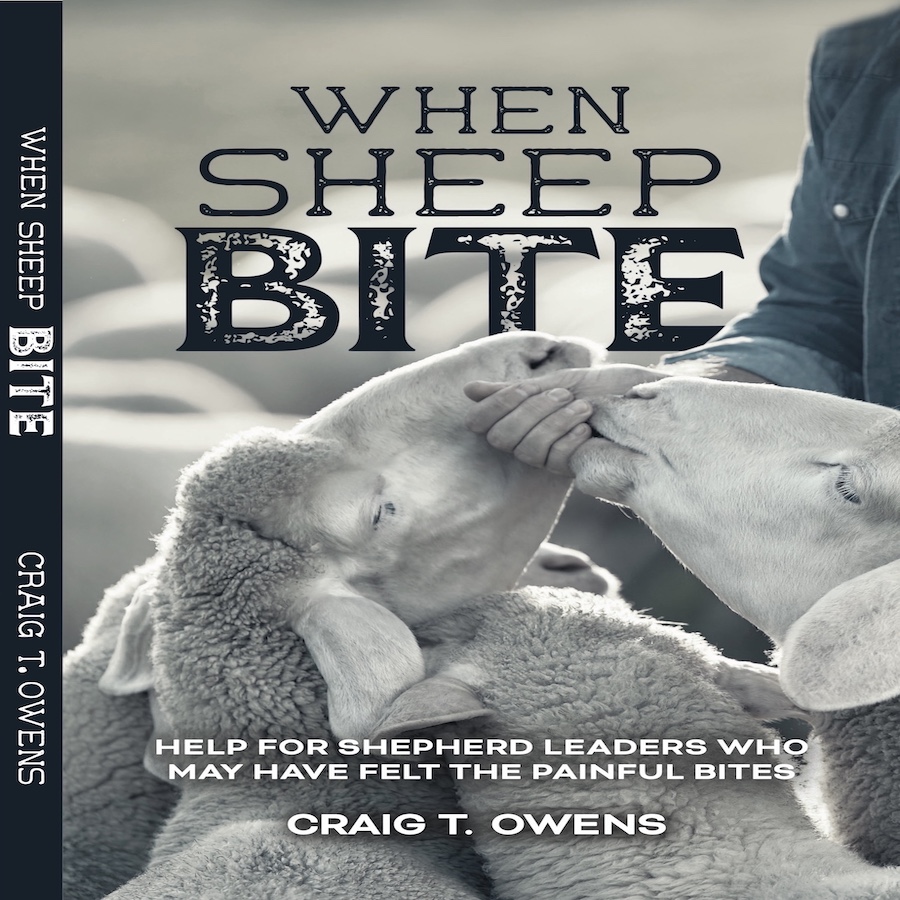
My book When Sheep Bite is a manual of help for church leaders who have been hurt by the very sheep they are attempting to help. This book was birthed from a very painful chapter in my own ministry.
But as dark as that time was, there was a ray of light that helped me to smile during the dark times and for years and years afterwards. Here is an excerpt from the chapter ‘Cry Before Your Confront’ in When Sheep Bite—
We used to have a funny saying in our family. Our puppy would be straining to get free and one of us would cry out, “Release the hound!”
After reading the previous chapter about imprecatory prayers, and hopefully putting that into practice, I hope you felt some relief from your anger. But when you read my reminder that David’s “Get ‘em, God!” cry was for God’s ears only, perhaps you were a little disappointed. Maybe you were hoping for someone to give you a green light to “release the hound” on those biting, kicking, and wayward sheep.
Wouldn’t it be so wonderful to unleash something—anything!—on those difficult sheep? As shepherds, we have so many ways we can dress up our unleashed hounds in biblical-sounding language. Maybe a righteous rebuke like the psalmist recorded: “You rebuke the arrogant, who are accursed, those who stray from Your commands” (Psalm 119:21). Or perhaps a well-timed prophetic thunderbolt like when Samuel was praying and “the Lord thundered with loud thunder against the Philistines and threw them into such a panic” (1 Samuel 7:10). Or even a strategic lightning strike from God’s throne as when the soldiers from King Ahaziah came to forcibly take Elijah to the king (2 Kings 1:11-12).
One of my favorite prayers is a prayer of David’s that is given added emphasis since it is recorded twice in the Scripture (2 Samuel 22 and Psalm 18)—
In my distress I called to the Lord; I cried to my God for help. From His temple He heard my voice; my cry came before Him, into His ears. The earth trembled and quaked, and the foundations of the mountains shook; they trembled because He was angry. Smoke rose from His nostrils; consuming fire came from His mouth, burning coals blazed out of it. He parted the heavens and came down; dark clouds were under His feet. … Out of the brightness of His presence clouds advanced, with hailstones and bolts of lightning. The Lord thundered from heaven; the voice of the Most High resounded. He shot His arrows and scattered the enemy, with great bolts of lightning He routed them. (Psalm 18:6-9, 12-14)
Wow, how good it must have felt for David to unleash these words! And yet we still see that they were words only for God’s ears, spoken when David was alone with the Almighty God. Isn’t there something we can say or do to our obstinate sheep? Yes, there is, but there is something we need to be reminded of first.
After a particularly grueling day of being bitten, kicked, and attacked by the angry sheep in my pasture, I came home and announced, “Tomorrow is ‘Be Kind to Craig Owens Day!” While driving home and licking my wounds, I had determined that I needed a day off—a day to unplug from all of the madness and make sure I was taking care of myself.
Let me add a very important truth here. In fact, it’s so important that I’m going to print it in bold letters: Self-care is not selfish! Far too many shepherds think that taking time off to care for themselves, especially in the midst of all of the chaos, is a selfish thing to do.
Selfish is different. Selfishness is self-centered. Selfishness is saying, “I’m going to take care of myself and I don’t care what happens to others while I’m doing what I want to do.” Self-care is a strategic withdrawal to take care of myself so that I can return to take care of others. It is like the instructions on an airplane to put your own oxygen mask on first before you try to help a small child with their mask. If I pass out, I’m no good to anyone else. Just as Jesus “often withdrew to lonely places and prayed” (Luke 5:16), we must find times to care for ourselves so that we are strengthened to help others when we return to the fray. This concept of self-care is so vital that I have dedicated all of Chapter 12 to explaining this idea to you in more depth.
My family still celebrates the Be Kind to Craig Owens Day “holiday” but we mainly remember it because of something else that happened in our family.
On this inaugural event, I planned a day of reading, praying, walking, and recuperating. I silenced my phone and withdrew for that entire Friday. After a nice evening with my family, I decided to extend my self-care time into Saturday. My daughter and I went out to breakfast, and because we both enjoy animals so much, we decided to stop into a new pet store and play with the puppies for a while.
Almost instantly, both of us were captivated by a very special dog. There was something about her that drew us to her. In short order, we were on the phone with my wife and my sons asking them to join us at the pet store. We ended up walking out of the store that morning with a new addition to our family.
My wife later remarked that this puppy was the best irresponsible decision we ever made. Part of the reason this was true is that this puppy became my constant companion. I took her to my office with me so that I would have a source of unconditional love to offset all of the brutal attacks I was absorbing.
When John Bradford saw a cartful of men going off to Tyburn to be hanged for their crimes, he said to a friend, “There goes John Bradford but for the grace of God.” When I stopped to think what was different between my behavior and the behavior of these biting sheep, I realized it was only the grace of God that had kept me from descending into the same ugly behavior. That’s when I decided to name our new puppy Grace. I wanted to say that name over and over and over again. I desperately needed to be reminded of God’s grace for me. I also needed to be reminded that God wanted my biting sheep to know His grace too.
When we cried out, “Release the hound,” it was because Grace was straining at her leash to overwhelm someone with her love. She wanted nothing more than to show them how much she welcomed them into her presence.
I’ll be honest with you: When some of my biting sheep came storming into my office to berate me for something and Grace wanted to run to them with love and acceptance, I wanted to scold her and keep her back. This, I think, was the attitude of the older brother when his wayward brother returned home and was lovingly welcomed back into the fold by their father (Luke 15:11-32). But when I paused to think of God’s amazing grace that “saved a wretch like me,” I was reminded that God’s grace also wants to restore other wayward, obstinate, unreasonable sheep.
Our annual reminder of this event is really remembering our dog Grace’s “Gotcha Day.” It’s our annual reminder that grace is best seen in times and places that it is least expected.
If you are a church leader, please pick up a copy of When Sheep Bite to help you on your healing journey. And if I can be of assistance to you, please get in touch with me.
Listen to the podcast of this post by clicking on the player below, and you can also subscribe on Apple, Spotify, or Audible.
The dictionary defines a rhetorical question this way: A question asked solely to produce an effect or to make an assertion of affirmation or denial. In other words, the question is asked with the assumption that the answer is obvious.
The apostle Paul does this five times in five consecutive verses at the end of Romans 8 (see verses 31-35). These questions are Paul’s way of getting us to reaffirm our rock-solid assurance of just how amazing it is that God holds us so securely.
Even though these are rhetorical questions, I want to add the extra assurance by giving you the answer to each question.
(1) Who can stand against me? No one!
Because Almighty God is for me.
(2) Who can cause God’s blessings to be withheld from me? No one!
Because God didn’t withhold His Son Jesus, He won’t withhold any other lesser blessing either.
Because Jesus intercedes for me and imputes His righteousness to me.
(5) Who can separate me from God’s love? No one!
Not a single thing, person, or circumstance can diminish any part of God’s love for me.
Don’t ever buy into the devil’s lies—not even for a second—that somehow you have put yourself in a place where God’s love for you is questionable. Whenever you hear these lies, return again and again to these five powerful rhetorical questions to reassure your heart, mind, and soul of just how securely you are held in God’s grip of grace.
The word gospel simply means the good news about the salvation that comes only through Jesus.
Paul loves this word!
Interestingly, although we refer to the first four books of the New Testament as “The Gospels,” the word itself barely appears:
Matthew—4 times
Mark—8 times
Luke—0 times
John—0 times
And even though these four opening books are the Gospels about Jesus, He Himself only uses the word nine times, with the other three times attributed to someone else mentioning what Jesus was doing.
Peter only uses this word twice (Acts 15:7; 1 Peter 4:17). And John uses it just once (Revelation 14:6).
Paul, however, uses this word 64 times!
It becomes such a part of who he is and how he thinks, that he calls it “my gospel” twice (Romans 2:16, 16:25) and “our gospel” three times (2 Corinthians 4:3; Colossians 1:23; 2 Thessalonians 2:14).
For Paul and for us this Good News is—
God’s promises fulfilled
salvation power
the fullness of God’s blessing
the opening of mysteries
the guide for godly living
glorious light
the expression of God’s grace
the standard of all truth
a key part of the Christian’s spiritual armor
the empowerment for ministry
the anchor of unshakable hope
the means by which we experience Christ’s glory
the only door to life and immortality
For those of us who have been called to preach this Gospel, these thoughts should both humble and empower.
For those of us who have been saved by believing this Gospel, these thoughts should cause us to desire to know more, and more, and more about our Savior.
Listen to the audio-only version of this podcast by clicking on the player below, or scroll down to watch the video.
We are grateful for you! Greg and I love talking about leadership, and it’s a great joy that you tune in to listen. In this episode we discuss why an attitude of gratefulness is so important for leaders year-round, not just around the holidays.
[0:17] We are so grateful for you!
[1:25] What is it about gratitude that make someone a great leader?
[4:28] Grateful leaders have greater influence with people around them.
[8:14] It’s easier to build consensus on our teams when we have a thankful paradigm.
[10:52] Thankful correlates with graceful. This is such an attractive quality for leaders.
[14:10] Greg asks me elaborate on how gratitude ties into my book Shepherd Leadership.
[16:09] How does a grateful mindset help us get through the tough times?
[18:56] Happiness is not the same as joy. Joy is much deeper and serves us as leaders much better because happiness can be gone really quickly.
[23:16] We give you some “homework” that will help you grow your gratitude.
Check out this episode and subscribe on YouTube so you can watch all of the upcoming episodes. You can also listen to our podcast on Spotify and Apple.
Romans 8:28 tells us that God uses ALL things to accomplish His purpose for our lives. Too many times I tried to rush through things without getting anything out of it. I have lots of new content every week, which you can check out on my YouTube channel.
He is 98 years old and he’s still busy serving other people! I pray we can all be as selfless and vibrant in ministering to others until the day God calls us home.
“When with an eye of faith we behold Christ crucified we ought to weep, not for Him, but for ourselves. We must not be affected with the death of Christ as with the death of a common person whose calamity we pity, or of a common friend whom we are likely to part with. The death of Christ was a thing peculiar; it was His victory and triumph over His enemies; it was our deliverance, and the purchase of eternal life for us. And therefore let us weep, not for Him, but for our own sins, and the sins of our children, that were the cause of His death; and weep for fear (such were the tears here prescribed) of the miseries we shall bring upon ourselves, if we slight His love, and reject His grace, as the Jewish nation did, which brought upon them the ruin here foretold.” —Matthew Henry, on Jesus’ word, “Do not weep for Me” in Luke 23:28
J. Warner Wallace shares three responses Christians can give to those who make the claim that Jesus didn’t think He was God. In this video, Detective Wallace talks about a section of his website that gives further evidence. You can find that section here.
The Institute for Creation Research is a group of scientists explaining how science points to a Creator. What does Creation have to do with Easter? “Any view of Christianity that incorporates long ages of death and suffering before Adam makes a sham of the Cross. This Easter season, as we remember our salvation made possible by the death of our Lord Jesus Christ on the Cross and His triumphant resurrection from the grave, let us understand it within the ‘big picture’ of a ‘very good’ creation that was ruined by our rebellion but restored by the willing sacrifice of our great Creator-Savior.”
“One measure of the greatness of a man is not only that he practices what he preaches, but also that he doesn’t consider himself above the ordinary means of grace that all Christians need.” —John Piper
“Beware of idleness—satan sows most of his seed in fallow ground.” —Thomas Watson
Listen to the podcast of this post by clicking on the player below, and you can also subscribe on Apple, Spotify, or Audible.
In my book Shepherd Leadership I talk about some strong, godly men who gave into temptation at a moment of weakness—David who behaved so poorly toward Bathsheba and Uriah, Elijah who got depressed and suicidal, and Peter who denied knowing Jesus.
One common factor for all of these guys is that their moment of giving in came when they were alone. They were isolated from others who may have been able to help them overcome the temptations that tripped them up.
Have you ever heard of the law of the weakest link?
If I have a chain with links that can handle 400, 300, 250, 175, and 500 pounds, how much weight can the chain hold? You don’t really need a calculator for this one because the answer is the capacity of the weakest link: 175 pounds. This is why it’s to my advantage to not only strengthen myself, but to help others grow their strength as well.
In Galatians 6:2-5, the apostle Paul talks about the strength we need for ourselves and our fellow Christian brothers and sisters. First, he says that each of us should test our own actions. I can only know my breaking point if I’m tested, and the Holy Spirit knows how to do this perfectly. After this testing, Paul says then I can take pride in myself without saying, “Well, at least I’m better than him!”
Quite simply, Paul tells each of us that we must be able to carry our own loads. Why? Because only a strong Christian can help someone else with their load. We each have to get stronger individually so that we have strength for others!
This is just like what we’ve been learning in our look at the Songs of Ascent: the goal is for all of the pilgrims to get to Zion together!
In this series, we are going to learn about six spiritual disciplines. Much like a physical workout, the Holy Spirit will start with us where we are. Not everyone will be at the same level nor will everyone progress at the same rate. But all of us will need these four things.
(1) Discipline. This is saying no to the easy thing or the thing that brings only fleeting happiness so that I can say yes to the things that bring eternal joy.
(2) Stick-to-it-iveness. I have to be committed to this process for a lifetime.
(3) Grace for yourself. There are going to be moments of struggles, plateaus, and even stumbles. Those are all a part of the journey, so we must extend grace to ourselves to learn, repent, and move forward.
(4) Patience for others. As I just mentioned, we are all on our own journey and we all progress at different rates. Let’s be patient with each other.
All of these spiritual disciplines are to strengthen us individually so that we have something to share with other saints (2 Corinthians 1:3-6).
These spiritual disciplines shouldn’t become legalistic. Don’t make the way you do it the way everyone has to do it. After all, a 175-pound link will be different than a 250-pound link.
What I am calling spiritual disciplines, C.S. Lewis called religious practices. In a letter to a friend, he wrote about the safety and beauty that result from these pursuits—
“I think about the practices what a wise old priest said to me about a ‘rule of life’ in general—‘It is not a stair but a bannister’…i.e. it is, not the thing you ascend by but it is a protective against falling off and a help-up. I think thus we ascend. The stair is God’s grace. One’s climb from step to step is obedience. Many different kinds of bannisters exist, all legitimate. It is possible to get up without any bannisters, if need be: but no one would willingly build a staircase without them because it would be less safe, more laborious, and a little lacking in beauty.” (C.S. Lewis)



 In the first ten verses of Ephesians 2 Paul talks about the amazing transformation from who we WERE before we met Jesus to who we ARE now with Jesus as our Lord and Savior.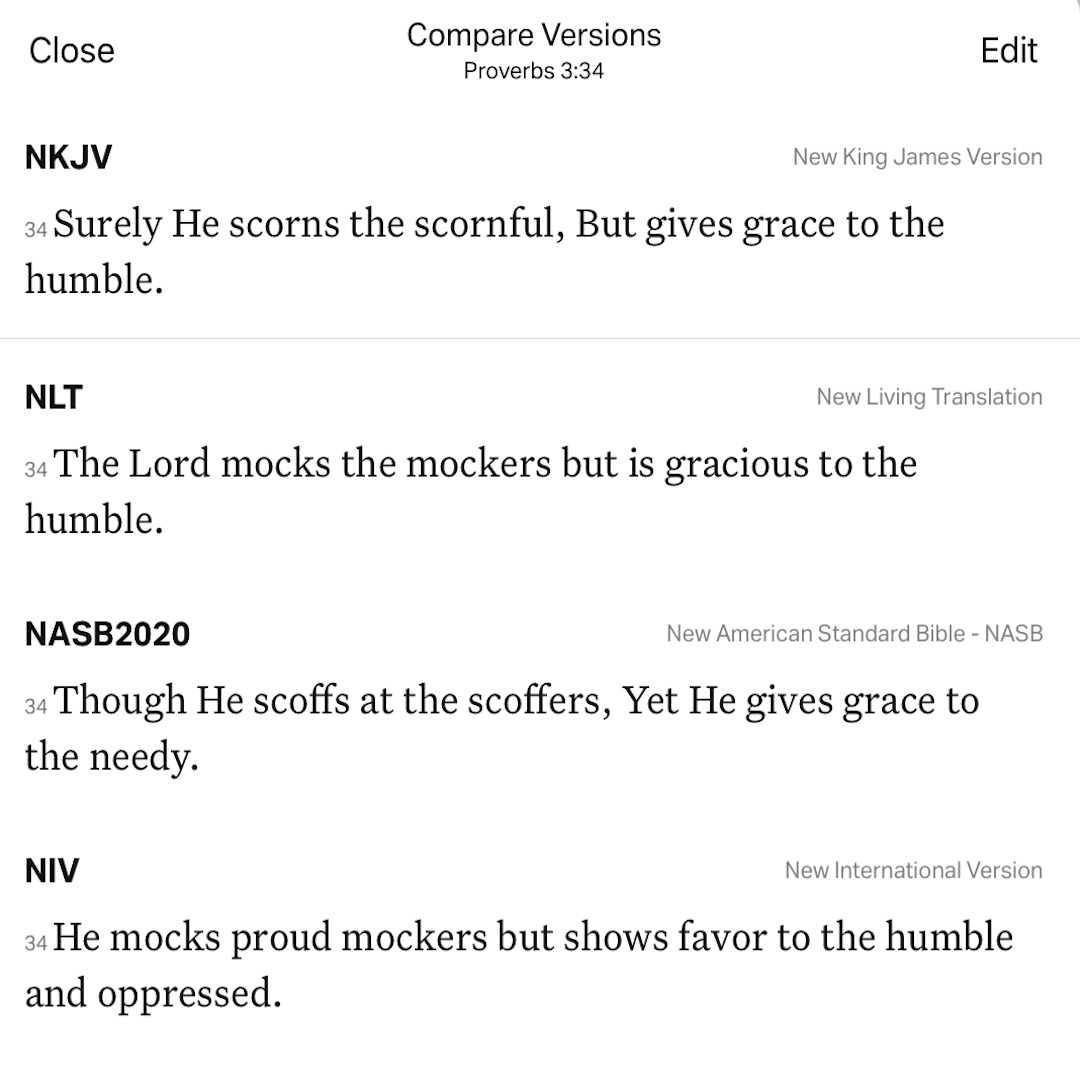







 Craig T. Owens