Links & Quotes

When a teammate seems to choke in a pressure-packed situation, good coaches help them learn from their mistake and get right back into the game. This is how leaders help their teammates go from choke to clutch. Check out the full conversation Greg and I had about this.

I have lots of new content every week, which you can check out on my YouTube channel.

“Most of us who aspire to be tops in our fields don’t really consider the amount of work required to stay tops.” —Althea Gibson, tennis great

“There is only one way forward when vindication is delayed: total forgiveness. And I can give you a motivation to forgive totally greater than any other that could be conceived: you do it for an audience of One. Yes. That’s it. That is how you do it! Total forgiveness comes easily when you realize you are doing it for God and the glory of Jesus Christ!” —R.T. Kendall

More archeological evidence supporting the historicity of the Bible. Here are the top ten discoveries related to the Book of Jeremiah.

ICR reports: “Millions of years of erosion should have toppled all the beautiful sandstone arches out West, yet many hundreds remain.” But following the biblical timeline of Creation and the Flood makes it unsurprising that the arches are still standing.

Dr. Glenn Sunshine offers a beautiful, biblically-centric prayer for our nation, especially during this current election cycle.

“A coach is someone who can give correction without causing resentment.” —John Wooden
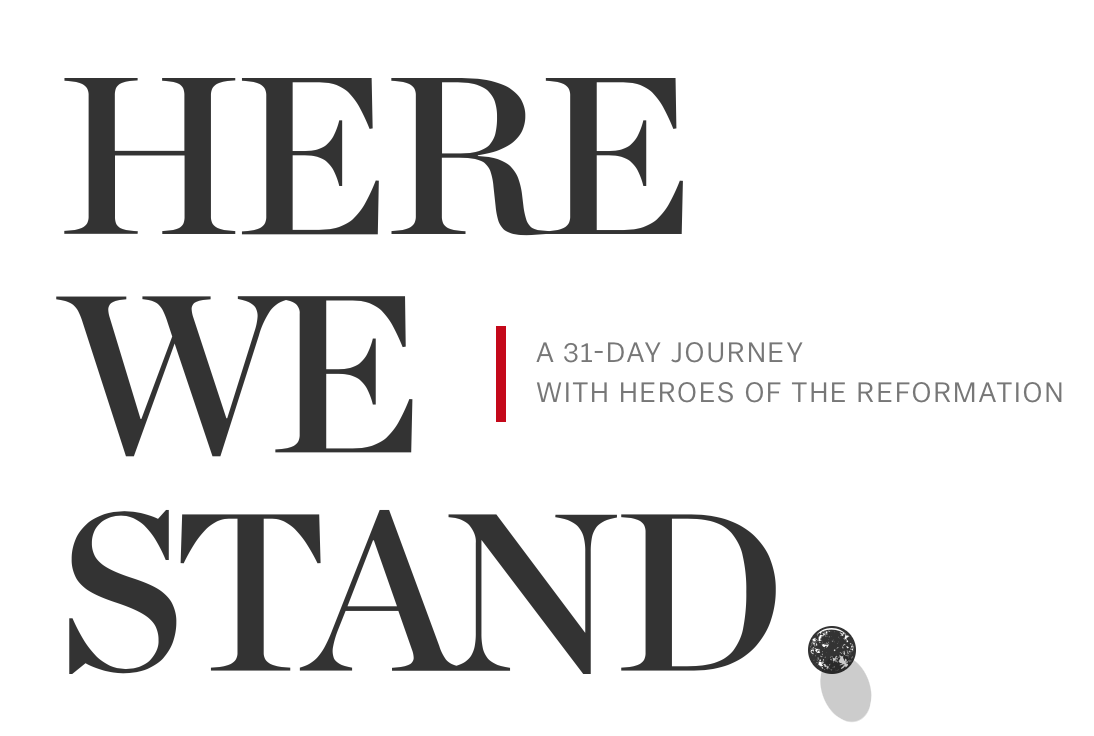
October is the month Protestants remember the start of the Reformation. The folks at Desiring God have a wonderful resource available by email every day during October called Here We Stand. Each day you will receive an email with a mini-biography of a key character in the Reformation. I am thoroughly enjoying these each day. Sign up here.
None of us are self-made. God created us on purpose and for a purpose. He gave us the gifts we need to accomplish that purpose. We will only find our fulfillment in life in stewarding those God-given gifts and opportunities in ways that glorify God. Not only fulfillment here, but then eternal satisfaction when we hear our Savior say, “Well done, good and faithful servant! Enter into your Master’s happiness!”
Honoring Friends And “Enemies”

Listen to the podcast of this post by clicking on the player below, and you can also subscribe on AppleSpotify, or Audible.

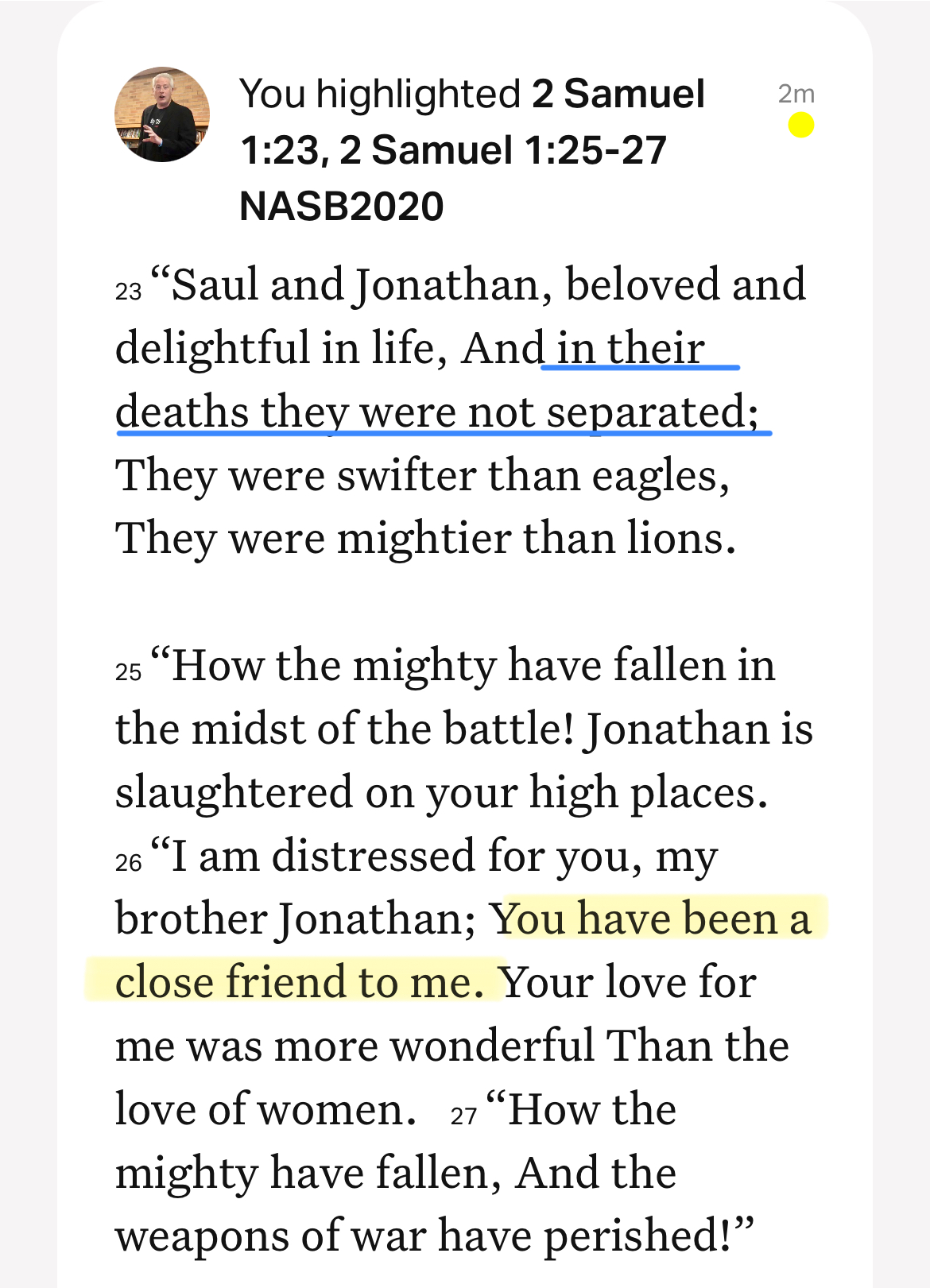
Saul and Jonathan, beloved and delightful in life, and in their deaths they were not separated; they were swifter than eagles, they were mightier than lions. Daughters of Israel, weep over Saul, who clothed you in scarlet, with jewelry, who put gold jewelry on your apparel. How the mighty have fallen in the midst of the battle! Jonathan is slaughtered on your high places. I am distressed for you, my brother Jonathan; you have been a close friend to me. Your love for me was more wonderful than the love of women. How the mighty have fallen, and the weapons of war have perished! (2 Samuel 1:23-27)

It’s not surprising that David honored his friend Jonathan in song after his death. But it is surprising that Jonathan remained faithfully at his father’s side, fulfilling his duties as a son and a prince of Israel, although he did not agree with his father’s treatment of David. 

In Jonathan we see the obedience to the fifth commandment: Honor your father and mother (Exodus 20:12). 

And it is also surprising that David says nothing bad about Saul in this song of lament, but only praises him for his valiant victories as Israel’s king. 

In David we see a true picture of forgiveness—where a forgiven transgression is a forgotten transgression, no longer held by David against his tormentor. Later in his life, David would write about the mind-blowing truth that God obliterates the record of our forgiven sins, never bringing them up again (Psalm 103:10-12)! 

Is it any wonder that David and Jonathan became and remained such close friends? From the moment Jonathan first heard David speaking about his trust in God, they became “one in spirit” and forged a covenant friendship that lasted even beyond Jonathan’s life (1 Samuel 18:1-4). 

May we learn from these two God-fearing, faithful friends what it really means to honor others, whether we call them friends or others might call them “enemies.” 

You may also be interested in a related blog post: How to pray when you’ve been stabbed in the back. 

In my book When Sheep Bite I have a chapter called “When the sheep slander you.” In that chapter, I dive deeper into the lesson leaders can learn from how David treated Saul both during his life and after his death. 

►► Would you please prayerfully consider supporting this ministry? My Patreon supporters get behind-the-scenes access to exclusive materials. ◀︎◀︎

How To See A National Revival

Listen to the podcast of this post by clicking on the player below, and you can also subscribe on AppleSpotify, or Audible. 

After making it up to the 11th step—so close to the top now—how could the psalmist be saying, “Out of the depths I cry to You, O LORD”? (Psalm 130:1) 

I think that the more we ascend in God, the more sensitive we should be to any semblance of sin in our lives that would offend Him. The mark of a maturing Christian is one who is constantly closing the gap between sin and confession. 

(You can check out all of the biblical references in this post by clicking here.)

I like the bridge in the song I Keep Falling In Love With Him

When I first fell in love with Jesus,
I gave Him all my heart
And I thought I couldn’t love him more
than I did right at the start.
But now I look back over the mountains,
and the valleys where I’ve been
And It makes me know I love Him so much
more than I did then


Out of the depths—Think how far we’ve come on this climb. In the first Song of Ascent, we were experiencing the woes of being in the valley (Psalm 120:5-7). But now in this song, the feelings of being in the depths are not from someone else’s sinful activity. 

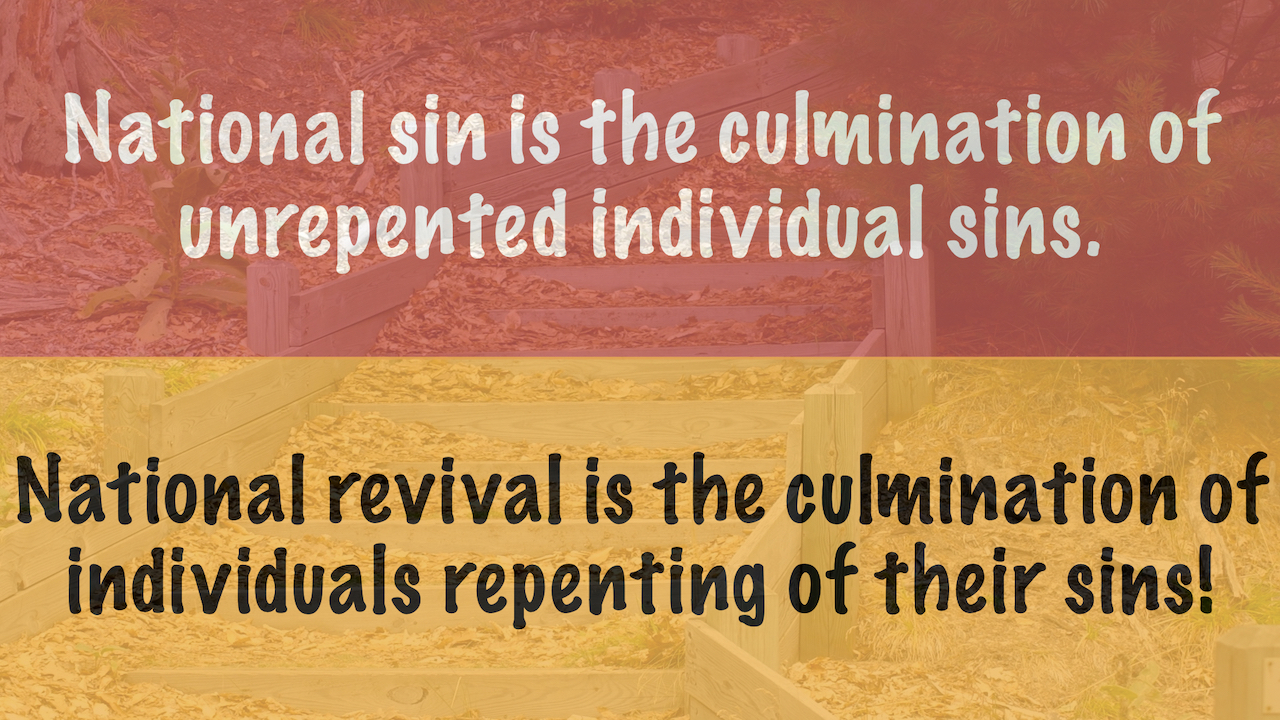
The psalmist is pointing out that national sin is the culmination of unrepented individual sins. God addressed this in Leviticus 20:22—Keep all My decrees and laws and follow them, so that the land where I am bringing you to live may not vomit you out.  

Even in these depths, the psalmist is confident that God will hear—let Your ears be attentive (v. 2). Nehemiah was confident too. Look how he joins his personal sin to the national sin after Israel had be vomited out of the land (Nehemiah 1:1-7). 

Our confidence comes from the rock-solid assurance that God completely forgives our sins and then forgets all that He forgives (vv. 2-3; Psalm 103:10-12). 

The middle verses (vv. 5-6) have the key words wait, watch, and hope. This middle part comes down to: (1) What I’m going to pay attention to, and (2) What God pays attention to. 

God is attentive to our cries for mercy, and He is watchful for our care, not for our punishment! 

We are called to wait and watch in hope because God has proven that He is all in for us. Look at this completeness:  

  • full forgiveness (v. 3) 
  • unfailing love (v. 7a) 
  • full redemption (v. 7b) 
  • all their sins (v. 8) 

Notice in v. 7 the phrase “all THEIR sins” is now corporate (not singular, personal as in the opening verses). 

We’ve gone FROM my voice, my cry TO your hope, O Israel and redemption of their sins. 

If national sin is the culmination of unrepented individual sins, then national revival is the culmination of individuals repenting of their sins! 

National revival starts with you and with me. 

If you’ve missed any of the Songs of Ascent we’ve looked at, you can find them all here. 

►► Would you please prayerfully consider supporting this ministry? My Patreon supporters get behind-the-scenes access to exclusive materials. ◀︎◀︎

Pray For Them?!

Listen to the podcast of this post by clicking on the player below, and you can also subscribe on AppleSpotify, or Audible. 

How exactly should we pray for those who have so badly mistreated us? There’s a natural response, and then there’s a supernatural response that Jesus calls us to.

Check out this episode of The Podcast.

In chapter 14 of When Sheep Bite I wrote—

      In the New Testament, the Greek word for “bless” is eulogeo. The prefix eu- means “good” and the root logos is “word.” So, in the New Testament context in which we now live, to bless someone literally means to say good words both to them and about them. So when Jesus tells us, “Bless those who curse you and pray for those who mistreat you,” He is telling us to say good words to them, and to say good words about them in prayer to our Heavenly Father. …

      Commenting on Psalm 109:4, my friend Kevin Berry said, “While they accuse me like satan, I will pray for them like Jesus.” This is the highest level of Christian maturity: To pray like Jesus did for those who insulted Him, slandered Him, and crucified Him, “Father, forgive them for they don’t understand what they are doing” (Luke 23:34).

The Scriptures that I reference on this episode of The Podcast are Matthew 5:44; Psalm 109:4; Revelation 12:10; John 10:10; Luke 23:34; Psalm 139:23-24; Romans 12:18-21.

And the blog posts I mention are: Unexpected Response and Choice Four-Letter Words.

I truly believe that When Sheep Bite will be a healing resource for shepherd leaders who are still feeling the pain of their latest sheep bite. Please pick up a copy today! 

►► Would you please prayerfully consider supporting this ministry? My Patreon supporters get behind-the-scenes access to exclusive materials. ◀︎◀︎

Our Gracious God

Answer me when I call, God of my righteousness! You have relieved me in my distress; be gracious to me and hear my prayer. … But know that the Lord has set apart the godly person for Himself; the Lord hears when I call to Him. (Psalm 4:1, 3)

I can’t come into God’s presence in my own strength. But when I am clothed in the righteousness of Jesus, the distress of my sin is relieved and I am joyfully welcomed into the awesome presence of my Heavenly Father! He longs to hear my voice, and He loves to be gracious to me!

Links & Quotes

I can forgive the inexcusable in others because God has forgiven the inexcusable in me. Check out this whole message here. I have lots of new content every week, which you can check out on my YouTube channel.

In the fourth year of King Hezekiah, which was the seventh year of Hoshea son of Elah, king of Israel, Shalmaneser king of Assyria came up against Samaria and besieged it (2 Kings 18:9). The Bible Archeology Report puts together wonderful biographies of biblical characters based on archeological discoveries that corroborate the account in Scripture. Here is the biography of Assyrian King Shalmaneser V. 

Meteorologist Dr. Roy Spencer writes, “Atmospheric CO2 levels will start to fall even with modest reductions in anthropogenic CO2 emissions. Why is that? The reason is due to something called the CO2 ‘sink rate.’ It has been observed that the more CO2 there is in the atmosphere, the more quickly nature removes the excess.” Imagine that! It’s almost as if the Creator of the Universe knew exactly what He was doing.

J. Warner Wallace makes the case that the origin of the universe points to a Creator—but he does so without using Scripture.

“You will not be able to extemporize good thinking unless you have been in the habit of thinking and feeding your mind with abundant and nourishing food.” —Charles Spurgeon

The Catalyst Of Our Witness

Listen to the podcast of this post by clicking on the player below, and you can also subscribe on AppleSpotify, or Audible. 

Jesus fulfilled all of the jots and tittles of prophecy, showing that God is the Promise Maker is God the Promise Keeper. 

We need to be careful of overlooking details we think might be insignificant because we can easily think that our small lives are somehow insignificant. They are not! As Tom Kaastra reminded us last week, we are here on purpose and for a purpose; our lives are eternally significant.  

Immediately after His resurrection, the followers of Jesus struggled to wrap their minds around what they had just experienced. Just before His ascension, Jesus explained to them both what had happened already, and what was about to happen (Luke 24:44-49). 

Jesus said He had already fulfilled the promised about His crucifixion and resurrection. Luke writes that Jesus “opened their minds so they could understand” (v. 45). 

Notice two important things:

  1. The Spirit of Jesus—the Holy Spirit—opens minds 
  2. He opens minds to grasp the truth in Scripture 

Jesus also says that we are still fulfilling the “what is written” (v. 46) in the the proclamation of the death and resurrection of Jesus. We are fulfilling the prophecy that says the message of Jesus will be preached everywhere to all peoples, so that they also can receive the forgiveness Jesus paid for and repent of their Godless ways. 

Who opens minds? The Holy Spirit. 

What does the Spirit use as a catalyst to open minds? Our witness. 

Who empowers our witness? The same Holy Spirit (see Luke 24:47-49; Acts 1:4-8). 

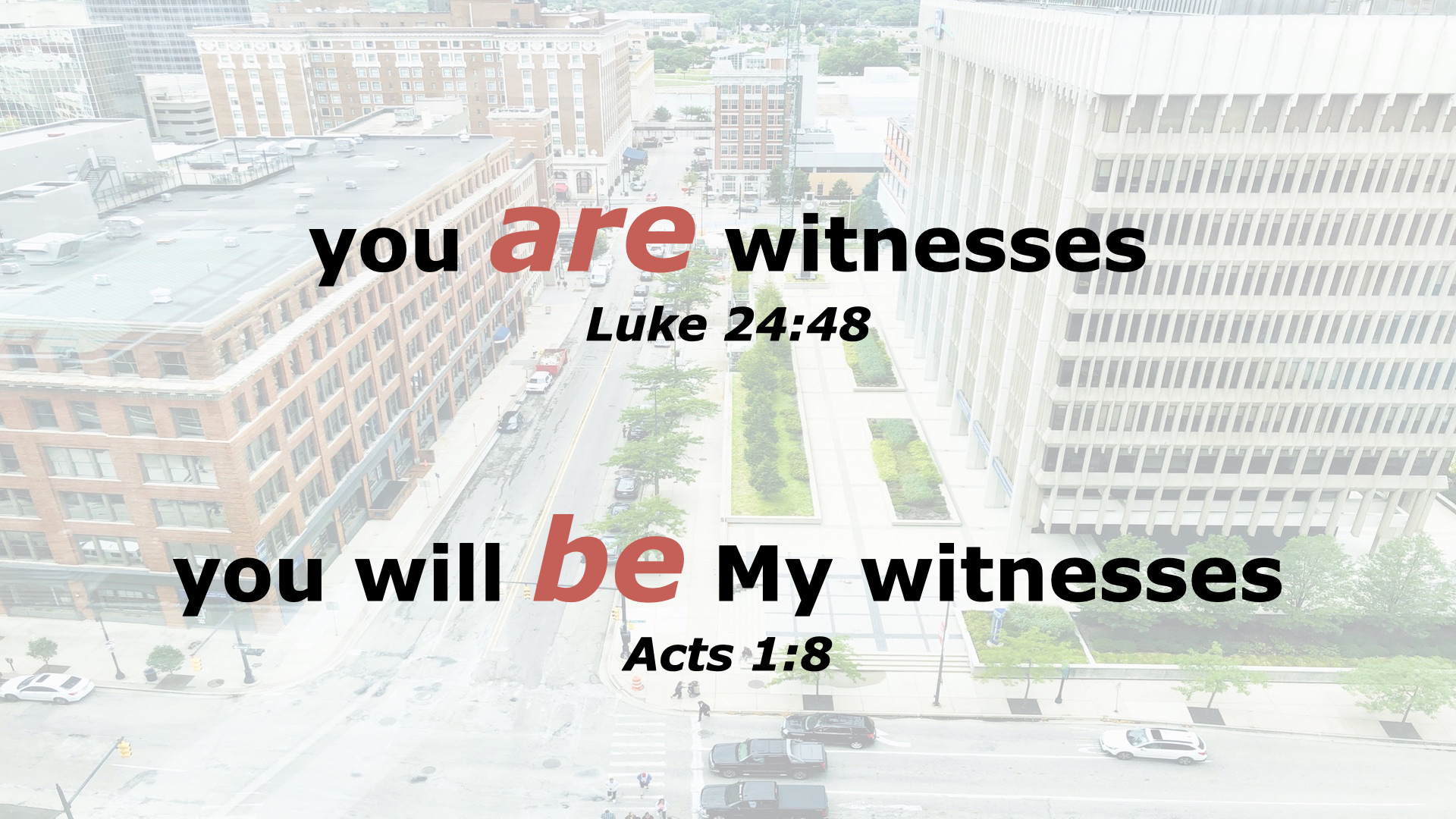
A witness is a truth-teller, who tells their firsthand story and who amplifies their verbal testimony by their Christ-honoring lifestyle. Jesus used two phrases to remind us that witnessing is not something we do, but it is who we are: 

  • you ARE witnesses (Luke 24:48) 
  • you will BE My witnesses (Acts 1:8) 

Holy Spirit-baptized Christians are empowered to take Jesus to every street. God has strategically and purposefully placed us on our “streets” to proclaim our witness. From Easy Street to Skid Row, and everywhere in between, we are to fulfill the prophecy of proclaiming this good news to all nations (see 1 Corinthians 9:20-22).

The Holy Spirit opens minds closed to God. He uses our witness as the catalyst for people to repent from their sin and receive the forgiveness that Jesus made available. 

So don’t stop at just receiving Jesus as your Lord and Savior, but also receive the empowering gift He promised—the baptism in the Holy Spirit! 

Please follow along with all of the messages in this series called Takin’ Him to the streets by clicking here. 

►► Would you please prayerfully consider supporting this ministry? My Patreon supporters get behind-the-scenes access to exclusive materials. ◀︎◀︎

Links & Quotes

The devil wants us to remember what we’ve done or what we still need to do, but Jesus wants us to remember what He has already done. There is a huge difference! Check out this whole message here. I have lots of new content every week, which you can check out on my YouTube channel.

“The most likely man to go to hell is the man who has nothing to do on earth. Idle people tempt the devil to tempt them.” —Charles Spurgeon

“What were we made for? To know God. What aim should we have in life? To know God. What is the eternal life that Jesus gives? To know God. What is the best thing in life? To know God. What in humans gives God most pleasure? Knowledge of Himself.” —J.I. Packer

The Bible Archeology Report shares the Top 10 archeological discoveries related to the resurrection of Jesus.

We can learn childlike faith by simply watching and listening to how young children interact with their loving parents. This video is a clip from one of the message in our series called Kingdom Praying.

Technological advancements abound all around us. How are Christians supposed to interact with technology: embrace it? ignore it? This is a thoughtful message to give us a biblical paradigm for our daily use of technology. 

“We must quit bending the Word to suit our situation. It is we who must be bent to that Word, our necks that must bow under the yoke.” —Elizabeth Elliot

“The things you pray about are the things you trust God to handle. The things you neglect to pray about are the things you trust you can handle on your own.” —H.B. Charles 

“Learning to pray doesn’t offer us a less busy life; it offers us a less busy heart.” —Paul Miller

A Leader’s Example

Listen to the podcast of this post by clicking on the player below, and you can also subscribe on AppleSpotify, or Audible. 

When you read through the history of the kings of Israel and Judah, there are two consistently recurring themes for these leaders—

  • He turned to God and the people put away their idols <or>
  • He turned from God and the people turned to their idols 

It’s true: As goes the leader, so go the people. 

In my life, I’ve experienced that the good things that I do over-the-top are only moderately emulated by those around me. But the unhealthy things that I even slightly indulge in are adopted quickly by everyone else. 

Godly leaders must be so aware of how their example impacts everyone around them, and they must fight to maintain biblical standards. When we miss the mark, we must be quick to admit our shortcoming, repent, and get back on track. 

In Hosea 4:9, God warns that the people will follow the ungodly example of their leaders, which is why God’s punishment is often more severe for those leaders. 

On the positive side, in Leviticus 9, Moses and Aaron demonstrate the leadership example of spending time in God’s presence and fully obeying everything God had revealed to them there. Then verse 23 it says that after they came out of His presence, God’s glory appeared to all the people. The positive example of the leaders led to huge blessings for all the people! 

A mark of a godly leader is one who increasingly aware of the power of his example. 

Leaders, let’s be first to go first in…

  • …being in God’s presence 
  • …obeying God’s commands 
  • …repenting when we fall short 
  • …asking forgiveness of those who have seen our poor example
  • …asking God to bless His people because of our good example

This is part 77 in my series on godly leadership. You can check out all of my posts in this series by clicking here.

►► Would you please prayerfully consider supporting this ministry? My Patreon supporters get behind-the-scenes access to exclusive materials. ◀︎◀︎

Links & Quotes

Unforgiveness keeps our eyes on our offenders and off our God. Free yourself by forgiving those who have hurt you. You can check out this full sermon hereI have lots of new content every week, which you can check out on my YouTube channel.

“At the moment of truth, there are either reasons or results.” —Chuck Yeager

As I have shared before, I am so impressed with the He Gets Us social media campaign! Some people are still trying to figure out exactly what this campaign is. Sean McDowell and his podcast partner Scott Ray had a great conversation with Ed Stetzer about this. Check out the video!

Some people have been critical of the He Gets Us commercials that aired during the Super Bowl, but I thought they were outstanding! This is a social media outreach designed and funded by some of the most biblically-grounded, evangelistically-minded people I know. It is a social media campaign. It is not designed as a sermon (which is why there are no Bible verses shown in the commercial). The idea is to get past the barriers and misconceptions skeptics have come to believe about Jesus, and then be enticed to go to the hegetsus.com website. It is at this site that the Gospel message is introduced and visitors are given Bible verses and other materials to go deeper.

John Stonestreet wrote, “Before it was the corporate creation of greeting card companies, it was a day to remember third-century Christian martyr Valentinus of Rome.” This post is a good reminder of what Christians really should be remembering on Valentine’s Day, as well as the higher definition of love.

“The important thing is to learn a lesson every time you lose.” —John McEnroe