Year-End Review (2024 Edition) 

Listen to the podcast of this post by clicking on the player below, and you can also subscribe on AppleSpotify, or Audible

I take some time at the end of each calendar year for a quick recap of everything we have learned during this year at Calvary Assembly of God. I do this because I want to make sure we are all on the same page with each other before we move into a new year. And I also think it’s very important that we are continually reminded and reassured of what God has done for us. In our series on gratitude we talked about the dangers of forgetting to remember and re-tell the blessings of God. We see in the letters from the apostles both a re-telling of their own words, and reusing and amplifying the words of Jesus and other apostles. 

You can click on the sermon series title to find a list of all of the sermons in that series. Clicking on those individual sermons will give you a short written recap of that message, and it will also give you the link to watch the video of the full sermon. 

Kingdom Praying. Jesus made it clear time and time again that He came to reveal the Kingdom of God to us. He described what the Kingdom was like and told us that He came to be the means by which we could enter God’s Kingdom. He also told us how God’s children could access the power and privileges of our Heavenly Father through the means of prayer. He assured us with words like, “Do not be afraid, little flock, for your Father has been pleased to give you the Kingdom” (Luke 12:32). Jesus said quite simply that we had access to our Father through prayer. And then to make sure we didn’t miss out on this awesome privilege, He instructed us, “This, then, is how you should pray” (Matthew 6:8). 

Jots and Tittles. As we get closer to the death and resurrection of Jesus, there are an increasing number of prophecies that are fulfilled in these events. Jesus appears to have been very attentive to making sure that each and every one of these prophecies were fulfilled to the smallest detail. Near the beginning of His public ministry, Jesus noted that not one iota—or “one jot or tittle” in the Old English vocabulary—of any of God’s promises would be left unfulfilled (Matthew 5:18). It’s amazing that Jesus so carefully attended to all of these, but it’s also important to ask ourselves what these fulfilled prophecies mean to us today. 

Takin’ Him to the Streets. Just before Jesus ascended to Heaven, He told His followers that they would have the joyful responsibility of taking the good news of forgiveness and eternal life to all the highways and byways of every nation. Later on, Paul would get more specific about all of the groups to which he was taking the message of Jesus (see Luke 24:46-47; 1 Corinthians 9:20-22). That commission is still in effect for Christians today: We are to share the gospel with everyone—from easy street to skid row, from Wall Street to Main Street, and every street in between. The streets on which you live and work are different from the streets where I travel. In fact, all of us live on different streets, but everyone we meet on every street needs to hear about Jesus. In this new series of messages, we are going to learn how the Holy Spirit can help us be ready to take Jesus to those on each street where God sends us. 

Ascending. Every year, Jews from around the world made four pilgrimages up to Jerusalem for various feasts and sacrifices. These journeys reminded them of God’s goodness as they went to the Temple to worship, and they helped refocus on God’s ways as they returned to their regular routines. Jerusalem is over 2500 feet above sea level, so the pilgrimage there was a physical workout as well as a spiritual workout. These workouts were beneficial for God’s people, preparing them to minister in their cities in the following months. The Book of Psalms contains 15 songs that these pilgrims would sing to and with each other as they traveled up to Jerusalem. These Psalms of Ascent are still instructive for Christians today. 

Living in your Gift Zone. God created each and every human being uniquely. We all come in different shapes and sizes, but we all share one thing in common: He created each of us with a unique personality and a unique gift package. By unique, I truly mean that we are all one-of-a-kind creations that have never existed in all of history! Here’s another thing we all have in common: We usually live in a comfort zone that is far smaller than our gift zone. Living this way keeps us from soaring through life in the way that God intended. He wants each of us to know our gifts, and to use our gifts in a way that benefits our world and brings Him glory. It starts with believing that we are indeed gifted by our Creator. Then we must have the courage to step out of our comfort zone into the much larger gift zone God has given us. 

Is that in the Bible? A meme that makes me chuckle every time I see it is a “quote” attributed to Abraham Lincoln in which he says, “The problem with quotes found on the internet is that they are often not true.” (Not to spoil the joke for you, but unless Lincoln knew how to time travel to the future, I don’t think he knew about the modern internet!). I love this meme because it captures something that so many people fall into: a quick acceptance of a statement without verifying its source or thinking through the implications of the statement’s truthfulness. In this series I think you may be surprised to discover just how many phrases we call biblical aren’t, and how many phrases there are that we never realized are actually in the Bible. 

Be Thankful. It’s so easy to spot the negative things. It’s so easy to gripe about the bad stuff with others. It’s so easy to complain about what’s wrong with the world. But the Bible repeatedly calls the saints of God to rise above this downward pull of negativity. In fact, for those who have a relationship with their Heavenly Father, who call Jesus their Savior, and who call the Holy Spirit their Counselor, there is really only one way to live: Grateful! 

Christ’s Advents. The word Advent means the appearing—something that bursts onto the scene. At this time of year we are actually thinking about TWO Advents. We look backward in gratitude to celebrate the first Advent of Jesus when He was born in a manger in Bethlehem. And then we look forward in joyful expectation to the second Advent of Jesus when He will return to earth again as King of kings. As Christians live in this time between the two Advents, our celebration and expectation should bring four noticeable attributes from our lives: hope, peace, joy, and love. 

I also shared a couple of messages that weren’t a part of a series. My Mother’s Day and Father’s Day sermons, and a sermon on how Christians should live in a political season

This next year promises to be another amazing time of learning and growing. If you live in northern Kent County and don’t have a home church, I would love for you to visit us

►► Would you please prayerfully consider supporting this ministry? My Patreon supporters get behind-the-scenes access to exclusive materials. ◀︎◀︎

Links & Quotes

Godly men honor their wives by having eyes only for them. Fellas, if you find your eyes wandering you need to tell yourself, “That’s not mine!” and then quickly put your eyes back where they belong. Check out my full message to men on Father’s Day.

I have lots of new content every week, which you can check out on my YouTube channel.

From a recent article at The Institute for Creation Research: “Astronomers using the James Webb Space Telescope have recently confirmed that two galaxies are extremely distant, with one becoming the new record holder as the most distant galaxy from Earth. … By uniformitarian reckoning, this galaxy existed just 290 million years after the supposed Big Bang, yet it looks too mature for its age. … This new record-breaker is just the latest example of the ‘distant mature galaxy problem’ that has long plagued the Big Bang model.” These galaxies are all the masterpiece of one Creator! Here is another resource from a biblical perspective that outlines what the “in the beginning” moment (Genesis 1:1) may have looked like.

“Give me the preacher who opens the folds of my heart; who accuses me, convicts me, and condemns me before God; who loves my soul too well to suffer me to go on in sin, unreproved, through fear of giving me offence; who draws the line with accuracy, between the delusions of fancy, and the impressions of grace; who pursues me from one hiding place to another, until I am driven from every refuge of lies; who gives me no rest until he sees me, with unfeigned penitence, trembling at the feet of Jesus; and then, and not till then, soothes my anguish, wipes away my tears, and comforts me with the cordials of grace.” —Samuel Pearce

Matthew Emadi writes, “The New Testament quotes Psalm 110 more than any other Old Testament passage. The apostles and the early church loved Psalm 110 for its majestic depiction of the Lord Jesus Christ and His reign over all nations.” Here’s how to read Psalm 110 in light of the words and works of Jesus.

J. Warner Wallace, at a Q&A session, answers questions about why some Bible translators have marked a couple of passages as unreliable, and why some books that claim to be authentic accounts aren’t included in the canon of Scripture. 

I always love when archeological discoveries confirm once again the historicity of the Bible! Here is an archeological biography of Esarhaddon.

“So the writer [of the Book of Hebrews] urges his readers, as part of being faithful to Him Who called them, to consider Jesus, to strive for the glory of Jesus, and to fix their minds on Jesus as the key to knowing daily strength for faithfulness (Hebrews 12:1-2). What does this entail? … The writer of Hebrews admits that he learned to look to Jesus by paying attention to those who had known Him, listening carefully to their words, and laying hold on them with faith (Hebrews 2:1-4). As he heard the apostles and studied the Scriptures of the Old Testament, the picture of Jesus presented there began to become increasingly clear. … The lesson is plain: Jesus is being revealed in the Scriptures of the Old and New Testament. Wherever we read or study in the Scripture, Jesus is present, making Himself known. We can see Jesus throughout the Bible, and consider Him as He is presented to us, in all His majesty, beauty, and power. Our responsibility is to read the Bible in such a way as to recognize what God is revealing about His Apostle and our High Priest, Jesus Christ.” —T.M. Moore

Links & Quotes

Fellas, the godly superwomen in our lives have unlocked our leadership potential. What are you going to do with that? You have only two choices: steward it or squander it. We only honor these godly women when we steward that potential well. Watch the full Father’s Day sermon here.

I have lots of new content every week, which you can check out on my YouTube channel.

Dan Reiland addresses an important topic for busy leaders: busy work vs. real work. “Doing the easy stuff makes us feel good, doing the hard stuff helps other people live better. When we focus on our real work over busywork, we see intentional progress toward a focused vision or goal, rather than just checking things off a list.” Check out the four things Dan calls leaders to focus on. 

“Because of what Jesus did for us through His life, death, and resurrection, we are no longer the worst things we have ever done. We are now the best thing God has ever done for us! That’s what God saved us from. That is our history. Now the question is, what has God saved us for? That is our destiny!“ —Jim Wiegand, in the Everything Begins With Purpose reading plan on YouVersion

A good reminder for pastors. “Call your own soul often to account; examine the temper, the frame, and the motions of your heart with all holy severity, so that the evidences of your faith in Jesus, and your repentance for sin, and your conversion to God, be many and fair, be strong and unquestionable; that you may walk on with courage and joyful hope toward heaven, and lead on the flock of Christ thither with holy assurance and joy.” —Isaac Watts

“The fellow who never makes a mistake takes his orders from one who does.” —Herbert Brocknow

“‘The fear the Lord.’ This refers to an awesome respect for God, which is a good thing. Without it, people are presumptuous before God. Those who do not fear God fail to respect His awesome power and righteousness, and they do not recognize the infinite distance between their sins and His holiness.“ —Quest Study Bible commentary on Psalm 128:1

“Our Lord did not ask us to give up the things of earth, but to exchange them for better things.” —Fulton J. Sheen

“Abortion advocates have long labeled humans in the earliest stages of development as ‘nothing but’ clumps of cells. This description is like calling Michelangelo’s David ‘a clump of marble.’ The only difference is that while art historians know every detail of this statuary masterpiece, scientists are still unlocking the secrets of the embryo.” John Stonestreet shares some astounding new research about the ways that the cells of a baby develop in a way that can only be attributed to an All-Wise Creator. 

The unrighteous always seek to pull down those who hold to God’s righteous standard. How sad that they think it easier to pull the righteous down than to repent of their own evil. God sees this: He rewards the righteous who do not compromise and He punishes the unrepentant unrighteous who try to force the righteous to compromise.

A Godly Man’s Superpower

Listen to the podcast of this post by clicking on the player below, and you can also subscribe on AppleSpotify, or Audible. 

On Mother’s Day, I mentioned that Proverbs 31 might be an intimidating description for Moms, but it doesn’t need to be that way. This chapter lists what is possible when a woman is fully committed to God, her husband, and her children.  

Her faithfulness is her superpower which unleashes so many good things for those around her. Or as we said it: Her nobility helps her be a king maker. 

I concluded by saying that men have an important role to play in order to honor the king-making power which the godly women in his life have unlocked. This is a man’s superpower! Together, God-fearing men and women can create a legacy of king makers. But separated or self-focused men and women can create a legacy of king breakers. 

(Check out all of the Scriptures I mention in this post here.) 

The Hebrew word for noble is used five times in Proverbs: three times for the godly superwoman (Proverbs 12:4, 31:10, 31:29), and twice for the godly superman (13:22, 31:3). 

Remember that this word is also translated in different versions of the Bible as excellent, virtuous, and strong in character. 

In Proverbs 31:3 the word vigor for men is attached to that same Hebrew word. In this context, the word can be defined as strength, efficiency, ability, or wealth. 

On Mother’s Day, we said that Eve is the “help meet” (as the old King James Version says), which means that she is the key that unlocks Adam’s potential. The teaching throughout Proverbs says that men can squander this unlocked potential by…

  • …forgetting God’s laws—Proverbs 31:4-5 
  • …not stewarding the unlocked leadership opportunities in our marriage, parenting, work, or community involvement (Proverbs 5:15-20; 2:1-5, 12-17; 22:29; 31:23). 

In essence, we cancel the definition of vigor that we saw above, changing strength to weakness, efficiency to inefficiency, ability to inability, and wealth to poverty. 

On Mother’s Day we looked at virtuous Ruth who used her godly superpower to unlock the potential for Boaz, the man who would become her husband. Let’s look at his example: 

  • he was called a man of standing because his righteousness was well known in Bethlehem—Ruth 2:1 
  • he was obedient to the smallest details of the law—Ruth 2:3; Leviticus 19:9-10  
  • he honored his father by following his example—Matthew 1:5; Joshua 2:1-24, 6:23 
  • he was an honored employer—Ruth 2:4 
  • he was also (just like Ruth) called a man of noble character—Ruth 3:7-11, 14 

A Dad’s superpower looks very similar to a Mom’s superpower. The godly woman unlocks the potential, and when the godly man carefully stewards that potential, he is also using his godly superpower (Luke 12:42-43, 48)! 

Guys, when we use our God-given superpower, we honor Him and the godly women in our lives who have made this possible for us. We do this by…

  • …faithfully loving God with all our heart, soul, mind, and strength—Proverbs 31:4-5; Mark 12:28-31 
  • …caring for our bride like Jesus cares for His bride—Ephesians 5:25 
  • …honoring the legacy of our parents—Ephesians 6:2-3 
  • …passing on a godly heritage to our children—Ruth 4:21-22 

This is God’s design. And it is God’s delight when we live this way. So we must make the choice to either carry on the godly heritage that was handed down to us, or reverse the ungodly heritage that we may have inherited. 

Godly men and women unlock and perpetuate their God-given superpower by giving their heart, soul, mind, and strength to God. And then God will continue to empower us as the spouses, parents, and leaders in our community that He desires for us to be! 

►► Would you please prayerfully consider supporting this ministry? My Patreon supporters get behind-the-scenes access to exclusive materials. ◀︎◀︎

The Courage Of A Spiritual Father

Listen to the podcast of this post by clicking on the player below, and you can also subscribe on AppleSpotify, or Audible. 

Father’s Day can bring up a lot of different emotions for folks. Growing up, you might not have had a very good experience with your father or perhaps you didn’t have a father involved with you at all. Maybe you look back on your own history as a Dad and have some regrets. Perhaps you’re an empty-nester now or maybe you’ve never had kids of your own. 

Regardless of your experience with your father or with your own circumstances, I think there are some things that we all naturally expect from our Dads. These are things that we should honor and things we as Dads should strive to demonstrate in our lives.  

Luke introduces us to a man in the Book of Acts named Joseph. We don’t know if he is a biological father or not, but he is presented to us as a spiritual father that we would do well to emulate. In fact, we only know his name is Joseph from our first introduction to him. This man was such an inspiration to so many people that he was given the nickname Barnabas—the name that is used everywhere else in the New Testament. 

When we think of our list of attributes of an ideal father, I think we all look to our fathers for these five things.

(1) Be there when we are getting started. Barnabas was there when Saul (later named Paul) first became a Christian and when the first Gentiles became Christians (Acts 9:26-28; 11:19-23). 

(2) Provide for us financially. Barnabas is the first person mentioned by name that gave a significant and much-needed financial donation to the Church (Acts 4:34-37).  

(3) Help us learn to leave our nest and fly on our own. Barnabas gave Paul his first leadership role in the Church (Acts 11:25-26). 

(4) Step back as we learn to soar on our own. Barnabas took the lead in the first commissioned missionary journey, but then we see him stepping aside for Paul to take the lead (Acts 13:1-2, 13). 

(5) Continue to “be there” for us even after we’ve left the nest. Barnabas also picked John Mark to accompany him and Paul on that first missionary endeavor, but when Barnabas stepped aside for Paul, Mark headed home instead of continuing on their trip. Later on, Barnabas wanted to give Mark another shot, but Paul was strongly against that. As a result, Paul and Barnabas parted company, with Barnabas taking Mark with him. From this point on, Luke doesn’t tell us anything else about Barnabas, but we know that Mark became the first one to write his Gospel account of the life of Jesus and that he became reconciled to both Paul and Peter, becoming an invaluable help to both of them. Although we don’t read what happened, I think it’s a good bet that all of this came about through the encouragement of Barnabas (Acts 13:13, 15:36-40; 2 Timothy 4:11; 1 Peter 5:13). 

(Check out all of the above Scriptures by clicking here.)

The name Joseph means “exalted.” Joseph was born into the tribe of Levi, placing him at the heart of the Jewish faith, yet he risked it all to not only acknowledge Jesus as the Messiah but to be so invested in the Christian Church that they called him Barnabas. Luke tells that his name means Son of Encouragement. 

The word “encourage” literally comes from in + courage—to put courage into someone, to inspire others with the courage or confidence they need to do something great. 

The word “encouragement” in Acts 4:26 in Greek is paraklesis: the same word used for the Holy Spirit. 

Fathers can only put in others what is already in themselves.

Acts 11:24 tells us that Barnabas was “a good man, full of the Holy Spirit and faith.” Because He was full of the Spirit of God, he could put that courage and security in others around him. 

Guys, it’s the same for us today. We have to be filled with the security, the joy, and the courage that springs eternally from the Holy Spirit. Only when we are filled with the Spirit can we put something truly impactful into the lives of our kids—both our biological and spiritual children. 

We don’t know how old Barnabas was. We don’t know if he had children of his own or not. All we know is that he was a good man that was full of the Holy Spirit, and that gave him the courage to put into others. 

What a great example for all of us to follow! 

If you’ve missed any of the other messages in our series We Are: Pentecostal, where we’ve been learning about the blessings that come to those who are baptized in the Holy Spirit, you can find all of those messages here. 

►► Would you please prayerfully consider supporting this ministry? My Patreon supporters get behind-the-scenes access to exclusive materials. ◀︎◀︎
Spirit-Filled Dads 

Listen to the podcast of this post by clicking on the player below, and you can also subscribe on AppleSpotify, or Audible. 

Last week I mentioned that there are numerous people who only appear in the Bible once. They come on the scene—many of them nameless to us—to play their part and then we never hear about them again. 

But we still hear from them because their lives are still teaching us. 

Remember that each of you is God’s gift to the world IF you are using God’s gift in you to glorify God in the world. We meet one of those gifts in the Book of Luke that can teach us Dads some valuable lessons. 

There are several “one-timers” listed by Luke in the Advent story. Luke was a first-rate historian, researching his subject and talking to eyewitnesses to the events. Some of these one-timers have a few details Luke shared with us: 

  • Zechariah and Elizabeth—we know their family lineage (priestly), Zechariah’s role in the temple, and the fact that Elizabeth was barren 
  • Shepherds—we know where they came from (the fields surrounding Bethlehem) and their occupation. 
  • Anna—we know her tribe (Asher), her father (Phanuel), and role (prophetess), and that she had been married and is now widowed. 

But all Luke can say of Simeon is, “There was a man called Simeon…” (Luke 2:25-35). 

Although, even that short introduction is packed with meaning. 

Simeon in Greek means harkening while Simeon in Hebrew means heard. So he was both one who heard God and one who was heard by God. This speaks to me of an intimacy of relationship. Simeon didn’t view his conversation with God as a monologue but as a dialogue. I think that far too often we view our Bible reading time as God simply speaking to us, and our prayer time as us speaking to God. But both of these activities should be a two-way dialogue.

A.W. Tozer has a great definition of a godly leader that I believe accurately portrays Simeon: “A true and safe leader is likely to be one who has no desire to lead but is forced into a position of leadership by the inward pressure of the Holy Spirit and the press of the external situation.” 

I think this means that a safe, godly leader is one who sees what is happening in a Christ-less culture, who then cries out in pain to God, and then who hears the Holy Spirit telling him how to live a holy life in that Christ-less culture.

We could call this external pressure grief over unrighteousness. Simeon so stood out in his culture that Luke calls him “righteous.” This is one whose way of thinking, feeling, and acting is wholly conformed to the will of God. 

He also calls Simeon “devout.” This is a compound Greek word that only Luke uses in the New Testament which means to catch good things and make them your own. Simeon took hold of the things of God, made them his own, and then observed them carefully.

Finally, Luke tells us that Simeon was “waiting for the consolation.” He was living expectantly to see God’s Word come to its fulfillment. He could do all of this because the Holy Spirit was upon him and the Holy Spirit had revealed truth to him. 

That phrase “revealed to him by the Holy Spirit” again speaks to the intimate relationship Simeon had with God. 

Simeon knew that what God promises, He fulfills. He knew the consolation God had promised through Isaiah (Isaiah 40:1-2), and then Simeon saw its fulfillment in Jesus the Christ—

“Sovereign Lord, as You have promised, You may now dismiss Your servant in peace. For my eyes have seen Your salvation, which You have prepared in the sight of all nations: a light for revelation to the Gentiles, and the glory of Your people Israel.” (Luke 2:29-32)

In today’s darkening, Christ-less culture, godly men like Simeon are needed again. 

Dads, do you feel the external pressure of today’s culture? If so, I pray that you will also feel the inward strengthening of the Holy Spirit drawing you into a more intimate relationship with Himself.

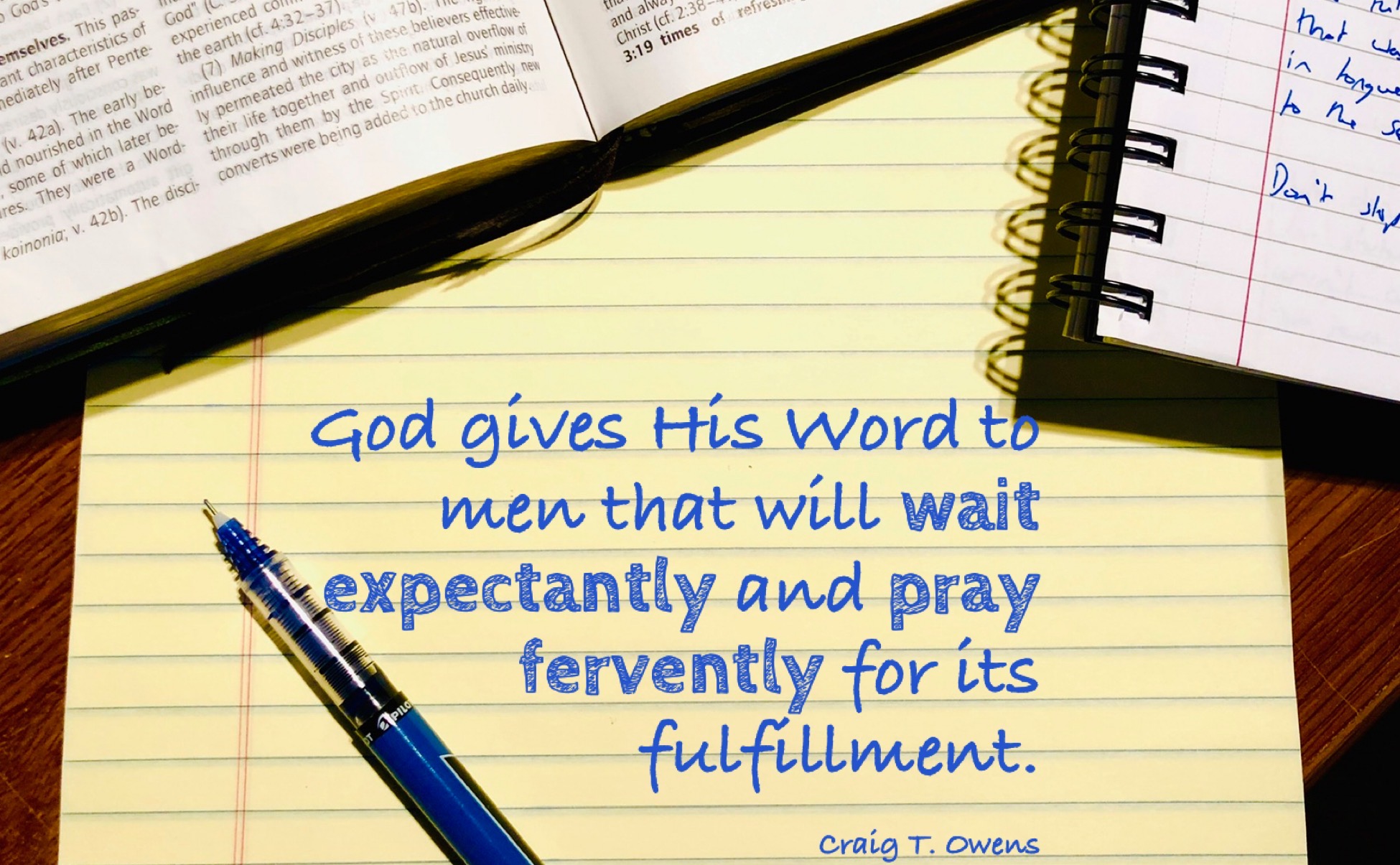
God gives His Word to men that will wait expectantly and pray fervently for its fulfillment. God is looking for men—for Dads—that will not cave in to cultural pressure. 

Guys, let the Holy Spirit’s inward pressure strengthen you to stand strong. As you see the external downward spiral away from God, don’t collapse, don’t complain, but hear God’s Word and remain a righteous and devout man for your family and your community. 

In our series We Are: Pentecostal, we talked much more in-depth about how the Holy Spirit wants to help us. You can check out all of those messages by clicking here.

►► Would you please prayerfully consider supporting this ministry? My Patreon supporters get behind-the-scenes access to exclusive materials. ◀︎◀︎
Ruth + Boaz

This is one of my all-time favorite stories in the Bible! It’s a story of disappointment, death, heartache, hope, redemption, and legacy. 

But mostly it’s a story of unexpected love. It’s a perfect portrayal of God’s redemption, and it’s beautifully lived out by an unlikely heroine and hero: It’s the eternal love story of Ruth + Boaz. 

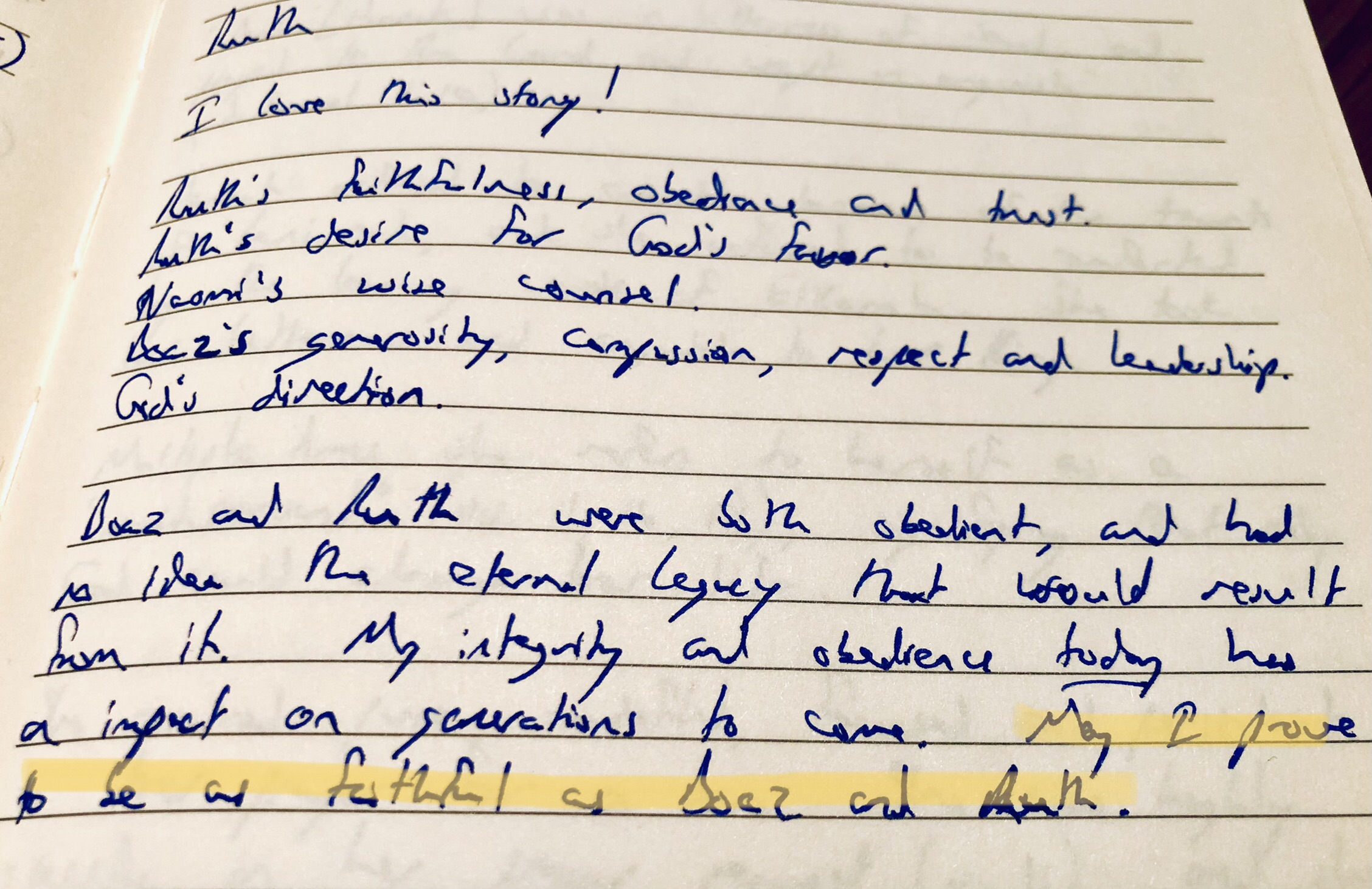
While thinking about this story, I wrote in my journal nearly four years ago, “May I prove to be as faithful as Boaz and Ruth.” Indeed, it’s hard to find better examples! 

This story is still teaching lessons to us today. On Mother’s Day, we looked at this love story through the eyes of Ruth, and on Father’s Day, we saw the lessons Boaz lived out for us. 

  • You can check out the Mother’s Day message about Ruth by clicking here.
  • And the Father’s Day look at Boaz is here.

3 Lessons From A Devoted Dad

If you were to pick a man that would have been desperately devoted to Jesus as his Savior, Cornelius wouldn’t make anyone’s “top 10” list! 

Just take a look at all the strikes against this man. He was a… 

  • Gentile—to Jews, Gentiles were just the fuel to stoke the fires of hell. 
  • resident of the city of Caesarea—since this was the headquarters of the Roman government for Palestine, not many Jews would venture there. 
  • Roman—historians say only 10% of Romans in this era were monotheistic. 
  • centurion—not just any centurion, but an extremely powerful centurion from the Italian Regiment (not just a local mercenary who was in it for the money). And he took his name from Cornelius Sulla, a Roman general known both for his mercy and his ruthlessness.

All of this makes Cornelius a fully self-sufficient and a well-to-do man who was not likely to look for help from God. Nor was he the type of person that a Christian missionary might seek out. 

But clearly, something was missing in Cornelius’ life because he was completely countercultural in his pursuit after God. Not just his pursuit of God, but his quick understanding of exactly who Jesus was. 

Luke the historian describes Cornelius as:

  • devout and God-fearing. The Greek word for devout literally means “a right worshipper.” It’s a word Luke only uses three times in Acts, and two of those times are describing Cornelius. 
  • prayerful. The word Luke uses for him means someone who makes prayer personal and ongoing. 
  • generous. Cornelius took care of people who couldn’t take care of themselves. 

All of this got God’s attention (see Psalm 141:2; Revelation 5:8; Proverbs 19:17), and He sent an angel to direct Cornelius to Peter. 

When Peter came to Cornelius’ house, twice he said “as you know” (vv. 36, 37), showing us that Cornelius was aware that there was not only one true God, but that a relationship with Jesus was the only way to be in right relationship with God. As Peter spoke with Cornelius, his family, his relatives, his close friends, and even his fellow soldiers, the Holy Spirit baptized them just as He had done with the disciples of Jesus on the day of Pentecost. 

So here are 3 vital lessons for all men to learn from the life of Cornelius the centurion—

  1. Your devotion to God is influential. People around you do notice your devoted pursuit of God.
  2. Your openness to all that God has puts your family, friends, and coworkers in a place to receive God’s blessings too.
  3. God’s blessings flowing through you have lasting and far-reaching results. The outpouring of the Holy Spirit on Cornelius may have opened the door for Christian evangelism to Gentiles unlike anything that had happened before.

Dads, be devoted to God. Desire all He has for you, and all He has for those around you. Pursue Him no matter how many “strikes” there may be against you. 

If you missed any of the messages in this series, you can access the full list of messages by clicking here.

How Guys Unintentionally Sabotage Their Relationships

There is a relationship killer that seems to be particularly hard for men. It’s hard because men’s brains are designed in a way that sometimes prohibits them from even seeing this issue.

Bill & Pam Farrel wrote a book called Men Are Like Waffles, Women Are Like Spaghetti. The Farrels identify how men tend to compartmentalize their lives. That is, guys can be so absorbed in one “box” in their life that they are completely oblivious to the other boxes. For instance, when a man is at work he seldom thinks about the other areas of his life (his wife, his kids, the bills that need to be paid, what he’s going to have for lunch).

In addition, men’s brains are also designed to stay in those boxes where things can be quickly fixed. A guy likes fixing things, so the boxes where he can do something and see an immediate result is a box he’s going to keep going back to again and again.

Here’s the trouble… Relationships don’t fit in nice, neat boxes. Neither are relationships something that can be “fixed.” And relationships are never, ever fixed or improved quickly.

So if a guy isn’t aware of these things, he can be unintentionally sabotaging the relationships around him.

King David illustrated this in his unintentional lack of involvement in three of his sons’ lives—

  • Amnon pursued an unhealthy relationship with his step-sister. David got mad but never did anything about it (2 Samuel 13:21).
  • Absalom got revenge for what Amnon did and then fled the country. When David finally allowed him to return to Israel, they never met to resolve what went wrong (2 Samuel 14:28).
  • Adonijah wanted to be king after David, but the Bible says, “His father had never interfered with him by asking, ‘Why do you behave as you do?’” (1 Kings 1:6).

Dave Wills wrote, “We all tend to craft a self-focused view of the world where we emerge as either a hero or a victim in every scene. We’re never the villains in the story. The truth is, though, that we’ve all been the bad guy more often than we’d like to admit. A life of love requires that we look in the mirror and give an honest and humble self-assessment.”

The way to defeat this relationship killer is to become aware of it through humble self-assessment. David learned this truth and shared his prayer with us: “Search me, O God. Show me any areas in my life where I am off-track” (Psalm 139:23-24).

In response to this prayer, the Holy Spirit must have showed David how he had unintentionally starved his relationships with Amnon, Absalom, and Adonijah, because he became highly involved in his son Solomon’s life.

So much so that as Solomon talked to his children about how they should live, he also told them where he had learned how to do this—his father taught him (Proverbs 4:1-4).

Guys, it doesn’t matter how long you’ve been unintentionally in another box. It doesn’t matter how strained the relationship may have become. If you will humbly ask God to search you, reveal to you where you’ve messed up, and ask Him to help you get better … your relationships WILL begin to improve!

Don’t wait another day to pray that “Search me” prayer!

Poetry Saturday—A Man

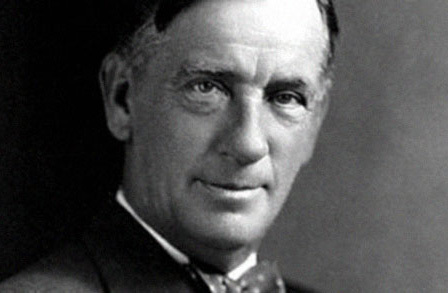
Edgar A. GuestA man doesn’t whine at his losses,
A man doesn’t whimper and fret,
Or rail at the weight of his crosses
And ask life to rear him a pet.
A man doesn’t grudgingly labor
Or look upon toil as a blight;
A man doesn’t sneer at his neighbor
Or sneak from a cause that is right.

A man doesn’t sulk when another
Succeeds where his efforts have failed;
Doesn’t keep all his praise for the brother
Whose glory is publicly hailed;
And pass by the weak and the humble
As though they were not of his clay;
A man doesn’t ceaselessly grumble
When things are not going his way.

A man looks on woman as tender
And gentle, and stands at her side
At all times to guard and defend her,
And never to scorn or deride.
A man looks on life as a mission.
To serve, just so far as he can;
A man holds his noblest ambition
On earth is to live as a man. —Edgar A. Guest