Links & Quotes

If you want your heart to be able to perform better, you are going to have to stress it a bit—that’s called exercise. The same thing is true for the heart of leadership—we have to exercise our leadership so that it can rise to the challenge later.

I have a lot of new video content on my YouTube channel every week. Please check it out and subscribe so you don’t miss anything.

J. Warner Wallace wrote, “Everyone, whether they realize it or not, is engaged in worship. We all adore something, elevating it above the rest, sometimes so much that we overlook its flaws.” Check out this post about being careful about what we worship.

“Nothing teaches us about the preciousness of the Creator as much as when we learn the emptiness of everything else.” —Charles Spurgeon 

“We should avoid end-time hysteria and ‘not grow weary in doing good’ (2 Thessalonians 3:13). There will be good work to do (vocationally and socially and personally) right up to the Lord’s coming. Our normal earthly duties will not end until the Lord appears. The rule then, until he comes, is, ‘Whatever you do, work heartily, as for the Lord and not for men’ (Colossians 3:23).” —John Piper 

Greg Morse has a fascinating post connecting the fable of Chicken Little with the historical account of Noah and the imminent return of Jesus. “I hope an acorn falls afresh on our heads as we observe an Old Testament saint who was the Chicken Little of his day. A man who remained awake and faithful with his back against the end of the world: a man named Noah.”

The Benefits Of The Right Kind Of Pastoral Stress

I was very honored to be asked to share these thoughts on KarlVaters.com. I was able to interview Karl about his latest book De-Sizing The Church.

(Photo by Official Presidio of Monterey | Flickr)

Jesus was “made like His brothers in every way” (Hebrews 2:17), which means He was not immune to the ravages of stress, yet He never let that stress overwhelm Him.

No one wants more stress. But attempting to avoid all stress can carry negative results that we seldom take into account.

In this guest article, Craig T. Owens (whom I interviewed in The Church Lobby, Episodes 43 and 82 ) writes about how managing the right type of stress (called eustress) can be a benefit, especially in positions of responsibility, like pastoring.

— Karl Vaters

As a pastor, I’m sure your life is practically stress-free. I mean, what do we have to do with our days except commune with God in our quiet study time, and then descend from the mountain to share the words God has given us? Then we can bask in the approval of our congregations as we watch them seamlessly integrate our sermons into their daily lives.

What’s that you’re saying? It’s not like that for you?

Anyone who has been a pastor for any length of time knows how demanding a job it is to be a shepherd of the flock God has placed under our care. And then frequently our shepherding work becomes even more challenging when we have to attend to the needs of obstinate sheep, or heal from the bites of angry sheep.

At times, we may dream about a more stress-free pasture.

But we actually do ourselves, our flock, and the world around us a huge disservice if we are striving for a stress-free life.

The Power To Persevere

First, I don’t think that is even possible. Adam and Eve in the perfection of the Garden of Eden faced a stressful decision. And Jesus, the Perfect Man, was constantly dealing with the stressors that pushed in on Him.

But more importantly, stress is vital for our healthy growth. Recent studies have shown that moderate levels of stress keep our brain sharp. In fact, the study went on to state that a brain that is striving for zero stress (if that’s even possible) begins to become less adept at problem solving. In our attempts to totally eliminate stress, we are actually squeezing out our ability to adapt, overcome, and soar when we face future problems.

In this case, I am talking about the healthy stress that doctors call eustress. Whenever we face a challenge, our body releases a hormone called cortisol that prepares our mind and body for action. In other words, God designed a way for us to be successful in stressful times.

Eustress is the push against the forces that would ultimately pull down our physical health, our relationships, our mental health, and a host of other things if we simply opt to “go with the flow.”

I read this in a recent article from an organization called Fight The New Drug:

“In a world that often sells ways to avoid stress, it’s crucial to remember that stress can be healthy in moderation. Stress and anxiety can trigger neural and chemical processes in your body designed to help you respond to challenges. Stress researcher Daniela Kaufer explains that ‘some amounts of stress are good to push you to the level of optimal alertness for behavioral and cognitive performance.’ Her research on stress in rats has even demonstrated that intermittent stressful events can create new brain cells in the rats that actually improve their future mental performances.”

I love how modern-day psychology validates what the Bible has already told us! The Bible makes it clear that persevering through the stressors that come against us can make us stronger, healthier, and better equipped for the next challenge. We are also fortified to help others through their times of stress (James 1:2-4; Romans 5:3-5; 2 Corinthians 1:3-5).

(Check out all of the Scriptures in this article by clicking here.)

The Greek word in the Bible translated “persevere” means keeping focused on the goal despite the struggles that it takes to get there. Jesus used this same Greek word at the conclusion of His parable of the sower: “The seed on good soil stands for those with a noble and good heart, who hear the Word, retain it, and by persevering produce a crop,” a crop that Jesus said was a hundred times more than what was sown (see Luke 8:5–15).

The Holy Spirit will push us further than we think we can go to develop the spiritual muscles and endurance we need to shepherd the sheep under our care during their trying times. He knows that persevering produces a huge crop.

Easy Roads Teach Few Lessons

I love riding my bike on the White Pine Trail by my house. My long rides have a really fun stretch where I am flying downhill! But as fun and stress-free as that part is, I’m not really building anything of lasting value. However, when I am coming back uphill and I want to quit because my legs are burning and I can hardly breathe, that becomes a valuable struggle.

I cannot build endurance by any other way than to persevere, to push myself just a little bit more each time. When I want to quit, I pedal just a few more feet. Gradually, the uphill becomes less daunting.

A friend gave me a t-shirt that I like to wear on my rides. When I put the shirt on, the blue-lettered message says, “Do It!” but as I struggle uphill and the sweat begins to pour off my body and drench my shirt, a new message emerges: “Don’t Quit!”

I have learned that easy roads teach very few valuable lessons. But persevering through the stressors not only strengthens me, but it builds an empathy for others that I would have otherwise missed.

The poet Epictetus noted this about the mighty Hercules:

“What would have become of Hercules do you think if there had been no lion, hydra, stag or boar—and no savage criminals to rid the world of? What would he have done in the absence of such challenges?

“Obviously he would have just rolled over in bed and gone back to sleep. So by snoring his life away in luxury and comfort he never would have developed into the mighty Hercules.

“And even if he had, what good would it have done him? What would have been the use of those arms, that physique, and that noble soul, without crises or conditions to stir into him action?”

—Epictetus, The Discourses

So the next time you are thinking about avoiding something that causes stress in your life, why don’t you reframe that thought. Instead, think about how you can become stronger, healthier, and more empathetic toward others because you are committed to successfully navigating that stressful situation.

Don’t ask God to get you out of that stressful situation, but ask Him to help you get something out of that stressful situation.

Eustress, Not Distress

Please notice that I have been talking about the good stress (eustress), but there is also a dangerous stress which doctors call distress. If we are trying to overcome a challenge in our own strength alone, instead of relying on God’s supernatural help, or if we are allowing stress to keep us from our healthy habits, eustress can disintegrate into distress.

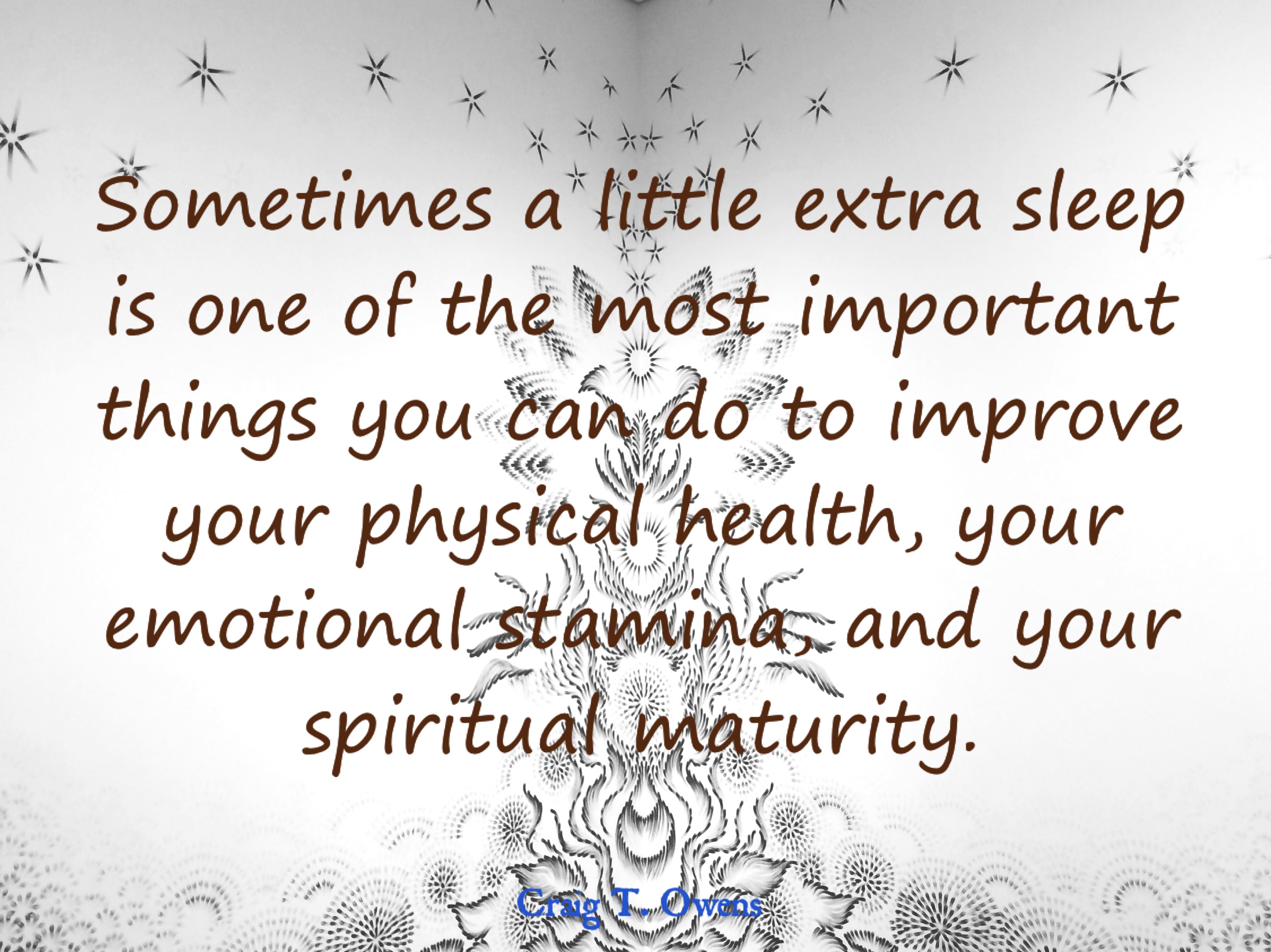
The stress hormone cortisol is naturally flushed from the body in two ways: physical exercise and proper sleep. Isn’t it interesting that when we are experiencing higher than usual amounts of stress that two of the areas that seem to disappear from our lives are time for exercise and nights with solid, uninterrupted sleep?

When we allow eustress to become distress, everything suffers. Our physical health is compromised, we have an increasingly difficult time coming up with creative solutions, our patience with difficult people is strained, and we find ourselves fighting irritability.

How Jesus Did It

Earlier I mentioned the stressors that Jesus faced, but notice that we never see Him responding inappropriately, acting in an unhealthy way, or “stressed out” by the needs of the sheep around Him. Keep in mind that Jesus was “made like His brothers in every way” (Hebrews 2:17), which means He was not immune to the ravages of stress, yet He never let that stress overwhelm Him. He never even allowed eustress to cross the line into distress.

How did Jesus keep stress in balance? I see so many healthy habits in His life. For instance, I see not only the regular habit of prayer to start His day (Mark 1:35), but I see Him withdrawing for a time of prayer or even a nap when He completed a stressful time of ministry (Luke 5:16).

Jesus encouraged His disciples in this as well. The disciples were excited to tell Jesus about their latest ministry but the activity around Jesus was so hectic that they couldn’t even find time to get a bite to eat, let alone take a deep breath to recover from their ministry. “Come with Me by yourselves to a quiet place and get some rest,” Jesus told them. And then “they went away by themselves to a solitary place” (Mark 6:30-32).

To keep yourself from becoming distressed, be deliberate about maintaining your healthy habits during your times of eustress. Eat healthy, get proper exercise, get a good night’s sleep, spend extra time in your Bible study and prayer time, and schedule time with healthy friends. All of these things will help you leverage all of the benefits of eustress, making you a stronger, more consistent and empathetic leader.

Important Morning Routines

Listen to the podcast of this post by clicking on the player below, and you can also subscribe on AppleSpotify, or Audible. 

On a recent episode of The Craig And Greg Show, Greg and I talked about the importance of leadership habits. In this particular clip, Greg asks me about my most important leadership habits.

►► Would you please prayerfully consider supporting this ministry? My Patreon supporters get behind-the-scenes access to exclusive materials. Like this recent post where I shared a map and an app to help with your Bible study time. ◀︎◀︎

Check Your Inputs

Listen to the podcast of this post by clicking on the player below, and you can also subscribe on AppleSpotify, or Audible.

Jesus was the healthiest Person to ever walk planet Earth. When Luke, a physician, tells us about the growth of Jesus, he says first that “Jesus grew in wisdom.” (Luke 2:52). That is our indication that a healthy mind is at the foundation for every other aspect of health. 

But mental health doesn’t stay in your mind—it affects every other part of your life. Likewise, all of the other parts of your life can enhance or drain your mental health. We are created as interconnected beings. For instance, it’s hard to think correctly when you’re physically tired, spiritually drained, or involved in an unhealthy relationship. It’s also true that it’s hard to make good decisions about your physical health, stay focused on God, or handle your relationships successfully if you aren’t thinking correctly. 

We see the apostles writing about our wholly healthiness

Dear friend, I pray that you may enjoy good health and that all may go well with you, even as your soul is getting along well. (3 John 2) 

Now may the God of peace make you holy in every way, and may your whole spirit and soul and body be kept blameless until our Lord Jesus Christ comes again. (1 Thessalonians 5:23 NLT) 

When my laptop is disconnected from the monitors I use at our church building, the message on the screen tells me to “check your inputs.” That’s not just for inanimate technology, but for us too: To maintain good overall health, we need to check our physical, spiritual, mental, and emotional inputs. 

Let’s start with the physical inputs. When we are active during the day our bodies release a stress hormone called cortisol. Stress is not a bad thing—it’s a normal thing. A body that isn’t stressed will atrophy and become susceptible to disease. Balanced, healthy stress is called eustress, and unbalanced, unhealthy stress is called distress. 

Cortisol is naturally flushed from the body in two ways: exercise and sleep. Exercise is important to keep our bodies moving effectively, and sleep helps us recover and helps our brains catalogue our memories (see 1 Timothy 4:8; Psalm 3:5). To fuel our exercise and our sleep requires the energy which we get from a healthy diet. 

So if you’re not thinking healthy thoughts, check your physical inputs: Am I getting the proper amount of sleep? Am I exercising regularly? Am I eating properly? Do I see a doctor for a checkup? 

How about spiritual inputs? Somewhat surprisingly, our spirits are kept healthy very much along the same lines as our physical bodies—proper food, appropriate exercise, and a time of rest. Our spiritual food is God’s Word, our exercise is working out what we’ve studied in the Bible, and our rest is called sabbathing (Jeremiah 15:16; Matthew 7:24-27; James 2:17). Jesus demonstrated all of these in His life and we, too, should follow His example. 

If you’re not thinking healthy thoughts, check your spiritual inputs: Am I reading the Bible regularly? Am I putting what I learn into practice? Am I sabbathing properly?  

Then there our emotional inputs, or the relationships that build us and relationships that drain us. You are always going to encounter people in need, and ministering to those needs is draining (Luke 8:45-46). We also need to be alert to those antagonistic people who purposely drain us (2 Timothy 4:14-15). We can make decisions to place people in our lives who build us up and be cautious of those who drain us (Proverbs 27:3, 5-6, 9, 17). 

Once again, if you’re not thinking healthy thoughts, check your emotional inputs: Do I have healthy people investing in my life? Am I sharpening the iron of others? 

Finally, let’s not forget the mental inputs. Computer programmers are well aware of the acronym GIGO: garbage in, garbage out. If you don’t like the results that are coming out, check what is going in. The apostle Paul gives us an outstanding checklist in Philippians 4:8. 

If your mental health isn’t as healthy as you would like it to be, perhaps you need to talk to your doctor about your physical health, or a mature spiritual friend about your spiritual health, or a Christian counselor about your emotional health. As you consult with these wise people, continue to pray for God’s help. As your Creator, He knows you better than anyone else could and He can give you the wisdom you need as you check your inputs. 

This is part 5 in our series on a Christian’s mental health. If you’ve missed any of the other messages I’ve shared, you can find them all by clicking here. 

►► Would you please prayerfully consider supporting this ministry? My Patreon supporters get behind-the-scenes access to exclusive materials. ◀︎◀︎

Optimal Spiritual Health

Listen to the podcast of this post by clicking on the player below, and you can also subscribe on AppleSpotify, or Audible. 

I had a great time on the 200churches podcast with Jeff Keady. 

Jeff and I spent a good chunk of our time talking about the health of pastors. I think it is very important for shepherd leaders to be wholly healthy because we cannot give to our flocks what we don’t possess ourselves. 

One of the things that is very interesting to me is the parallels between maintaining our physical health and maintaining our spiritual health. When it comes right down to it, our physical health can be optimized by getting a handle on four key elements: (1) proper diet, (2) regular exercise, (3) appropriate rest and recovery, and (4) regular times of evaluation and adjustment. 

Our spiritual health is optimized with these same four elements. 

As my friend Josh Schram reminded me, “Health is not just a big one-time choice. Health is small daily choices.” Jesus made these daily choices to eat well, exercise regularly, rest when needed, and make the adjustments His Father spoke to His heart. He set us an example for healthy spiritual growth that will keep us in a place to grow our shepherd leadership capacities. 

I have found that we are much more likely to make and stick to a plan to get physically healthy when we have a workout friend or someone who is holding us accountable. The same is true for our spiritual health. So pastor, don’t try to get and stay healthy on your own, but get a trusted friend or two working out alongside you. 

In my book Shepherd Leadership, I have five chapters that focus on a leader’s mental, physical, spiritual, and relational health. I hope you will pick up a copy to help you operate at peak healthiness. 

If you want to catch up on some of the other clips I’ve already shared from this interview, you can find them here, and I’ll be sharing more clips from this 200churches interview soon, so please stay tuned. Shepherd Leadership: The Metrics That Really Matter is available in print or ebook, and in audiobook through either Audible or Apple. 

►► Would you please prayerfully consider supporting this ministry? My Patreon supporters get behind-the-scenes access to exclusive materials. ◀︎◀︎

Which Engine Drives You?

Listen to the podcast of this post by clicking on the player below, and you can also subscribe on AppleSpotify, or Audible. 

There’s a little song that makes me chuckle every time I hear it, and I may have even sung this song a couple of times myself. It goes like this, “I had a lot to do today, but you know what I did instead? I took a nap. It was a very good nap.” 

We’ve all been there. There are things we know that we should do, but we simply don’t feel like doing them. We let our feelings drive our actions. There are several seemingly innocent things that we can handle this way, with no apparent problems created for ourselves. 

The real problem comes in when our feelings continually drive our actions. Because the caboose which must follow that engine can easily become “my truth.” It goes like this:

  • I let my feelings take the lead
  • I act on my feelings
  • I now believe what I felt was truthful

This could be called pragmatism—allowing a positive outcome to determine what I believe to be truth. 

But our feelings may lie to us. Our feelings can make us believe something is harmless, when in fact it may be putting us on a path from which it may be extremely difficult to recover. 

Jesus taught us a different way. He prayed this way to His Father, “Your Word is truth” (John 17:17). He may have had in mind these words from the psalmist:

The sum of Your word is truth—the total of the full meaning of all Your individual precepts; and every one of Your righteous decrees endures forever. (Psalm 119:160 AMP) 

When we let truth drive our actions, we are performing those actions in faith that good feelings will follow. Now the progression goes like this:

  • I let what I know to be true take the lead
  • I act on that truth
  • I feel good for doing the right thing

I may not feel like exercising, but I know it’s good for me. So I do it and then I feel good for doing it, and my body is healthier for doing it. 

I may not feel like forgiving the one who wronged me, but I know God says I should. So I do it and then I feel good for doing it, and my emotions are healthier for doing it. 

I may not feel like speaking the tough word in love to my friend, but I know the Bible says I should. So I do it and then I feel good for doing it, and my relationship is healthier for doing it.

Letting God’s truth be the engine that drives our actions will result in healthiness and good feelings. But letting my emotions be the engine that drives my actions may sometimes result in temporary good feelings, but the longterm consequences may not be healthy or God-honoring. 

We should not say, “God, please bless what I’m doing so that I can feel good about it,” but instead we should say, “God please help me to do what You say is right, and I know I will feel good because Your blessing will be on it.” 

►► Would you please prayerfully consider supporting this ministry? My Patreon supporters get behind-the-scenes access to exclusive materials. ◀︎◀︎

Recovering Mentally

Listen to the podcast of this post by clicking on the player below, and you can also subscribe on AppleSpotify, or Audible. 

I had a great time on the Thriving In Ministry podcast with Kyle Willis and Dace Clifton. 

Kyle asked me a question about how I recharge myself mentally. A key verse in the Bible for me is 2 Corinthians 10:5 where the the apostle Paul counsels us to capture our thoughts. This is extremely hard to do when we are physically or mentally drained. 

In my younger years, I used to try to “do nothing” as my recovery time. As I matured, I realized that top athletes had a different way to help their body recover, and I began to adapt those practices to my time of mental recovery. Dace also shares a very helpful tip for his mental recovery time. 

In my book Shepherd Leadership: The Metrics That Really Matter I make the case that in order for the sheep to be healthy, the shepherd has to get healthy first. The principle is simple: You cannot give to others what you do not possess yourself. I hope you will pick up a copy of my book to learn how Jesus taught us to be wholly healthy leaders.

I’ll be sharing more clips from this Thriving In Ministry interview soon, so please stay tuned. Shepherd Leadership: The Metrics That Really Matter is available in print or ebook, and in audiobook through either Audible or Apple.

►► Would you please prayerfully consider supporting this ministry? ◀︎◀︎


A Healthy On-And-Off

Listen to the podcast of this post by clicking on the player below, and you can also subscribe on AppleSpotify, or Audible. 

I had a great time on the Thriving In Ministry podcast with Kyle Willis and Dace Clifton. 

The guys asked me a question about how I keep myself healthy, and I pointed them to a principle I observed in the life of Jesus. Check out this excerpt from the chapter “A Healthy Leader’s Sabbath” in my book Shepherd Leadership: The Metrics That Really Matter

     Jesus had a human body just like ours. The demands of ministry caused stress on His body just as it does on our bodies. This is totally natural—this is the way God designed us. Our body helps us meet the demands of each day by releasing a hormone called cortisol. Cortisol helps us by managing how our body uses carbohydrates, fats, and proteins; keeping inflammation down; regulating blood pressure; controlling the sleep-wake cycle; and boosting our energy. … 

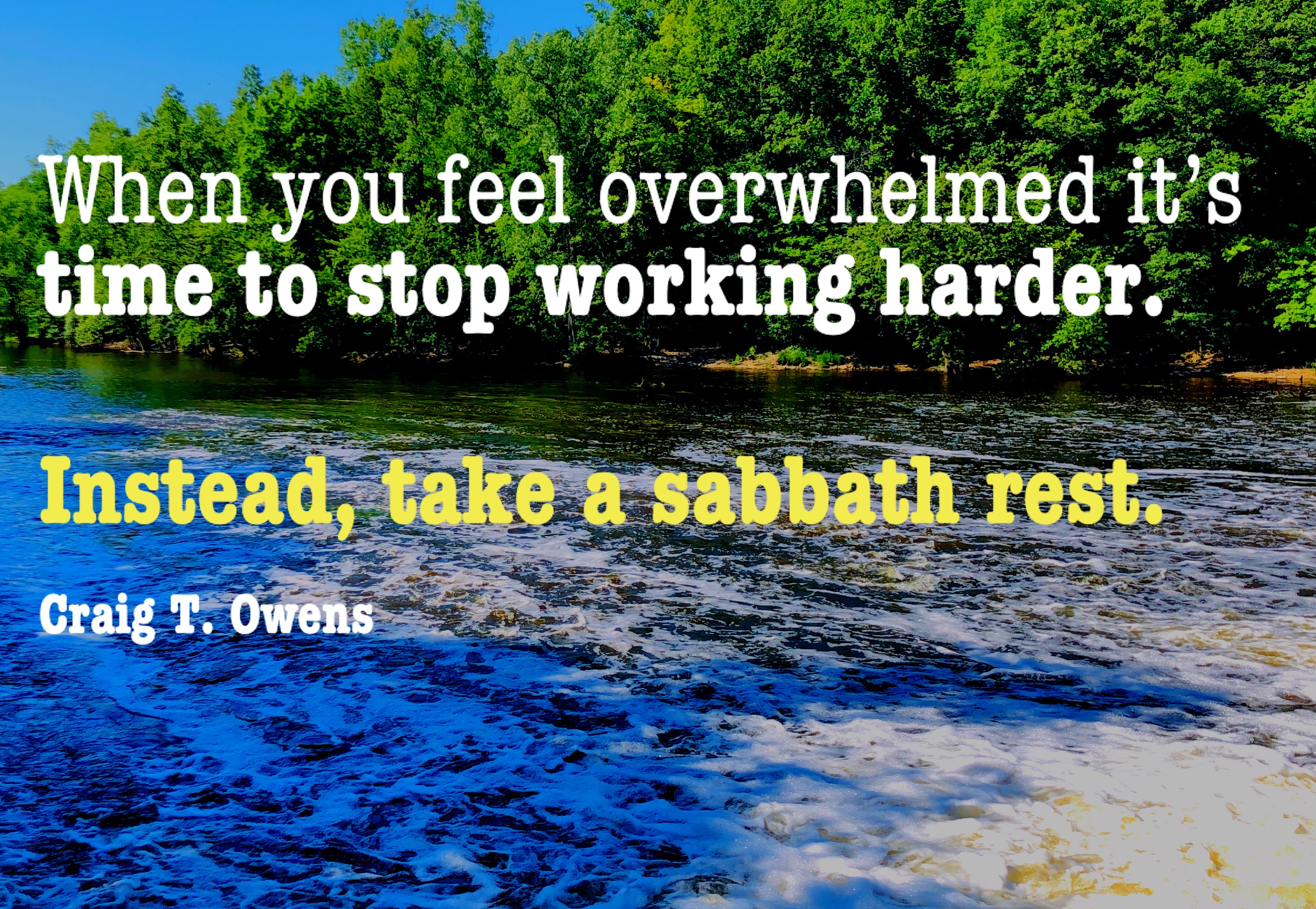
     Cortisol is naturally flushed from our bodies by a healthy on-and-off rhythm. God built this into His Creation by giving us daily rhythms of day and night, work and rest, and by providing a weekly Sabbath to rest and reflect. But as most shepherd leaders know, setting aside a consistent Sabbath day is extremely rare. Again, let’s look to Jesus: Do you see Him doing anything—or not doing anything—on the Sabbath day that He didn’t do the other days? On any day of the week, we see Him speaking in a synagogue, healing the sick, teaching crowds of people, giving instructions to His followers, correcting religious leaders, walking with friends, or stopping to eat at someone’s home.  

     Jesus had a healthy on-off rhythm: work-rest, minister-celebrate, expend-refresh. Jesus demonstrated that the Sabbath is not so much a day as it is an attitude of the heart. It’s listening to the Holy Spirit say something like, “You’ve been very busy this afternoon, so it’s time to take a nap” and then obeying that divine prompting. Resting and being refreshed—“sabbathing”—is not a luxury; it’s a necessity! That’s why, after a busy day of ministry, we see Jesus spending time in prayer, or taking a nap while crossing the lake when He didn’t have anyone to teach or heal, or finding time for a retreat with His disciples so they could rest and recuperate. 

I have five chapters in Shepherd Leadership about a leader’s overall health, and two chapters in particular where I talk about practical ways that we can create the time to practice sabbathing.

I’ll be sharing more clips from this Thriving In Ministry interview soon, so please stay tuned. Shepherd Leadership: The Metrics That Really Matter is available in print or ebook, and in audiobook through either Audible or Apple.

►► Would you please prayerfully consider supporting this ministry? ◀︎◀︎

Heart Rate Recovery

Listen to the podcast of this post by clicking on the player below, and you can also subscribe on AppleSpotify, or Audible. 

A few years ago Mark Schultz wrote a song about someone living a go-go-go, overly-busy life and he entitled the song “Running just to catch myself.” Ever been there? 

There’s a Hebrew word that shows up 70 times in the Bible (mostly in the Psalms) that, sadly, many English translations of the Bible have relegated to a footnote. That’s too bad because Selah is such a powerful word. Unless we want to live our lives “running just to catch myself,” we all need a take time to Selah. Look how some have translated this word:

  • “Stop there and consider a little” (Matthew Henry) 
  • “the sacred pause” (Charles Spurgeon) 
  • “pause and calmly think of that” (AMP) 

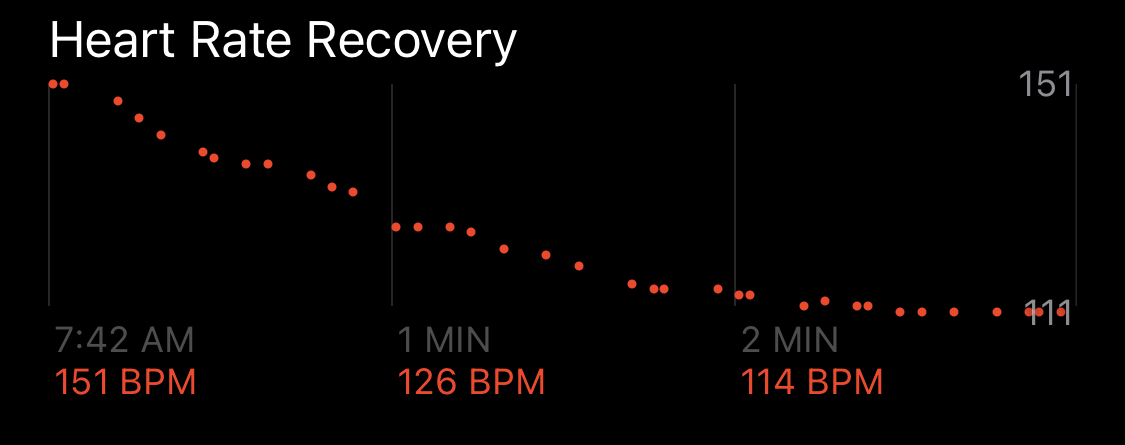
Whether it’s a planned exercise time or just something that frightens or excites us, our heart rate is designed by God to increase—this is how we prepare for fight-or-flight. Doctors say that one of the most vital statistics they now look at to gauge overall cardio health is heart rate recovery (HRR). Doctors want to see a significant increase in HRR after exercise, fright, or excitement. 

A few of the factors that boost HRR:

  • Regular, planned exercise 
  • Getting the proper amount of quality sleep 
  • Reducing stress 

Respond-and-recover is part of a health-building cycle. But if we’re “running just to catch myself” all the time, this time of recovery isn’t happening. Not only are we not recovering well, but we are not properly prepared for the next time our heart needs to start beating faster.   

This HRR is just as vital for us emotionally and spiritually as it is physically: We cannot always be stressed or always be “on.” We need a Selah—a time to stop and consider, a time to take a sacred pause to calmly think. 

This is what David teaches us in Psalm 68. Check out the “bookend verses” where he reminds us that when God arises His enemies are scattered, and that God is awesome and He gives power and strength to His people (vv. 1, 35). And look a the middle verse where David says that when God ascends in victory He gives gifts (v. 18). 

This tells me two things: (1) God is sovereignly in charge (not me or anyone else), and (2) In His love, God delights to use His sovereign power to bless His children. 

The question is not IF I’m going to be confronted by difficult things or difficult people, but HOW will I recover from these confrontations? 

May I suggest a 3-step process to increase your spiritual HRR? 

  1. Acknowledge your situation—don’t try to cover it up or justify it 
  2. Selah—pause to take a deep breath  
  3. During that breath, redirect your thoughts from the difficulty to your awesome God (see 2 Corinthians 10:5; Philippians 4:4-8)

Look at David’s example in this psalm:

Reflect Worship
God defeats enemies (vv. 1-2) Be glad, rejoice, sing (vv. 3-4)
God is a Father and Deliverer (vv. 5-7) Selah (v. 7)
God is sovereignly in control (vv. 8-18) Praise and Selah (v. 19)
God defeated Death (vv. 20-23) Join the procession of worshippers (vv. 24-27) 
God uses His strength to care for His people (vv. 28-31) Sing praises and Selah (vv. 32-35)

As you breathe deeply in this worship of recovery, think on this: “Your sigh can move the heart of Jehovah; your whisper can incline His ear to you; your prayer can stay His hand; your faith can move His arm.” —Charles Spurgeon 

Our Selah pause leads to proper perspective, which allows us to recover more quickly. That, in turn, helps us to be better prepared for the next time we’re confronted by difficulties. 

To check out the other lessons we’ve learned in our ongoing series called Selah, please check out the list I’ve compiled here.

►► Would you please prayerfully consider supporting this ministry? ◀︎◀︎

Sleep Stats

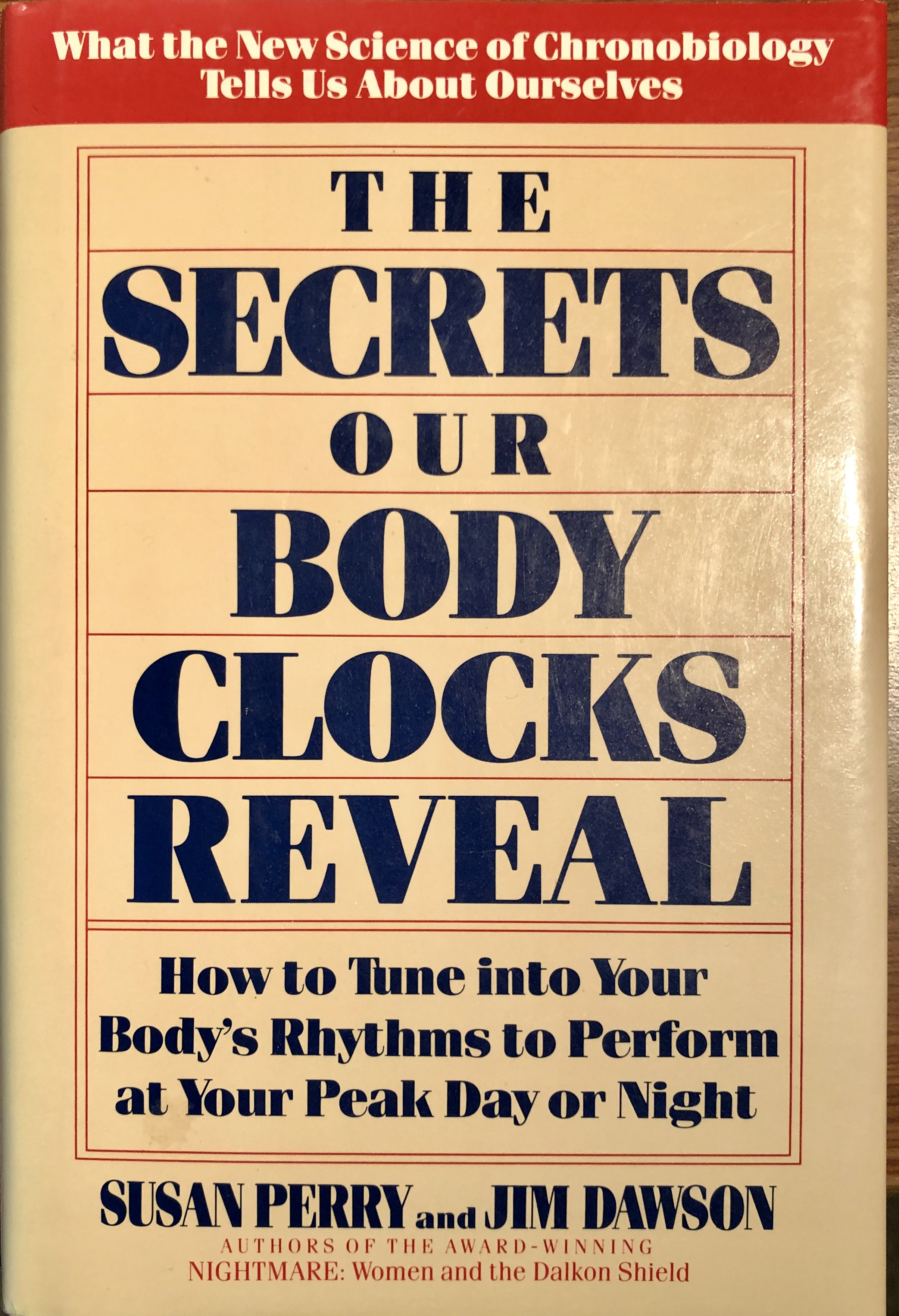
Sleep is so important for maintaining good physical and emotional health. In the book The Secrets Our Body Clocks Reveal, the authors share some interesting information on sleep. 

“The clearest ninety-minute rhythm is the ‘sleepability’ cycle. About every ninety minutes, you enter a short period during which you are vulnerable to fatigue and sleepiness. …

“These rhythmic periods of sleepability are shorter during the morning hours than in the afternoon. That’s why it’s usually more difficult to take a nap in the morning than later in the day. Some of the time, you can fight off this fatigue—particularly if what you are doing is interesting or different. However, most of the time you would do best to give in to the rhythm and take a short break from your work—especially around the lunch hour, when you are already battling the early afternoon let down.” 

“Scientists have found that when we are bored, under stress, or short of sleep, our ninety-minute cycles tend to shorten to roughly sixty minutes. That may explain why we eat and smoke more under stressful or boring circumstances.” 

What deep sleep does for you:

  • Restores body and brain
  • Stimulates growth
  • Maintains mental health

What dream sleep does for you:

  • Consolidates and sorts memory
  • Enables learning
  • Ensures our physical safety

Things that can disrupt your sleep rhythms:

  • Dieting (loss of weight can cause more frequent awakenings during the night)
  • Caffeine
  • Alcohol
  • Low-sodium diet (elderly people only)
  • Cigarettes
  • Sleeping pills
  • Exercising vigorously if you’re not accustomed to it
  • A sleeping partner who snores or thrashers about in the night
  • Pets moving about in your bedroom
  • Sporadic, unpredictable noises
  • A room that is too warm (more than 75° F) or too cool (less than 60° F)
  • Hunger
  • Stress

Things that can enhance your sleep rhythms:

  • Regular aerobic exercising (at least twenty continuous minutes) particularly in the late afternoon
  • Sex right before bedtime
  • Following a bedtime ritual
  • Relaxation exercises right before bed
  • A bedtime snack high in carbohydrates
  • A dark and quiet bedroom
  • A “white noise” 

“Many scientists now believe that we were meant to sleep twice a day, once during the afternoon and again at night. … In one study, college students who regularly napped showed improved scores on skill and memory tests taken just after a nap.” 

“Scientists have also discovered that short naps (twenty minutes or less) are just as revitalizing as long ones—and less disruptive to regular sleep rhythms. In addition, regular nappers wake up more refreshed than those who take only an occasional nap. When naps are part of the regular daily rhythm, they are less disruptive.” 

You can check out my full book review of The Secrets Our Body Clocks Reveal by clicking here. Some other quotes and statistics I shared from this book can be found here. 

Another great book is Sleep: It Does A Family Good. That book review is here.