Let’s Grow Together

Listen to the podcast of this post by clicking on the player below, and you can also subscribe on AppleSpotify, or Audible. 

We’ve now learned about all three circles that help us discover our God-implanted gifts: 

  • Passion—what thrills you? 
  • Pain—what kills you? 
  • Proficiency—what fulfills you? 

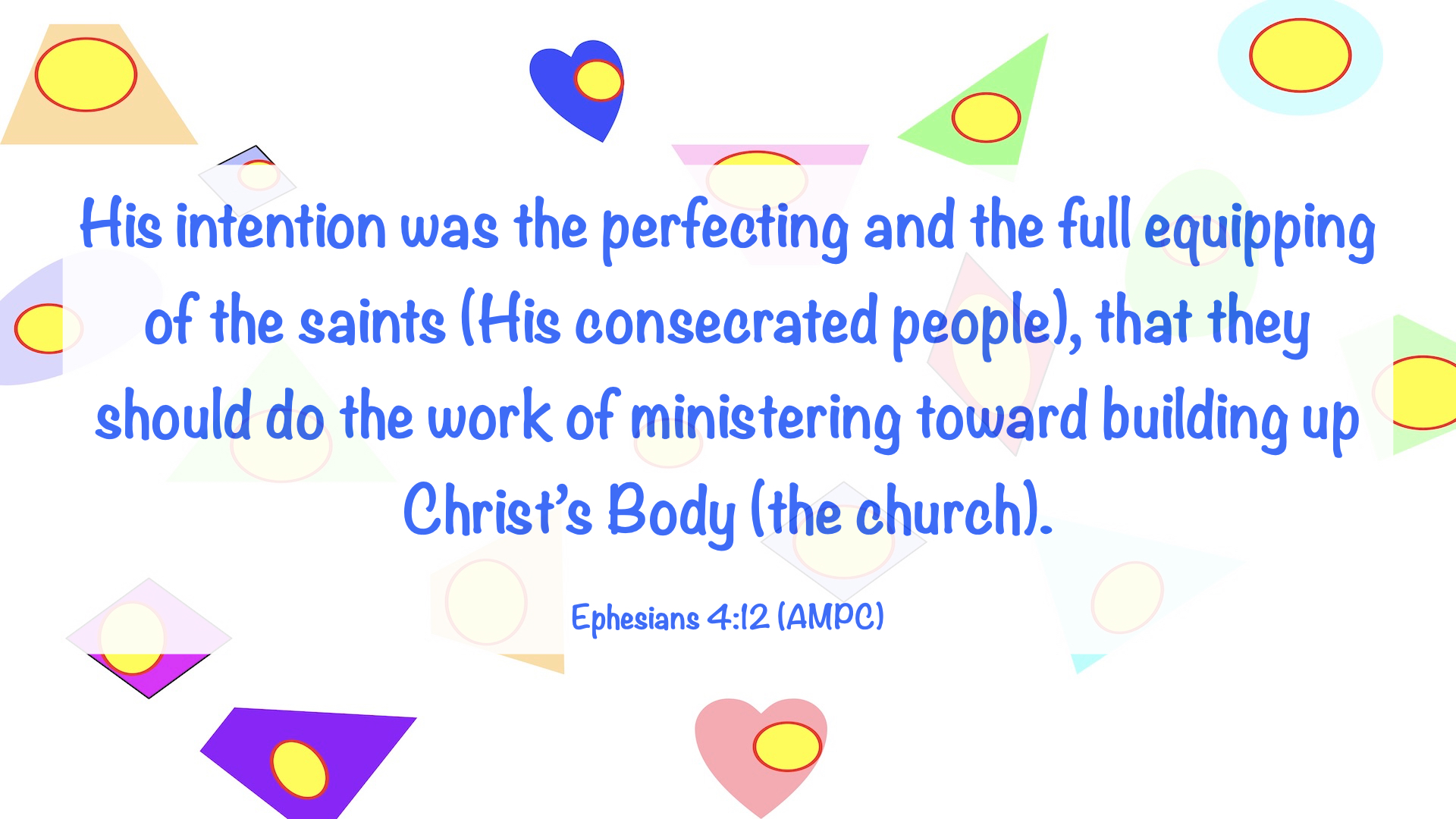
What do you do with these gifts? What’s the whole purpose in learning about them? I think the goal as saints is to help the Body of Christ mature in ways that brings God glory (Ephesians 4:12-16). 

(Check out all of the Scriptures in this post by clicking here.) 

Solomon also gives a great word picture of friends using their gifts for each other—“As iron sharpens iron, so a friend sharpens a friend” (Proverbs 27:17 NLT). 

In an earlier message in this series, I talked about the thousands of enzymes in our human bodies. Each enzyme has just one task, and each task is indispensable to the health of the whole body. It is exactly the same in the Body of Christ—your gift-in-action is indispensable to the health of the whole Body.

How do you squander your grace gift? I think these are five basic ways:

  1. Not discovering it—“I have a gift?” 
  2. Devaluing it—“My gift is nothing special.” 
  3. Overvaluing it—“My gift is super-important.” 
  4. Laziness—“My gift is fine just the way it is.” 
  5. Selfishness—“My gift is just for me.” 

We need to discover our own gifts, but then we need to work on making the switch from “me” to “we.” I want to excel in using my gift so that I can help you excel in using your gift so that we can help another brother or sister excel in using their gift. 

Oswald Chambers said, “The Book of God is insistent on this: we cannot develop a holy life alone, it would be a selfish life, without God in it and wrong. … Beware of isolation; beware of the idea that you have to develop a holy life alone. It is impossible to develop a holy life alone, you will develop into an oddity and a peculiarism, into something utterly unlike what God wants you to be. The only way to develop spiritually is to go into the society of God’s own children, and you will soon find how God alters your set.” 

Frequently we need another brother or sister in Christ to help nudge us into discovering and using our gifts. For example, look how…

  • Mordecai assured Esther (Esther 4:13-14) 
  • Matthias was chosen by those in the upper room (Acts 1:21-26) 
  • The first deacons were unanimously chosen by the Church (Acts 6:3-6) 
  • Barnabas and Saul were chosen by the Holy Spirit and confirmed by other prophets and teachers in the church (Acts 13:1-3) 
  • Paul encouraged his proteges to appoint elders who were recognized by others in the church (Titus 1:5; 1 Timothy 3:1f) 

Consider this poem—

For want of a horseshoe nail the shoe was lost.
For want of a shoe the horse was lost.
For want of a horse the rider was lost.
For want of a rider the message was lost.
For want of a message the battle was lost.
For want of a battle the kingdom was lost.
And all for the want of a horseshoe nail.


Listen to the Holy Spirit. Listen to the confirming words from fellow saints—words like “You are gifted,” “You are so good at…,” and “How did you know how to do that?” Then step out of your comfort zone and soar into your gift zone! 

If you’ve missed any of the other messages in our Living in your gift zone series, you can check them all out here. 

►► Would you please prayerfully consider supporting this ministry? My Patreon supporters get behind-the-scenes access to exclusive materials. ◀︎◀︎

What’s Your Passion?

Listen to the podcast of this post by clicking on the player below, and you can also subscribe on AppleSpotify, or Audible. 

A quick recap: We are all gifted by God, but we typically restrict ourselves to a comfort zone which is much smaller than our God-given gift zone. In order to maximize our impact for the Kingdom of God, we are going to have to get uncomfortable with staying comfortable—we are going to have to trust God as we push out further into our gifts. 

Last week I gave you a homework assignment to think about the things you love to do. Why do we need to know this? Because it is one of the indicators of our areas of giftedness. 

In the whole carrot-versus-stick discussion, you will find that most people are motivated by reward way more than they are by the fear of punishment. Look at how these God-fearing men were motivated by the God’s rewards:

  • David—1 Samuel 17:26-27, 29-30 
  • Paul—1 Corinthians 9:24; 2 Timothy 4:8 
  • Jesus—Hebrews 12:2; Philippians 2:9-11 

(Check out all of the Scriptures in this post by clicking here.)

Who’s more likely to get the reward: the one who loves what they are doing or the one who hates what they are doing? We are more likely to stick with what we love doing, and you are going to love doing what you are gifted by God to do. 

Why we do what we do is much more important that what we do (Isaiah 1:11, 13, 15; Matthew 7:22-23). 

We have been gifted by God to do great things. When we do those great things, we are rewarded and it brings God glory. That realization should answer the question of why we do what we do (Ephesians 2:10). 

The way we see the world, what motivates us, and how we act are all determined by our gifts. We are working on the same Great Commission, but how we live that out will be different because of our different gifts. 

In the Old Testament, the saints wanted Zion to be strong and God-glorifying: 

  • David fought battles and wrote worship songs 
  • Solomon gave wise proverbs 
  • Josiah brought about reforms 
  • Ezra encouraged the Israelite governor and high priest 
  • Daniel encouraged the Babylonian rulers 
  • Nehemiah built the wall

In the New Testament era, the saints should all want the Body of Christ to be strong and God-glorifying. Toward that goal, we still need warriors, worshipers, wisemen, reformers, teachers, counselors, workers. 

Toward that goal, we all have a part to play (Ephesians 4:12). Check out the example of Paul in…

  • …Thessalonica: Paul was in the synagogue on three Sabbaths (Acts 17:1-2; 2 Thessalonians 3:8)  
  • …Corinth: Paul was synagogue on the Sabbath days, but after Silas and Timothy arrived, Paul was able to be preaching every day for 18 months (Acts 18:1-5, 11) 

What’s the difference? Silas and Timothy used their gifts so that Paul could use his. Without the “enzyme” of Silas and Timothy’s gifting, the whole Body of Christ would have been impoverished. 

One of the things that will help your spot your areas of giftedness is noticing what you are passionate about—What do you love to do? 

Let me give you three things to consider:

  1. When can I do this again? vs. When will this be over? 
  2. When I do this, I’m tired but fulfilled vs. When I do this, I’m tired. 
  3. I would do this without pay vs. I would rather find something else to do. 

Our prayer should echo what Paul prayed:

For this reason, since the day we heard about you, we have not stopped praying for you. We continually ask God to fill you with the knowledge of His will through all the wisdom and understanding that the Spirit gives, so that you may live a life worthy of the Lord and please Him in every way: bearing fruit in every good work, growing in the knowledge of God. (Colossians 1:9-12)

If you’ve missed any of the messages in our series Living in Your Gift Zone, you can find them all here. 

►► Would you please prayerfully consider supporting this ministry? My Patreon supporters get behind-the-scenes access to exclusive materials. ◀︎◀︎

We Are All Gifted

Listen to the podcast of this post by clicking on the player below, and you can also subscribe on AppleSpotify, or Audible. 

Last week I concluded by saying I wanted to help all of us discover our God-given gifts so that we could stretch outside of our comfort zone. Remember that your comfort zone is much smaller than your gift zone. 

I’m concerned that some people might be confused about what I mean by “gifts.” Some people look at someone who can preach, or write, or sing, or compose music, or paint, and say, “They are so gifted! I could never do anything like that.” Yes, those are very visible gifts, but let’s not limit “gifts” to just those kinds of things. 

God has designed our physical bodies to do some astounding things! We see some people using their bodies to run fast, jump high, lift heavy things, or catch a ball, and we may marvel at their talents. These amazing feats are only possible because of a thousand other gifts. Even the simplest of tasks is far from simplistic. Isaac Newton noted, “In the absence of any other proof, the thumb alone would convince me of God’s existence.” 

Something that is invisible to the human eye but indispensable to absolutely everything that happens in our physical bodies is the vital functions of enzymes. 

Enzymes are proteins that help facilitate metabolism, or coordinate a chemical reaction. Some enzymes build things up and some break things down. Enzymes help with things like… 

  • turning the food we eat into energy 
  • breathing 
  • building muscle 
  • nerve function 
  • ridding our bodies of toxins 

There are thousands of individual enzymes in the body. Each type of enzyme only has one job. 

For example, consider the enzyme sucrase. If it is deficient in the body, sucrose from food isn’t broken down to glucose and fructose. As a result we would experience dehydration, malnutrition, and developmental delay. 

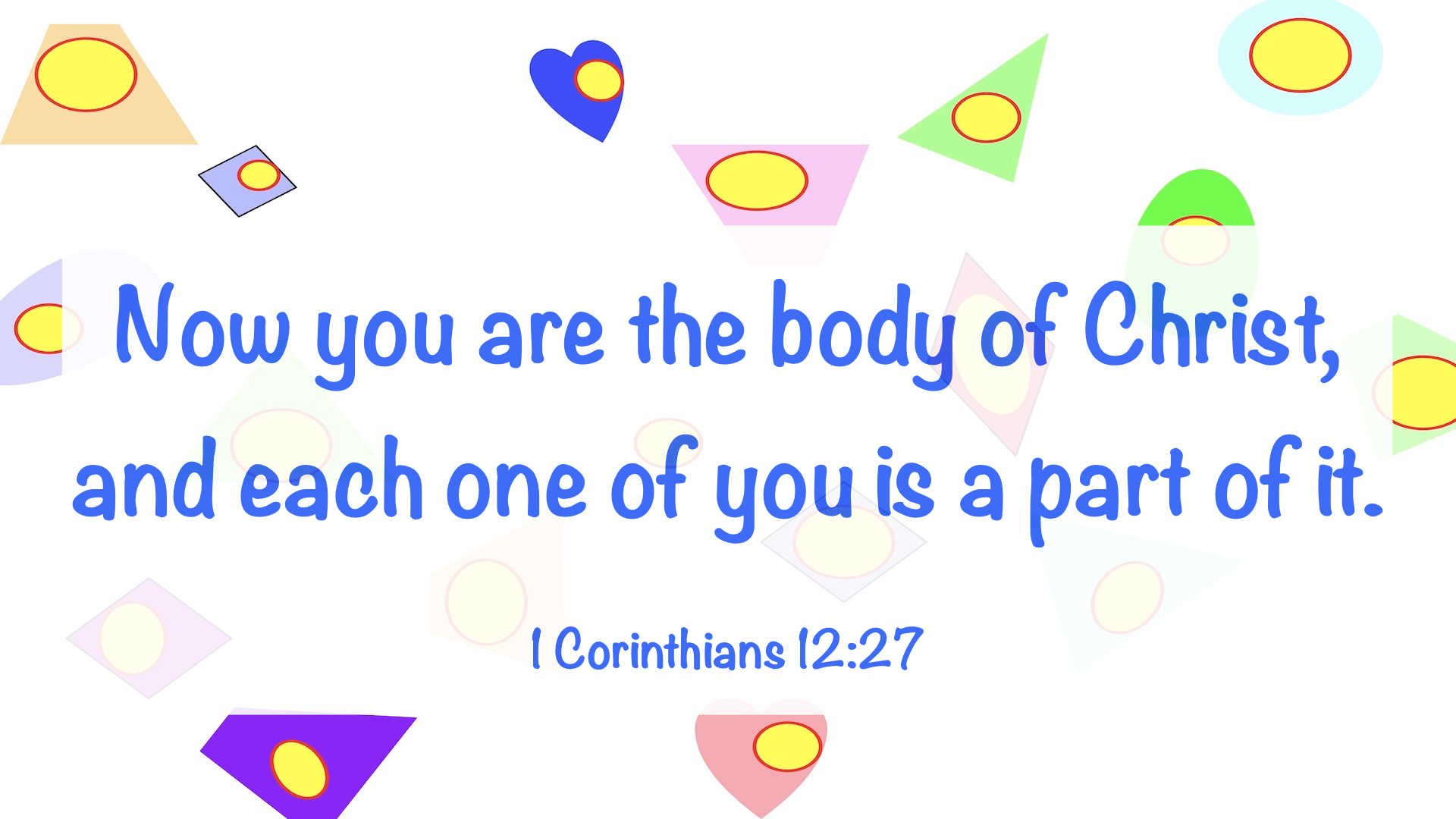
Every enzyme is vital. It’s not coincidental at all the the New Testament uses the analogy of our physical bodies to portray the Body of Christ (Romans 12:3-6; 1 Corinthians 12:6, 18, 27). 

(Check out all of the verses in this post by clicking here.)

In the New Testament church it’s easy to spot the highly visible gifts like preaching, evangelism, and church leadership, just as it’s easy to spot physical accomplishments like a professional athlete or a world-class pianist. But let’s not overlook the thousands of indispensable “enzymes” in the Church that allow the Body of Christ to function in a healthy way. 

Read through the Book of Acts and you will see gifts in the form of people who…

  • agreed together in prayer 
  • affirmed God-honoring, biblical decisions 
  • organized feeding programs 
  • hosted people in their homes (house churches) 
  • prepared food for others 
  • handed out that food 
  • sewed clothes for those who needed them 
  • faithfully visited the sick and imprisoned 
  • earned a paycheck to pay for ministry expenses 
  • distributed funds to those in need 
  • used their official positions open doors or provide protection 
  • wrote important correspondence

Peter wrote, “God has given each of you a gift from His great variety of spiritual gifts. Use them well to serve one another” (1 Peter 4:10). 

What happens if an “enzyme” is missing? Quite simply: The Church cannot grow to our full potential (1 Corinthians 12:26 AMPC; Ephesians 4:12-13). 

Each of us needs all of us. All of us needs each of us. Jesus hasn’t just saved you from death, He has also saved you to life—an abundant life for you, for the Body of Christ, and for those who don’t know Him as their Lord and Savior yet. 

You are gifted. More precisely said: You ARE a gift! 

If you’ve missed any of the other messages in this series, you can check them all out here. 

►► Would you please prayerfully consider supporting this ministry? My Patreon supporters get behind-the-scenes access to exclusive materials. ◀︎◀︎

Links & Quotes

Christians should run their entire race with joy—we should soar across the finish line! Check out this full sermon on Psalm 132.

I have lots of new content every week, which you can check out on my YouTube channel. 

“Joy is never in our power and pleasure often is.” —C.S. Lewis

John Piper points out that thinking and knowing are essential for Christian maturity, but there is also a danger in knowledge. How do we find the correct balance?

I talked about a Christian’s self-examination this week, and then I came across this from T.M. Moore: “Christians do not fear to examine themselves. Especially when it seems something may be lacking in our walk with and work for the Lord, we need to heed the words of the apostle Paul and do some serious soul-searching and altering of our life course (2 Corinthians 13:5). Examining ourselves involves carefully considering how we use our time (Ephesians 5:15-17) as well as what’s going on in our soul and our life. We must not fear to examine ourselves nor resent when others may encourage us to do so.”

Darryl Cooper’s revisionist history of Winston Churchill and World War II is flawed on so many levels. John Stonestreet does a great job debunking most of Cooper’s points, but we should also read history for ourselves and be able to answer those who would twist it for their own purposes.

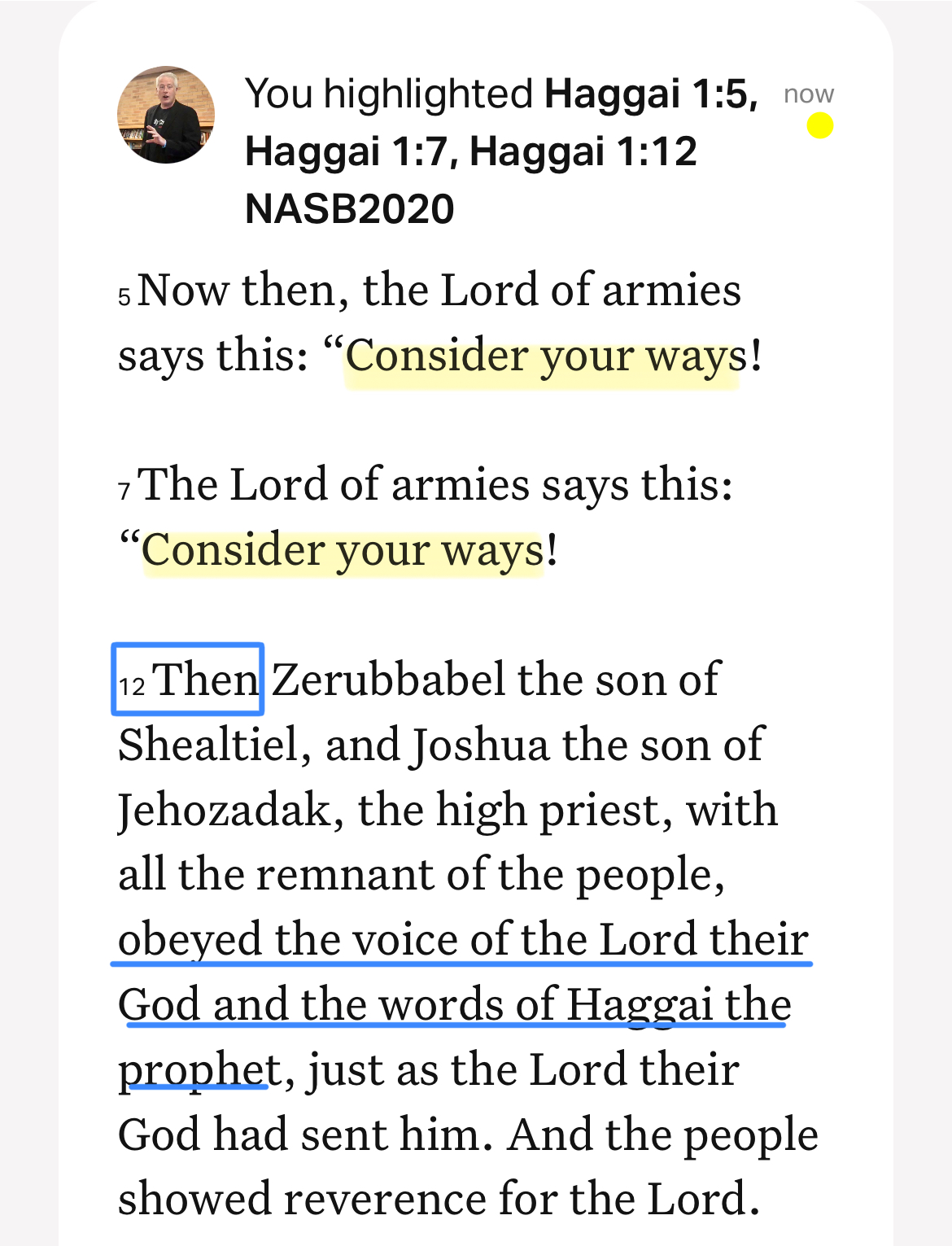
God’s messengers call people to consider the way they are currently living in comparison to the way God has called them to behave. Wise people will heed this call and repent from any ways that deviate from God’s way. I talked in more depth about Haggai and his message of considering our ways in my series on the minor prophets.

“Come to Jesus by quitting every other hope, by thinking of Him, believing God’s testimony about Him, and trusting everything to Him. If you thus come to Him, the rest which He will give you will be deep, safe, holy, and everlasting.” —Charles Spurgeon 

One more from T.M. Moore: “We will only hunger and thirst for more of the Lord and His promises as we consider how far short of that might and greatness we fall. … I suspect that most Christians today are fairly satisfied with the state of their faith. They have a ‘good enough’ experience of Jesus and they’re not really thirsting for much more. But the work of shepherds is to help people realize that splashing around in the mud puddle of faith is not to be compared with sailing on the ocean of God’s grace and power.”

The Fullness Of God’s Glory

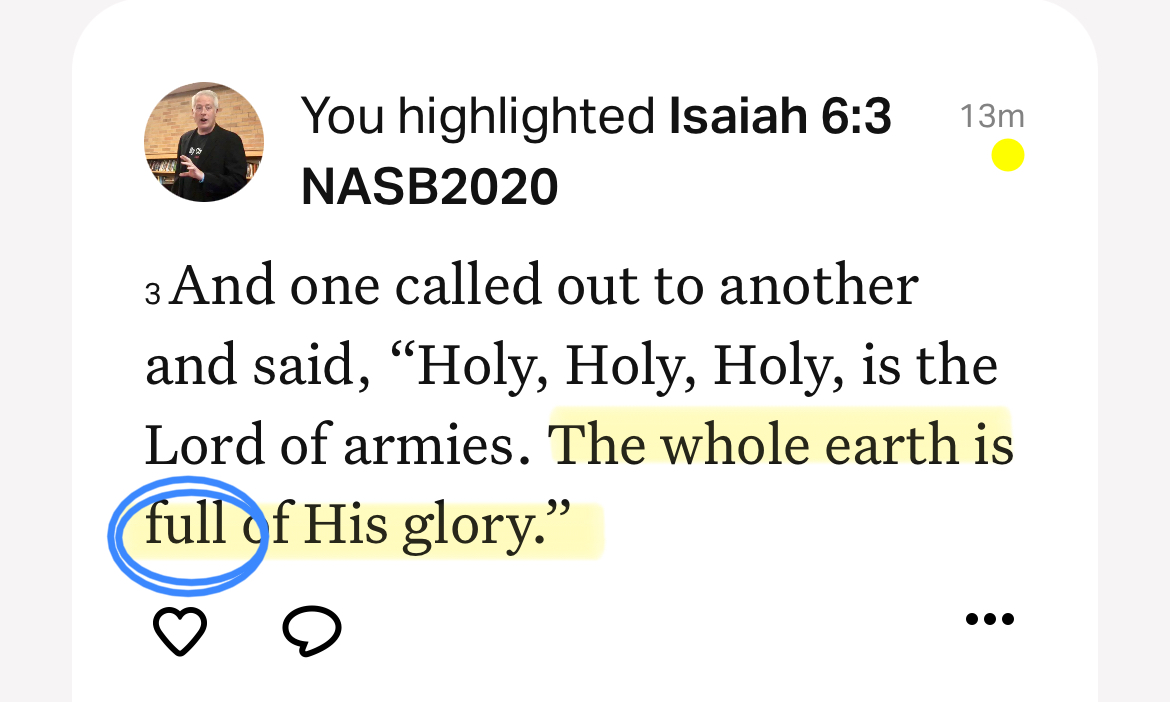
And one [angel] called out to another and said, “Holy, Holy, Holy, is the Lord of armies. The whole earth is full of His glory.” And the foundations of the thresholds trembled at the voice of him who called out, while the temple was filling with smoke. Then I said, “Woe to me, for I am ruined! Because I am a man of unclean lips, and I live among a people of unclean lips; for my eyes have seen the King, the Lord of armies.” (Isaiah 6:3-5) 

The literal translation of the phrase “the whole part is full of His glory” is, “The fullness of the whole earth IS His glory.” 

Paul says it this way, “All things have been created through Him [Jesus] and for Him. He is before all things, and in Him all things hold together” (Colossians 1:16-17). God spoke all things into existence—we literally live today in His breath, we breathe His breath, we eat His breath. All that exists is the fullness of His glory. 

Isaiah got a small glimpse of this glory, and the weightiness of God’s awesome glory brought him to his knees (Isaiah 6:4-5). 

How many trivial things would fall to the side when we realize how unimportant they are in comparison to the eternal importance of God’s glory! 

How differently we would live each day if we were aware of God’s presence in and around us! 

How fearful we would be to even contemplate sinning in His presence! 

How quick we would be to repent of sin when we are aware of just how present He is! 

How unafraid we would be to boldly stand for God and proclaim His love and power if we were aware of His ever-present Spirit equipping and supporting us! 

Oh, that “the Father of glory may give you a spirit of wisdom and revelation in the knowledge of Him” (Ephesians 1:17)! 

You may also want to check out:

Links & Quotes

Guys, you don’t have to “live down” to the poor male role models that Hollywood portrays, but you can create a beautiful culture in your marriage, your home, and your workplace. Check out the full sermon this clip came from.

I have lots of new content every week, which you can check out on my YouTube channel.

“Challenge yourself; it’s the only path which leads to growth.” —Morgan Freeman

Michael R. Emlet writes, “There are no easy answers here. In thinking about the juxtaposition of mental-health issues and church discipline, we want to be wary of two extremes. First, we don’t want to avoid corrective pastoral care out of fear that we will ‘add insult to injury’ for those struggling with mental affliction. Second, we don’t want to care for someone with mental illness exactly as we would care for someone without such a struggle. We want biblical truth and love to guide us.” This is a thoughtful post about how pastors should think about mental illness in church disciple. I shared a year-long series of messages on a Christian’s mental health, which you can find here.

Why does Paul call satan “the prince of the power of the air” (Ephesians 2:2)? Pastor John Piper gives us some excellent thoughts on Bible study in general and this verse in particular. 

Links & Quotes

Let’s change our leadership mentoring perspective. It’s not whether you dropped the ball or not, it’s what you learned from the time you dropped the ball. This is how we help others move forward. Check out the full Craig and Greg Show episode where we talk more about “untraditional” performance reviews.

I have lots of new content every week, which you can check out on my YouTube channel.

If it hadn’t been for J.R.R. Tolkien’s influence, C.S. Lewis may have remained an atheist. And if it hadn’t been for C.S. Lewis’ encouragement, the world may never have been able to enjoy Tolkien’s Lord of the Rings series. This truly was a friendship that blessed the world! A book that explores this relationship further is A Hobbit, A Wardrobe, and A Great War.

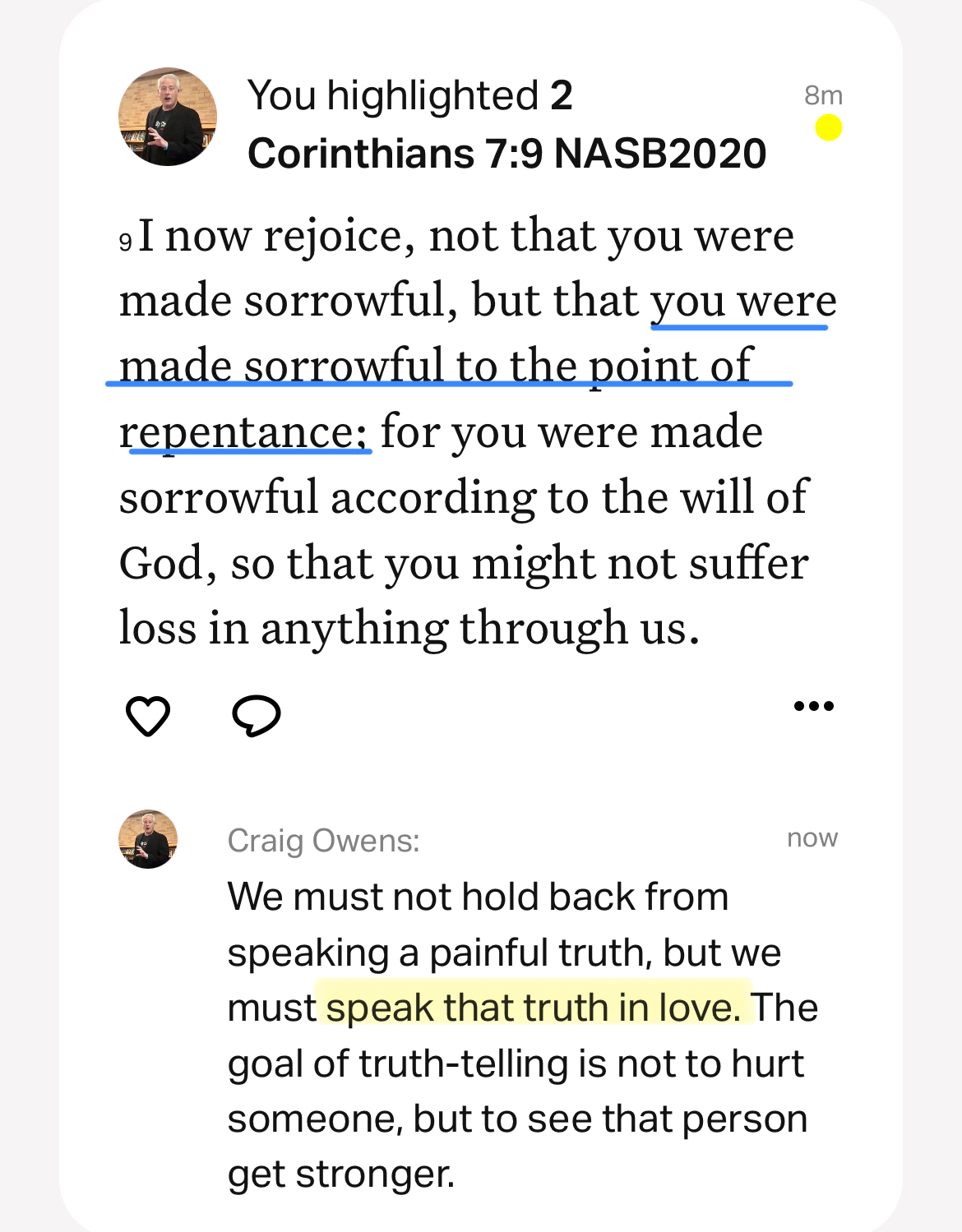
“We don’t all have to be geniuses to innovate in the way we use culture. For example, what if we were to repudiate, once and for all, all gossip and all carping and complaining, and instead were to work hard day by day to redirect our tongues toward building others up (Ephesians 4:29)? We would have to innovate some new ways of engaging people in conversation, by getting to know people and taking a real interest in them, becoming better listeners, asking good questions, making sure all our words were seasoned with grace, and always speaking truth in love. Would that not be a radical and innovative improvement on much of what passes for conversation today? If every believer just worked a bit harder to innovate new forms of conversation, I’m persuaded the world would certainly notice the difference!” —T.M. Moore

I think anyone who has read the Bible has heard the amazing story that Jesus told about a wayward son, a loving father, and a struggling older brother (see Luke 15:11-32). Jon Bloom imagines a conversation that the brothers may have had with each other after the younger brother returned home.

J. Warner Wallace is a cold-case detective and a premier Christian apologist. Some Christians believe that we only need to use Scripture to form our trust in Scripture. In this video, Wallace explains from Scripture how even Jesus used evidence outside of Scripture to make His case that He was who Scripture said He was. 

It is interesting how many modern-day scientists will accept without fact that an asteroid impacted Earth “millions of years ago” to trigger massive changes that resulted in the extinction of dinosaurs, but will flatly disregard the Flood recorded in the Bible. As a result of their false assumptions, they reach conclusions (like believing they have refuted Bergmann’s Rule) that are quickly refuted. Check out this insightful post.

If you are doing all the calculating with your money, then Jesus says you’re not rich toward God. Check out this full sermon here.

“When God brings new opportunities the path forward is often unknown; it’s a risky journey to start. After all, if you can see the path to the finish line, you do not need to trust the Lord. Why would God give a golden opportunity to those unwilling to trust Him for the unknown?” —Roger Parrott, Opportunity Leadership 

(For security reasons, I cannot share a link to the following but I can verify its veracity). “Sam” is a Christian in an Arabic country who has been instrumental in starting and leading a church in his country for several years. He was arrested two months ago and held in prison for 55 days. He was interrogated the first 8 days, then left in solitary confinement for 47 days: the bright lights always on, Some Christians were able to meet with him after his release, listen to his story, share Scripture together, pray with and encourage him. Here is one of their main takeaways from their conversation with Sam. 

“So, Sam, how did you make it 55 days in prison?” 

Sam said, “The Holy Spirit was with me and was with my mouth. He gave me the words to say. But the devil also sat right next to me twisting Scripture.” Sam continued, “Tell those that will go to prison it is very important not only to know the Scripture but to be able to interpret it correctly as the accuser (I found out by experience) is so adept at twisting God’s Word to both tempt and discourage us.”

Just Knowing Or Really Knowing?

Listen to the podcast of this post by clicking on the player below, and you can also subscribe on AppleSpotify, or Audible. 

I wonder how well you know the word “know”? Let’s find out.

Check out this episode of The Podcast.

Here are some helpful resources from this episode:

The Scriptures I referenced are 1 Samuel 2:12-17, 22; Genesis 2:25; John 1:4-5; Psalm 119:18; Ephesians 1:17.

I mentioned a blog post and video in this podcast about the work Jesus did on our behalf on the Cross. That was called Right Remembering.

My new book When Sheep Bite is available for pre-order!

Here are a bunch of ways to get in touch with me and follow along with other projects on which I am involved

►► Would you please prayerfully consider supporting this ministry? My Patreon supporters get behind-the-scenes access to exclusive materials. ◀︎◀︎

Purposeful, Present Power

My friend Tom Kaastra shared an encouraging message to our Calvary Assembly of God family today. 

Tom linked together the doxology in Ephesians 3 and the prayer in Ephesians 1, noting that the key word in both passages is power. He also reminded us that this is power in the present tense, so the same power that raised Jesus from the dead is the power that is at work in you and me right now. 

This is power for us to work “far more abundantly” purposefully than we typically imagine. God’s power at work in us is so much more than we even dream of. Tom pointed out that Paul prays for the “eyes of your heart” to be opened. In other words, Paul wants us to have an experiential knowledge of God’s work in and through us. 

Have you ever wondered why you’re here, and not in heaven? You’re not there because God needs you here. He has a purpose for you right here and right now! 

I found myself saying, “Amen!” frequently throughout this encouraging message. I hope you will feel encouraged by this too. You have been created on purpose and for a purpose!

Your Irreplaceable Genealogy

Listen to the podcast of this post by clicking on the player below, and you can also subscribe on AppleSpotify, or Audible. 

Have you ever felt like a nameless face in the crowd? Let me tell you what you should do with those thoughts.

Check out this episode of The Podcast.

Some resources from this episode:

Here are a bunch of ways to get in touch with me and follow along with other projects on which I am involved

►► Would you please prayerfully consider supporting this ministry? My Patreon supporters get behind-the-scenes access to exclusive materials. Like a first look at the cover of my brand new book. ◀︎◀︎