Guys, you don’t have to “live down” to the poor male role models that Hollywood portrays, but you can create a beautiful culture in your marriage, your home, and your workplace. Check out the full sermon this clip came from.
I have lots of new content every week, which you can check out on my YouTube channel.
“Challenge yourself; it’s the only path which leads to growth.” —Morgan Freeman
Michael R. Emlet writes, “There are no easy answers here. In thinking about the juxtaposition of mental-health issues and church discipline, we want to be wary of two extremes. First, we don’t want to avoid corrective pastoral care out of fear that we will ‘add insult to injury’ for those struggling with mental affliction. Second, we don’t want to care for someone with mental illness exactly as we would care for someone without such a struggle. We want biblical truth and love to guide us.” This is a thoughtful post about how pastors should think about mental illness in church disciple. I shared a year-long series of messages on a Christian’s mental health, which you can find here.
Let’s change our leadership mentoring perspective. It’s not whether you dropped the ball or not, it’s what you learned from the time you dropped the ball. This is how we help others move forward. Check out the full Craig and Greg Show episode where we talk more about “untraditional” performance reviews.
I have lots of new content every week, which you can check out on my YouTube channel.
If it hadn’t been for J.R.R. Tolkien’s influence, C.S. Lewis may have remained an atheist. And if it hadn’t been for C.S. Lewis’ encouragement, the world may never have been able to enjoy Tolkien’s Lord of the Rings series. This truly was a friendship that blessed the world! A book that explores this relationship further is A Hobbit, A Wardrobe, and A Great War.
“We don’t all have to be geniuses to innovate in the way we use culture. For example, what if we were to repudiate, once and for all, all gossip and all carping and complaining, and instead were to work hard day by day to redirect our tongues toward building others up (Ephesians 4:29)? We would have to innovate some new ways of engaging people in conversation, by getting to know people and taking a real interest in them, becoming better listeners, asking good questions, making sure all our words were seasoned with grace, and always speaking truth in love. Would that not be a radical and innovative improvement on much of what passes for conversation today? If every believer just worked a bit harder to innovate new forms of conversation, I’m persuaded the world would certainly notice the difference!” —T.M. Moore
J. Warner Wallace is a cold-case detective and a premier Christian apologist. Some Christians believe that we only need to use Scripture to form our trust in Scripture. In this video, Wallace explains from Scripture how even Jesus used evidence outside of Scripture to make His case that He was who Scripture said He was.
It is interesting how many modern-day scientists will accept without fact that an asteroid impacted Earth “millions of years ago” to trigger massive changes that resulted in the extinction of dinosaurs, but will flatly disregard the Flood recorded in the Bible. As a result of their false assumptions, they reach conclusions (like believing they have refuted Bergmann’s Rule) that are quickly refuted. Check out this insightful post.
If you are doing all the calculating with your money, then Jesus says you’re not rich toward God. Check out this full sermon here.
“When God brings new opportunities the path forward is often unknown; it’s a risky journey to start. After all, if you can see the path to the finish line, you do not need to trust the Lord. Why would God give a golden opportunity to those unwilling to trust Him for the unknown?” —Roger Parrott, Opportunity Leadership
(For security reasons, I cannot share a link to the following but I can verify its veracity). “Sam” is a Christian in an Arabic country who has been instrumental in starting and leading a church in his country for several years. He was arrested two months ago and held in prison for 55 days. He was interrogated the first 8 days, then left in solitary confinement for 47 days: the bright lights always on, Some Christians were able to meet with him after his release, listen to his story, share Scripture together, pray with and encourage him. Here is one of their main takeaways from their conversation with Sam.
“So, Sam, how did you make it 55 days in prison?”
Sam said, “The Holy Spirit was with me and was with my mouth. He gave me the words to say. But the devil also sat right next to me twisting Scripture.” Sam continued, “Tell those that will go to prison it is very important not only to know the Scripture but to be able to interpret it correctly as the accuser (I found out by experience) is so adept at twisting God’s Word to both tempt and discourage us.”
My friend Tom Kaastra shared an encouraging message to our Calvary Assembly of God family today.
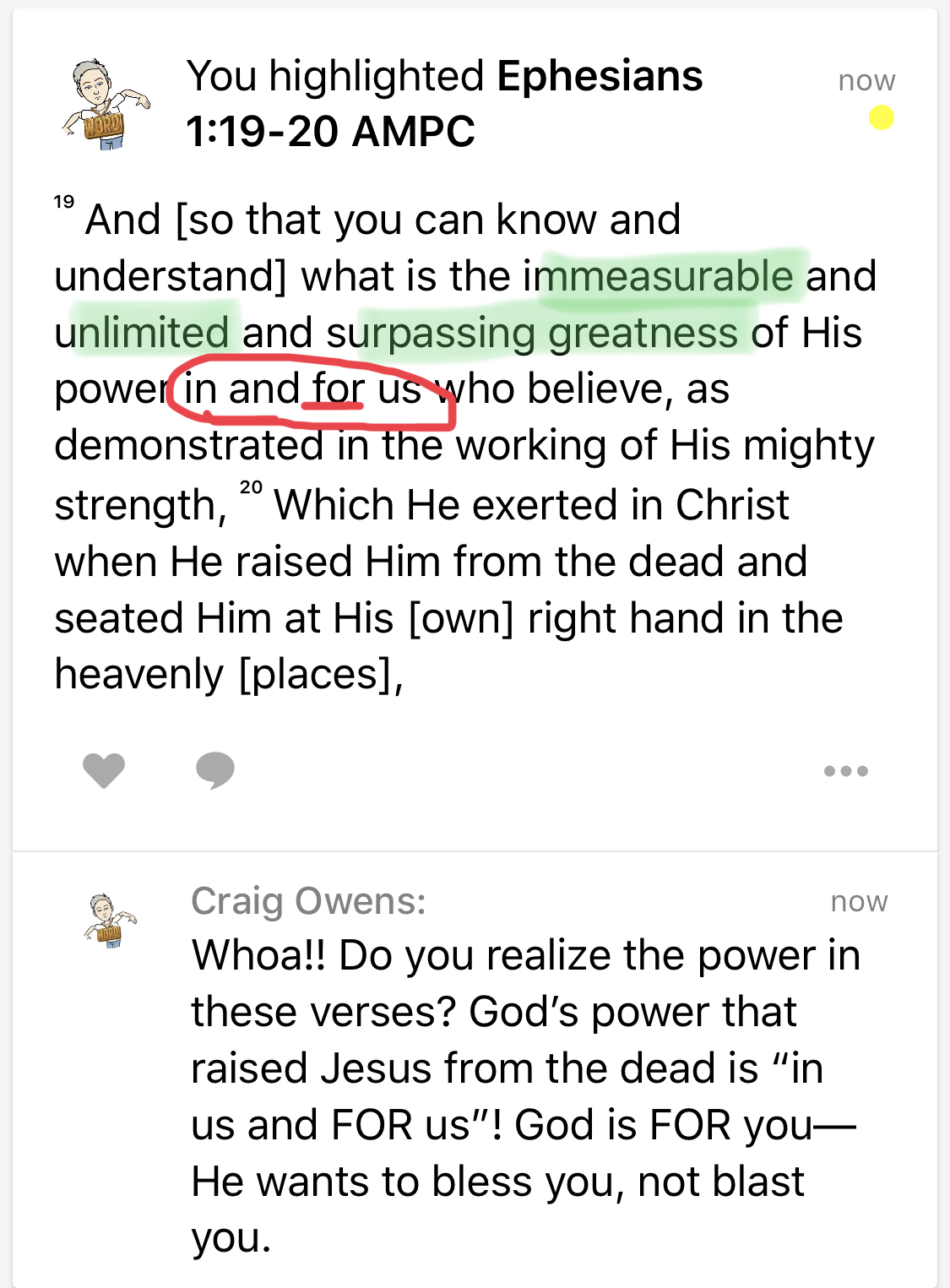
Tom linked together the doxology in Ephesians 3 and the prayer in Ephesians 1, noting that the key word in both passages is power. He also reminded us that this is power in the present tense, so the same power that raised Jesus from the dead is the power that is at work in you and me right now.
This is power for us to work “far more abundantly” purposefully than we typically imagine. God’s power at work in us is so much more than we even dream of. Tom pointed out that Paul prays for the “eyes of your heart” to be opened. In other words, Paul wants us to have an experiential knowledge of God’s work in and through us.
Have you ever wondered why you’re here, and not in heaven? You’re not there because God needs you here. He has a purpose for you right here and right now!
After this genealogy, we read that an angel says to Joseph, “Joseph son of David, do not be afraid to take Mary home as your wife, because what is conceived in her is from the Holy Spirit” (Matthew 1:20). And then notice this commentary from Matthew—
All this took place to fulfill what the Lord had said through the prophet: “The virgin will conceive and give birth to a Son, and they will call Him Immanuel”(which means “God with us”). (Matthew 1:22-23)
Matthew says, “all this took place to fulfill what the Lord had said.” All what? Everything that came before that statement: the genealogy with all its exceptional items, the 70-year exile of the Jewish people, the Immaculate Conception, the fulfillment of a 700-year-old prophecy.
I find this absolutely astounding! And so, apparently, did Joseph!
But remember that Jesus is not only “the son of David” but He is also called a “son of Abraham.” This means that Jesus came to be more than just the King of the Jews.
We have a cliché that says something like, “Don’t miss the forest for the trees.” By this, we mean that sometimes in the moment we only see one large tree or obstacle in front of us and we miss seeing the majesty of the whole forest. Or maybe we only see the obstacle and not the path that would take us where we need to go.
We are living between the Advents now so you would think that we have a good “forest” perspective, but even we sometimes get bogged down in the moment, wondering what God is doing. The story of Abraham should help us to see the whole forest of God’s plan a little better.
In Genesis 12:1-3 we read God’s promise to Abraham that all people on earth would be blessed by his obedience to God’s call. Listen to the opening words of Stephen’s sermon as he looked back on this—
The God of glory appeared to our father Abraham while he was still in Mesopotamia, before he lived in Harran. “Leave your country and your people,” God said, “and go to the land I will show you.” So he left the land of the Chaldeans and settled in Harran. After the death of his father, God sent him to this land where you are now living. (Acts 7:2-4)
Stephen reminds us that God spoke to Abraham while he was still living in Mesopotamia. Abraham must have shared this promise with his father because in Genesis 11:31 we read that Terah takes Abraham, Sarah, and Lot with him to make this journey, but they only traveled as far as Harran.
Why did they stop here? We’re not sure. Perhaps Terah was still grieving the death of his youngest son who had died before they left. Maybe Terah was concerned about his middle son Nahor who chose not to travel with them. Or maybe Terah was paralyzed by the magnitude of the journey still ahead of them. Whatever the reason, Terah allowed a “tree” to obscure his view of the whole “forest” of God’s plan.
Stephen then says that Abraham continued the journey to Canaan “after the death of his father.” But if we do the math, it appears that Terah was still biologically alive when Abraham left (see Genesis 11:26, 32; 16:3, 16).
Abraham had to trust God more than he respected his father, even to the point of considering his father as dead.
Later on, God gave Abraham a similar test with his own son. Abraham passed this test and God repeated His promise about blessing all people through Abraham(see Genesis 22:1-18).
In Romans 4, Paul explains that Abraham’s faith in God’s promise was rewarded, and that through our faith in Jesus we are connected to this same promise.
Just as there was an “all this took place to fulfill what the Lord had said” about Jesus—including the faith-filled obedience of Abraham and David—God has an “all this” for your life too.
God saw you before you were born. He had a plan for your life. He gave you gifts and talents to be used for His glory. There is not a single part—not a single experience—of your life that is accidental (Psalm 139:16; Ephesians 2:10; Romans 8:28).
Just as He used all this for Jesus, He is using all this for your life too. Will you trust Him?
Through David, God fulfilled the promise that Jesus would be King of the Jews. Through Abraham, God fulfilled the promise that Jesus would be King of all nations. Through Jesus, God fulfilled the promise that Jesus would be our Righteousness.
Abraham died without seeing the promise fulfilled. But we have seen the promise fulfilled, and that should fuel our faith to trust God to fulfill the promise He has for each of us. I pray that this assurance will be renewed in your heart as you celebrate Advent this year.
Listen to the podcast of this post by clicking on the player below, and you can also subscribe on Apple, Spotify, or Audible.
It would be nice if complainers were satisfied just complaining to themselves, but they’re not. Do you know the cliché misery loves company? It’s just as true for complainers: They really want others to join them in their bellyaching!
I think a good word for what these negative people do is ambush. The dictionary says that means to lie in wait with hostile intent. Jesus told His followers that this ambushing behavior was going to happen. In Luke 6:22, He uses the word “when” not “if”—
Blessed are you when people hate you, when they exclude you and insult you and reject your name as evil, because of the Son of Man.
We see this vividly portrayed in the life of Daniel. This man had done nothing but helpful things since the moment he arrived in Babylon. He faithfully served foreign kings, never wanted any recognition for himself, saved lives, interpreted dreams, and explained confusing things. He had a great work ethic and impeccable integrity. But the complainers still wanted to ambush him (see Daniel 6:1-5).
One psalmist described these ambushers in terms of a hunting lion: His mouth is full of lies and threats; trouble and evil are under his tongue. He lies in wait near the villages; from ambush he murders the innocent. His eyes watch in secret for his victims (Psalm 10:7-8).
Doesn’t this sound like what the devil does too? Be alert and of sober mind. Your enemy the devil prowls around like a roaring lion looking for someone to devour (1 Peter 5:8).
Jerusalem was surrounded by three armies that were lying in wait to ambush the Israelites. After God told the people of Jerusalem that He would deliver them, King Jehoshaphat sent out his army with the worshippers at the front of the ranks. Then listen to how worship not only thwarted the ambushers but boomeranged their evil plans back on themselves—
As they began to sing and praise, the Lord set ambushes against the men of Ammon and Moab and Mount Seir who were invading Judah, and they were defeated. The Ammonites and Moabites rose up against the men from Mount Seir to destroy and annihilate them. After they finished slaughtering the men from Seir, they helped to destroy one another. (2 Chronicles 20:22-23)
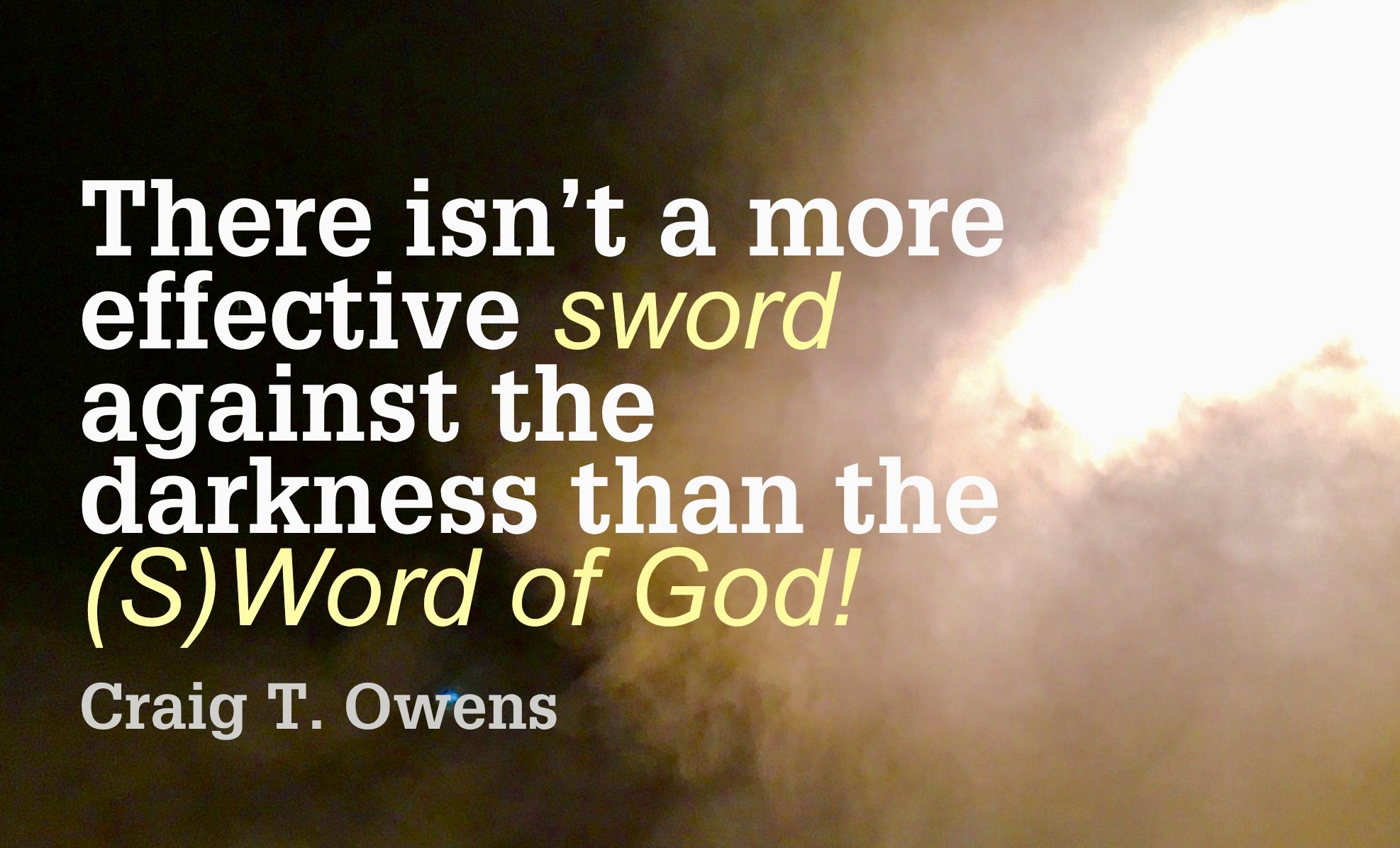
When we worship God and sing our grateful praise to Him, we put the sword of God in our mouths. And there isn’t a more effective sword against the darkness than the (S)Word of God (Hebrews 4:12; Revelation 1:16; Ephesians 6:17)!
Paul told the church at Colosse that singing our praise to God with other saints was an encouragement to all who heard those worshipful songs (Colossians 3:15-17).
So when the ambushers are surrounding you, use your thankful songs as a shield, as a sword, and as an encouragement to others!
If you’ve missed any of the other messages in our series The Great Attitude of Gratitude, you can find them all here.
Listen to the podcast of this post by clicking on the player below, and you can also subscribe on Apple, Spotify, or Audible.
Of all the things that rob a Christian of peace and robust mental health, stress has to be near the top of the list. There are so many stressors in our lives that to not find a way to actively de-stress is to choose to remain stressed. This is sort of like fertilizing the weeds, as we learned in our second mental health strategy.
A certain amount of stress is good for us—doctors call this eustress. Our bodies have been designed by God with a hormone called cortisol that helps us respond to stressful situations, and He also designed that the unused cortisol be flushed from our bodies as we sleep and exercise. However, when we become stressed, many times sleep and exercise are squeezed out of our lives.
Men’s Health magazine reported, “You personally may dictate when you’ll die. After studying 1633 men for 30 years, Purdue scientists found that worrying takes 16 years off your life. Negative thinking triggers the release of cortisol, a stress hormone that can be dangerous when elevated for long periods of time.”
The eustress can degrade into distress if we’re not attentive to this downward slide. The excess cortisol that is allowed to remain in our bodies leads to unhealthy responses—like sleeplessness, starvation or binge eating, and little to no exercise. These unhealthy factors are further exacerbated by our diminished coping skills that come from the damage done to the hippocampus in our brain. Lingering cortisol kills the neurons in this memory center of our brains, which makes it harder for us to recall past lessons that could help us resolve stress.
Sadly, distress can become its own downward cycle as the unhealthy responses and diminished coping skills negatively impact our lives, creating even more stressors.
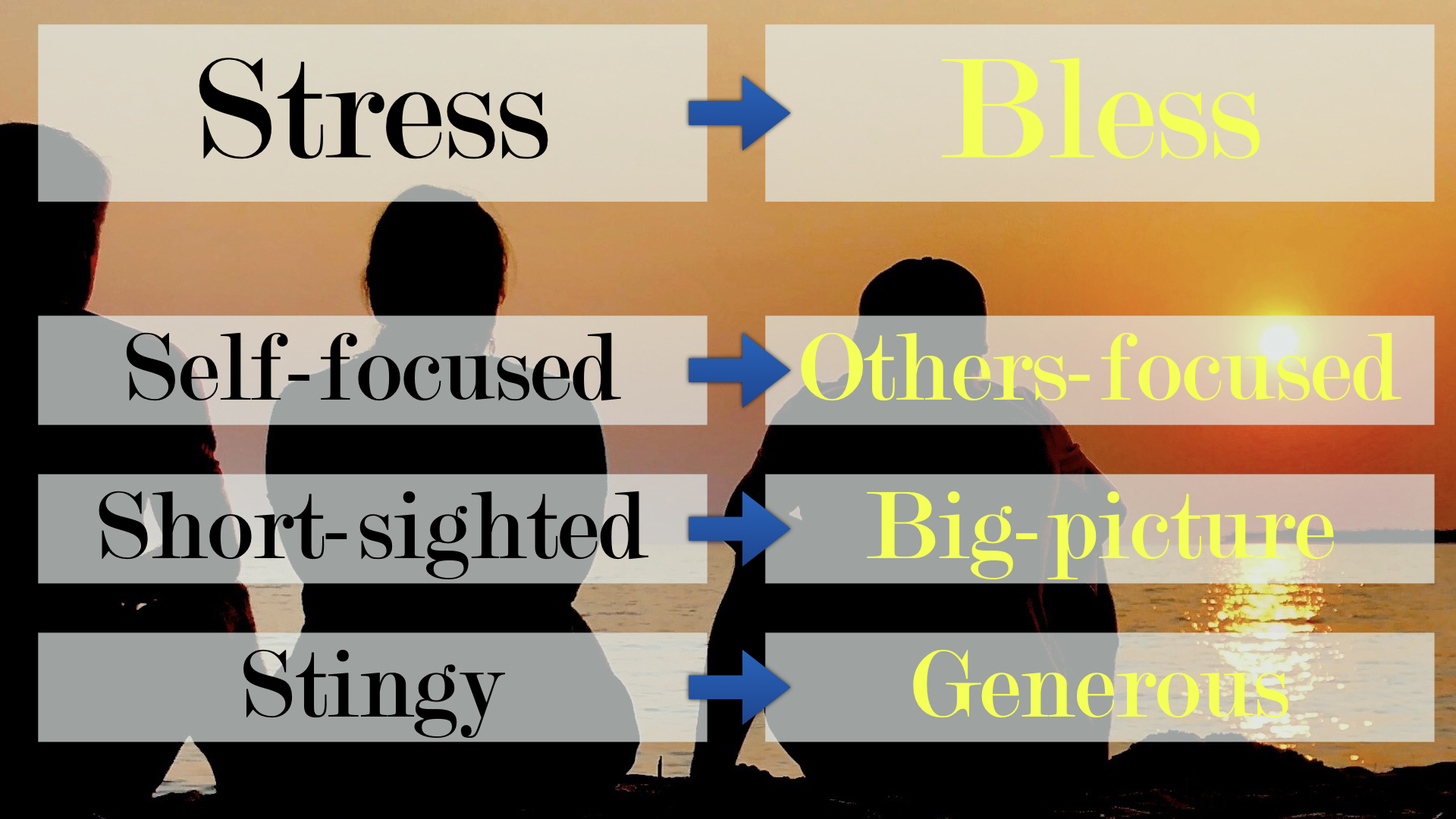
Stress makes us:
Self-focused
Short-sighted
Stingy with our time, possessions, and even God’s promises
But there is a word of hope for us. William James noted, “The greatest weapon against stress is our ability to choose one thought over another.”
I want to give you one thought—one word, one action—to combat stress: Bless.
Blessing others takes the focus off myself. Blessing God puts the focus on Him.
In the Gospels, we see people who had suffered the ravages of stress, encounter Jesus, find freedom, and then begin to bless others as a preventative to returning to their stress-filled lives. We can see a few examples in healed women, a man delivered from demons, and a woman who had lived a less-than-virtuous life (Luke 8:1-3, 26-39; 7:36-50).
Frequently, the Old Testament psalmists shared how blessing God and others brought them out of their stressful situations. A great example comes from David when he chose to bless God in a stressful place, and ended up being a blessing to other afflicted people around him (Psalm 34:1-6).
Instead of remaining self-focused we become others-focused
Instead of being short-sighted we get a big-picture orientation
Instead of being stingy with our possessions and God’s promises we become generous
Remember that in the distress cycle I mentioned earlier the brain cells in the hippocampus were being damaged? The excess cortisol literally kills those neurons. The good news is that the hippocampus is one of the few places in the brain that experiences neurogenesis after cortisol is flushed. When you replace stressing with blessing, and the cortisol is regularly flushed from your body, brain cells are regenerated in your hippocampus. In essence, you are developing both a new brain and a new mind.
The apostle Paul wrote, “Put off, concerning your former conduct, the old man which grows corrupt according to the deceitful lusts, and be renewed in the spirit of your mind, and that you put on the new man which was created according to God, in true righteousness and holiness” (Ephesians 4:22-24 NKJV).
Don’t let stress steal life from your years and years from your life. De-stress by blessing God and blessing those around you.
Listen to the podcast of this post by clicking on the player below, and you can also subscribe on Apple, Spotify, or Audible.
When Jesus was discussing end times events with His disciples, He described days that looked pretty bleak. Do any of these descriptions sound familiar today?
In times like these, Jesus said many people will be deceived. This is why Jesus twice tells His followers to “be on your guard” (vv. 9, 23).
What exactly does “on guard” look like?
Maybe you’ve heard a similar phrase before a fencing match, reminding the combatants to raise their swords. That’s a good picture for Christians. Paul tells us that we can use the “sword of the Spirit, which is the Word of God” to defend ourselves during spiritual warfare (Ephesians 6:17).
While Jesus is instructing His disciples, He tells them the sword-like power of His words. He said, “My words will never pass away” (Mark 13:31). In other words, His sword is invincible!
Another modern-day phrase that fills out the definition of being on guard is when someone says, “Heads up!” This means to watch out for things that may be headed your way. Jesus reminded us, “I have told you everything ahead of time” (v. 23) so we can be aware of what’s coming.
We are aware of the approaching dark days of the end times, but we are not afraid of them. Three times, Jesus tells us to “keep watch” (vv. 34, 35, 37). This Greek word means to be aroused from sleep so that we can give active and strict attention to the task before us.
“Be on guard! Be alert!” Jesus said (v. 33), so that you don’t become apathetic. The devil prowls around, seeking to use the times of turmoil to confuse, deceive, and then mislead people.
But we are not unaware of his schemes.
Christian, we must stay on guard. We must be ready but unafraid of the opposition. We must keep in mind the never-failing Word of God, and we must use that sword to cut down the deceiving ideas. The Holy Spirit will give you the right words to wield at the right moment—
“…Don’t worry in advance about what to say. Just say what God tells you at that time, for it is not you who will be speaking, but the Holy Spirit.” (Mark 13:11)
Listen to the podcast of this post by clicking on the player below, and you can also subscribe on Apple, Spotify, or Audible.
King Herod Antipas was the son of King Herod the Great. Herod the Great is the one who tried to kill Jesus shortly after He was born, and in the process murdered numerous infant boys in and around Bethlehem (Matthew 2:16).
Herod Antipas seduced his sister-in-law Herodias (who was married to his brother Philip), who then divorced her husband to marry Antipas, who had also divorced his own wife (Matthew 14:3). This is also the Herod who so desperately wanted to see Jesus perform a miracle (Luke 9:7-9, 23:6-10).
Antipas was no choir boy! And yet he had a strange fascination with spiritual matters. Not only did he want to see Jesus, but he liked hearing John the Baptist preach. At the same time, he hated John’s message that said he was living in sin (Mark 6:17-18; Leviticus 20:21). Herod wanted John dead, but he also feared the backlash from the people who thought John was God’s prophet. Later on, he tried to protect John from death, but in trying to save face with his guests, he had to have John killed (Mark 6:26; Matthew 14:5).
Herod Antipas continually flirted with sin—never killing it, never running away from it. And this eventually caught up with him.
The Gospel of Mark records, “Finally the opportunity came” (Mark 6:21). Herodias’ daughter performed a seductive dance for Herod on his birthday, which cause him to say in front of everyone, “I’ll give you whatever you want.” Prompted by her mother, this young lady seized the opportunity and said, “I want the head of John the Baptist on a platter!” Following in his father’s footsteps, Herod Antipas became a murderer.
If sin is left close, it will kill you. The Bible tells us sin is crouching nearby, always looking for an opportunity, always a part of the devil’s scheming plan to destroy us (Genesis 4:7; Luke 4:13; Ephesians 6:11; 1 Peter 5:8).
Let us not make the same fatal mistake that Herod Antipas made by flirting with our sin instead of killing it. Paul wrote, “So put to death the sinful, earthly things lurking within you. Have nothing to do with sexual immorality, impurity, lust, and evil desires. … [N]ow is the time to get rid of anger, rage, malicious behavior, slander, and dirty language” (Colossians 3:5, 8).
Or, as John Owen put it, “Be killing sin, or it will be killing you.”