Temporary Sorrow For Eternal Joy

Listen to the podcast of this post by clicking on the player below, and you can also subscribe on AppleSpotify, or Audible. 

On Sunday we looked at the thought that our grief often comes because our current situation isn’t what we expected it to be. Notice that we say, “what we expected,” as though we can control anything!  

Today we remember the horrific death of Jesus on the Cross and we call it Good Friday. We can only call it “good” now because we see the results on the other side. If we were to go back in time to the weeks, days, and even moments before Jesus was arrested and so cruelly treated, those around Him would call that time anything but good. 

Look how the disciples responded to this coming event (Matthew 16:21-22). Grief can also come when we give more weight to today’s pain than we do to eternity’s joy. 

(Check out all of the Scriptures in this post by clicking here.) 

This has always been a strategy of the devil to get people to look at now and not consider eternity. That’s how he tempted Adam and Eve, who gave in to this ploy. And then he tried the same strategy on Jesus, but failed (see Genesis 3:1-5; Matthew 4:1-10). 

Jesus knew why He came to earth (Matthew 20:28). And as He got closer and closer to the day of His crucifixion, the weight began to build (John 12:27). 

Look at how Jesus fought grief by making sure He gave more weight to eternity. He turned His pain into prayer so His Father could exchange His grief for His joy (Matthew 26:36-44).

Jesus prepared His disciples by trying to give them an eternal focus (Luke 22:14-20). He told them to pray that they wouldn’t give in to this temptation to trade eternal joy for momentary pain, but they didn’t understand. This is what focusing on the pain of now does—the weight of it exhausts us emotionally, physically, and spiritually.
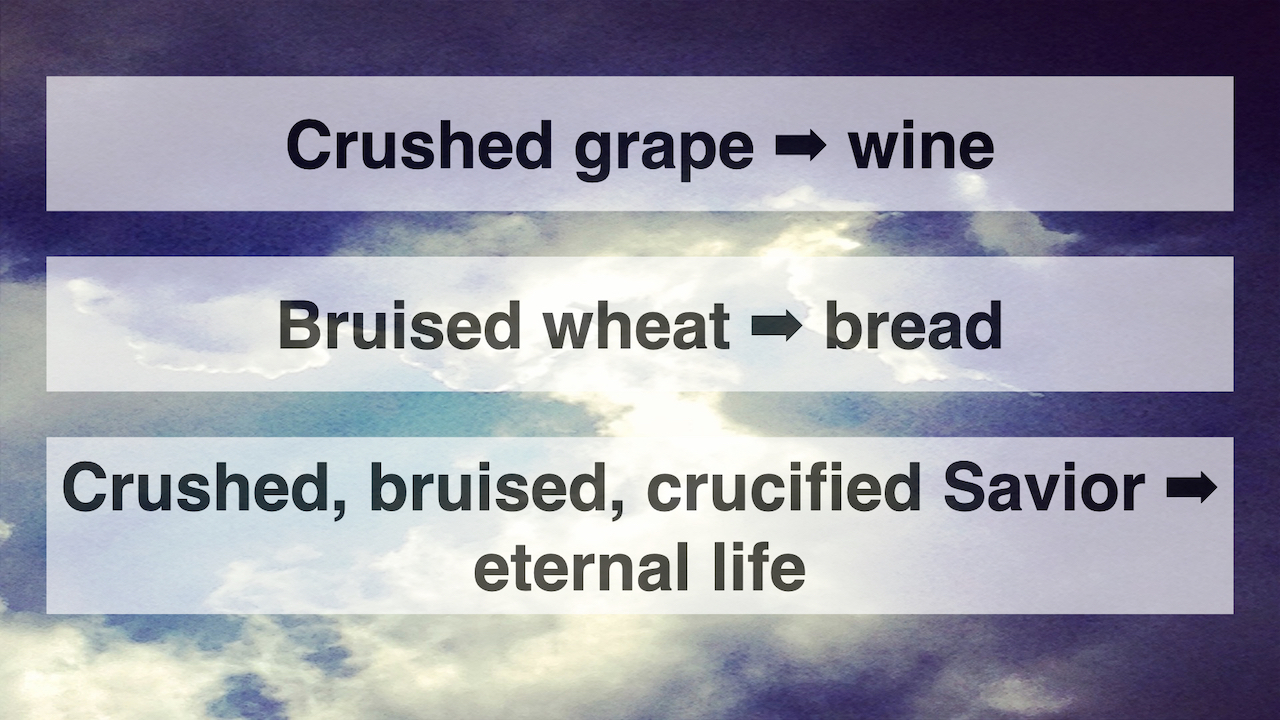
But look at the eternal focus in vv. 17-19:

  • The crushed grape gives us wine 
  • The bruised wheat gives us bread 
  • The crushed, bruised, crucified Savior gives us eternal life  

“Very truly I tell you, unless a kernel of wheat falls to the ground and dies, it remains only a single seed. But if it dies, it produces many seeds” (John 12:24).

Remember the devil’s strategy: get us so focused on the pain of now that we forget about the far greater joy that lasts forever. 

Jesus wants us to “do this in remembrance of Me”—to see the crushed grape and the bruised wheat and the crucified Savior in the light of eternity. 

Check out the other messages in this series called Grief Into Joy by clicking here.

►► Would you please prayerfully consider supporting this ministry? My Patreon supporters get behind-the-scenes access to exclusive materials. ◀︎◀︎

Right Remembering

Listen to the podcast of this post by clicking on the player below, and you can also subscribe on AppleSpotify, or Audible. 

Jesus hung on the Cross for about 6 hours. He was mostly silent during this time—His seven statements from the Cross would have taken less than a minute to say them all back-to-back. 

He hung silently and thoughtfully. I know He was thoughtful because John records, “Later, knowing that all was now completed, and so that the Scriptures would be fulfilled, Jesus said, ‘I am thirsty’” (John 19:28). 

Movie directors will often show a flashback scene where their character looks back to remember what came before. I think during this silent time on the Cross, Jesus reviewed His public ministry. He reviewed every jot and tittle of every promise His Father had made, and He knew that each and every one had been completed.  

This culminating event on the Cross was the fulfillment of the big picture that God had been painting all along. The system of sacrifices centered in the tabernacle or the temple had been trying to show us something. 

There were daily sacrifices and annual sacrifices; there were sacrifices for willful sins and sacrifices for unintentional sins; there were sacrifices for priests and for laypeople. Day after day, week after week, month after month, year after year, decade after decade, century after century these sacrifices continued, never feeling like the work was finished. 

These practices were only a shadow, but a shadow that foretells the Reality—

The law is only a shadow of the good things that are coming—not the realities themselves. For this reason it can never, by the same sacrifices repeated endlessly year after year, make perfect those who draw near to worship. … The reality, however, is found in Christ. (Hebrews 10:1; Colossians 2:17) 

(Check out all of the Scriptures in this post by clicking here.)

Jesus knew that He had come as the Reality (John 13:1), but before this final event on the Cross that would fully reveal the Reality, Jesus had one last thing to do: He wanted to share a final meal with His friends (Luke 22:7-15). 

Jesus said that eagerly desired to eat the Passover meal with them. This Passover remembrance looked backwards to the deliverance from Egypt and was celebrated year after year, decade after decade, century after century. 

The events were so long ago that they may have seemed like fading shadows to those who were celebrating this meal over a millennia after the fact. Jesus brought Reality. 

Jesus knew He was the most powerful Person on earth, but He also knew that He had come to serve (Mark 10:45; John 13:3-5). To demonstrate His servanthood…

  • He washed the feet of His betrayer 
  • He washed the feet that would run away from Him in terror 
  • He prepared them for what was coming 

Peter boldly declared that he would never run away, and Matthew and Mark record that all of the other disciples declared the same thing—(Luke 22:33; Matthew 26:35; Mark 14:31). But Jesus knew the prophecy that said, “I will strike the Shepherd, and the sheep of the flock will be scattered (Matthew 26:31). 

So Jesus prepared them by praying for them, and He prepared them by showing them the Reality of all those daily, weekly, monthly, annual, and Passover sacrifices (Luke 22:17-20, 31-32). 

Jesus was the completion of this sacrifices (Hebrews 7:26-28, 9:11-14)! 

The prophecy God gave in Jeremiah was completed in Christ’s broken body and spilled blood on the Cross—“For I will forgive their wickedness and will remember their sins no more” (Jeremiah 31:31-34; Hebrews 8:12). 

The purpose of this Last Supper—this meal that completes so many jots and tittles—is to remember. The devil wants you to remember what YOU did. Jesus wants you to remember what HE did. 

Good Friday and the celebration of Communion helps us remember correctly that Jesus paid in-full the penalty for our sins, so now our forgiven sins are forgotten sins. The moment we sin, there is already the remedy for our sins that has been paid for. We repent, ask forgiveness, and receive His immediate cleaning. 

Such amazing love! 

If you have missed any of the messages in this series looking at some of the jots and tittles of prophecy that are fulfilled in Jesus, you can check them all out by clicking here.  

►► Would you please prayerfully consider supporting this ministry? My Patreon supporters get behind-the-scenes access to exclusive materials. ◀︎◀︎
An Unlikely Convert

There is a man that we meet in just a couple of verses of Scripture. We know that he is a Roman centurion. I gave him an appropriate Roman name of Vitellius. I created a fictional backstory for this centurion, but all of the events are well documented in both biblical history and contemporary history books of the time. I have listed below all of the scripture references that you may want to consult, along with some quotes from notable historians. 

What isn’t fictional is the fact that the Cross didn’t happen to Jesus, but He came to make Calvary happen. 

Jesus said this about His crucifixion, “And I, when I am lifted up from the earth, will draw all people to Myself” (John 12:32). That’s what happened to the thief, and to the centurion Vitellius, and to me, and to all who have acknowledged that Jesus is the Savior. 

Vitellius’ bold claim on the day Jesus was crucified still rings true 2000 years later: “Certainly this was a righteous Man!” 

Looking at Jesus who was lifted up on that Cross, we can appreciate the beauty of the 700-year-old prophecy about Him:

He had no beauty or majesty to attract us to Him, nothing in His appearance that we should desire Him. He was despised and rejected by mankind, a man of suffering, and familiar with pain. Like one from whom people hide their faces He was despised, and we held Him in low esteem. Surely He took up our pain and bore our suffering, yet we considered Him punished by God, stricken by Him, and afflicted. But He was pierced for our transgressions, He was crushed for our iniquities; the punishment that brought us peace was on Him, and by His wounds we are healed. (Isaiah 53:2-5)

Which is what we celebrate in Communion still to this day. “And [Jesus] took bread, gave thanks and broke it, and gave it to them, saying, ‘This is My body given for you; do this in remembrance of Me.’ In the same way, after the supper He took the cup, saying, ‘This cup is the new covenant in My blood, which is poured out for you’” (Luke 22:19-20). 

The way Christians live today can still lift Jesus up for all to see. Jesus told His followers, “Whoever wants to be My disciple must deny themselves and take up their cross and follow Me. For whoever wants to save their life will lose it, but whoever loses their life for Me will find it” (Matthew 16:24-25). 

When we live this way, our lives become the aroma of life to even sin-hardened thieves and war-hardened soldiers.  

Check out this video of Vitellius’ personal experience—

Here are some further resources for you to check out:

  • The Bible verses that form the background for this centurion’s story—Luke 23:1-47; Matthew 27:11-54; Mark 15:1-39; John 18:28-19:34
  • Historian William Barclay wrote this about the centurions, “The centurions were the backbone of the Roman army. In a Roman legion there were 6,000 men; the legion was divided into sixty centuries, each containing 100 men, and in command of each century there was a centurion. These centurions were the long-service, regular soldiers of the Roman army. They were responsible for the discipline of the regiment, and they were the cement which held the army together. … A centurion was the equivalent of a regimental sergeant-major; and the centurions were the backbone of the Roman army.”
  • The horrific torture of crucifixion

If you have missed any of the other messages in our series of Bold Claims, you can find them all my clicking here.

New Inside

Listen to the podcast of this post by clicking on the player below, and you can also subscribe on AppleSpotify, or Audible. 

In the movie Groundhog Day, Bill Murray’s character (Phil) is stuck in a small town where February 2 keeps repeating. Phil tries desperately to get out of this town and out of this day, but nothing he seems to do gets him out of the endless loop. He becomes smarter and richer each day, but at the end of the day, everything resets to the beginning. 

It’s frustrating! 

God’s people of the Old Testament had their own “Groundhog Day”—the Day of Atonement that came every single year. This was the day their sins were confessed, forgiven, and atoned for, and had a very specific set of sacrifices and rituals. Much like Phil in the movie, they began to go through these motions almost entirely without thinking. 

Year after year, millennia after millennia “the same sacrifices repeated endlessly year after year, [couldn’t] make perfect those who draw near to worship” (see Hebrews 10:1-4). 

Even those who were God-fearing and tried their best to live perfectly righteous lives could find in the law provision for those who “sin unintentionally” (Leviticus 4:2, 13, 22, 27; 5:15, 18, 22, 24, 27-29). It was just another reminder that the loop of sin-confession-repentance-forgiveness-atonement was never ending. 

And as if all the requirements of the Torah weren’t enough, Jesus came on the scene and seemed to raise the bar, telling us even though our outward actions might look righteous, our inward thoughts and attitudes made us just as sinful (Matthew 5:21-22, 27-28). And then Jesus even dropped this on us, “Be perfect, therefore, as your heavenly Father is perfect” (Matthew 5:48)! 

Perfect?! As perfect as God?! This could easily make people throw their hands up in resignation, “I give up! Why even try?” 

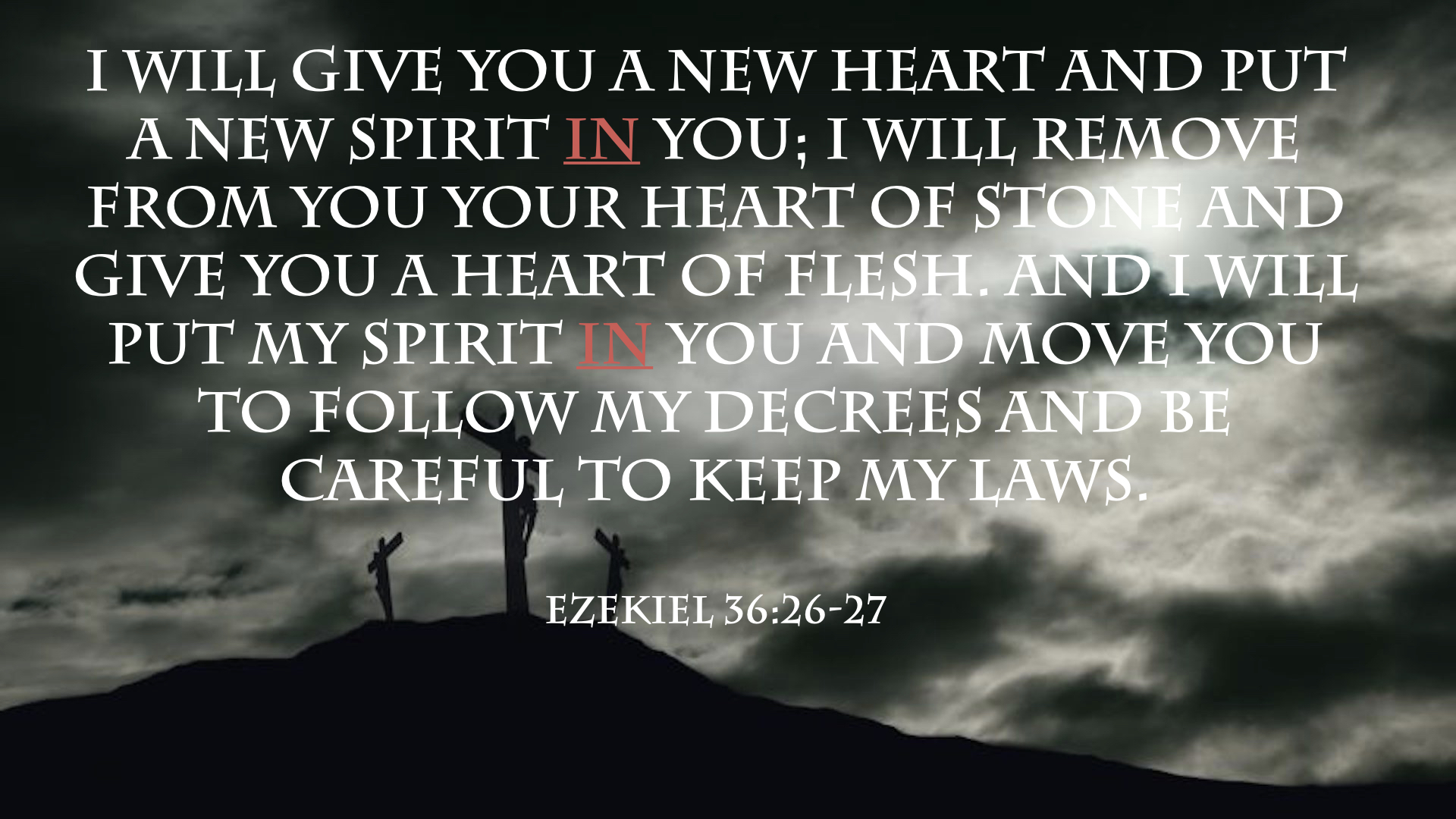
Through Ezekiel, God prophesied an internal change. This wasn’t something I must do, but something GOD will do—

I will give you a new heart and put a new spirit in you; I will remove from you your heart of stone and give you a heart of flesh. And I will put My Spirit in you and move you to follow My decrees and be careful to keep My laws. (Ezekiel 36:26-27) 

The solution to our endless loop of sin-confession-repentance-forgiveness-atonement must become internal. It’s no use trying to correct the fruit if the root is still evil! That requires an inside job. 

On Good Friday, the last words Jesus spoke before His death were, “It is finished” (John 19:30). 

What was finished? Our struggle to get ourselves out of this endless loop. The writer of Hebrews had this to say about Jesus: 

But when this Priest had offered for all time one sacrifice for sins, He sat down at the right hand of God. … For by one sacrifice He has made perfect forever those who are being made holy. (Hebrews 10:12, 14) 

Remember Jesus told us we had to be perfect like God? The root word for “perfect” in that verse is telos. When Jesus cried out, “It is finished,” He said one word in Greek: tetelestai. This also comes from the root word telos. Jesus perfectly finished all that was necessary for us to become perfect in God’s sight. 

Christians often use the the phrase “I invited Jesus into my heart” as an expression of their faith in what Jesus did for them on the Cross. That word “IN” is a good reminder. 

Jesus comes IN and the fear of punishment—the fear of being eternally stuck in the endless loop—has to go out. “There is no fear IN love. But perfect love drives out fear, because fear has to do with punishment. The one who fears is not made perfect IN love” (1 John 4:18). 

The word “perfect” in that verse is also from the same root word telos. 

Not only does Jesus come IN to our hearts to make them new, but He also takes us IN to His perfection. “Looking away from all that will distract to Jesus, Who is the Leader and the Source of our faith—giving the first incentive for our belief—and is also its Finisher—bringing it to maturity and perfection…” (Hebrews 12:2 AMP). 

Jesus shared a last supper with His disciples. His last supper was the first Communion. At this time Jesus told them He was establishing a “new covenant.” How do we square this with His previous statement that He didn’t come to abolish the law but to fulfill it? 

Jesus said this new covenant was IN His blood. His blood doesn’t abolish the law, but it perfects the law. His perfect blood makes out hearts new and takes us out of the external loop and IN to His prefect righteousness. 

Jesus accomplished all that was needed to make us perfect inside, and then to perfectly take us into God’s presence. As the hymn The Old Rugged Cross reminds us, “In that old rugged Cross, stained with blood so divine, a wondrous beauty I see. For ’twas on that old Cross Jesus suffered and died to pardon and sanctify me!” 

May we always cherish the perfection that was purchased for us on that Cross. 

►► Would you please prayerfully consider supporting this ministry? My Patreon supporters get behind-the-scenes access to exclusive materials. ◀︎◀︎
Watch Your Horn

Listen to the podcast of this post by clicking on the player below, and you can also subscribe on AppleSpotify, or Audible. 

During my freshman year of college, I was once the butt of a good-natured joke. I didn’t mind it so much except for the fact that there were several people in the room that didn’t know me, so they would have walked away thinking I was a jerk. As I vented to my roommate about this, his counsel was simply, “Just forgive ‘em, man!” 

Yeah, right … easier said than done! I didn’t want forgiveness—I wanted payback! Ever been there? 

The Hebrew word Selah is a call for us to pause and calmly think about what’s going on in our heart and mind. For instance, in those moments where we may want someone to get justice for the way they hurt us. 

In Psalm 75, God is literally the One who speaks the Selah. In fact, God speaks twice in this short psalm: once in verses 2-5 and again in verse 10 to close this psalm. Putting together His two speeches, God says, “I choose the right time, I judge perfectly, I hold everything firm. Selah. I will cut off the horns of all the wicked, but the horns of the righteous will be lifted up.” 

What is meant by “the horn of the wicked” or “the horn of the righteous”? Literally, it means a show of strength, but it can be used in both a negative or a positive sense. 

In the negative sense it means:

  • boasting of your own power 
  • standing in defiant opposition to all other powers 
  • proudly trumpeting your own strength
  • the English words “arrogant” and “boast” in verse 5 are both the same word Hebrew word halal. This means to shine a light on yourself, literally to say “Hallelujah!” to or about yourself! 

This pride is so dangerous! As C.S. Lewis said, “Pride is ruthless, sleepless, unsmiling concentration on the self.”

In the positive sense, a horn means the righteous person who shines a light on God, who concentrates on Him, who knows that anything good they have comes from Him. 

The wicked lift up their own horn (literally lift up themselves), while the righteous bow their horn (literally lift up God). What does God do? God opposes the proud but shows favor to the humble (1 Peter 5:5). 

This psalm essentially has God giving two warnings:

  1. To the wicked He says, “Do not lift up your horn against Me.” 
  2. To the righteous He says, “Submit to Me and do not try to rush My timing.” 

Notice that Asaph says “a cup of foaming wine” is coming to the wicked (v. 8). This symbolizes God’s judgment (Revelation 19:11-16). This was to be our just punishment too, but Jesus took the cup of God’s wrath Himself, and in its place gave us the cup of God’s blessing (Isaiah 51:22; Matthew 26:39-42; 1 Corinthians 10:16). This switching of the cups is what we celebrate every time we drink the cup of Communion. 

God was patient with us and He is still being patient with the boastful wicked, which is why He warns them—and us—to Selah. We were rescued from judgment and now God calls upon us to tell others about Him, so that they may also be reconciled to Him through Jesus Christ (Proverbs 24:11-12; 2 Peter 3:9). 

Here’s the call to Christians: Watch your horn! Don’t shine a light on yourself, but shine a light on Jesus Christ and remain on-mission to rescue those who persist in blowing their own horn. 

If you’ve missed any of the other messages in our Selah series, you can find the full list by clicking here. 

►► Would you please prayerfully consider supporting this ministry? ◀︎◀︎

Ordinances Of The Church

Listen to the podcast of this post by clicking on the player below, and you can also subscribe on AppleSpotify, or Audible. 

Many churches recognize a various numbers of ordinances within their worship services. The dictionary gives two definitions of the word ordinance that are helpful for us: (1) a rule to be followed, and (2) something believed to be ordained (or made holy). 

There are two ordinances that we celebrate: baptism in water and holy communion. 

Water Baptism

This wasn’t a practice invented by Christians, but teachers had been baptizing their students for years as an outward sign of followership. Not only did various members of the Israelite community come to John to be baptized, but even Jesus desired to be water baptized (Matthew 3:5-6, 13-17). 

Why would Jesus need to be baptized? Look at how Jesus replied to John, “It should be done, for we must carry out all that God requires” (Matthew 3:15 NLT), or in the NIV: “to fulfill all righteousness.” 

Jesus came to be our High Priest. One of the requirements for the priest was “he must bathe himself in water before he puts” on the ceremonial robes that were to be worn in the tabernacle (Leviticus 16:4). Jesus also came to be our perfect sacrifice, so He needed to be like us in every single way. If Jesus wasn’t water baptized, not “all righteousness” would have been fulfilled. 

Jesus was also baptized as an example for us. We, too, are priests in God’s Kingdom that need to be washed for our priestly service (1 Peter 2:9; 3:20-21). 

Our foundational truth statement on this is: “The ordinance of baptism by immersion is commanded by the Scriptures. All who repent and believe on Christ as Savior and Lord are to be baptized. Thus they declare to the world that they have died with Christ and that they also have been raised with Him to walk in newness of life.” 

Jesus gave us this rule to follow for new Christians: “baptizing them in the name of the Father and of the Son and of the Holy Spirit” (Matthew 28:19). This is also what Peter announced to the new believers on the Day of Pentecost: “Repent and be baptized, every one of you, in the name of Jesus Christ for the forgiveness of your sins” (Acts 2:38).  

Communion

Sometimes called The Last Supper or The Lord’s Supper, the Israelites had continued to celebrate the Passover (Exodus 12) with unleavened bread and wine—symbolizing the body and the blood of the sacrificial lamb which saved them from death. 

Our foundational truth statement on this is: “The Lord’s Supper, consisting of the elements—bread and the fruit of the vine—is the symbol expressing our sharing the divine nature of our Lord Jesus Christ, a memorial of his suffering and death, and a prophecy of His second coming, and is enjoined on all believers ‘till He come!’” 

Jesus, while celebrating Passover with His disciples, showed how Passover had been pointing to His First and Second Advents (Luke 22:13-20; 1 Corinthians 11:23-26). 

Both of these ordinances have reminders in them of our new life in Christ:

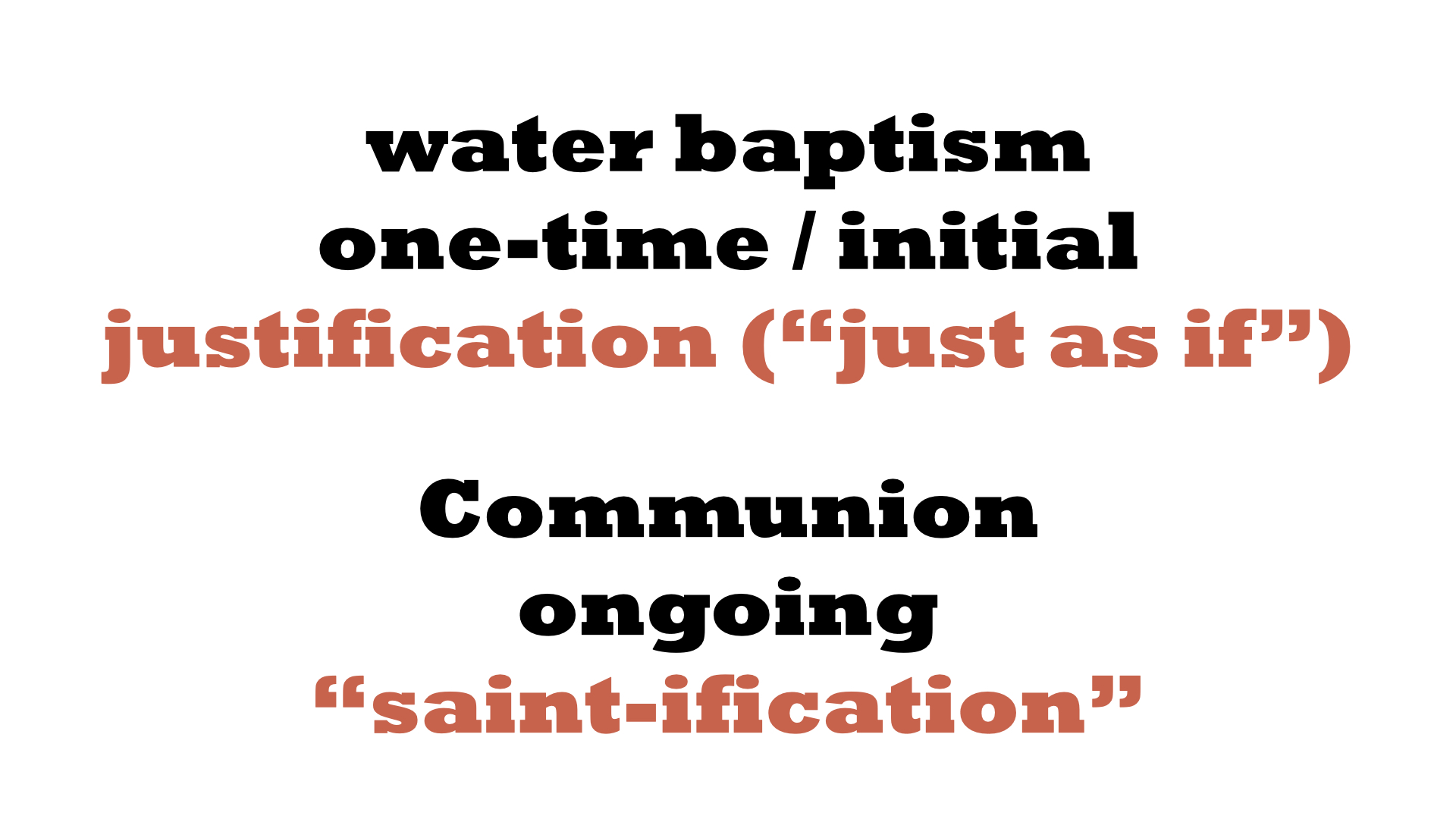
  1. Water baptism is a one-time event, just as our justification (“just as if I’d never sinned”) is a one-time event. This looks back to what Jesus did on the Cross. 
  2. Communion is an ongoing celebration “until He comes,” just as our sanctification (“saint-ification”) is an ongoing process. This looks ahead to what Jesus will complete when we are glorified in Heaven. 

If you’ve missed any of the other messages in our series exploring our foundational beliefs, you can find the complete list by clicking here.

►► Would you please prayerfully consider supporting this ministry? ◀︎◀︎

Poetry Saturday—Walking With God

Alas, my God, that we should be
Such Strangers to each other!
O that as Friends we might agree,
And walk, and talk together!
Thou know’st my Soul doth dearly love
The Place of Thine Abode;
No Music drops so sweet a Sound,
As those two words, My God.

I long not for the Fruit that grows
Within these Gardens here;
I find no sweetness in their Rose
When Jesus is not near:
Thy gracious Presence, O my Christ
Can make a Paradise;
Ah, what are all the goodly Pearls
Unto this Pearl of Price!

May I taste that Communion, Lord,
Thy people have with Thee?
Thy Spirit daily talks with them,
O let it talk with me!
Like Enoch, let me walk with God,
And thus walk out my Day,
Attended with the Heavenly Guards
Upon the King’s High-way.

When wilt Thou come unto me, Lord?
O come, my Lord most dear!
Come near, come nearer, nearer still;
I’m well when Thou art near.
When wilt Thou come unto me, Lord?
I languish for Thy Sight;
Ten Thousand Suns, if Thou art Strange,
Are shades instead of Light.

When wilt Thou come unto me, Lord?
For, till Thou dost appear,
I count each Moment for a Day,
Each Minute for a Year.
Come, Lord and never from me go,
This World’s a darksome Place;
I find no Pleasure here below,
When Thou dost veil Thy Face.

There’s no such Thing as Pleasure here;
My JESUS is my All;
As Thou didst shine or disappear,
My pleasures rise and fall.
Come, spread Thy Savour on my Frame,
No sweetness is so sweet;
Till I get up to sing Thy Name,
Where all Thy Singers meet. —Thomas Shepherd

Not How But Who

This is part 3 in our series looking at phrases that sound biblical and then asking, “Is that in the Bible?

Statement #3—This is how you should take Communion.… Is that in the Bible? Quite simply: No, it’s not. 

Every church seems to celebrate Communion with its own unique style, typically following an age-old tradition. There’s nothing wrong with traditions per se. The only thing we have to watch out for is when traditions become the focal point, instead of the thing the tradition is pointing us to. Almost as if we are celebrating the celebration (see Isaiah 1:11-14; Mark 7:1-8). 

In 1054 AD the Great Schism occurred between the Roman church (in West) and the Byzantine church (in East). One issue that led to this schism was Communion. The West used unleavened bread, saying that sin was removed. The East said that sounded like they were adopting Judaism, so they used leavened bread, saying that the “rising” symbolized new life. 

Even today there are differences and disagreements—only administered by a priest … only certain church officials can “bless” the elements … a common cup … individual cups … unfermented juice … fermented wine … unleavened wafers … pieces torn off a full loaf of bread. The Bible never says about Communion, “Do it this way.” All of these are man’s traditions. 

Passover was first instituted in Exodus 13. This is before the Law is given through Moses (Exodus 20) and before the instructions for the tabernacle are given (Exodus 25). In the first version, the sacrifice of the lamb was in individual homes, the lamb’s blood was shed on the doorposts of that home, and the family ate the lamb, unleavened bread, and bitter herbs together at home. 

After the tabernacle was operational, there was a change (Deuteronomy 16). Now the sacrifice of the lamb was in the tabernacle, the lamb’s blood was sprinkled on the altar, but the family still ate the lamb, unleavened bread, and bitter herbs together at home. 

By the time of Jesus, there were newer traditions which weren’t prescribed in the Bible that involved as many as five cups of wine, a very specific order that the meal was presented, and the singing of Psalm 113-118 (sometimes people sang all the way through Psalm 138). 

In the last supper Jesus shares with His disciples, we see some of these later elements. We read about the different cups of wine, the unleavened bread, the supper of lamb, and the singing of a hymn (Luke 22:14-20; Matthew 26:26-30; Mark 14:22-26; 1 Corinthians 11:23-26). 

I want to specifically focus on the second cup of wine Jesus used in this supper. Paul calls this cup the cup of thanksgiving and the cup of the Lord (1 Corinthians 10:16, 21). Why? Because Jesus switched cups with us! 

The Bible tells us that we have all sinned, and therefore we are supposed to drink the cup of God’s wrath—For in the hand of the Lord there is a cup of His wrath, and the wine foams and is red, well mixed; and He pours out from it, and all the wicked of the earth must drain it and drink its dregs (Psalm 75:8 AMP). 

But Jesus switched cups with us. He took the full wrath of God upon Himself, and then gave us God’s new covenant of forgiveness—“The days are coming,” declares the Lord, “when I will make a new covenant with the people of Israel and with the people of Judah. It will not be like the covenant I made with their ancestors when I took them by the hand to lead them out of Egypt, because they broke My covenant…. This is the covenant I will make with the people of Israel after that time,” declares the Lord. “I will put My law in their minds and write it on their hearts. I will be their God, and they will be My people. … For I will forgive their wickedness and will remember their sins no more.” (Jeremiah 33:31-34). 

Jesus said, “When you drink this, do this in remembrance of Me.” THIS is what we’re called remember and celebrate! 

It’s not HOW we celebrate Communion but WHO we remember when we do celebrate. 

Let’s not celebrate the celebration, but let’s celebrate the Savior who paid the price so that we could celebrate the forgiveness of our sins under God’s new covenant! 

Love Securely

Jesus is journeying toward the Cross. On Thursday, it’s His last opportunity to impart His most important thoughts to His disciples. He is about to be arrested, and everything is about to go sideways for the disciples—“this isn’t the way this is supposed to happen!”—and Jesus needs to prepare them with the truth they will need to sustain them through this. 

“I have eagerly desired to eat this Passover with you before I suffer,” Jesus says (Luke 22:15).  

So Peter and John are sent to make arrangements for the Passover meal, but one of the arrangements that they overlooked was the host duties—washing the feet of each guest, anointing them with perfume, and giving them a welcoming kiss. 

As they are eating dinner, Jesus makes four important statements:

  1. “One of you will betray Me”
  2. “All of you will abandon Me”
  3. “I will rise again and restore you”
  4. “I have prayed for you”

These statements get the disciples arguing about who’s going to betray Jesus—“It’s not me, is it?!”—and over how faithful they are—“I would never abandon Him!” Ultimately they begin to argue over who is the greatest disciple among them. 

Jesus not only explains to them how the servant is greater than the master in God’s sight (Luke 22:24-27), but He then becomes the living example of that when He washes their feet (John 13:1-5, 12-17). 

Here’s an important principle—Only secure people can lovingly serve others. 

Insecure people don’t like to serve others because they feel they are being misused, or taken advantage of, or that others will look down on them. 

Jesus “knew” (John 13:1, 3) how much power His Father had given Him, making Him secure enough to serve. Security really means, “I am loved by God, and I know who I am in Him.”

Jesus served out of love: the profound love that He knew His Father had for Him. He gave His disciples the same mandate: Serve others out of love for Me and show the world that you are My disciples (see John 13:34-35).

When Jesus ate this last supper with His disciples, He instituted a remembrance celebration that we now call Communion. The root word is “commune” which the dictionary defines as a “conversation with profound intensity and intimacy.” 

This is the type of intimate relationship Jesus had with His Father, and this is the type of relationship He calls us to with Him. The broken bread of Communion reminds us that Jesus can make whole any broken area that would keep us from communing with Him. The cup of Communion reminds us that Jesus can instantly and fully forgive any sin that would keep us from communing with Him. 

Jesus set the example—we are to commune with our Heavenly Father through the way He made by His broken body and His shed blood. It’s out of this communion that we are empowered by His love, and then feel secure enough to serve others in love too. 

God Is For You!

I’m going to make a statement that might shock some people. 

Some of you who have been around Christianity might have heard this before, and you may even mentally agree with it. But even people who mentally agree with it want to add a “Yeah, but…” to it. Or they mentally agree with it but don’t live like it’s true. 

Ready? Here it is … 

God is for you.

Far too many people mistakenly think God is looking for an opportunity to punish them; He’s trying to catch them doing something wrong; He’s perched on the edge of heaven with lightning bolts of judgment in His hand. God doesn’t want to blast you; He wants to bless you! 

Although the word favor appears quite frequently in Scripture, God’s favor is also implied in the word grace, which means God’s unmerited favor. 

It’s unmerited because none of us is worthy of God’s favor; it’s not something anyone can earn. We have all sinned, and therefore we’re all worthy of the death penalty. Every single one of us! 

I have worshipped idols, I have blasphemed God’s name, I have broken the Sabbath, I have dishonored my parents, I have coveted, I have lied, I have committed adultery, and I have murdered. And so have you (see James 2:10).

Do you understand what Jesus did for us on the Cross? HE SWITCHED PLACES WITH US!

Jesus became my sin, and He made it possible for me to become His righteousness (2 Corinthians 5:21). Check this out: 

For God took the sinless Christ and poured into Him our sins. Then, in exchange, He poured God’s goodness into us!

“It was because of His grace that God the Father sent His only Son to die in our place. To say it another way, Christ’s death was the result of God’s grace; grace is not the result of Christ’s death.” —Jerry Bridges

Don’t allow the devil’s lies of your unworthiness keep you from missing out on this truth. All of us are unworthy of God’s favor. But God demonstrated that He was for us when Jesus died on the Cross in our place. Now there is no more guilt, no more condemnation, absolutely nothing standing in the way of all of God’s unmerited favor because 

GOD IS FOR YOU! 

Join me next Sunday as we continue with our series called God’s Favor. You can either join me in person or on Facebook Live.