Thursdays With Spurgeon—The Oftener The Better

This is a weekly series with things I’m reading and pondering from Charles Spurgeon. You can read the original seed thought here, or type “Thursdays With Spurgeon” in the search box to read more entries.

The Oftener The Better 

     It is strange that spiritual blessings are our only possessions that we do not employ. We get a great spiritual blessing and we let the rest get on it for many a day. There is the mercy seat, for instance. Ah, my friends, if you had the cash box as full of riches as that mercy seat is, you would go often to it, as often as your necessities require. But you do not go to the mercy seat half so often as you need to go. Most precious things God has given to us, but we never overuse them. The truth is, they cannot be overused. We cannot wear a promise threadbare. We can never burn out the incense of grace. We can never use up the infinite treasures of God’s lovingkindness. … 

     How seldom do we ask counsel at the hands of the Lord! How often do we go about our business without asking His guidance? In our troubles how constantly do we strive to bear our burdens, instead of casting them upon the Lord, that He may sustain us! And this is not because we may not, for the Lord seems to say, “I am yours, soul; come and make use of Me as you will. You may freely come to My store, and the oftener the better. Welcome.” … 

     Have not God in name only. Since He allows you to have such a Friend, use Him daily. My God will supply all your wants. Never want while you have a God. Never fear or faint while you have a God. Go to your treasure and take whatever you need. There is bread and clothes, and health and life, and all that you need. O Christian, learn the divine skill to make God all things; to make bread of your God, and water, and health, and friends, and ease. He can supply you with all these. … 

     Oh! Child of God, let me urge you to make use of your God. Make use of Him in prayer. I beseech you, go to Him often, because He is your God. … Fly to Him; tell Him all your wants; use Him constantly by faith, at all times. …  

     Go to God continually, importunately, confidently. Delight yourself in the Lord, and He will bring it to pass. Commit your way to the Lord, and He will guide you by His counsel and afterward receive you to glory (Psalm 73:24).

From God In The Covenant 

Oh what peace we often forfeit
Oh what needless pain we bear
All because we do not carry
Everything to God in prayer

Thursdays With Spurgeon—The Greatest Treasure Ever!

This is a weekly series with things I’m reading and pondering from Charles Spurgeon. You can read the original seed thought here, or type “Thursdays With Spurgeon” in the search box to read more entries.

The Greatest Treasure Ever!

     Oh! Christian, do but consider what it is to have God to be your own! Consider what it is, compared with anything else.

Jacob’s portion is the Lord;
What can Jacob more require?
What can heaven more afford—
Or a creature more desire?

     Some have their portion in the city. Their wealth is superabundant and in constant streams it flows to them, until they become a very reservoir of gold. But what is gold compared with your God? You could not live on it; your spiritual life could not be sustained by it. Apply it to your aching head, and would it afford you any ease? 

     Put it on a troubled conscience, and could your gold allay its pangs? Put it on your desponding heart and see if it could stay a solitary groan or give you one grief the less. But you have God, and in Him you have more than gold or riches ever could buy, more than heaps of brilliant ore could ever purchase for you. … 

     There are griefs here with which men cannot intermeddle, and there are griefs to come with which men cannot interfere to alleviate the pangs, pains, agonies, and dying strife. But when you have this: “I will be your God” [Jeremiah 31:33]—you have as much as other men can have put together. … 

     O Christian, ask for nothing in this world but that you may live on this and that you may die on this: “I will be your God.” This exceeds all the world has to offer. …

     Oh! Here is a very sea of bliss, a very ocean of delight! Come, bathe your spirit in it. You may swim to eternity and never find a shore. You may dive to the very infinite and never find the bottom. “I will be your God.” Oh! If this does not make your eyes sparkle, if this makes not your foot dance for joy and your heart beat high with bliss, then assuredly your soul is not in a healthy state.

From God In The Covenant 

I agree with Spurgeon: “If this does not make your eyes sparkle, if this makes not your foot dance for joy and your heart beat high with bliss, then assuredly your soul is not in a healthy state.” 

If you want your soul to be in this healthy state, it is possible for you to know assuredly that God is saying to you, “I will be your God.” Jesus died in your place to pay the penalty for your sin. If you believe that, you may ask God to forgive all your sins—completely cancel that record of wrongdoing—and He will! Then His Spirit will take up residence in your heart and you can know the unspeakable bliss of the truth of what God says: “I am your God”! 

Thursdays With Spurgeon—The Joy Of Saying, “My God”

This is a weekly series with things I’m reading and pondering from Charles Spurgeon. You can read the original seed thought here, or type “Thursdays With Spurgeon” in the search box to read more entries.

The Joy Of Saying, “My God”

     We commence then by the first thing, which is enough to startle us by its immense value. In fact, unless it had been written in God’s Word, we never could have dreamed that such a blessing could have been ours. God Himself, by the covenant, becomes the believer’s own portion and inheritance. “I will be their God” [Jeremiah 31:33]. … 

     Stop just one moment and think it over before we start. In the covenant of grace, God Himself conveys Himself to you and becomes yours. Understand it. God and all that is meant by that word—eternity, infinity, omnipotence, omniscience, perfect justice, infallible rectitude, and immutable love; all that is meant by God as Creator, Guardian, Preserver, Governor, Judge. All that that great word God can mean of goodness and of love, of bounty and of grace. All that this covenant gives you to be your absolute property as much as anything you can call your own: “I will be their God.” … 

     While He is Judge of all, He especially is their judge because He is the Judge whom they love to reverence, the Judge whom they long to approach because they know His lips will confirm that which their hearts have already felt, which is the sentence of their full acquittal through the merits of the glorious Savior. Our loving God is the Judge who will acquit our souls, and in that respect we can say He is our God whether as Sovereign, as Governor enforcing law, or as Judge punishing sin. Although God is in some sense the God of all men, yet in this matter there is something special toward His people so that they can say, “He is our God, even in those relationships.” … 

     Furthermore, the Christian can call God his God from the fact of his justification. A sinner can call God, God, but he must always put in an adjective and speak of God as an angry God, an incensed God, or an offended God. But the Christian can say “my God” without putting in any adjective except it be a sweet one wherewith to extol Him, so now we who were sometime afar off are made near by the blood of Christ. We who were enemies to God by wicked works are His friends, and looking up to Him, we can say “my God,” for He is my Friend, and I am His friend.

From God In The Covenant 

What an incredible assurance in those two words: my God! Therefore, there is now no condemnation for those who are in Christ Jesus (Romans 8:1). 

It makes me want to sing along with Fanny Crosby:

Blessed assurance, Jesus is mine!
O what a foretaste of glory divine!
Heir of salvation, purchase of God,
Born of His Spirit, washed in His blood.
This is my story, this is my song
praising my Savior all the day long!


Thursdays With Spurgeon—“Got To” To “Get To”

This is a weekly series with things I’m reading and pondering from Charles Spurgeon. You can read the original seed thought here, or type “Thursdays With Spurgeon” in the search box to read more entries.

“Got To” To “Get To” 

     What a glorious covenant the second covenant is! Well might it be called “a better covenant, which was established on better promises” (Hebrews 8:6). … 

     It is better, for it is founded upon a better principle. The old covenant was founded on the principle of merit. It was “Serve God and you will be rewarded for it. If you walk perfectly in the fear of the Lord, God will walk well toward you and all the blessings of Mount Gerizim will come upon you and you will be exceedingly blessed in this world and the world that is to come.” But that covenant fell to the ground, because, although it was just that man should be rewarded for his good works, or punished for his evil ones, yet man being sure to sin and since the fall infallibly tending toward iniquity, the covenant was not suitable for his happiness, nor could it promote his eternal welfare.

     But the new covenant is not founded on works at all. It is a covenant of pure unmingled grace. You may read it from its first word to its last, and there is not a solitary syllable as to anything to be done by us. The whole covenant is a covenant, not so much between man and his Maker, as between Jehovah and man’s representative, the Lord Jesus Christ. The human side of the covenant has been already fulfilled by Jesus, and there remains nothing now but for the covenant of giving, not the covenant of requirements.

From God In The Covenant 

The old covenant was—you’ve got to do this. The new covenant is—you get to do this! 

The old covenant made requirements. The new covenant invites joyful participation. 

The old covenant needed men to do rituals of sacrifice. The new covenant was done once for all when Jesus said, “It is finished!” 

Under the new covenant, we are free to worship God and enjoy His blessings without having to complete a checklist of religious duties. Have you traded GOT TO for GET TO?

Thursdays With Spurgeon—Not Puffed Up, Not Despised

This is a weekly series with things I’m reading and pondering from Charles Spurgeon. You can read the original seed thought here, or type “Thursdays With Spurgeon” in the search box to read more entries.

Not Puffed Up, Not Despised 

     We magnify our office, though we would not magnify ourselves. We hold that nothing can dignify a man more than being appointed to an office in a Christian church. I would rather be a deacon of the church than lord mayor of London. A minister of Christ is, in my estimation, an infinitely higher honor than the world can bestow. My pulpit is to me more desirable than a throne, and my congregation is an empire more than large enough. An empire before which the empires of the earth dwindle into nothing in everlasting importance.

     Why does God give to one man a special call by the Holy Spirit to be a minister and pass by another? There is another man more gifted, perhaps, but we dare not put him in a pulpit because he has not had a special call. … The man whom some would perhaps think most suitable for the office is passed by and another chosen. There is a manifestation of God’s sovereignty in the appointment to office in putting David on a throne, and making Moses the leader of the children of Israel through the wilderness, in choosing Daniel to stand among princes, in electing Paul to be the minister to the Gentiles and Peter to be the apostle of the circumcision. And you who have not the gift of honorable office must learn the great truth contained in the question of the Master, “Is it not lawful for Me to do what I wish with My own things?” [Matthew 20:15]

     We say again, the sovereignty of God is here displayed in the distribution of gifts honorable. Learn here, O Christian man, if you have gifts, to cast the honor of them at the Savior’s feet, and if you possess them not, learn not to murmur. Remember that God is equally as kind when He keeps back as when He distributes His favors. If any among you is exalted, let him not be puffed up. If any is lowly, let him not be despised. For God gives to every vessel His measure of grace. Serve Him after your measure and adore the King of heaven who does as He pleases.

From Divine Sovereignty

  • Why does one person have one gift, and not another gift? 
  • Why does one Christian have one gift and another Christian many gifts? 
  • Why does one person rise to notoriety and another remains anonymous? 
  • Why did God choose David? Or Moses? Or Joshua? Or Saul/Paul? 

God is sovereign and He knows what He is doing! 

This should awaken in us a humble confidence. We are humbled that God would choose us for anything, but we are also confident that since He did choose us and place us where we needed to be that nothing can remove us or diminish what God is doing through us. 

Don’t get puffed up. Don’t feel despised. God knows exactly what He is doing! 

Thursdays With Spurgeon—God Sovereignly Gives Gifts

This is a weekly series with things I’m reading and pondering from Charles Spurgeon. You can read the original seed thought here, or type “Thursdays With Spurgeon” in the search box to read more entries.

God Sovereignly Gives Gifts

…Am I not permitted to do what I choose with what is mine? (Matthew 20:15) 

     There is no attribute of God more comforting to His children than the doctrine of divine sovereignty. Under the most adverse circumstances, in the most severe troubles, they believe that sovereignty has ordained their afflictions, and that sovereignty overrules them and that sovereignty will sanctify them all. … 

     On the other hand, there is no doctrine more hated by worldlings, no truth of which they have made such a football, as the great, stupendous, but yet most certain doctrine of the sovereignty of the infinite Jehovah. Men will allow God to be everywhere except on His throne. … When God ascends His throne, His creatures then gnash their teeth. And when we proclaim an enthroned God and His right to do as He wills with His own, to dispose of His creatures as He thinks well, without consulting them in the matter, then it is that we are hissed and execrated. … 

     O you who are gifted with a noble frame, a comely body—boast not yourself therein, for your gifts come from God. Oh, glory not, for if you glory you become uncomely in a moment. The flowers boast not of their beauty, nor do the birds sing of their plumage. Be not vain, you daughters of beauty. Be not exalted, you sons of comeliness. And, all you men of might and intellect, remember that a sovereign Lord bestows all you have. … 

     Therefore I say do not exalt yourself above measure, but use what God has given you, for it is a royal gift and you should not lay it aside. But if the sovereign Lord has given you one talent and no more, lay it not up in a napkin, but use it well. … Bless God that you have more than others and thank Him also that He has given you less than others, for you have less to carry on your shoulders. And the lighter your burden, the less cause you will have to groan as you travel on toward the better land. Bless God, then, if you possess less than your fellows, and see His goodness in withholding as well as in giving.

From Divine Sovereignty

God does all that He does on purpose. Just because you or I cannot perceive His purpose doesn’t mean that there is no purpose. There is! 

God is sovereign. We can fight against this, or we can see it as the amazing comfort that God intends for it to be. Since God is sovereign, I can rest assured that I am where He needs me to be, equipped with all He has given me to bring Him glory in that place!


Thursdays With Spurgeon—Christ Came On Purpose

This is a weekly series with things I’m reading and pondering from Charles Spurgeon. You can read the original seed thought here, or type “Thursdays With Spurgeon” in the search box to read more entries.

Christ Came On Purpose

     This heavenly knowledge is not given to us for its own sake alone. Even the high and blessed revelation of the righteous Father is not made to us that we may know it and end in knowing. Our Lord says, “I have declared to them Your name, and will declare it, that the love with which You have loved Me may be in them, and I in them” [John 17:24-26]. The objective of the knowledge bestowed upon us is the infusion of a love unrivaled in value and extraordinary to the last degree! … 

     Therefore does Christ declare the blessed name of the righteous Father, in order that it may come home to you with an unconquerable power that the Father loves you and loves you beyond conception, seeing that not even His dear Son was so loved as to be spared, but He must die that you might live and that the justice of God might be satisfied on your account! … 

     Christ has come on purpose to declare the name of God that the love of God may be perceived by us, its power felt, its glory recognized, its greatness wondered that, its infinitude delighted in. … 

     Now, if you fully know the righteous fatherhood of God, as Christ would have you know it, you will learn that God loved you as He loved His Son. … If He had not loved you as He loved His Son, He would have said to His Son, “Son, you will never leave heaven for that polluted planet. You will never descend to poverty and suffering. You will never have Your hands and feet pierced. You will never be despised and spit upon and put to a cruel death.” But because He loved us as He loved His Son, He gave His Son! …

     Do you try, if you can, to realize this high privilege. It is true, O believer, that God, the infinite Father, takes pleasure in you!

From The Righteous Father Known And Loved

THIS is what we celebrate in remembering Christ’s First Advent! 

THIS is why forgiven sinners can eagerly long for Christ’s Second Advent!

Book Reviews From 2019

Thursdays With Spurgeon—The Depths Of God’s Love For Us

This is a weekly series with things I’m reading and pondering from Charles Spurgeon. You can read the original seed thought here, or type “Thursdays With Spurgeon” in the search box to read more entries.

The Depths Of God’s Love For Us

I have made You known to them, and will continue to make You known in order that the love You have for Me may be in them and that I Myself may be in them. (John 17:26) 

     Is He not Himself very God of very God? … He declared the righteous Father in His life, for in His life He incarnated truth and grace. Jesus Christ on earth was without sin in thought, in word, and in deed. Point me to a sin He ever committed, inculcated, or excused. Righteousness was about Him as the atmosphere that He breathed. Well did the psalmist say of Him, “You love righteousness and hate wickedness” (Psalm 45:7). And yet what love there was in Him and pity for the wandering sheep! He mingled with sinners and yet was separate from sinners. He touched their diseases and healed them and yet was not defiled by their impurities. He took their infirmities upon Himself and yet in Him, personally, there was no trace of sin. Our Lord was so righteous that you perceived at once that He was not of this world—and yet He was so lovingly human that He was altogether a Man among men. … 

     He was man’s Brother and his physician, his Friend and his Savior! When you want to know the Father’s righteousness and love, read the history of Jesus Christ—no, know the Lord Jesus Himself and you know the Father! … 

     Beloved, when Jesus Christ died, there was a greater display of the righteousness and the fatherhood of God than could have been possible by any other means! Then the mystery was made plain and the depth opened up to its very bottom! O Lord our God, what an abyss of adorable goodness have You thus laid bare before us! … 

     And now, today, it is the business of our Lord to continue to reveal the righteous fatherhood of God, and He does so by the work of His Holy Spirit [John 14:26]. … That Spirit of God working on behalf of Christ is still declaring this among the nations! As the years roll on, He is opening the eyes of the blind and bringing His own chosen, one by one, to behold the glory of God in the face of Jesus Christ! And then they can say, “O righteous Father, I know You and rejoice in You.”

To each one of us who is saved, Jesus is declaring this righteous Father more and more.… I trust that every day we see a little more of the righteous fatherhood of God and will continue to do so, world without end!

From The Righteous Father Known And Loved

May we never, ever come to the end of learning about these depths of love that Jesus revealed in His life, death, and resurrection, and which the Holy Spirit is continuing to impart to us. 

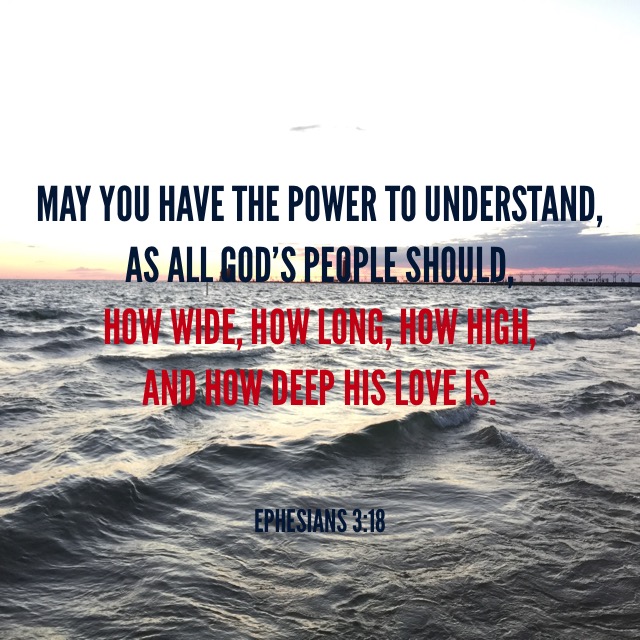
May we add our Amen to the apostle Paul’s prayer: I keep asking that the God of our Lord Jesus Christ, the glorious Father, may give you the Spirit of wisdom and revelation, so that you may know Him better. … I pray that out of His glorious riches He may strengthen you with power through His Spirit in your inner being, so that Christ may dwell in your hearts through faith. And I pray that you, being rooted and established in love, may have power, together with all the Lord’s holy people, to grasp how wide and long and high and deep is the love of Christ, and to know this love that surpasses knowledge—that you may be filled to the measure of all the fullness of God. (Ephesians 1:17; 3:16-19)

10 Quotes From “The Sermons Of Charles Spurgeon”

I share lengthy passages from Charles Spurgeon’s sermons in my weekly Thursdays With Spurgeon feature, along with my short commentaries. But here are some individual quotes from the prince of preachers who were just too good to not share! 

“Would you lose your sorrows? Would you drown your cares? Then go to plunge yourself in the Godhead’s deepest sea—be lost in His immensity. And you will come forth as from a couch of rest, refreshed and invigorated.” 

“Blessed be His dear name, He is unchanged in His love. When He first wrote the covenant, how full His heart was with affection to His people. He knew that His Son must die to ratify the articles of that agreement. He knew right well that He must rend His Best Beloved from His heart and send Him down to earth to bleed and die. He did not hesitate to sign that mighty covenant. Nor did He shun its fulfillment. He loves as much now as He did then. And when suns will cease to shine and moons to show their feeble light, He still will love on forever and forever.” 

“We sweat, we toil, and we fail. How often do we come back weeping because we have toiled, as we think, without success! Yet, Christian man, you have not been without success, for ‘He is still in one mind.’ All this was necessary to the fulfillment of His one purpose. You are not lost; your labor has not rotted under the clod. All, though you see it not, has been working together toward the desired end.” 

“Creation is an arrow from the bow of God, and that arrow goes on, straight on, without deviation to the center of the target that God ordained that it should strike.” 

“Though in the dark hours you and I may slip and often fall, yet His loving-kindness changes not. Your strong arm, O God, will bear us on. Your loving heart will never fail. You will not turn your love away from us or make it cease to pour upon us Your fierce anger, but having begun You will complete the triumphs of Your grace.” 

“God calls upon us, until the world is utterly destroyed with fire, to go on saving men with all our might and main. Every year that passes is meant to be a year of salvation. We rightly call each year the year of our Lord. Let us make it so by more earnest efforts for the bringing of sinners to the Cross of Christ.” 

“The very fact that you are made to groan and cry by reason of God’s long-suffering to guilty men gives you sympathy with Christ and union with Christ, who endured such contradiction of sinners against Himself! … But when, through the long-suffering of God with the ungodly, you are made to suffer, account it to be a mark of your salvation. ‘Rejoice and be exceedingly glad, for great is your reward in heaven, for so they persecuted the prophets who were before you’ (Matthew 5:12).” 

“Blessed be God, the effect of Christ’s medicine does not depend upon the degree to which we can realize how it acts, but if we receive it by faith, if it penetrates into the heart, if it takes possession of the affections, it will work in us that wondrous change by which we will be delivered from the love of sin and saved both from its condemnation and its power! Thank God for a simple gospel!” 

“Although our Lord Jesus Christ is more perfect than any other example—indeed, the only perfect example—yet it is easier to imitate Christ than it is to imitate some of the best of His people.” 

“Because the pill is gilded, you suck down the poison. Because the thing is popular, you patronize it, though it is lustful, it is abominable, it is deceitful!” 

More quotes coming soon, so stay tuned!