Poetry Saturday—The Bag

Listen to the podcast of this post by clicking on the player below, and you can also subscribe on AppleSpotify, or Audible.

Away despair! my gracious Lord doth heare.
         Though windes and waves assault my keel,
         He doth preserve it: He doth steer,
         Ev’n when the boat seems most to reel.
         Storms are the triumph of His art:
Well may He close His eyes, but not His heart.

Hast thou not heard, that my Lord Jesus di’d?
         Then let me tell thee a strange storie.
         The God of power, as He did ride
         In His majestic robes of glorie,
         Reserv’d to light; and so one day
He did descend, undressing all the way.

The starres His tire of light and rings obtain’d,
         The cloud His bow, the fire His spear,
         The sky His azure mantle gain’d.
         And when they ask’d, what He would wear;
         He smil’d and said as He did go,
He had new clothes a making here below.

When He was come, as travellers are wont,
         He did repair unto an inne.
         Both then, and after, many a brunt
         He did endure to cancell sinne:
         And having giv’n the rest before,
Here He gave up His life to pay our score.

But as He was returning, there came one
         That ran upon Him with a spear.
         He, who came hither all alone,
         Bringing nor man, nor arms, nor fear,
         Receiv’d the blow upon His side,
And straight He turn’d, and to His brethren cry’d,

If ye have any thing to send or write,
         I have no bag, but here is room:
         Unto my Father’s hands and sight,
         Beleeve Me, it shall safely come.
         That I shall minde, what you impart;
Look, you may put it very neare My heart.

Or if hereafter any of My friends
         Will use Me in this kinde, the doore
         Shall still be open; what he sends
         I will present, and somewhat more,
         Not to his hurt. Sighs will convey
Any thing to Me. Harke, Despair away. —George Herbert (**spelling is 1663 English**)

►► Would you please prayerfully consider supporting this ministry? My Patreon supporters get behind-the-scenes access to exclusive materials. ◀︎◀︎

Year-End Review (2021 Edition)

I have the privilege of pastoring Calvary Assembly of God. One of the things I am honored to do is share a message from God’s Word with our church each week. And nor just teaching, but reminding folks of whatwe have learned too. The apostles Peter and Paul both saw the value in this as well.

So here are all of the sermon series that I shared in 2021. Clicking on each series title will take you to a list of all of the sermons in that series. 

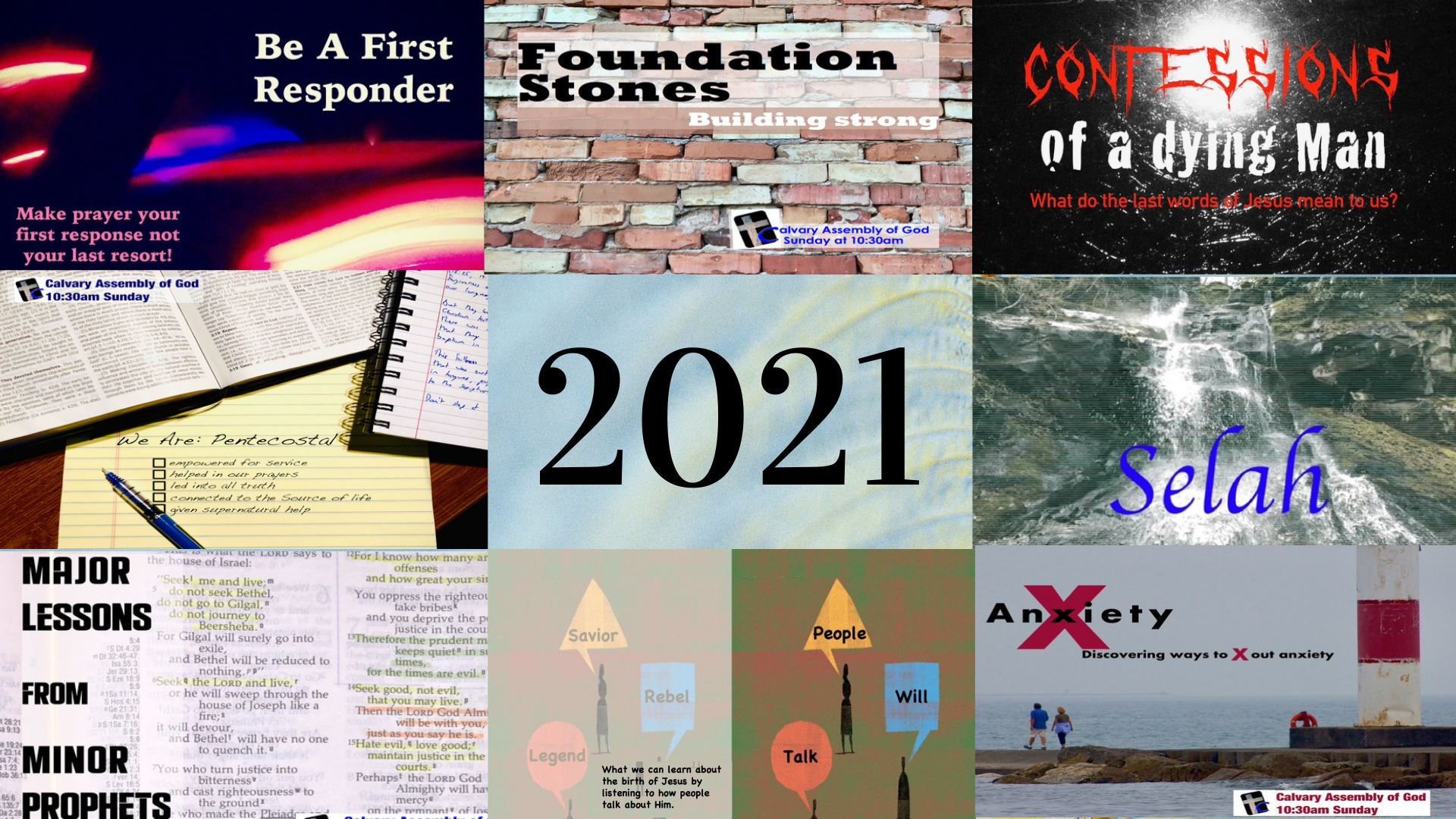
Foundation Stones—Any architect will tell you: You can’t build a great building on a weak foundation. This is just as true in the spiritual realm, which is why John Calvin warned, “Those who are strong only in fervor and sharpness, but are not fortified with solid doctrine, weary themselves in their vigorous efforts, make a great noise…[and] make no headway because they build without foundation.” We have had on the Calvary website since Day 1 a link to “What we believe,” but more than just having them listed there, it is important to discuss them.

Be A First Responder—There is a line in an old hymn that convicts me every time I sing it: “Oh, what peace we often forfeit; Oh, what needless pain we bear all because we do not carry everything to God in prayer.” Why are we so slow to drop to our knees in prayer when trouble strikes? It seems we fool ourselves into thinking the problem is small enough to handle on our own, or we think God isn’t concerned with something that may seem trivial, or we’ve been-here-done-this before and know the way to go. But this isn’t what our Heavenly Father desires; instead, He wants us to come to Him before we try anything else. Instead of making prayer our last resort, why don’t we strive to make it our first response!

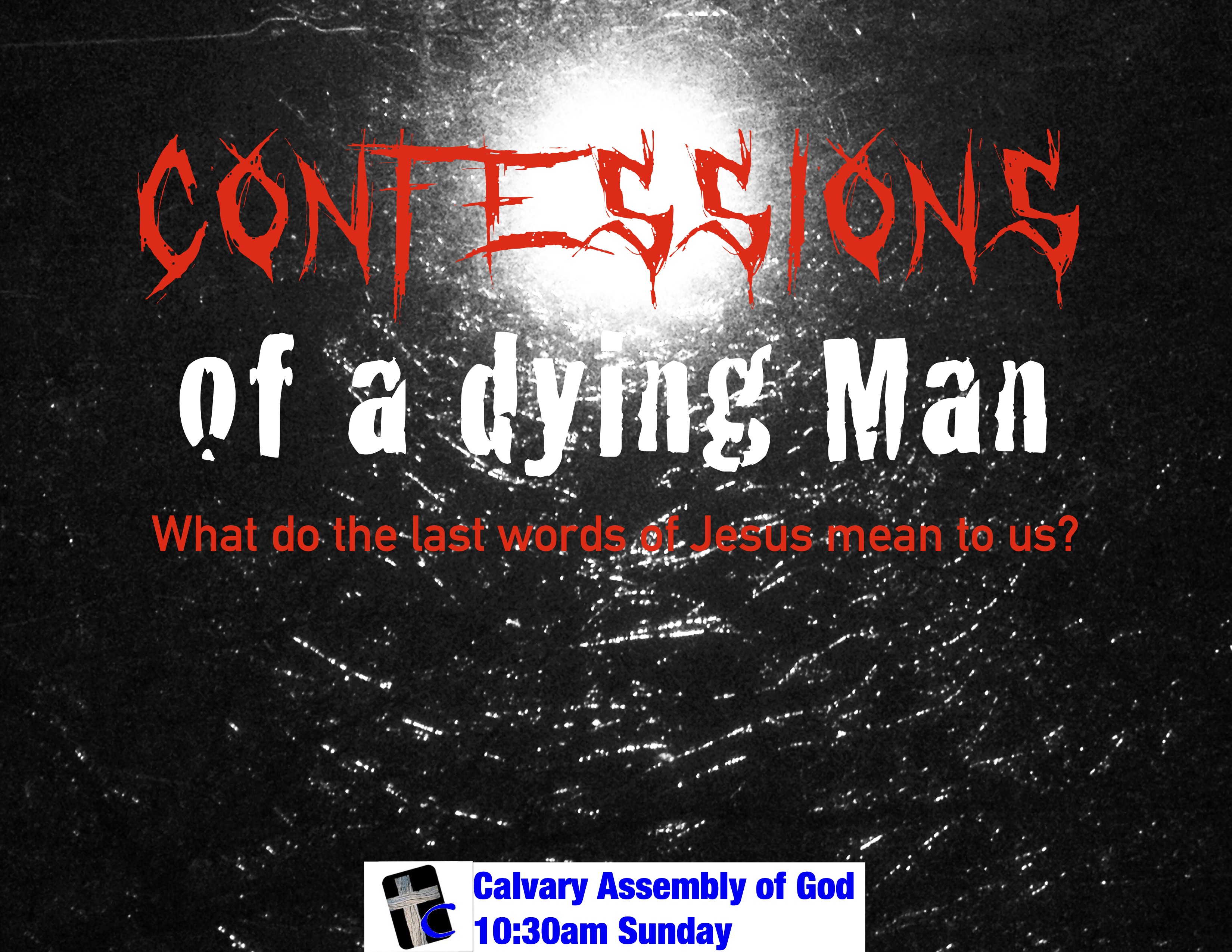
Confessions Of A Dying Man—In our justice system, rarely will a judge allow hearsay testimony to be introduced in court. But there is one notable exception: a dying declaration. A dying declaration is the statement of a mortally injured person who is aware he or she is about to die. This statement is admissible testimony in court on the theory that a dying person has no reason not to tell the truth. Jesus was nailed to a Cross. Mortally injured, unable to escape, He had no reason to lie. In His dying moments, struggling to get enough air in His lungs to be able to speak, Jesus choked out seven statements that still have a profound impact on us today.

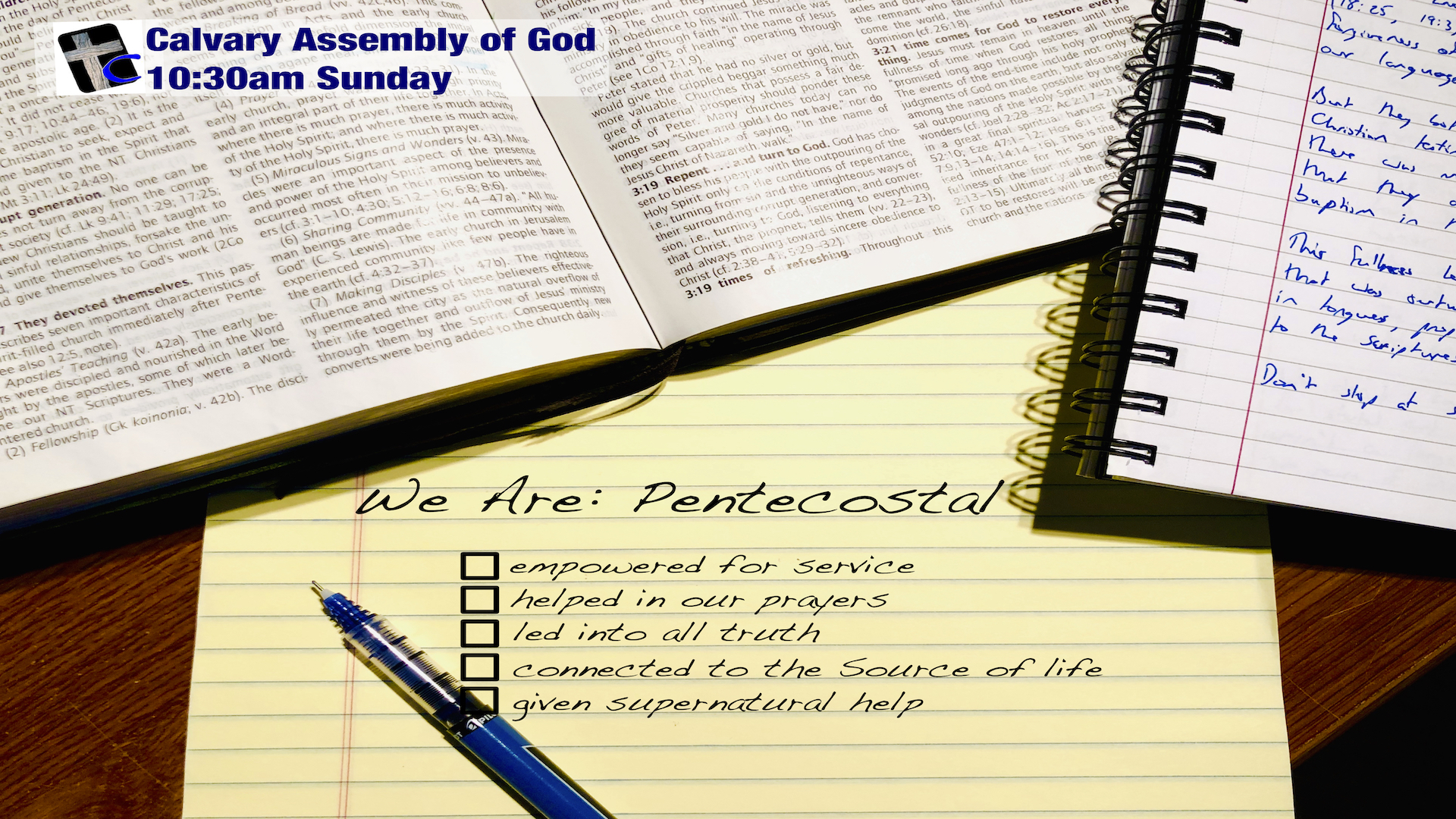
We Are: Pentecostal—Pentecost for over 1500 years was a celebration in Jerusalem that brought in Jews from all over the world. But on the Day of Pentecost that came just ten days after Jesus ascended back into heaven, the meaning of Pentecost was forever changed! Followers of Jesus—now empowered by an infilling of the Holy Spirit—began to take the good news of Jesus all over the world. These Spirit-filled Christians preached the Gospel and won converts to Christ even among hostile crowds, performed miracles and wonders, stood up to pagan priests and persecuting governmental leaders, and established a whole new way of living as Christ-followers. We, too, can be Pentecostal followers of Jesus Christ today. 

Selah—The word Selah appears nearly 70 times in the Bible, almost exclusively in the Psalms. Although it is primarily a musical term, it applies beautifully to our summer series. It means a pause. Throughout the Psalms, Selah appears at the end of a verse, at the end of the psalm, or sometimes even mid-sentence. But each one of them is perfectly placed by the Spirit-inspired authors to get us to take a breath and deeply contemplate what we just read or sang. 

Major Lessons From Minor Prophets—Sometimes the naming of things gives us an inaccurate picture of the thing being named. For instance, many people think the “old” in Old Testament means outdated or perhaps updated by the “new” in the New Testament. When in fact, both Testaments are needed to give us the full picture of God’s love and glory. A similar thing happens with the headings “major prophets” and “minor prophets.” It makes it sound like the major prophets have something major to say to us, while we could take or leave the minor messages of the minor prophets. In reality, they were given these headings simply because of the volume of writing—the five major prophets consist of 182 chapters, whereas the 12 minor prophets only have 67 chapters. The volume of their writing may be minor, but their content carries major messages of meteoric power! 

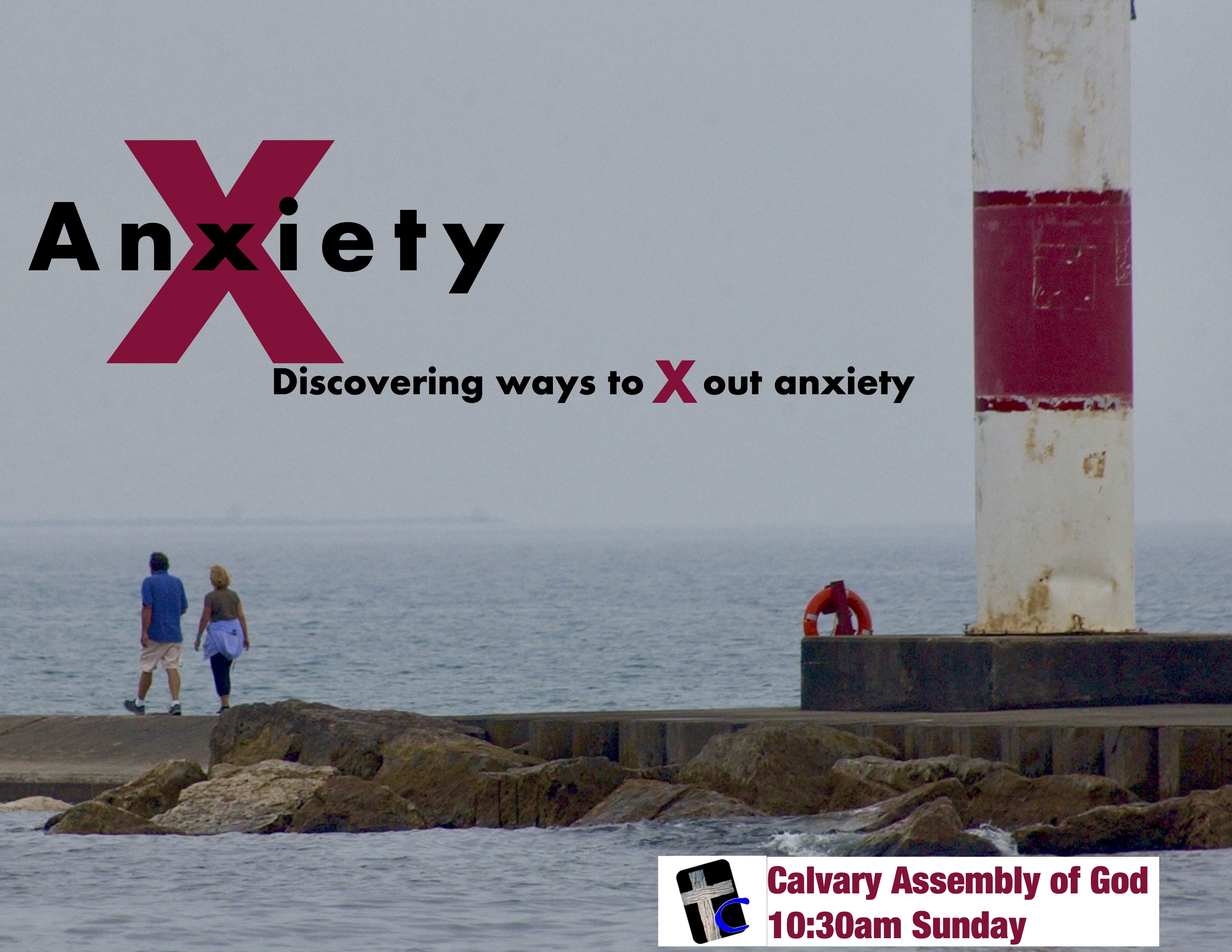
X-ing Out Anxiety—Two brothers—one a doctor and one a pastor—addressed the prevalence of anxiety in our culture. They wrote, “A recent survey of primary care physicians in the United States revealed that at least one-third of office visits were prompted by some form of anxiety.” Anxiety can negatively impact our relationships, our ability to think creatively, our physical health, and even our relationship with God. Thankfully, one of the titles given to Jesus is The Prince of Peace. Join us for this freeing series called X-ing Out Anxiety, where we will be learning what God’s Word says about getting free from the anxiety that is robbing us of life, and replacing that anxiety with His peace.

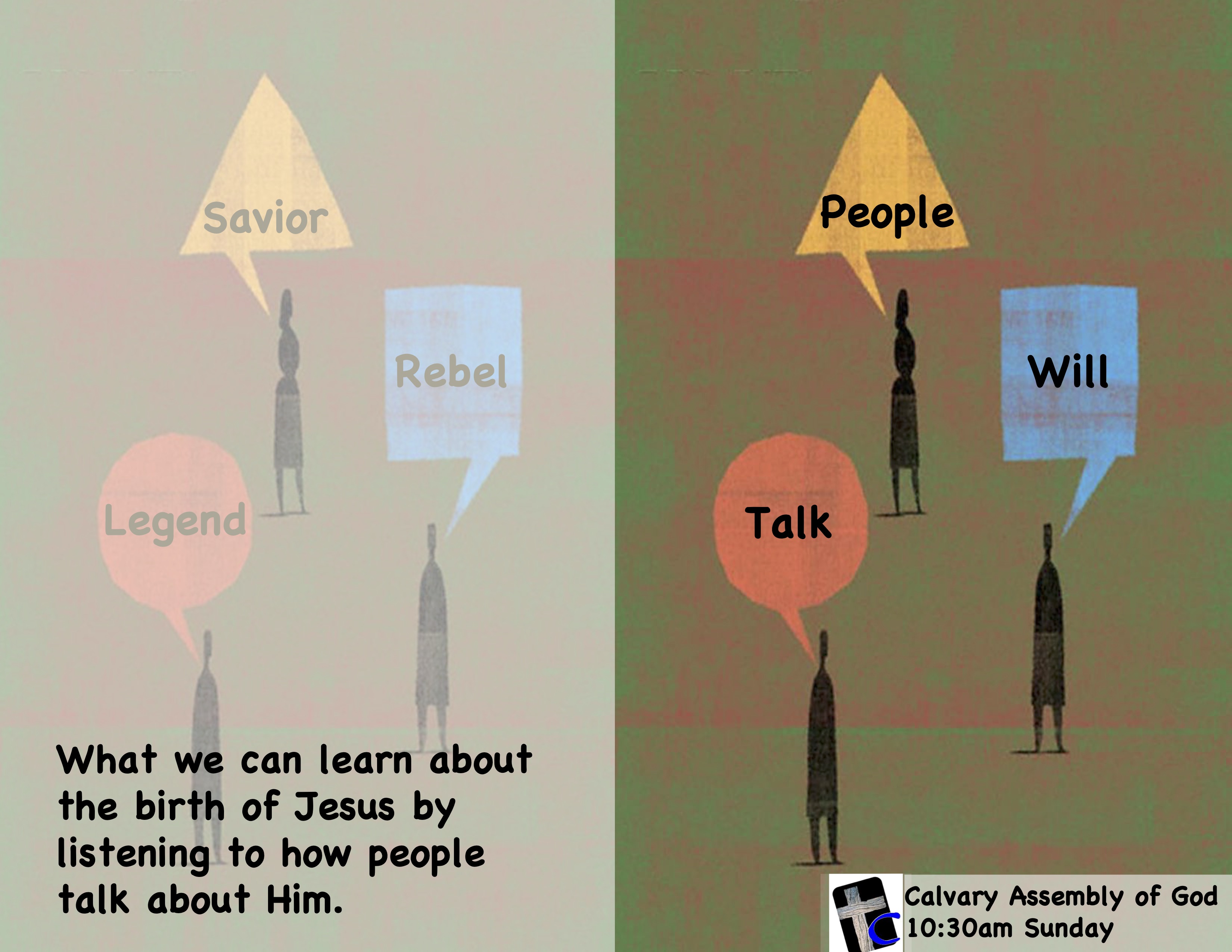
People Will Talk—Sometimes celebrities and other people in the public spotlight will hire a publicist to help promote their cause, build their brand, or present them in the best possible light. If you wanted to stretch the terms, you could say that some of the Old Testament prophets and the New Testament disciples could have been viewed as the “publicists” for Jesus. At least, that’s what critics might point to. But despite the best efforts and high salaries of publicists—both ancient and modern—they cannot control the “word on the street.” What people are actually saying about the one in the spotlight is usually the best evidence of who that person truly is. As we celebrate this Advent season, we are going to look at what the people on the street were saying about Jesus at the time of His birth. Before He ever performed a miracle or presented a parable—before any of His “publicists” could try to make Him look good—people were already talking. And what they said about Him is truly enlightening.

We will be returning to a couple of these series in 2022, and we’ll be launching some brand new ones as well. In either case, if you don’t have a home church in the northern Kent County area, I would love to have you join us! 

Thursdays With Spurgeon—Such Love!

This is a weekly series with things I’m reading and pondering from Charles Spurgeon. You can read the original seed thought here, or type “Thursdays With Spurgeon” in the search box to read more entries.

Listen to the podcast of this post by clicking on the player below, and you can also subscribe on iTunes or Spotify.

Such Love!

     Our Savior so loved us that He stripped Himself of His robes of radiance. Listen, you children of God, it is the old story over again, but it is always new to you. He stripped Himself of His bright array. He laid aside His scepter and His crown and became an infant in Bethlehem’s manger among the horned oxen. Thirty years of poverty and shame the King of heaven spent among the sons of men, and all out of love to us. Jesus the heavenly lover, panting to redeem His people, was content to abide here without a place to rest His head that He might rescue us!

     Do you see Him yonder in the garden in His agony? His soul is exceedingly sorrowful even to death! His forehead, no, His head, His hair, and His garments are red with bloody sweat. Do you see Him giving His back to the smiters and His cheeks to them who pluck off His hair? See Him, as He hides not His face from shame and spitting, dumb like a sheep before her shearers and like a lamb that is brought to the slaughter! He opened not His mouth but patiently bore it all on our behalf. See Him with the Cross upon His mangled shoulders, staggering through Jerusalem’s streets, unwept for and unpitied, except by poor feeble women! 

     See Him, you who love Him, and love Him more as He stretches out His hands to the nails and gives His feet to the iron. See Him, as with power to deliver Himself He is made captive. Behold Him as they lift up the Cross with Him upon it and dash it down into its place and dislocate His bones. Hear that cry, ‘I am poured out like water, and all My bones are out of joint’ (Psalm 22:14). Stand, if you can, and view that face so full of grief. Look till a sword will go through your own heart as it went through His mother’s very soul. Oh, see Him as He thirsts and has that thirst mocked with vinegar! 

     Hear Him as He prays and has that prayer parodied, ‘Look, He is calling for Elijah! … Let us see if Elijah will come to take Him down’ (Mark 15:35-36). See Him as they who love Him come and kiss His feet and bathe them with their tears. Will you not love Him who did all that friend could do for a friend? He who gave His life for us?

From The Church’s Love To Her Loving Lord

My friend, if you don’t know Jesus as your personal Lord and Savior, I ask that you would consider this amazing act of love all for you. Jesus went through all of this for you! Won’t you accept His love and invite Him into your heart today? 

If you do have a personal relationship with Jesus, look again at your Beloved Savior. Let this love rekindle your heart to share Christ’s love with everyone around you.

►► Would you please prayerfully consider supporting this ministry? ◀︎◀︎

“Father, Into Your Hands I Commit My Spirit”

Listen to the podcast of this post by clicking on the player below, and you can also subscribe on Apple or Spotify.

I have some sobering news for you: You are going to die. 

Death is the great equalizer. It comes for the rich and poor, the scholar and the illiterate, all races, all ages, the healthy as well as the sick. Unless you’re still alive when Jesus comes back again, your odds of dying are 1-in-1. 

What happens “on the other side”? What happens after this life is over? Since it seems dark and mysterious to most people, they tend to ignore it until it’s thrust upon them. That’s why I find the dying words of people interesting. Like P.T. Barnum asking, “How were the receipts today at Madison Square Garden?” or W.C. Fields reading a Bible on his deathbed and telling a friend, “I’m looking for a loophole.” 

Or the very last words of Jesus: “Father, into Your hands I commit My spirit.” 

Jesus is steeped in Scripture, so nearly everything He says in His final four declarations come directly from the Psalms, including His final phrase which comes from Psalm 31:5. 

When Jesus broke a three-hour silence with His cry, “My God, My God, why have You forsaken Me,” both Matthew and Mark use the Greek words megas phoné to describe how loudly Jesus spoke. And now with His final words, Luke uses the same megas phoné description. 

Notice in the first megaphone cry Jesus calls on God the All-Powerful Creator. And with His last megaphone declaration, He calls on His Father who is All-Loving. How comforting it is to know that God is both All-Powerful and All-Loving! Not only can He answer our cries, but He delights to answer them! 

The word Jesus uses for “commit” is in the future tense and it means “to entrust as a deposit.” Jesus believed that God was going to do more than just give Him life again, but that He would give life to all who would believe in Him. 

Unlike atheist Bertrand Russell who said, “I would never die for my beliefs because I might be wrong,” Jesus DID die for His beliefs, and by rising from the dead proved He was right in trusting God. 

Job saw an inescapable death for all mankind, but he also foresaw the forgiveness of God (Job 14:5, 16-17). Jesus died once for all mankind and was then resurrected, bringing about the death of death by making forgiveness accessible to anyone (Hebrews 9:27-28; 1 Corinthians 15:19-22). 

We can now have the peace that comes from trusting the only One to Whom we can safely entrust our souls. Because Jesus brought death to death, we can have the same peace when we die that Jesus had when He died. 

With faith in Jesus, you can…

…live today knowing you’re invincible until God calls you home 

…live today full of joy because your home in heaven is secure

…live your very last day in peace because you know to Whom your soul is entrusted 

Because Jesus died at peace with God, we can face death triumphantly! 

If you’ve missed any of the messages in our series on the dying declarations of Jesus, you can access the full list by clicking here.

►► Would you please prayerfully consider supporting this ministry? ◀︎◀︎

“I Am Thirsty”

Listen to the podcast of this post by clicking on the player below, and you can also subscribe on Apple or Spotify.

Jesus has just broken a 3-hour silence with His megaphone-voice cry: “My God, My God, why have You forsaken Me?” Now His final three statements will follow in rather short order, beginning with, “I am thirsty.”

It might seem trivial that Jesus expressed His desire for a drink, especially since He also knew that there was no thirst-quenching water nearby. Far from being trivial, however, this was eternally important because it completed His mission. 

Before saying, “I am thirsty,” John tells us that Jesus knew “that all was now completed.” The Greek word for know is sometimes translated as “see” and sometimes “know.” When it’s “see” it’s always in the past tense—“saw” or “have seen.” Perhaps in His 3-hour silence, Jesus was reviewing His earthly life, looking back to see what He had accomplished. Make no mistake about it, Jesus was on-mission for all 30+ years of His life in Israel. 

But now that He has seen His life, He “knows.” This word is in the perfect tense. He’s seen it all and He knows He has accomplished all He set out to complete. As He had told His audience earlier in His life, “For assuredly, I say to you, till heaven and earth pass away, one jot or one tittle will by no means pass from the law till ALL is fulfilled” (Matthew 5:18). 

In looking back on His life, Jesus saw one final thing: He needed to be given vinegar to drink just as David prophesied (Psalm 69:13-21). With that sour sip, ALL the Ts are crossed and ALL the Is are dotted! 

When John writes, “Knowing all was now completed, and so the Scripture would be fulfilled,” he uses the Greek word which means mission accomplished! 

Why did Jesus need to fulfill ALL the prophecies and complete ALL the law? Check out His earlier statement from the Amplified Bible: “For truly I tell you, until the sky and earth pass away and perish, not one smallest letter nor one little hook identifying certain Hebrew letters will pass from the Law until all things it FORESHADOWS are accomplished.” 

The law was just our temporary guardian and the temple practices were just a shadow of the realities of Heaven (see Galatians 3:23-25; Hebrews 10:1-10). ALL of them were merely pointing to Jesus, so Jesus made sure ALL of them were completed. 

His “I am thirsty” statement was really His “Amen” to His completed mission. 

Jesus fulfilled every Scripture so that we could stand on every promise! 

Check this out: “For no matter how many promises God has made, they are ‘Yes’ in Christ. And so through Him the ‘Amen’ is spoken by us to God” (2 Corinthians 1:20). 

The shadows of the law were turned into the substance on which we can come boldly before the throne of God’s grace! In just three words—“I am thirsty”—Jesus completed His mission for God’s glory and for our eternal help! 

If you’ve missed any of the messages in our series on the dying confessions of Jesus from the Cross, you can access the full list by clicking here.

►► Would you please prayerfully consider supporting this ministry? ◀︎◀︎

“My God, My God”

Listen to the podcast of this post by clicking on the player below, and you can also subscribe on Apple or Spotify.

Jesus has been hanging on the Cross silently for three hours. And now He gathers His strength for four final statements that all come in pretty close proximity. His first three dying declarations have been declarations of love:

But now comes a word of sheer, unparalleled agony. A word from a heart that is experiencing the depths of betrayal and pain that has never been known—or even approached—in all of human history: Eloi, Eloi, lama sabachthani! (Matthew 27:45-46; Mark 15:33-34)

Does this sound like a good Friday message: My God, My God, why have You forsaken Me? 

This is the only one of the seven dying declarations of Jesus that Matthew and Mark record, and they do it nearly identically: 

  • It’s spoken in the everyday language of the people: Aramaic 
  • It’s translated into the worldwide language of business and literature: Greek 
  • It’s a direct quotation of Hebrew Scripture 

This is a word for everyone: Jews and Greek, nobles and commoners, religious people and pagans. 

This dying declaration comes from words taken directly from Psalm 22. David wrote this psalm 1000 years before the crucifixion of Jesus, but note the amazing accuracy in the despicable treatment of Jesus, gambling for Christ’s clothes, even the crucifixion itself (which was unknown in David’s time), and then there’s the heart-wrenching cry My God, My God, why have You forsaken Me?  

Matthew and Mark say Jesus “cried out.” This can mean a cry of joy or a cry of pain. They also record that He cried out with “a loud voice.” The Greek words here will sound very familiar even to English ears—“loud” is the word megas, and “voice” is the word phoné. Literally: Jesus raised a megaphone voice to make sure everyone heard His cry! 

Remember that cried out can either be a cry of joy or of pain? Which one was it? You could make the case that it is both of these meanings. But there is a third way of using this word: a cry for help. 

Jesus is about to take a plunge. He is about to descend deeper than anyone else ever has. He is about to voluntarily go into Hell itself. This megaphone cry is His battlecry before storming the gates of Hell! 

Christ’s megaphone battlecry was heard in Hell and in Heaven as Jesus descended to decisively defeat hell, death, and the grave! Make no mistake, Jesus undoubtedly won that battle! That same descriptive word megas is also used for… 

  • …the stone in front of His grave is a megas stone 
  • …the earthquake that rolled away that stone on Resurrection morning was a megas earthquake 
  • …the joy of Christ’s friends at seeing the tomb empty was a megas joy 
  • …the trumpet sound at Christ’s Second Coming when He returns to earth as the Conquering King will be a megas blast, and His shout a megaphone cry (Matthew 24:31; 1 Thessalonians 4:16)! 

Jesus went to the deepest depths to take us to the highest heights! 

His megaphone declaration from the Cross on Good Friday was a cry of pain over our sin, a battlecry as He stormed the gates of Hell, and a cry of joy over His coming victory! 

So now we can say, “Where, O Death, is your victory? Oh yeah, you don’t have one because my Savior has totally defeated you!” 

If you’ve missed any of the other dying declarations of Jesus from the Cross, you may access the full list by clicking here.

►► Would you please prayerfully consider supporting this ministry? ◀︎◀︎

“Dear Woman”

Listen to the podcast of this post by clicking on the player below, and you can also subscribe on Apple or Spotify.

The crucifixion of Jesus lasted about six hours. This was mercifully short compared to what typically happened to crucifixion victims. It was hard enough for Jesus to get enough air just to breathe, let alone enough air to talk, so His words are few but precious! From 9:00 until about noon, He speaks three times; from noon until about 3:00, He has no recorded words; at 3:00 there are four final statements that come pretty close together. 

As Jesus speaks His final declaration before wordlessly suffering for the next three hours, let’s take a look at who was there. They were people who deeply cared about Jesus, and people about whom Jesus deeply cared: His mother, His aunt, the mother of one of His disciples, Mary Magdalene, and His beloved disciple John. 

Also notable was who wasn’t present on Golgotha: none of Christ’s siblings or other close relatives. 

This last word from Jesus before His long silence was an incredibly loving word. As the oldest of His siblings, and with His earthly father Joseph dead, Jesus had head-of-the-household responsibilities, especially the care of His mother Mary. 

When Jesus speaks to her, He says, “Dear woman.” This is a term of kindness, respect, and endearment. To both His mother and to John, there is a Greek word that is omitted in some English translations of the Bible: Behold. Since Christ’s words were at a premium, this word was Jesus saying, “Listen very closely. Pay careful attention to this important word I’m about to speak.” 

To His mother, Jesus says, “Dear woman, behold your son.” Jesus was saying, here is one on whom you can depend. And to His dear friend Jesus says, “Behold your mother.” Literally, Jesus was asking John to care for Mary as though she were his own biological mother. 

Think about the dying declarations we’ve already heard. To those who treated Him so horribly, Jesus said, Father, forgive them.” This was a word of forgiveness that required agape love. To the hardened criminal crucified next to Him, Jesus said, “Today you will be with Me in paradise.” This was a word of salvation that also required agape love. 

Agape love is only possible in a regenerated heart. It’s an utterly selfless love that Jesus described this way: “Greater love has no one than this: to lay down one’s life for one’s friends” (John 15:13). To forgive the unforgivable, to grant salvation to a lifelong criminal, takes the other-worldly agape love. We expect this from Jesus. 

But there are two other loves in this scene. When Jesus says, “Dear woman,” He is expressing this natural love of son to mother. This Greek love is labeled storgé. C.S. Lewis calls this “the most natural, emotive, and widely diffused of loves.” To His dear friend John, Jesus speaks a word of philos love. C.S. Lewis says philos is “the love between friends as close as siblings in strength and duration [and] the least natural of loves.” 

Jesus cared deeply for His mother and He deeply trusted His friend John. This tells me an important truth: Jesus doesn’t just care about spiritual things. 

In fact, there isn’t anything that you care about that Jesus doesn’t feel too: “He had to be made like [us] fully human in every way” (Hebrews 2:17). 

Sadly, I think we frequently hold on to some cares because we think they are too small or too insignificant—or maybe “unspiritual”—so we think they are unworthy of Christ’s attention. Let me say it again: There isn’t anything that you care about that Jesus doesn’t feel too! 

Jesus intercedes before the Father’s throne of grace on our behalf. He knows exactly what to ask for because He experienced all of our earthly pains Himself. Then the Father and Son send the Holy Spirit into our hearts to give us the love and strength we need (see Hebrews 4:14-16; Romans 5:5). 

When Jesus showed us His full love—storgé, philos, and agape—He made it possible for us to fulfill His command: “A new command I give you: Love one another. As I have loved you, so you must love one another. By this everyone will know that you are My disciples, if you love one another” (John 13:34-35). 

Jesus showed every kind of love so that we can live every kind of love! As we live as love-filled people, we show others the path to Christ’s love for their own love-starved hearts. 

Jesus spoke this loving declaration from the Cross to show us that His love covers any need that we have to encounter. Let me repeat it again so that you don’t forget it: There isn’t anything that you care about that Jesus doesn’t feel too!

If you’ve missed any of the other messages in our series on the dying declarations of Jesus from the Cross, you can access the full list by clicking here.

►► Would you please prayerfully consider supporting this ministry? ◀︎◀︎

“Father, Forgive Them”

Listen to the podcast of this post by clicking on the player below, and you can also subscribe on Apple or Spotify.

In our system of law, special attention is given to someone’s dying declaration. If our legal system gives such weight to the last words of an imperfect man, it seems to me that we should take special note of the dying declarations of the only truly innocent Man who ever walked this earth: Jesus Christ. 

After being nailed to the Cross, the first dying declaration from Jesus was: Father, forgive them, for they do not know what they are doing (Luke 23:34). 

Let’s say that Billy is dying on a hospital bed after being fatally shot, and all he can muster the strength to do is point at Johnny and whisper, “He… shot… me….” We would know who the “he” was in that situation, but who exactly is the “them” in this declaration of Jesus? 

Who offended Jesus? Who mortally wounded Him? Who caused Him such anguish? Maybe it was…

  • His disciples who couldn’t stay awake to pray with Him 
  • Judas who betrayed Him with a kiss 
  • the nine disciples who ran away 
  • Peter who denied three times that he knew Jesus 
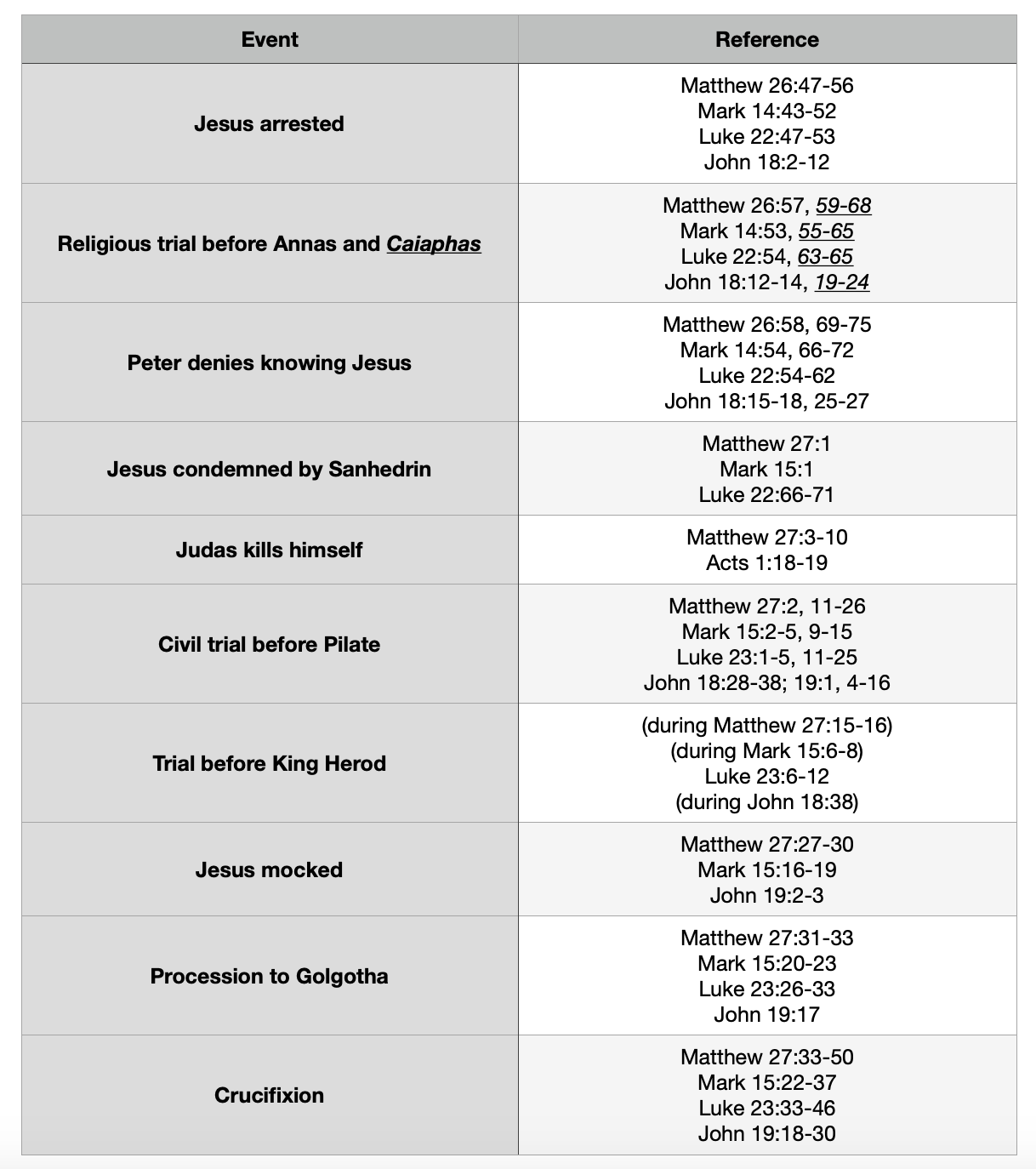
  • the false witnesses in Caiaphas’ house
  • the members of the Sanhedrin who hit Him and spit on Him 
  • the members of the Sanhedrin who were silent 
  • the temple guards who mocked Him 
  • those who spewed lies when Jesus stood before Pilate
  • those who lied about Jesus when He stood before Herod 
  • Herod and his soldiers who mocked Him 
  • the Roman soldiers who abused Him 
  • the Roman soldiers who stripped Him naked and crucified Him 

To all of the above, Jesus said, “Father, forgive them”!  

Listen to how Peter described the response of Jesus to all of this: When they hurled their insults at Him, He did not retaliate; when He suffered, He made no threats… (1 Peter 2:23). That word for insults means to heap abuse on Him or to pile on. This was a fulfillment of a 700-year-old prophecy: He was oppressed and afflicted… (Isaiah 53:7). Isaiah uses similar words, where oppressed means tyrannized, and afflicted means a humiliating, painful loss of dignity. 

Christ’s own disciples afflicted Him, and so did the temple guards, and Pilate, and King Herod, and the Roman soldiers… and you and me. All of this mistreatment and humiliation and tyrannizing was handed out by us too (see Isaiah 53:6; 1 Peter 2:24-25). That’s why His arms were spread so wide when He said, “Father, forgive them,” because there were so many that needed forgiveness! 

When Jesus said forgive, He was asking His Father to take away our guilt that kept us out of God’s presence. Think of a courtroom scene where God the Father is the Judge, satan is the prosecutor, Jesus is the victim, and I am the defendant. The evidence is overwhelming and incontrovertible, and I am pronounced guilty. My punishment is a death sentence. When Jesus says, “Father, forgive him,” He is taking the death penalty in my place! 

In another beautiful fulfillment of an Old Testament practice, Jesus became both our sin offering and our scapegoat, making atonement for us at the mercyseat in the Most Holy Place, and allowing us to be welcomed into God’s holy presence (Leviticus 16:15-16, 20-22; Hebrews 9:12-14). 

When Jesus said, “Father, forgive them,” He was saying, “Father, bring them into Your presence!” 

You and I need to accept by faith the atoning work done on the Cross, the forgiveness of sins that was purchased for us. Jesus didn’t come to condemn us, but to lovingly restore us, and for that we are eternally and humbly grateful. 

Please don’t miss out on any of these dying declarations from Jesus. You can find my thoughts on all of the confessions of this dying Man by clicking here.

►► Would you please prayerfully consider supporting this ministry? ◀︎◀︎

Confessions Of A Dying Man

In our justice system, rarely will a judge allow hearsay testimony to be introduced in court. But there is one notable exception: a dying declaration. 

A dying declaration is the statement of a mortally injured person who is aware he or she is about to die. This statement is admissible testimony in court on the theory that a dying person has no reason not to tell the truth. 

Jesus was nailed to a Cross. Mortally injured, unable to escape, He had no reason to lie. In His dying moments, struggling to get enough air in His lungs to be able to speak, Jesus choked out seven statements that still have a profound impact on us today. 

Here are the confessions of Jesus we have discussed:

The Deity And Divinity Of Jesus

Listen to the podcast of this post by clicking on the player below, and you can also subscribe on Apple or Spotify.

Some really silly guys did a series of videos called “Neature Walk” because they wanted to share how neat is nature! In episode one Vic sees a tree that he really likes and says, “Score! This is an aspen tree. You can that it’s an aspen tree because of the way it is.” This is either circular reasoning or an obvious statement. “Just look at this thing. You can tell it’s this thing because it looks and acts like this thing.” 

I feel a lot like this when I look at the first part of our third foundational truth statement: “We believe in the Deity of the Lord Jesus Christ.” (As a side note, I covered the second part of this statement—“As God’s Son, Jesus was both human and divine”—in another post, which you may find here.) 

Check this out: the definition for Deity is the divine character of God, and the definition for divine means things relating to the Deity. In saying we believe Jesus is God we are really saying, “You can tell that Jesus is God because of the way He is.” 

In order to make this definition work, we need evidence for both the divinity and the deity of Jesus. That being said, let me remind you of J. Warner Wallace’s instruction on faith. There is:

  • Blind faith—believing in something without evidence 
  • Unreasonable faith—believing in something in spite of the evidence 
  • Reasonable faith—believing in something because of the evidence 

Here is some evidence that I think makes it reasonable to believe that Jesus is divine:

  1. Virgin birth—Isaiah 7:14; Luke 1:34-35; Matthew 1:22-23 
  2. Sinless life—Isaiah 53:4-6, 9; Hebrews 7:26-27; 1 Peter 2:22 
  3. Miracles—Acts 10:38; 2:22-24 
  4. Death, resurrection, exaltation—Isaiah 53:10-12; Philippians 2:6-8; Hebrews 1:3 

(Check out all the Scriptural references listed above by clicking here.) 

I think the best evidence for the Deity of Jesus is the connection He Himself made between the “Jehovah” titles of the First Testament and His “I AM” statements in the Second Testament:

  • Jehovah Jireh (I Am Your Provider) → I am the Bread of Life (John 6:35)
  • Jehovah Rapha (I Am Your Healing) → I am the Resurrection and the Life (John 11:25-26)
  • Jehovah Nissi (I Am Your Source) → I am the Vine (John 15:5)
  • Jehovah Shalom (I Am Your Peace) → I am the Light of the world (John 8:12)
  • Jehovah Raah (I Am Your Shepherd) → I am the Good Shepherd (John 10:11)
  • Jehovah Sabaoth (I Am Your Wall Of Protection) → I am the Gate (John 10:9)
  • Jehovah Tsid-kenu (I Am Your Righteousness) → I am the Way, Truth, and Life (John 14:6)
  • Jehovah Shammah (I Am Here) → I am the Alpha and Omega (Revelation 1:8; 22:13). 

(Check out all the Scriptural references listed above by clicking here.)

The Jewish leadership understood perfectly what Jesus was claiming! But the more pertinent question is this: Do we understand what we must do with this evidence? 

We cannot claim that Jesus was born of a virgin, or lived a sinless life, or did miracles, or died and rose again and then not believe He is God. We cannot pick and choose the parts of Jesus we want. 

The apostle Paul reminded us that someday “at the name of Jesus every knee should bow, in heaven and on earth and under the earth, and every tongue acknowledge that Jesus Christ is Lord, to the glory of God the Father” (Philippians 2:11-12). 

Every knee will bow to Him one day: Either in worship of Jesus their Savior, or in abject terror of Jesus their Judge. 

I pray that you believe in Jesus as your Lord and Savior today… don’t wait another moment! 

►► Would you please prayerfully consider supporting this ministry? ◀︎◀︎

If you’ve missed any of the other messages in our Foundational Stones series, which is exploring our foundational beliefs, you may access all of them by clicking here.