Year-End Review (2025 Edition)

Listen to the podcast of this post by clicking on the player below, and you can also subscribe on AppleSpotify, or Audible. 

I like to take some time at the end of each calendar year to both look back and look forward. Throughout biblical history, whenever God was ready to take His people into a new chapter, He always took time for them to review the ground they had already covered. So as we get ready to go into 2026, here is a look back at the things God taught us in 2025 through these sermon series I shared with the wonderful folks at Calvary Assembly of God.

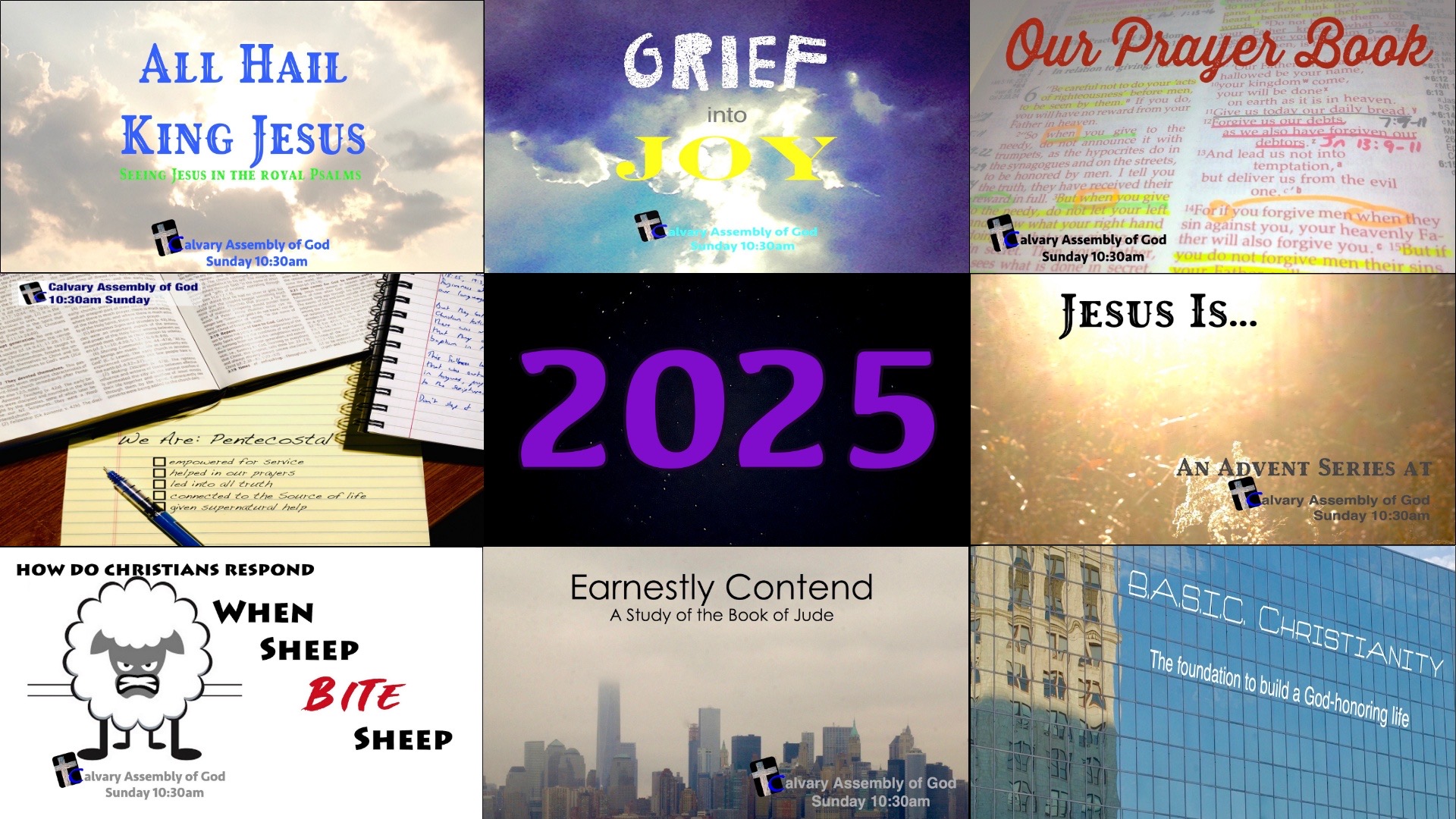
Our Prayer BookGod has given us an amazing Book! The Bible addresses the human condition—all our desires, frustrations, hopes, and the only path on which we can find eternal and unfading joy. The Bible not only tells us how to live, but it also tells us how to pray. And it’s as we pray that the principles in the Scripture come alive with fresh applications for our daily life. We don’t have to fumble around, attempting to find the right words to pray and then wondering if those prayers were heard on high. We can learn to pray in agreement with God’s perfect will. God has spoken to us through His Word, and He invites us to use His words to form our prayers back to Him. I love beginning each new year with a reminder of the power of prayer.

When Sheep Bite SheepNo one likes to be mistreated—especially when the one that hurts us is one we would have thought of as an ally or even a friend. These slights become even more painful when they take place inside the Christian community. When sheep bite sheep, our natural response is to lash out to try to even the scales of justice. But the Bible consistently and clearly calls Christians to pursue a supernatural response. This is a highly practical series of messages on how you can respond in a Christ-honoring way when you are bitten by another sheep in God’s pasture.

Grief Into JoyAt the end of your rope … down for the count … nothing but gray skies all around … unable to see any light at the end of the long, dark tunnel. Ever been there? The reality is, we all have been there. But the good news is that we don’t have to stay there! God is always at work to turn our apparent no-win, dark, hopeless situations into something bright and glorious! He is working in ways that no human mind could have dreamed up, and working on our behalf in a way no human power could ever hope to rival. God specializes in turning grief into joy! We are approaching the time of year where we remember the death of Jesus. Without a doubt that was the darkest, most grief-stricken day in all of history. Yet that time of mourning was completely forgotten in the overwhelming joy that exploded from an empty tomb on Resurrection Sunday!

We Are: PentecostalPentecost for over 1500 years was a celebration in Jerusalem that brought in Jews from all over the world. But on the Day of Pentecost which came just ten days after Jesus ascended back into heaven, the meaning of Pentecost was forever changed! Followers of Jesus—now empowered by an infilling of the Holy Spirit—began to take the good news of Jesus all over the world. These Spirit-filled Christians preached the Gospel and won converts to Christ even among hostile crowds, performed miracles and wonders, stood up to pagan priests and persecuting governmental leaders, and established a whole new way of living as Christ-followers. We, too, can be Pentecostal followers of Jesus Christ today. We can experience an anointing and an empowering in our lives that turns ordinary Christianity into extraordinary Christianity!

All Hail King JesusThe Bible closes with a vivid picture of Jesus as the undisputed King of kings, and we look forward to that time when all creation bows before Him. Even more so, we cannot wait to be with our King for ever and ever! The psalmists of Israel also foresaw the coming of this King, especially in the example they had in their King David. Many of the poetic words they penned esteemed Jesus as the King for Whom they longed. David himself not only saw the future coming of the Eternal King, but he also looked back in time to see Jesus reigning as King before time began. It is these royal psalms that we will be studying as we celebrate the first arrival on Earth of our King and as we anticipate the second coming of our Royal Majesty. The more clear our vision is of this King, the more we will worship Him, follow Him, and invite others to know Him as their own Lord and Master.

B.A.S.I.C. ChristianityWhen someone invites Jesus into their heart, they are immediately justified in God’s sight and have the assurance of Heaven as their eternal home. But then the question comes, “Now what?” Our justification is immediate but our sanctification is an ongoing, lifelong process. Sanctification is what brings fruitfulness to a Christian’s life and what allows that fruitful life to be a testimony to others. The Bible gives us the B.A.S.I.C.s of this Christian life, and that’s what we will be exploring over the next few weeks.

Earnestly ContendJude, the half-brother of Jesus, wrote a letter to the church. He said he was hoping to write about salvation, but looking at the conditions in the culture around him, he felt urged by the Holy Spirit to challenge Christians to “contend for the faith that was once for all entrusted to the saints.” What does this word “contend” mean for us today? Are Christians supposed to be combative about sharing their faith? Are they supposed to argue with anyone and everyone who disagrees with them on any point? Jude gives us Holy Spirit-inspired wisdom to understand how to deal with those who have departed from the purity of biblical truth.

What To Do In A CrisisLook back through the pages of history and you will see a common theme. Whether it’s world history or your own personal history, you have so much for which you can give thanks. In tough times, we tend to become forgetful because we are so focused on the intensity of the moment. But if we will simply look back in time, we will see just how faithful God has been to us. We bring our focus back to Him in our trying times when we remember and rehearse “the wonderful things He has done” (Psalm 107). The season of Thanksgiving is a good time for us to be reminded of the powerful resource we have when we are giving thanks for our blessings. Thankful people are confident people because they choose hope in God’s faithful provision over grumbling about their current circumstances.

Jesus Is…Over 700 years before He was born in Bethlehem, God spoke through the prophet Isaiah to describe the Messiah that was coming. Peter said that until the advent of Jesus, the prophets continued to scour the evidence of who this Messiah was going to be. When Jesus finally came to earth as a Man, young and old alike were thrilled to proclaim that the One they had been longing for had made His long-expected appearing! As Jesus lived on earth, died on Calvary, and was resurrected back to life, He continued to fulfill all that had been prophesied about Him. Isaiah said of Jesus: “He will be called Wonderful Counselor, Mighty God, Everlasting Father, Prince of Peace.” This Advent season we will take some time to unpack what each of these majestic titles mean. We will explore how Jesus demonstrates that He is truly worthy of each of these titles, and we will see how that knowledge should thrill our hearts as we celebrate His first Advent and eagerly long for His Second Advent.

If you live in northern Kent County and don’t have a home church, I would be thrilled for you to visit me at Calvary Assembly of God this year.

►► Would you please prayerfully consider supporting this ministry? My Patreon supporters get behind-the-scenes access to exclusive materials. ◀︎◀︎
Jesus Is Our King

Listen to the podcast of this post by clicking on the player below, and you can also subscribe on AppleSpotify, or Audible. 

When we talk about the Baby in the manger, there is often an aspect that we overlook, although it’s included in many of our Christmas carols—

  • born is the King of Israel 
  • come and worship Christ, the newborn King 
  • hark the herald angels sing, glory to the newborn King 
  • joy to the world, the Lord is come, let earth receive her King 

I think many of us bristle a bit at the idea of any king—especially someone claiming absolute authority as King of kings—because of our unpleasant experiences, or perhaps the stories we have heard from history. Lord Acton was right when he said, “Power tends to corrupt and absolute power corrupts absolutely.” Every monarch throughout history has established their kingdom by the strength of their sword: “Do things my way, or else!” Lord Acton went on to correctly add, “Despotic power is always accompanied by corruption of morality.” 

The kings of Isaiah’s day in Israel were nothing but evil, and the kings of Judah were becoming more and more ungodly with each successive generation. What about during the time Jesus was to be born? Luke 2:1 tells of Caesar Augustus. Augustus was born Octavian and he came to power after Julius Caesar was assassinated and after fighting against Mark Anthony and Cleopatra. Augustus claimed to restore the republic, but he really kept all the power to himself.

Matthew tells us of King Herod the Great and his despicable family tree (Matthew 2:1-3, 16). 

This is why we tend to distrust those who claim authority over us and demand from us our allegiance to them. So when Isaiah begins to tell of the coming Messiah (Isaiah 9:2-5) it sounds like a warlord wielding His powerful sword. 

(Check out all of the Scriptures in this post by clicking here.) 

But recall that the first time time Isaiah uses the Hebrew word shalom (peace) is in the titles of this King. Isaiah calls Him a Child and then gives Him such unexpected titles (Isaiah 9:6)! 

Isaiah says “the government will be on His shoulders.” The word misra (government) is only used twice in the Old Testament, here in vv. 6-7. The root word sara is also only used twice, and both times are related to Jacob the trickster being transformed into Israel, the one in whom there is no deception. This tells us that the Messiah is going to take the burden on Himself—He flips the Kingdom upside! Instead of all of us serving Him, He comes to serve us! 

This is why it’s called His government and peace and establishing and upholding it with justice and righteousness! 

This King of absolute power—the One Who is also called Mighty God—could overwhelm us with His unquestioned, unrivaled, and unapproachable power, but He came to be our King who makes peace. 

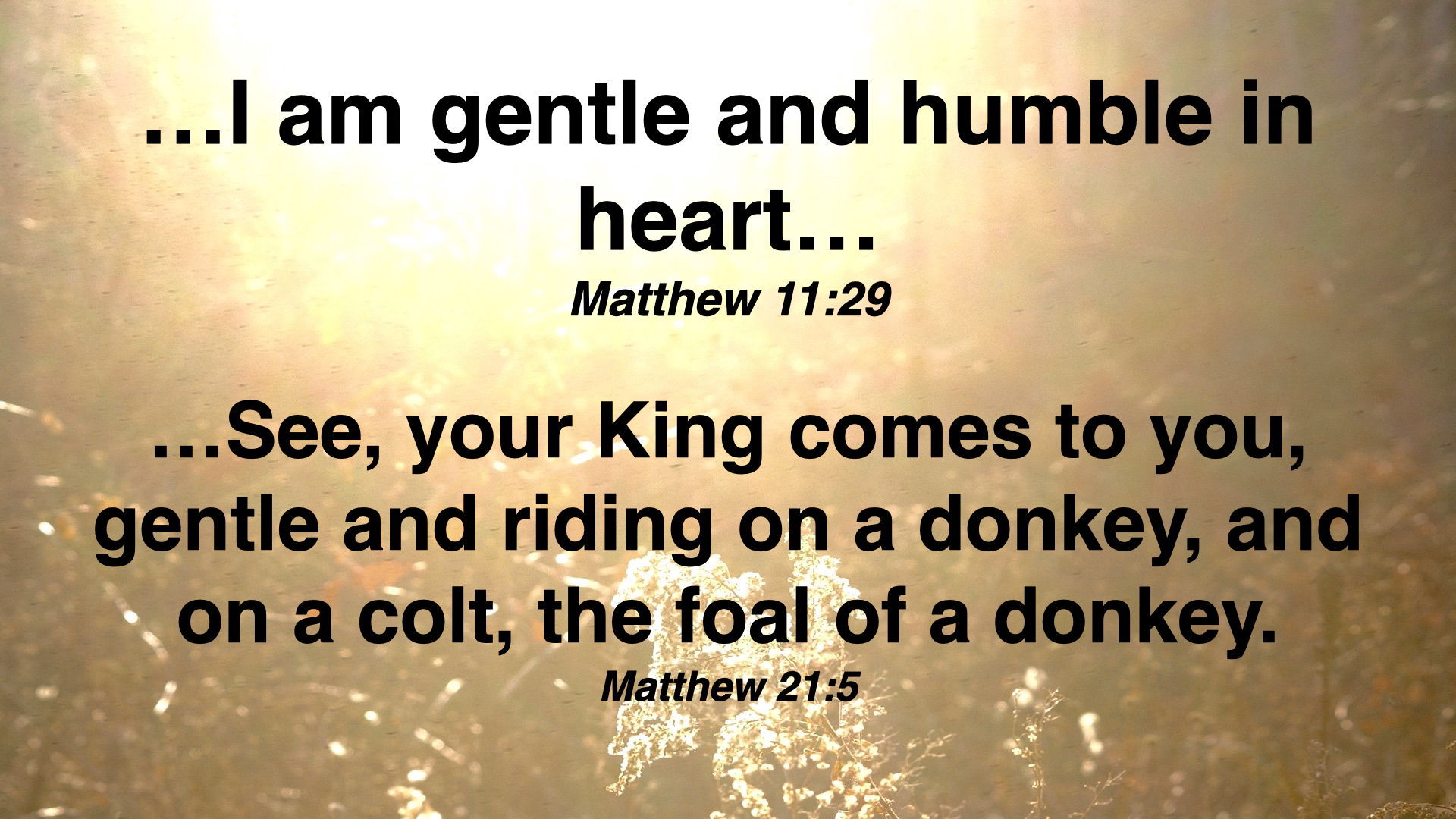
Our King is the most awesome power in the universe, but He is approachable because He is humble (Philippians 2:6-8; Isaiah 53:1-5; Matthew 11:29; Matthew 21:5). 

This is exactly what the angel foretold to Mary (Luke 1:26-33), and this is what Mary grasped, as she relates it to us in her Magnificat. Listen as she expresses praise for both our King’s power and His gentleness (vv. 46-55). 

Our King came to draw His sword not against us but against the enemy that kept us enslaved and separated from God (Isaiah 9:2-5; Colossians 2:13-15; Revelation 1:18). 

In Isaiah 9:6 we read that the government will be on His shoulders. This is Jesus carrying the burden. This word for “shoulders” in the OT is almost always associated with the words “burden” or “yoke.” 

We were born with the yoke of sin burdening us (Hebrews 2:15). Jesus took that on His shoulders when He took an old rugged Cross on His shoulders. Now He invites us to give our burden and our yoke to Him (Matthew 11:28-30). 

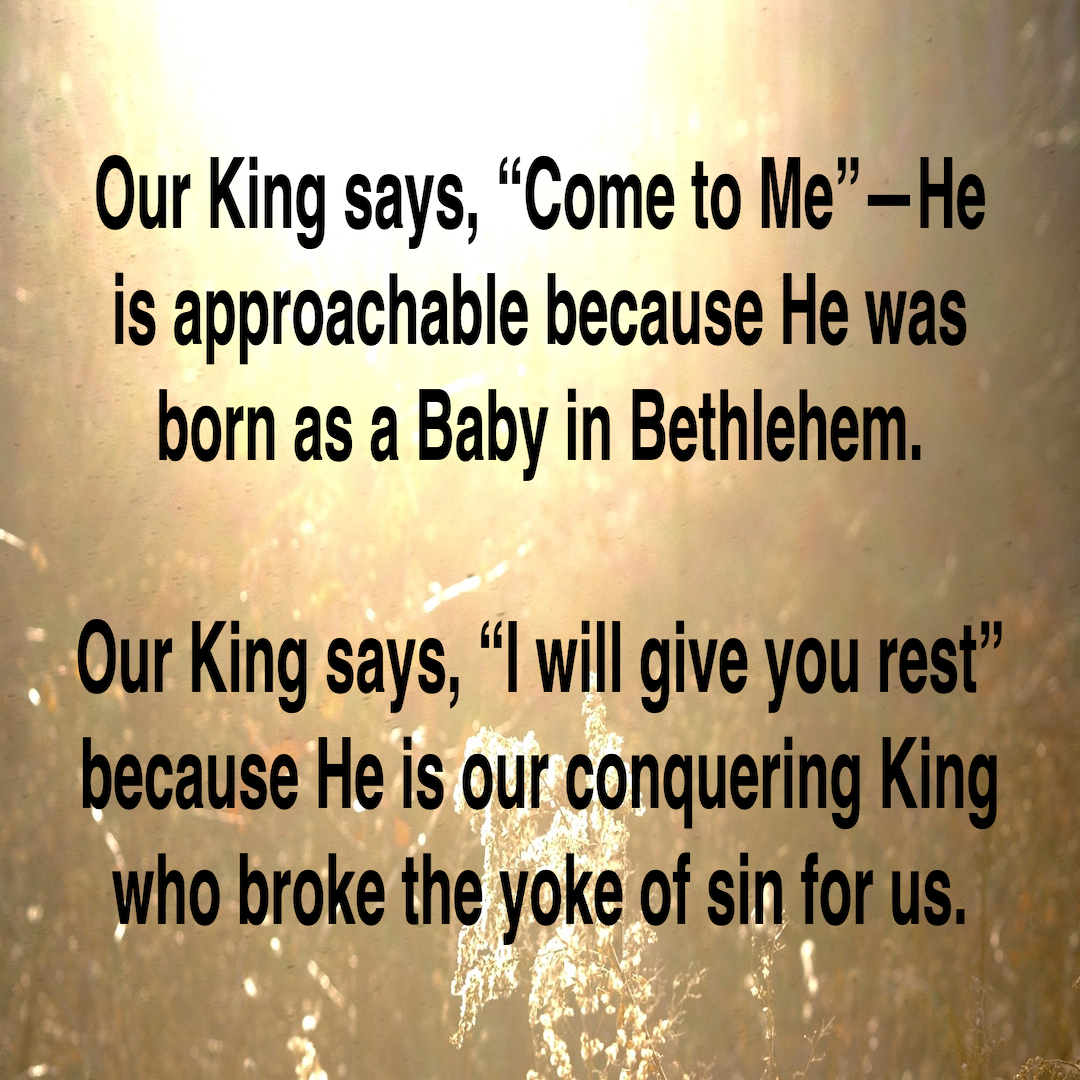
Our King says, “Come to Me”—He is approachable because He was born as a Baby in Bethlehem. Our King says, “I will give you rest” because He is our conquering King who broke the yoke of sin for us. This is what Christmas should remind us! 

If you’ve missed any of the previous messages in our series looking at the titles and roles of the Messiah, you can check them all out here. 

►► Would you please prayerfully consider supporting this ministry? My Patreon supporters get behind-the-scenes access to exclusive materials. ◀︎◀︎
Advent Quotes

“Joy doesn’t wait until everything is repaired and restored. It takes root in God’s presence and grows even in hard soil.

“Advent joy doesn’t mean everything is going well. It’s not shallow optimism or a quick distraction from pain. It’s the deep gladness of knowing God is near, faithful, and making all things new. 

“This joy doesn’t depend on circumstances. It flows from union with God. That means joy can live alongside sorrow. … 

“The Advent season invites us to practice this kind of joy. As we remain in God’s love and join his Kingdom work of generosity and mercy, we let joy overflow through our lives like a song that begins quietly now but will one day fill all creation.” —Bible Project’s Anticipating Christmas reading plan 

“No other story, no pagan legend or philosophical anecdote or historical event, does in fact affect any of us with that peculiar and even poignant impression produced on us by the word Bethlehem. No other birth of a god or childhood of a sage seems to us to be Christmas, or anything like Christmas.” —G.K. Chesterton 

“One incident in angelic history, the angelic pronouncement to shepherds in their fields, is enough to weld our hearts to them forever. How free from envy the angels were! Christ did not come from heaven to save their peers when they fell. When satan, the mighty angel, dragged with him a third part of the stars of heaven, Christ did not stoop from His throne to die for them; but He left them to be reserved in chains and darkness until the last great day. Yet angels did not envy men. Though they remembered that He took not up angels, yet they did not murmur when He took up the seed of Abraham; and though the blessed Master had never condescended to take the angel’s form, they did not think it beneath them to express their joy when they found Him arrayed in the body of an infant.” —Charles Spurgeon 

“Long had God promised the world’s redemption would come through the offspring who would sustain a bite to the heel yet, in the very act of battle, crush the serpent’s head. Even as kings and prophets pinned their hopes on the coming births of sons, God unfolds His master scheme of one Son to overshadow them all.

“A glimpse of this Son’s manifold greatness will be captured in His name (Isaiah 9:6), which turns out to be not singular but fourfold. He is Guide, Champion, Caretaker, and Peacemaker, and each of these paired with attendant glory.” —David Mathis 

“The manger of Bethlehem was big with God’s glory; in the incarnation was wrapped up all the blessedness by which a soul, snatched from the depths of sin, is lifted up to the heights of glory.” —Charles Spurgeon

Jesus Is Prince Of Peace

Listen to the podcast of this post by clicking on the player below, and you can also subscribe on AppleSpotify, or Audible. 

I opened an email this week and clicked on the link to login in to my auto and homeowner’s insurance account, and I was greeted on their website with this message, “Peace of mind is the best gift you can give yourself this season.” And I said to myself, “How perfect, because we are looking at the next prophesied name for Jesus which was given before He was born in Bethlehem: Prince of Peace.”   

Except there’s a huge problem here. Did you see it in that website message? “The best gift you can give yourself.” Quite frankly: I cannot give myself peace! Colossians 1:21 says, “Once you were alienated from God and were enemies in your minds because of your evil behavior.” All of us have sinned and are hopelessly destined for eternal punishment (Romans 3:23, 6:23a). 

(Check out all of the Scriptures in this post by clicking here.)

Thankfully, Romans 6:23 goes on to say “the gift of God is eternal life in Christ Jesus our Lord.” This is what the fourth prophesied title of Jesus foretells (Isaiah 9:6-7). 

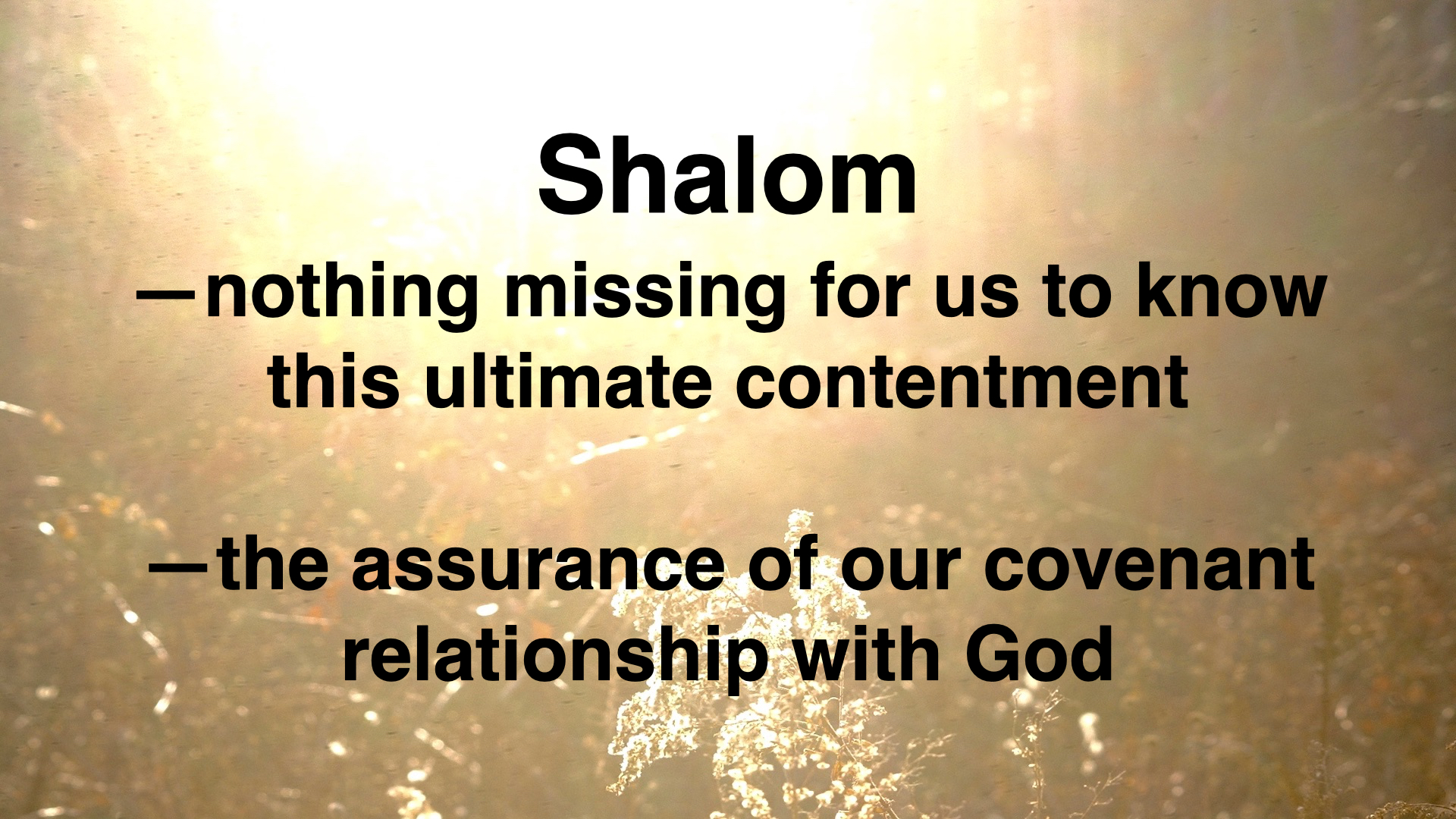
Prince means a Ruler or Overseer. Peace is the Hebrew word shalom which means completeness, soundness, and contentment. Some have described shalom as there being nothing missing for us to know this ultimate contentment. Many call this the assurance of our covenant relationship with God. 

Isaiah uses the word shalom quite a bit, but he uses it here in chapter 9 for the first time in the Book of Isaiah. 

Zechariah saw the covenant as being fulfilled before Jesus the Messiah was born. Noticed the past tense words that culminate in light and peace in Luke 1:67-79. Zechariah concludes his prophetic word by noticing two profound transitions: 

  • Darkness (Isaiah 8:21-22; 59:2, 7-10) → Light (Isaiah 9:2; 59:16-17)
  • HostilityPeace (Luke 2:25, 38; Isaiah 40:1-2; Isaiah 53:5; Colossians 1:15-22; Luke 2:29)

The First Advent of Jesus made peace with God possible for us (Luke 2:8-14; Hebrews 2:14-15).  

Now we can live in peace (Isaiah 26:3, 12; John 16:33) and we can announce “peace on earth” to others (John 20:21; Romans 10:15). 

The Second Advent of Jesus will reveal His unending peace that gives us eternal life in Him (Isaiah 52:7-10; Genesis 3:22; Revelation 22:14). 

We have the peace of God because of the Prince of Peace! And we have the message of peace to share with those who don’t know the Prince of Peace. I pray that this Advent season we will messengers of peace to all those who are living in darkness and hostility. 

If you’ve missed any of the other messages in this series, you can find them all here. 

►► Would you please prayerfully consider supporting this ministry? My Patreon supporters get behind-the-scenes access to exclusive materials. ◀︎◀︎

Jesus Is Everlasting Father

Listen to the podcast of this post by clicking on the player below, and you can also subscribe on AppleSpotify, or Audible. 

Last week we talked about how the title “God” can mean different things to different people. When we are talking about the One True God as He is revealed to us in the Person of Jesus, there is no doubt of Whom we are speaking. The opponents of Christianity knew this too, which is why they tried to get the early saints to not use the name Jesus.  

Isaiah 9:6 says that a Child is born and a Son is given, but this Son is given the unusual title of Everlasting Father. Jesus acknowledged this unusualness in this exchange with the Pharisees in Matthew 22:41-45. 

(Check out all of the Scriptures in this post by clicking here.) 

Everlasting” means continuous existence; existing in perpetuity; the Chief by which all other things are ordered and aligned. We see this in Genesis 1:1, where “In the beginning” signifies God started Time but He existed before that moment. 

In John 1:1, similar words are used,  but here “in the beginning” means if you stand at the moment Time began and were able to look back into the immeasurable eternity that existed before that, God was there. More specifically, the Word of God (Jesus) was there as God. Jesus Himself affirmed this in Revelation 1:8 and 3:14. 

Then in 1 John 1:1, the phrase “from the beginning” means that after Time ends, you can look into the infinite eternity that still exists and God is there. Again, Jesus Himself affirms this in Revelation 22:13. 

Father” this is the first word in our biblical Hebrew dictionary. It means father, the head or founder of a family, the protector of the family. Paul says that Jesus fulfills all of these definitions (Colossians 2:9-10, 1:15-22), and the writer of Hebrew opens his epistle with the same thought (Hebrews 1:1-3). 

No one on earth has seen God the Father. This makes it difficult to follow Him. Which is why Jesus made His appearing among us (John 1:1, 14, 18). 

Paul wanted people to know the mystery of God, namely, Christ” (Colossians 2:2), and he said that Jesus is the Key that unlocks the treasure-trove of God’s rich love for us. Notice Paul’s progression: teaching the Word (1:25-27) so that we mature (1:28), so that we have the full riches of complete understanding, in order that we may know the mystery of God, namely, Christ (2:2-4). 

When Jesus was born, Simeon gave us the same assurance when he saw Jesus and announced that Jesus was the Christ that had been prophesied (Luke 2:25-32), and Jesus Himself told His disciples the exact same thing (John 14:8-9). 

Let people see God’s love through your life, all year-round but especially at Christmas. As we said last week, when we talk about Jesus and live for Jesus, we invite others to God, through Jesus, by the Spirit’s illumination. 

If you have missed any of the other messages in our series Jesus Is…, you can find them all here.

►► Would you please prayerfully consider supporting this ministry? My Patreon supporters get behind-the-scenes access to exclusive materials. ◀︎◀︎
Jesus Is Mighty God

Listen to the podcast of this post by clicking on the player below, and you can also subscribe on AppleSpotify, or Audible. 

Have you ever heard the phrase “in name only”? For instance, someone might say, “He’s the boss around here in name only, but the one who really calls the shots is someone else.” We might give the title “boss” to someone just for convenience because “The guy who thinks he’s in charge” is probably too awkward to keep saying! We know the true boss by what he or she says or does, and how people respond to him or her. 

I think this is true when someone says, “God,” you might wonder just what they mean by that. Sennacherib’s field commander appeared to be confused by this, as he uses both “God” and “god” interchangeably in 2 Kings 18:19-22, 32-35. But the foretelling of the Advent of the Christ makes it perfectly clear to Whom the prophets were pointing (Isaiah 9:6-7). 

(Check out all of the Scriptures in this post by clicking here.) 

Let’s consider the title Mighty God. The word God is the Hebrew word el. It is translated many ways, but let’s find out which definition is correct in this foretelling of Jesus. 

  1. A god-like person  
  2. A mighty hero  
  3. An angel  
  4. A manmade god  
  5. The One True God 

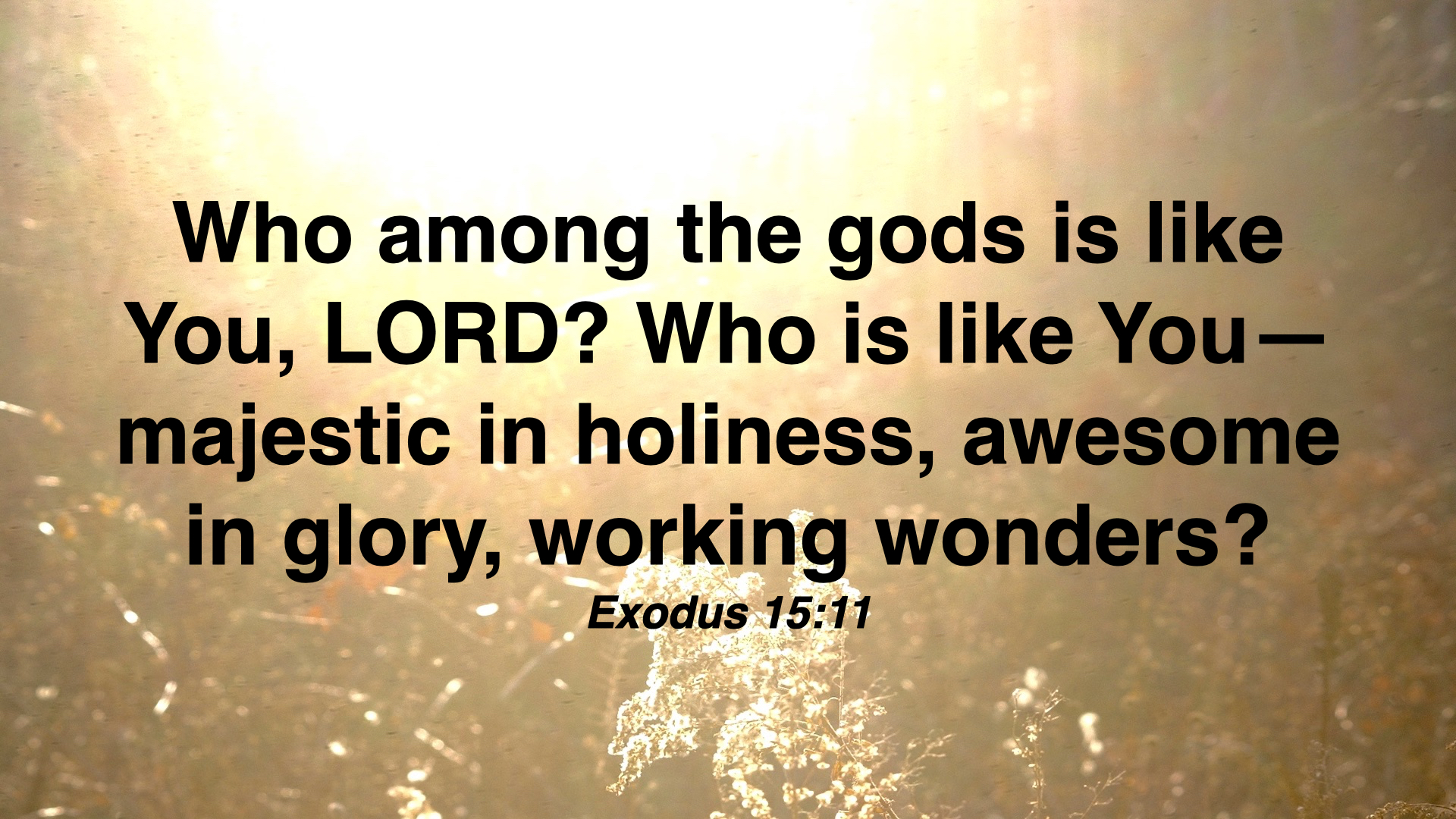
We can eliminate “a god-like person” from Exodus 15:11.
We can eliminate “a mighty hero” from Psalm 82:1.
We can eliminate “an angel” from Psalm 29:1 and Isaiah 6:1-3.
We can eliminate “a manmade god” from Isaiah 14:12-15.

So it must mean He is The One True God! One of Isaiah’s favorite phrases is “the Lord Almighty” which he uses 61 times (e.g. Isaiah 47:4)! 

Isaiah 40 is one of the most descriptive chapters of the Lord Almighty. In here we see that…

  • He forgives sin (vv. 1-2) 
  • He is beyond description (v. 12)—holding the world’s 326 quintillion gallons of water in the hollow of His hand, fitting the 10 septillion stars of the cosmos across the breadth of His hand, and carrying the weight of the Earth (1.3 octillion pounds) easily in His basket! 
  • He is distinguished from manmade gods (vv. 18-20, 25) 
  • His strength is absolutely unrivaled (vv. 26, 28) 

How do we know these descriptive words in Isaiah point to Jesus? Look at these First Testament Scriptures compared to Christ’s First Advent: 

  • Isaiah 40:3-5 foretells the messenger who would herald Christ’s arrival. Zechariah is inspired by the Holy Spirit to make this connection to his son John (Luke 1:76-77), and then John lives this out (Mark 1:1-3).  
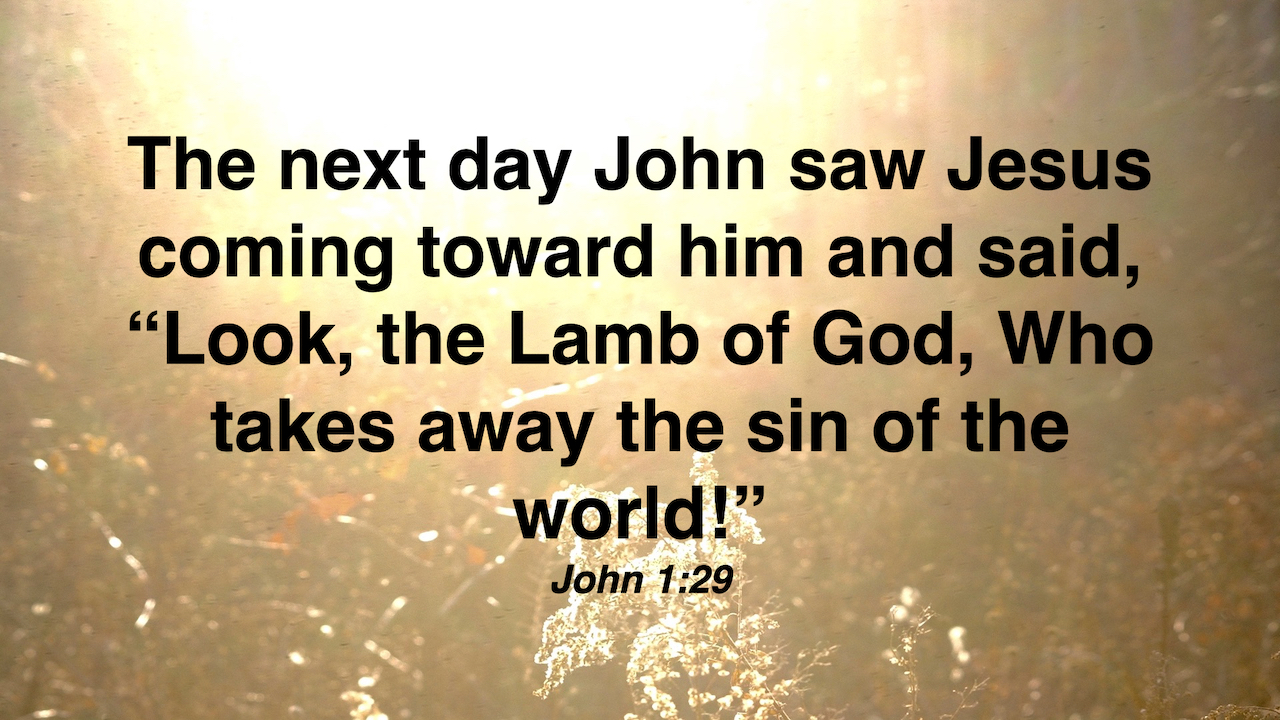
  • Remember that 40:1-2 says that The One True God forgives sins, which is what John the Baptizer sees in Jesus (John 1:29).  
  • In 41:10, 13-14 we read of God shining His light into darkness to set people free, which is another thing that Zechariah connects to Jesus (Luke 1:67-75). 

Jesus wasn’t God in name only, but His words and action—and the response of those who saw and heard Him—affirmed that He is the Mighty God that was foretold (John 8:48-59; Mark 14:60-64). 

Notice also how the early New Testament saints proclaimed Christ’s unique deity, stating clearly that He is the fulfillment of all of the prophetic words that point to Him as The One True God (Acts 4:8-10, 12, 18; 5:27-32). 

Peter and John said, “We are witnesses of this.” We too are witnesses of this if we have accepted Jesus as our Lord and Savior. We get to proclaim His Lordship by our verbal testimony and our lifestyle. As C.S. Lewis said, “A man who was merely a man and said the sort of things Jesus said would not be a great man or a moral teacher. He would either be a lunatic—on the level with the man who says he is a poached egg—or else he would be the devil of hell. You must take your choice. Either this was, and is, the Son of God; or else a madman or something worse. You can shut Him up for a fool…or you can fall at His feet and call Him Lord and God.” 

In Philippians 2:9-11, Paul points out that Jesus has the name above every name and that every knee must bow to Him and every tongue confess that He is Mighty God! Today, let us bow our knee to Him and lift our voices proclaiming that He is Lord and God until our One True God takes us home or returns at His Second Advent. 

If you’ve missed any of the other message in our Advent series called Jesus Is…, you can find them all here. 

►► Would you please prayerfully consider supporting this ministry? My Patreon supporters get behind-the-scenes access to exclusive materials. ◀︎◀︎
Jesus Is Wonderful Counselor

Listen to the podcast of this post by clicking on the player below, and you can also subscribe on AppleSpotify, or Audible. 

Jesus made His first appearance as a fully human Man in a stable in Bethlehem. But His Advent—or appearing—had been anticipated for a long time before that. 

In fact, one of the darkest chapters in human history takes place shortly after human history began. Mankind sinned and was separated from God because of that sin. The initial separation foretold an eternal separation (Genesis 3:22), but God shines His light of hope in this darkest hour, foretelling the Advent of our rescue (3:15). 

(Check out all of the Scriptures in this post by clicking here.)

Seven hundred years before Christ’s birth in Bethlehem, the setting is still dark and getting darker. Sin is running rampant, God’s people are groping in darkness, and enemies are pressing in from every side. 

Out of the darkness, God speaks (Isaiah 8:5-10), giving us a glimpse of the Messiah’s glory. Notice the hope-filled words Immanuel (v. 8) and God with us (v. 10). This darkness is the inevitable result of not gazing on God’s glory (vv. 21-22), and yet there appears another glorious promise in a single word: Nevertheless (9:1-7). 

We get a glimpse of Immanuel’s glory in the titles that will describe our Messiah. Let’s look first at Wonderful Counselor. 

Wonder can have two definitions: 

  1. Something so extraordinary that it is hard for our finite human minds to comprehend—Exodus 15:11; Isaiah 25:1 NLT. 
  2. God’s awesome deeds: His works that leave us in absolute awe of His greatness—Jeremiah 32:17 AMPC. 

Counselor is someone who gives counsel; not just any counsel, but perfect counsel because He is omniscient (knows it all) and omnipotent (can do it all)—Isaiah 14:26-27; Psalm 139:1-6; Psalm 32:8. 

Job got a glimpse of this Awesome Counselor too in Job 42:1-6. 

Our First Testament friends only got a glimpse of the Messiah’s glory, but we have the glory revealed to us—Hebrews 1:1-3a; Matthew 1:22-23; John 1:5, 14, 18. 

We have His wonderful counsel revealed to us too—Luke 5:20-26; John 7:37-46. 

And we look forward to seeing His glory undimmed at His Second Advent—John 1:47-51; Mark 14:61-62. 

As we live now between the Advents, we have the joyful privilege and responsibility to proclaim this glory to those still living in darkness—Matthew 28:18; Acts 4:30.  

See how the saints proclaimed Christ’s glory, relying on His wonderful counsel in Acts 4:13, 20, 31; 5:12; 6:8, 10; 8:6-8. This is how we are to live too (2 Thessalonians 2:16-17). 

As you live between the Advents, I pray that the glory of our Wonderful Counselor will become more real to you and that it will shine out of every word you speak and everything you do! 

Check out the other posts in this series Jesus Is… here.

►► Would you please prayerfully consider supporting this ministry? My Patreon supporters get behind-the-scenes access to exclusive materials. ◀︎◀︎
Jesus Is…

Over 700 years before He was born in Bethlehem, God spoke through the prophet Isaiah to describe the Messiah that was coming. Peter said that until the advent of Jesus, the prophets continued to scour the evidence of who this Messiah was going to be. 

When Jesus finally came to earth as a Man, young and old alike were thrilled to proclaim that the One they had been longing for had made His long-expected appearing! As Jesus lived on earth, died on Calvary, and was resurrected back to life, He continued to fulfill all that had been prophesied about Him. 

Isaiah said of Jesus: “He will be called Wonderful Counselor, Mighty God, Everlasting Father, Prince of Peace.” This Advent season we will take some time to unpack what each of these majestic titles mean. We will explore how Jesus demonstrates that He is truly worthy of each of these titles, and we will see how that knowledge should thrill our hearts as we celebrate His first Advent and eagerly long for His Second Advent. 

Join me at Calvary Assembly of God for this encouraging Advent series as we learn that Jesus is…

Year-End Review (2024 Edition) 

Listen to the podcast of this post by clicking on the player below, and you can also subscribe on AppleSpotify, or Audible

I take some time at the end of each calendar year for a quick recap of everything we have learned during this year at Calvary Assembly of God. I do this because I want to make sure we are all on the same page with each other before we move into a new year. And I also think it’s very important that we are continually reminded and reassured of what God has done for us. In our series on gratitude we talked about the dangers of forgetting to remember and re-tell the blessings of God. We see in the letters from the apostles both a re-telling of their own words, and reusing and amplifying the words of Jesus and other apostles. 

You can click on the sermon series title to find a list of all of the sermons in that series. Clicking on those individual sermons will give you a short written recap of that message, and it will also give you the link to watch the video of the full sermon. 

Kingdom Praying. Jesus made it clear time and time again that He came to reveal the Kingdom of God to us. He described what the Kingdom was like and told us that He came to be the means by which we could enter God’s Kingdom. He also told us how God’s children could access the power and privileges of our Heavenly Father through the means of prayer. He assured us with words like, “Do not be afraid, little flock, for your Father has been pleased to give you the Kingdom” (Luke 12:32). Jesus said quite simply that we had access to our Father through prayer. And then to make sure we didn’t miss out on this awesome privilege, He instructed us, “This, then, is how you should pray” (Matthew 6:8). 

Jots and Tittles. As we get closer to the death and resurrection of Jesus, there are an increasing number of prophecies that are fulfilled in these events. Jesus appears to have been very attentive to making sure that each and every one of these prophecies were fulfilled to the smallest detail. Near the beginning of His public ministry, Jesus noted that not one iota—or “one jot or tittle” in the Old English vocabulary—of any of God’s promises would be left unfulfilled (Matthew 5:18). It’s amazing that Jesus so carefully attended to all of these, but it’s also important to ask ourselves what these fulfilled prophecies mean to us today. 

Takin’ Him to the Streets. Just before Jesus ascended to Heaven, He told His followers that they would have the joyful responsibility of taking the good news of forgiveness and eternal life to all the highways and byways of every nation. Later on, Paul would get more specific about all of the groups to which he was taking the message of Jesus (see Luke 24:46-47; 1 Corinthians 9:20-22). That commission is still in effect for Christians today: We are to share the gospel with everyone—from easy street to skid row, from Wall Street to Main Street, and every street in between. The streets on which you live and work are different from the streets where I travel. In fact, all of us live on different streets, but everyone we meet on every street needs to hear about Jesus. In this new series of messages, we are going to learn how the Holy Spirit can help us be ready to take Jesus to those on each street where God sends us. 

Ascending. Every year, Jews from around the world made four pilgrimages up to Jerusalem for various feasts and sacrifices. These journeys reminded them of God’s goodness as they went to the Temple to worship, and they helped refocus on God’s ways as they returned to their regular routines. Jerusalem is over 2500 feet above sea level, so the pilgrimage there was a physical workout as well as a spiritual workout. These workouts were beneficial for God’s people, preparing them to minister in their cities in the following months. The Book of Psalms contains 15 songs that these pilgrims would sing to and with each other as they traveled up to Jerusalem. These Psalms of Ascent are still instructive for Christians today. 

Living in your Gift Zone. God created each and every human being uniquely. We all come in different shapes and sizes, but we all share one thing in common: He created each of us with a unique personality and a unique gift package. By unique, I truly mean that we are all one-of-a-kind creations that have never existed in all of history! Here’s another thing we all have in common: We usually live in a comfort zone that is far smaller than our gift zone. Living this way keeps us from soaring through life in the way that God intended. He wants each of us to know our gifts, and to use our gifts in a way that benefits our world and brings Him glory. It starts with believing that we are indeed gifted by our Creator. Then we must have the courage to step out of our comfort zone into the much larger gift zone God has given us. 

Is that in the Bible? A meme that makes me chuckle every time I see it is a “quote” attributed to Abraham Lincoln in which he says, “The problem with quotes found on the internet is that they are often not true.” (Not to spoil the joke for you, but unless Lincoln knew how to time travel to the future, I don’t think he knew about the modern internet!). I love this meme because it captures something that so many people fall into: a quick acceptance of a statement without verifying its source or thinking through the implications of the statement’s truthfulness. In this series I think you may be surprised to discover just how many phrases we call biblical aren’t, and how many phrases there are that we never realized are actually in the Bible. 

Be Thankful. It’s so easy to spot the negative things. It’s so easy to gripe about the bad stuff with others. It’s so easy to complain about what’s wrong with the world. But the Bible repeatedly calls the saints of God to rise above this downward pull of negativity. In fact, for those who have a relationship with their Heavenly Father, who call Jesus their Savior, and who call the Holy Spirit their Counselor, there is really only one way to live: Grateful! 

Christ’s Advents. The word Advent means the appearing—something that bursts onto the scene. At this time of year we are actually thinking about TWO Advents. We look backward in gratitude to celebrate the first Advent of Jesus when He was born in a manger in Bethlehem. And then we look forward in joyful expectation to the second Advent of Jesus when He will return to earth again as King of kings. As Christians live in this time between the two Advents, our celebration and expectation should bring four noticeable attributes from our lives: hope, peace, joy, and love. 

I also shared a couple of messages that weren’t a part of a series. My Mother’s Day and Father’s Day sermons, and a sermon on how Christians should live in a political season

This next year promises to be another amazing time of learning and growing. If you live in northern Kent County and don’t have a home church, I would love for you to visit us

►► Would you please prayerfully consider supporting this ministry? My Patreon supporters get behind-the-scenes access to exclusive materials. ◀︎◀︎
Christ’s Advents Bring Love

Listen to the podcast of this post by clicking on the player below, and you can also subscribe on AppleSpotify, or Audible

The lights of hope, peace, and joy burn brightly. They drive out the darkness in our own lives and in the lives of others with whom we come in contact. But you and I both know lots of people who are very positive people—always upbeat, seemingly peaceful and joyful. The real question is: What is the source of this light? Or more specifically, how do people know that you are hopeful, peaceful, and joyful because you know Jesus as your Savior and King?  

Jesus said there were two proofs that we are His followers:

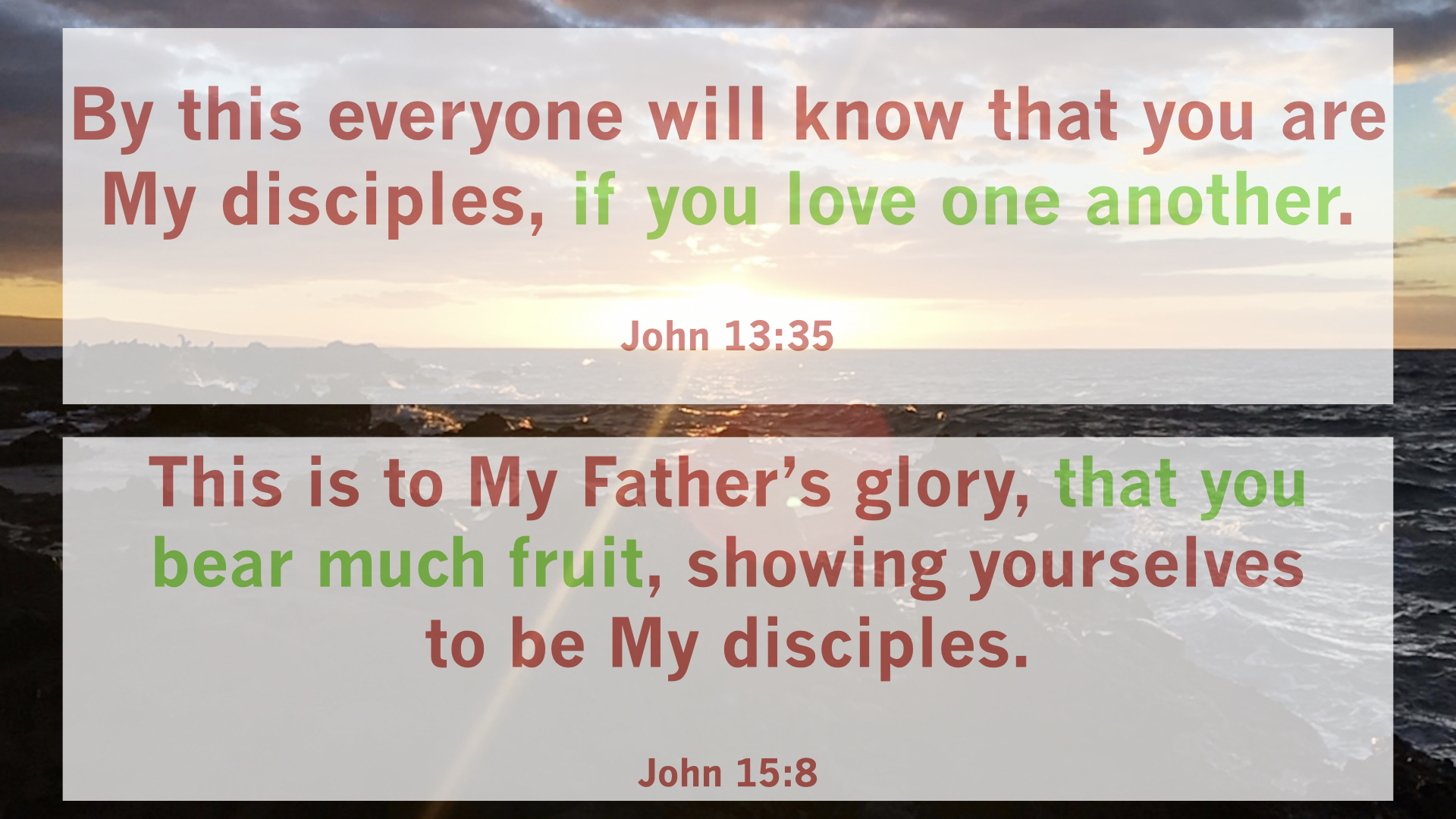
  1. That we love others (John 13:35) 
  2. That we are producing God-honoring fruit (John 15:8) 

God IS love—it’s His very nature. Just like an apple doesn’t have the capacity for apple-ness but is by its nature an apple, so God doesn’t have the capacity for love, or love more than others, but He is by His nature Love. 

Any qualities of hope, peace, and joy in our lives have to originate from God’s love. We cannot manufacture these fruits, but they are a natural result of our being connected with Love Himself. 

Love is what brought Jesus to earth at His First Advent (John 3:16-17; Romans 5:5-8). And we can only love others and produce the fruit of hope, peace, and joy because Jesus went first and became our Source (1 John 4:19; John 15:1). 

Love brought Jesus to earth at His First Advent, and Love is what empowers us to be loving and fruitful between His Advents. 

  1. Love one another means that love serves (John 13:1-5, 15-17, 34-35) 
  2. Bear much fruit means that love grows (John 15:1-12) 

We can only serve and be lovingly fruitful as we stay connected to Love (2 Peter 1:2-7; 1 John 2:28). 

Love brought Jesus to earth at His First Advent, Love is what empowers us to be loving and fruitful between His Advents, and Love is what patiently waits for Christ’s Second Advent (2 Peter 3:3-4, 9). 

We continue to grow in our love and produce fruit by being connected to the Vine of Love (1 Corinthians 13:11-12; 1 John 3:1-2 ; Hebrews 10:23-24). 

We need to let our love be continually supplied by Love Himself so that our fruitfulness can shine as a bright testimony. Jesus said, He was the Light of the world, and then He called us to be the light to our part of the world where He has placed us (John 8:12; Matthew 5:14-16). 

Always remember that we celebrate the First Advent and look forward to the Second Advent by staying connected to Jesus, growing in our love for Him and for others, and allowing the fruit of hope, peace, and joy to shine brightly for God’s glory. 

If you’ve missed any of the other messages in our Advent series, you can find them all by clicking here

►► Would you please prayerfully consider supporting this ministry? My Patreon supporters get behind-the-scenes access to exclusive materials. ◀︎◀︎