But this isn’t quid quo pro—we aren’t grateful people just so we can get something back for ourselves. We should be grateful people because…
(1) …God is good all the time and so we should be thankful to Him continually—1 Thessalonians 5:18
(2) …Jesus was grateful—1 Peter 2:23; Hebrews 12:2
(3) …God blesses thankful people—1 Peter 3:9; Luke 6:33
(4) …your thankfulness can benefit people you haven’t even met!
Near the end of his life, David wrote a hymn of thanksgiving, which he taught to Asaph (his worship leader) who then taught it to all the citizens (1 Chronicles 16:7-35). Throughout this song, notice how many times David sang about not only giving thanks but sharing our thankfulness with those around us.
In difficult times, people search for what delivered others in the past. A good example is Psalm 106, where the psalmist warns his readers about the dangers of forgetting to be thankful for God’s blessings. This psalm begins and ends with words taken right from David’s hymn of thanksgiving as an added reminder of what our gratitude should sound like (see vv. 1, 47-48).
One hundred years after David wrote this song, King Asa needed to look back to it. His father Abijah had been evil throughout his reign as king, so had his grandfather Rehoboam. His great-grandfather Solomon started off well, but turned away from God near the end of his life. So Asa looked all the way back to the thankful heart of his great-great grandfather David (1 Kings 15:11).
Jehoshaphat needed this same song 100 years after Asa (200 years after David wrote it) in 2 Chronicles 20. Enemies had surrounded Judah and Jehoshaphat called the people to prayer. Jahaziel, a direct descendant of David’s worship leader Asaph, calls the people to trust God to fight the battle for them. As the army marches out the next morning, they put the worship team at the front who sang David’s 200-year-old song of thanksgiving and God used that to ambush their enemies!
Your lifestyle of gratitude today—your songs of thanksgiving—could be a blessing to future generations that haven’t even been born yet!
We would do well to learn the lessons of the past and make sure we are always quickly turning our grumbling into a song of thankfulness.
As you do, you are…
Emulating the lifestyle of Jesus
Banking up blessings from God
Ambushing the enemy
Bringing a testimony to non-believers
Establishing a standard for future generations
We bless God and bless others by employing two words: BE THANKFUL!
Listen to the podcast of this post by clicking on the player below, and you can also subscribe on Apple, Spotify, or Audible.
Do you remember this song: “If you’re happy and you know it clap your hands”? It goes on to say, “If you’re happy and you know, then your life will surely show it….” Frankly, I’m concerned about Christians that are unhappy.
Charles Spurgeon was talking to his students and he said, “I commend cheerfulness to all who would win souls; not levity and frothiness, but a genial, happy spirit. There are more flies caught with honey than with vinegar, and there will be more souls led to heaven by a man who wears heaven in his face than by one who bears Tartarus in his looks.” Tartarus, in Greek mythology, is a sunless abyss, below Hades, in which Zeus imprisoned the Titans, which is the exact opposite of the Paradise described in the Bible.
Unhappiness generally comes from ingratitude. An unhappy Christian gives God no praise, robs Him of glory, and paints God in a bad light. A happy Christian lifts God high and invites others to know this All-Good, All-Happy God too!
Christians need to fight against the downward pull of negativity in which our culture seems to so easily gravitate. In his letter to the Philippians, the apostle Paul says that a Christian who doesn’t engage in the complaining that the world is known for will shine brightly. Quite simply, thankfulness is the antidote to complaining (Philippians 2:14-18).
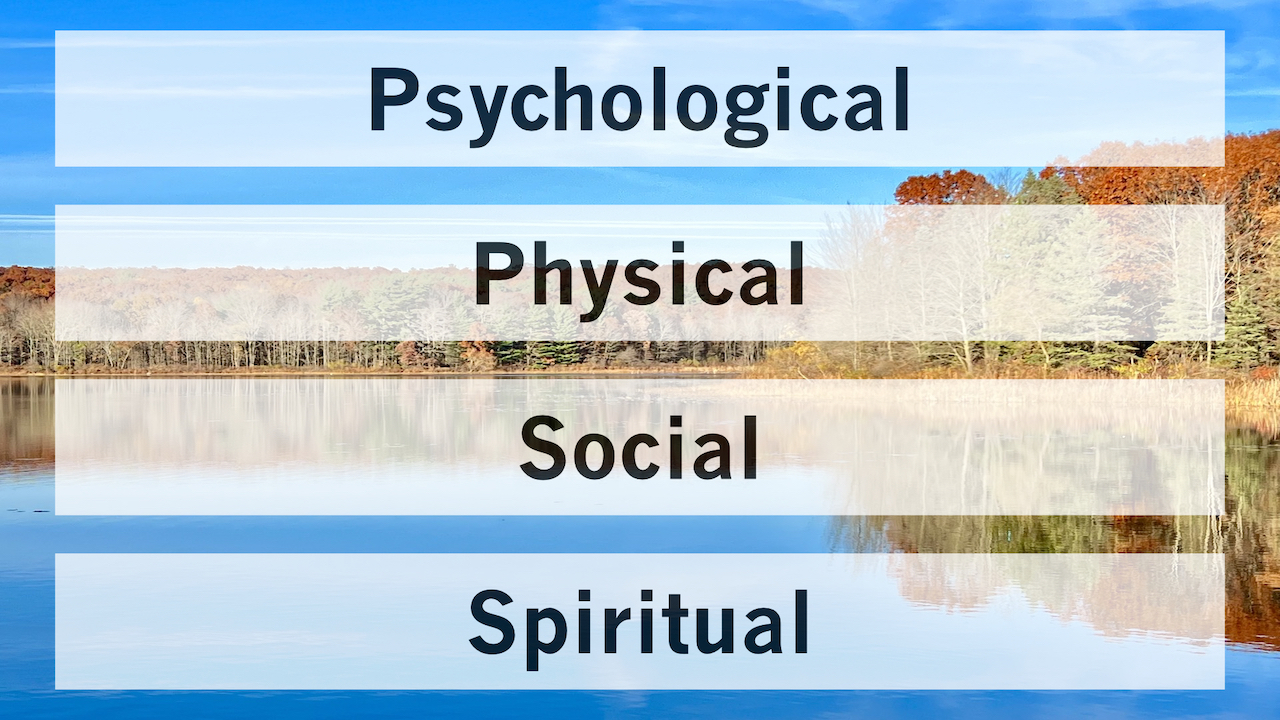
Even those who may not recognize the the authority of Scripture have extolled the benefits of gratitude. Psychologists and medical professionals have identified three benefits from a thankful heart:
Physical benefits—stronger immune system, less body aches and pains, regulated blood pressure, a better sleep-wake cycle
Social benefits—better communication with others, increased empathy, increased likability
And Christians can add one more benefit to this list:
Spiritual benefits—more dynamic corporate worship, enchanted Christian testimony, perseverance through trials, fortification against giving in to temptation
The well-known Cleveland Clinic reported that an attitude of gratitude leads to overall wellness. When you are grateful for what you have, it improves your outlook mentally, physically, spiritually, and relationally.
Here are five things you can start doing today that will increase your gratitude levels, enhance your Christian testimony, and generally improve your life:
Switch your perspective. Worry is focusing on what you don’t have. Make the switch to gratitude by giving thanks for what you do have (Matthew 6:25-34).
Strengthen your relationships. It’s fine to weep with those who weep, but let’s encourage others and be encouraged by others so that we can rejoice with those who rejoice (1 Thessalonians 3:6-10),
Foster healthy habits. Dr. Luke gives us the pyramid of health that Jesus demonstrated in Luke 2:52. The pinnacle is strong relationships, and grateful people are more empathetic and likable.
Keep a gratitude journal so that you don’t forget what God has done for you (Psalm 106:7).
Talk about your gratitude. This instills thankfulness in other saints (Isaiah 63:7) and in future generations of your family (Isaiah 46:4), and it becomes a testimony for seekers (1 Peter 3:15).
Let me close with this observation from Blaise Pascal: “There are three kinds of people in the world; those who have sought God and found Him and now serve Him, those who are seeking Him, but have not yet found Him, and those who neither seek Him nor find Him. The first are reasonable and happy, the second reasonable and unhappy, and the third unreasonable and unhappy.”
Reasonable, happy saints are the ones who lift God high and invite others to know this All-Good, All-Happy God too! Not just at the Thanksgiving season, but starting now and then going all year long!
Follow along with all of the messages in this series called Be Thankful by clicking here.
I’m concerned that some people might be confused about what I mean by “gifts.” Some people look at someone who can preach, or write, or sing, or compose music, or paint, and say, “They are so gifted! I could never do anything like that.” Yes, those are very visible gifts, but let’s not limit “gifts” to just those kinds of things.
God has designed our physical bodies to do some astounding things! We see some people using their bodies to run fast, jump high, lift heavy things, or catch a ball, and we may marvel at their talents. These amazing feats are only possible because of a thousand other gifts. Even the simplest of tasks is far from simplistic. Isaac Newton noted, “In the absence of any other proof, the thumb alone would convince me of God’s existence.”
Something that is invisible to the human eye but indispensable to absolutely everything that happens in our physical bodies is the vital functions of enzymes.
Enzymes are proteins that help facilitate metabolism, or coordinate a chemical reaction. Some enzymes build things up and some break things down. Enzymes help with things like…
turning the food we eat into energy
breathing
building muscle
nerve function
ridding our bodies of toxins
There are thousands of individual enzymes in the body. Each type of enzyme only has one job.
For example, consider the enzyme sucrase. If it is deficient in the body, sucrose from food isn’t broken down to glucose and fructose. As a result we would experience dehydration, malnutrition, and developmental delay.
Every enzyme is vital. It’s not coincidental at all the the New Testament uses the analogy of our physical bodies to portray the Body of Christ (Romans 12:3-6; 1 Corinthians 12:6, 18, 27).
In the New Testament church it’s easy to spot the highly visible gifts like preaching, evangelism, and church leadership, just as it’s easy to spot physical accomplishments like a professional athlete or a world-class pianist. But let’s not overlook the thousands of indispensable “enzymes” in the Church that allow the Body of Christ to function in a healthy way.
Read through the Book of Acts and you will see gifts in the form of people who…
agreed together in prayer
affirmed God-honoring, biblical decisions
organized feeding programs
hosted people in their homes (house churches)
prepared food for others
handed out that food
sewed clothes for those who needed them
faithfully visited the sick and imprisoned
earned a paycheck to pay for ministry expenses
distributed funds to those in need
used their official positions open doors or provide protection
wrote important correspondence
Peter wrote, “God has given each of you a gift from His great variety of spiritual gifts. Use them well to serve one another” (1 Peter 4:10).
What happens if an “enzyme” is missing? Quite simply: The Church cannot grow to our full potential (1 Corinthians 12:26 AMPC; Ephesians 4:12-13).
Each of us needs all of us. All of us needs each of us. Jesus hasn’t just saved you from death, He has also saved you to life—an abundant life for you, for the Body of Christ, and for those who don’t know Him as their Lord and Savior yet.
You are gifted. More precisely said: You ARE a gift!
Listen to the podcast of this post by clicking on the player below, and you can also subscribe on Apple, Spotify, or Audible.
We as a Church are underperforming. How do I know this? Look at the way the world treats Christians; specifically, look at what’s NOT happening.
“By this all will know that you are My disciples, if you have love for one another” (John 13:35). Jesus said this right after He served His disciples by washing their feet. Is this happening today: Do people know you are a Christian by the way you put your love into servant-hearted action, or do they just know what you are against?
“Be prepared to give an answer to everyone who asks you to give the reason for the hope that you have” (1 Peter 3:15). When was the last time someone saw your hope-filled life in such contrast to everyone else’s response that they said, “How can I have what you have?”
Peter said our adversary prowls like a lion. He is perfectly willing to bide his time, picking the strategy that works best. One of his favorite strategies is lies—sometimes half-truths or out-of-context truths.
…Woe to the earth and the sea, because the devil has gone down to you! He is filled with fury, because he knows that his time is short. … The dragon was enraged with the woman and went off to make war against the rest of her offspring—those who obey God’s commandments and hold to the testimony of Jesus (Revelation 12:12, 17).
Lies are his native tongue. He lied to Adam and Eve right in the beginning (Genesis 3:1, 4-5), and he still lies now (Revelation 12:10). Jesus contrasted this with the truth that He came to proclaim (John 8:42-45).
The devil has learned that with many people, outright attacks drive them TO God. We see this in the oldest book of the Bible (Job 1:6f, 20-22), and in modern times (churches were filled after the 9-11 terrorist attacks).
What the devil would rather do is lie to you to keep you comfortable. In The Screwtape Letters, Screwtape implores Wormwood to keep his patient indifferent and comfortable. Indeed, we all have a comfort zone and we love to stay in it.
King Saul went from 3000 men to 600 men, from a full armory to only two swords, from defeating the Ammonites to being hemmed in by the Philistines. King Saul was enjoying life as the king, hanging out with his friends, sitting under a pomegranate tree, far away from his enemies. Life was good for Saul, life was familiar and comfortable. Saul was living in his comfort zone. But the comfort zone is a lousy place to live.
In the comfort zone you only tell stories, but never live an adventure. In the comfort zone, you only hear about what God has done for others, but you never experience Him move in miraculous ways for yourself.
God has given us all gifts so that we can live as overcomers and bring Him glory, but we settle for living only in our comfort zone. Our comfort zones are always way smaller than our gift zones, and the devil is perfectly happy to see us stay there.
Moses was comfortable in the desert, but God sent him in His power (Exodus 3:11, 14).
David was comfortable in the pasture, but God equipped him to lead a whole nation (2 Samuel 7:18; Psalm 78:70-71).
Jeremiah was comfortable being an anonymous priest, but God gave him words to prophesy to a wayward nation (Jeremiah 1:4-8).
Saul was comfortable as a Pharisee, but God sent him to tell the world the Jesus is the Messiah (Acts 8:3; 1 Timothy 1:16).
What lies have kept you in your comfort zone?
Maybe a parent said, “You’ll never amount to anything.”
Maybe a teacher said, “You’re slow.”
Maybe a classmate said, “You’re weird.”
Maybe the devil said, “You cannot make a difference in the world.”
You need to silence those lies with God’s truth:
God created me on purpose and for a purpose—Psalm 139:13-17
He has given me all the gifts I need to soar—2 Peter 1:3-4
He wants to help me, if I will trust Him—Isaiah 41:10, 13-14
Charles Spurgeon said, “The extent of power God can infuse into a person is immeasurable; when divine strength is granted, human weakness ceases to be a hindrance.”
So, friends, it’s time to get uncomfortable with staying comfortable. It’s time to stretch and soar out of your comfort zone and into more of your gift zone!
Listen to the podcast of this post by clicking on the player below, and you can also subscribe on Apple, Spotify, or Audible.
I am a big fan of Alcoholics Anonymous (AA). They are founded on biblical principles. I would paraphrase two of the most important ones as: (1) We need a Savior to set us free and (2) We need friends to lean on. James 5:16 says this as succinctly as any verse: “Therefore confess your sins to each other and pray for each other so that you may be healed. The prayer of a righteous person is powerful and effective.”
AA says: “Often times, a person with substance use disorder may have a need for control that can prevent them from achieving peace of mind. They may feel frustrated that they cannot control the actions of other people and turn to substances like alcohol to control their feelings, even though the control that alcohol provides is a farce. The Serenity Prayer is a gentle reminder that letting go and accepting a loss of control can help put an end to the substance abuse cycle.”
In light of our series called Is That in the Bible? let’s ask, is the serenity prayer in the Bible.
No, it’s not, but still there are some very important principles we shouldn’t miss from this prayer.
The full prayer is—
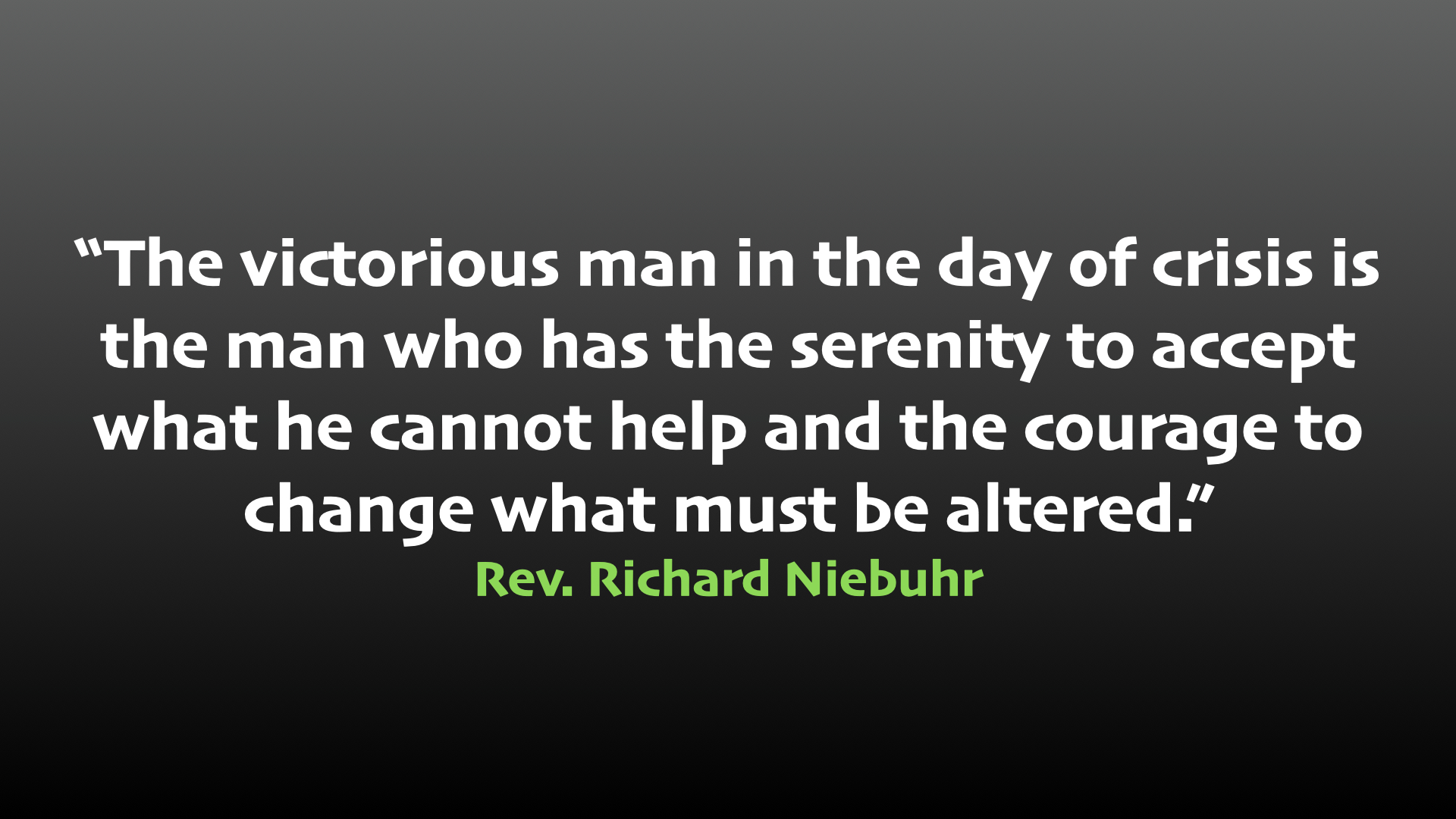
God grant me the serenity to accept the things I cannot change; courage to change the things I can; and wisdom to know the difference.
Living one day at a time; enjoying one moment at a time; accepting hardships as the pathway to peace;
Taking, as He did, this sinful world as it is, not as I would have it; trusting that He will make all things right if I surrender to His will;
That I may be reasonably happy in this life and supremely happy with Him forever and ever in the next. Amen.
Should Christians pray a prayer like this? Biblically, there is nothing wrong with Christians praying prayers that have been written by men or women, provided that they don’t contradict the words God has spoken to us.
Remember James 5:16 that we looked at earlier? The Personalized Promise Bible has a prayer for that verse:
If I have stumbled in any way, I do not need to fret over it—I can rest in full confidence that the Lord loves me and forgives all of my shortcomings. I also know that sin is a hindrance to my healing. Therefore, if there is any sin in my life I repent of it. I confess my sins to trusted brothers and sisters in Christ, gaining strength and praying in agreement with them so that I will be healed.
In a similar fashion, I see several passages of Scripture that are woven into the serenity prayer.
“God grant me the serenity to accept the things I cannot change; courage to change the things I can; and wisdom to know the difference.” Proverbs 1:2-3 describes the help God’s wisdom gives us for daily living.
“Living one day at a time; enjoying one moment at a time.” Jesus taught us to pray each day for our daily bread (Matthew 6:8, 11).
“Accepting hardships as the pathway to peace.” Jesus also taught us to pray, “Your will be done on earth as it is in Heaven” (Matthew 6:10), and He also prayed a very similar prayer Himself when He was in the Garden of Gethsemane, “Yet not as I will, but as You will” (Matthew 26:39).
“Taking, as He did, this sinful world as it is, not as I would have it; trusting that He will make all things right if I surrender to His will.” Jesus promised us both trouble in this world and His overcoming power to stand strong in that trouble (John 16:33).
“That I may be reasonably happy in this life and supremely happy with Him forever and ever in the next. Amen.” Jesus promises eternal rewards that vastly outweigh the trouble we may face in this life (Luke 12:32; Matthew 25:21, 34).
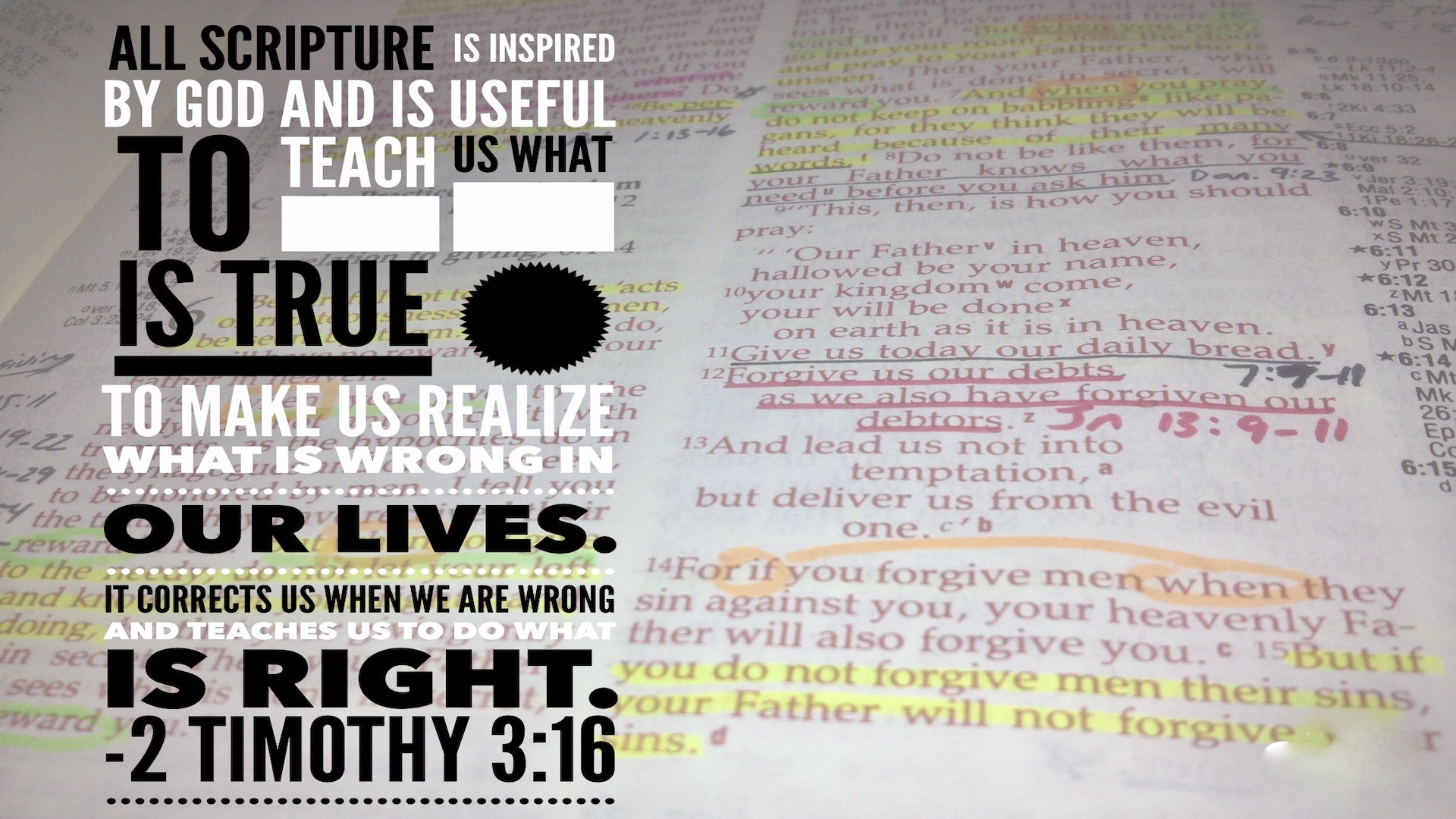
The bottom line: The Bible is not just a Book to read through but a Book to pray through. ALL Scripture is for ALL servants of God. ALL Scripture is applicable to ALL the circumstances we will ever face in life.
If something like the serenity prayer—or any other man-made prayer—is based on Scripture and helps give voice to your prayers, use them! But use them as guides to help you begin to form your own prayers from biblical passages you are reading for yourself.
Listen to the podcast of this post by clicking on the player below, and you can also subscribe on Apple, Spotify, or Audible.
We’re up to Psalm 131. After this step, only three more steps to go until we reach the top! We’re almost there. We started in a dark valley surrounded by enemies that wanted to keep us in the valley, but we persevered, we matured, and now the end it almost in sight!
Notice that David wrote this Song of Ascent, and I think he may have had a particular instance from his history in mind when he did.
At the height of David’s success, the Bible says that, “David knew that the LORD had established him as king over Israel and that his kingdom had been highly exalted for the sake of His people Israel” (1 Chronicles 14:2). So David used his position to do something very noble: return the ark of the covenant of the Lord to Jerusalem. This was a popular decision that “seemed right to all the people” (13:3).
But it turned out disastrously!
One of the priests overseeing the transportation of the ark of the covenant was killed, and as a result David became angry at God and fearful of Him.
After a cooling off time, David humbled himself. He admitted that he hadn’t “inquired of the Lord” before undertaking this task and then he looked to the Scriptures to find out how to move the ark the correct way (15:12-15).
It’s quite possible David had this incident in mind when he wrote the Song of Ascent for people coming to worship God in the temple where the ark of the covenant of the Lord would be housed.
The opening words sound the tone of humility—“my heart is not proud” and “my eyes are not haughty.” I think in the context of this opening verse of Psalm 131, pride can be defined as:
trying to handle things on my own
concerning myself with things outside my control
That means that humility is trusting that God is in total control.
Verse 2 starts with an important word: But. Instead of the fretting of pride, David chooses the trusting of childlike humility. David says that he has “stilled and quieted my soul.” He has chosen childlike humility.
This is exactly what Jesus told us: “Truly I tell you, unless you change and become like little children, you will never enter the kingdom of heaven.Therefore, whoever takes the lowly position of this child is the greatest in the kingdom of heaven” (Matthew 18:3-4).
The consistent message throughout Scripture—from Creation in Genesis 1 until the realization of our eternal reward in Heaven in Revelation 22—is childlike trust in our Heavenly Father.
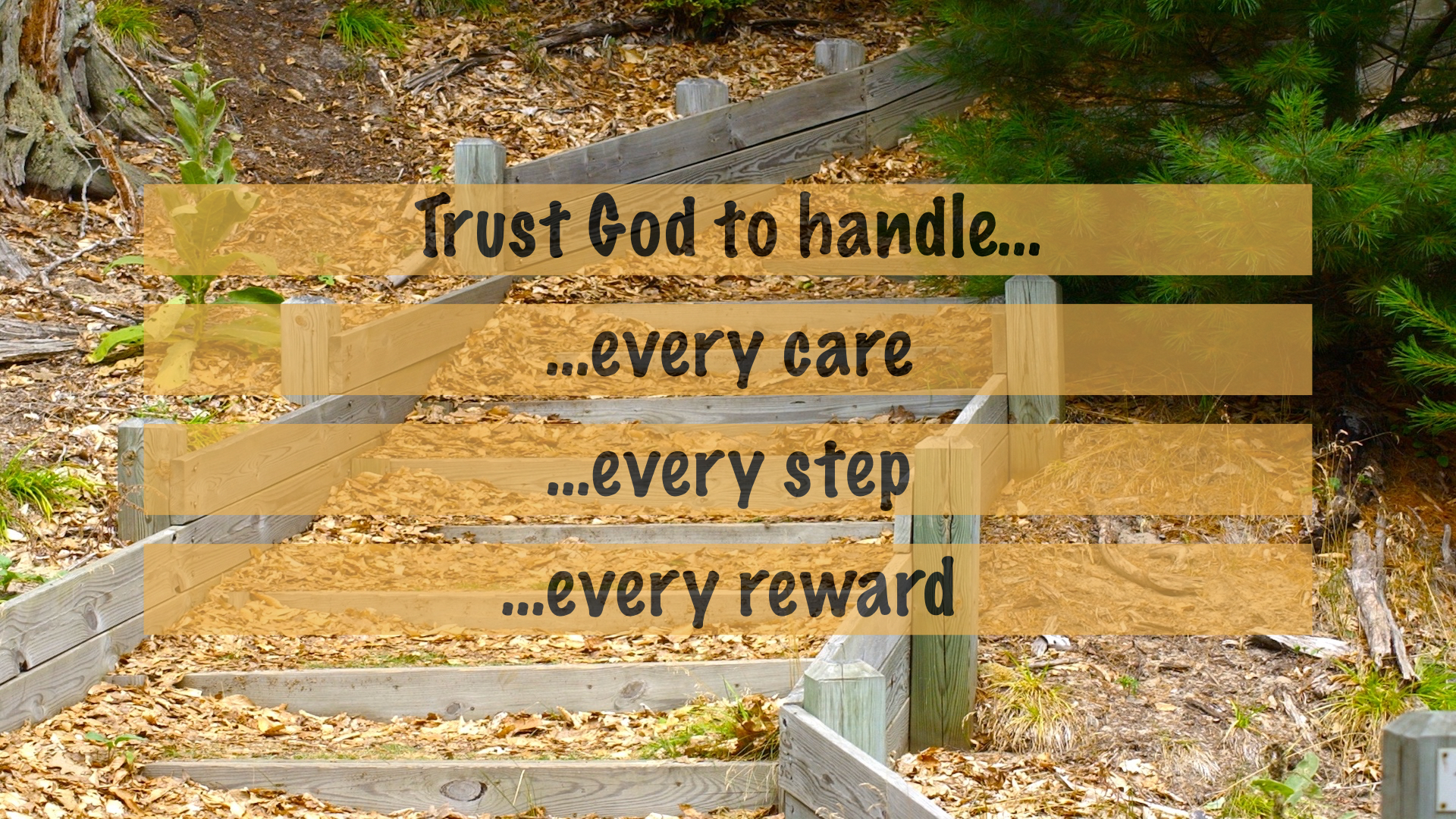
We can trust God to handle…
…every care—1 Peter 5:7
…every step—Proverbs 3:5-6
…every reward—Luke 12:32
Don’t let pride cause you to stumble in the homestretch. The closer we get to the end of the journey, the more childlike we should become.
Leaders should be able to use mistakes as growth opportunities. Check out these wise words from the book Spiritual Leadership.
I have lots of new content every week, which you can check out on my YouTube channel.
T.M. Moore encourages Christian to be ready to help their neighbors answer their burning questions: “Christians, Charles Taylor insists, must not be guilty of crushing human flourishing by a too-small vision of God and an unloving or unenergetic approach to our neighbors. Instead, we must study and prepare to ‘respond most profoundly and convincingly to what are ultimately commonly felt dilemmas.’ We must be ready to guide our neighbors out of the dark woods of wrong belief into the radiant meadows of the Sun of Righteousness, risen with healing in His wings. But to do this, we must be ready guides. We must anticipate the questions our groping neighbors will ask and prepare to answer them clearly and intelligently (1 Peter 3:15).”
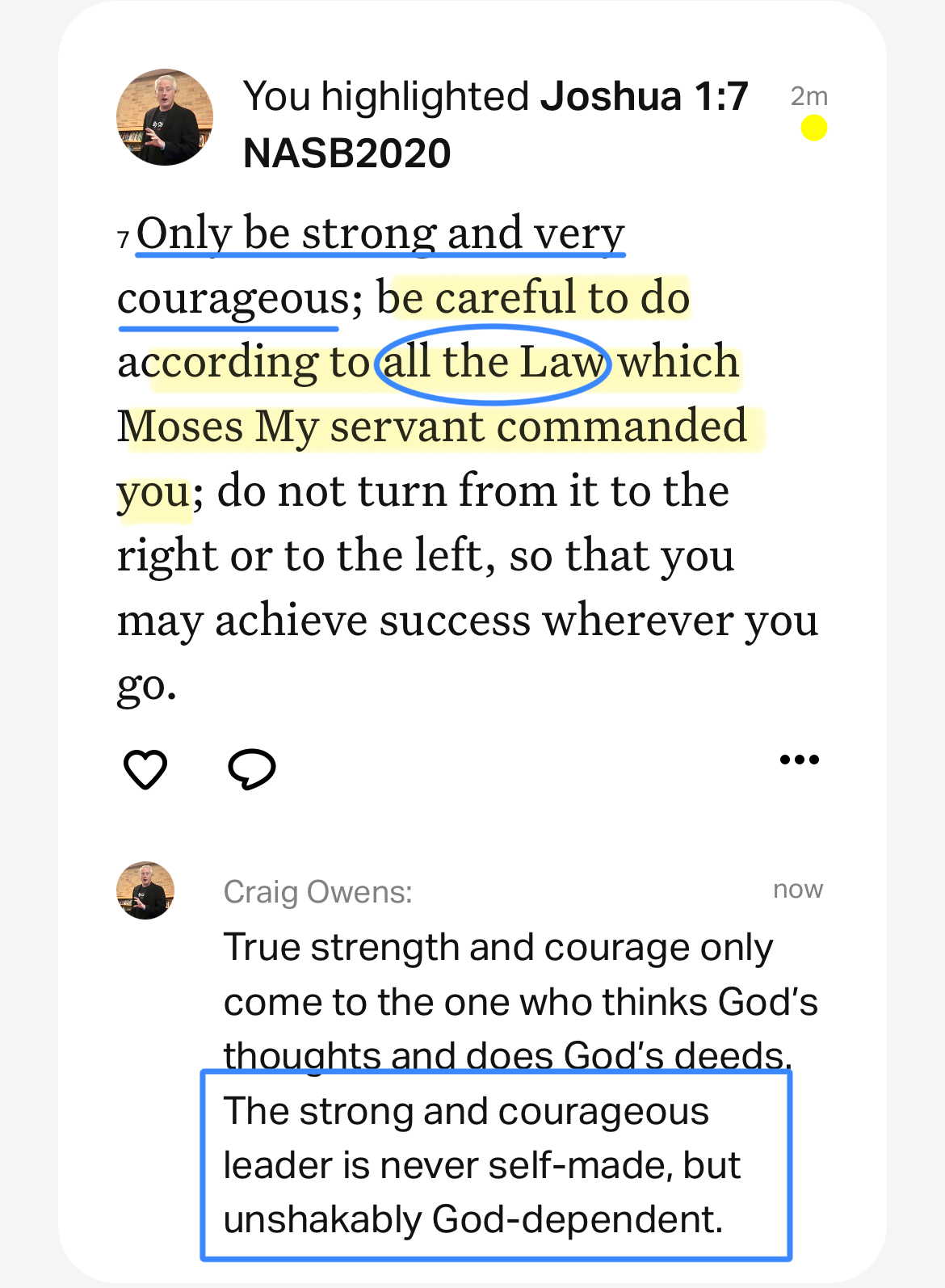
True strength and courage only come to the one who thinks God’s thoughts and does God’s deeds (see Joshua 1:7). The strong and courageous leader is never self-made, but unshakably God-dependent.
On the latest Craig and Greg Show podcast, this the quote from Andy Murray that I shared: “A great team begins to happen when you have the right people on the bus in the right seats and the bus breaks down…. They work through the crisis, they get back on the bus, they’re sweating and tired. All of the sudden something magical happens: They begin to talk to each other. Culture happens through crisis. Unfortunately, many team environments have structured the crisis out.”
Mabel Dean went to Egypt at 40 years old and stayed there for nearly 40 years without taking a single furlough! “All of Dean’s life, people did not expect her to amount to much. Despite what others said, Dean believed that she had a mandate from God for missions work in Africa. She later stated, ‘I was the only homely one in my family. Yet I was the one that He chose for His work.’”
One of the prayers in the Songs of Ascent calls us to mature (or ascend) in our prayers for those who have hurt us.
“There is always a better way of doing things, and either you or your competitor will find it.” —Brad Anderson













 Craig T. Owens