The Biblical Metric Of Success

Listen to the podcast of this post by clicking on the player below, and you can also subscribe on AppleSpotify, or Audible.

I was asked to share an article on the Converge Coaching blog.

There is no shortage of books that define “success” in our business or ministry endeavors, but as Christians, let’s try to get a more precise definition—a biblical definition.

I did a quick search for the words “success” or “successful” in just the New International Version of the Bible, and I was somewhat surprised by two things. First of all, the relatively few times this word is used: Only 25 times in the entire Scripture. We read of prayers offered for a successful journey, or a king’s reign, or a building project, success that comes to someone because of God’s favor on their life, or success in battle.

The second thing that surprised me: The word “success” isn’t used in the New Testament. The reason this surprised me is because without there being even a close second, Jesus has to be the most successful person who ever walked this planet. No one ever taught like He did, performed the miracles He did, or willingly laid down His life and was resurrected like He was. And yet the word “success” is never attached to His life.

This means we are left to draw some Holy Spirit-illuminated inferences from the Bible on how to define success. You may ask, “Why do we even need to know what ‘success’ is?” I would say we need a biblical definition for success to avoid the inevitable feelings of failure that come if things aren’t going as well as we thought they should.

In business, we often define success as revenue growth or a healthy net profit. In ministry, we typically measure success by church attendance, the number of people launched into ministry, or the amount of money given to missions work.

But what happens if we apply these metrics to the work Jesus did while He was on Earth? We see His disciples fretting over not having enough money to buy food for the congregation, and Jesus mentioning He often didn’t have a bed to sleep in, or the fact that Jesus only had one set of clothes. As a businessman, Jesus wouldn’t be considered successful by any current metrics. Even as a ministry leader, the congregation that gathered after Jesus was resurrected back to life only numbered 120 people. So if we consider Jesus as a pastor, His church wasn’t exactly thriving according to modern metrics.

After Peter’s sermon on the day of Pentecost (Acts 2) and his sermon following the healing of the lame man (Acts 3), we don’t hear much about quantitative growth throughout the rest of the Book of Acts. But in the balance of the Book of Acts, in the teachings of Jesus, and in the instructions in the epistles, we do hear substantially more about qualitative growth.

I think the clear message is that qualitative metrics are much more important to God than quantitative measurements. Specifically, I think we see the emphasis on two important qualities for godly leaders: faithfulness and excellence.

Solomon wrote, “Whatever you do, do well” (Ecclesiastes 9:10 NLT), and Paul told us, “Whatever you do, do it all for the glory of God” (1 Corinthians 10:31 NIV). These things tell us that our best effort is always required—no cutting corners, no half-measures, no bare-minimum effort. Instead, we should always do the best that we can, always striving for excellence.

My Grandma drilled a poem into my memory whenever I wanted to stop at “good enough.” She would say—

Good, better, best
Never let it rest
Until your good is better
And your better is best

How long do we do this excellent work? Until our Master returns.

Jesus said, “Who then is the faithful and wise manager, whom the master puts in charge of his servants to give them their food allowance at the proper time? It will be good for that servant whom the master finds doing so when he returns” (Luke 12:42-43 NIV).

Our devotion to these qualitative metrics of faithfulness and excellence can only truly be judged by listening to the Holy Spirit each day. He alone can speak to each of our hearts about our level of excellence and faithfulness for that day. He alone can help us know what true success is. We need to listen to His voice so that we don’t get distracted, disillusioned, and possibly even de-railed by trying to measure up to others’ quantitive metrics of success.

After all, ultimate success for any leader is to hear the applause from nail-scarred hands as our Master says, “Well done—excellently and faithfully done—My good and faithful servant!”

I can think of no better definition of success.

►► Would you please prayerfully consider supporting this ministry? My Patreon supporters get behind-the-scenes access to exclusive materials. ◀︎◀︎
An Unimpressive But Praiseworthy Resume

Listen to the podcast of this post by clicking on the player below, and you can also subscribe on AppleSpotify, or Audible. 

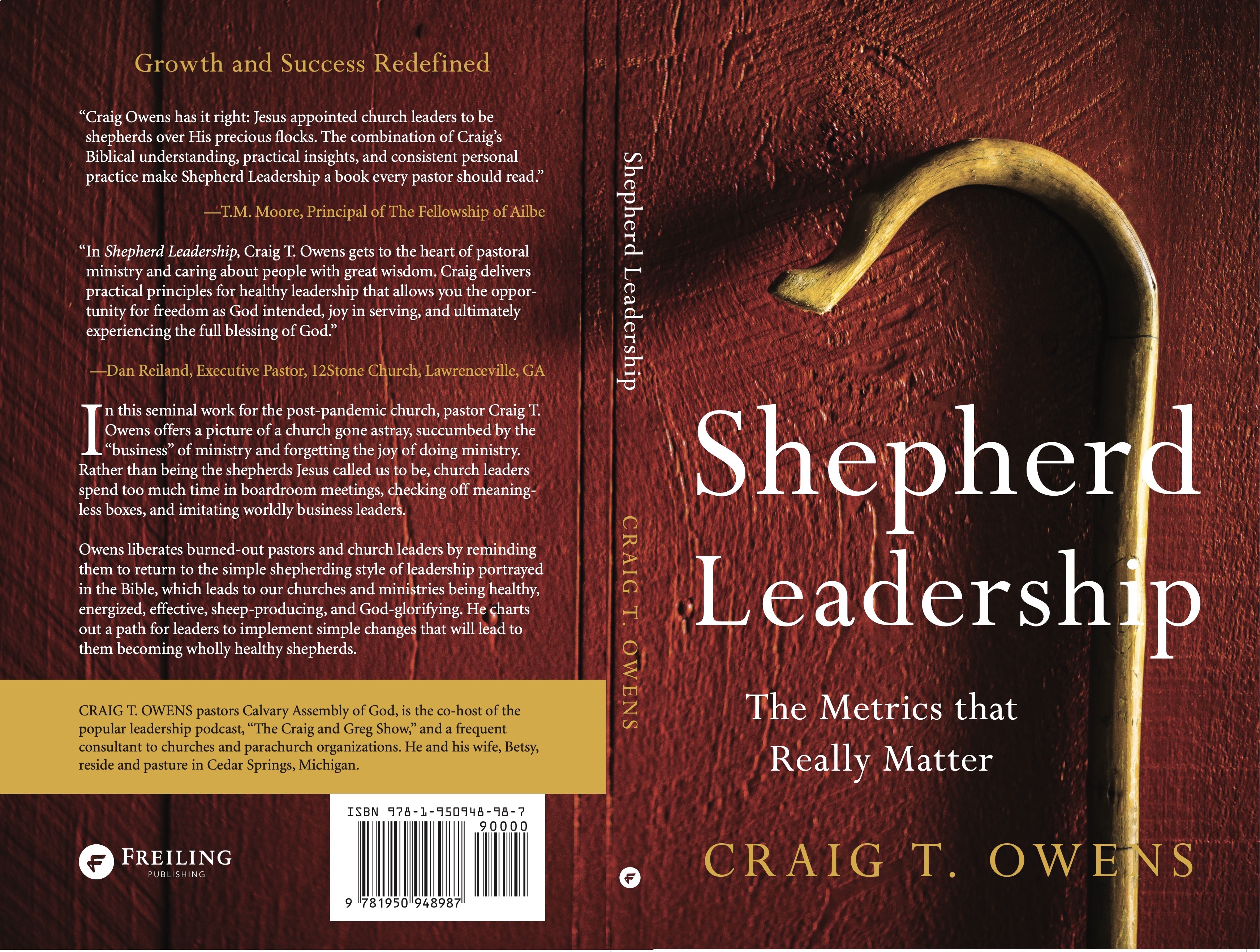
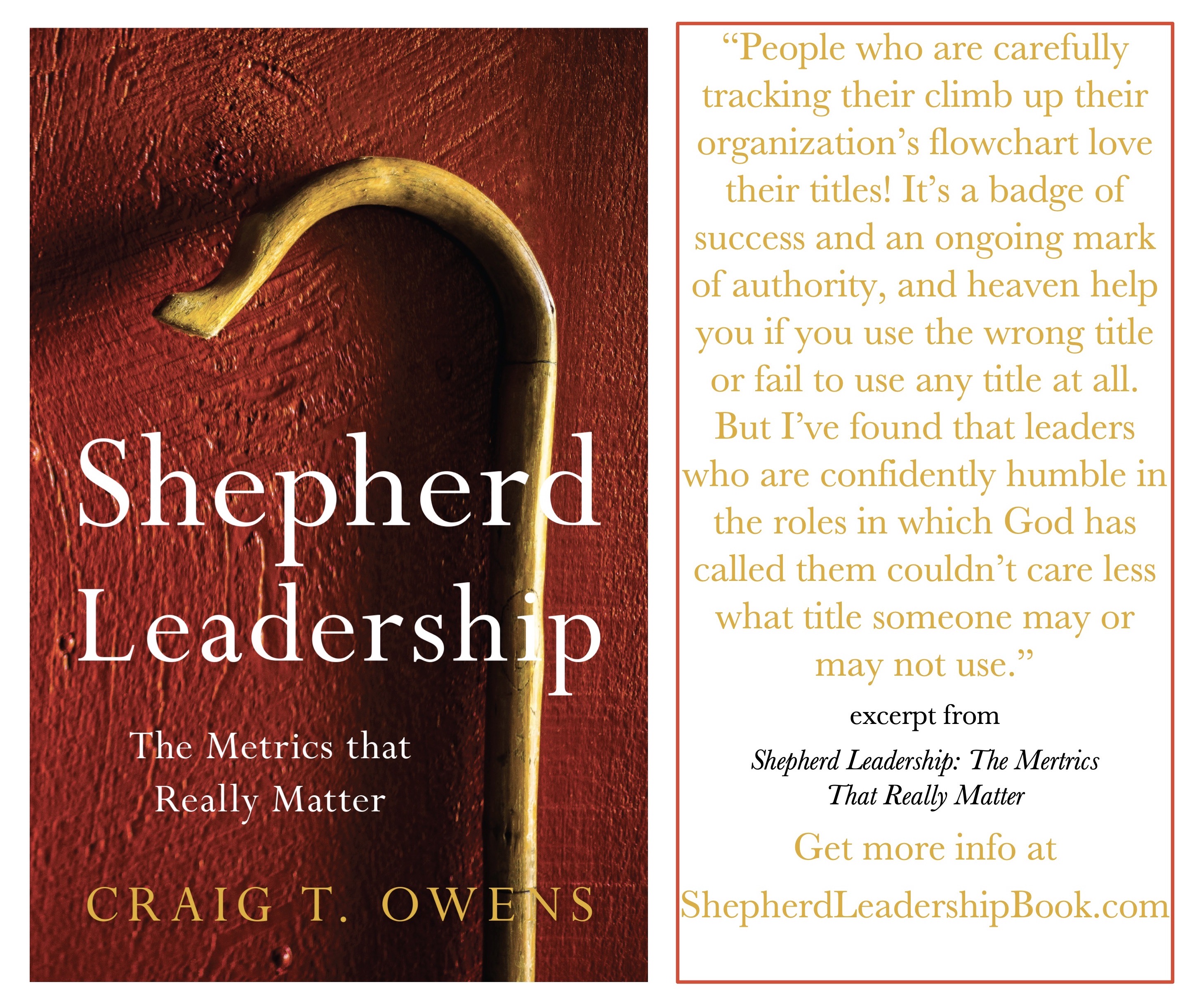
In my book Shepherd Leadership, I have a chapter entitled ‘The Wrong Ladder.’ Let me share two short paragraphs with you to set the stage—

Maybe, like many people, you’ve been working on a plan to climb your own ladder of success. You’ve been careful to get the best education, meet the right people, and put in the right amount of time on each level, all while keeping your eyes and ears open for the next “rung” of the ladder. 

Perhaps this is successful in the corporate world, but I wonder how this idea has crept into the ministry world. Make no mistake: this mindset is prominent in our churches and nonprofit organizations. We may dress it up in churchy language, but the attitude is still there. 

On the pages of Luke’s Gospel, we read a very unimpressive but praiseworthy resume of a vital ministry leader: John the Baptizer. 

His first ministry job begins when “the word of the Lord came to John son of Zechariah in the wilderness” (Luke 3:2). 

A word from God had already been spoken about John’s life that was pretty impressive (Luke 1:13-17, 76-77). From birth, John knew that he was to be the forerunner of the long-awaited Messiah. John could have walked around with quite an ego, but instead, we read, “And [John] grew and became strong in spirit; and he lived in the wilderness until he appeared publicly to Israel” (1:80).

No special education, no ladder-climbing positions, no getting to know all the right people who could open doors for him. He was simply alone with God in the wilderness for nearly 30 years! 

Then just as quickly as he burst on the scene, God took John off the scene (Luke 3:20; Matthew 14:3-11). John knew this would happen—that he was merely a herald, and that his ministry would decrease as Christ’s increased. John shows us that it’s not about how many people are in your church, how big of a budget you’ve raised, or how long you’ve been in a particular position. It’s about faithful obedience. 

It’s about being comfortable with anonymity, if that’s what God chooses. It’s about allowing God to place and remove him when and how He chooses. 

Listen to this observation from Dr. Henry Halley

Assuming that John began his ministry shortly before he baptized Jesus, it lasted about a year and a half. Thirty years in seclusion, one and a half years of public preaching, a year and four months in prison—and then the final curtain. 

This is the resume of the man who ushered in the Savior of the world, and of whom Jesus said there had not been born anyone greater (Matthew 11:11). 

In ‘The Wrong Ladder’ chapter, I concluded with this—

God frequently picks people we would consider the least qualified. He sometimes has one in an unglamorous position for years, and sometimes He catapults somebody immediately to the top. Sometimes God will keep His hand-selected individual in a prominent leadership position until death, and sometimes He will remove that person to a place of obscurity after only a short time. 

God’s ladder of success is nothing like ours! 

May all of us in leadership positions make this our prayer: Father, this is for Your glory, not my advancement. I’m not here to build my following, my resume, my fame. I only want to live and lead and minister for Your glory and for Your fame. Holy Spirit, help me keep this example of John at the forefront of my mind anytime I think about building my own resume. In the name of Jesus I ask. Amen.

►► Would you please prayerfully consider supporting this ministry? My Patreon supporters get behind-the-scenes access to exclusive materials. ◀︎◀︎

The Courage Of A Spiritual Father

Listen to the podcast of this post by clicking on the player below, and you can also subscribe on AppleSpotify, or Audible. 

Father’s Day can bring up a lot of different emotions for folks. Growing up, you might not have had a very good experience with your father or perhaps you didn’t have a father involved with you at all. Maybe you look back on your own history as a Dad and have some regrets. Perhaps you’re an empty-nester now or maybe you’ve never had kids of your own. 

Regardless of your experience with your father or with your own circumstances, I think there are some things that we all naturally expect from our Dads. These are things that we should honor and things we as Dads should strive to demonstrate in our lives.  

Luke introduces us to a man in the Book of Acts named Joseph. We don’t know if he is a biological father or not, but he is presented to us as a spiritual father that we would do well to emulate. In fact, we only know his name is Joseph from our first introduction to him. This man was such an inspiration to so many people that he was given the nickname Barnabas—the name that is used everywhere else in the New Testament. 

When we think of our list of attributes of an ideal father, I think we all look to our fathers for these five things.

(1) Be there when we are getting started. Barnabas was there when Saul (later named Paul) first became a Christian and when the first Gentiles became Christians (Acts 9:26-28; 11:19-23). 

(2) Provide for us financially. Barnabas is the first person mentioned by name that gave a significant and much-needed financial donation to the Church (Acts 4:34-37).  

(3) Help us learn to leave our nest and fly on our own. Barnabas gave Paul his first leadership role in the Church (Acts 11:25-26). 

(4) Step back as we learn to soar on our own. Barnabas took the lead in the first commissioned missionary journey, but then we see him stepping aside for Paul to take the lead (Acts 13:1-2, 13). 

(5) Continue to “be there” for us even after we’ve left the nest. Barnabas also picked John Mark to accompany him and Paul on that first missionary endeavor, but when Barnabas stepped aside for Paul, Mark headed home instead of continuing on their trip. Later on, Barnabas wanted to give Mark another shot, but Paul was strongly against that. As a result, Paul and Barnabas parted company, with Barnabas taking Mark with him. From this point on, Luke doesn’t tell us anything else about Barnabas, but we know that Mark became the first one to write his Gospel account of the life of Jesus and that he became reconciled to both Paul and Peter, becoming an invaluable help to both of them. Although we don’t read what happened, I think it’s a good bet that all of this came about through the encouragement of Barnabas (Acts 13:13, 15:36-40; 2 Timothy 4:11; 1 Peter 5:13). 

(Check out all of the above Scriptures by clicking here.)

The name Joseph means “exalted.” Joseph was born into the tribe of Levi, placing him at the heart of the Jewish faith, yet he risked it all to not only acknowledge Jesus as the Messiah but to be so invested in the Christian Church that they called him Barnabas. Luke tells that his name means Son of Encouragement. 

The word “encourage” literally comes from in + courage—to put courage into someone, to inspire others with the courage or confidence they need to do something great. 

The word “encouragement” in Acts 4:26 in Greek is paraklesis: the same word used for the Holy Spirit. 

Fathers can only put in others what is already in themselves.

Acts 11:24 tells us that Barnabas was “a good man, full of the Holy Spirit and faith.” Because He was full of the Spirit of God, he could put that courage and security in others around him. 

Guys, it’s the same for us today. We have to be filled with the security, the joy, and the courage that springs eternally from the Holy Spirit. Only when we are filled with the Spirit can we put something truly impactful into the lives of our kids—both our biological and spiritual children. 

We don’t know how old Barnabas was. We don’t know if he had children of his own or not. All we know is that he was a good man that was full of the Holy Spirit, and that gave him the courage to put into others. 

What a great example for all of us to follow! 

If you’ve missed any of the other messages in our series We Are: Pentecostal, where we’ve been learning about the blessings that come to those who are baptized in the Holy Spirit, you can find all of those messages here. 

►► Would you please prayerfully consider supporting this ministry? My Patreon supporters get behind-the-scenes access to exclusive materials. ◀︎◀︎

Links & Quotes

Quite frequently God’s measurement of success is nothing like our measurements. “More” doesn’t always mean success. Check out this example which I unpack in my book Shepherd Leadership. And be sure to check out all of my videos on my YouTube channel.

Living in the Great Lakes state my whole life, I have always been fascinated by the huge bodies of water which surround us—they are almost like mini-oceans. As a result, there have been nearly 600 shipwrecks on our lakes. Check out the history of these wrecks here.

A mini-biography of Robbie Risner, one of our nation’s most decorated pilots in the Korean and Vietnam wars.

In spite of what some skeptics claim, Christianity is not anti-science. In fact, J. Warner Wallace lays out the evidence that shows that Christ-followers have fueled the major scientific advancements of history.

“Always be a first-rate version of yourself, instead of a second-rate version of somebody else.” —Judy Garland

Isaac Newton said, “Atheism is so senseless. When I look at the solar system, I see the earth at the right distance from the sun to receive the proper amounts of heat and light. This did not happen by chance. … This most beautiful system of the sun, planets, and comets, could only proceed from the counsel and dominion of an intelligent and powerful Being.” Check out the amazing symmetries in our solar system that Copernicus, Kepler, and Newton all identified. 

“The truth is the kindest thing we can give folks in the end.” —Harriet Beecher Stowe

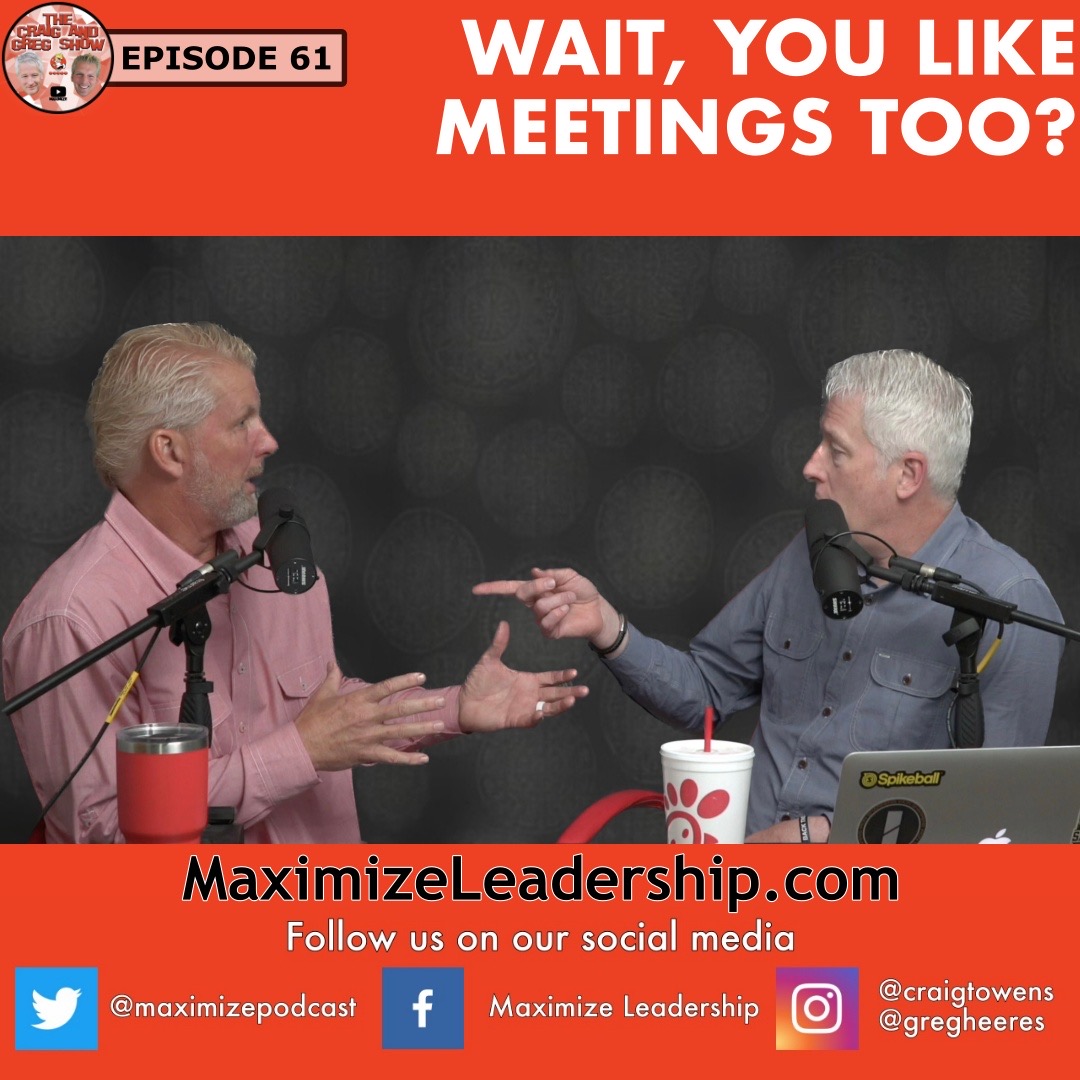
The Craig And Greg Show: Wait, You Like Meetings Too?

Listen to the audio-only version of this podcast by clicking on the player below, or scroll down to watch the video.

Too often we fall into the trap of seeing meetings as perfunctory, tedious, and downright boring to attend. In this episode, Greg and I are here to tell you, we like meetings! If managed correctly, meetings can be an impactful leadership tool that helps grow and bond your team. So set aside any of your preconceived notions, and let us tell you why they think you should embrace opportunities for meetings.

  • [0:57] We’re robbing ourselves when we just try to “get through” a meeting. 
  • [2:33] Leaders help everyone learn during the meetings.
  • [4:00] Don’t spring brand new information on your team at the meeting, but help them prepare to contribute ahead of time.
  • [5:40] There is a value in getting our teams together.
  • [7:50] Sometimes the best leadership move is to cancel a meeting.
  • [9:28] How can leaders make meetings more efficient?
  • [10:42] A leader’s attendance signals the value of the meeting.
  • [11:23] Greg has a sarcastic quote that makes a great point about meetings.
  • [12:57] Not every meeting needs to involve every team member.
  • [14:36] Leaders need to set expectations before the meeting starts.
  • [16:37] How insecure leaders sabotage meetings.
  • [19:01] Be conscious of the workloads of those who are invited to your meetings.
  • [21:47] How do leaders keep people on-topic during meetings?

Check out this episode and subscribe on YouTube so you can watch all of the upcoming episodes. You can also listen to our podcast on Spotify and Apple.

A Preview Of Heaven

Listen to the podcast of this post by clicking on the player below, and you can also subscribe on AppleSpotify, or Audible. 

When Mary visits Elizabeth, she discovers that Elizabeth is pregnant, just as the angel Gabriel told her. This confirms for Mary that everything Gabriel told her about her own pregnancy would be fulfilled too. 

At this, Mary bursts into a song that we now call the Magnificat: My soul glorifies the Lord and my spirit rejoices in God my Savior (Luke 1:46-47). 

Mary’s rejoicing was prompted by her deeper realization of who her Savior is. The more she knows her Lord, the more she can praise Him; the more she praises Him, the more He is glorified; the more He is glorified, the more she knows Him. 

So could we say it this way? As my spirit rejoices in God my Savior my soul glorifies Him. Yes, indeed we can! There seems to be an interconnectedness: As I focus on God to rejoice in Him, that rejoicing cannot help but glorify Him. 

So we could also say it this way: God is glorified in my rejoicing of Him. 

Or: As I express my delight in my Savior, His glory is seen more clearly. 

However we put it, when I rejoice in who God is, He is glorified. As He is glorified, my joy in rejoicing in Him is increased. As my joy in Him increases, I cannot help but rejoice in Him even more. 

This, I believe, is a picture of Heaven. Just as the angels encircle the throne and call out to one another, “Holy! Holy! Holy!” as they perpetually rejoice in a new realization of God’s glory, so will we. There are an infinite number of beauties in our Savior which will prompt us to rejoice in Him and glorify Him, so we need an infinite amount of time to fully appreciate His majestic beauty. 

Let’s not wait until we arrive in Heaven to begin this loving worship. Let’s follow the example of Mary and sing out our praise at every possible moment. As we do, a desperate world cannot help but be drawn to gaze upon the beauty which is celebrated in our rejoicing. 

►► Would you please prayerfully consider supporting this ministry? My Patreon supporters get behind-the-scenes access to exclusive materials. ◀︎◀︎
In, On, And Through

Listen to the podcast of this post by clicking on the player below, and you can also subscribe on AppleSpotify, or Audible. 

I’ve talked before about the benefits of calling the Old and New Testaments the First and Second Testaments. This helps me not to subconsciously slip into the thought that “old” means outdated or that “new” means a replacement of what came before it. When I say First and Second I remember that there cannot be a Second without a First, that the First anticipates the Second and the Second fulfills the First. 

The people of the First Testament experienced the Spirit of God in an often-repeated phrase: “the Spirit of the Lord came on” someone. It usually came on them for a specific task or season. For instance…

  • 70 leaders to help Moses (Numbers 11:25)
  • the judges that delivered Israel from their enemies (Judges 3:10, 6:34, 11:29, 14:6, 15:14)
  • the anointing for Israel’s king (1 Samuel 16:13)
  • empowerment for prophets to prophesy (Ezekiel 11:5)

(Check out all of the above references by clicking here.)

When the Holy Spirit came on these men, there was a noticeable supernatural anointing and empowerment, but more times than not these men also had visible and sometimes crippling stumbles. 

What happens on the outside often stays on the outside. Sort of like the little boy whose mom brought him to church one Sunday. The little boy was constantly standing up on his chair and disturbing everyone around him. Finally, the exasperated mother whispered, “If you don’t sit down I’m going to take you to the restroom and spank you.” The little boy immediately sat down with his arms tightly crossed. He looked at his mom and said, “Outside I may be sitting down but inside I’m standing up!” 

God looks at the heart. He told the Israelites that their inward defiance didn’t outweigh their outward religious practices. And Jesus said that people who prophesied, cast out demons, and performed miracles, but still had an unrepentant heart, would hear Him say, “I never knew you” (Isaiah 1:12-13; Matthew 7:21-23). 

In the First Testament, we see a desire for the Holy Spirit to be more than on—a desire for Him to come in. David prayed, “Create in me a pure heart, O God, and renew a steadfast spirit within me” (Psalm 51:10). And God promised His people, “I will give them an undivided heart and put a new spirit in them … And I will put My Spirit in you and move you to follow my decrees and be careful to keep My laws” (Ezekiel 11:19, 36:27). 

That is exactly what happened on that Pentecost Sunday immediately following Christ’s resurrection and ascension. The Christians were baptized in the Holy Spirit. He came in them and brought them into the Godhead (John 14:20). 

Jesus described this “in-ness” in the picturesque language of a branch joined to the vine. The branch cannot produce any fruit on its own, but it abides in the vine so that the fruit-producing power can flow into the branch (see John 15:1-5). 

Paul identified this fruit of the Spirit as “love, joy, peace, forbearance, kindness, goodness, faithfulness, gentleness and self-control,” and he concluded with the phrase, “against such things there is no law” (Galatians 5:22-23). The law always sets limits, but when the Holy Spirit abides in us, the production of fruit is limitless! 

Being baptized in the Holy Spirit means that we allow Him to come in us and then to work on us. It’s only when the Holy Spirit has worked in us that can He flow through us to others. Jesus said that we would receive the Spirit’s empowerment to be witnesses—that’s an inward change that produces an outward fruit.

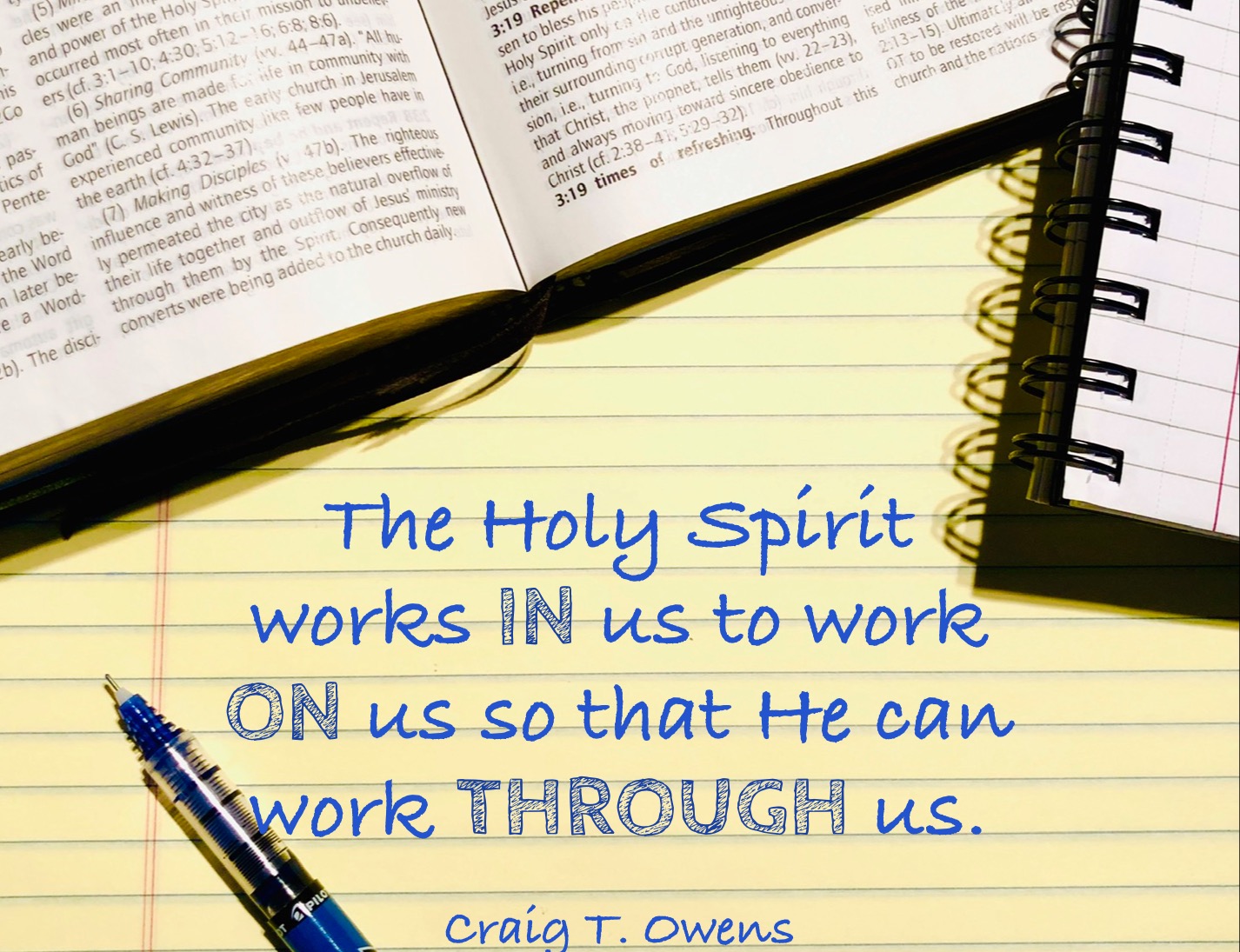
The Holy Spirit works in us to work on us so that He can work through us. So don’t stop at just salvation, but be baptized in the Holy Spirit! 

If you’ve missed any of the messages in our series on the Pentecostal experience, you can find all of those messages by clicking here. 

►► Would you please prayerfully consider supporting this ministry? My Patreon supporters get behind-the-scenes access to exclusive materials. ◀︎◀︎

How Plungerman Taught Me Humility

Listen to the podcast of this post by clicking on the player below, and you can also subscribe on AppleSpotify, or Audible. 

As I was being interviewed on the Leading From Alignment podcast, Jim Wiegand and John Opalewski were asking me about back-to-back chapters in my book Shepherd Leadership where I discuss how a leader’s confidence and humility should be in a healthy tension with each other. 

There is an alter-ego superhero I created to help me learn this lesson—his name is Plungerman! 

You can also check out more of my book Shepherd Leadership by clicking here. 

►► Would you please prayerfully consider supporting this ministry? My Patreon supporters get behind-the-scenes access to exclusive materials. ◀︎◀︎
Secure To Serve

Listen to the podcast of this post by clicking on the player below, and you can also subscribe on AppleSpotify, or Audible. 

T.M. Moore is an esteemed theologian and a good friend. I was excited to discover someone who shared my passion for viewing pastoring as “pasturing”—seeing ourselves as under-shepherds following The Chief Shepherd Jesus. 

More resources:

►► Would you please prayerfully consider supporting this ministry? My Patreon supporters get behind-the-scenes access to exclusive materials. ◀︎◀︎
Check Your Inputs

Listen to the podcast of this post by clicking on the player below, and you can also subscribe on AppleSpotify, or Audible.

Jesus was the healthiest Person to ever walk planet Earth. When Luke, a physician, tells us about the growth of Jesus, he says first that “Jesus grew in wisdom.” (Luke 2:52). That is our indication that a healthy mind is at the foundation for every other aspect of health. 

But mental health doesn’t stay in your mind—it affects every other part of your life. Likewise, all of the other parts of your life can enhance or drain your mental health. We are created as interconnected beings. For instance, it’s hard to think correctly when you’re physically tired, spiritually drained, or involved in an unhealthy relationship. It’s also true that it’s hard to make good decisions about your physical health, stay focused on God, or handle your relationships successfully if you aren’t thinking correctly. 

We see the apostles writing about our wholly healthiness

Dear friend, I pray that you may enjoy good health and that all may go well with you, even as your soul is getting along well. (3 John 2) 

Now may the God of peace make you holy in every way, and may your whole spirit and soul and body be kept blameless until our Lord Jesus Christ comes again. (1 Thessalonians 5:23 NLT) 

When my laptop is disconnected from the monitors I use at our church building, the message on the screen tells me to “check your inputs.” That’s not just for inanimate technology, but for us too: To maintain good overall health, we need to check our physical, spiritual, mental, and emotional inputs. 

Let’s start with the physical inputs. When we are active during the day our bodies release a stress hormone called cortisol. Stress is not a bad thing—it’s a normal thing. A body that isn’t stressed will atrophy and become susceptible to disease. Balanced, healthy stress is called eustress, and unbalanced, unhealthy stress is called distress. 

Cortisol is naturally flushed from the body in two ways: exercise and sleep. Exercise is important to keep our bodies moving effectively, and sleep helps us recover and helps our brains catalogue our memories (see 1 Timothy 4:8; Psalm 3:5). To fuel our exercise and our sleep requires the energy which we get from a healthy diet. 

So if you’re not thinking healthy thoughts, check your physical inputs: Am I getting the proper amount of sleep? Am I exercising regularly? Am I eating properly? Do I see a doctor for a checkup? 

How about spiritual inputs? Somewhat surprisingly, our spirits are kept healthy very much along the same lines as our physical bodies—proper food, appropriate exercise, and a time of rest. Our spiritual food is God’s Word, our exercise is working out what we’ve studied in the Bible, and our rest is called sabbathing (Jeremiah 15:16; Matthew 7:24-27; James 2:17). Jesus demonstrated all of these in His life and we, too, should follow His example. 

If you’re not thinking healthy thoughts, check your spiritual inputs: Am I reading the Bible regularly? Am I putting what I learn into practice? Am I sabbathing properly?  

Then there our emotional inputs, or the relationships that build us and relationships that drain us. You are always going to encounter people in need, and ministering to those needs is draining (Luke 8:45-46). We also need to be alert to those antagonistic people who purposely drain us (2 Timothy 4:14-15). We can make decisions to place people in our lives who build us up and be cautious of those who drain us (Proverbs 27:3, 5-6, 9, 17). 

Once again, if you’re not thinking healthy thoughts, check your emotional inputs: Do I have healthy people investing in my life? Am I sharpening the iron of others? 

Finally, let’s not forget the mental inputs. Computer programmers are well aware of the acronym GIGO: garbage in, garbage out. If you don’t like the results that are coming out, check what is going in. The apostle Paul gives us an outstanding checklist in Philippians 4:8. 

If your mental health isn’t as healthy as you would like it to be, perhaps you need to talk to your doctor about your physical health, or a mature spiritual friend about your spiritual health, or a Christian counselor about your emotional health. As you consult with these wise people, continue to pray for God’s help. As your Creator, He knows you better than anyone else could and He can give you the wisdom you need as you check your inputs. 

This is part 5 in our series on a Christian’s mental health. If you’ve missed any of the other messages I’ve shared, you can find them all by clicking here. 

►► Would you please prayerfully consider supporting this ministry? My Patreon supporters get behind-the-scenes access to exclusive materials. ◀︎◀︎