After God had taken away his voice, Ezekiel picked up his pen and wrote chapters 25–32 as prophetic warnings. It was after all of these warnings were written down that God renewed His call to Ezekiel to be His watchman (33:7 and 3:17).
How many times do I want to check out because I am not able to do things as I had been doing them before? Any one of us can fall into that all-or-nothing mindset—if I can’t do everything as I have been doing it, I won’t do anything at all.
Ezekiel teaches us three important lessons:
No complaints to God
No excuses for discontinuing his ministry
Full obedience to God’s call on his life
What an outstanding lesson for all of us!
►► I dive deeper into this topic in a video that I shared exclusively with my Patreon supporters. Would you please prayerfully consider supporting this ministry? For just $5 per month you will be supporting all of the free content I make available on my blog, my podcast, and my YouTube channel, and you will be getting access to all of my exclusive content too. ◀︎◀︎
Listen to the podcast of this post by clicking on the player below, and you can also subscribe on Apple, Spotify, or Audible.
Have you noticed some people just say, “Morning,” but not “Good morning”? Almost as if they are waiting to see if it’s actually going to be good. I think many people wake up overwhelmed before their feet hit the floor. If the cliche says, “When it rains it pours,” to them it seems like it’s always pouring!
In our series, we’ve been asking if certain statements are in the Bible. Statement #7 is God won’t give you more than you can handle. Is that in the Bible? Well, kinda.
Many people would say, “Yes, it’s in the Bible” based on 1 Corinthians 10:13 which says, “No temptation has overtaken you except what is common to mankind. And God is faithful; He will not let you be tempted beyond what you can bear. But when you are tempted, He will also provide a way out so that you can endure it.”
Remember that context is king, so we need to look at the whole setting. For this verse, I would suggest going back to the beginning of the chapter (1 Corinthians 10:1-14). Paul is telling us that Israel’s bad examples are a warning for us. What’s the warning? It boils down to not becoming overconfident in our own abilities—“So, if you think you are standing firm, be careful that you don’t fall!” (v. 12).
Overconfidence exposes us to temptation. James does a really good job of defining temptation as our own evil desires that have met an opportunity to give in (James 1:13-14). When the pressure is on, perhaps I’m tempted to…
…cut corners
…water down the truth
…tell a little white lie
…justify helping myself to something that isn’t mine
One phrase reminds us that “no temptation or trial has come to you that is beyond human resistance and that is not adjusted and adapted” to us. God is helping us grow through those tempting times.
Another phrase from this verse says that God “can be trusted not to let you be tempted and tried and assayed beyond your ability and strength of resistance and power to endure.” God knows the perfect time and temperature of our trials to remove the impurities from our lives.
Paul’s conclusion—his “therefore”—is found in the next verse: “Therefore, my dear friends, flee from idolatry” (1 Corinthians 10:14). “Flee” means we are to take hold of ourselves to stay away from dangerous places, and “idols” are anything we put in place of God.
Notice the verse says, “God…will not let you be tempted beyond what you can bear.” Sometimes I set myself up to stumble when I’m…
…physically tired
…hangry
…spiritually drained
…emotionally frazzled
Even in these things God will give us wisdom if we ask Him (James 1:5), but we must apply the wisdom He gives us.
So God tests me to purify and strengthen me. God will never overwhelm me or set me up for failure, but I may overwhelm myself and set myself up for failure if I’m not being careful about the idols I set up in my life.
So If you are feeling overwhelmed, if you are feeling like there’s too much, if you feel like you’re giving in to temptations, ask yourself:
Am I getting enough sleep?
How’s my diet?
Have I made Bible reading and prayer a priority this week?
Are there any relationships that are draining me?
Have I confessed my shortcomings?
Have I asked God for wisdom?
Have I obeyed what God has already shown me?
God will never give me more than I can handle in His tests, but sometimes I give myself more than I can handle. It’s time to remove those idols and stumbling blocks from my life.
Listen to the podcast of this post by clicking on the player below, and you can also subscribe on Apple, Spotify, or Audible.
I stay near the door. I neither go too far in, nor stay too far out, The door is the most important door in the world— It is the door through which men walk when they find God. There’s no use my going way inside, and staying there, When so many are still outside, and they, as much as I, Crave to know where the door is. And all that so many ever find Is only the wall where a door ought to be. They creep along the wall like blind men. With outstretched, groping hands, Feeling for a door, knowing there must be a door, Yet they never find it… So I stay near the door.
The most tremendous thing in the world Is for men to find that door—the door to God. The most important thing any man can do Is to take hold of one of those blind, groping hands, And put it on the latch—the latch that only clicks And opens to the man’s own touch. Men die outside that door, as starving beggars die On cold nights in cruel cities in the dead of winter— Die for want of what is within their grasp. They live, on the other side of it—live because they have found it. Nothing else matters compared to helping them find it, And open it, and walk in, and find Him… So I stay near the door.
Go in, great saints, go all the way in— Go way down into the cavernous cellars, And way up into the spacious attics— In a vast, roomy house, this house where God is. Go into the deepest of hidden casements, Of withdrawal, of silence, of sainthood. Some must inhabit those inner rooms, And know the depths and heights of God, And call outside to the rest of us how wonderful it is. Sometimes I take a deeper look in, Sometimes venture a little farther; But my place seems closer to the opening… So I stay near the door.
The people too far in do not see how near these are To leaving—preoccupied with the wonder of it all. Somebody must watch for those who have entered the door, But would like to run away. So for them, too, I stay near the door.
I admire the people who go way in. But I wish they would not forget how it was Before they got in. Then they would be able to help The people who have not even found the door, Or the people who want to run away again from God. You can go in too deeply, and stay in too long, And forget the people outside the door. As for me, I shall take my old accustomed place, Near enough to God to hear Him, and know He is there, But not so far from men as not to hear them, And remember they are there too. Where? Outside the door— Thousands of them, millions of them. But—more important for me— One of them, two of them, ten of them, Whose hands I am intended to put on the latch, So I shall stay by the door and wait For those who seek it. ‘I had rather be a door-keeper…’ So I stay near the door. —Samuel Shoemaker
“[God] does not need us. If we stay away He is not impoverished. He does not need us in order to be happy in the fellowship of the Trinity. But He magnifies His mercy by giving us free access through His Son, in spite of our sin, to the one Reality that can satisfy us completely and forever, namely, Himself. ‘You make known to me the path of life; in Your presence there is fullness of joy; at Your right hand are pleasures forevermore’ (Psalm 16:11).” —John Piper
“Good preachers are good learners, and not just of the Scriptures. They need to understand the times and the ways the times impact the people they are called to serve. Preachers who know their sheep well, as our Good Shepherd exemplified for us, will hear their concerns, understand their thoughts, discern their hopes and fears, and be able to preach in a way that speaks directly to their souls with transforming grace and power. Let us strive to be sons of Issachar when it comes to the ministry of God’s Word.” —T.M. Moore
This week I shared another exclusive video with my Patreon supporters. Please consider supporting this ministry at just $5 per month. I also shared this public video especially for my fellow pastors:
John Stonestreet wrote about our amazing brain. What a marvelous thing our Creator has given us! Here is just one example: “In 2013, a collaboration between Japanese and German scientists created one of the most realistic brain simulations ever attempted. They used what was, at that time, the world’s fourth-largest computer, containing over 700,000 processor cores and producing an eye-popping 1.4 million gigabytes of RAM. The machine worked at top speed, crunching numbers for over 40 minutes. In the end, it produced just one second of simulated brain activity.”
This is a weekly series with things I’m reading and pondering from Charles Spurgeon. You can read the original seed thought here, or type “Thursdays With Spurgeon” in the search box to read more entries.
Listen to the podcast of this post by clicking on the player below, and you can also subscribe on Apple, Spotify, or Audible.
Three Keys To Effective Prayer
Why is this extraordinary power of prayer given to those who abide in Christ? May what I have to say encourage you to make the glorious attempt to win this pearl of great price! Why is it, that by abiding in Christ and having His words abide in us, we get to this liberty and prevalence in prayer? …
I answer, first, because of the fullness of Christ. … I see clearly enough why the branch gets all it wants while it abides in the stem, since all it wants is already in the stem and is placed there for the sake of the branch. What does the branch want more than the stem can give it? If it did want more, it could not get it. For it has no other means of living but by sucking its life out of the stem. O my precious Lord, if I want anything that is not in You, I desire always to be without it. I desire to be denied a wish that wanders outside of You. But if the supply of my desire is already in You for me, why should I go elsewhere? You are my all, where else should I look? …
The next reason for this is the richness of the Word of God. … The best praying man is the man who is most believingly familiar with the promises of God. After all, prayer is nothing but taking God’s promises to Him and saying to Him, ‘Do as You have said.’ … If the Word of God abides in you, you are the man who can pray because you meet the great God with His own words….
A man will succeed in prayer when his faith is strong. And this is the case with those who abide in Jesus. It is faith that prevails in prayer. The real eloquence of prayer is a believing desire. ‘All things are possible to him who believes’ (Mark 9:23). A man abiding in Christ, with Christ’s words abiding in him, is eminently a believer and consequently eminently successful in prayer.
From The Secret Of Power In Prayer
God Himself has told us, “Call to Me and I will answer you and tell you great and unsearchable things you do not know” (Jeremiah 33:3). Not “I might answer you,” but “I will answer you.”
God also tells us how to receive what we ask in prayer:
Abide in Jesus. Desire nothing else but to know His heart more intimately.
Know God’s Word. The Bible isn’t just a Book to be read through, but it’s a Book to be prayed through.
Stretch your faith. A desperate father said to Jesus, “If You can, please help us.” Jesus admonished that father—and all of us too—to believe that Jesus is able to accomplish what we ask of Him. And then comes this great exclamation from that same desperate father: “I do believe; help me overcome my unbelief!” The God that wants us to have faith in Him for answered prayers is the same God Who imparts that faith to us. How? By abiding in Jesus and taking God at His Word.
Don’t give up, my friend. Keep praying. There is no other way to learn to pray more effectively than to keep on abiding in Jesus, keep on claiming the biblical promises, and keep on stretching your faith to present your prayer request to Him again.
Listen to the podcast of this post by clicking on the player below, and you can also subscribe on Apple, Spotify, or Audible.
How many times has fear constricted your world?
When I look back on some of my past decisions, I can see that often my procrastination in making that decision was from a fear-based, worst-case scenario. I held back because I was afraid of the outcome from my decision.
Also when I look back I see that even the things that didn’t go perfectly never turned out to be devastatingly bad, but something from which I could recover and learn valuable lessons.
Now, I’m not talking about shoot-from-the-hip, never-thought-it-through actions. Those things have frequently gotten me in hot water! What I’m talking about is thinking it through, getting good counsel, praying about it, and then still holding back from making a decision.
Fear would cause us to procrastinate, only see the negative possibilities, and maybe even become disobedient to God because we think we have to rely on our resources. On the other hand, hope wants us to see the possibilities, hear God’s voice, and then step out in confident faith.
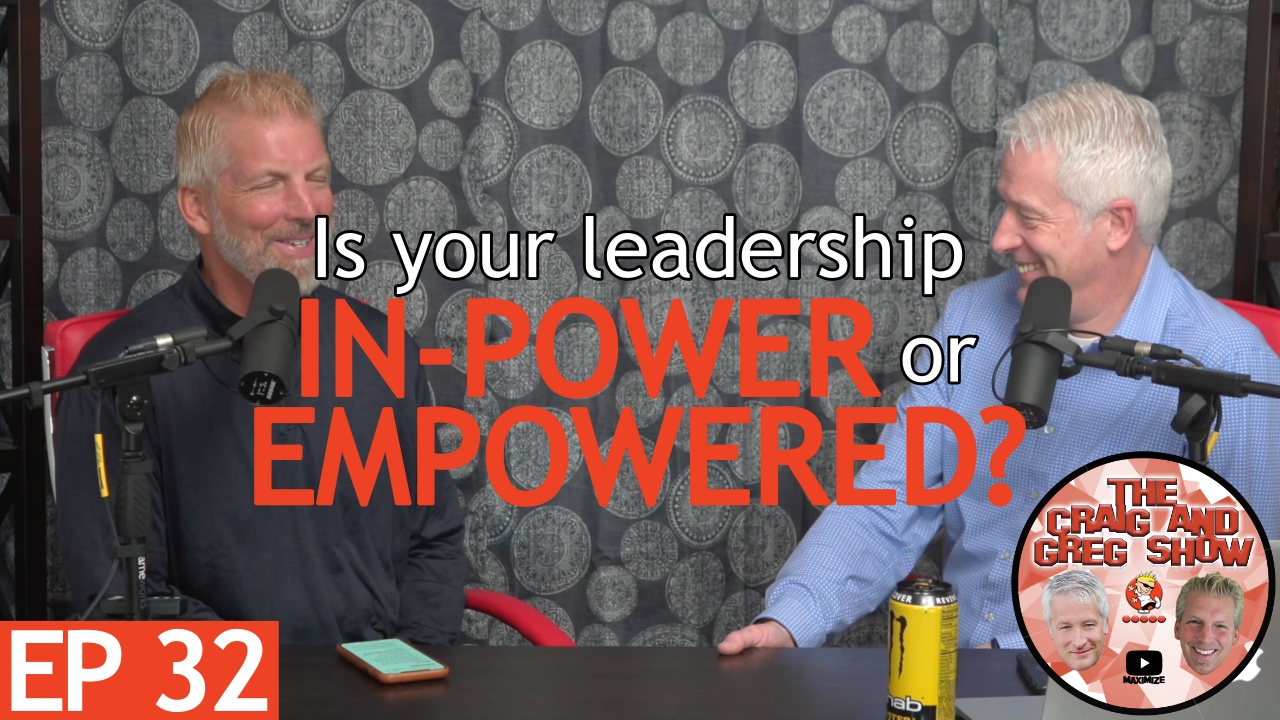
My friend Greg and I discussed this fear versus hope topic on an episode of our leadership podcast called The Craig And Greg Show.
[1:52] Does your empowerment show people you trust them?
[4:00] Craig tells a story about how the best mentors hold up a mirror.
[6:15] Do you believe you’re in-power, or do you empower?
[7:28] The guys talk about Patrick Lencioni’s leadership books.
[8:23] What is a habit that holds back a leader from empowering?
[10:27] Is your leadership trustworthy?
[12:10] Insecurity kills empowerment
[12:51] Getting Naked!!
[14:15] Are you admitting your mistakes first?
[14:50] Are you self-aware about what’s holding you back from empowering others?
[16:34] What is the difference between delegation and empowerment?
[17:45] Craig and Greg challenge leaders on examining their empowerment of others.
Check out this episode and subscribe on YouTube so you can watch all of the upcoming episodes. You can also listen to our podcast on Spotify and Apple.
Listen to the podcast of this post by clicking on the player below, and you can also subscribe on Apple, Spotify, or Audible.
Just as I was beginning my business career, Louis Gerstner was at the top of his career. Mr. Gerstner stepped in as the CEO of IBM when Big Blue was at a perilous time: This massive company was on the brink of either crumbling or soaring. Gerstner unpacks the impressive turnaround story in his book Who Says Elephants Can’t Dance?
When I was in my teenage years, several family members were encouraging me to consider IBM for my career path. They explained that a job at IBM would become a lucrative, influential, and lifelong position. Indeed, since its founding in the early twentieth century, it had grown into a worldwide behemoth of technology. You could tell IBM employees by their distinct dress, confidence, and loyalty to Big Blue.
But adhering to the rigid principles that both Thomas Watson Sr. and Thomas Watson Jr. had preached turned into inflexible practices that were losing the true soul of this once-great company. By the early 1990s, IBM was floundering, hemorrhaging cash, and about to experience one of the most epic collapses any organization had ever seen.
Enter Louis Gerstner. He had developed a stellar reputation at American Express and RJR Nabisco, and was highly sought as the CEO of IBM. Except Mr. Gerstner initially didn’t want to take on this challenge. He knew how difficult it would be to lead change in an organization that was so entrenched in its nearly 100-year-old ways.
Eventually, he did agree to step into this role, and over the next decade led one of the most comprehensive and impressive turnarounds in business history. IBM shook off stodgy practices while returning to its founding principles, refocused on customers’ needs, and as a result, regained its dominance in the technology field.
Any organization—whether for-profit or non-profit—can get stuck in a rut. Its once-beneficial principles can morph into practices which are merely attempting to keep the machinery running, but are no longer meaningful for either team members or other stakeholders.
Mr. Gerstner’s refocusing of the elephant-sized IBM will give any leader some invaluable insights into how to keep their organization from sliding into ineffectiveness and irrelevance. I would highly recommend this book to all leaders.
Listen to the podcast of this post by clicking on the player below, and you can also subscribe on Apple, Spotify, or Audible.
I’ve noticed that when people want to sound super-spiritual that they like to use King James Version phrases. Sometimes I hear people speaking in normal, everyday English until they begin praying and then I hear, “Thy servant … Thou O Most High … we beseech Thee … Thou knowest Thine children….”
Statement #6 in our series “Is that in the Bible” also sounds more powerful when people quote it in King James English—Shun the very appearance of evil or sometimes Wherefore come out from among them, and be ye separate, saith the Lord. Are those in the Bible? Yes, they are!
We don’t use the word “shun” very often today, but in what was probably the first written book of the Bible we read that not only did Job shun evil, but God commended him for shunning evil too. And wise King Solomon advocated for his readers to shun evil (Job 1:1, 8; 2:3; Proverbs 3:7, 14:16).
Yes, those phrases that I quoted earlier come right from the King James Version of the Bible in 1 Thessalonians 5:22 and 2 Corinthians 6:17, but does this mean that we are to stay away from anything that is “unChristian”? Does it mean that we are to shun sinners?
There is a story that is told in the synoptic Gospels, but I especially like it in Matthew’s Gospel for one specific reason (which I’ll share with you in a moment). Jesus has just called Matthew to be His disciple, and several of Matthew’s coworkers appear to be having a going-away dinner for him which Jesus attended.
Then comes the “911” call from the Pharisees (this statement is in Matthew 9:11): “Gasp! Jesus is eating with sinners! He’s not shunning them! Call in the sin police!” The New Living Translation is even more harsh, with the Pharisees asking, “Why does your Teacher eat with such scum?” (v. 13 NLT).
In Luke’s Gospel we read another story where Jesus eating with “such scum” turned another tax collector’s life around. In Luke 19:1-10, we read of Zaccheus experiencing a complete life change because of His encounter with Jesus.
Listen to Christ’s words in both Matthew and Luke: “It is not the healthy who need a doctor, but the sick. … I have not come to call the righteous, but sinners. … The Son of Man came to seek and to save what was lost” (Matthew 9:12-13; Luke 19:10).
This doesn’t sound like Jesus shunned sinners.
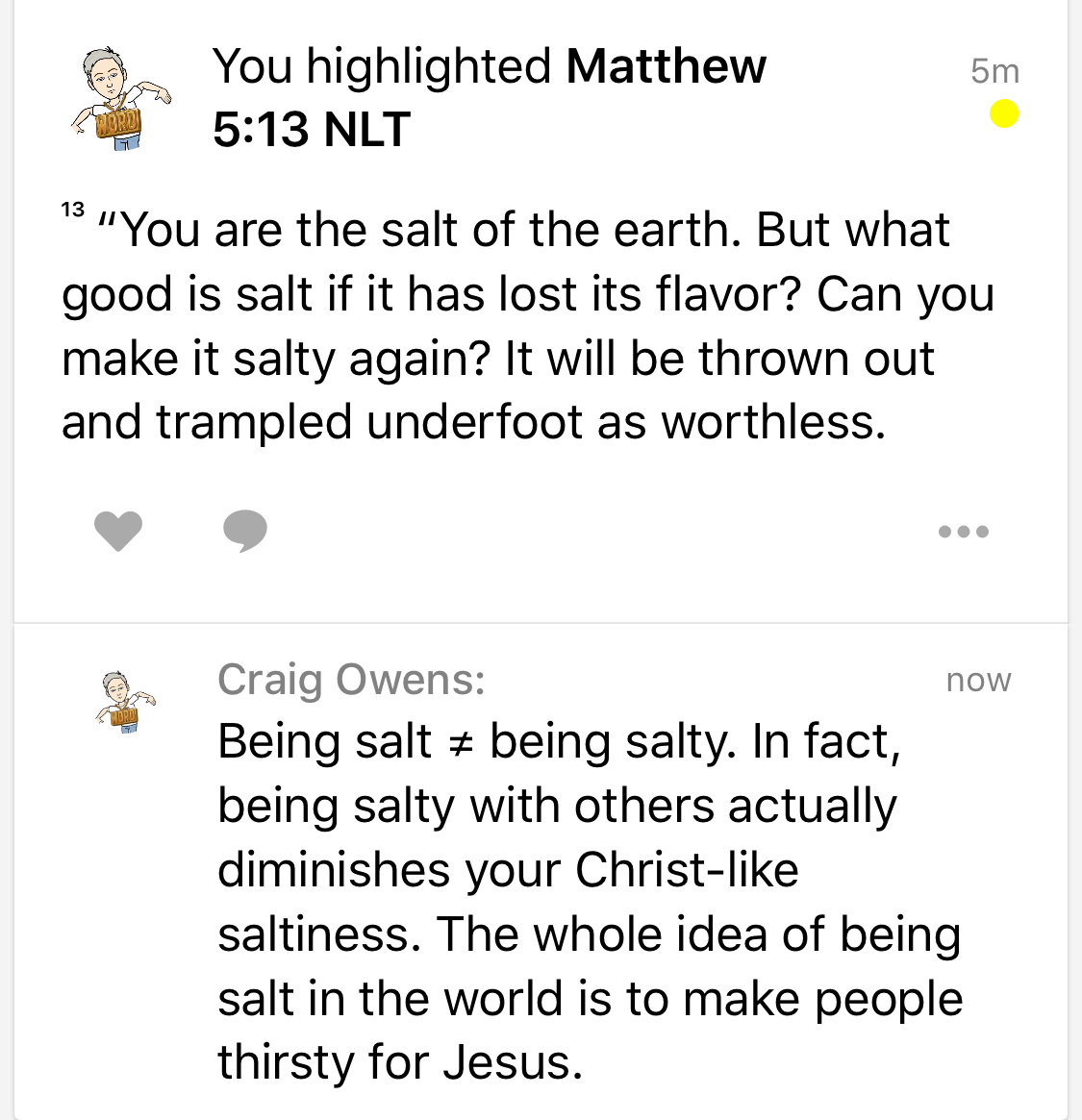
Likewise, Jesus called us to be His salt and light in the world (Matthew 5:13-14). No matter how beneficial the salt of my life is, it doesn’t help anyone if it stays in the saltshaker, shunning the food. No matter how bright the lantern of my life is, it doesn’t help anyone in a closed closet, shunning the darkness.
Notice what Jesus didn’t do. He didn’t go to Matthew’s house or Zaccheus’ house for a good time, or for a good meal, or for a time of entertainment. He was on mission. So too for Christians: We go into dark places not for our pleasure or entertainment, but because we’re on a rescue mission!
In both the Old Testament Hebrew and the New Testament Greek, the words for “shun” point at our own hearts. The words mean: You walk away from things that will pull you down, or you hold yourself back from the places and things that will lead you to sin.
So look at the phrase “Shun the very appearance of evil” in its context: “Do not quench the Spirit. Do not treat prophecies with contempt but test them all; hold on to what is good, reject [or shun] every kind of evil” (1 Thessalonians 5:19-22).
Paul is calling us to shun the things that drown out the voice of the Holy Spirit. Listen to two of those verses in another translation: “But test and prove all things until you can recognize what is good; to that hold fast. Abstain from evil” (vv. 21-22 AMP).
In 2 Corinthians 6 the phrase “Be ye separate” is in the context about being “unequally yoked” with unbelievers. This is what happened to King Solomon when he married women who were idolaters, and they pulled his heart away from God.
“Shun” means to keep away from those things that would pull you down. How do I know if a certain environment or activity or person is pulling me down? I need to check my thoughts, attitudes, and actions. If I find they are becoming un-Christlike, then that is an indication of a place or person that I need to limit my exposure.
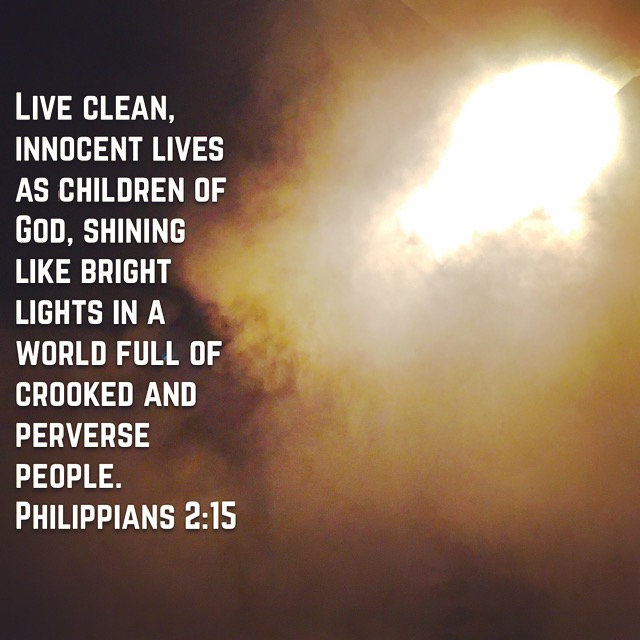
As long as my thoughts, attitudes, and actions remain Christlike, I should keep on seasoning and shining in dark places so that I can draw others to Jesus. “Do everything without complaining and arguing, so that no one can criticize you. Live clean, innocent lives as children of God, shining like bright lights in a world full of crooked and perverse people” (Philippians 2:14-15 NLT).
Don’t shun people that Jesus dearly loves, but don’t put yourself in a position where your devotion to God is compromised either. Listen to the voice of the Holy Spirit giving you the wisdom you need to be both on-mission for Jesus and shining a bright, innocent light!
Listen to the podcast of this post by clicking on the player below, and you can also subscribe on Apple, Spotify, or Audible.
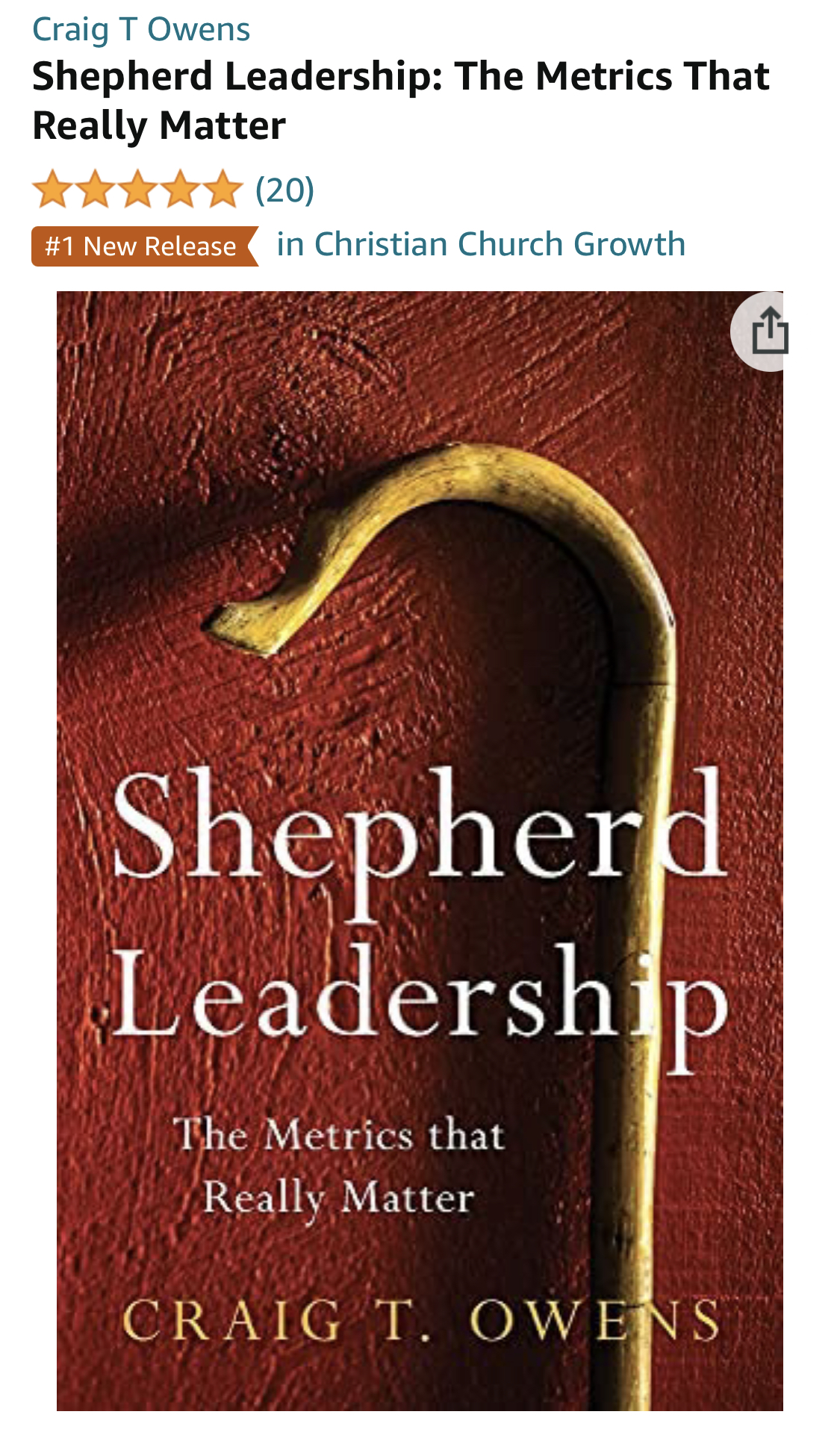
My friend Greg Heeres and I have been through so many things over the past 30 years. For the past couple of years, we have been presenting a leadership podcast called The Craig And Greg Show. Recently, Greg wanted to talk with me about the success of my book Shepherd Leadership: The Metrics That Really Matter, and to get an update on how the book has been received by others.
I am so grateful that my book was listed on Amazon as a #1 new release. Shepherd Leadership: The Metrics That Really Matter is available in print or ebook, and in audiobook through either Audible or Apple.



 …so my mouth was opened and I was no longer silent (Ezekiel 33:22).
 I love the humanitarian work of Convoy of Hope wherever there is a need. They are on the front lines of Ukraine right now. If you are looking for a good organization to support financially,



 Craig T. Owens