10 Quotes From “The Knowledge Of The Holy”

A.W. Tozer helps us think long and deep about the greatness of God, opening windows of insight that many have not contemplated previously. Check out my full book review of The Knowledge Of The Holy by clicking here. 

“With our loss of the sense of Majesty has come the further loss of religious awe and consciousness of the divine presence. … The decline of the knowledge of the holy has brought on our troubles. A rediscovery of the majesty of God will go along way toward curing them.” 

“What comes into our minds when we think about God is the most important thing about us.” 

“The man who comes to a right belief about God is relieved of ten thousand temporal problems, for he sees at once that these have to do with matters which at the most cannot concern him for very long; but even if the multiple burdens of time may be lifted from him, the one mighty single burden of eternity begins to press down upon him with a weight more crushing then all the woes of the world piled one upon another. …

“But unless the weight of the burden is felt, the gospel can mean nothing to the man; and until he sees a vision of God high and lifted up, there will be no woe and no burden. Low views of God destroyed the gospel for all who hold them.” 

“Among the sins to which the human heart is prone, hardly any other is more hateful to God than idolatry, for idolatry is at bottom a libel on His character. … The essence of idolatry is the entertainment of thoughts about God that are unworthy of Him.” 

“The heaviest obligation lying upon the Christian Church today is to purify and elevate her concept of God until it is once more worthy of Him—and of her.” 

“When the Spirit would acquaint us with something that lies beyond the field of our knowledge, He tells us that this thing is like something we already know, but He is always careful to phrase His description so as to save us from slavish literalism.” 

“An attribute of God is whatever God has in anyway revealed as being true of Himself.” 

“We might be wise to follow the insight of the enraptured heart rather than the more cautious reasonings of the theological mind.” 

“If we ever think well it should be when we think of God.” 

“The harmony of His being is the result not of a perfect balance of parts but of the absence of parts.… An attribute, then, is not a part of God, it is how God is…. The divine attributes are what we know to be true of God. He does not possess them as qualities; they are how God is as He reveals Himself to His creatures.” 

The Knowledge Of The Holy (book review)

One definition of a Christian mystic is someone who engages in deep, prayerful pondering of the nature of God, as He is revealed in the Scriptures, and then emerges from those intimate encounters to share with us what he or she has learned. I would put A.W. Tozer in this category, especially in his book The Knowledge Of The Holy—The Attributes of God: Their Meaning in the Christian Life. 

Tozer himself described the Christian mystic more fully than I could in his book The Christian Book Of Mystical Verse. In that book, Tozer shared some poetic verses from some of his favorite mystical thinkers. He noted, “The hymns and poems found here are mystical in that they are God-oriented; they begin with God, embrace the worshipping soul, and return to God again.” 

In The Knowledge Of The Holy, Tozer takes us on his own personal journey into the immeasurable depths of God’s greatness. Whereas many theologians tend to focus on one attribute of God at a time, Tozer has a God-given ability to help us see all of God’s attributes operating in their infinite fullness. 

Even as Tozer plunges deep into the attributes of God’s self-existence, self-sufficiency, omniscience, omnipotence, omnipresence, love, mercy, justice, grace, and sovereignty, he reminds us, “Because God is immutable He always acts like Himself, and because He is a unity He never suspends one of His attributes in order to exercise another.” 

This is not a book you can ready lightly or casually, or even quickly. This is a book that invites you to read slowly and reverently each of the short chapters, and then to meditate long on the immenseness of an All-Powerful, All-Loving God who wants to reveal Himself to you. 

The Knowledge Of The Holy is a soul-expanding book!

4 + 4 Strategies To Eliminate Distractions To Your Prayer Time

There’s a quote that has been the theme for this series on prayer: “Prayer pursues joy in fruitful fellowship with Jesus, knowing that God is glorified when we bear fruit in answer to prayer. Why do God’s children so often fail to have consistent habits of happy, fruitful prayer? Unless I’m badly mistaken, one of the reasons is not so much that we don’t want to, but that we don’t plan to.” —John Piper 

And unless I’m badly mistaken, the most obvious thing we need to plan to eliminate is distractions. 

Some people say they can juggle a lot of things at once. “I’m a really good multitasker,” they say. But science says differently. MIT neuroscientist Earl Miller concluded that our brains are “not wired to multitask well…. When people think they’re multitasking, they’re actually just switching from one task to another very rapidly. And every time they do, there’s a cognitive cost.” What is that cognitive cost? “Multitasking can drop IQ as much as 15 points, essentially turning you into the cognitive equivalent of an 8-year-old” (Inc. Magazine). 

If the devil can make you think you can multitask prayer with other things, he has seriously inhibited the effectiveness of your prayers. 

Jesus was not a multitasker—but He was singularly focused on His Father’s plan. And yet He accomplished more in His three years of public ministry than anyone else in history! 

Here are 4 strategies to help you get ready to pray:

  1. Try to have your prayer time in the same place and at the same time. Your brain likes routine and it will help you zero-in during your scheduled prayer times. 
  2. Silence your cell phone or other noisy distractions. 
  3. Keep a notepad handy for random thoughts that pop into your head. Writing them down will keep your brain from switching back-and-forth to them.
  4. Focus on listening, not on talking—Eugene Peterson said, “Prayer is first of all a means of listening. Prayer is an act of attention.” 

When we get right down to it, prayer is spiritual warfare (2 Corinthians 2:11; Ephesians 6:10-18). In the context of warfare, the word strategy means the maneuvering that takes place prior to the battle. The devil is a masterful tactician, and he will do everything he can to keep you distracted. 

That’s why three times Peter tells us to be clear-minded and singularly-focused in our thoughts SO THAT we can pray without the hindrances of distractions (1 Peter 1:13-14; 4:7; 5:8-9). And Paul tells us to take all our thoughts captive, so that no un-Christlike thoughts are inhibiting our prayer time (2 Corinthians 10:4-5). 

Here are 4 strategies to help you stay focused in prayer:

  1. A—adoration. Enter into God’s presence with a Psalm or worship music. 
  2. C—confession. Deal with unconfessed sin, unforgiveness, or relationship strife as quickly as possible (Psalm 66:18; Matthew 5:21-24). 
  3. T—thanksgiving. Paul counseled us, “Do not be anxious about anything, but in everything, by prayer and petition WITH thanksgiving, present your requests to God” (Philippians 4:6).  
  4. S—supplication. Intercede for your brothers and sisters in the battles they are facing (James 5:16; Job 42:10; Ephesians 6:18).  

Remember—

Prayer isn’t preparation for the battle; prayer IS the battle! Let’s not be distracted from that!

Poetry Saturday—Of Hidden Uses

All things being are essential to the vast ubiquity of God;
Neither is there one thing overmuch, nor freed from honorable servitude.
Were there not a need be of wisdom, nothing would be as it is;
For essence without necessity argueth a moral weakness.
We look through a glass darkly, we catch but glimpses of truth;
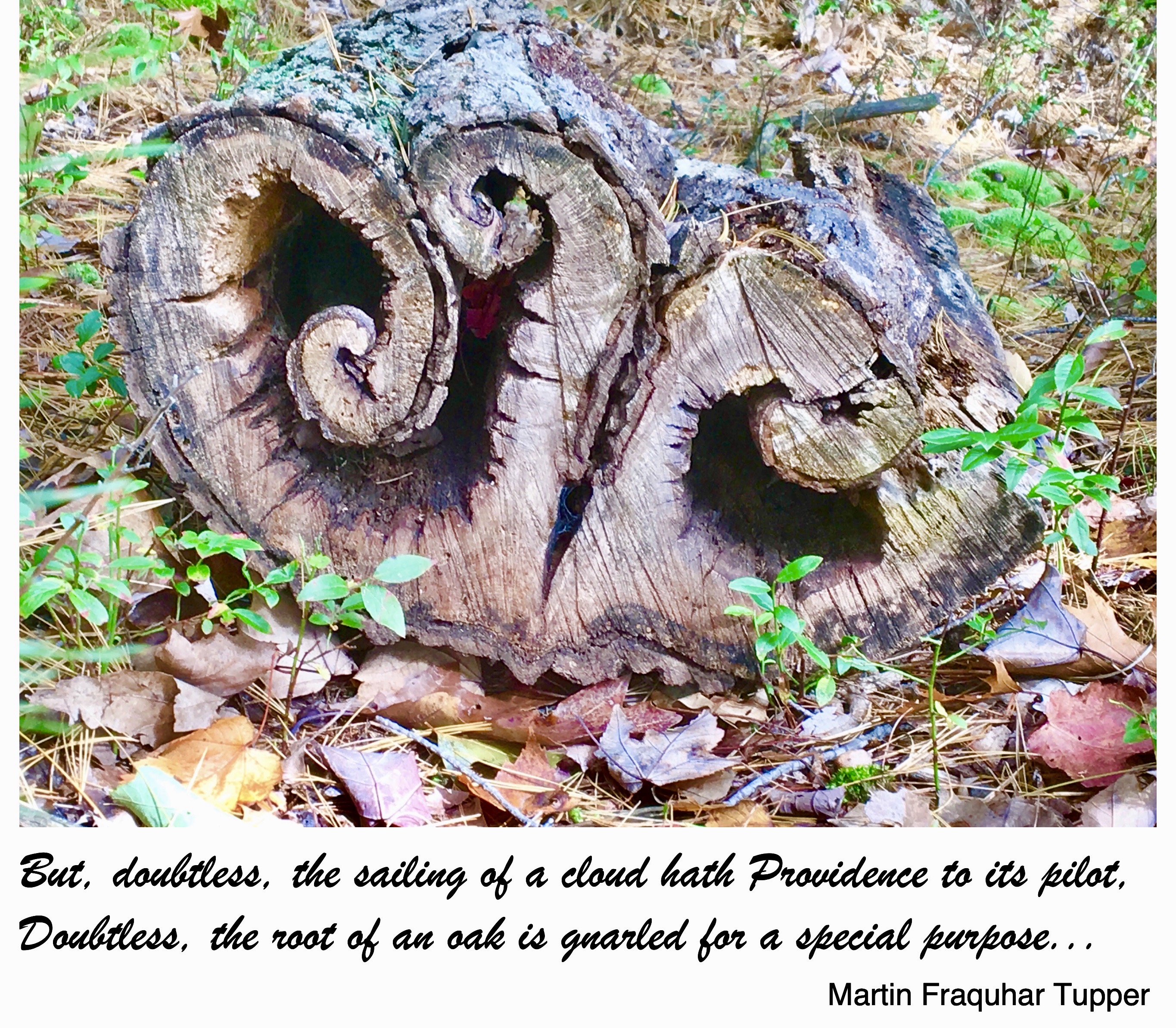
But, doubtless, the sailing of a cloud hath Providence to its pilot,
Doubtless, the root of an oak is gnarled for a special purpose,
The foreknown station of a rush is as fixed as the station of a king,
And chaff from the hand of a winnower, steered as the stars in their courses.
Man liveth only in himself, but the Lord liveth in all things;
And His pervading unity quickeneth the whole creation.
Man doeth one thing at once, nor can he think two thoughts together;
But God compasseth all things, mantling the globe like air;
And we render homage to His wisdom, seeing use in all His creatures,
For, perchance, the universe would die, were not all things as they are. —Martin Fraquhar Tupper

Thursdays With Spurgeon—Born A King

This is a weekly series with things I’m reading and pondering from Charles Spurgeon. You can read the original seed thought here, or type “Thursdays With Spurgeon” in the search box to read more entries.

Born A King

     A very singular thing is this, that Jesus Christ was said to have been ‘born King of the Jews’ (Matthew 2:2). … The moment that He came on earth, He was a king. He did not wait till His majority that He might take His empire—but as soon as His eye greeted the sunshine, He was a King. From the moment that His little hands grasped anything, they grasped a scepter. As soon as His pulse beat and His blood begin to flow, His heart beat royally and His pulse beat an imperial measure and His blood flowed in a kingly current. He was born a King. He came ‘to be ruler in Israel.’ … 

     His goings forth as our Surety were from everlasting [Micah 5:2]. Pause, my soul, and wonder! You had goings forth in the person of Jesus from everlasting. Not only when you were born into the world did Christ love you, but His delights were with the sons of men before there were any sons of men! Often did He think of them; from everlasting to everlasting He had set His affection upon them. … 

     If He had not loved me with a love as deep as hell and as unutterable as the grave, if He had not given His whole heart to me, I am sure He would have turned from me long ago. He knew what I would be and He had time enough to consider it—but I am His choice and that is the end of it. … He knew me before I knew myself—yes, He knew me before I was myself. … 

     Sweet Lord Jesus! You whose going forth were of old, even from everlasting, You have not left Your goings forth yet. Oh, that You would go forth this day to cheer the faint, to help the weary, to bind up our wounds, to comfort our distresses! Go forth, we beseech You, to conquer sinners, to subdue hard hearts, to break the iron gates of sinners’ lusts and cut the iron bars of their sins in pieces! O Jesus! Go forth, and when You go forth, come to me!

From The Incarnation And Birth Of Christ

Think about that for a moment—Jesus had all of eternity to think about you, to see your whole life, and still, He loved you enough to die on a Cross for you! 

That God should love a sinner such as I 
Should yearn to change my sorrow into bliss 
Nor rest till He had planned to bring me nigh 
How wonderful is love like this

Such love, such wondrous love 
That God should love a sinner such as I 
How wonderful is love like this

That Christ should join so freely in the scheme 
Although it meant His death on Calvary
Did ever human tongue find nobler theme 
Than love divine that ransomed me

That for a willful outcast such as I
The Father planned the Savior bled and died 
Redemption for a worthless slave to buy 
Who long had law and grace defied

And now He takes me to His heart a son 
He asks me not to fill a servant’s place 
The far off country wanderings all are done 
Wide open are His arms of grace —C. Bishop, Such Love

Leaders Listen

“The moment you wake up each morning your wishes and hopes for the day rush at you like wild animals. And the first job of each morning consists in shoving them all back; in listening to that other Voice, letting that other, stronger, larger, quieter Life come flowing in.” —C.S. Lewis 

“God said, ‘Abraham!’ ‘Yes?’ answered Abraham. ‘I’m listening.’” —Genesis 22:1 

Then God came and stood before him exactly as before, calling out, ‘Samuel! Samuel!’ Samuel answered, ‘Speak. I’m Your servant, ready to listen.’” —1 Samuel 3:10 

“How much of God are we missing because we don’t stop to listen to the many voices God uses to speak to us?” —George Washington Carver 

“To answer before listening—that is folly and shame.” —Proverbs 18:13 

“Courage is what it takes to stand up and speak; courage is also what it takes to sit down and listen.” —Winston Churchill

A mark of a godly leader is one who listens to the counsel of other godly leaders. 

“Wise, godly leaders know they must listen to the counsel of wise, godly leaders.” —Craig T. Owens 

“Lead with your ears, follow up with your tongue, and let anger straggle along in the rear.” —James 1:19 

“There are none so blind as those who will not see, none so deaf as those who will not hear, none so ignorant as those who will not listen… and none so foolish as those who think they can change those who will not see, hear, or listen.” —Warren Bennis

“Correct the wise, and they will love you.” —Proverbs 9:8 

“What is a great man who has made his mark upon history? … He is a man who has looked through the confusion of the moment and has seen the moral issue involved; he is a man who has refused to have his sense of justice distorted; he has listened to his conscience until conscience becomes a trumpet call to like-minded men, so that they gather about him, and together, with mutual purpose and mutual aid, they make a new period in history.” —Jane Addams, in a speech about George Washington 

“People don’t lose intimacy when they stop talking, but when they stop listening. Leaders seldom realize how much their listening empowers the other person. Because they are leaders, the sheer act of listening speaks volumes that even a great speech can’t communicate. …   

“A leader’s communication must be consistent, clear, and courteous. But leaders must also be good listeners. When leaders don’t listen: They stop gaining wisdom. … Leaders listen; leaders learn; and then leaders lead.” —John Maxwell 

This is part 43 in my series on godly leadership. You can check out all of my posts in this series by clicking here.

Acceptable And Pleasing

…acceptable to the Lord … an aroma pleasing to the Lord… (Leviticus 1:3, 9). 

Whether it’s a sacrifice or a lifestyle, these two phrases sum up the goal of obeying all of God’s directives: acceptable and pleasing. 

“But,” you might say, “there is a lot of law to obey—a lot! 

And I would agree with you. Beginning with the Ten Commandments in Exodus 20 and going all the way through Numbers 9, there are 56(!) chapters of regulations.

“And I’m supposed to follow all of those?!” 

Yes! Every single one of them. And not just those, but also the innumerable man-made rules that were added on top of all of those laws. 

In the opening words of Leviticus, two key words emerge:

  • Acceptable to the Lord 
  • An aroma pleasing to the Lord

“How can I ever get there?” 

YOU can’t! 

For EVERYONE has sinned; we ALL fall short of God’s righteous standard (Romans 3:23 NLT). 

For NO PERSON will be justified—made righteous, acquitted, and judged acceptable—in God’s sight by observing the works prescribed by the Law… (Romans 3:20 AMP). 

But here is our hope—Blessed be the God and Father of our Lord Jesus Christ, Who has blessed us with every spiritual blessing the heavenly places in Christ…to the praise and of the glory of His grace, by which HE MADE US ACCEPTABLE in the Beloved (Ephesians 1:3, 6 NKJV). 

And when we are in Christ, we also become an aroma pleasing to God—Our lives are a Christ-like FRAGRANCE rising up to God (2 Corinthians 2:14-17 NLT). 

On our own, we cannot accomplish any of this. But in Christ we are both ACCEPTABLE to the Lord … and an aroma PLEASING to the Lord…. 

Enjoying The Meal

I am so active every day that I need to eat about 2700 calories just to maintain my weight. Eating that often, if I’m not careful, I can just simply put food in my mouth and really not taste it. 

I think most people realize that there is a difference between eating and enjoying their food. Not only is gulping not very pleasurable, but doctors have even found some negative impacts on habitual food-gulpers. Things like: 

  1. Indigestion 
  2. Weight gain 
  3. Disconnection from hunger/full signals 
  4. Increasingly likelihood of unhealthy food choices 

In the same way, there’s a difference between praying and enjoying our time with God (see Mark 6:30-31 and Revelation 3:20).

Just as there are many physical benefits to enjoying healthy food, there are also many spiritual benefits to enjoying our time in God’s Word and God’s presence. This spiritual eating and digestion process is called meditation. 

Allow me to put a couple of thoughts together to show you the value of this spiritual discipline: 

  • The apostle Paul told us, “Pray continually” (1 Thessalonians 5:17). 
  • God told Joshua, “Keep this Book of the Law always on your lips; meditate on it day and night, so that you may be careful to do everything written in it. Then you will be prosperous and successful” (Joshua 1:8).

So the way we pray continually is to have something healthy to digest. We can feast on God’s Word and then allow the Holy Spirit to extract all of the healthy spiritual nutrients that will allow us to grow and mature. 

David said, “Taste and see that the Lord is good” (Psalm 34:8). Don’t gulp down your meal of the Scripture—taste it. Don’t rush through your prayer time—enjoy it. Keep mulling over what you have read. Keep chewing on it to help the digestion of the good stuff you need to be healthy.

We meditate on the Word of God to learn how to continually commune with the God of the Word. 

Meditating on God’s Word with the Holy Spirit’s help means you will never lack material for praying continually.

Poetry Saturday—God Is The Name My Soul Adores

God is the Name my soul adores,
The almighty Three, the eternal One;
Nature and grace, with all their powers,
Confess the Infinite unknown.

Thy voice produced the sea and spheres,
Bade the waves roar, the planets shine;
But nothing like Thyself appears
Through all these spacious works of Thine.

Still restless nature dies and grows;
From change to change the creatures run:
Thy being no succession knows,
And all Thy vast designs are one.

A glance of Thine runs through the globe,
Rules the bright worlds, and moves their frame;
Of light Thou formist Thy dazzling robe;
Thy ministers are living flame.

How shall polluted mortals dare
To sing Thy glory or Thy grace?
Beneath Thy feet we lie afar,
And see but shadows of Thy face.

Who can behold the blazing light?
Who can approach the consuming flame?
None but Thy wisdom knows Thy might
None but Thy Word can speak Thy Name. —Isaac Watts

Thursdays With Spurgeon—Why Bethlehem?

This is a weekly series with things I’m reading and pondering from Charles Spurgeon. You can read the original seed thought here, or type “Thursdays With Spurgeon” in the search box to read more entries.

Why Bethlehem?

     There [in Bethlehem] cleaved to [Naomi] Ruth the Moabitess, whose Gentile blood should unite with the pure untainted stream of the Jew and should thus bring forth the Lord our Savior, the great King both of Jews and Gentiles. … And in the streets of Bethlehem did Boaz and Ruth receive a blessing that made them fruitful, so that Boaz became the father of Obed and Obed the father of Jesse—and Jesse the father of David. … 

     There is something in the name of the place. Bethlehem Ephrathah. The word Bethlehem has a double meeting. It signifies ‘the house of bread’ and ‘the house of war.’ …

     Bethlehem, you house of bread, rightly were you called, for there the Bread of life was first handed down for man to eat.

     And it is called ‘the house of war,’ because Christ is to a man either ‘the house of bread’ or else ‘the house of war.’ While He is food to the righteous, He causes war to the wicked, according to His own words: ‘Do not think that I came to bring peace on earth. I did not come to bring peace but a sword…’ (Matthew 10:34–36).

     Sinner, if you do not know Bethlehem as ‘the house of bread,’ it will be to you a ‘house of war.’ If from the lips of Jesus you never drink sweet honey—if you were not like the bee, which sips sweet luscious liquor from the Rose of Sharon, then out of the selfsame mouth there will go forth against you a two-edged sword! And that mouth from which the righteous draw their bread will be to you the mouth of destruction and the cause of your ill. … 

     Ephrathah … the meaning of it is ‘fruitfulness’ or ‘abundance.’ … 

     If we are like trees planted by the rivers of water, bringing forth our fruit in our season, it is not because we were naturally fruitful, but because of the rivers of water by which we were planted. It is Jesus who makes us fruitful. ‘If you abide in Me, and My words abide in you, you will ask what you desire, and it shall be done for you’ (John 15:7). Glorious Bethlehem Ephrathah! Rightly named! Fruitful house of bread—the house of abundant provision for the people of God! 

From The Incarnation And Birth Of Christ

Bethlehem wasn’t just a random place for Jesus Christ to be born. God doesn’t do anything randomly. Everything He does has a plan and a purpose. We may have difficulty seeing what the purpose is. As Martin Tupper noted in one of his poems—

We look through a glass darkly, we catch but glimpses of truth;
But, doubtless, the sailing of a cloud hath Providence to its pilot…
Man doeth one thing at once, nor can he think two thoughts together;
But God compasseth all things, mantling the globe like air…

Not only was the birthplace of Jesus purposely chosen by God, so was your birthplace. And your birth parents. And, indeed, everything about you. You are not an accident or some chance encounter. You have been created by God on purpose and for a purpose. 

Let the birthplace of Jesus—all the rich meaning of Bethlehem Ephrathah—be an encouragement to you that God knows and loves you dearly. Your life has meaning and purpose, which you can discover through a personal relationship with your Heavenly Father through Jesus Christ.