Links & Quotes

A.W. Tozer said, “There’s an awesomeness about God which is missing in our day altogether; there’s little sense of admiring awe in the Church of Christ these days.” May we repent of little prayers and boldly pray to an awesome God who wants to do awesome things that will bring Him glory!

I have lots of new content every week, which you can check out on my YouTube channel.

I always smile at the archeological discoveries which confirm the historicity of the Bible! Discovery after discovery keeps reinforcing that the Bible is a reliable historical document—which is exactly what one would expect from the inspired Word of God. Here are two recent article: (1) An archeological biography of the Assyrian king Ashurbanipal, and (2) The excavation of a rare Roman prison in Corinth that “likely gives us a picture of those that held the apostles as recorded in the New Testament (e.g. Acts 5:18, 12:5, 16:23).”

This is a very informative Q&A session with cold case detective and Christian apologist J. Warner Wallace. But I especially like his answer to the first question: Do Christians have to investigate every other religion to be convinced that the Bible is true?

“Faith untried may be true faith, but it is sure to be little faith, and it is likely to remain dwarfish so long as it is without trials. Faith never prospers so well as when all things are against her: tempests are her trainers, and lightnings are her illuminators. … No flowers wear so lovely a blue as those which grow at the foot of the frozen glacier; no stars gleam so brightly as those which glisten in the polar sky; no water tastes so sweet as that which springs amid the desert sand; and no faith is so precious as that which lives and triumphs in adversity. … Faith increases in solidity, assurance, and intensity, the more it is exercised with tribulation. Faith is precious, and its trial is precious too.” —Charles Spurgeon 

“Mature Christians can be recognized by a variety of indicators. They feast on the Word of God (Hebrews 5:14), persevere in love and good works (Hebrews 6:9-10), bear the fruit of the Spirit rather than the marks of the flesh (Galatians 6:16-23), use their gifts to help build the church (1 Corinthians 12:7-11; Ephesians 4:12-16), teach the things of Jesus to others (Hebrews 5:12: Acts 1:8), and more. This, the New Testament insists, is the condition toward which every Christian strives.” —T.M. Moore (check out all of the Scriptures T.M. references here

“Now is the accepted time, not tomorrow, not some more convenient season. It is today that our best work can be done.” —W.E.B. Du Bois 

Jesus shows us that only secure people can serve others. Insecure people won’t ever make themselves vulnerable, and so they miss out on God’s blessing. I address this in more depth in my book Shepherd Leadership.
Reassuring The Timid Soul

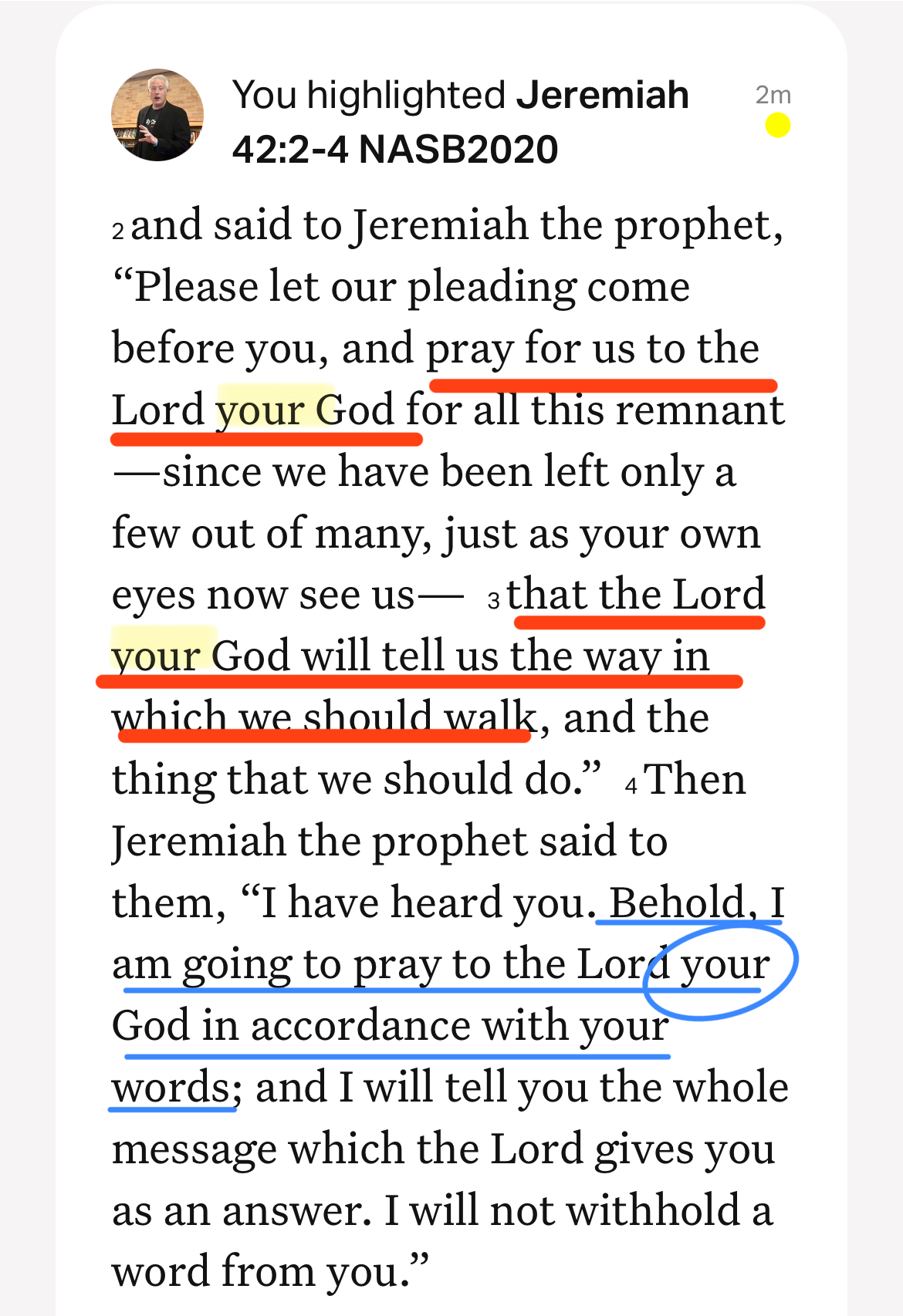
…All the people from the small to the great approached and said to Jeremiah the prophet, “Please let our pleading come before you, and pray for us to the Lord your God for all this remnant—since we have been left only a few out of many, just as your own eyes now see us—that the Lord your God will tell us the way in which we should walk, and the thing that we should do.” Then Jeremiah the prophet said to them, “I have heard you. Behold, I am going to pray to the Lord your God in accordance with your words; and I will tell you the whole message which the Lord gives you as an answer. I will not withhold a word from you.” (Jeremiah 42:1-4)

You can hear the distance that the people felt from God in the words they say to Jeremiah, “the Lord YOUR God.” 

But Jeremiah reassures them that God still sees them and loves them when he responds with the exact same words—not “the Lord my God” (as the people thought he would say) but “the Lord YOUR God.” 

This word of encouragement from Jeremiah helped this same group of people to see God in the right light: “Whether it is pleasant or unpleasant, we will listen to the voice of the Lord OUR God to whom we are sending you, so that it may go well for us when we listen to the voice of the Lord OUR God” (v. 6).

This is a good reminder for all of us that we need to encourage one another whenever we have the opportunity. “Let’s approach [our] God with a sincere heart in full assurance of faith … and let’s consider how to encourage one another in love and good deeds” (Hebrews 10:22, 24).

You may want to check out my post A Unique Look At “Church” for some further thoughts about encouraging our brothers and sisters.

The Craig And Greg Show: Patience And Impatience

Listen to the audio-only version of this podcast by clicking on the player below, or scroll down to watch the video.

In today’s episode we’re going to—IMPATIENCE! Yes, we’re talking about impatience. As a leader it can be hard to resist the temptation of impatience, but Greg and I believe that developing patience is a vital skill for leaders. In this episode we’ll explore some of the pitfalls of impatience, and share strategies for you to develop into a more thoughtful and patient leader.

  • [0:14] We’re looking at the leadership builder vs. killer of patience vs. impatience. 
  • [1:41] Patience is sometimes misperceived as not being in control—like we’re simply waiting around for something to happen.
  • [2:27] Can patience be developed?
  • [3:50] Patience allows a process to mature, and helps people grow.
  • [7:35] Warning: patience can cross a line into procrastination.
  • [8:30] Leaders need to avoid the temptation of impatiently answering too quickly.
  • [10:50] What leadership pressures make us give in to impatience?
  • [12:59] Leaders can help their teammates with their own impatience by asking some thoughtful questions.
  • [15:28] Ego + Bad advice = Dangerous impatience
  • [16:40] Patience helps leaders trust both the process and the people around them.
  • [18:33] Leaders need to be aware of what’s happening in themselves when their patience is stretched. Patient leaders grow their leadership influence.
  • [22:24] Greg quizzes me about the origins of patience.
  • [24:45] I make a confession about my impatience in my early years.
  • [25:55] Greg shares an insightful quote about the value of patience.

Check out this episode and subscribe on YouTube so you can watch all of the upcoming episodes. You can also listen to our podcast on Spotify and Apple.

An Apologetic For Apologetics

Listen to the podcast of this post by clicking on the player below, and you can also subscribe on AppleSpotify, or Audible. 

I would like to give Christians an apologetic about Christian apologetics.

Check out this episode of The Podcast.

The Scriptures I reference in this episode of The Podcast are 1 Peter 3:15-16; Luke 1:1-4; Acts 1:1-3; Luke 24:45-49; Acts 1:5, 8.

In a couple of earlier blog posts, I elaborate more on some points in this episode. Check out:

I have also talked quite a bit about apologetics on my blog, which you can find here.

Keep up with everything else I have going on, including my newest book and my other podcasts by clicking here.

►► Would you please prayerfully consider supporting this ministry? My Patreon supporters get behind-the-scenes access to exclusive materials. ◀︎◀︎

Honoring Friends And “Enemies”

Listen to the podcast of this post by clicking on the player below, and you can also subscribe on AppleSpotify, or Audible.

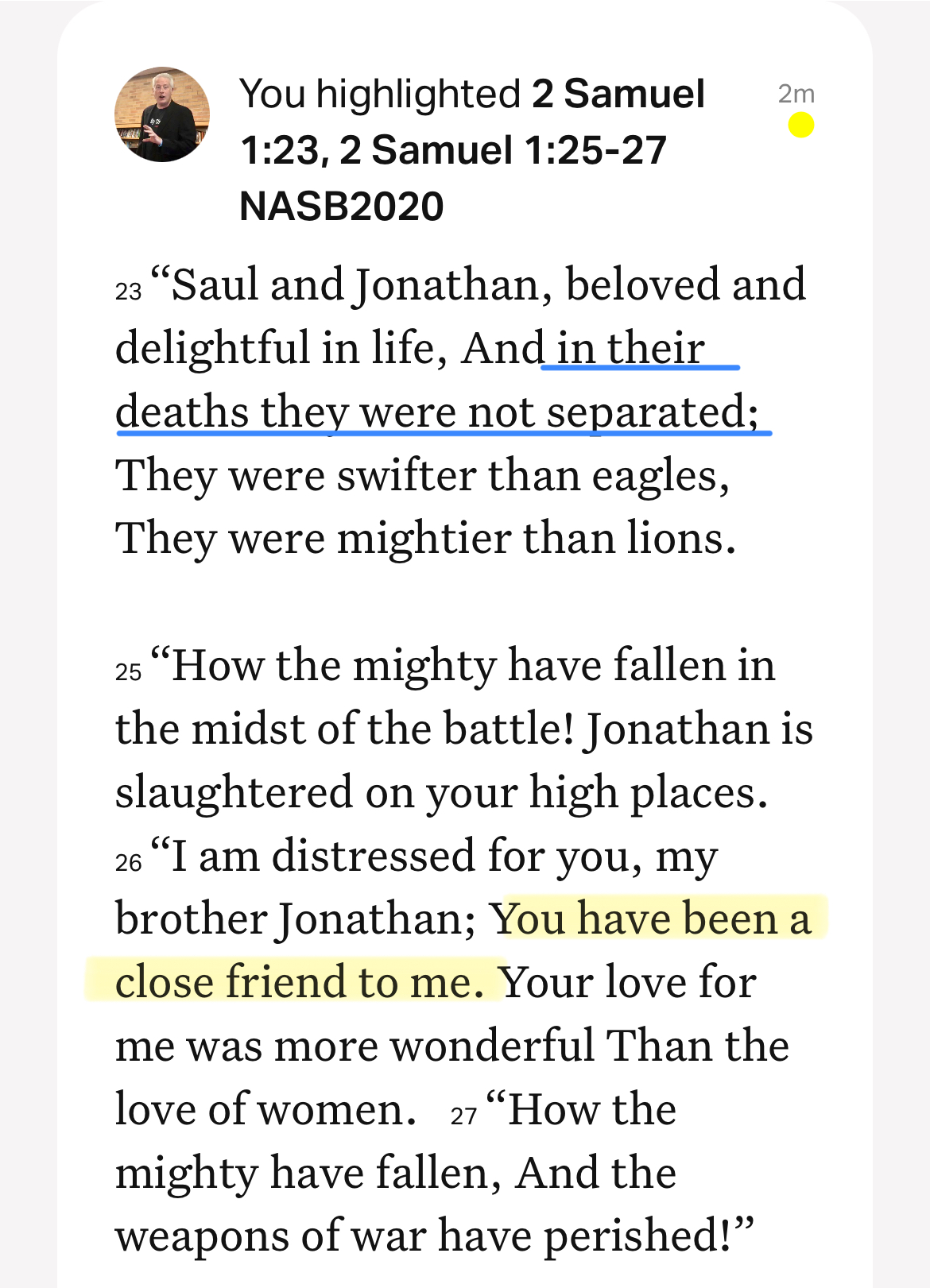
Saul and Jonathan, beloved and delightful in life, and in their deaths they were not separated; they were swifter than eagles, they were mightier than lions. Daughters of Israel, weep over Saul, who clothed you in scarlet, with jewelry, who put gold jewelry on your apparel. How the mighty have fallen in the midst of the battle! Jonathan is slaughtered on your high places. I am distressed for you, my brother Jonathan; you have been a close friend to me. Your love for me was more wonderful than the love of women. How the mighty have fallen, and the weapons of war have perished! (2 Samuel 1:23-27)

It’s not surprising that David honored his friend Jonathan in song after his death. But it is surprising that Jonathan remained faithfully at his father’s side, fulfilling his duties as a son and a prince of Israel, although he did not agree with his father’s treatment of David. 

In Jonathan we see the obedience to the fifth commandment: Honor your father and mother (Exodus 20:12). 

And it is also surprising that David says nothing bad about Saul in this song of lament, but only praises him for his valiant victories as Israel’s king. 

In David we see a true picture of forgiveness—where a forgiven transgression is a forgotten transgression, no longer held by David against his tormentor. Later in his life, David would write about the mind-blowing truth that God obliterates the record of our forgiven sins, never bringing them up again (Psalm 103:10-12)! 

Is it any wonder that David and Jonathan became and remained such close friends? From the moment Jonathan first heard David speaking about his trust in God, they became “one in spirit” and forged a covenant friendship that lasted even beyond Jonathan’s life (1 Samuel 18:1-4). 

May we learn from these two God-fearing, faithful friends what it really means to honor others, whether we call them friends or others might call them “enemies.” 

You may also be interested in a related blog post: How to pray when you’ve been stabbed in the back. 

In my book When Sheep Bite I have a chapter called “When the sheep slander you.” In that chapter, I dive deeper into the lesson leaders can learn from how David treated Saul both during his life and after his death. 

►► Would you please prayerfully consider supporting this ministry? My Patreon supporters get behind-the-scenes access to exclusive materials. ◀︎◀︎

The Serenity Prayer

Listen to the podcast of this post by clicking on the player below, and you can also subscribe on AppleSpotify, or Audible. 

I am a big fan of Alcoholics Anonymous (AA). They are founded on biblical principles. I would paraphrase two of the most important ones as: (1) We need a Savior to set us free and (2) We need friends to lean on. James 5:16 says this as succinctly as any verse: “Therefore confess your sins to each other and pray for each other so that you may be healed. The prayer of a righteous person is powerful and effective.” 

(Check out all of the Scriptures in this blog post by clicking here.) 

AA says: “Often times, a person with substance use disorder may have a need for control that can prevent them from achieving peace of mind. They may feel frustrated that they cannot control the actions of other people and turn to substances like alcohol to control their feelings, even though the control that alcohol provides is a farce. The Serenity Prayer is a gentle reminder that letting go and accepting a loss of control can help put an end to the substance abuse cycle.” 

In light of our series called Is That in the Bible? let’s ask, is the serenity prayer in the Bible. 

No, it’s not, but still there are some very important principles we shouldn’t miss from this prayer. 

The full prayer is—

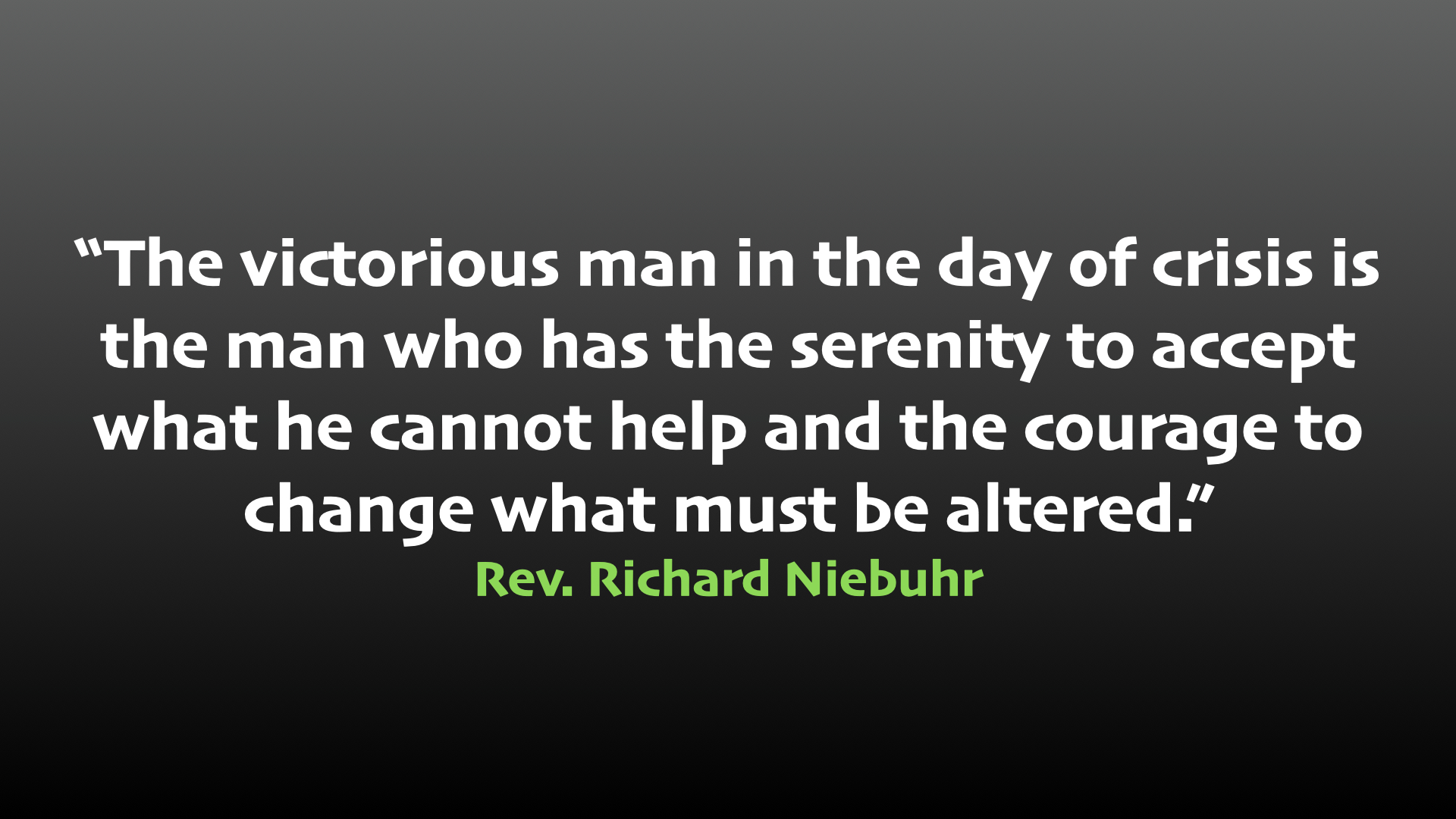
God grant me the serenity to accept the things I cannot change; courage to change the things I can; and wisdom to know the difference. 
Living one day at a time; enjoying one moment at a time; accepting hardships as the pathway to peace;
Taking, as He did, this sinful world as it is, not as I would have it; trusting that He will make all things right if I surrender to His will;
That I may be reasonably happy in this life and supremely happy with Him forever and ever in the next. Amen.


Should Christians pray a prayer like this? Biblically, there is nothing wrong with Christians praying prayers that have been written by men or women, provided that they don’t contradict the words God has spoken to us. 

Remember James 5:16 that we looked at earlier? The Personalized Promise Bible has a prayer for that verse: 

If I have stumbled in any way, I do not need to fret over it—I can rest in full confidence that the Lord loves me and forgives all of my shortcomings. I also know that sin is a hindrance to my healing. Therefore, if there is any sin in my life I repent of it. I confess my sins to trusted brothers and sisters in Christ, gaining strength and praying in agreement with them so that I will be healed. 

And then they cross-reference about 10 more biblical passages that support this prayer—Psalm 103:1-5; Isaiah 53:4-5; 1 Peter 2:24; Matthew 9:22, 29; 18:19, 20; Mark 11:22-26; 16:18; Hebrews 12:1-3; Galatians 6:1-2. 

In a similar fashion, I see several passages of Scripture that are woven into the serenity prayer. 

“God grant me the serenity to accept the things I cannot change; courage to change the things I can; and wisdom to know the difference.” Proverbs 1:2-3 describes the help God’s wisdom gives us for daily living. 

“Living one day at a time; enjoying one moment at a time.” Jesus taught us to pray each day for our daily bread (Matthew 6:8, 11). 

“Accepting hardships as the pathway to peace.” Jesus also taught us to pray, “Your will be done on earth as it is in Heaven” (Matthew 6:10), and He also prayed a very similar prayer Himself when He was in the Garden of Gethsemane, “Yet not as I will, but as You will” (Matthew 26:39). 

“Taking, as He did, this sinful world as it is, not as I would have it; trusting that He will make all things right if I surrender to His will.” Jesus promised us both trouble in this world and His overcoming power to stand strong in that trouble (John 16:33). 

“That I may be reasonably happy in this life and supremely happy with Him forever and ever in the next. Amen.” Jesus promises eternal rewards that vastly outweigh the trouble we may face in this life (Luke 12:32; Matthew 25:21, 34). 

The bottom line: The Bible is not just a Book to read through but a Book to pray through. ALL Scripture is for ALL servants of God. ALL Scripture is applicable to ALL the circumstances we will ever face in life.  

If something like the serenity prayer—or any other man-made prayer—is based on Scripture and helps give voice to your prayers, use them! But use them as guides to help you begin to form your own prayers from biblical passages you are reading for yourself.

Check out some of the other topics we have covered in this Is That in the Bible? series here.  

►► Would you please prayerfully consider supporting this ministry? My Patreon supporters get behind-the-scenes access to exclusive materials. ◀︎◀︎

Links & Quotes

You are a one-of-a-kind creation on purpose! God’s plan for your life is as unique as you are. I had the privilege of speaking at Country Chapel’s week-long revival services, and this is a clip from my sermon.

I have lots of new content every week, which you can check out on my YouTube channel.

What “began 90 years ago in Seattle as ‘an agency to supply candidates for the ministry to our churches and on the mission field,’” is now celebrating its 90th anniversary as Northwest University. It is really cool to see the hand of God supplying in miraculous ways for those who were so passionate about this endeavor.

“How thankful we are, Father God, for a crucified Redeemer. Nothing in heaven or earth is such an amazing wonder as this; nothing can compete with it for excellence. May all the many charms of sin be overcome by this ravishing love, which bubbles up in every drop of our Redeemer’s blood. How can we, with thoughts of the Cross alive in our hearts, sin against so much tenderness, compassion, and grace, and all the other perfections of You, our God, which sound so loud in our ears from the Cross of Jesus?” —Stephen Charnock

On the anniversary of Blaise Psacal’s death in 1662, John Stonestreet shared a mini-biography and several good reasons why Christians should still heed this mathematician and apologist’s insights.

“Where shall language be found which shall describe Your matchless love, Your unparalleled love, toward the children of men? Your love is so vast and boundless that, as the swallow skims the water without diving into its depths, so all descriptive words merely touch the surface of Your love, while depths immeasurable lie beneath. … The most inspired mind must utterly fail to fathom this love. Here is love! And truly it is love that surpasses knowledge. Oh, let this love fill our hearts with adoring gratitude and lead us to practical manifestations of its power.” —Charles Spurgeon

When a leader admits a need for help to his or her team, it actually increases the level of respect the team has for that leader. 

What does pornography have to do with loneliness? “Dr. Gary Brooks, a psychologist who has worked with people struggling with unwanted porn habits for the last 30 years, explains that ‘Anytime [a person] spends much time with the usual pornography usage cycle, it can’t help but be a depressing, demeaning, self-loathing kind of experience.’”

Rebelling Against Government And God

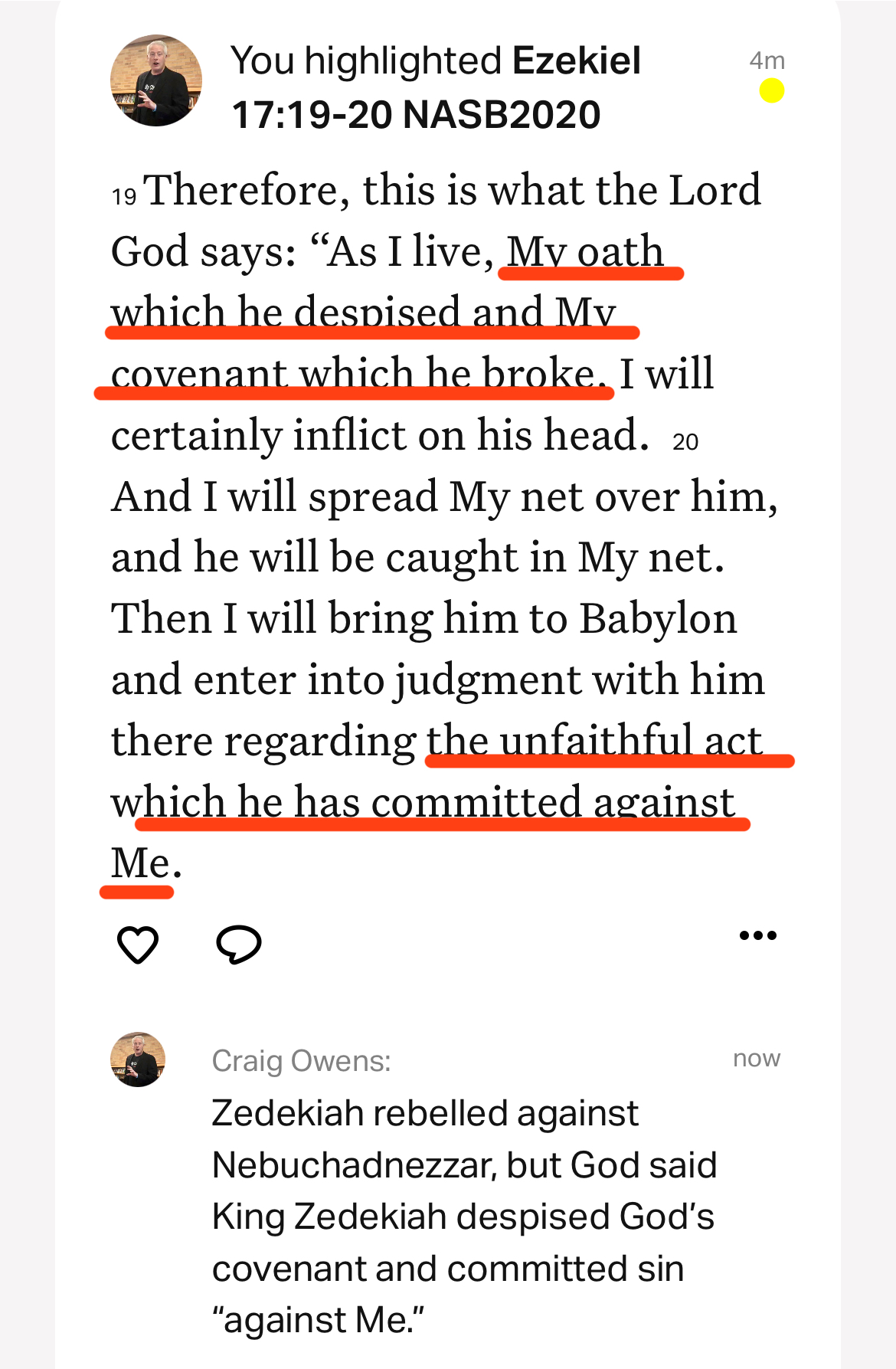
Therefore, this is what the Lord God says: “As I live, My oath which he [Zedekiah] despised and My covenant which he broke, I will certainly inflict on his head. And I will spread My net over him, and he will be caught in My net. Then I will bring him to Babylon and enter into judgment with him there regarding the unfaithful act which he has committed against Me. (Ezekiel 17:19-20) 

Zedekiah rebelled against Nebuchadnezzar, but God said King Zedekiah despised God’s covenant and committed sin “against Me.” 

All governing authorities on earth are God’s servants. God used Babylon as His means of punishing Judah for her sin. When King Zedekiah conspires with Pharaoh to attack Nebuchadnezzar, God says Zedekiah is really rebelling against God Himself!

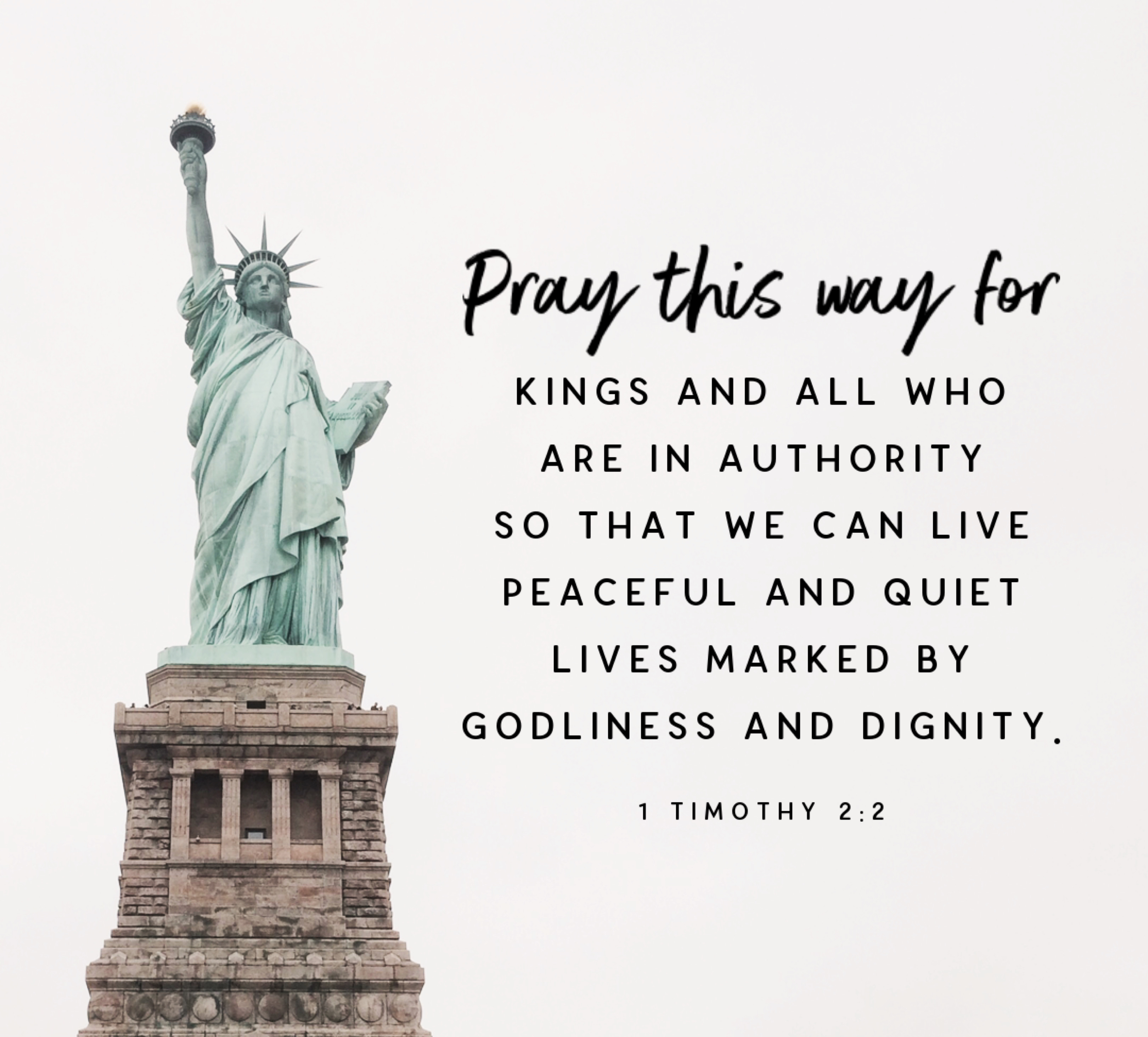
Christians are called to pray for those in governmental leadership. To dig a little deeper on this topic, check out two previous blog posts and sermon videos:

Time To Check The Mirror

Listen to the podcast of this post by clicking on the player below, and you can also subscribe on AppleSpotify, or Audible. 

All leaders—but especially pastoral leaders—need to work on a better response when we are bitten by a sheep in our pasture. Our natural first response is usually not going to be very helpful for us or for the biting sheep. 

In chapter 2 of my book When Sheep Bite, I wrote this—

  When a painful attack suddenly confronts me, I go to the mirror. Instead of asking, “What’s wrong with them that they would bite me like this?” I go to prayer to ask, ‘“Did I do something that provoked this?’’ Sometimes I have literally gone into my bathroom, closed the door, and gotten nose-to-nose with myself to ask this question, and then listened for the Holy Spirit to speak to my heart. 

   My cousin Dick Brogden wrote, “Critics and skeptics are gifts to us, for in their aspersions they often bring to light a brokenness or a liability early on in its development in us. If we are secure enough to ferret out the truth through the condemnation of others, we remain healthy in the long term as our malady is exposed and dealt with before it becomes to serious.” 

   Remember that we are naturally self-protective, so this time of introspection will need to be supernaturally empowered by the Holy Spirit if we are going to see the true prompter of the attack. A prayer I have prayed more times than I can count is, “Search me thoroughly, O God, and know my heart! Try me and know my thoughts! And see if there is any wicked or hurtful way in me, and lead me in the way everlasting” (Psalm 139:23-24 AMPC). 

Get a copy of my book here to help you heal from the painful sheep bites, and to learn how to respond better with each new biting experience. 

►► Would you please prayerfully consider supporting this ministry? My Patreon supporters get behind-the-scenes access to exclusive materials. ◀︎◀︎

Is That In The Bible?

Listen to the podcast of this post by clicking on the player below, and you can also subscribe on AppleSpotify, or Audible.

A meme that makes me chuckle every time I see it is a “quote” attributed to Abraham Lincoln in which he says, “The problem with quotes found on the internet is that they are often not true.” 

(Not to spoil the joke for you, but unless Lincoln knew how to time travel to the future, I don’t think he knew about the modern internet! 😂) 

I love this meme because it captures something that so many people fall into: a quick acceptance of a statement without verifying its source or thinking through the implications of the statement’s truthfulness. 

Some insightful comments sound Shakespearean, but William never wrote them. 

Some pieces of wisdom sound Socratic, but Socrates never taught them. 

Some religious maxims sound godly, but the Bible never recorded them. 

I would like to invite you to join me as we relaunch this series called Is That In The Bible? I think you may be surprised to discover just how many phrases we call biblical aren’t, and how many phrases there are that we never realized are actually in the Bible. 

By the way, if you have a phrase that you would like to have us explore in this series, please leave it in a comment below. You may want to check out the questions we have already addressed:

In this installment of this series, we asked: Is this in the Bible…