Why We Need Loving Friends

Listen to the podcast of this post by clicking on the player below, and you can also subscribe on AppleSpotify, or Audible. 

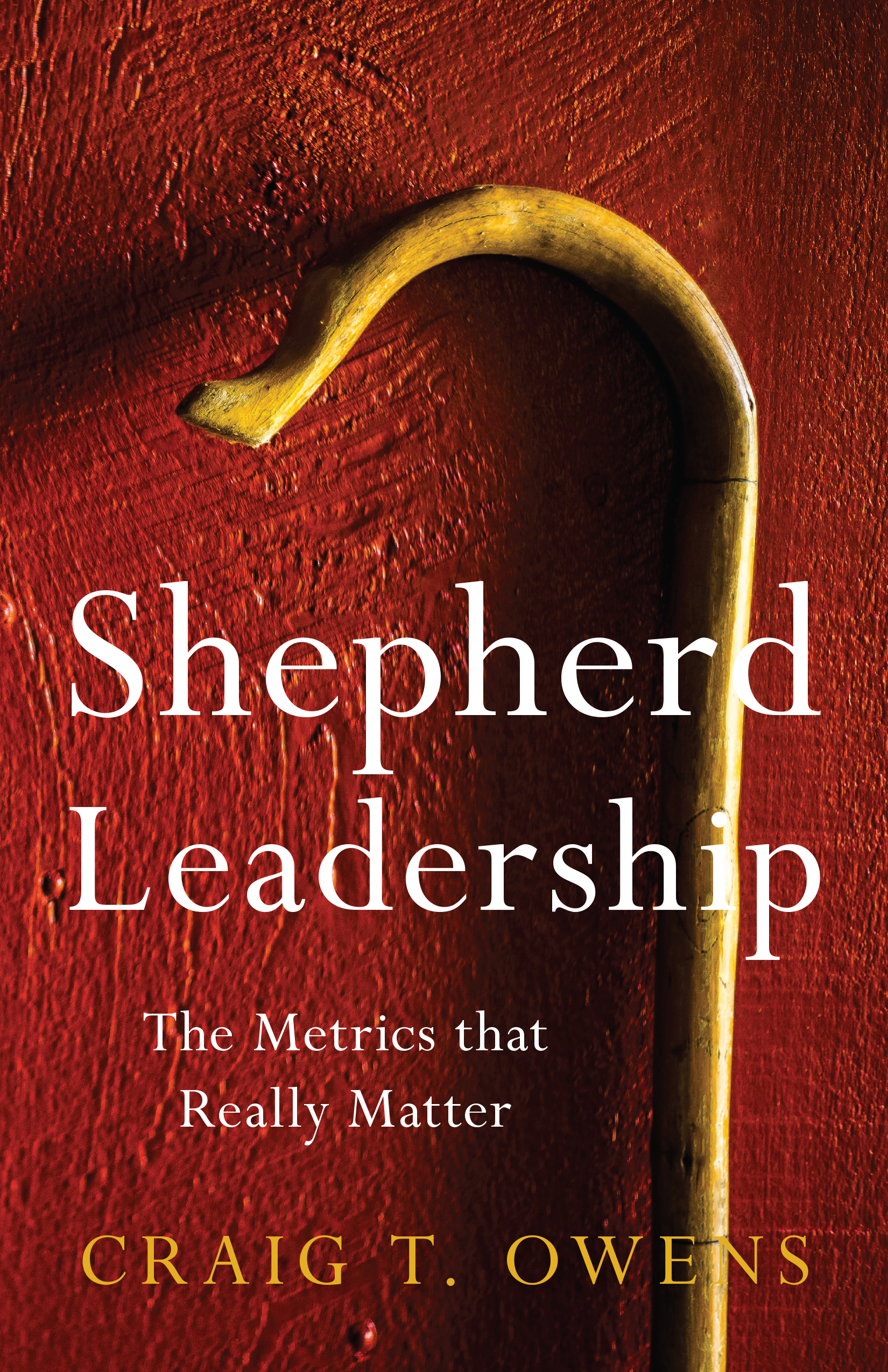
Check out this excerpt from chapter 13 of my book Shepherd Leadership: The Metrics That Really Matter

David was the gold standard for every king of Israel who followed him. Numerous times throughout the history of Israel, we will see a note that a certain king either followed God like David, or turned from God unlike David. Yet there exists a wart on David’s portrait: an adultrous affair with the wife of a man in his inner circle, and then subsequent lies and a murder to cover up the affair. “The thing David had done displeased the Lord” (see 2 Samuel 11). 

But I’d like to turn your attention to when this affair occurred: “In the spring, at the time when kings go off to war … David remained in Jerusalem” (2 Samuel 11:1). He was without his usual comrades. The men who knew David best, who could probably sense if something was amiss, weren’t around to warn him. When David tried to find out the identity of the bathing beauty on the roof next door to his palace, an unnamed attendant tried to remind him, “Isn’t that Bathsheba, the wife of Uriah?” but David dismissed him. 

Elijah was arguably the most forceful and fearless prophet in Israel’s history. Not only did he stand up to the evil kings of Israel, but he spoke out against the kings of surrounding nations, too. In answer to Elijah’s prayer, God brought a drought on the land, and again in answer to Elijah’s prayer, God sent rain. Elijah challenged the 450 prophets of the god Baal and the 400 prophets of the goddess Asherah to a duel to the death, which ended up in a decisive victory for Yahweh. Yet, shortly after this massive victory, Elijah was depressed to the point that he wanted to die. 

What led to Elijah’s depression? Something very similar to David’s slide into adultery: He was alone. Elijah ran away from Queen Jezebel’s death threat, left his servant behind, and proceeded all by himself into the desert. It was when he was without a comrade that he prayed to God, “I’ve had enough. Take my life” (see 2 Kings 17–19). 

And what about Peter? He boldly claimed his loyalty to Jesus, even to the point of wielding a sword at the guards who came to arrest his Master. But when Peter was alone, after the other disciples fled, he denied three times that he knew Jesus (Matthew 26:33, 51, 69–75). 

God designed us to be in relationship with others. His statement to Adam in some of the earliest words of the Bible—“It is not good for you to be alone”—are words for us still today. 

In a recent episode of “The Craig And Greg Show,” Greg and I discussed one of our favorite verses in the Bible: Wounds from a friend can be trusted, but an enemy multiplies kisses (Proverbs 27:6). 

If you want to go far, don’t try to go alone. If you want an accountability partner that can keep warts away from your leadership legacy, don’t go alone. If you want to extend your leadership influence, don’t go alone. If you want to honor God’s investment in you, don’t go alone. Get those friends around you who love you enough to speak the truth! 

►► Would you please prayerfully consider supporting this ministry? ◀︎◀︎

Washington’s Immortals (book review)

Listen to the podca

st of this post by clicking on the player below, and you can also subscribe on AppleSpotify, or Audible. 

There’s an old proverb that says,

For want of a nail the shoe was lost,
for want of a shoe the horse was lost,
for want of a horse the knight was lost,
for want of a knight the battle was lost,
for want of a battle the kingdom was lost.
So a kingdom was lost—all for want of a nail.

I thought of this proverb as I began reading Washington’s Immortals by Patrick K. O’Donnell, which recounts the history of a regiment from Maryland that not only turned the tide of a crucial battle in the American Revolutionary War, but who were at the center of nearly every vital battle throughout the war. 

At the outset of the war, the British army and navy nearly overwhelmed George Washington’s forces in New York. One regiment from Maryland stood their ground, keeping the British bottled up for just one hour. But that one hour allowed General Washington precious time to get his retreating army to safety. Without the bravery and tenacity of these Marylanders, the war could have been over almost before it started. So to paraphrase the old proverb above, for want of the brave stand of the Marylanders, the American cause could have been lost! 

As General Washington watched those brave men not only stand their ground, but repeatedly counterattack the far superior British forces, he said, “Good God! What brave fellows I must this day lose!” 

If that were the only service to the American colonies that this elite group had supplied, it would have been enough. But time and time again, General Washington and General Nathaniel Green placed the Marylanders in the most vulnerable or the most crucial places on the battlefield, knowing that these men would not fail to come through. 

O’Donnell follows the movements of the Marylanders from the beginning of the war all the way through to its conclusion in a very readable manner. He shares just enough of the details of the battle for us to get a feel for the gravity of the situation, but not so many details that it becomes laborious reading. 

Any students of American history, military history, or leadership-under-fire will appreciate reading Washington’s Immortals. 

►► Would you please prayerfully consider supporting this ministry? ◀︎◀︎

Judging Like God

Listen to the podcast of this post by clicking on the player below, and you can also subscribe on AppleSpotify, or Audible.

I may have heard more confusion, bad preaching, and even heresy based on Psalm 82 than almost any other passage! Most of the confusion comes from just verses 1 and 6, but if we read the entire psalm, I think confusions are quickly cleared up.

The biggest point of confusion is the use of the word “gods.” The Hebrew language doesn’t have capital and lowercase letters like we do. So the word God (with or without a capital “G”) is the same Hebrew word—el (singular) or elohiym (plural)—which means mighty One or mighty ones. Humans can be mighty ones, but only Yahweh is the Mighty One. 

Further adding to the confusion for some people is that Yahweh God is sometimes referred to in the plural in Hebrew: elohiym. This is understandable because we believe God is Three-in-One. Not three gods, but one God in three Persons. 

Bible translators have to use context clues to determine whether the biblical authors are referring to Yahweh or a pretend deity. Thankfully, English Bible translators have helped us out:

  • when the Hebrew word is Yahweh, most Bibles print it LORD 
  • when the Mighty One is implied in the text it’s God (with a capital “G”), and when it’s just a mighty person it’s typed god/gods (with lowercase a “g”). 
  • the NIV translators really helped us in Psalm 82 by designating the false deities in quotation marks (“gods”), almost as if they’re saying “the so-called gods.” 

When we were looking at the Selah in Psalm 81, I pointed out the importance of remembering that context is king. Clearly, from the context in Psalm 82, these are false gods (lowercase “g” and inside quotation marks).  

Asaph only speaks in the first and last verses of this psalm, but notice his commentary that “God presides…He gives judgment.” As in, God gets the final and decisive word. In fact, God does the most speaking in this psalm (in verses 2-7). God indicts wicked people for…

  • defending the unjust 
  • showing partiality to the wicked 
  • knowing nothing, understanding  nothing, walking around in darkness 
  • and notes “you will die like mere men” 

Now notice what the Selah pause connects. This is a pause for us to contrast two things: the righteous way and the wicked way. Or maybe we could say the contrast is between the way of the righteous Mighty One and His followers, and the way of wicked mighty ones. 

The Selah really begs an important question, “How long will your pride keep you doing these wicked things?” Notice what God calls on people to do in opposition to what the wicked are doing:

  • the wicked defend the unjust vs. the righteous are to defend the weak and fatherless 
  • the wicked show partiality to the wicked vs. the righteous maintain the rights of the poor and oppressed 
  • the wicked are concerned only about themselves vs. the righteous rescue the weak and needy from the hand of the wicked 

The Selah is intended to prompt us to ask ourselves: “Which are we? What am I doing or not doing?” 

The word for rendering a judgment is used four times in Psalm 82: 

  • God gives judgment on the activities of the “gods” 
  • the wicked defend the unjust, meaning that they condone their unjust activities 
  • the righteous defend the weak, meaning they speak up for those being oppressed by the “gods”
  • finally, Asaph declares in verse 8 that God renders the final and decisive judgement 

God wants us to exercise His righteous judgment on the earth. We have to Selah to examine ourselves first (see Matthew 7:1-5 and this short video), but then we need to act boldly and righteously (see Micah 6:8; Leviticus 5:1; Proverbs 31:8-9). 

We can judge like we are “gods,” or we can judge, defend, and speak up like ambassadors of the Mighty One—the Ultimate Judge.

Wicked people are punished for judging like “gods.” Righteous people are rewarded for judging like God. 

If you’ve missed any of the messages in our series exploring the Selahs in the Psalms, you can access the full list by clicking here. 

►► Would you please prayerfully consider supporting this ministry? ◀︎◀︎
Poetry Saturday—Love Asserting Herself

Listen to the podcast of this post by clicking on the player below, and you can also subscribe on AppleSpotify, or Audible.

And have I, Christ, no love for Thee,
No passion for Thy charms?
No wish my Saviour’s face to see,
And dwell within His arms?

Is there no spark of gratitude
In this cold heart of mine,
To Him whose generous bosom glow’d
With friendship all divine?

Can I pronounce His charming name,
His acts of kindness tell;
And while I dwell upon the theme,
No sweet emotion feel?

Such base ingratitude as this
What heart but must detest!
Sure Christ deserves the noblest place
In every human breast.

A very wretch, Lord! I should prove,
Had I no love for Thee:
Rather than not my Saviour love,
Oh may I cease to be! —Samuel Stennett

►► Would you please prayerfully consider supporting this ministry? ◀︎◀︎
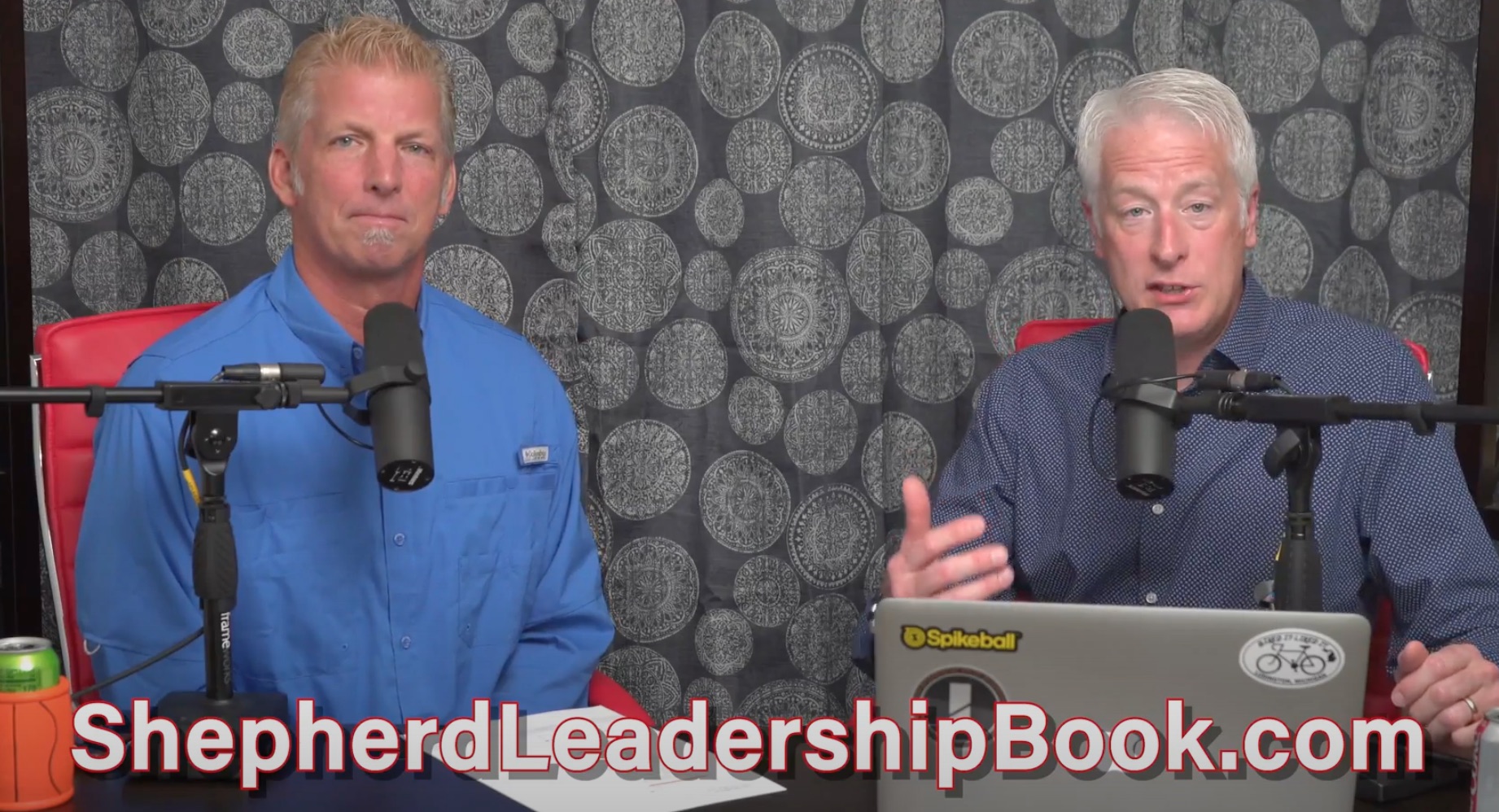
Craig And Greg Talk Shepherd Leadership

I have known Greg Heeres for almost 30 years. During that time we have grown as close as brothers, partnering on numerous projects, both personally and professionally. One of our shared passions is developing leaders. Out of this passion we began a video and audio podcast called The Craig And Greg Show. 

We switched up our format just a bit in a recent episode so that Greg could interview me about my book Shepherd Leadership: The Metrics That Really Matter. 

I was also thrilled to receive an endorsement from another church leadership blogger that I greatly admire: 

“In his new book, Shepherd Leadership, Craig T. Owens gets to the heart of pastoral ministry and caring about people with great wisdom. Jesus sets the example for us as the good shepherd, and Craig delivers practical principles for healthy leadership that allows you the opportunity for freedom as God intended, joy in serving, and ultimately experiencing the full blessing of God.”Dan Reiland, Executive Pastor, 12Stone Church, Lawrenceville, GA

You may listen to the audio-version of Greg’s interview of me on the player below, and I’ve also shared the link to watch the video of this interview.

Thursdays With Spurgeon—The Assurance Of God’s Love

This is a weekly series with things I’m reading and pondering from Charles Spurgeon. You can read the original seed thought here, or type “Thursdays With Spurgeon” in the search box to read more entries.

Listen to the podcast of this post by clicking on the player below, and you can also subscribe on iTunes or Spotify.

The Assurance Of God’s Love

Tell me, O you whom I love, where you feed your flock, where you make it rest at noon. For why should I be as one who veils herself by the flocks of your companions? (Song of Solomon 1:7)

     It is well to be able to call the Lord Jesus Christ by this name without an ‘if’ or a ‘but.’ A very large proportion of Christian people can only say of Christ that they hope they love Him. They trust they love Him, but this is a very poor and shallow experience to be content to stay here. It seems to me that no one ought to give any rest to his spirit till he feels quite sure about a matter of such a vital importance. We are not content to have a hope of the love of our parents, or of our spouse, or of our children! We feel we must be certain there. And we are not to be satisfied with a hope that Christ loves us and with a bare trust that we love Him. … 

     ‘I know whom I have believed,’ says Paul (2 Timothy 1:12). ‘I know that my Redeemer lives,’ says Job (Job 19:25). ‘You whom I love,’ says Solomon in the Song as we have it here. Learn, dear friends, to get that positive knowledge of your love to Jesus, and be not satisfied till you can talk about your interest in Him as a reality that you have made infallibly sure by having received the witness of the Holy Spirit and His seal upon your soul by faith that you are born of God and belong to Christ. …  

     Why do we love Jesus? We have the best of answers: because He first loved us! … Why do we love Him? Because before this round earth was fashioned between the palms of the great Creator, before He had painted the rainbow or hung out the lights of the sun and moon, Christ’s delights were with us. He foresaw us through the glass of His prescience. He knew what we should be….

From The Church’s Love To Her Loving Lord

God wants you to know how much He loves you. He went first because we didn’t have any way to approach Him. But Jesus made it possible for us to come close to God through His substitutionary death on the Cross for our sins. And now the Holy Spirit is speaking clearly to your heart to trust that this is absolutely, irrevocably true: GOD LOVES YOU! 

As Spurgeon said, don’t be content with merely thinking this is true, but ask the Holy Spirit to help you know this is true! 

Listen to these words—This is how God showed His love among us: He sent His one and only Son into the world that we might live through Him. … This is how we know that we live in Him and He in us: He has given us of His Spirit. And we have seen and testify that the Father has sent His Son to be the Savior of the world. … We love because He first loved us. (1 John 4:9, 13-14, 19)

►► Would you please prayerfully consider supporting this ministry? ◀︎◀︎


Hating Well

Listen to the podcast of this post by clicking on the player below, and you can also subscribe on AppleSpotify, or Audible. 

I hate… (Psalm 119:163). 

In my experience, many Christians struggle with the word “hate,” as though it shouldn’t have any part in their vocabulary. And yet here is that word right in the middle of Psalm 119, this longest chapter in the Bible which extols the value of the Bible in all 176 verses. 

I remember watching “Sesame Street” when they would sing the song, “One of these things is not like the other.” Let’s play that same game from this Sin/Shin section of Psalm 119:

  • I stand in awe of Your Word 
  • I rejoice in Your promise 
  • I love Your law 
  • I praise You, God, for Your righteous laws 
  • I follow Your commands 
  • I obey Your statues 
  • I love Your statutes 
  • I obey Your precepts 
  • I hate falsehood 

Doesn’t that last one seem out of place? In fact, it’s not just “hate,” but one translation says, “hate and abhor,” and another says, “hate and detest”! 

But I want you to notice first of all that it is not a person that the psalmist hates, but falsehood, deception, fraud, lying. The root word in Hebrew is someone who is purposefully dealing falsely as a means of tricking or cheating. 

This is what we could correctly say is righteous anger.

The psalmist’s love for the glory of God is great, which means he also reveres this Book of Truth—the Bible—that leads people to basking in God’s glory. To be apathetic about lies that are deliberately attempting to cheat people out of an intimate relationship with God is the exact opposite of love.

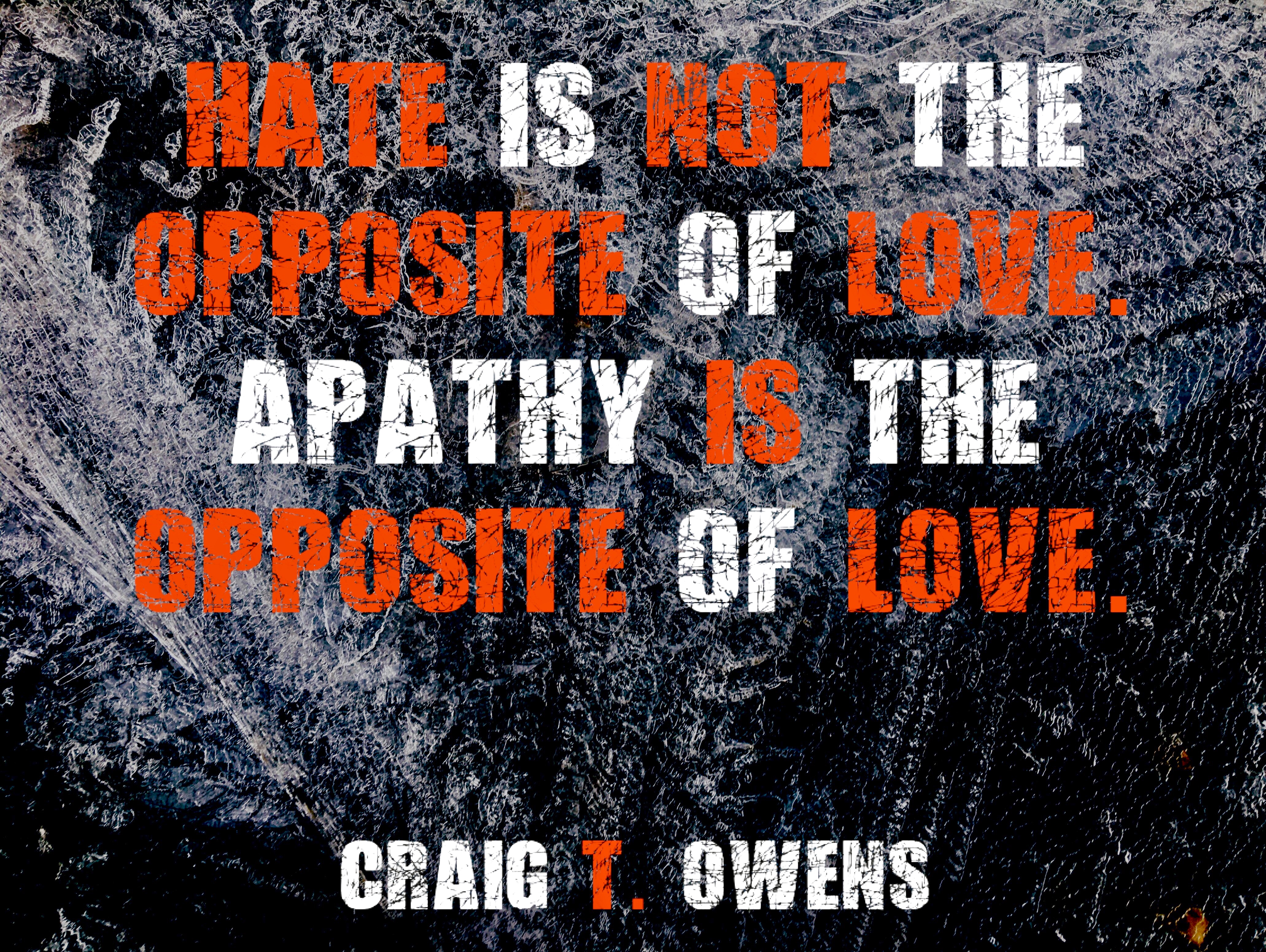
Hate is not the opposite of love; apathy is the opposite of love.

Hate of those things which keep people from God is the completion of the love for God and the respect for the Book that brings people to Him.

To love fully, I must also hate well. Not people, but actions that keep people away from experiencing and knowing God’s love. May all of us learn from the Holy Spirit how to awaken from any apathy we may have, and to correctly express our righteous anger. 

►► Would you please prayerfully consider supporting this ministry? ◀︎◀︎
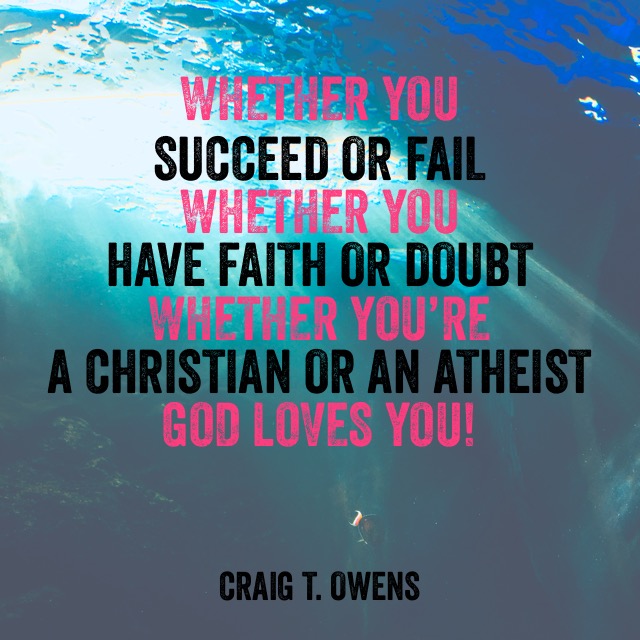
The Craig And Greg Show: Are We Using The Right Metrics?

On this episode of “The Craig And Greg Show” we talk about: 

  • Greg toots my horn for me! [1:00]
  • I talk about how my book Shepherd Leadership: The Metrics That Really Matter came into being [1:45] 
  • Greg wonders why leaders get trapped using metrics of success that don’t really matter [4:10]
  • I talk about why the subtle shift from “servant leadership” to “shepherd leadership” is important [4:50]
  • Greg and I discuss the tension between a leader’s confidence and a leader’s humility [6:25]
  • I explain how my wife helped me see my leadership in a better light [8:00]
  • my favorite definition of humility comes from C.S. Lewis [9:45]
  • Greg asks how leaders can develop the right kinds of relationships that will help them continue to grow [10:35]
  • I share the dangers when leaders try to fly solo [11:40]
  • Greg talks about the vital need for leaders to refresh themselves [14:00]
  • who will benefit from reading Shepherd Leadership? [14:50]
  • I share a humorous story of a way I advised a church to grow their numbers overnight [16:54]

Check out this episode and subscribe on YouTube so you can watch all of the upcoming episodes. You can also listen to our podcast on Spotify and Apple.

10 Quotes From “Reading The Bible With The Founding Fathers”

Listen to the podcast of this post by clicking on the player below, and you can also subscribe on AppleSpotify, or Audible. 

For any students of American history or of the role the Bible has played in affecting world affairs, Reading The Bible With The Founding Fathers is an eye-opening book. You can check out my full book review by clicking here. Unless otherwise noted, quotes are from author Daniel Dreisbach. 

“Following an extensive survey of American political literature from 1760 to 1805, political scientist Donald S. Lutz reported that the Bible was referenced more frequently than any European writer or even any European school of thought, such as the Enlightenment or Whig intellectual traditions. Indeed, the Bible accounted for about one-third of all citations in his sample. According to Lutz, ‘Deuteronomy is the most frequently cited book, followed by Montesquieu’s The Spirit of the Laws.’ … Saint Paul is cited about as frequently as Montesquieu and [William] Blackstone, the two most-cited secular authors, and Deuteronomy is cited almost twice as often as all of [John] Locke’s writings put together.”

“The founders often quoted the Bible without the use of quotation marks or citations, which were not necessary for a biblically literate society but the absence of which fail to alert a biblically illiterate modern audience to the Bible’s invocation.” 

“Increasing unfamiliarity with the Bible makes it harder and harder for Americans to understand their origins and their mores, or to put words to their experiences. … Lacking knowledge of the Bible, Americans are likely to be literally inarticulate, unable to relate themselves to American life and culture as a whole.” —Wilson Carey McWilliams

“Knowledge of the Bible and its place in the American experience, in short, helps Americans better understand themselves and their history.” 

“In regard to this Great Book [the Bible], I have but to say, it is the best gift God has given to man. All the good the Saviour gave to the world was communicated through this book. But for it we could not know right from wrong. All things most desirable for man’s welfare, here and hereafter, are to be found portrayed in it.” —Abraham Lincoln 

“[T]he Bible has had a literary influence not because it has been considered as literature, but because it has been considered as the report of the Word of God.” —T.S. Eliot 

“[William] Tyndale, who was the first to translate the Bible into English from the original Hebrew and Greek, can be rightly called the father of the King James Bible. Approximately ‘eighty percent of his Old Testament and ninety percent of his New Testament’ were adopted by the King James translators. …  

“There is much truth in the remark that ‘without Tyndale, no Shakespeare.’ It is also true that ‘without Tyndale, no King James Bible.’ ‘Without the King James Bible,’ Alister McGrath observed, ‘there would have been no Paradise Lost, no Pilgrim’s Progress, no Handel’s Messiah, no Negro spirituals, and no Gettysburg Address. … Without this Bible, the culture of the English-speaking world would have been immeasurably impoverished.’” 

“The size of the vocabulary found in the King James Bible is not extensive. [William] Shakespeare, it is estimated, used between fifteen and twenty thousand different words. Milton’s verse draws on a lexicon of about thirteen thousand words. The Old Testament, in the Hebrew and Aramaic, has approximately fifty-six hundred words. The New Testament, in the Greek, has around forty-eight hundred words. In the entire King James Bible, by contrast, there are only about six thousand different words, according to one accounting.” 

“The opinion that human reason, left without the constant control of divine laws and commands, will preserve a just administration, secure freedom and other rights, restrain men from violations of laws and constitutions, and give duration to a popular government, is as chimerical as the most extravagant ideas that enter the head of a maniac. … Where will you find any code of laws, among civilized men, in which the commands and prohibitions are not founded on Christian principles? I need not specify the prohibition of murder, robbery, theft, [and] trespass. … Every wise code of laws must embrace the main principles of the religion of Christ.” —John Adams 

“Moral principles and precepts contained in the Scriptures ought to form the basis of all our civil constitutions and laws. These principles and precepts have truth, immutable truth, for their foundation; and they are adapted to the wants of men in every condition of life. They are the best principles and precepts, because they are exactly adapted to secure the practice of universal justice and kindness among men; and of course to prevent crimes, war and disorders in society. No human laws dictated by different principles from those in the gospel, can ever secure these objects. All the miseries and evils which men suffer from vice, crime, ambition, injustice, oppression, slavery and war, proceed from their despising or neglecting the precepts contained in the Bible. … For instruction then in social, religious and civil duties resort to the scriptures for the best precepts and most excellent examples of imitation.” —Noah Webster

Listening To Obey

Listen to the podcast of this post by clicking on the player below, and you can also subscribe on AppleSpotify, or Audible. 

Have you ever been confronted by someone claiming, “The Bible is full of contradictions”? 

How about this one: God says, “I tested you at the waters of Meribah” (Psalm 81:7) vs. at Meribah…[the Israelites] tested the LORD (Exodus 17:7)? 

Whenever we see a possible contradiction, remember this: Context is king. We have to look at these two accounts in their proper context. 

In the Exodus account, the Israelites have just been delivered out of slavery in Egypt and crossed the Red Sea on dry ground. The pursing Egyptian army tried to follow them, but the waters closed back over them and they drowned. Three days later we find the Israelites grumbling over a lack of drinkable water, which God miraculously supplies. A month after that they are complaining about their food supply, which God miraculously supplies. And right on the heels of that they are again complaining about not having water to drink, which God miraculously supplies (see Exodus 15-17). 

It is after this second miraculous supply of water that we read that phrase we are considering: the Israelites tested God. The Hebrew word for “tested” is nasa which equates to, “Oh yeah? Prove it!” or “I’ll believe it when I see it!” or as The Message paraphrase puts it, “Is God here with us, or not?” 

In Psalm 81, God Himself is speaking in vv. 6-16, so He is the One who claims, “I tested them at Meribah.” The Hebrew word for “tested” in this instance is bahan. This means to investigate closely, to spot and bring out the impurities in fine metals. God not only makes the claim, “I tested them,” but He is also the One who tells us to Selah—pause and calmly consider. 

Consider what? After the first instance of grumbling about water in Exodus 15, we read, “There the Lord made a decree and a law for them, and there He tested them. He said, ‘If you will listen carefully to the voice of the Lord your God and do what is right in His eyes, if you pay attention to His commands and keep all His decrees, I will not bring on you any of the diseases I brought on the Egyptians’” (Exodus 15:25-26). 

Notice the words decree, law, and commands. Asaph says something similar in Psalm 81:4, “This is a decree for Israel, an ordinance of the God of Jacob. He established it as a statute for Joseph when He went out against Egypt.” 

God is talking about laws before the Ten Commandments are given. What is the law He desires to be obeyed above all else? In a word: Listen. 

  • If you will listen carefully to the voice of the Lord your God and do what is right in His eyes (Exodus 15:25). 
  • I tested you at the waters of Meribah. Selah. Hear, O My people, and I will warn you—if you would but listen to Me, O Israel! (Psalm 81:7-8) 

God brings us to these moments of tests to see how we will respond. He doesn’t need to know, but we need to know how we will respond. When we find ourselves wringing our hands, or grumbling, or saying, “Is God here with us, or not?”, what does that tell us about our own heart? He wants us to be wholly His, so He has to bring out the impurities. That same word bahan is used when God speaks this word: “I will refine them like silver and test them like gold. They will call on My name and I will answer them; I will say, ‘They are My people,’ and they will say, ‘The Lord is our God’” (Zechariah 13:9). 

Asaph uses the Hebrew word for “listen” five times in Psalm 81. This word means listening with an attitude to obey. In order for us to hear God’s voice, we have to listen with an attitude toward obedience. This is not, “Oh yeah? I’ll believe it when I see it!” but “Oh yeah! I will obey it so I will see it!” 

As I pondered this, the Holy Spirit dropped these questions on my heart which I encourage you to ponder as well: 

  • God is always speaking to me. Am I making quiet time to listen to His voice?  
  • God sometimes has to discipline me. Am I open to His purifying? 
  • God has wise counsel for me. Am I obeying it?
  • God knows the best path for me. Am I walking in it?
  • God wants to subdue my enemies. Am I asking Him to do it?
  • God has abundant blessings for me. Am I listening to obey?

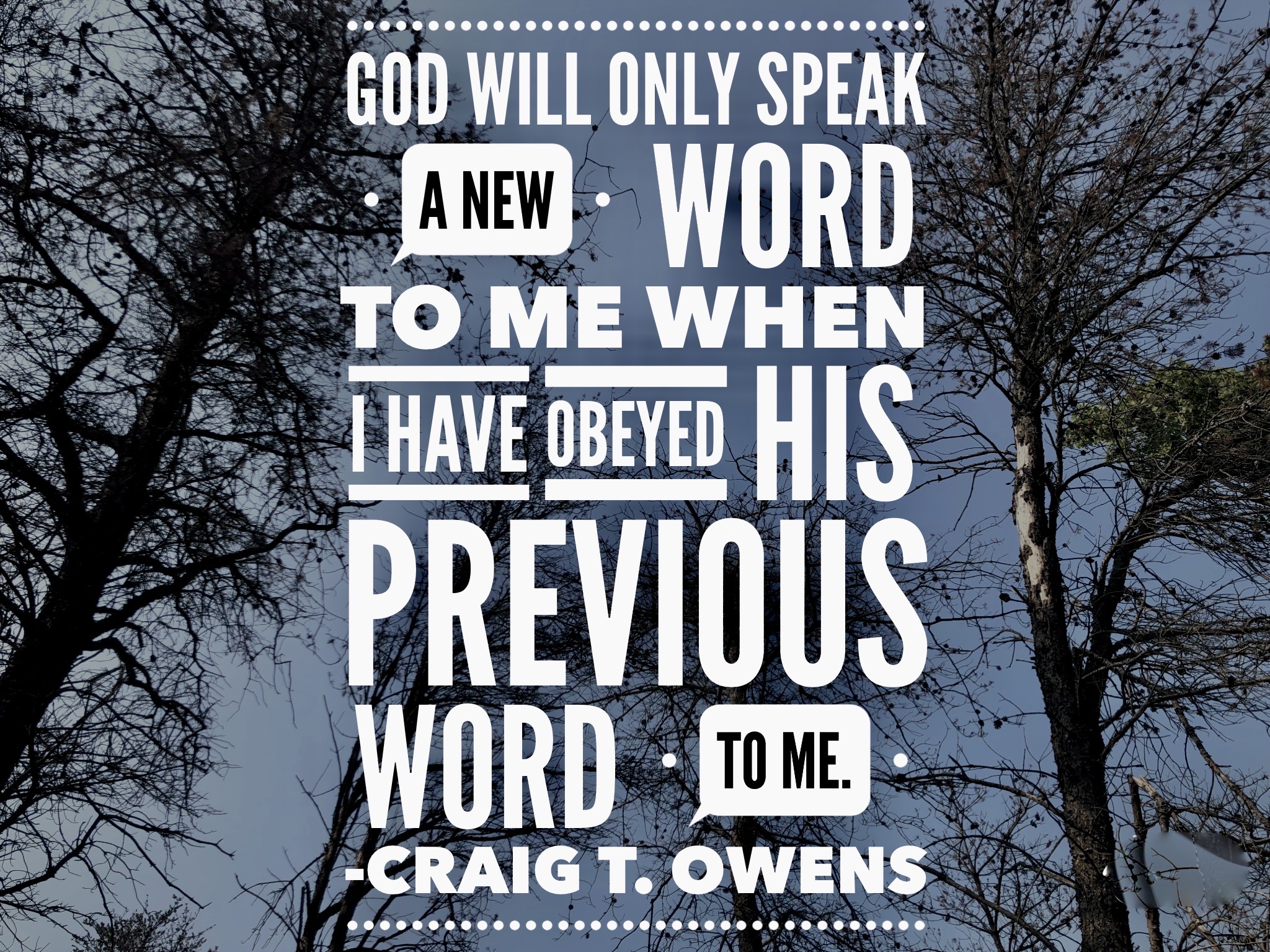
God will only speak a new word to me when I have obeyed His previous word to me.

When I am in distress, I need to train myself to Selah so that I can say, “God has brought me to this test, what do I need to learn? Am I listening to God’s voice with an attitude to obey?” 

May our heart’s posture always be, “Speak, Lord, for Your servant is listening and ready to obey whatever You speak to me.” 

If you’ve missed any of the messages in our Selah series, you can access the full list by clicking here. 

►► Would you please prayerfully consider supporting this ministry? ◀︎◀︎