PUSHing For God’s “Yes

Listen to the podcast of this post by clicking on the player below, and you can also subscribe on AppleSpotify, or Audible. 

Parents, I want you to think back to your children asking you for something they really wanted. How many times did they ask? How many different ways did they ask? What sort of strategies did they use? Did you ever sense any hesitation in them coming to you to make their request? 

Do you have this firmly in mind? Good, because this is how Jesus explains prayer. 

Jesus called God His Father, and when His disciples asked Him how to pray, Jesus instructed them to address God as “Father” (Luke 11:1-2). 

(Check out all of the Scriptures in this post by clicking here.)

This is so remarkable! 

  • Hindus don’t call God “father” but they flip it around by saying, “Father is like God” to teach children to respect their earthly fathers. 
  • Buddhists don’t believe in a God that anyone can worship or even have a relationship. 
  • Islam gives Allah 99 names, but not one of the names is “Father.” 
  • Jewish rabbis don’t see how anyone other than Jewish people can even think of God as their Father, but even they don’t presume to address Him that way in their prayers. 

And yet Jesus tells us to come to prayer to the Almighty Creator and Sustainer of the universe with, “Father.” There is intimacy in that title. There is an understanding of knowingness and trustworthiness in that title. There is an implied belief of perfect provision in that title. 

We looked at Luke 11:9-10 previously, and we saw especially how the Amplified Bible brings out the idea of asking again and again and again. But is this what Jesus really meant for us to do? Don’t you feel a bit like a pest asking this way? 

The disciples asked Jesus to teach them to pray (Luke 11:1-4), but then Jesus gave them an un-asked-for illustration to make His point (vv. 5-8). 

The Greek word for “boldness” in v. 8 is translated “shameless persistence” or “sheer persistence” or “shameless audacity” in various biblical translations. In the Greek, it’s a unique word (anaideia) which means without shame. 

The sleeping friend—although he was tired and the request for bread came at an inconvenient time—still wanted to honor his friend. Or more precisely, he wanted to preserve the honor of his friend. 

There’s another Greek word (hypomone) that I would define as stick-to-it-iveness. Two great examples are Bartimaeus (Mark 10:46-52) and the Syrophoenician mother (Matthew 15:21-28). 

In light the the story of the Good Samaritan in the previous chapter of Luke, I think this friend was practicing the Golden Rule: he wouldn’t want to lose standing in the community or be embarrassed by being an ill-equipped host, so he helped supply his neighbor. 
Give us each day our daily bread” (Luke 11:3) hallows God as our Father. Our Father is the Bread Supplier and He never wants His children forsaken or embarrassed—

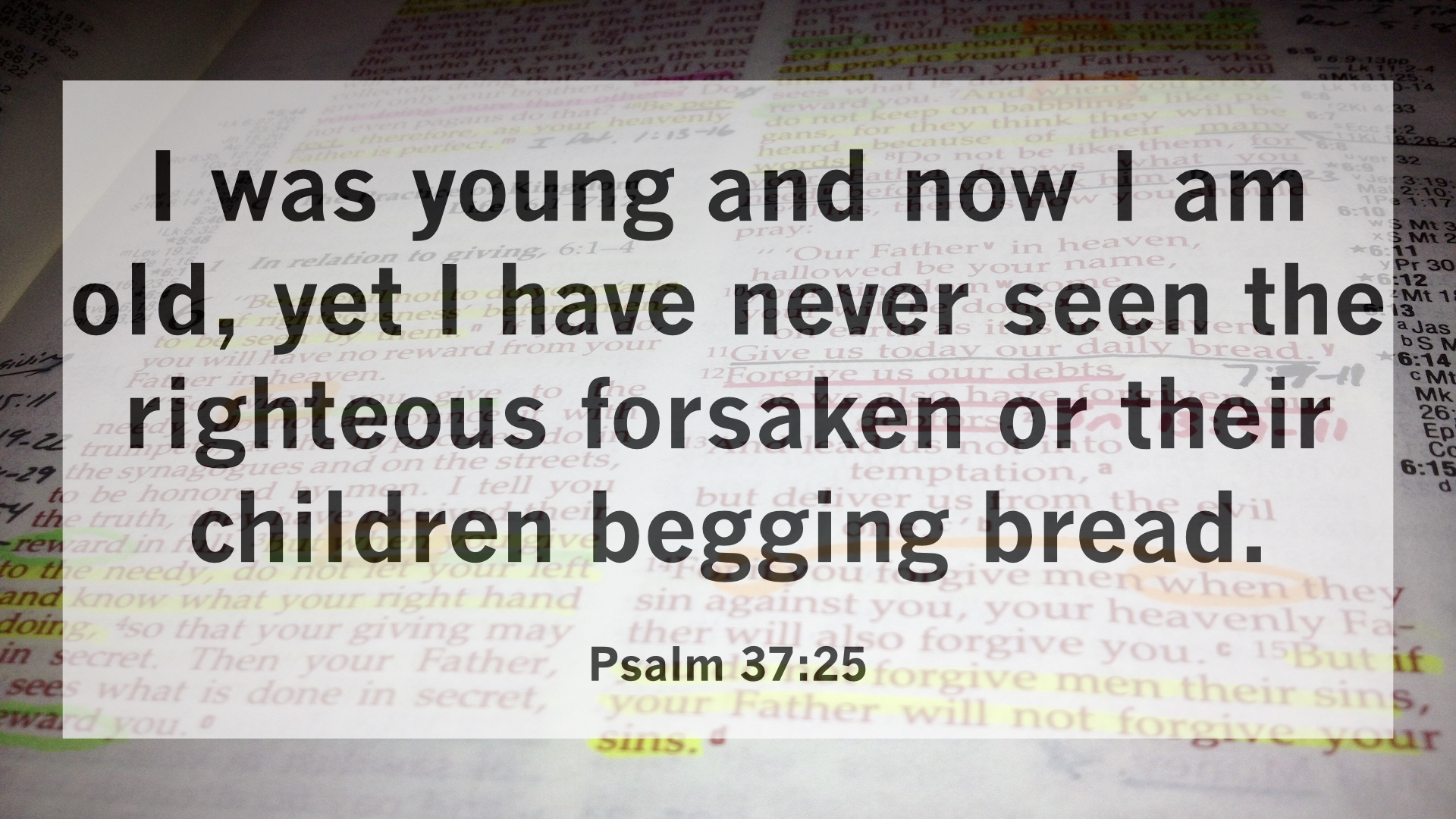
I was young and now I am old, yet I have never seen the righteous forsaken or their children begging bread. (Psalm 37:25) 

The conclusion to the instructions Jesus gives us about prayer are continual asking, persistent seeking, and audacious knocking! P.U.S.H. = pray until something happens! 

“Our giving depends much on the state of our minds at the moment. When depressed, we have no pleasure in giving; we either refuse, or we give merely to get quit of the applicant. Darkness of mind shrivels us up, makes us selfish, neglectful of others. When full of joy, giving seems our element—our joy overflows in this way; we cannot help giving; we delight in applications; we seek opportunities of giving. So with the blessed God. Being altogether happy, His delight is to give; His perfect blessedness flows out in giving. We can never come wrongly to such an infinitely happy Being.” —Horatius Bonar 

Our importunate requests are opportunities for God to show His unequaled supply to others—to exalt His name. For that request, God will “get up and give you as much as you need” (Luke 11:8). 

We are to keep on PUSHing for our Father’s “yes.” 

Check out all of the other messages in this prayer series by clicking here. 

►► Would you please prayerfully consider supporting this ministry? My Patreon supporters get behind-the-scenes access to exclusive materials. ◀︎◀︎

Links & Quotes

When we pray the closing words of the prayer Jesus gave us—“For Yours is the kingdom, and the power, and the glory forever. Amen!”—we are both acknowledging God’s awesomeness and we are asking for our lives to display this reality.

I have a lot of new video content on my YouTube channel every week. Please check it out and subscribe so you don’t miss anything.

“He who loves iniquity does not love his fellow man, for ‘he who loves iniquity does not love, but rather hates his own soul.’ And certainly he who does not love his own soul will in no way be capable of loving the soul of another.” —Aelred of Rievaulx (1109-1167) 

Steven Lee shows us the biblical principles that God forms us through failure. One passage especially stood out to me because it is a central thought to both of my books. Lee writes, “God measures success according to faithfulness: ‘One who is faithful in a very little is also faithful in much’ (Luke 16:10). Do we strive for success as defined by God? Are we seeking to be faithful with all that he has entrusted to us—time, talents, and treasure? Or have we adopted the lying weights and measures of our world? Will our labors result in hearing the words ‘Well done, good and faithful servant’ (Matthew 25:23)? Put aside striving for the world’s facade of perfection.”

“The measure of who we are is what we do with what we have.” —Vince Lombardi 

T.M. Moore teases us with this: “The most important question we can ask guides us in answering many other questions besides, questions such as, ‘Whom should I marry?’ and ‘How can I stop wasting time?’ and ‘What’s the best way to use my wealth?’’ Any question that helps us answer those and a myriad other questions that might arise during the day must be pretty important. Indeed, it must be the most important question any of us could ask.” What is that most important question? Check out his thought-provoking answer. 

“Life is not a spectator sport. If you’re going to spend your whole life in the grandstand just watching what goes on, you’re wasting your life.” —Jackie Robinson 

When God gives you a victory, write it down (see Exodus 17:14). When God gives you a promise, write it down. Then read it regularly so you don’t forget it. This will keep you grateful, it will keep you expectant, and it will keep you dependent on the victory-giving, promise-keeping God.

Don’t Confuse The Temporal With The Eternal

Listen to the podcast of this post by clicking on the player below, and you can also subscribe on AppleSpotify, or Audible. 

Politics are a reality for anyone who lives under a human government. But Christians need to be cautious that we don’t put more weight on temporal politics than we do on the eternal Kingdom of God. 

You can check out the full sermon that this clip came from here. 

And I’ve shared quite a bit about praying for those in governmental leadership positions:

►► Would you please prayerfully consider supporting this ministry? My Patreon supporters get behind-the-scenes access to exclusive materials. ◀︎◀︎
Defeating My Internal Enemies

     Remember not the sins (the lapses and frailties) of my youth or my transgressions; according to Your mercy and steadfast love remember me, for Your goodness’ sake, O Lord. … The troubles of my heart are multiplied; bring me out of my distresses. Behold my affliction and my pain and forgive all my sins of thinking and doing. Consider my enemies, for they abound; they hate me with cruel hatred. (Psalm 25:7, 17-19 AMPC)

In this prayer, it appears that David’s enemies are his own accusing thoughts brought on by his sinfulness. 

But David also knows that with God there is full forgiveness. Because of His “mercy and steadfast love,” God forgives our confessed sins and forever forgets them. 

The way to vanquish the internal enemies that accuse and torment us is to bring our “sins of thinking and doing” into the light of our Savior’s presence—only there will we be freed from those enemies.

God-Sent Enemies

Listen to the podcast of this post by clicking on the player below, and you can also subscribe on AppleSpotify, or Audible.

It could be that the enemies that are dogging your footsteps—harassing you and closing in on you—are doing so because God incited them to do this. 

Why? 

So that you will grow stronger in your dependence on His keeping power. God says He will gain the honor and glory when He does what no earthly power can do. 

Check out this part of the story about the Egyptians pursuing the Israelites—

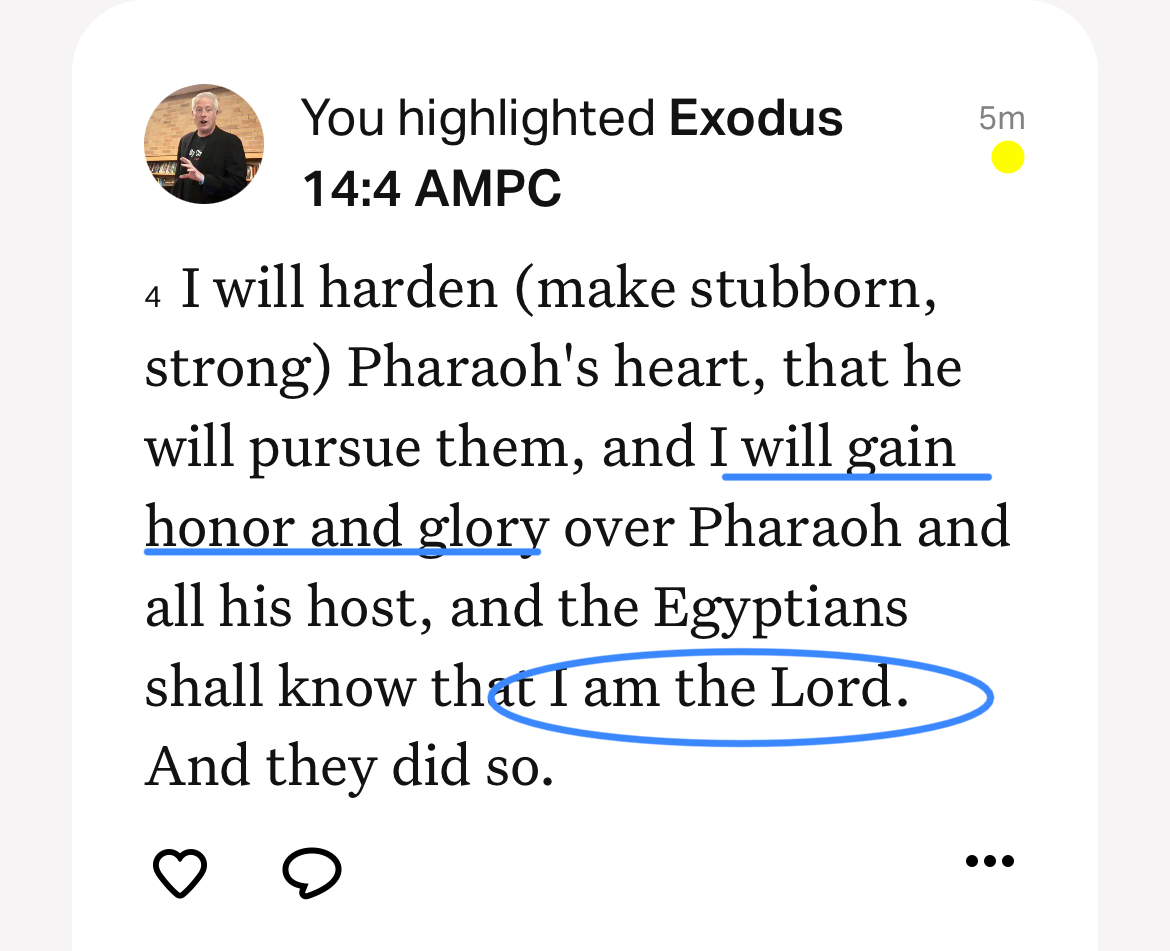
     “For Pharaoh will say of the Israelites, ‘They are entangled in the land; the wilderness has shut them in.’ I will harden (make stubborn, strong) Pharaoh’s heart, that he will pursue them, and I will gain honor and glory over Pharaoh and all his host, and the Egyptians shall know that I am the Lord.” And they did so. … The Lord made hard and strong the heart of Pharaoh king of Egypt, and he pursued the Israelites, for they left proudly and defiantly. … Moses told the people, “Fear not; stand still (firm, confident, undismayed) and see the salvation of the Lord which He will work for you today. For the Egyptians you have seen today you shall never see again. The Lord will fight for you, and you shall hold your peace and remain at rest.” … Thus the Lord saved Israel that day from the hand of the Egyptians, and Israel saw the Egyptians dead upon the seashore. And Israel saw that great work which the Lord did against the Egyptians, and the people reverently feared the Lord and trusted in (relied on, remained steadfast to) the Lord and to His servant Moses. (Exodus 14:3-4, 8, 13-14, 30-31 AMPC) 

God allowed the enemies to pursue the Israelites. Actually, God Himself stirred up these enemies to go after His people. 

So let me ask again: Why would God do this?

Two things happened as the Israelites remained at rest: 

  1. The Egyptians were defeated, which caused God’s name to be revered 
  2. The Israelites were delivered, which caused them to place their trust more firmly in God. 

Instead of complaining about your foes—or even trying to defend yourself or fight back against them—keep your eyes on your Savior. He will be glorified as He cares for you as only He can! And when God does unleash His power on your behalf, you will have a testimony that will reverberate through the ages—

     Then Moses and the Israelites sang this song to the Lord, saying, “I will sing to the Lord, for He has triumphed gloriously; the horse and his rider or its chariot has He thrown into the sea. The Lord is my Strength and my Song, and He has become my Salvation; this is my God, and I will praise Him, my father’s God, and I will exalt Him. … Who is like You, O Lord, among the gods? Who is like You, glorious in holiness, awesome in splendor, doing wonders?” (Exodus 15:1-2, 11)

God will be glorified in your difficult situation. Stand still and watch your awesome God work in awesome ways!

I wrote about this story from a different angle in my post Between a Rock and a Hard Place. And check out my video clip Different Thinking in Difficult Places. 

►► Would you please prayerfully consider supporting this ministry? My Patreon supporters get behind-the-scenes access to exclusive materials. ◀︎◀︎

How Do We Wait Expectantly?

Listen to the podcast of this post by clicking on the player below, and you can also subscribe on AppleSpotify, or Audible. 

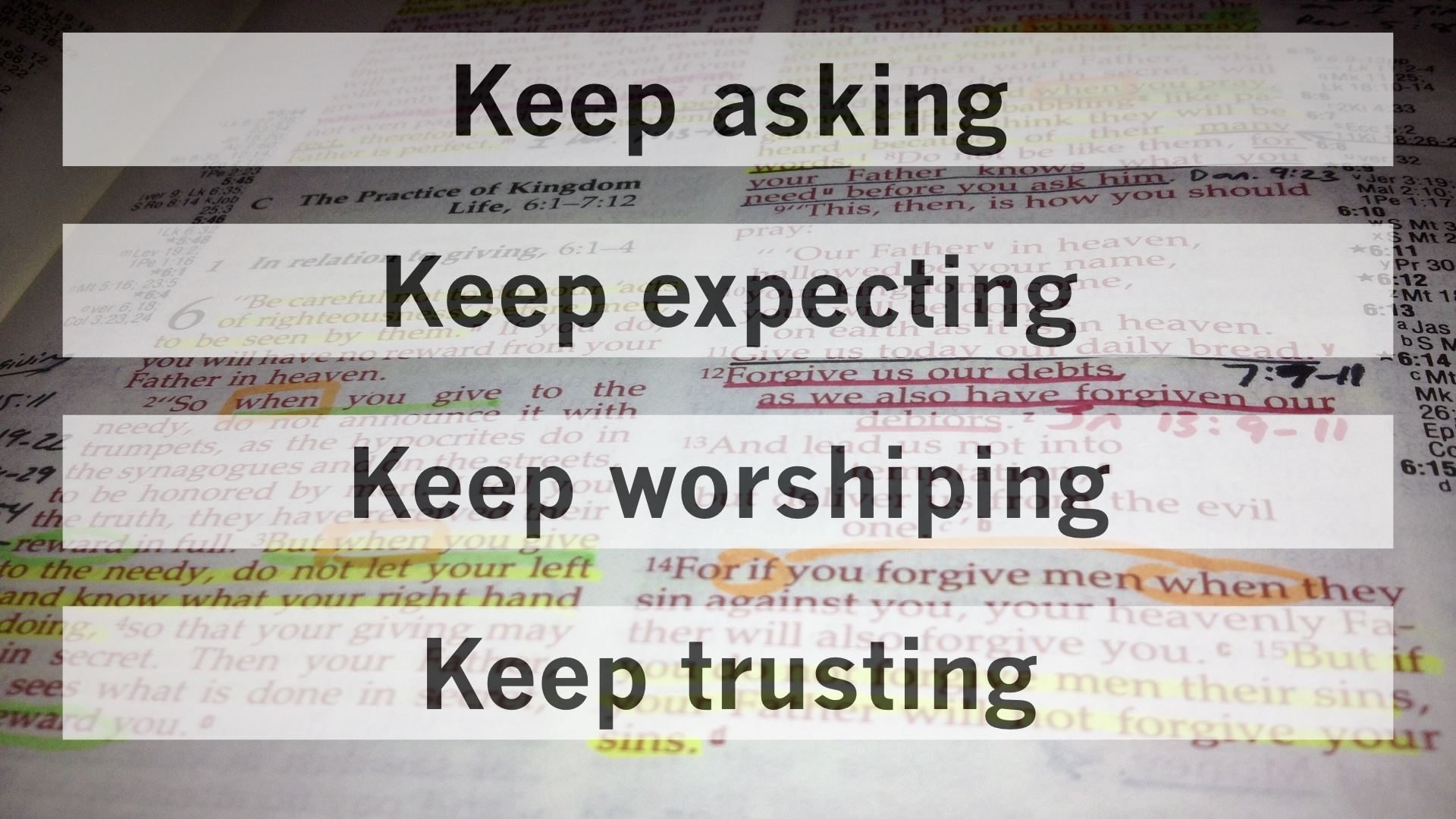
Last week I asked, “How long do we keep praying?” Answer: Until God answers or until He lifts our burden. In the meantime, the Bible encourages us to…

  1. Keep asking with full confidence that God hears you 
  2. Keep expecting an answer 
  3. Keep worshiping God for Who He is 
  4. Keep trusting that your Heavenly Father wants to give you the very best! 

With that in mind, let me ask you another question: What does this look like? How do we wait expectantly for God to answer? I’ve got three thoughts from the Scripture.

(1) Keep walking

Eliezer had a 300-mile journey which would have taken him about 10 days. Abraham prayed for him before he left and Eliezer prayed when he arrived (Genesis 24:7, 12, 15). His expectation that God would answer him kept him walking. The answer came after 10 days—before he even finished praying! 

(Check out all of the Scriptures in this post by clicking here.)

Nehemiah prayed for God’s favor with King Artaxerxes (Nehemiah 1:11) but then he had to keep walking to work every single day for at least 4 months (2:4). All the while he was praying, expecting, and planning, so when the king asked him what he wanted, Nehemiah was ready to answer. 

A royal official met Jesus in Cana and asked Him to heal his son who was was sick in Capernaum. Jesus said, “Go! Your son will live,” and that father began walking his 20-mile journey home. Along the way, his servants met him to deliver the good news of the boy’s full recovery. When the father asked, he found out it was at the very moment Jesus had said, “Go” (John 4:46-53). 

Faith takes Jesus at His word and starts walking toward the approaching miracle! 

(2) Keep waiting

There are two Hebrew words in the Old Testament that frequently are translated “wait”: 

  • qava = expecting in hope 
  • yahal = guarding that hope    

Check out how one psalmist linked hoping and waiting—

Out of the depths I cry to You, LORD; Lord, hear my voice. Let Your ears be attentive to my cry for mercy. … I wait for the LORD, my whole being waits, and in His Word I put my hope. I wait for the Lord more than watchmen wait for the morning, more than watchmen wait for the morning. (Psalm 130:1-2, 5-6) 

And David wrote how he had learned to quiet himself in God’s loving presence: But I have calmed and quieted myself, I am like a weaned child with its mother; like a weaned child I am content (Psalm 131:2). 

Then listen to the wait-hope-quiet link in Jeremiah’s prayer—

I say to myself, “The LORD is my portion; therefore I will wait for Him.” The LORD is good to those whose hope is in Him, to the one who seeks Him; it is good to wait quietly for the salvation of the LORD. (Lamentation 3:24-26) 

In the New Testament, the idea is patience for an expected result is like a farmer who had prepared his field, planted good seed, watered it with his prayers, and is now assured of an abundant harvest (James 5:7-8; Galatians 6:9). 

(3) Keep smiling

We put on a smile, not a show! 

Contrast what Jesus said about the wrong way to pray and fast…

And when you pray, do not be like the hypocrites, for they love to pray standing in the synagogues and on the street corners to be seen by others. … And when you pray, do not keep on babbling like pagans … When you fast, do not look somber as the hypocrites do, for they disfigure their faces to show others they are fasting… (Matthew 6:5, 7, 16) 

…with the God-honoring, God-trusting way—

But when you pray, go into your room, close the door and pray to your Father, who is unseen … But when you fast, put oil on your head and wash your face. (Matthew 6:6, 17) 

It’s not a fake smile, but a smile that comes from the joy in our rock-solid expectation in God’s reply to our prayer (Psalm 28:6-7; 38:15) 

Pray—then keep walking, keep waiting, and keep smiling in anticipation of what your Heavenly Father is doing on your behalf. 

If you want to check out the other messages in this prayer series, please click here. 

►► Would you please prayerfully consider supporting this ministry? My Patreon supporters get behind-the-scenes access to exclusive materials. ◀︎◀︎

Links & Quotes

Christian parents often experience both a weight and a wait as they pray for their children. Biblical waiting is always active, calling us to continue to pray for our kids—not matter how old they are!

I have a lot of new video content on my YouTube channel every week. Please check it out and subscribe so you don’t miss anything.

The Institute for Creation Research reported: “Perhaps one of the top evidences for creation are the subcellular and incredibly efficient molecular protein machines that clearly function by known engineering principles. They are hardly simple. Determining just a part of their function requires the best science has in twenty-first-century technology: ‘While belonging to the nanoscale, protein machines are so complex that tracing even a small fraction of their cycle requires weeks of calculations on supercomputers.’”

Dr. Thaddeus Williams said, “What do you think is the most repeated phrase in the entire Bible? It’s, ‘Thus says the Lord…’ which clocks in at over 400 occurrences. The God of the Bible is not the stone-cold silent god of the ancient Greeks. Nor is He the stone-cold silent god of the ancient Stoics or Epicureans, too busy enjoying the amenities of divine bliss to bother with humanity. No. The God who exists is a God who speaks.” What does this mean for us? Dr. Williams talks about what happens to people who make time to regularly hear what God has to say to them through His Word.

“Work is the outcome of effort; fruit, of life. A bad man may do good work, but a bad tree cannot bear good fruit.” —Hudson Taylor 

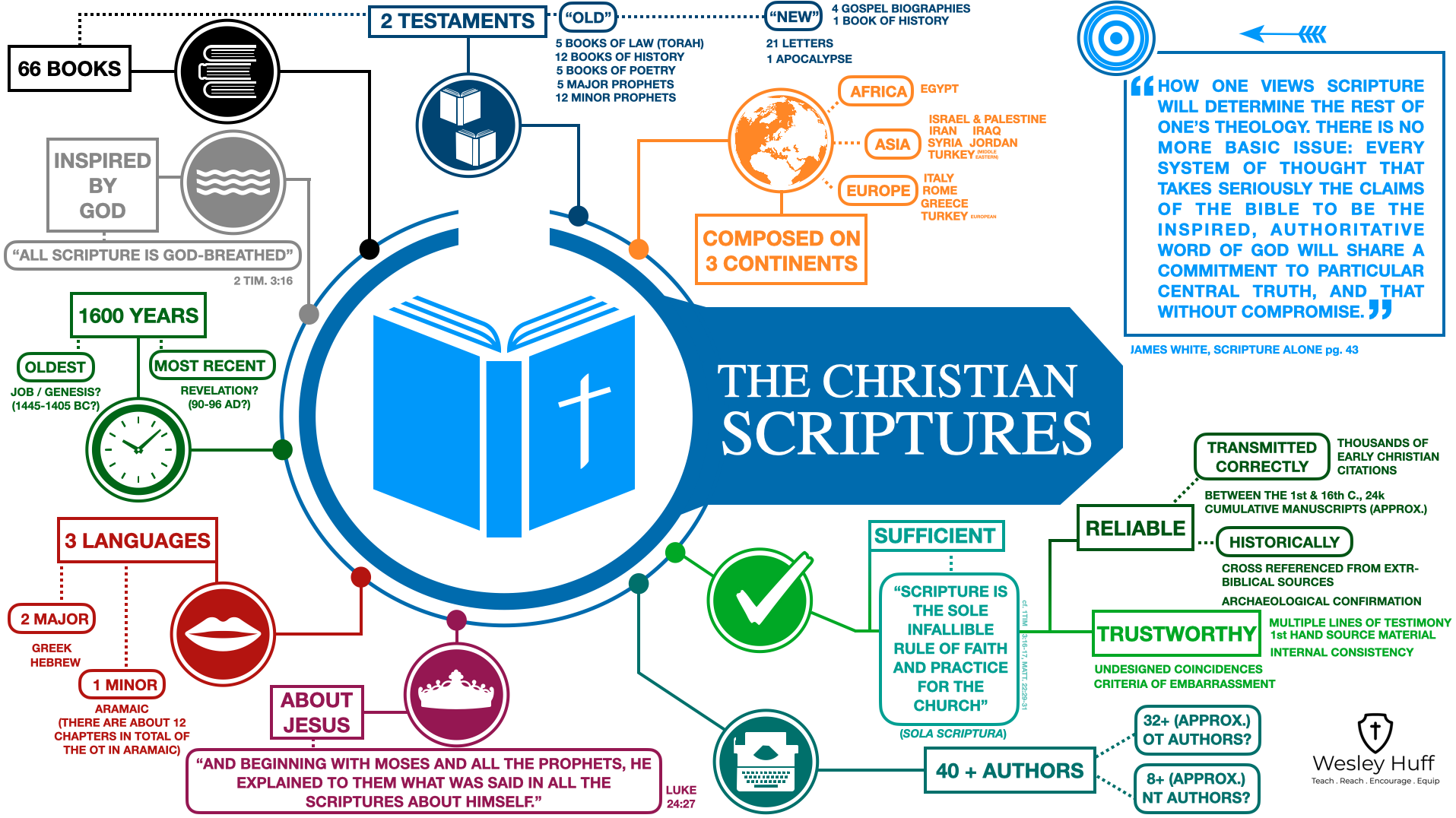
I love studying my Bible, and I also enjoy passing along things that encourage others to begin studying their own Bibles. This is a really cool infographic from Wesley Huff, giving a great overview of the Bible.

Dr. Steve Nichols has an interesting mini-biography of King Louis IX, whom some have called “the greatest king of the Middle Ages.”

J. Warner Wallace leads us all along “the fuse” that led up to the arrival of Jesus as the Messiah, the One to whom the Old Testament prophets predicted.

The Craig And Greg Show: The Silent Killers

Listen to the podcast of this post by clicking on the player below, and you can also subscribe on AppleSpotify, or Audible.

To you the term “silent killer” might conjure visions of a lone assassin from a spy movie, or perhaps more mundane but equally deadly things like high blood pressure or carbon monoxide leaks. In today’s episode Greg and I are discussing toxic behaviors that creep into the workplace. They aren’t quite as deadly as the ones listed above, but can still cause massive anger, frustration, and discord in your organization. Join us as we discuss some of the most prevalent toxins we’ve seen, and highlight how you as the leader are responsible for being the safeguard against them.

  • [0:20] Toxic things can sneak into our workplace unless we proactively look for them.
  • [1:35] Leaders need to be honest with their team so their team feels they can be honest with them in return.
  • [3:43] Greg and I discuss some of the toxic behaviors we have seen that create problems in the workplace.
  • [3:54] -Gossip
  • [4:51] -Office Politics
  • [6:42] -Negative Competition
  • [8:37] -Negativity
  • [10:20] -Bureaucracy
  • [12:46] -Braggadocio
  • [14:12] -Bashing
  • [14:46] Toxicity will come to every organization. We as leaders shine in the way we deal with it.
  • [17:47] When I wrote Shepherd Leadership, I spent two chapters discussing the balance between confidence and humility because of how important it is.
  • [19:08] One of our main jobs as leaders is to develop others, but toxicity squashes that.
  • [20:26] A coach can come alongside you to be the “detector” for the silent killers that might be lurking in your organization.

Check out this episode and subscribe on YouTube so you can watch all of the upcoming episodes. You can also listen to our podcast on Spotify and Apple.

How Long?

Listen to the podcast of this post by clicking on the player below, and you can also subscribe on AppleSpotify, or Audible. 

Last week we saw that if we make prayer our priority, we can expect that our eyes will be opened to the answers that God has for us. Hagar and Eliezer seemed to get pretty quick answers. Nehemiah had to wait four months for the answer to his prayer. 

We saw in Psalm 5 that David laid his requests before God first thing in the morning, and then he went out of his prayer closet in expectation of an answer (Psalm 5:1-3). But how long did he wait? 

(Check out all of the Scriptures in this post by clicking here.) 

Psalm 6 may not happen historically right after Psalm 5, but listen to David’s heart, “Have mercy on me, LORD, for I am faint; heal me, LORD, for my bones are in agony. My soul is in deep anguish. How long, LORD, how long? (Psalm 6:2-3). And then again in Psalm 13:1-3, David asks, “How long?” four times in the first two verses! 

When we read the training Jesus gave His disciples about prayer in Luke 11:9-10, we see how He implores them (and us) to keep on praying. It becomes even more emphatic in the Amplified Bible—

So I say to you, ask and keep on asking and it shall be given you; seek and keep on seeking and you shall find; knock and keep on knocking and the door shall be opened to you. For everyone who asks and keeps on asking receives; and he who seeks and keeps on seeking finds; and to him who knocks and keeps on knocking, the door shall be opened. 

But once again we have to ask: how long are we to continue asking, seeking, and knocking? This is what Job asked in the middle of his trial (Job 6:8, 11-13). 

Charles Spurgeon said, “God has measured the crosses of all His children: Israel in Egypt, 430 years; Joseph in prison, 3 years; Judah in Babylon, 70 years.” That means that God knows what He is doing, God knows His timing for answering, and that our part is to simply to continue to ask, seek, and knock as we throw our total trust on Him! 

I remember my affliction and my wandering, the bitterness and the gall. I well remember them, and my soul is downcast within me. Yet this I call to mind and therefore I have hope. Because of the LORD’s great love we are not consumed, for His compassions never fail. They are new every morning; great is Your faithfulness. I say to myself, “The LORD is my portion; therefore I will wait for Him.” (Lamentations 3:19-24) 

During these times of waiting, we need to keep recalling what we know:

  1. God’s love is unfathomable—Romans 5:5, 8:38-39 
  2. God’s timing is perfect—Deuteronomy 32:4 
  3. God’s method is flawless—Romans 8:28 
  4. God’s gifts are good—Luke 11:11-13, 12:32  

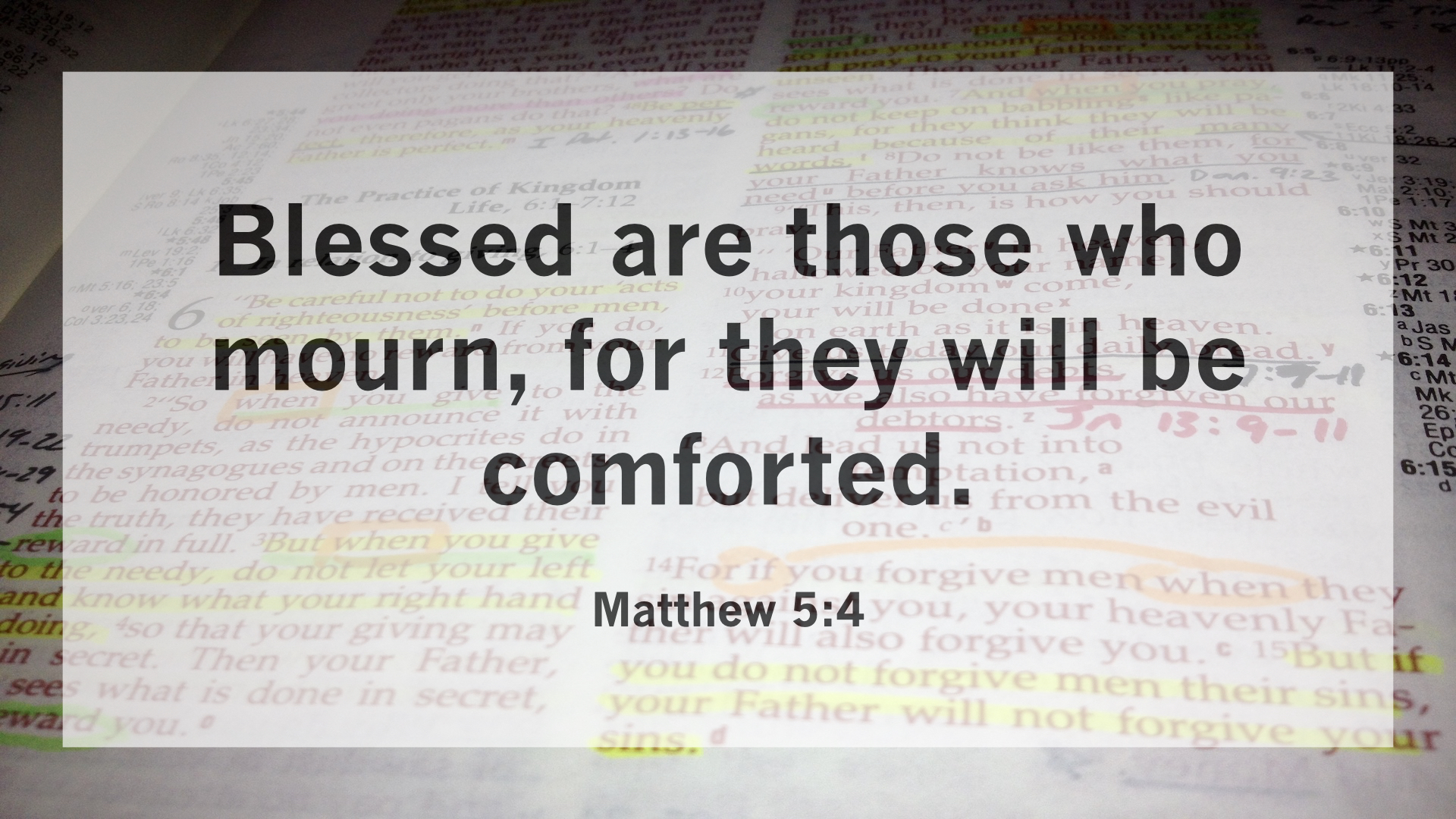
In Psalms 6 & 13, David doesn’t record any answers from God, but listen to this assurance from Jesus, “Blessed are those who mourn, for they will be comforted” (Matthew 5:4). 

Jesus doesn’t tell us how or when God will bring us comfort, but He does assure us that we will be comforted! 

In a couple of the examples from David, you can see this assurance as he continues his prayers (Psalm 6:2-4, 8-10; 13:1-6). Paul also experienced this confidence (2 Corinthians 12:7-10), and so did Jesus (Matthew 26:38-39, 50-54). 

The writer of Hebrews assures us that Jesus was heard in His, “How long?” cries, and therefore He knows exactly how to intercede for us today as we lift up the same cry (Hebrews 5:7-8; 2:10, 14, 17-18)! 

How long? Quite simply stated: Until God answers or until He lifts our burden. 

In the meantime, the examples in Scripture and the assurance of Christ’s intercession for us us encourages us to…

  1. Keep asking with full confidence that God hears you 
  2. Keep expecting an answer 
  3. Keep worshiping God for Who He is 
  4. Keep trusting that your Heavenly Father wants to give you the very best!  

If you have missed any of the other messages in our prayer series, you can find them all here. 

►► Would you please prayerfully consider supporting this ministry? My Patreon supporters get behind-the-scenes access to exclusive materials. ◀︎◀︎
Links & Quotes

Whether you call it grit or stick-to-it-iveness, those who don’t give up easily are the ones who will become leaders by their example. Check out the conversation we had on The Craig and Greg Show.

I have a lot of new video content on my YouTube channel every week. Please check it out and subscribe so you don’t miss anything.

I was thrilled to be asked to write an article for Influence Magazine about the biting sheep that every pastor has experienced. I am praying that this article will help pastors recover and thrive in their shepherding ministry.

“Knowing our lowliness and Christ’s worthiness, we neither grovel nor saunter into the presence of God. And we do not go home flippant or weeping. In Christ, we will receive what we ask or what we should have asked.” —David Mathis

In 1 Thessalonians 5:19, the apostle Paul warns us not to quench the Holy Spirit. T.M. Moore asks, “How do we quench the Spirit?” and then gives Christians seven warning signs to avoid this quenching. Check out his post Joy In His Spirit.

I really enjoy these archeological biographies of biblical people and places. The Bible Archeology Report writes, “The Neo-Babylonian king, Amēl-Marduk (biblical Evil-Merodach) is only mentioned twice in Scripture (in 2 Kings 25:27–30 and the parallel passage, Jeremiah 52:31–34), both times in connection with the restoration of Jehoiachin, king of Judah.” In a separate post, John Stonestreet shares an archeological discovery in a Roman cemetery in Frankfurt of an amulet that shows that “the Gospel spread farther and faster than historians thought.”

Kenneth Blanchard shares his novel way of setting personal and business goals for the year in a post ‘Look forward to looking back at your goal success in 2025.’