You may also want to check out my blog post and video The Value of Journaling where I talk about how I capture thoughts, prayers, conversations from others, Scripture verses and more when I’m facing a big decision.
Listen to the podcast of this post by clicking on the player below, and you can also subscribe on Apple, Spotify, or Audible.
The last time we were together, Pastor Caleb mentioned that I was the only one he knew that put hot sauce on my eggs. But then several of you let him know that you do that too. After the service, someone told me that they like Tabasco sauce on their pizza, which isn’t something I enjoy.
We all have different tastes. Our tastebuds are just one of the things that makes us unique creations. Unique means one-of-kind, no one else like me. We don’t need to add something like “very unique” because just by itself the word means that God made a once-in-eternity masterpiece when He made you and me.
It’s a good thing that we are unique. I see what you don’t see, and you see what I don’t see. There are some things I know how to do well, but perhaps you struggle doing them. That’s okay because there are things you can do that I won’t have the opportunity to do. Combined together we saints make an amazing team!
The apostle Paul understood the value of unique individuals.
Titus was probably the one who carried Paul’s letter to the Corinthians and then had the responsibility to teach those saints how to carry out what was in the letter (2 Corinthians 2:12-13; 7:6-7, 13-15; 8:6, 16-17). Titus was the pastor that Paul sent to Crete. Paul quoted a poet who said, “Cretans are always liars, evil brutes, lazy gluttons” (Titus 1:12). Titus was confident and bold to stand his ground for what he believed (Galatians 2:1-3).
Timothy was more soft-spoken and tenderhearted, so Paul had to encourage him more (1 Timothy 4:7, 12), but he was the one who could soothe troubled spots. Timothy stepped in to help behind the scenes (Acts 18:1-5) and he was the one Paul reached out to with his last letter form prison, asking Timothy to come to him (2 Timothy 4:12).
What a great thing it is to have unique saints in our lives!
One person—not matter how gifted—cannot do it all. Look at Moses in Exodus 18:13-18. Even an anointed team like the 12 apostles cannot to it all. Look at Acts 6:1-2.
These leaders recognized the need to other uniquely gifted people to come alongside them. Moses was advised to choose capable men. In other words, those with the ability to judge disputes wisely (Exodus 18:19-25). The apostles chose those who were full of the Holy Spirit and wisdom (Acts 6:3-6). The Greek word for wisdom (sophia) means someone with heaven-sent wisdom that also has the ability to apply that wisdom effectively.
Israel in the Old Testament and the Church in the New Testament would have been constricted if those other people hadn’t agreed to let their God-given abilities be used.
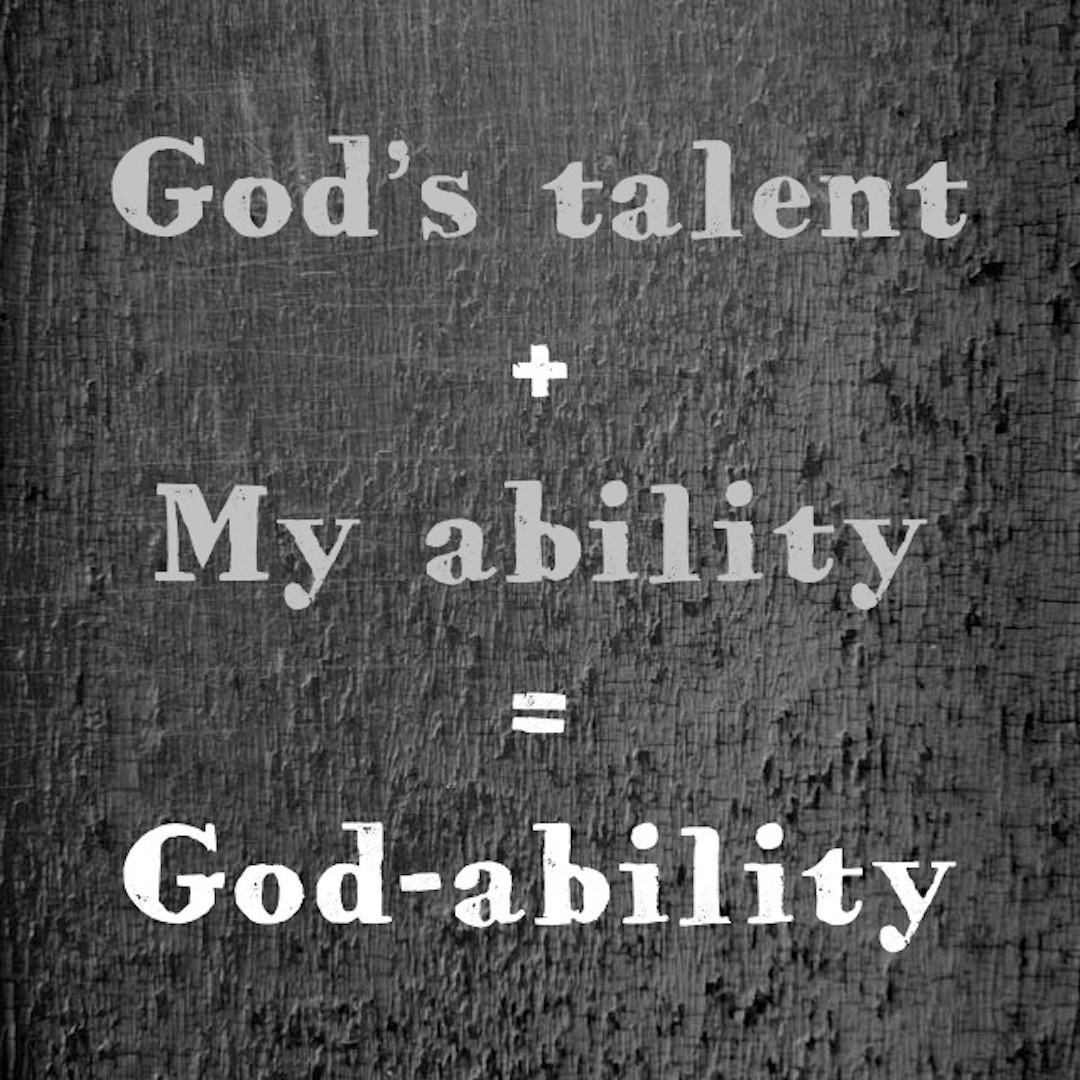
God’s talent + My ability = God-ability
In 2 Corinthians 8-9, Paul is specifically talking about the ability of people to give their offerings to help the growing church, but there is a phrase that I think is appropriate for any application of our gifts: They gave themselves first of all to the Lord (2 Corinthians 8:5).
When what we do is a cheerful “get to” and not an obligatory “got to” it is noticed by everyone. Those two chapters in 2 Corinthians are filled with words like cheerful, eagerness, and enthusiasm.
Deliver-ability to get the needed items to those who need them
But none of these work without availability. This is the attitude that makes our God-ability a blessing and not a chore.
There is a place in ministry for every Christian. When you are available, God will allow the talent that He has given you to be a blessing to the Church. You benefit, the other saints benefit, and the watching world sees a living witness that will draw them to Jesus.
“Psychologists, since the beginning of the discipline, have argued about the essence of what it means to be human. Some, like [Sigmund] Freud, insist that we are motivated by physical pleasure, while others, like Victor Frankl or Abraham Maslow, believe that some higher purpose…. Human beings, made in the image and likeness of God, only realize their full potential and pleasure as they participate in the very being of God and know and experience the pleasure He takes in Himself and His glory.” —T.M. Moore
“If you are persevering in faith today, you owe it to the blood of Jesus. The Holy Spirit, who is working in you to preserve your faith, is honoring the purchase of Jesus. God the Spirit works in us what God the Son obtained for us. The Father planned it. Jesus bought it. The Spirit applies it—all of them infallibly.” —John Piper
“The Hebrew word Davar (דבר, pronounced ‘daw-var’) reveals something profound about God’s Word—it’s not merely information, but transformation. … Throughout Scripture, God’s Word consistently proves both living and active. It has the power to create worlds (Genesis 1), transform lives (Psalm 119:105), and accomplish God’s purposes (Isaiah 55:11).” —Dave Adamson
More fascinating archeology that supports the Bible’s historicity. This is a look at the library of letters found at Tell el-Amarna in Egypt. “The most obvious connection between the Amarna Letters and biblical history is that some of the letters appear to be describing, in real-time, the attacks of the Israelites during the period of the conquest. Remember, the initial conquest battles took a period of some 5–6 years, but the attempts by various tribes to conquer their allotted territories lasted into the period of the Judges. The letters from the rulers of some of the very cities named in the biblical conquest calling for help from the attacking ʿapîru/ḫa-bi-ru, provide a poignant backdrop to this period of biblical history.”
“Because I am your constant Companion, there should be a lightness to your step that is observable to others. Do not be weighed down with problems and unresolved issues, for I am your burden-bearer.” —Jesus in Sarah Young’s Jesus Calling, based on Psalm 31:19–20; John 16:33
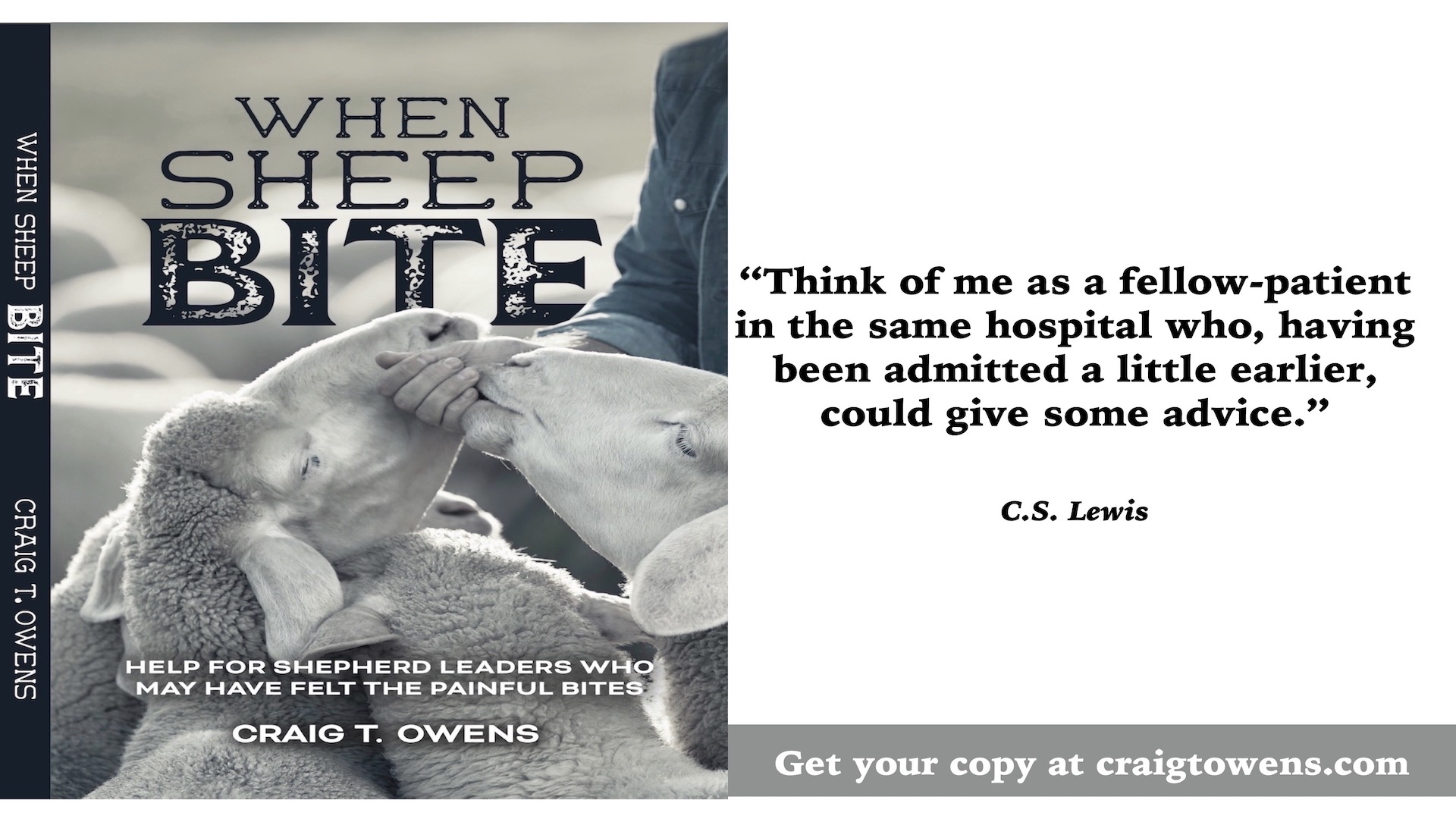
My book When Sheep Bite is all about recovering after difficulties—whether they were created by your mistakes or someone else’s mistakes. In the Introduction to my book I wrote:
I want to give you what I wanted when this happened to me: empathy, insight, a helpful perspective, and a manual of help that God has provided in the Bible. I don’t want to try to one-up your story of pain, because I’m confident that no one could truly know how deeply you’ve been hurt. But I do want to give you some assurance that I know what I’m talking about. …
Your pain and your circumstances are unique. Your pain is real, and it is incomparable to anyone else’s pain. But the biblical principles that God revealed to me—those things that helped me heal and the thoughts I want to share with you—are applicable for any shepherd. These tried-and-true principles can help you not just survive this pain but thrive in spite of this pain. I would say to you something that C.S. Lewis wrote, “Think of me as a fellow-patient in the same hospital who, having been admitted a little earlier, could give some advice.”
Listen to the podcast of this post by clicking on the player below, and you can also subscribe on Apple, Spotify, or Audible.
Our Royal Psalms take us from King David to King Jesus. David went from the anointed king on the run from King Saul, to being king over Judah (2 Samuel 2:4), to being king over “all the tribes” (2 Samuel 5:1-3; 8:15).
David’s kingdom stretched far and wide (1 Chronicles 22:14-16; 29:10-13). This absolute control King David now wields over every nation surrounding Israel puts fear into the hearts of Israel’s enemies. Fear of David brings freedom for the people of his kingdom.
As the Sons of Korah think about this fear that brings them freedom, they look beyond their earthly king to the King of Heaven and compose this Royal Psalm recorded in Psalm 47. This psalm has majestic terminology for God in almost every verse; including, Lord Most High, great King over all the earth (vv. 2, 7, 9), God reigns over the nations; and God is seated on His holy throne.
I’m especially intrigued by the word awesome in verse 2. The KJV says “the Lord Most High is terrible” because it does take two Hebrew words to give us the full definition of awesome. First, “Most High” is best thought of with the suffix -est: greatest, highest, noblest. In other words, there is nothing above Him. Then “terrible” is to be held in awe, to be honored, to be reverenced.
Just as the Israelites had no fear of enemies because David was on the throne, God says the same thing to us: Because the Most High is on the throne, His people have no fear of their enemies.
When we fear God we need not fear anything else.
When we fear God:
…we hate our own sin (Psalm 36:1-3)
…we love His mercy that forgives our sin (Psalm 103:2-3, 10-12)
…we hate sin in the world (2 Timothy 2:26)
…we love sinners (2 Timothy 2:24-26; Acts 10:38; Jude 20-23)
…we hate the darkness that traps people (2 Corinthians 4:4)
…we love shining the light of King Jesus (Philippians 2:15-16)
…we hate this life (John 12:25)
…we love eternal life (Romans 3:23-24, 8:18)
When the people of Israel reverenced David as their king, they would be able to know his blessings. When we fear our awesome God, we will also receive His blessings. Take a look at the amazing blessings Jesus Himself—the King of kings—lists for those who reverence His awesome Kingship (Revelation 2:7, 11, 17, 26-28; 3:5, 11-12, 21)!
God is awesome and asks us to reverence Him and then enjoy life in His freedom.
Leaders must resist trying to rush in “to save the day.” We need to let our teammates learn how to rescue themselves through a time of productive struggle. Check out the full conversation Greg and I had in our episode “The struggle is real (but necessary).”
I have had an ongoing series of posts and videos called “Is that in the Bible?” Many times we discover that a phrase we think is biblical isn’t found in the Scripture or it is being used out of context. John Stonestreet addresses this same concern. He writes, “Selective proof-texting points to how widespread and deep biblical illiteracy is. In addition to an ignorance of the actual content of the Bible, there is ignorance about what the Bible even is, and how Christians throughout the ages have used it. It’s bad when this ignorance shows up in politics. It’s sad when it shows up in our churches and Christian subcultures.”
“Strength does not come from winning. Your struggles develop your strengths.” —Arnold Schwarzenegger
Marcus Buckingham shared something fascinating: “I studied 3000 Disney housekeepers. Eight of them told me what they loved about their work. One vacuums herself out of every room to make perfect carpet lines. Another lies on every bed to test the ceiling fan because dust falling means guests think the room is dirty. A third arranges kids’ toys in elaborate scenes—Mickey with the TV remote, Minnie with french fries. All breaking Disney’s rules. All excellent for completely different reasons. Stop building competency models for leaders. The best leaders are super different from each other. Average is homogenous. Excellence is idiosyncratic.”
Listen to the podcast of this post by clicking on the player below, and you can also subscribe on Apple, Spotify, or Audible.
What does it mean when we really believe the words, “The Lord is my Shepherd, I lack nothing” (Psalm 23:1)?
When the sheep is utterly dependent on the shepherd, it lacks nothing. A sheep without any lack glorifies the Good Shepherd.
God is glorified when I remain in utter dependence on Him, and I continue to have to lack because of His perfect provision. I am quiet, restored, on the right path, fearless, secure, provisioned, blessed, and forever hopeful.
To try to provide for my own needs dishonors the Good Shepherd, but to come to Him for absolutely everything glorifies Him as eternally satisfying and reliable.
The more my needs are satisfied by God alone, the more He is glorified.
Leaders would do well to remember that they lead a group of unique individuals. Let the unique gifts of those unique people be used in unique ways, and watch both the individuals and the organization grow!
“As Tyler Cowen wrote in The Free Press, ‘Whether or not you work in the AI sector, if you put any kind of content on the internet, or perhaps in a book, you are likely helping to train, educate, and yes, morally instruct the next generation of what will be this planet’s smartest entities. You are making them more like you—for better or worse.’ Now, maybe someone thinks, ‘I’ve hardly got any followers, who cares what I post? It probably won’t matter.’ But the principle means we should care. The philosopher Immanuel Kant famously offered his ‘categorical imperative’ as a test for ethical decisions: ‘Act only according to that maxim whereby you can at the same time will that it should become a universal law.’ In other words, we should only do what we think would be good for everyone to do.” —Axis.org
How much good inside a day?
Depends how good you live ’em.
How much love inside a friend?
Depends how much you give ’em. —Shel Silverstein
A fantastic mini-biography of Otto J. Klink who went from being a Christian, to an atheist socialist, to failed presidential assassin, to a Pentecostal author and evangelist. Wow!
“My acceptance of the universe is not optimism, it is more like patriotism. It is a matter of primary loyalty. The world is not a lodging-house at Brighton, which we are to leave because it is miserable. It is the fortress of our family, with the flag flying on the turret, and the more miserable it is the less we should leave it. The point is not that this world is too sad to love or too glad not to love; the point is that when you do love a thing, its gladness is a reason for loving it, and its sadness a reason for loving it more.” —G.K. Chesterton
Marshall Segal said this about our daily Bible reading time, “I want to walk through a five-step prayer you could pray when you sit down with your Bible to meet with God. The five steps are built on an acronym for FEAST. Focus my mind; Enlighten my eyes; Address my sin; Satisfy my soul; Train my hands.”
“A man of character will make himself worthy of any position he is given.” —Mahatma Gandhi
“A retentive memory may be a good thing, but the ability to forget is the true token of greatness. Successful people forget. They know the past is irrevocable. They’re running a race. They can’t afford to look behind. Their eye is on the finish line. Magnanimous people forget. They’re too big to let little things disturb them. They forget easily. If anyone does them wrong, they consider the source and keep cool. It’s only the small people who cherish revenge. Be a good forgetter. Business dictates it, and success demands it.” —Elbert Hubbard
“Leadership is not about being in charge, but about taking care of the people in your charge.” —Simon Sinek
Flowing Data has a fascinating look at how people spend their time during the day. Their adjustable chart shows activities by age, sex, and time of day. It reminds me of a blog post I shared about time management, where I noted, “You cannot add more Tick, Tocking! time to your day, but you can keep more of your day from Drip, Dropping! away.”
“We might think, ‘Well, hey, if I’m devoting myself all the time to looking out for others’ needs, who’s going to be looking out for mine?’ The Lord, of course, because He knows what you need even before you ask Him, and He has ways of meeting your needs that are more wonderful than you in your cleverness or strength could ever conjure or provide (cf. Matthew 6:25-34).” —T.M. Moore
“We all know that exercise makes us feel better, but most of us have no idea why. We assume it’s because we’re burning off stress or reducing muscle tension or boosting endorphins, and we leave it at that. But the real reason we feel so good when we get our blood pumping is that it makes the brain function at its best, and in my view, this benefit of physical activity is far more important—and fascinating—than what it does for the body. Building muscles and conditioning the heart and lungs are essentially side effects. I often tell my patients that the point of exercise is to build and condition the brain.” —Dr. John Ratey
T.M. Moore has a hard but good word for Christians: “If this day, and this expectation and hope [when we heard King Jesus say, ‘Well done, good and faithful servant’], are not the driving force for every aspect of our lives and work, then it is doubtful we have really understood the Good News of the Kingdom or received the salvation freely offered to us by the King. I say this again: If we are not motivated and driven, day by day, by the prospect of hearing ‘Well done, good and faithful servant,’ then we need to examine ourselves, whether we truly know the Lord of glory. That’s pretty hard language, I know, but let’s face the reality: If we have not submitted to Jesus as Lord of every area of our life, all the work we’ve been given to do, then we are still living for ourselves, not Him.” —T.M. Moore
Listen to the podcast of this post by clicking on the player below, and you can also subscribe on Apple, Spotify, or Audible.
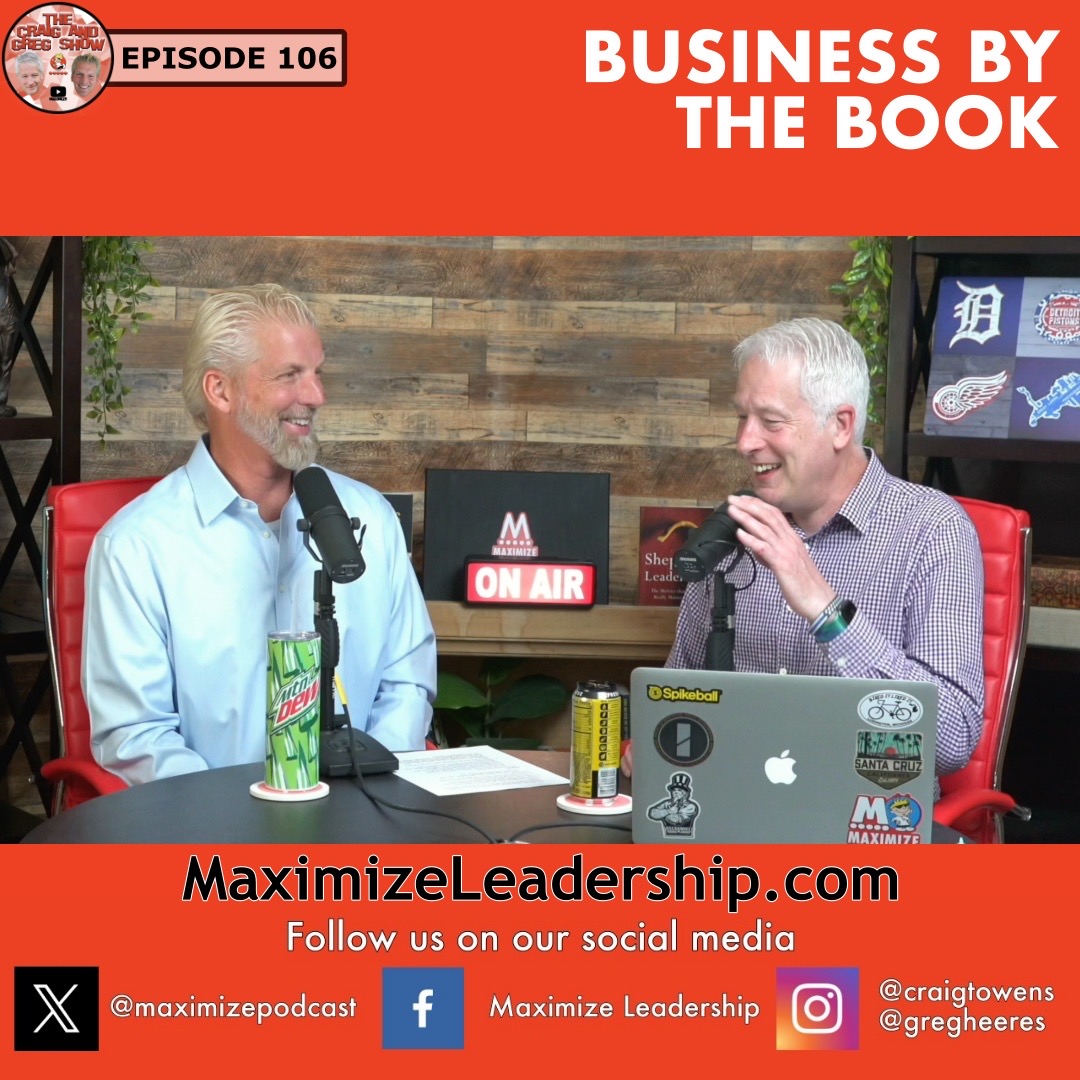
The multitude of books written about business and leadership is nearly incalculable. If you began reading now and did nothing else you could spend the rest of your life reading business books and still have many unread at the end of your life. Yet the wealth of knowledge contained within these books still pales in comparison to the insights provided to us by THE book—the Bible. In today’s episode Greg and I are happy to announce we are working on a new project called Business By The Book, which combines biblical insights with real-world applications.
[0:00] Introduction
[0:40] Greg and I are working on a project that we are so excited to be doing!
[1:50] We cover all the “boxes” on a corporate flowchart with this project. We start with the CEO box.
[3:56] We have been working as leadership coaches before there even was such a term.
[5:34] I will be writing from the Bible side and Greg will be writing from the business side in all of these books.
[8:21] If you are the point leader in your organization, you need to go first in reading this book and getting copies for others.
[9:10] We need your help for future books in this series.
Listen to the podcast of this post by clicking on the player below, and you can also subscribe on Apple, Spotify, or Audible.
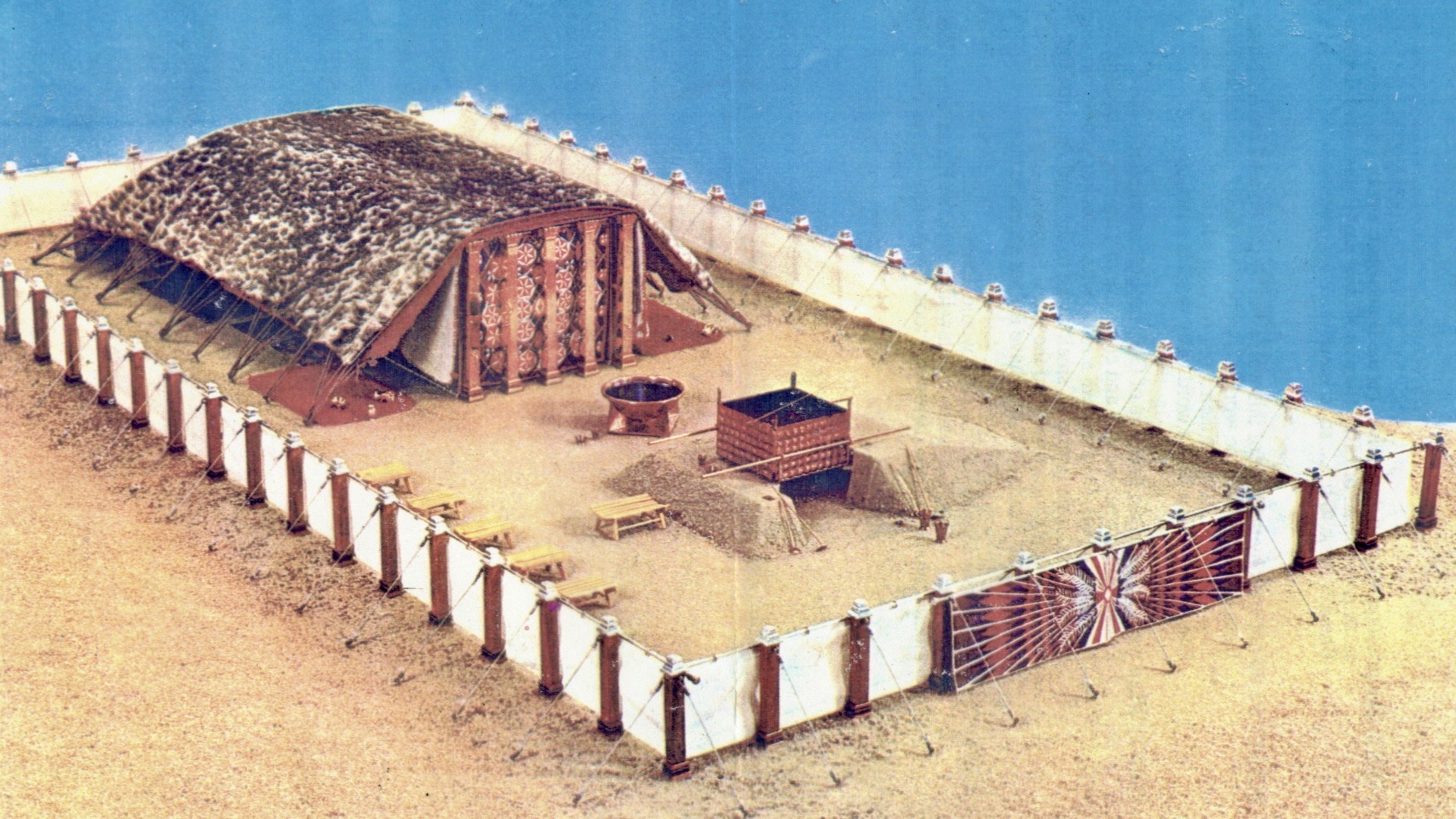
I was absolutely fascinated by a Messianic Jew’s insights on the Old Testament Tabernacle, and how every aspect of it pointed to Jesus the Messiah.
The overview of the construction of the Tabernacle starts in Exodus 25 and covers the next fifteen chapters in that book. Here are a few of my main takeaways from my friend’s teaching.
The materials for the Tabernacle are brought as a freewill offering given by freed slaves (Exodus 25:1-2). This gold, silver, bronze, linens, and other materials were gifts from the Egyptians when the Israelites left on the night of the Passover.
The Tabernacle is at the center of the Israelite camp (Numbers 2:1-34), signifying God’s presence in the center of our lives. When the Israelite community moved out, the tribe of Judah went first. Judah means “praise.” What a great reminder to let praise to God be at the forefront of all we do!
In Exodus 27:16, the materials to be used for the curtains compromising the entrance to the Tabernacle are blue, purple, and scarlet. The blue is for sky (Heaven), the purple designates royalty, and the scarlet signifies the blood of the sacrifices. Jesus came to earth as royalty from Heaven, and by His shed blood He opens the way for all of us to be with Him in Heaven forever! Jesus said He was the only way to Heaven (Hebrews 2:14-15; John 14:6).
The bronze altar for cleansing was just inside the entrance (Exodus 27:1-8). The worshiper offered this sacrifice in place of their sin. The priests would then move to the laver to wash off the dirt of the world. It’s important to note that the priests wash at the laver, not in the laver. Jesus is the One who washes us and cleanses us (Ephesians 5:26).
There are four different coverings over the Holy Place. As the priest progresses farther into the Holy Place, the coverings become thicker, so less outside light is visible.
First covering (Exodus 26:1) was blue, purple, and scarlet yarns (like the colors at the entrance) with cherubim woven into the fabric. The priests looking up would see these angels.
Second covering (v. 7) was goat’s hair. Goats were used for sin offerings, reminding the priests that there was a sacrifice to cleanse them so they could approach the presence of God.
Third covering (v. 14) was a red-dyed ram skin, showing the blood that covers us.
Fourth covering (v. 14) was the durable leather of a badger. Now there would have been very little light from outside, but the angels would still be seen for those inside the Holy Place.
In the Holy Place was the showbread (sometimes called the bread of presence) pointing to Jesus as our Bread of Life (Exodus 25:23-30; John 6:35). Also in the Holy Place was the lampstand filled oil (vv. 31-37). Only one stick holds the oil and supplies the other six branches. The priests could only work by the light of God. Jesus is our light (John 8:12). And we also find the altar of incense here (30:1-7). This was a unique perfume that wasn’t used anywhere else. The prayers of the saints that arise before the throne in Heaven as said to rise as incense (Psalm 141:2; Revelation 5:8). Worshipers in God’s presence are saturated with the aroma of Jesus (2 Corinthians 2:14-15).
In the Holy of Holies is the ark of the covenant of the Lord (25:10-22). Inside the ark were the stone tablets that contained the Ten Commandments. On top of the ark, overshadowed by the wings of two huge cherubim angels, was the mercyseat or atonement cover. Notice that mercy is over the Law, and that the blood of the sacrifice of Jesus covers my disobedience and makes me at one with God (the literal definition of atonement).
How beautifully all of these aspects of the earthly Tabernacle point to Jesus (Hebrews 8:5, 10:1)! And even more amazingly, Jesus fulfilled every requirement in this Tabernacle to make it possible for all who put their faith in Him to enter the Heavenly Tabernacle and remain in His presence for ever and ever!