6 Quotes From “The Fi5th Gospel”

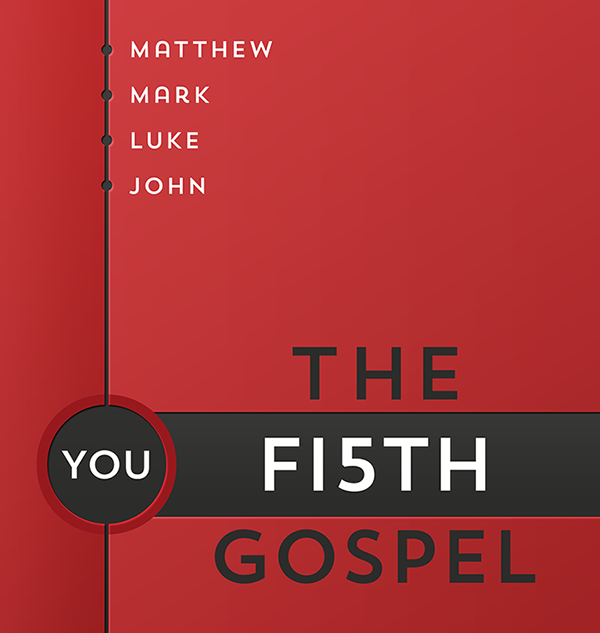
The Fi5th GospelI have been watching the One Minute Apologist videos from Bobby Conway for quite awhile, and find them very helpful. Recently I finished a reading plan in YouVersion based on Bobby’s book The Fi5th Gospel. Here are a few quotes that especially caught my attention.

“If I am the only Gospel people will ever experience are they experiencing the true Gospel?”

“At no other time in human history has God so plainly and blatantly revealed Himself than at Calvary. At no point has He so graphically uncovered His heart for mankind. It was there, on a hill outside Jerusalem, the Messiah bled for us, suffering hellish agony and sin-induced banishment, all the while enduring the brutal wrath of a holy and righteous God.”

“The exclamation point to this graphic love letter to us was the resurrection—Jesus’ conquering moment of triumph over sin, satan, and the grave. This is what Christians are all about right? It’s how we are saved. Take away the Cross and we’re no different from any other religious idea. It’s Jesus Christ, His death and resurrection. Strip away all the modern church fluff and this is what you find at the core of our faith. It’s essential. Nonnegotiable. Undeniable. It’s what makes us who we are. It’s what makes Christians ‘Christian.’ And it’s why Jesus is the answer to all of life’s deepest issues.”

“The sacrifice [God] requires isn’t death on a cross, but rather death to our pride and fear of what other might think. God just wants us to be proud of Jesus and what He has done for us. He wants us to be unashamed of His Son.”

“Though we were originally created in God’s image, God’s reflection in us was marred in the Garden of Eden when Adam and Eve sinned. And though His image wasn’t completely erased, it was defaced and tarnished. When you trusted in Christ, the Holy Spirit began a beautiful work of ‘image restoration’ in you; masterfully remaking you to more accurately reflect God’s virtue. He began sculpting, forming, and transforming your character to better display Christ to the world. You become His image-bearer, and His ongoing work in your life distinguishes you from the world. This is a lifelong process, by the way, and one God is committed to completing.”

“None of us will ever perfectly represent God’s character. As long as we’re on this earth, we’ll have imperfections. And it’s these imperfections that some unbelievers are quick (and happy) to point out and expose. But there is value in listening to what others say, of taking an honest look in the mirror, of stepping into an unbeliever’s shoes to see what they perceive about Jesus and His bride. Think of it as a spiritual awareness-building exercise.”

Thursdays With Oswald—6 Questions About Your Relationship With Jesus

Oswald ChambersThis is a weekly series with things I’m reading and pondering from Oswald Chambers. You can read the original seed thought here, or type “Thursdays With Oswald” in the search box to read more entries.

6 Questions About Your Relationship With Jesus

“How much more shall the blood of Christ, Who through the enteral Spirit offered Himself without blemish unto God, cleanse your conscience from dead works to serve the living God?” (Hebrews 9:14)

     Our right to ourselves in every shape and form was destroyed once and for ever by the death of Jesus, and we have to be educated into the realization of what this means in all its fullness. We have to come to a relationship to the Cross in thought as well as in life. … 

     We are here with no right to ourselves, for spiritual blessing for ourselves; we are here for one purpose only—to be made servants of God as Jesus was. …

   “How much more” does the death of Jesus mean to us today than it ever has before? Are we beginning to be lost in wonder, love and praise at the marvelous loosening from sin, and are we so assimilating the nature of Jesus that we bear a strong family likeness to Him?

     The most devout among us are too flippant about this great subject of the death of Jesus Christ. When we stand before the Cross, is our every common pious mood stripped off? … 

     How does all the profound thought underlying the death of Jesus touch us? The writer to the Hebrews instantly connect it with conscience—“How much more shall the blood of Christ,…cleanse your conscience from dead works to serve the living God?” Has conscience the place in our salvation and sanctification that it ought to have? … 

     Are you thankful to God for your salvation and sanctification, thankful He has purged your conscience from dead works? Then go a step further; let Jesus Christ take you straight through into identification with His death until there is nothing left but the light at the foot of the Cross, and the whole sphere of the life is hid with Christ in God. 

From The Philosophy Of Sin

I challenge you: take some time to thoughtfully answer these questions.

Thursdays With Oswald—What “Religious” Things Perplex You?

Oswald ChambersThis is a weekly series with things I’m reading and pondering from Oswald Chambers. You can read the original seed thought here, or type “Thursdays With Oswald” in the search box to read more entries.

What “Religious” Things Perplex You? 

     If we are perplexed over the question of sanctification, or about the baptism of the Holy Ghost, we ourselves are the reason why we are bothered. God has written a Book, and the phrases “sanctification” and the “baptism of the Holy Ghost” are His, not man’s; why do we not go to Him about it? 

     We are the reason why we do not go; we dare not go. If we honestly ask God to baptize us with the Holy Ghost and fire, anything that happens is His answer, and some appalling things happen. If we accept the revelation that our body is the temple of the Holy Ghost, are we prepared to ask God to fulfill the purpose of the Holy Ghost in our body? If we are, watch the consequences—that friendship must go, that book, that association, everyone of them must decay off like a lightning flash. 

     If anyone has a difficulty in getting through to God, it is never God who is to blame. We can get through to Him as soon we want to, there is nothing simpler.

From The Psychology Of Redemption

I believe Chambers’ line of reasoning goes like this:

  • God has revealed His full will in the inspired words of Scripture.
  • The same Holy Spirit Who inspired the Bible can illuminate our hearts.
  • We don’t have insight because we either don’t ask for it [James 1:5], or we don’t really want to hear the truth [James 4:3].
  • Asking for help while posturing ourselves to obey will quickly bring clarity—“Jesus Christ’s life must work through our flesh, and that is where we have to obey. So many go into raptures over God’s supernatural salvation, over the wonderful fact that God saves us by His sovereign grace (and we cannot do that too much), but they forget that now He expects us to get ourselves into trim to obey Him” (Oswald Chambers).

George Whitefield On Developing Godly Attributes

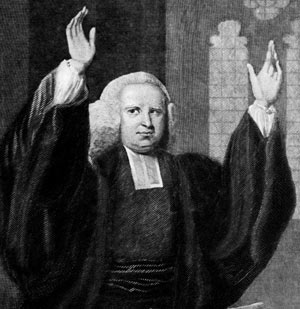
George Whitefield“The fruit of the Spirit (Galatians 5:22-23) do not automatically become evident in our lives. If we are not discerning enough to recognize their availability to us, to desire them, and then to nourish them in our thoughts, they will never become embedded in our nature or behavior. Every further step of spiritual growth in God’s grace must be preceded by acknowledging our lack of a godly attribute and then by exhibiting a prayerful determination to obtain it. …

“Today many people are attempting to use their mental capacity and logical thinking to obtain sanctification, yet this is nothing but a religious fabrication. They believe that if they just mentally put themselves on the altar and believe the altar provides the gift of sanctification, they can then logically conclude they are fully sanctified. Then they go happily on their way, expressing their flippant, theological babble about the ‘deep’ things of God.

“Yet the heartstrings of their old nature have not been broken, and their unyielding character, which they inherited from Adam, has not been ground to powder. Their soul has not throbbed with the lonely, gushing groans of Gethsemane. Having no scars from their death on Calvary, they will exhibit nothing of the soft, sweet, gentle, restful, victorious, overflowing, and triumphant life that flows like a spring morning from an empty tomb.” —George Whitefield

11 Quotes From “The Duty Of Pastors”

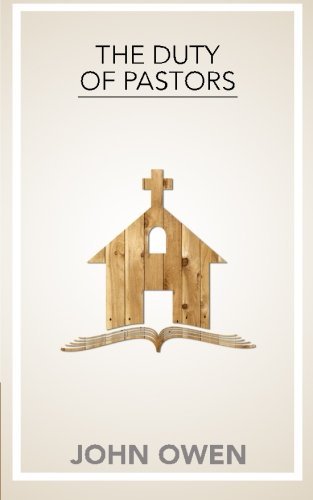
The Duty Of PastorsJohn Owen has some fascinating insights on pastors and ministers (hint: they’re not the same thing) in his book The Duty Of Pastors. Here are some of the quotes I liked from this book. Remember this book was written in the 17th-century, so don’t let the Old English keep you from discovering the rich truths in these passages.

“Why should any speak where the Holy Ghost is silent? … Where things are obscured, it is a safer way to prove the practice of men by God’s precept, charitably supposing them to have been obedient, than to wrest the divine rule to their observation, knowing how prone men are to deify themselves by mixing their inventions with the worship of God.”

“The lights which God maketh are sufficient to rule the seasons for which they are ordained. As, in creating of the world, God ‘made two great lights, the greater light to rule the day, and the lesser light to rule the night;’ so, in the erection of the new world of His church, He set up two great lights, the lesser light of the Old Testament to guide the night, the dark space of time under the law, and the greater light of the New Testament to rule the glorious day of the gospel. And these two lights do sufficiently enlighten every man that cometh into this new world. There is no need of the false fire of tradition where God sets up such glorious lights.”

“All faithful ministers of the gospel, inasmuch as they are ingrafted into Christ and are true believers, may, as all other true Christians, be called priests; but this inasmuch as they are members of Christ, not ministers of the gospel. It respecteth their persons, not their function, or not them as such.”

“Thus, this metaphorical appellation of priests is, in the first place an intimation of that transcendent privilege of grace and favour which Jesus Christ hath purchased for everyone that is sanctified with the blood of the covenant.”

“Not to lose myself and reader in this digression, the sum is, the unspeakable blessings which the priesthood of Christ hath obtained for us are a strong obligation for the duty of praise and thanksgiving; of which that in some measure we may discharge ourselves, He hath furnished us with sacrifices of that kind to be offered unto God.” 

“That the name of priests is nowhere in the Scripture attributed peculiarly and distinctively to the ministers of the gospel as such. … And yet, when Christ ascended on high, He gave some to be prophets, for the edification of His body, Eph. iv. 11; none, as we find, to be priests. Priests, then (like prelates), are a sort of church-officers whom Christ never appointed.”

“Never fear the equity of what God sets thee upon. No excuses of disability or any other impediment ought to take place; the Lord can and will supply all such defects.”

“God never sendeth any but whom He doth so extraordinarily and immediately call and ordain for that purpose; and that this may be manifested unto others, He always accompanieth them with His own almighty power, in the working of such miracles as may make them be believed, for the very works’ sake which God by them doth effect.”

“We do not read of any such miracles wrought by the prophet Amos, and yet he stands upon his extraordinary immediate vocation, ‘I was no prophet, neither was I a prophet’s son, but the Lord took me,’ etc. It sufficeth, then, that they be furnished with a supernatural power, either in, 1. Discerning; 2. Speaking; or 3. Working. … The sum is, that seeing such men pretend that their revelations and miracles are from heaven, let us search whether the doctrine they seek to confirm by them be from heaven or no.”

“There is a general obligation on all Christians to promote the conversion and instruction of sinners, and men erring from the right way.”

“For a public, formal, ministerial teaching, two things are required in the teacher: first, Gifts from God; secondly, Authority from the church (I speak now of ordinary cases). He that wants either is no true pastor.”

Be sure to check out my review of The Duty Of Pastors by clicking here.

How To Study Your Bible

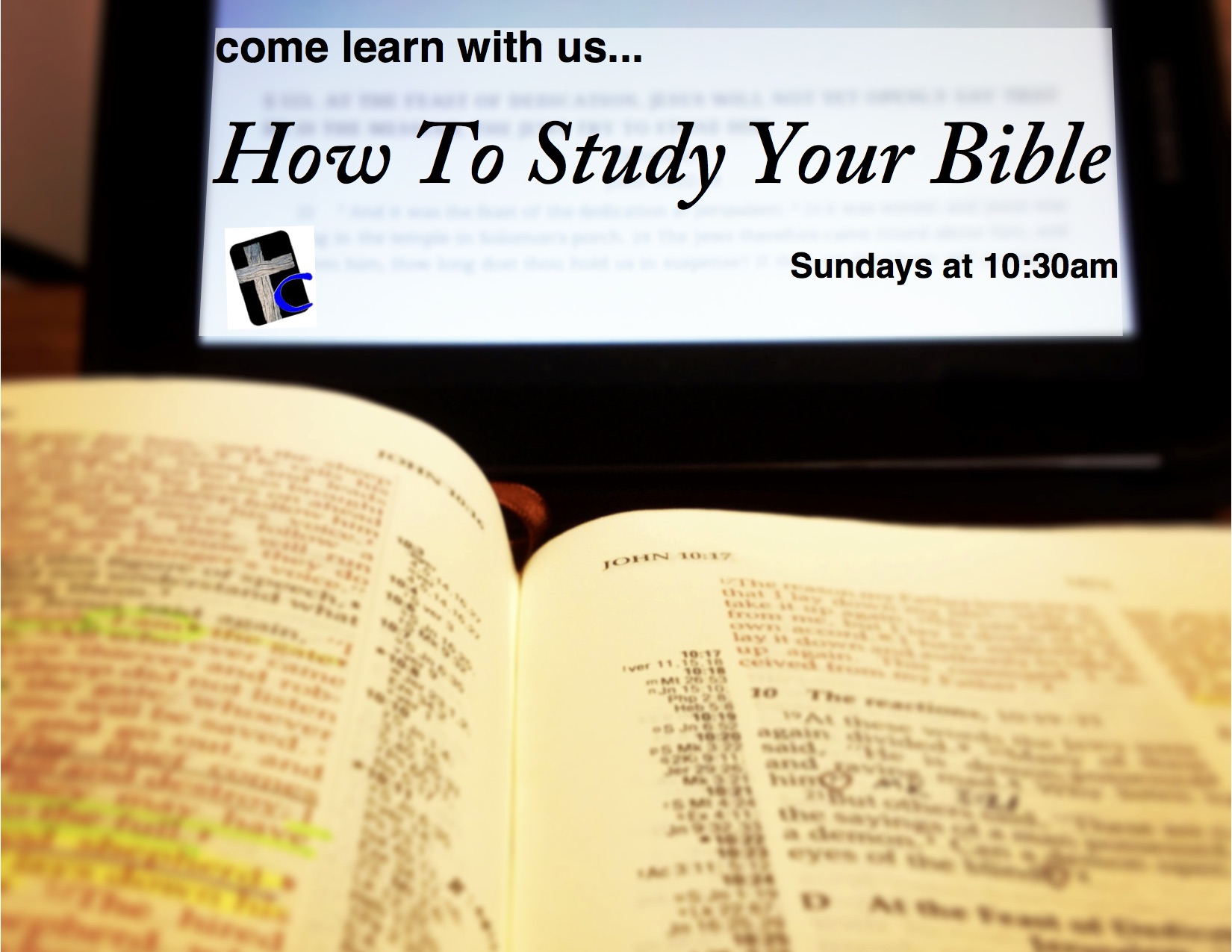
How To Study Your BibleMaybe first we should ask, “Why should we study the Bible?” Many people loudly proclaim, “All that is needed for salvation is faith in Jesus.” This is correct, but remember this—Faith [for salvation] comes from hearing the message, and the message is heard through the Word of Christ (Romans 10:17).

Then after our faith in Jesus brings us the forgiveness for our sins, there is an ongoing process of walking out our faith, something the Bible calls sanctification. Here again the Bible plays a vital role. Jesus prayed for His followers this way: Sanctify them by the truth; Your Word is truth (John 17:17).

The bottom line … Our Christian walk is nearly impossible to maintain without the resources found in the Scriptures! 

But the Bible is a large book, and many people don’t know where or how to begin to study it. That’s why we are taking the time to learn together some practical ideas for studying God’s Word.

Please join us at Calvary Assembly of God over the next few weeks as we learn the practices which will help us make the most of our time studying the Bible. If you cannot join us in person, we will be broadcasting all of our messages live on Periscope (follow @craigtowens to be notified when the broadcasts begin).

If you are ready to take your Bible study to a new level, please join us beginning this Sunday!

Links & Quotes

link quote

“To fulfill God’s destiny for your life, you likely don’t have to do more; you have to do less. … Enjoy the Christmas season. Wrap the presents. Prepare your home in a festive way. Make memories with your family. But don’t let this Christmas pass without spending some time at Jesus’ feet. Long after everything else fades from this Christmas, worshiping Jesus is all that will truly last.” —Rick Warren

“Holidays in America have come to be regarded as entitlements. They’re all about us, seasons of diversion, distraction, self-indulgence, and time off work. Even the great religious celebrations of the national calendar—Thanksgiving, Christmas, and Easter—are regarded by most Americans as opportunities to get some good bargains and enjoy a little time for relaxation, not for spiritual reflection and renewal, but just for doing whatever we want. Sort of like the way most Christians observe the Lord’s Day.” —T.M. Moore

As we are celebrating the First Advent, J. Warner Wallace asks a great question: Why didn’t the Apostle Paul mention the virgin conception?

“I am convinced many Christians today are troubled for the same reason Asa was [2 Chronicles 16:1-9]. They have war in their souls because they have traded faith for self-reliance. But the fact is, there is no way a follower of Jesus can have faith in any other source and not be troubled.” —David Wilkerson

“People who are exercised and preoccupied with such things as how the star worked and how the Red Sea split and how the manna fell and how Jonah survived the fish and how the moon turns to blood are generally people who have what I call a mentality for the marginal. You do not see in them a deep cherishing of the great central things of the gospel—the holiness of God, the ugliness of sin, the helplessness of man, the death of Christ, justification by faith alone, the sanctifying work of the Spirit, the glory of Christ’s return and the final judgment. They always seem to be taking you down a sidetrack with a new article or book. There is little centered rejoicing.” —John Piper

“Whether one makes the observation light-heartedly or in all seriousness, one must observe that, when the male body unites for procreation with the female, the pleasure that goes along with it is understood to be in accordance with nature, but that when male joins with male, or female with female, it is outside the bounds of nature. This outrage was first done by people whose desire for pleasure was without self-control.” —Plato. This agrees with what the Bible says in Romans 1:26-27.

Lenny Esposito has some good advice for students to defend their Christian faith in the classroom.

Seth Godin has some insight on whining—“Before starting, a question: Will it help? Like holding a grudge, or like panicking, whining rarely helps. If anything, any of the three make it far less likely that you’ll make progress solving the problem that has presented itself. And, like knuckle cracking, it’s best enjoyed alone.”

[VIDEO] Bobby Conway asks Lenny Esposito how to handle the claim “The Bible has contradictions in it”—

11 More Quotes From “Our Portrait In Genesis”

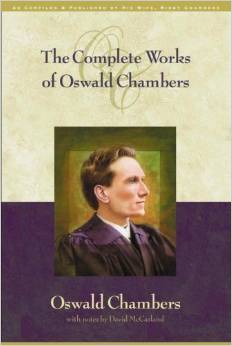
The Complete Works Of Oswald ChambersOswald Chambers’ book Our Portrait In Genesis is an excellent companion book when you read the book of Genesis from the Bible. I’ve already shared a few quotes from this book here, and here. Below are a few more I found highlighter-worthy.

“Degeneration and backsliding are by no means one and the same. Degeneration begins in almost imperceptible ways; backsliding in the Scriptural use of the term is a distinct forsaking of what I know of God and a deliberate substitution of something other (cf. Jeremiah 2:13). … If I maintain my right to my natural self I will begin to degenerate and get out of God’s purpose. … If I refuse to sacrifice the natural, the God-life in me is killed.”

“To experience conviction of sin is not a cause for misgiving, but an occasion for understanding the impossible things God has done in the Redemption.”

“All through, a personal crisis ought to serve as an occasion for revealing the fact that God reigns, as well as compelling us to know our own character.”

“We have the notion that it is only when we are pure and holy that God will appear to us; that God’s blessing is a sign that we are right with Him. Neither notion is true. Our Lord took care to say that God makes His sun to rise on the evil and on the good, and sends His rain on the just and on the unjust. God’s blessings are not to be taken as an indication of the integrity of the character blessed, yet on the other hand the discernment of God’s character is determined entirely by the individual character of the person estimating God. ‘With the merciful You will show Yourself merciful’ (Psalm 18:25). The way I discern God’s character is determined by my own character. God remains true to His character, and as I grow in integrity I discern Him. Jacob’s undeservedness, and the fact that God continually blesses him, are brought out very clearly all through his life.”

“‘I can’t understand why I have no confidence in God’; the reason may be a matter of digestion, not enough fresh air, or sleep, too much tea—something slight. It is the shallow things that put us wrong much more quickly than the big things. The great object of the enemy of our souls is to make us fling away our confidence in God; to do this is nothing less than spiritual suicide. When we experience misgiving because we have sinned there is never any ambiguity as to its clause, the Holy Spirit brings conviction home like a lightning flash.”

“Prayer in distress dredges the soul (cf. Psalm 107). It is a good thing to keep note of the things you prayed about when you were in distress. We remain ignorant of ourselves because we do not keep a spiritual autobiography.”

“That is always the test of the reality of sanctification, not so much that I have received something, but that I have ceased to be my old self.”

“The warrior of God is not the man of muscle and a strong jaw, but the man of un-utterable weakness, the man who knows he has not any power; Jacob is no longer strong in himself, he is strong only in God, his life is no longer marked by striving, but by reliance on God. You cannot imitate reliance on God.”

“Authority never comes from you, but from God through you, therefore let God introduce or withhold as He chooses.”

“Beware of saying, ‘Oh well, it doesn’t matter much what I think about in secret’; it does, for the opportunity will come when what you think about in secret will find expression and spurt out in an act. The Bible always speaks of sin as it appears in its final analysis. Jesus does not say, ‘You must not covet because it will lead to stealing’; He says, ‘You must not covet because it is stealing.’ He does not say, ‘You must not be angry with your brother because it will lead to murder’; He says, ‘You must not be angry with your brother because it is murder.’”

“Four times over in this chapter [Genesis 39] is this statement made, ‘the Lord was with Joseph.’ It is the presence of God that is the secret of victory always. The fear of the Lord creates an atmosphere in which impure thoughts and unholy desires die a natural death.”

You can also read my review of this book by clicking here.

Reconnecting the Disconnection

DisconnectThere is a disconnection problem in the United States of America. Consider this:

  • John Adams, one of our nation’s founding fathers said, “The general principles on which the fathers achieved independence were the general principles of Christianity.”
  • Every president from George Washington to Barak Obama has invoked the name of God in his inaugural address.
  • 96% of Americans say they believe in God.
  • 80% of Americans call themselves Christians.

And yet:

  • Our grade schools make no mention of “God”, some even to the point of not reciting the pledge of allegiance.
  • Higher education is openly antagonistic toward God and Christians.
  • The entertainment industry normalizes lifestyles that are openly unbiblical.
  • Even our US government has done things like legalizing murder in the form of abortion, and sanctioning homosexuality by calling their unions “marriage.”

The Bible calls Christians “aliens and strangers in the world.” Perhaps the term “aliens” is not so much for what we say we believe, but how we live what we believe. 

So Peter opens his letter to “strangers in the world” by telling Christians how to live in a way that can reconnect this disconnection.

  • Humble—because we sinners have been chosen (v. 2a) to become citizens of Heaven.
  • Confident—because of the foreknowledge of God the Father (v. 2b) that can never be thwarted.
  • Teachable—because the process of the sanctifying work of the Spirit and obedience to Jesus Christ (v. 2c) requires us to be humbly-confident, teachable servants.
  • Graceful and peaceful (v. 2d)—because what we believe about God’s invitation to come to Him, Christ’s payment that makes that possible, and the Holy Spirit’s sanctification should be lived out in graceful and peaceful lives.

Would your Earthling family members say you are graceful and peaceful? 

Would your Earthling coworkers say you promote grace and peace on the job? 

Would your Earthling neighbors say you make the neighborhood graceful and peaceful? 

Would the Earthling business owners you frequent say your gracefulness and peacefulness is more evident than in the citizens of Earth?

Search me, God, and know my heart test me and know my anxious thoughts. See if there is ANY offensive way in me, and lead me in the way everlasting. (Psalm 139:23-24).

If you’ve missed any messages in this series, you may find the complete list by clicking here.

Links & Quotes

link quote

“It has pleased God to give each one of us the same amount of time each day, week, month, and year. Time is a gift of God, and He expects us to use it wisely, in ways that overcome the foolishness of living apart from God and glorify Him in all the details of our lives (Psalm 90:12; Ephesians 5:15-17; 1 Corinthians 10:31). … The challenge of the spiritual life is to claim all our time and construct all our activities in order to pursue what we desire as the life of following Jesus. Anything that doesn’t contribute to that objective distracts from it. … What do the time and activities of your life reveal about what you desire in life and what you’re depending on to give your life purpose and joy?” —T.M. Moore

If you haven’t checked out The Bible Project videos lately, please visit their YouTube channel. They have some really cool stuff that give you an overview of a book of the Bible, and some of the major themes in the Bible. Each video is only 5-7 minutes long, but there is a ton of good insight packed into that time.

“If God did not love us unconditionally, He would not penetrate our unattractive lives, bring us to faith, unite us to Christ, give us His Spirit, and make us progressively like Jesus.” —John Piper

“The Word of God is an expansive Word; ever widening its dimensions; growing upon us; never old, ever new; in which we make continual discoveries; the same tree, but ever putting forth new branches and leaves; the same river, but ever swelling and widening; losing none of its old water, yet ever receiving accessions.” —Horatius Bonar

Planned Parenthood’s love/hate relationship with science.

The Federalist shares 10 reasons it makes zero sense to support abortion.

Parents & teachers, check out what Tim Elmore says we often forget when we are helping our students solve problems.