Hallowed Be Your Name

Jesus was once asked, “What is the greatest commandment?” He responded by saying, “The Lord our God, the Lord is One,” and then saying we should love God with all our heart, soul, mind, and strength (which fulfills the first four of the Ten Commandments), and then love our neighbor as ourselves (which fulfills the next six of the Commandments).

To live this way, we need to pray this way too! That’s why Jesus taught us a model prayer—which we typically call “The Lord’s Prayer”—in which the first three petitions are for God’s glory (hallowed be Your name; Your kingdom come; Your will be done), and the next three petitions are for man’s help (daily bread, forgiveness, victory over temptation). 

Jesus says we can pray to our Heavenly Father, but we still need to remember that He is also the God of the Hallowed Name. The Greek word for hallowed is made up of two other Greek words: 

  • hagnos is something totally immaculate, blindingly pure, and unapproachable. The apostle Paul said this about God: Our Master, Jesus Christ, is on His way. He’ll show up right on time, His arrival guaranteed by the Blessed and Undisputed Ruler, High King, High God. He’s the only one death can’t touch, His light so bright no one can get close. He’s never been seen by human eyes—human eyes can’t take Him in! Honor to Him, and eternal rule! (1 Timothy 6:15-16) 
  • thalpo means cherished. The same apostle Paul also said that God has given us the right to approach Him as “Abba, Father” or “Daddy, God” (Romans 8:15). 

He is both unapproachable and approachable. He is both awful and lovable. He is both Supreme power and Supreme love. He is both Hallowed and Father. He is unique. Since He is unique, we must approach Him uniquely in holy prayer. But we must always approach first and foremost to reverence His holy Name. As Matthew Henry said, “Let Him have the praise of His perfections, and then let us have the benefit of them.” 

Think of His glory in every request you make of Him. Father, may Your holy, righteous name be hallowed and exalted and made famous as You…

  • … provide my daily bread
  • … forgive me and help me forgive others
  • … give me victory over temptations

Let’s not pray prayers that rob God of His glory. Prayers like:

  • Selfish prayers that are all about me, me, me
  • Doubtful prayers that aren’t really sure God can help
  • Little prayers that insult God’s power and His love
  • Unexpectant prayers that ask God to do something, but we don’t really expect that He will

Let’s be known as people who pray confidently humble prayers. Let’s come to a Father Who is All-Love and to a God Who is All-Powerful—a God Whose power is perfectly balanced by His love, and Whose love is perfectly balanced by His power. May our prayers HALLOW His name! 

Join me this Sunday as we continue to learn more about prayer. 

Thursdays With Spurgeon—The Joy Of Saying, “My God”

This is a weekly series with things I’m reading and pondering from Charles Spurgeon. You can read the original seed thought here, or type “Thursdays With Spurgeon” in the search box to read more entries.

The Joy Of Saying, “My God”

     We commence then by the first thing, which is enough to startle us by its immense value. In fact, unless it had been written in God’s Word, we never could have dreamed that such a blessing could have been ours. God Himself, by the covenant, becomes the believer’s own portion and inheritance. “I will be their God” [Jeremiah 31:33]. … 

     Stop just one moment and think it over before we start. In the covenant of grace, God Himself conveys Himself to you and becomes yours. Understand it. God and all that is meant by that word—eternity, infinity, omnipotence, omniscience, perfect justice, infallible rectitude, and immutable love; all that is meant by God as Creator, Guardian, Preserver, Governor, Judge. All that that great word God can mean of goodness and of love, of bounty and of grace. All that this covenant gives you to be your absolute property as much as anything you can call your own: “I will be their God.” … 

     While He is Judge of all, He especially is their judge because He is the Judge whom they love to reverence, the Judge whom they long to approach because they know His lips will confirm that which their hearts have already felt, which is the sentence of their full acquittal through the merits of the glorious Savior. Our loving God is the Judge who will acquit our souls, and in that respect we can say He is our God whether as Sovereign, as Governor enforcing law, or as Judge punishing sin. Although God is in some sense the God of all men, yet in this matter there is something special toward His people so that they can say, “He is our God, even in those relationships.” … 

     Furthermore, the Christian can call God his God from the fact of his justification. A sinner can call God, God, but he must always put in an adjective and speak of God as an angry God, an incensed God, or an offended God. But the Christian can say “my God” without putting in any adjective except it be a sweet one wherewith to extol Him, so now we who were sometime afar off are made near by the blood of Christ. We who were enemies to God by wicked works are His friends, and looking up to Him, we can say “my God,” for He is my Friend, and I am His friend.

From God In The Covenant 

What an incredible assurance in those two words: my God! Therefore, there is now no condemnation for those who are in Christ Jesus (Romans 8:1). 

It makes me want to sing along with Fanny Crosby:

Blessed assurance, Jesus is mine!
O what a foretaste of glory divine!
Heir of salvation, purchase of God,
Born of His Spirit, washed in His blood.
This is my story, this is my song
praising my Savior all the day long!


Poetry Saturday—Like A River Glorious

Like a river, glorious
Is God’s perfect peace,
Over all victorious
In its bright increase;
Perfect, yet it floweth
Fuller every day,
Perfect, yet it groweth
Deeper all the way.

Stayed upon Jehovah,
Hearts are fully blest;
Finding, as He promised,
Perfect peace and rest.

Hidden in the hollow
Of His blessed hand,
Never foe can follow,
Never traitor stand;
Not a surge of worry,
Not a shade of care,
Not a blast of hurry
Touch the spirit there.

Stayed upon Jehovah,
Hearts are fully blest;
Finding, as He promised,
Perfect peace and rest.

Every joy or trial
Falleth from above,
Traced upon our dial
By the sun of love;
We may trust Him fully
All for us to do—
They who trust Him wholly
Find Him wholly true.

Stayed upon Jehovah,
Hearts are fully blest;
Finding, as He promised,
Perfect peace and rest. —Frances Ridley Havergal

Thursdays With Spurgeon—Christ Came On Purpose

This is a weekly series with things I’m reading and pondering from Charles Spurgeon. You can read the original seed thought here, or type “Thursdays With Spurgeon” in the search box to read more entries.

Christ Came On Purpose

     This heavenly knowledge is not given to us for its own sake alone. Even the high and blessed revelation of the righteous Father is not made to us that we may know it and end in knowing. Our Lord says, “I have declared to them Your name, and will declare it, that the love with which You have loved Me may be in them, and I in them” [John 17:24-26]. The objective of the knowledge bestowed upon us is the infusion of a love unrivaled in value and extraordinary to the last degree! … 

     Therefore does Christ declare the blessed name of the righteous Father, in order that it may come home to you with an unconquerable power that the Father loves you and loves you beyond conception, seeing that not even His dear Son was so loved as to be spared, but He must die that you might live and that the justice of God might be satisfied on your account! … 

     Christ has come on purpose to declare the name of God that the love of God may be perceived by us, its power felt, its glory recognized, its greatness wondered that, its infinitude delighted in. … 

     Now, if you fully know the righteous fatherhood of God, as Christ would have you know it, you will learn that God loved you as He loved His Son. … If He had not loved you as He loved His Son, He would have said to His Son, “Son, you will never leave heaven for that polluted planet. You will never descend to poverty and suffering. You will never have Your hands and feet pierced. You will never be despised and spit upon and put to a cruel death.” But because He loved us as He loved His Son, He gave His Son! …

     Do you try, if you can, to realize this high privilege. It is true, O believer, that God, the infinite Father, takes pleasure in you!

From The Righteous Father Known And Loved

THIS is what we celebrate in remembering Christ’s First Advent! 

THIS is why forgiven sinners can eagerly long for Christ’s Second Advent!

Thursdays With Spurgeon—Righteous Father

This is a weekly series with things I’m reading and pondering from Charles Spurgeon. You can read the original seed thought here, or type “Thursdays With Spurgeon” in the search box to read more entries.

Righteous Father

O righteous Father! The world has not known You, but I have known You; and these have known that You sent Me. And I have declared to them Your name, and will declare it, that the love with which You loved Me may be in them, and I in them. (John 17:25-26)

     In the sublime transactions of Calvary, God manifests all the love of a tender Father’s heart and all the justice of an impartial Ruler’s sword! … 

     When we see in a man unconditional submission to the justice of God and yet a trustful hopefulness in His boundless love, we may be sure that he is a renewed man. He cries, “You are righteous, O my God, and if You destroy me, I can say nothing. But, Father, You will not destroy me, for I perceive that You are love. Though I see You grasp your sword of fire, yet do I trust You, for I still believe You to be gracious and loving.” … 

     They would not have come to know the righteous Father unless there had been a change in their character worked by the Spirit of God, and that once done they know Him as of necessity. … To know the only true God, and Jesus Christ whom He has sent, is the climax, the essence, the sum total of wisdom! … 

     In Christ Jesus, God is just and yet our Justifier! We are so safe that we begin to challenge opposition and cry, “Who shall bring a charge against God’s elect?” (Romans 8:33). We take up a triumphant note and sing with exceeding joy, “If God is for us, who can be against us?” (Romans 8:31). If God is righteous and yet my Father, then I am saved and saved in such a way that the attributes of God are glorified by my salvation, and therefore I am most securely and certainly saved!

From The Righteous Father Known And Loved

Jesus prayed that we might know the Father as He knew Him—both just and the Justifier. 

When we know God this way, we also know ourselves and our position in Him more clearly. We are both guilty and worthy of God’s full wrath AND justified and an object of God’s favor. We can never earn this on our own, but we stand in this precious and secure place only because we stand in the righteousness of Jesus. 

Jesus wants us to know His Father this way. Do you? 


Humbug?!

In Longfellow’s classic I Heard The Bells On Christmas Day every stanza ends with the phrase “peace on earth, goodwill to men.” Unless you’ve been living someplace that doesn’t get the daily news, you might be saying, “Peace on earth? Really? I just don’t see it….” Or as Ebenezer Scrooge might say, “Peace on earth? Bah! Humbug!” 

A humbug is an imposter, or something empty of meaning. 

The third stanza of I Heard The Bells seems almost to slide into that Christmas humbug note: “And in despair I bowed my head: ‘There is no peace on earth,’ I said. ‘For hate is strong and mocks the song of peace on earth, goodwill to men.’” 

Indeed, even for those who call themselves a Christian, Christmas could become a humbug if…

  • … it’s all about busyness or just trying to “survive the holidays” 
  • … we get more excited about Santa Claus coming down the chimney to fill stockings than we do about Jesus coming down to Earth to be born in a manger 
  • … our main focus is on gifts—both what you’re giving and what you’re getting—and then we regret putting ourselves into debt 

Between Malachi (the last book of the Old Testament) and Matthew (the first book of the New Testament) is a time span of about 400 years that is called “the dark period.” God had promised through Jeremiah that He would restore the Israelites and rebuild Jerusalem. There were promises of the Messiah coming to set things right, but after 400 years of darkness, the mindset of most Israelites was probably, “Messiah? Peace? Bah! Humbug!!” 

What God really promised through Jeremiah was a peace that came about as a result of two things: (1) forgiveness of sins and (2) restoration of a perfect relationship with God. The Hebrew word for “peace” is shalom, which means one’s personal sense of wholeness and well-being, free from anxiety and fear, knowing that all is well between my soul and God. 

This is what God promises—I will cleanse them from ALL the sin they have committed against Me and will forgive ALL their sins of rebellion against Me (Jeremiah 33:8). 

This shalom is what comes through the First Advent of Jesus! As Longfellow observed, “Then pealed the bells more loud and deep: God is not dead nor doth He sleep; the wrong shall fail, the right prevail, with peace on earth, goodwill to men.” 

And this is what Jesus brought—

  • She will give birth to a Son, and you are to give Him the name Jesus, because He will save His people from their sins (Matthew 1:21 NIV). 
  • Now you have been united with Christ Jesus. Once you were far away from God, but now you have been brought near to Him through the blood of Christ. For Christ Himself has brought peace to us… (Ephesians 2:13-14 NLT) 
  • Therefore, since we are justified (acquitted, declared righteous, and given a right standing with God) through faith, let us grasp the fact that we have…peace with God through our Lord Jesus Christ (the Messiah, the Anointed One) (Romans 5:1 AMP). 

The bells and carols and remembrances of Christ’s First Advent should send our hearts soaring in anticipation of Christ’s Second Advent—when Christ shall return to take all of His own to be with Him forever, where He will wipe away every tear and where we live forever with Him in the New Jerusalem (see Jeremiah 33:9; John 14:3; Revelation 21:1-4). 

Let us guard against Christmas ever becoming a humbug—an imposter, something empty of meaning—but let’s make sure the rich meaning of Christ’s peace dwells richly in us! 

If you’ve missed any of the message in this series, you can check them out by clicking here.  

Thursdays With Spurgeon—Instructor And Indweller

This is a weekly series with things I’m reading and pondering from Charles Spurgeon. You can read the original seed thought here, or type “Thursdays With Spurgeon” in the search box to read more entries.

Instructor And Indweller

O righteous Father! The world has not known You, but I have known You; and these have known that You sent Me. And I have declared to them Your name, and will declare it, that the love with which You loved Me may be in them, and I in them. (John 17:25-26) 

     John’s Gospel is always easy for the child to read, but it is always hard for the man to understand. And these two verses, which are almost entirely made up of words of one syllable, contain mysteries that baffle the most enlightened understanding. …  

     The twenty-sixth verse speaks of the wonderful discoveries of a love of infinite excellence: “That the love with which You loved Me may be in them, and I in them.” And you notice that in order to bring that love home to us, there is a divine Indweller who goes with it, and without whom it could not be! As a teacher is required to bring us the choice knowledge, so an indweller is necessary to infuse into us the infinite love: “And I in them.” Jesus must teach us or we will not know the Father. He must dwell in us or we will not rejoice in His love.

     Thus our first subject is divine knowledge and the divine Instructor. Our second subject is indwelling love and the indwelling Lord. The two are one! The blessed Person of our Lord Jesus is so connected with both and so unites both that the subject is one! To know God in Christ Jesus is to love Him, and to be loved of Him is the cause of our being made to know Him! When Jesus declares the Father’s name, we both know and love. And when we see the Father in the Son, we are filled with both instruction and affection. …  

     “Righteous Father”—I know of no other place in Scripture where God is called by that name. … He is righteous, having the attributes of a judge and ruler. He is just, impartial, by no means sparing the guilty. He is Father, near of kin, loving, tender, forgiving. In His character and in His dealings with His people, He blends the two as they were never combined before! How can the Judge and the Father be found in one? When guilty men are concerned, how can both characters be carried out to the fullest? How is it possible? There is but one answer, and that is found in the sacrifice of Jesus that has joined the two in one! In the atonement of our Lord Jesus, “mercy and truth have met together; righteousness and peace have kissed” (Psalm 85:10). 

From The Righteous Father Known And Loved

Jesus showed us the full extent of His love at Calvary. When He was ready to ascend to heaven, He promised to send the Holy Spirit to remind us of all that we had learned about this love and salvation of Jesus, and so much more! 

This should suggest to each of us a searching question: Do I know the Lord? 

If not, you can know Him today!


Honoring Veterans The Right Way [repost]

Disclaimer: I’m a patriotic crier. I love the United States of America, and proudly call her the greatest nation in history. So whenever I watch a patriotic movie, or serve at a veteran’s funeral, or even sing the national anthem before a Cedar Springs football game, I get misty.

I believe we owe a huge debt of gratitude to our veterans. But I also believe we may not be honoring that debt in the right way.

We usually honor our soldiers, sailors, airmen and Marines who have given “their last full measure of devotion” by playing taps at their funeral, firing a 21-gun salute, or even putting a flag in the sacred ground of their burial site every year at Memorial Day.

But what about our vets who are still living? Don’t they deserve more than just an occasional visit on Veterans Day?

In many ways, we treat Veterans Day like we do Thanksgiving Day: it’s just one day on our calendar to take care of our obligations to be grateful, and then we can continue on with business-as-usual until the next year.

Wouldn’t it be more fitting for us to treat Veterans Day—like Thanksgiving Day—as a culmination of another year full of gratitude? After all, it’s very likely that we wouldn’t even be able to enjoy our business-as-usual lives if it were not for the sacrifices of our veterans.

The Apostle Paul gives us a good pattern to follow. Four times in his letters he says, “I thank God for you every time I remember you” (Romans 1:9; Philippians 1:3; 2 Timothy 1:3; Philemon 4). In these times of thanks, he is remembering others who put their lives on the line for freedom, just as our veterans have done for us.

Here are at least three things we can learn from Paul’s thankfulness to apply to our gratitude for our veterans —

  1. Keep mementos of remembrance around you. Perhaps it’s an American flag, or a picture, or a Veterans Day program. Simply find something that will jog your memory frequently about the debt of gratitude we owe to our vets.
  2. Pray for our veterans. Paul often told his friends that when he was filled with thoughts of gratitude about them, he turned those thoughts into prayers for them.
  3. Turn your feelings into actions. When you see one of your mementos and say a prayer for a veteran, take it a step further. Jot a note to a vet, send an email, send flowers, or take them out to lunch. Perhaps you could invite a veteran into your home for Thanksgiving or Christmas or Easter, or “adopt” a veteran on Mother’s Day or Father’s Day.

The point is this: Let’s not make honoring our veterans something we only do on November 11. Let’s remember them often, be thankful for them always, and turn those thoughts and gratitude into action all year long.

Ingratitude Can Mess Us Up

Fading gratitude can negatively impact our past, present, and future. Because when our gratitude to God begins to fade, so does our understanding of what God has already done for us, our appreciation of what He is still doing for us today, and our hope for what He will provide for us tomorrow. But we can flip the script—Our continual gratitude can begin to positively impact our past, present, and future! 

“Gratitude is from the same root word as ‘grace,’ which signifies the free and boundless mercy of God. Thanksgiving is from the same root word as ‘think,’ so that to think is to thank.” —Willis P. King 

The more we THINK about God’s grace in our lives, the more we can give THANKS for all He has done. Or said another way…

The best way to be THANKFUL is to be THINKFUL!

In Psalm 78, Asaph gives us a two-word reason for the up-and-down history of the Israelites: they forgot. The Israelites’ forgetfulness led to their lack of gratitude, which then caused yet another downward turn away from God. One of the examples he gives us is very informative: the daily provision of manna while the Israelites were in the wilderness (see Psalm 78:11-25; Exodus 16:4, 14-18). 

Every day God’s people had their food needs miraculously supplied for them, yet they begin to take this gift of God for granted. They stopped thinking about His provision, and then they began to ungratefully grumble (Numbers 11:4-6). Their grumbling actually caused them to want to return to slavery in Egypt! 

With fading gratitude, we can get stuck in the past. We even end up looking back at slavery and scarcity and call it “the good old days”! With fading gratitude for the past, sometimes we beat ourselves up. We say things like, “If I would have known then what I know now….” But you couldn’t know then what you know now. You only know now because of what you went through then, which makes another reason to be grateful. After all, God is using everything we have gone through to work out His plan (see Isaiah 46:9-10; Romans 8:28). 

We need to be thinkful about our past so that we can be thankful for what God is doing with it today.

Manna provided food every single day the whole time the Israelites were in the wilderness. It stopped immediately after they entered the Promised Land. For that daily provision, they should have been thankful but it was when they forgot to be thankful that they longed for the past and tried to do things on their own. 

The manna is a picture of Jesus. Not only is He our daily bread for today, but He is also our hope for eternity with God in Heaven. And for that, we should be daily thinkful AND thankful. 

If you’d like a fun idea of how to stay thinkful AND thankful, check this out.

Join us this Sunday as we learn more about the dangers of our fading gratitude. 

Let It Go

Scholars are unsure of the date that Obadiah wrote his book. We know that it took place after invaders had caused problems in Judah and Edom responded in a way that angered God. Some scholars place this date after Nebuchadnezzar’s conquest of Judah in 586 BC, and others think it’s more likely to have occurred during the reign of Jehoram around 840 BC. The bottom line is that the date doesn’t matter because the underlying feud which led to God’s pronouncement of judgment had been smoldering for hundreds and hundreds of years! 

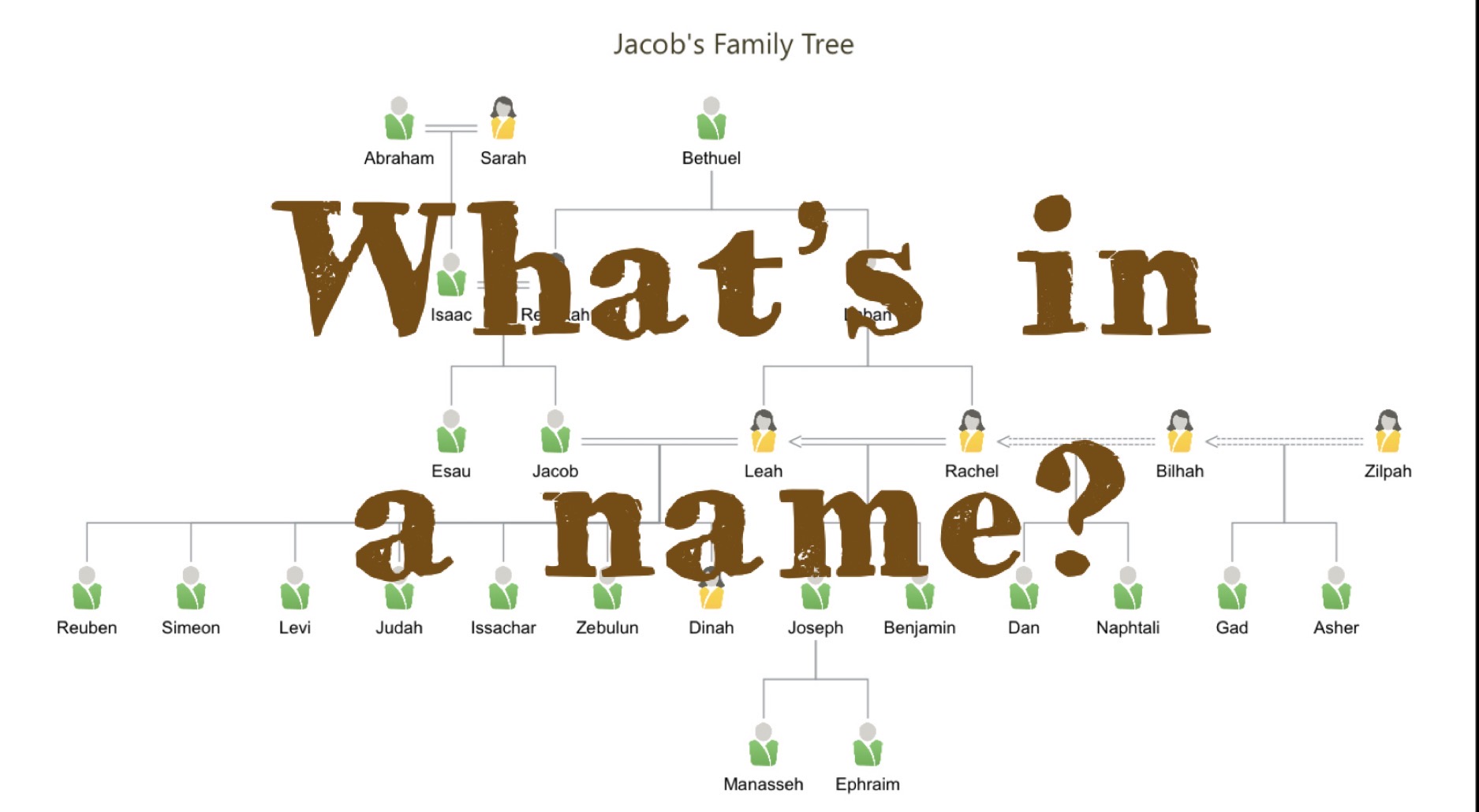
The feud was between Jacob (the father of the nation of Israel) and his twin brother Esau (the father of the nation of Edom). Esau was born first and should have received his father Isaac’s blessing, but Jacob took the birthright that was supposed to belong to Esau. 

As you might imagine, “Esau seethed in anger against Jacob because of the blessing his father had given him; he brooded, ‘The time for mourning my father’s death is close. And then I’ll kill my brother Jacob’” (Genesis 27:41). Jacob escaped Esau’s initial rage, but 400+ years later, when the Israelites left Egypt and were on their way to Canaan, the Edomites—trying to even the score—refused to let the Israelites pass through their territory. 

Now another few hundred years have passed and when Judah was invaded, the Edomites not only didn’t do anything to help their brothers, but they piled on with the invaders (vv. 10-14). Once again, their rage at the descendants of Jacob exploded!  

For this, God pronounced judgment on the nation of Edom through His prophet Obadiah. 

Edom’s downfall is very instructive because we are ALL liable to the same fate! 

  1. It starts with pride. Pride keeps us from forgiving our offenders because we think WE have to be the one to even the score. As C.S. Lewis noted, “Pride is a spiritual cancer: it eats up the very possibility of love, or contentment, or even common sense.”
  1. It then becomes thoughts of plotting our revenge. Jesus warned us of the dire consequences for dwelling on these kinds of thoughts (Matthew 5:21-22). 
  1. It next morphs into cheering on those who attack our offenders.
  1. It eventually becomes our revenge in action, which then brings God’s judgment against us!

Always remember this: It is God’s place to judge, but our place is to forgive our enemies and “get revenge” by blessing them beyond what they deserve (Romans 12:17-21). 

You might say, “But what they did to me is absolutely inexcusable!” You are probably right, but you are not going to make anything right. Making things right—handing out appropriate justice—is God’s business. Again, C.S. Lewis reminds us, “To be a Christian means to forgive the inexcusable, because God has forgiven the inexcusable in you.”

There are three important words to remember when someone has wronged you: LET IT GO!

Carrying a grudge against someone who has inexcusably wronged you is toxic to your life and doesn’t leave room for God’s justice. LET IT GO!

If you missed any messages in our series called Major Lessons From Minor Prophets, you can check them out here.