In what may be the best-known parable that Jesus told, what’s the difference between the hard path where the seeds failed to produce anything and the fertile soil where the seeds produced an abundant harvest? The fertile soil had a plow applied to it. In the same way, God wants to “plow” the hard places in our life so that there can be an abundant harvest! Check out this full sermon here.
I have lots of new content every week, which you can check out on my YouTube channel.
“The greatest reason for a loss of reality is that while we say we believe one thing, we allow the spirit of the naturalism of the age to creep into our thinking, unrecognized.” —Francis Schaeffer, in True Spirituality
“The glory of God is a silver thread, which must run through all our actions.” —Thomas Watson
“Christianity is not the removal of weakness, nor is it merely the manifestation of divine power. Rather, it is the manifestation of divine power through human weakness.” —Dr. Donald Stamps, Life In The Spirit Study Bible,commenting on 2 Corinthians 4:7-9, 12:9-10
“In our media-rich, secular age, we must be especially vigilant against unbelief finding its way into our hearts [Hebrews 3:12]. The heavenly calling of God is really real, and we can really partake of it. But we’ll need to be continuously on guard against ideas and messages that can undermine our confidence, stifle our boasting, rob us of the reality of our experience of Christ, set us adrift from the Lord, and end up proving us to be someone other than we thought.” —T.M. Moore
“If you don’t want responsibility, don’t sit in the big chair. To be successful, you must accept full responsibility.” —Pat Summitt
From the 1440 Daily Digest: Congratulations, America—July 4, 2024, marks the 248th commemoration of the day the Declaration of Independence was adopted by the Second Continental Congress. Through the centuries, the US has grown from 13 colonies with about 2.5 million people to 50 states and 14 territories with a population of more than 330 million. The economy has swelled to over $27T. Advances in public health have cut the child mortality rate from over 45% to under 1%, while our citizens live over 35 years longer on average. Scientific achievements in the US have delivered everything from the light bulb, modern flight, and the internet to air conditioning, movies, and the polio vaccine. More than 2.7 million miles of power lines electrify the country across over 4 million miles of paved roads, with over 90% of households accessing broadband internet. The US has also been responsible for more than 800 human visits to space—the most of any country.
Listen to the podcast of this post by clicking on the player below, and you can also subscribe on Apple, Spotify, or Audible.
Have you ever said to yourself…
…I should have known better?
…why I am going through this again?
…I thought I was over this hurdle?
…you would think I would have matured enough by now to not have to deal with this?
Maybe the author of Psalm 129 felt this way: “Here I am on the 10th step and I’m still having to deal with this! When will I finally arrive at the top and be done with these issues?” (compare Psalm 129:1-2 with 124:1-5).
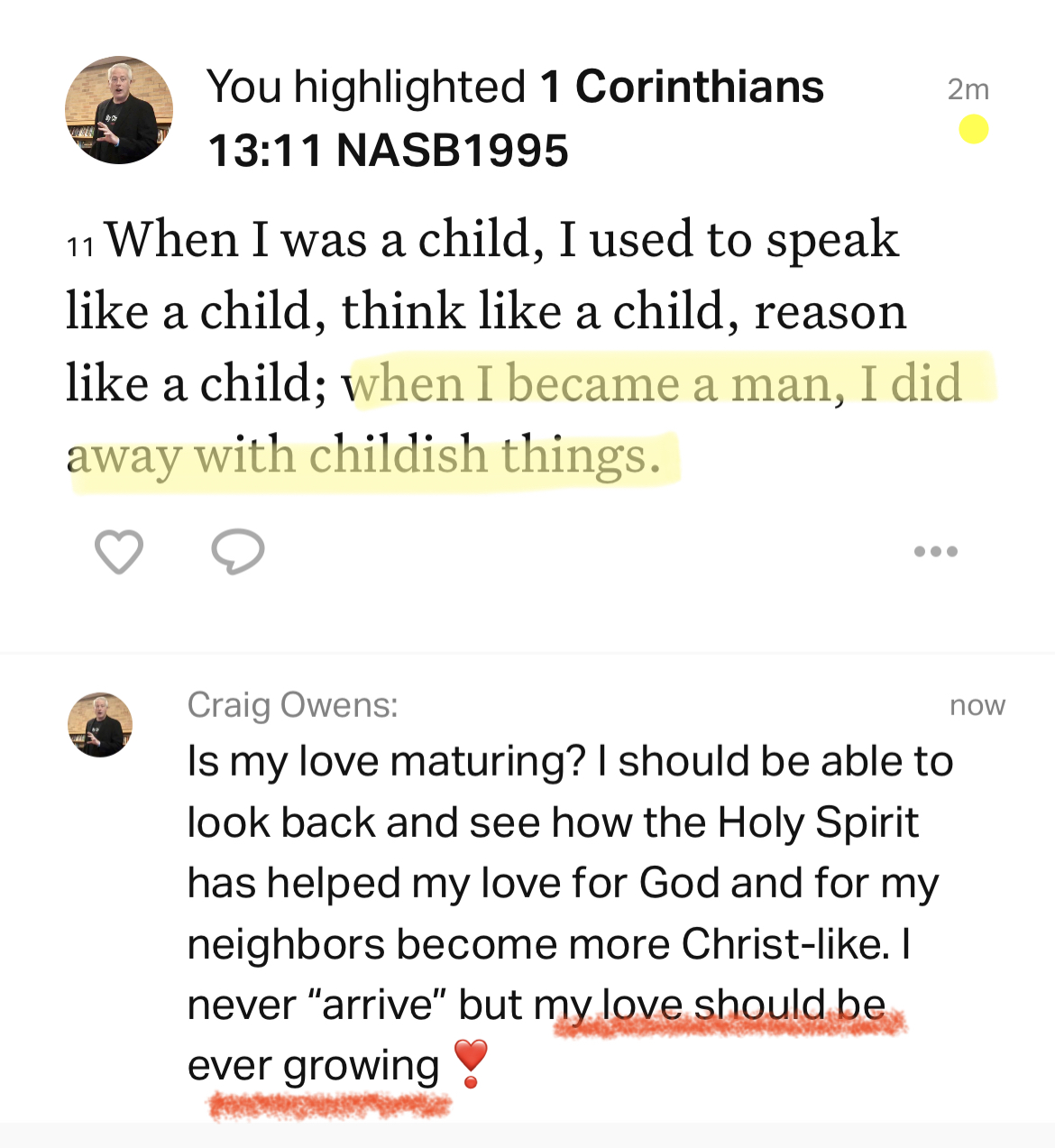
I think those statements—“I should have known better” or “I thought I was over this”—pre-suppose that we will reach a point in our life where we “arrive.” If nothing else, this psalm is a reminder that we are still on the journey, that we are still a work-in-progress, that the saint-ification process is still ongoing. It’s clear from Scripture that we never “arrive” until we arrive in Heaven and hear our Master say, “Well done, good and faithful servant.”
While we are ascending up toward our heavenly home, these great oppressions and plowings remind us that there is still work to be done in us and through us to bring glory to God (Romans 5:3-4; James 1:2-4, 12).
Of his Soviet prison, Alexander Solzhenitsyn said, “I bless you, prison—I bless you for being in my life—for there lying on rotting prison straw, I learned the object of life is not prospering as I had grown up believing, but the maturing of the soul.”
The reality is God is using all of those things for my good and for His glory (Romans 8:28).
What happens as I am oppressed and plowed?
(1) I am refined—Psalm 66:8-12, 16-20. God is removing the impurities from my life.
(2) My prayers are matured. Psalm 129:5-8 is an imprecatory prayer, a prayer that says, “Get ‘em, God!” These have their place, but for us they are to be our emergency release valve (which I discuss in more depth in my book When Sheep Bite). But Jesus calls for our prayers to mature from imprecatory to intercessory (Matthew 5:43-45). In my book I write, “This is the highest level of Christian maturity: To pray like Jesus did for those who insulted Him, slandered Him, and crucified Him, ‘Father, forgive them for they don’t understand what they are doing’ (Luke 23:34)”
(3) I develop more intimate God-dependence—2 Corinthians 1:8-10.
(4) I am better equipped to help others—2 Corinthians 1:3-6.
(5) Others feel more inclined to pray for me—2 Corinthians 1:7, 11.
“God uses broken things. It takes broken soil to produce a crop, broken clouds to give rain, broken grain to give bread, broken bread to give strength.” —Vance Havner
Oppressed? Yes! Defeated? No!
Plowed? Yes! Enslaved by the plow’s cords? No!
God uses this to bring us closer and closer to Him until He can eventually say to us face-to-face, “Well done, good and faithful servant!” That’s when we truly arrive! Until then, we keep on ascending.
Listen to the podcast of this post by clicking on the player below, and you can also subscribe on Apple, Spotify, or Audible.
Say the word “confrontation” and many people cringe. “I try to avoid confrontations with others,” people will quickly say.
The origin of the word comes from a derivative of the word for “forehead.” The original intent of confrontation was simply putting the facts in front of someone’s face so that they could acknowledge them.
The problem for most of us (myself included) is two-fold:
I don’t like to be confronted with things I may be doing incorrectly or incompletely.
I don’t like making others defensive when I confront them with the things they may be doing incorrectly or incompletely.
As a result, we usually don’t confront others and they usually don’t confront us. Sadly, this can keep us from maturing in areas where we may be able to soar if we could only make some minor changes.
Christians should be especially open to confrontation from a brother or sister. After all, Solomon told us, “Wounds from a friend can be trusted, but an enemy only multiplies kisses” (Proverbs 27:6). And Jesus warned us, “Woe to you when all men speak well of you, for so did their fathers to the false prophets” (Luke 6:26 NKJV).
The best confrontation is self-confrontation in the presence of the Holy Spirit. After we have submitted to that loving spotlight, then we can proceed with our loving confrontation with our brothers and sisters.
Remember this:
The goals of Christian confrontation are restoration and maturity.
We want to see wandering saints return to God’s path, and we want those saints who are immature to blossom into Christ-like maturity that brings glory to God.
I have prepared a flowchart that can help you with a biblical framework for the work of confrontation. Please work through this flowchart slowly and prayerfully. Don’t rush any step, but make sure you can answer an honest “yes” to each question. When you get to the last step, keep in mind these three Ms:
Maturity—self-confrontation and confrontation of others should always be moving us toward maturity.
Mutual accountability—agree to stay involved in this process, with each of you remaining accountable to each other.
Listen to the podcast of this post by clicking on the player below, and you can also subscribe on Apple, Spotify, or Audible.
Our sixth spiritual discipline—confession—is at the pinnacle of our growth as maturing saints. That’s because many of the other disciplines will culminate in one saint confessing to another saint. Confession not only keeps us strong as individuals, but it keeps the whole Christian community in a strong, healthy place.
The story has been told about two monks who had woven plenty of baskets to sell in town on market day. On the way to town they devised a strategy where one monk would sell at one end of the market and the other at the opposite end. At the end of the day they would meet at a designated place to go back to the monastery. One monk sold all of his baskets and returned to the meeting place. He waited, and waited, and waited. It wasn’t until the next morning that the second monk appeared.
“I cannot return to the monastery with you,” he told his waiting friend. “I have committed a terrible sin. I was tempted, and I gave into the temptation and committed fornication last night. I have broken my vows to my brothers and to God, so you will have to go back without me.”
The first monk listened to his friend and then answered, “Come, my friend. We will go back to the monastery and repent together.”
He was really saying to his friend, “I can identify, because under the same circumstances I might have done the same thing. Perhaps if I had stayed at your side I could have held you accountable, so I bear mutual responsibility for your stumble.”
The early church is described in terms of togetherness. James, the early leader of the church in Jerusalem, was a part of this togetherness and used it as an important conclusion to his book of instructions to the saints—
Is anyone among you in trouble? Let them pray. Is anyone happy? Let them sing songs of praise. Is anyone among you sick? Let them call the elders of the church to pray over them and anoint them with oil in the name of the Lord. And the prayer offered in faith will make the sick person well; the Lord will raise them up. If they have sinned, they will be forgiven. Therefore confess your sins to each other and pray for each other so that you may be healed.… My brothers and sisters, if one of you should wander from the truth and someone should bring that person back, remember this: Whoever turns a sinner from the error of their way will save them from death and cover over a multitude of sins. (James 5:13-16, 19-20)
James wants the saints to be together in prayer, together in worship, together in confession, and together in rescuing their fellow brothers and sisters. The word he uses for “confession” means an out-loud profession or agreement. When he says, “confess your sins” he uses a word that means a deviation from a standard, or a falling short of God’s word.
James sees this ongoing confession as a preventative to “a multitude of sins.” In this instance, the word he uses is an outright violation of God’s laws. In other words, the small deviations can add up to something deadly.
Paul uses a similar idea when he writes, “Let us purify ourselves” (2 Corinthians 7:1). The implication again is that we are confessing both individually and corporately. I can be a huge blessing to my brothers and sisters by going first in confession (Matthew 7:1-5).
In each of our previous five spiritual disciplines I’ve shared a “so that” statement to help us keep perspective of why we need to employ those disciplines. For confession, here’s our focal point: I confess to other saints so thatwe can be mutually accountable in our growth toward purity and maturity.
Confession is good for us individually and corporately, so let’s continue to use this to strengthen everyone.
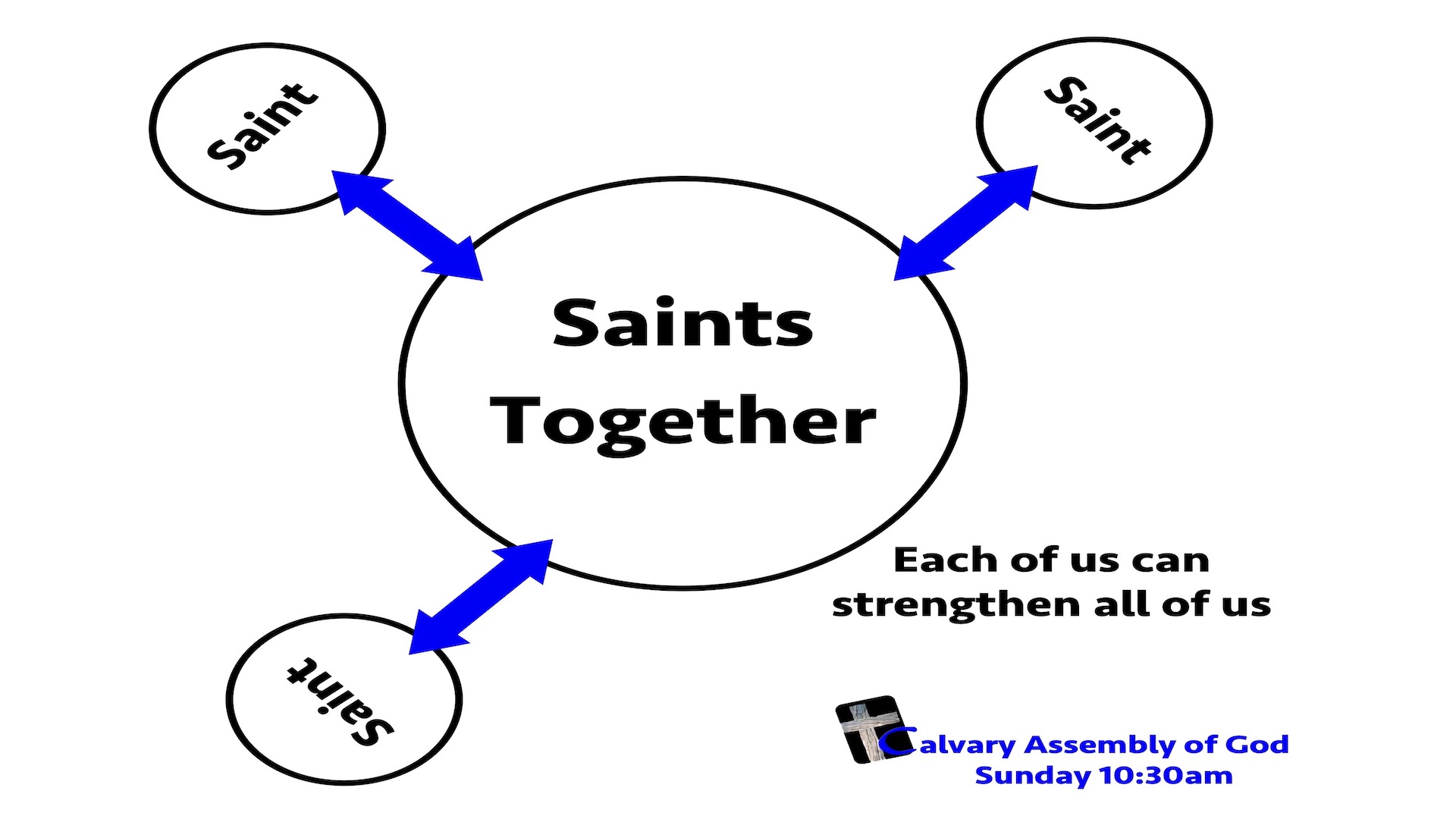
Throughout the New Testament the word “saints” is always in the plural form. This is a clear indication that none of us can develop into the full-fledged Christians we were meant to be on our own.
We all need each other. More specifically, we all need the most mature version of each other.
A key component of an individual saint’s development is the time spent alone being forged by the discipline of the Holy Spirit. Maturing saints then come together with each other to continue to strengthen and sharpen everyone in the church. Strong individual saints make a strong church, and a strong church makes strong individual saints!
Join me for our new series called Saints Together. We will be studying the six spiritual disciplines that each individual saint must put into practice so that they can use their newly developed strengths to help other saints in their own development.
Listen to the podcast of this post by clicking on the player below, and you can also subscribe on Apple, Spotify, or Audible.
I’m not a fan of rollercoasters, but I know a lot of people who really like them. Some even travel all over the world to experience unique rollercoasters. The anticipation as the cars climb slowly up the big hill, knowing that there’s no stopping this thing now! Then the rush of emotions, a deep breath and a laugh at the end (usually laughing at our friends’ responses while on the ride), and then we just walk away. The moment of anticipation leading up to the big drop was usually longer and more intense than the ride itself.
Not only do people travel all over to find rollercoasters, some people seem to have their emotions perpetually on rollercoasters.
One of the telltale signs of someone with an immature mental health is the way every situation gets blown out of proportion before anything even happens. Then as an event unfolds, their exaggerations continue: the molehills are mountains, every valley is the valley of the shadow of death, the night is a nightmare, the “crisis” is lasting forever, no one has ever gone through what they’re going through, and the list goes on.
To break out of this habit requires us developing emotional capacity. John Maxwell describes it like this: “Emotional capacity is the ability to handle adversity, failure, criticism, change, and pressure in a positive way.” Just as athletes have to develop lung capacity or muscle capacity, developing emotional capacity takes time, patience, and diligence.
Increased emotional capacity is not escaping from our problems or even learning coping skill. Escapism never allows us to confront the things that are keeping our emotional capacity immature. On the other hand, maturing emotional capacity is learning to pause to get perspective so that we can avoid turning every mountain into a molehill, and every challenge into a do-or-die battle.
Let me illustrate this by looking at two emotions which seem to be the most rollercoaster-ish.
(1) The first rollercoaster emotion is anger
Out-of-proportion anger can either burn everyone around us when we explode, or it can eat away inside us if we hold it in. Neither of these are healthy emotional responses. Jesus got angry at the religious crowd that was keeping people away from God’s kingdom, but He didn’t ride the rollercoaster that led to a sinful expression of His anger.
God asked Jonah a very helpful question: Have you any right to be angry? (Jonah 4:4). When we feel the Holy Spirit asking us this question, our defiant first response is almost always, “Yes! I didn’t do anything wrong! It was all him!” Solomon would counsel us to cross-examine that thought (Proverbs 18:17).
Sometimes God will bring someone else across our path to help us pause to get perspective—to flatten the rollercoaster. For instance, God used Abigail to help David (see the story in 1 Samuel 25). However the Holy Spirit cross-examines us, we need to learn to truly listen. James told us:
My dear brothers and sisters, take note of this: Everyone should be quick to listen, slow to speak and slow to become angry, because human anger does not produce the righteousness that God desires. (James 1:19-20)
(2) The second rollercoaster emotion is fear
Fear usually causes us to fight or flight. Those are the natural responses, but the supernatural response is to pause to evaluate. I love the reminder that F.E.A.R. means false evidence appearing real.
As with anger, our first pause to get perspective on this potential rollercoaster that can plunge us into a deep, dark valley should be to cross-examine the false evidence of fear.
When the group of ladies came to the tomb of Jesus on the Sunday following His crucifixion, they were already battered and bruised in their emotions. Finding an empty tomb brought even more fear in their hearts. But there is a keyword in this account that will help us:
In their fright the women bowed down with their faces to the ground, but the men [angels] said to them, “Why do you look for the living among the dead? He is not here; He has risen! Remember how He told you, while He was still with you in Galilee: ‘The Son of Man must be delivered over to the hands of sinners, be crucified and on the third day be raised again.’” Then they remembered His words. (Luke 24:5-8)
The Holy Spirit can help us remember the truth in God’s Word to counteract the fear-inducing false evidence (2 Timothy 1:7; John 14:26), but we must pause to listen to this evidence before this rollercoaster emotion picks up speed.
The bottom line: Don’t try to escape your strong emotions. Pause. Cross-examine the evidence with the help of God’s Word, the Holy Spirit, and a friend to get a healthy perspective. This can help you flatten the rollercoaster before your emotions run away with you.
One of the loudest, most persistent advertising messages is about speed: Take action now, get immediate results as soon as you sign up, don’t miss out, act today! Because of this sentiment that appears all around us, many people often think that any life changes they make should bring about immediate and lasting results.
I’ve often joked that I wish I had the superpower to zap myself or a friend—“<Poof!> There, you’ve got it now. You’re all set!” Unfortunately, that’s usually not how it works.
Instead, we need to be ready for a lengthy process—possibly even a lifelong process—of the Holy Spirit helping us to make the micro-adjustments that are necessary.
Check out this part of my conversation with Jim and John as we discussed this idea.
If you would like to watch this full interview on the Leading From Alignment podcast, please go here.
I’ll be sharing more clips from this interview soon, so please stay tuned. My book Shepherd Leadership: The Metrics That Really Matter is available in print or ebook, and in audiobook through either Audible or Apple.
This is a weekly series with things I’m reading and pondering from Charles Spurgeon. You can read the original seed thought here, or type “Thursdays With Spurgeon” in the search box to read more entries.
Listen to the podcast of this post by clicking on the player below, and you can also subscribe on Apple, Spotify, or Audible.
The Proof In The Longing
My soul is consumed with longing for Your laws at all times. (Psalm 119:20)
Can you say that your heart pines for God as the watcher through the midnight sighs for the dawn, or as the traveler over burning sand longs for the shadow of a great rock? Oh, then, though I would not have you rest in longings; indeed, I know you never can. Yet they are a proof that you are spiritually alive! Heart longings are far better tests than attendance at sacraments, for men who are dead in sin have dared to come both to baptism and the Lord’s Supper. Eager desires prove spiritual life much better than supposed attainments, for these supposed attainments may all be imaginary. But a heart breaking for the longing that it has for God’s Word is no fancy. It is a fact too painful to be denied! …
We have not reached perfection, but do not let us, therefore, be discouraged, for the apostle of the Gentiles said, ‘Not as though I had already attained, either were already perfect’ (Philippians 3:12). … When a man thinks himself so good that he cannot be better, he is probably so bad that he could not be worse. …
The fuller a man is of grace, the more he hungers for grace! Strange it is to say so, but the paradox is true—the more he drinks and the more he is satisfied and ceases to thirst in one sense, the more he is devoured with thirst after the living God! … This it is to be a true child of God: To always have a yearning soul toward God’s Word, to be eager after His commandments at all times. May the Holy Spirit keep us ever hungering and thirsting after God and His truth.
From Holy Longings
In a recent interview that I did, I was asked how someone should deal with the fact that they are struggling to be balanced in their leadership. My reply was, “The very fact that they are feeling the struggle should be a great encouragement to them. People who don’t feel the tension of wanting to get better are blinded to their deficiencies and never seek help.”
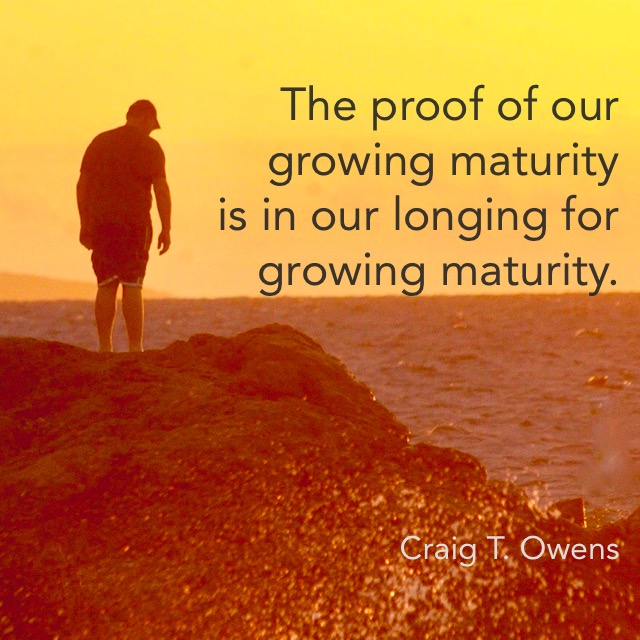
The proof of our growing maturity is in our longing for growing maturity.
The psalmist in this great chapter is thrilled with what God’s Word has already accomplished in his life, and yet he is still longing for the Holy Spirit to do an even greater work in his heart. This is the tension in which every maturing Christian should live. The devil would love to whisper to your heart, “Your longing for more proves that you are still immature.” This is an utter lie! As Spurgeon reminds us, the more of God we have, the more of God we will crave.
Immature people only want to do the bare minimum, but mature people want to do more than is expected of them. Jesus called these people those that went the second mile. That was a topic in my most recent Monday Motivation series.
I am a big fan of The Babylon Bee. If you haven’t checked out their satirical wit, please do so! One post that caught my eye this week is called What Your Favorite Book Of The Bible Says About You. Wow, did this one make me laugh! If you would like to check out some real Bible studies, I have some here and here.
Cold-case detective and Christian apologist J. Warner Wallace discusses how Jesus impacted other world religions—
The drought in north Texas has revealed some more dinosaur tracks, raising some new questions about these massive animals that roamed Earth.
The devil loves to try to pervert the conviction of the Holy Spirit into condemnation. Here is the freeing truth we can stand on: There is NO condemnation for those who are in Christ Jesus.




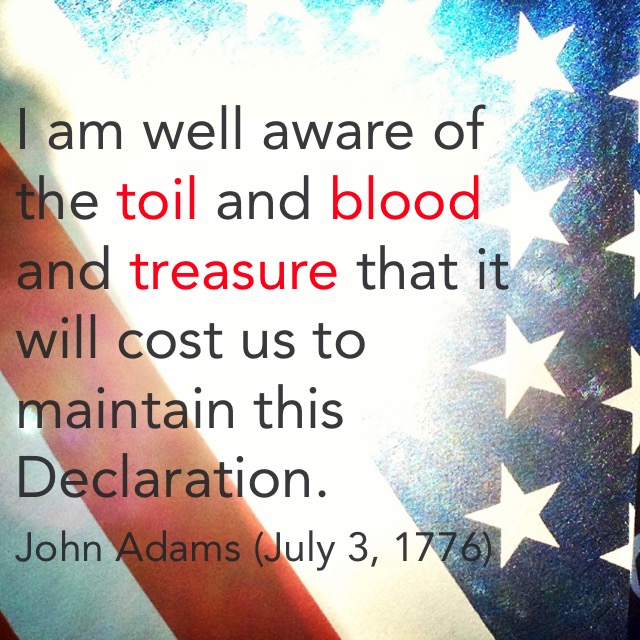 From the 1440 Daily Digest: Congratulations, America—July 4, 2024, marks the 248th commemoration of the day the Declaration of Independence was adopted by the Second Continental Congress. Through the centuries, the US has grown from 13 colonies with about 2.5 million people to 50 states and 14 territories with a population of more than 330 million. The economy has swelled to over $27T. Advances in public health have cut the child mortality rate from over 45% to under 1%, while our citizens live over 35 years longer on average. Scientific achievements in the US have delivered everything from the light bulb, modern flight, and the internet to air conditioning, movies, and the polio vaccine. More than 2.7 million miles of power lines electrify the country across over 4 million miles of paved roads, with over 90% of households accessing broadband internet. The US has also been responsible for more than 800 human visits to space—the most of any country.