Thursdays With Spurgeon—Holy Longings

This is a weekly series with things I’m reading and pondering from Charles Spurgeon. You can read the original seed thought here, or type “Thursdays With Spurgeon” in the search box to read more entries.

Listen to the podcast of this post by clicking on the player below, and you can also subscribe on AppleSpotify, or Audible. 

Holy Longings

My soul is consumed with longing for Your laws at all times. (Psalm 119:20) 

     One of the best tests of a man’s character will be found in his deepest and heartiest longings. You cannot always judge a man by what he is doing at any one time, he may be under constraints that compel him to act contrary to his true self, or he may be under an impulse from which he will soon be free. He may, for a while, back off from that which is evil, yet he may be radically bad. … A man’s longings are more inward and more nearer to his real self than his outward acts—they are more natural in that they are entirely free and beyond compulsion or restraint. 

     As a man longs in his heart, so is he. I mean not every idle wish, as I now speak, but strong desires of the heart. These are the true life of a man’s nature. You will know whether you yourself are evil by answering this question: To what have you the greatest desire? … So then, dear hearers, your heart longings may furnish you with helps for self-examination, and I beg you to apply them, as things of the heart touch the root of the matter.

From Holy Longings

Jesus was constantly taking us back to the examination of our heart. He knew that “out of the heart come evil thoughts—murder, adultery, sexual immorality, theft, false testimony, slander” (Matthew 15:19). He further demonstrated this when He made anger in the heart the same as murder, and lust in the heart the same as adultery (Matthew 5:21-30). 

We can try to change our behaviors all day long, but if we don’t address the heart longings that are prompting those behaviors, we are fighting a losing battle. 

Sigmund Freud called them “Freudian slips” when we said or did something that seemed out of character. I think we should call them eye-opening insights—we just had an opportunity to glimpse what heart longing is at the root of that inappropriate word or action. Thankfully, the same Holy Spirit that reveals these carnal longings to us will also lead us to repentance and a heart change that brings about God-honoring heart longings. 

Don’t try to excuse or cover up what may have slipped out, but use that as a merciful warning of heart longings that need the sanctification of the Holy Spirit. We are all a work-in-progress, which is why I like to remember the word sanctification by saying it “saint-ification.” Let’s yield to the Holy Spirit to bring out greater saintliness by saint-ifying our heart longings.

►► Would you please prayerfully consider supporting this ministry? My Patreon supporters get behind-the-scenes access to exclusive materials. ◀︎◀︎

Unexpected Response

Listen to the podcast of this post by clicking on the player below, and you can also subscribe on AppleSpotify, or Audible. 

I’m a bit of a nut about the exactness of words, so one of my pet peeves is the incorrect use of imply and infer. “Imply” is something I do as the speaker; “infer” is something you do as the listener. Or you might say implying is like throwing and inferring is like catching. 

A big problem arises when I infer something that you didn’t imply. Or even worse, when I infer something based on something you didn’t say. People will often say something like this, “Since Jesus didn’t specifically talk about ________ then it must be okay.” In logic, this would be called an argument from ignorance: concluding that an action must be acceptable because it has not been specifically stated to be unacceptable. 

Statement #10 in our series asking “Is that in the Bible?” is—Love your neighbor. Is that in the Bible? Yes!  

Remember Jesus called “Scripture” all of the words we would now call “Old Testament.” So in Matthew 5:43 Jesus quoted Scripture: Do not seek revenge or bear a grudge against anyone among your people, but love your neighbor as yourself. I am the Lord (Leviticus 19:18). 

Later on, Jesus would add to this Deuteronomy 6:5—Love the Lord your God with all your heart and with all your soul and with all your strength—to answer the question about the greatest commandment of all. 

In Leviticus 19, the Hebrew word for love means love in the broadest sense of the word, and neighbor means a friend or a fellow citizen. Unfortunately, the rabbis inferred that someone not a Jew was therefore an enemy and therefore not worthy of love. They further inferred that the opposite of love was hate. 

Matthew Henry commented, “They were willing to infer what God never designed.” 

Statement #11 is—Hate your enemy. Is that in the Bible? Yes, in the fact that it appears in print in Matthew 5:43, but it doesn’t appear in the Scripture that Jesus knew. It had become so ingrained in the thinking of people that they now assumed it was in the Bible. 

In many ways, the Old Testament laws were easier to live out because they were all external and easy to measure, like don’t murder or don’t sleep with someone who isn’t your spouse. But Jesus made it a heart issue—He said lust is the same as adultery and hate is the same as murder. 

Jesus also made love for enemies a heart issue. The word He used for love in the Greek is agape—the same word describing God’s love for His enemies in John 3:16—For God so LOVED the world, that He gave His one and only Son, that whoever believes in Him would not perish but would have everlasting life. 

Jesus said our enemies were really our neighbors and were worthy of sacrificial love because they, too, were loved by God. 

Matthew 5:44 is shortened in the NIV and has a footnote explaining that the longer verse was not seen in the earlier manuscripts. But given the fact that Jesus demonstrated everything found in the longer version of this verse, I think we are safe in using it. So let’s look at the response Jesus calls us to from the NKJV: But I say to you, love your enemies, bless those who curse you, do good to those who hate you, and pray for those who spitefully use you and persecute you. 

Here’s what Jesus says it means for us to love our enemies:

(1) Bless the cursers. We’ve all been “cursed out” with nasty, hateful words. When that happens, Jesus wants to bless that neighbor. The word He used for bless literally means to say good words. 

(2) Help the haters. Jesus said we are to do those things that are beautiful and excellent—like the Good Samaritan did for his enemy-turned-neighbor (see Luke 10:25-37).  

(3) Pray for the persecutors. Talk to God about them; don’t talk to others about them. 

This response from Christians toward people whom others would call an enemy is totally unexpected by the world. This unexpected response will begin to draw enemies toward Jesus (1 Peter 2:12). If we will treat enemies and neighbors, they may soon become brothers and sisters in the family of God! 

When the world hits us Christians out of hate, let’s respond with unexpected love: blessing those who curse us, helping those who hurt us, and praying for those who persecute us. 

If you’ve missed any of the other messages in our Is That In The Bible? series, you can find the full list by clicking here. 

►► Would you please prayerfully consider supporting this ministry? My Patreon supporters get behind-the-scenes access to exclusive materials. ◀︎◀︎

Practical Health Questions

Listen to the podcast of this post by clicking on the player below, and you can also subscribe on AppleSpotify, or Audible. 

I had a great time on the 200churches podcast with Jeff Keady. 

Jeff wanted to know if I had a favorite chapter in my book Shepherd Leadership: The Metrics That Really Matter. That’s an easy question to answer because it is the chapter I didn’t write—the Preface of the book was written by Dick Brogden and sums up my book better than I could have on my own. 

But there is a chunk of five chapters in Shepherd Leadership that I keep going back to quite frequently. This section is also one that has resonated with other leaders who coach and counsel pastors. 

Dr. Luke summarized the wholly healthy development of Jesus in just one verse: And Jesus grew in wisdom, in stature, in favor with God, and in favor with men (Luke 2:52). I think this gives us the perfect pyramid for our healthy growth—

  • It starts with our mental health (wisdom) 
  • Which helps us make good decisions for our physical health (stature)
  • Which creates an ideal environment for our spiritual health to flourish (favor with God)
  • Which is ultimately realized in our relational health (favor with men) 

This is why, when I am coaching other pastors that are struggling with relationships with their board or parishioners, I start with…

Oftentimes the answers to these questions reveal a deficit in mental, physical, or spiritual health that is preventing a breakthrough in strong, healthy relationships. As soon as health is being restored at the lower levels of this pyramid, positive changes in spiritual and relational health begin to blossom as well. 

Pastor, please pick up a copy of my book to help you get into the healthiest place you can be. You cannot give health to the flock under your care if you are not at optimal health yourself. 

If you want to catch up on some of the other clips I’ve already shared from this interview, you can find them here. I’ll be sharing more clips from this 200churches interview soon, so please stay tuned. Shepherd Leadership: The Metrics That Really Matter is available in print or ebook, and in audiobook through either Audible or Apple.

►► Would you please prayerfully consider supporting this ministry? My Patreon supporters get behind-the-scenes access to exclusive materials. ◀︎◀︎
Successful Against Temptation

The Holy Spirit showed some interesting thoughts from the story of the temptation of Jesus.

Below is a 1-minute clip from a much longer video that I provided exclusively for my Patreon supporters. My blog has 5000+ posts that are all free. In addition, nearly all of my teaching videos on YouTube are free to the public.

To help me continue to provide all of this free content, I ask my friends to support this ministry at just $5 per month. My Patreon supporters get quotes from the books I have read, access to teaching videos that no one else sees, and exclusive teaching content that I don’t make available publicly. This is just my way of saying “Thanks!”

Special offer—Any new Patreon supporters that sign on in the next 30 days will not only get all of my exclusive content going forward, but they will also receive access to all of the content I have already shared. Check it out and sign up here.

Directed Steps

Listen to the podcast of this post by clicking on the player below, and you can also subscribe on AppleSpotify, or Audible. 

Jesus was constantly cognizant of His mission. We see it at the beginning of His ministry and all the way through to the very end. At the beginning, He makes a decision where to live and base His ministry “to fulfill what was said through the prophet Isaiah” (Matthew 4:12-16). At the end, He knows “that everything had now been finished, and so that Scripture would be fulfilled” He makes a final request (John 19:28). 

So “when Jesus heard that John had been put in prison, He withdrew to Galilee…and lived in Capernaum…in the area of Zebulun and Naphtali.” This residency fulfilled Isaiah’s prophetic word. 

Jesus knew He had to go to this region. The event of John’s imprisonment prompted His move to Capernaum. 

My sovereign God makes no mistakes; nothing is random nor inconsequential. I should develop the habit of praying, “Now that this has happened, what would You have me do?” I believe this is how Jesus lived. 

My life, just like Jesus’ life, has a purpose. Just as the Holy Spirit directed the movements of Jesus, He will direct my steps as well, if I will only listen for His voice.

I think we would be wise to form a daily prayer something along these lines—

Father, in my heart I may have planned a course for today, but I trust You to direct my steps. I will not stubbornly nor thoughtlessly lean on my own understanding, but at every moment I will listen for Your wise and perfect counsel. Jesus, just as You lived dependent on the Holy Spirit, I want to live this way as well. In Jesus’ name, Amen. (see Proverbs 16:9, 3:5-6; James 4:13-15) 

►► Would you please prayerfully consider supporting this ministry? My Patreon supporters get behind-the-scenes access to exclusive materials. ◀︎◀︎

Sure And Secure

Listen to the podcast of this post by clicking on the player below, and you can also subscribe on AppleSpotify, or Audible. 

We have looked at all of the psalms with a Selah pause, but there is one bonus message that we need to consider, and I think it’s a perfect wrap up to this series. 

Outside the book that bears his name, there is no other mention of Habakkuk anywhere else in the Bible. The author himself gives us no biographic information, nor does he give us dates as most of the other prophets do. However, there is enough information inside his short book that allows us to make some solid inferences:

  • based on his instructions in 3:19 we can infer he is a Levite and a worship leader—notice that he says “my instruments” 
  • we know for certain he is a song writer and a prophet (1:1; 3:1) 
  • he is a prophet with a heavy message—the word oracle in in the opening verse is probably better translated a “burden” 
  • he is a contemporary of Jeremiah, who spoke to backsliders, but Habakkuk speaks to the godly remnant to help them make sense of what’s happening in their crumbling culture 

Habakkuk does something that isn’t seen anywhere in the Bible except in the Psalms: he calls godly people to Selah—not once, but three times! 

In our look at the Selahs of Psalm 55 we noted how David’s Selahs almost came as an interruption of his anxious thoughts. Habakkuk’s Selahs follow this same theme. That’s because Habakkuk’s culture (like ours today) was increasingly unrighteous, unstable, and unsure. This prophetic worship leader wants righteous people trying to stand strong in their unrighteous culture to know that our surety and stability must come from our unshakable relationship with our righteous God. 

We’ve said that one of the definitions for Selah is “pause and calmly think of that,” but for Habakkuk’s Selahs I want to modify it slightly: Pause to interrupt your doubtful thoughts and consider this…. What he wants us to consider, I believe, comes from the opening words of his song in chapter 3—

Lord, I have heard of Your fame; I stand in awe of Your deeds, O Lord. Renew them in our day, in our time make them known; in wrath remember mercy (v. 2). 

We are to pause to consider that God has already shown His unrivaled power in the past, and then we stand firm to see Him move again “in our day, in our time” so that the unrighteous will have an opportunity to repent and turn to Him. 

The first Selah is after v. 3 in which Habakkuk references Mount Paran. How did God show His fame there? Moses recorded it this way: 

The Lord came from Sinai and beamed upon us from Seir; He flashed forth from Mount Paran, from among ten thousands of holy ones, a flaming fire, a law, at His right hand. (Deuteronomy 33:2)  

Selah—pause to interrupt your doubtful thoughts and consider this: God did this before and He can do it again. His glory will cover the heavens, His praise will fill the earth, His power will be so evident that the earth will quake and nations will tremble (vv. 4-6). All of this to reassure the righteous and arrest the attention of the wayward unrighteous.  

The second Selah is after v. 9 where Habakkuk is still describing all that God will do personally to rescue His righteous ones. Selah—pause to interrupt your doubtful thoughts and consider this: God did this before—see the almost identical language David uses in Psalm 18:3-17—and He can do it again. All of this to reassure the righteous and arrest the attention of the wayward unrighteous. 

The final Selah is at the end of v. 13 where Habakkuk describes what God will do to the enemies of His people. He uses words of decisive victory—crushed, stripped, pierced, trampled. 

Once again, Selah—pause to interrupt your doubtful thoughts and consider this: God did this before and He can do it again. More specifically, Jesus is the Decisive and Ultimate Victor over sin and death! Check this out: 

Then the end will come, when [Jesus] hands over the kingdom to God the Father after He has destroyed all dominion, authority and power. For He must reign until He has put all His enemies under His feet. The last enemy to be destroyed is death. (1 Corinthians 15:24-26) 

And having disarmed the powers and authorities, He made a public spectacle of them, triumphing over them by the Cross. (Colossians 2:15) 

Do not be afraid. I [Jesus] am the First and the Last. I am the Living One; I was dead, and now look, I am alive for ever and ever! And I hold the keys of death and Hades. (Revelation 1:17-18)

When our culture is becoming increasingly unrighteous, unstable, and unsure, what an unshakable surety and security we have standing on Christ the Solid Rock. As the old hymn reminds us—when all around my soul gives way, He then is all my hope and stay!

If you’ve missed any of the messages in our lengthy Selah series, you can find all of the messages by clicking here. 

►► Would you please prayerfully consider supporting this ministry? My Patreon supporters get behind-the-scenes access to exclusive materials. ◀︎◀︎

Sunday ≠ Sabbath

Listen to the podcast of this post by clicking on the player below, and you can also subscribe on AppleSpotify, or Audible. 

I had a great time on the Thriving In Ministry podcast with Kyle Willis while his podcast partner Dace Clifton was on sabbatical. 

Kyle and I wanted to help pastors get a better understanding of the value of a sabbath rest, but also an understanding of the challenges that come with trying to sabbath. Throughout the Old Testament, we read of God taking the Israelites to task for their unwillingness to rest, which ultimately led to them having to take a forced rest.   

As I mentioned in this interview, just because the calendar says “Sunday” doesn’t automatically mean that it’s a sabbath day. This is especially true for pastors who are busily engaged in ministry activities on Sundays. But I take comfort in the example of Jesus who showed shepherd leaders how to make sabbathing an active and integral part of effective ministry. 

I have a chapter in my book Shepherd Leadership called “A Healthy Shepherd’s Sabbath,” and then I have a follow-up chapter called “Can’t, Won’t, or Don’t” which addresses some changes pastors can make to ensure they are getting the vital rest they need. If you are a church leader, I encourage you to pick up a copy of my book Shepherd Leadership: The Metrics That Really Matter. 

I’ll be sharing more clips from this Thriving In Ministry interview soon, so please stay tuned. Shepherd Leadership: The Metrics That Really Matter is available in print or ebook, and in audiobook through either Audible or Apple.

►► Would you please prayerfully consider supporting this ministry? My Patreon supporters get behind-the-scenes access to exclusive materials. ◀︎◀︎
God Loves Wicked People

Listen to the podcast of this post by clicking on the player below, and you can also subscribe on AppleSpotify, or Audible.

The first two Selah pauses we see in Psalm 140 are pauses to remember two things: 

  1. There, but for the grace of God, go I. 
  2. God is doing something in me through wicked people and evil times. 

But there is one more Selah in this chapter that we need to consider—Do not grant the wicked their desires, O Lord; do not let their plans succeed, or they will become proud. Selah. (v. 8) 

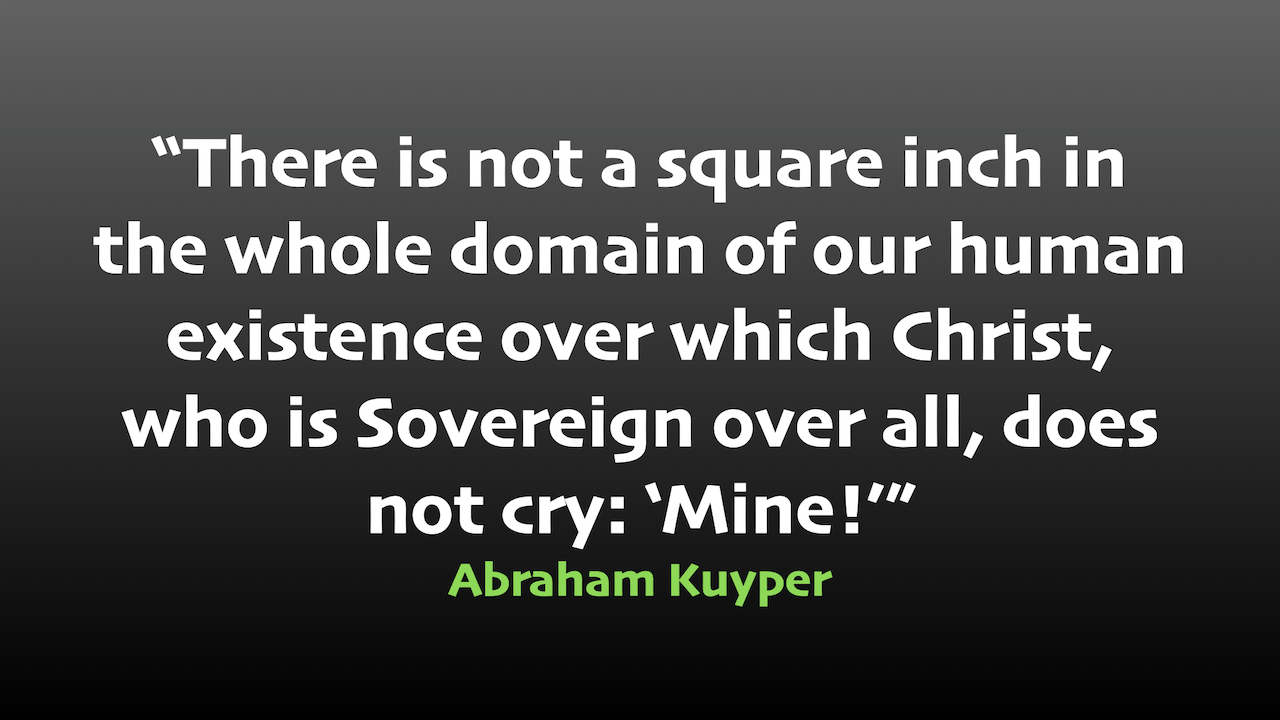
Most of  us would probably agree with Abraham Kuyper who said, “There is not a square inch in the whole domain of our human existence over which Christ, who is Sovereign over all, does not cry: ‘Mine!’” 

But the amazing thing here is that God allows David—and you and me—to call Him mine! “O LORD, I say to You, ‘You are MY God’” (v. 6). David goes on to say that God is my strong deliverer who shields me against evildoers (v. 7). 

But isn’t David’s God also the God of the wicked? Aren’t they a part of “the whole domain of human existence” that is His? Yes! 

So that must mean that God wants even wicked people to call Him, “My God”! 

This is exactly what Jesus told us: For God so loved the world [including wicked people] that He gave His one and only Son, that whoever [including wicked people] believes in Him shall not perish but have eternal life. For God did not send His Son into the world to condemn the world, but to save the world [including wicked people] through Him (John 3:16-17). 

Just before this third Selah in verse 8 David prays that the plans of the wicked might be thwarted so that proud people don’t become even more proud. That seems okay. But after the Selah David seems to be asking God to let everything that wicked people have planned to boomerang back on them (vv. 9-11).  

Isn’t that hateful? Not if we understand “hate” correctly. 

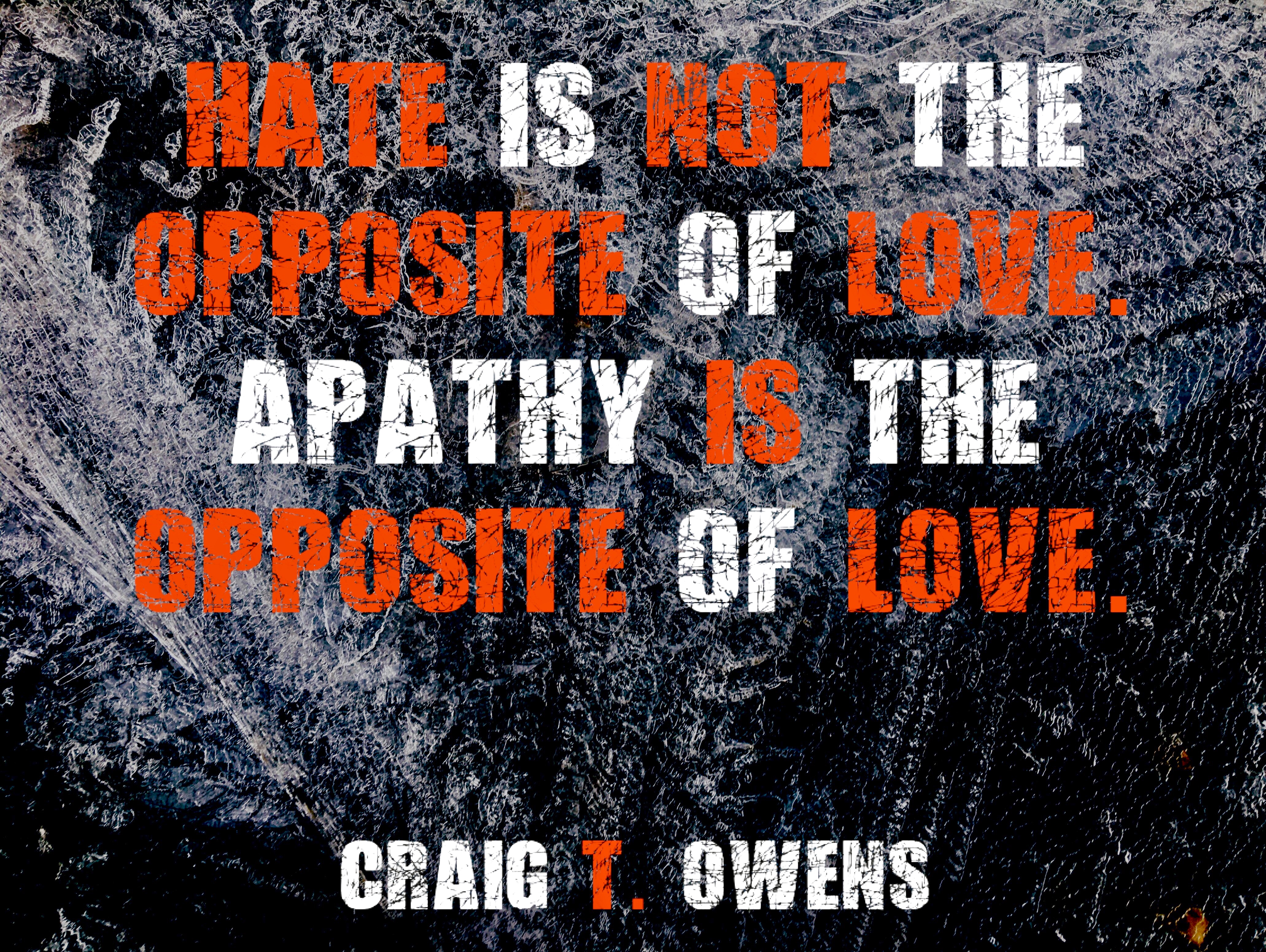
Hate isn’t the opposite of love, but apathy is the opposite of love. Hate is a very strong emotion that usually comes out when something we love or desire is thwarted or kept from us. 

Just as we learned last week that God allows evil people and their slander and wickedness to prune us and make us more fruitful, can’t God give back to evil people exactly what they need to get their attention? Can’t He use their own evil plans for them just as He used them for us? Yes! 

If God loves us—and He does—then He must hate anything that keeps us from Him. 

If God loves wicked people—and He does—then He must also hate anything that keeps them from accepting the atoning work Jesus did for them on the Cross. 

God is love. There is nothing you can do to make God love you any more. There is nothing an evil person can do to make God love them any less. 

David’s third Selah is really his reminder that he must leave evil people to the only One who can discipline them in perfect measure. We have to leave evil people to God’s care—the only One who can rescue them. That’s why Jesus told us to “love your enemies and pray for those who persecute you” (Matthew 5:44). 

David’s prayer in verses 9-13 does leave evil people in God’s hands, and it’s a prayer you and I can personalize for those whom we desire to know Jesus as their Savior. 

It’s not God’s desire that any should perish. So let’s Selah to call God, “My God,” but to also pray that even the wicked people around us will come to the realization that through faith in Jesus, they too can cry out, “My God!” 

God gave me a unique story when I was walking through a challenging time with a friend that I needed to leave to God’s care. I called the story The Parable of the Lifeguard. You can watch it in the video below, or you can read it by clicking here. 

If you have missed any of the messages in our Selah series, you can find a list of all of those messages by clicking here. 

►► Would you please prayerfully consider supporting this ministry? My Patreon supporters get behind-the-scenes access to exclusive materials. ◀︎◀︎

Poetry Saturday—The True Aaron

Listen to the podcast of this post by clicking on the player below, and you can also subscribe on AppleSpotify, or Audible. 

See Aaron, God’s anointed priest,
Within the veil appear;
In robes of mystic meaning dressed,
Presenting Israel’s prayer.

The plate of gold which crowns his brows,
His holiness describes;
His breast displays, in shining rows,
The names of all the tribes.

With the atoning blood he stands,
Before the mercy-seat;
And clouds of incense from his hands,
Arise with odor sweet.

Urim and Thummim near his heart,
In rich engravings worn;
The sacred light of truth impart,
To teach and to adorn.

Through him the eye of faith descries,
A greater Priest than he;
Thus Jesus pleads above the skies,
For you, my friends, and me.

He bears the names of all His saints,
Deep on His heart engraved;
Attentive to the state and wants
Of all His love has saved.

In Him a holiness complete,
Light and perfections shine;
And wisdom, grace, and glory meet;
A Savior all divine.

The blood, which as a Priest He bears
For sinners, is His own
The incense of His prayers and tears
Perfume the holy throne.

In Him my weary soul has rest,
Though I am weak and vile
I read my name upon His breast,
And see the Father smile. —John Newton [Levitcus 8:7-9]

►► Would you please prayerfully consider supporting this ministry? My Patreon supporters get behind-the-scenes access to exclusive materials. ◀︎◀︎
…The Certainty Of Eternal Light

Listen to the podcast of this post by clicking on the player below, and you can also subscribe on AppleSpotify, or Audible.

Even though Jesus explicitly told His followers about His crucifixion, it was clear on that Friday on Golgotha that they didn’t fully grasp what was going on. 

We see the same thing in Heman’s maskil of Psalm 88: The faint hope that his Savior would rescue him from death, but still not fully grasping what was happening. Just as Jesus cried out, “It is finished” and His disciples thought the darkness had fallen, Heman ends his psalm with, “You have taken my companions and loved ones from me; the darkness is my closest friend” (Psalm 88:18). 

There is the reality of darkness in this world—but it is only temporary darkness. This is why I entitled our look at Psalm 88 as “The reality of temporary darkness” because, in the second part of this couplet of maskil psalms, Ethan moves right into the light of Resurrection Sunday: “I will sing of the Lord’s great love forever” (Psalm 89:1). 

Consider this Good Friday-to-Resurrection Sunday thought from Jesus: “…In the world you will have tribulation; BUT be of good cheer, I have overcome the world” (John 16:33). This tells us of both the temporary darkness and the conquering Light. But also notice that Jesus said our peace would come from knowing that both darkness and light are realities: “These things I have spoken to you, that in Me you may have peace.” Whether we are in temporary darkness or looking forward to the eternal light, our peace is only found in Jesus. 

When the followers of Jesus came to His tomb on Sunday morning, the angels asked them a penetrating question, “Why are you looking for a living Person in a place where there are dead people?” Then they began to stimulate their memory to get them to recall Christ’s words. Finally, we read, “THEN they remembered” (Luke 24:5-8). Then they had to choose to obey the word of God. 

Ethan recalls God’s words and uses his “will” three in the opening two verses. 

The disciples also could bank on Christ’s words, just as Ethan chose to bank on Jehovah’s words. The central part of Psalm 89 is God speaking: Check out His assurance in the “I will” statements within the quotation marks in verses 19-37. Then we are called to Selah to let that soak in. 

Notice what radiates out from this foundational assurance:

  • Ethan uses the pronouns You/Your 20 times in reference to God to assure us that God is in sovereign control (vv. 8b-14). Then he tells us of the blessings of God’s favor on our obedience to His word (vv. 15-18). 
  • On the other side of the central quotation from God, Ethan again uses the pronouns You/Your 13 times in vv. 38-45, but then he tells us of the blessing of God’s discipline on our disobedience.
  • Radiating out further, Ethan asks seven questions—much like his brother Heman did in Psalm 88—in verses 5-8 and 46-48. 
  • Finally, we see the psalm both opening and closing with praising God as we remember His covenant word (vv. 1-4, 49-52). 

Remember we said the darkness cannot prevail. The darkness is temporary (Romans 8:18) but Ethan repeatedly reminds us of God’s foreverness (vv. 1, 2, 4, 29, 52). 

  • The Selah after v. 4 is to pause in wonder at God’s words and break into rejoicing!
  • The Selah after v. 37 is again to pause after remembering God’s covenant, and to reflect on our own obedience or disobedience. 
  • The Selah after v. 45 is a pause to mourn and repent from our disobedience. 
  • The Selah after v. 48 is to pause to reflect on the forgiveness purchased on Calvary and the eternal light and life that bought. 
  • Finally, v. 52 harkens back to v. 1 as the praise is restored and the cycle begins all over again. In fact, the praise of God’s light continues forever! 

Heman and Ethan both remind us of this important truth—

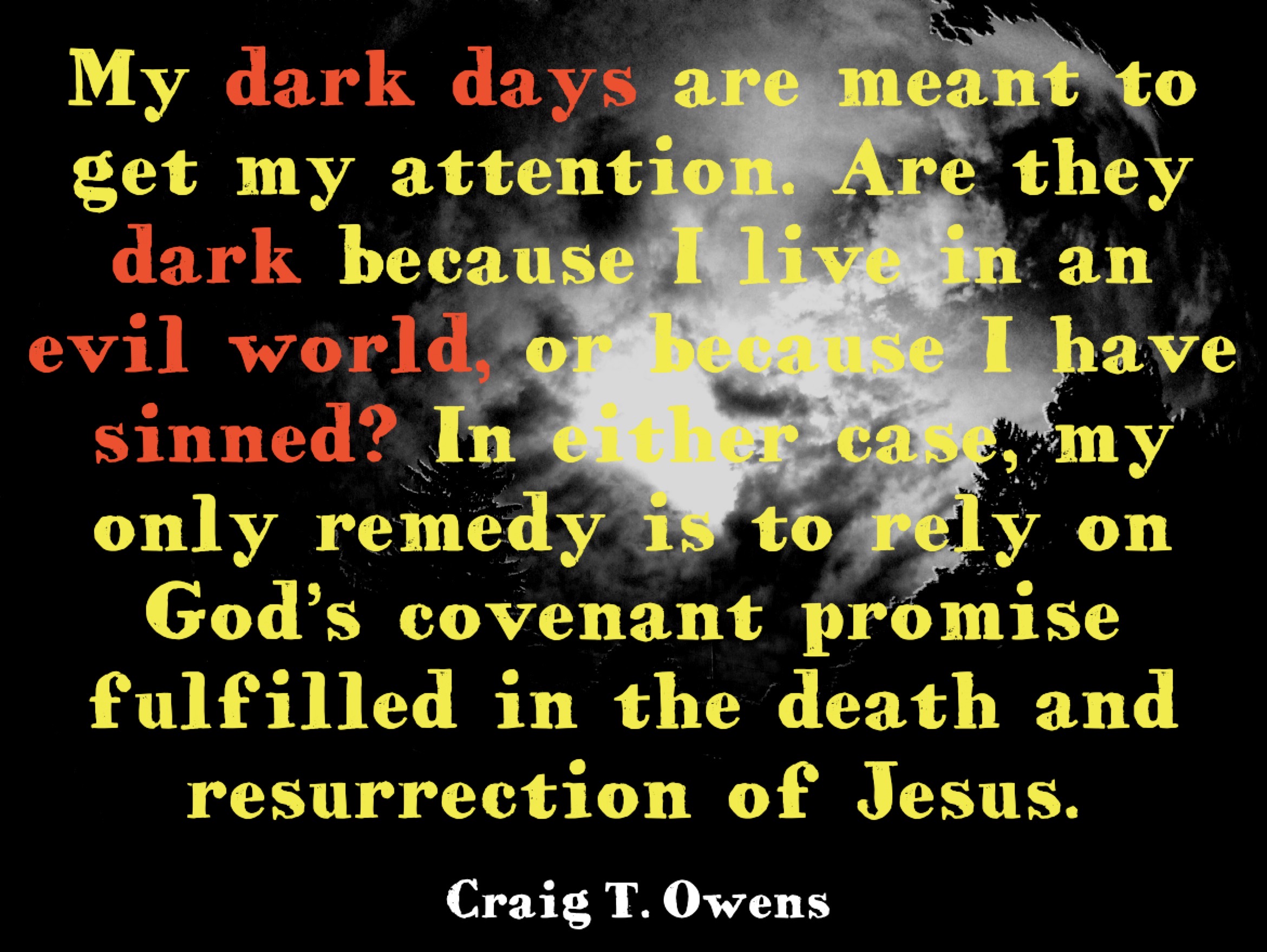
My dark days are meant to get my attention. Are they dark because I live in an evil world, or because I have sinned? In either case, my only remedy is to rely on God’s covenant promise fulfilled in the death and resurrection of Jesus. 

If you’ve missed any of the other messages in our Selah series, you can find a complete list by clicking here.

►► Would you please prayerfully consider supporting this ministry? My Patreon supporters get behind-the-scenes access to exclusive materials. ◀︎◀︎