What Does That Mean?

Listen to the podcast of this post by clicking on the player below, and you can also subscribe on AppleSpotify, or Audible. 

In one of my favorite movies—The Princess Bride—one character believe himself to be very smart. In fact, Vizzini considers Plato, Aristotle, and Socrates to be morons compared to his massive intelligence. But in one section of the movie he keeps using a singular word over and over again, until Inigo says to him, “You keep using that word. I do not think it means what you think it means!” Sometimes I wonder if this is what people want to say to Christians! 

Every family has its own unique lexicon—words and phrases mean something to them that they don’t mean to others. Every industry has shorthand for its products and services. Every friend group has their own inside jokes. And we Christians are just as guilty. 

  • Sometimes instead of saying, “Yes” we say, “Amen.” 
  • Instead of calling someone, “Mr. or Mrs.” we call them, “Brother or Sister.” 
  • We soften some of our stronger language by saying, “I’m grieved in my spirit,” instead of saying more honestly, “I’m really ticked off!” 
  • And sometimes, to sound super-spiritual when we pray, we begin to speak in Old English. 

Is it any wonder that people outside of our church circles sometimes look at us like we’re a bit off? 

So what do we mean by calling ourselves “Christian”? This was not the preferred name for followers of Jesus in the early Church: 

  • Saints—60x (only 4x in Acts)
  • Believers—43x (26x in Acts) 
  • Disciples—24x (all in Acts) 
  • Christian—3x 

The word originates in Acts 11:19-26 (v. 19 references the persecution of 8:1). The Greek language follows the Roman pattern of adding “ian” to the name of a great leader whom others were following. King Agrippa used this word in Acts 26:28, showing us how it has gained traction. 

(Check out all of the Scriptures in this post by clicking here.)

Christ is not a proper name, nor is it the surname of Jesus. Christ means the anointed One. So it’s more correct for us to say, “Jesus the Christ” (as in John 1:41). 

So to be a Christian is to follow the Anointed One. To believe that He died to pay the penalty for our sins, and that He rose to life again to give us His eternal life. 

To be a Christian is to live like Jesus, or to live as His ambassadors (2 Corinthians 5:11-21). 

To be a Christian is to continue to live like Jesus even in the face of opposition (1 Peter 4:12-16; 2:21-23; 3:13-17). 

Christians are being the Church when they are intentionally living in a way that makes Jesus known as the Christ—the One and Only Anointed One. 

Some excellent questions for Christians to ponder: 

  • What do you mean when you say, “I am a Christian”? 
  • Do others see and hear Jesus in what you do and say? 
  • Does your verbal confession and lifestyle confession compel others to come to Jesus? 

Let’s make sure our lives are the best definition of what the Bible says a Christian truly is! 

Check out all of the other messages in this series by clicking here. 

►► Would you please prayerfully consider supporting this ministry? My Patreon supporters get behind-the-scenes access to exclusive materials. ◀︎◀︎

Our Cornerstone

Listen to the podcast of this post by clicking on the player below, and you can also subscribe on AppleSpotify, or Audible. 

Last week we saw that the essential confession is not just, “I believe You are the Christ the Son of the living God,” but also, “I will take up my cross and follow You!” (Matthew 16:16-18, 24). Notice that these are “red letter words”—words spoken by Jesus. They are not “they say” words (like v. 14; Matthew 7:21-23). 

(Check out all of the Scriptures I use in this post by clicking here.)

Look at the very next red letter words in Matthew 7:24-27. Notice the two parts: hears and puts them into practice. That’s our verbal and our lifestyle confession. What are we hearing and putting into practice? “These words of Mine.” 

Jesus is our Cornerstone. The dictionary defines this as, “something that is essential, indispensable; the chief foundation on which something is constructed or developed.” 

Some sandy things to build your life upon: 

  • what your family practiced 
  • what your pastor preached 
  • what your friends believe 

You know how you will know how sure your foundation is? When the storms come! I recently heard a well-known scholar and Christian apologist in an interview. He was asked by a skeptic of Christianity if he had doubts, and he responded, “Sure, I have doubts. But I choose to believe what the Bible says.” And I thought, “How sad to live this way.” We have a reliable, unshakable foundation in Jesus (2 Corinthians 1:18-22; 1 Corinthians 15:58). 

Religions and philosophies have come and gone. 

Spiritual giants have stumbled, and fierce tyrants have growled and then died. 

Traditions and societies have changed through the millennia. 

But the red letter words of Jesus stand firm through every season and storm (2 Timothy 2:19). 

Our Cornerstone remains unmovable and we can stand on Him unshaken. This foundation…

  • …was prophesied—Isaiah 28:16; Psalm 118:22 
  • …was fulfilled—Matthew 21:42; Acts 4:11-12 
  • …is still standing today—Ephesians 2:19-20; 1 Peter 2:4-6 
  • …will still be standing for all eternity—Revelation 21:5; John 14:1-4 

So there is no need to be afraid. There is no need to get frustrated. There is no need to engage in meaningless debates with the “they say” crowd. Stand firm on the red letter words—our Cornerstone. 

“On Christ the solid rock I stand, all other ground is sinking sand!” 

Check out all of the other messages in this “I Will Build My Church” series here. 

►► Would you please prayerfully consider supporting this ministry? My Patreon supporters get behind-the-scenes access to exclusive materials. ◀︎◀︎
Why We Do What We Do

Listen to the podcast of this post by clicking on the player below, and you can also subscribe on AppleSpotify, or Audible. 

Charles Spurgeon said, “The resurrection of Christ is the cornerstone of the glorious temple of truth, the keystone of the arch of revelation.” 

What we believe about the resurrection gives meaning and purpose to everything else. The resurrection is the defining Truth. In 2 Timothy 2:19 we read two important truths about this foundation: (1) God knows those who truly know Him, and (2) Those who really know Him must unabashedly stand for the Truth. 

(Check out all of the Scriptures in this post by clicking here.) 

Words are powerful, they are creative. At the very beginning of Time, God said, “Light” and light existed (Genesis 1:1-3). God’s Word is still creating today (Hebrews 4:12). There are words we need to let go, and there is the Word for which we must stand without wavering or backing down. 

In 1 Timothy 1:3-7, Paul essentially says we have two choices: Do we want to promote controversy or do we want to promote God’s work? We have to learn to distinguish what is biblical and what is not. 

  • Biblical things—God’s Word clearly tells us “Yes” (2 Timothy 3:14-17) 
  • Unbiblical things—God’s Word clearly tells us “No” (like: do not murder, do not commit adultery, etc.)  

These two are fairly straightforward. As Dr. Donald Stamps wrote, “The Church has the responsibility to safeguard the true and original apostolic doctrines found in Scripture and commit it to others without compromise or corruption.” 

What is harder to sort out is:

  • Extra-biblical things—something in addition to or outside of God’s Word 
  • Non-biblical things—something not specifically addressed in God’s Word 

Passages like 1 Timothy 4:1-7 and 2 Timothy 2:14-19 help us sort out biblical and non-biblical things. 

Are extra-biblical things wrong? Not necessarily. Paul quoted poets, and even uses an extra-biblical example of Jannes and Jambres [who] opposed Moses (3:8). 

Are non-biblical things wrong? Not necessarily. But both extra-biblical and non-biblical things can become wrong when we give these things biblical status (Mark 7:9). 

“Church” and “Christian” can completely lose their biblical meaning if we allow unbiblical, extra-biblical, or non-biblical ideas to define them. We must stand firm on God’s Word to give biblical meaning to everything we say and do. 

Jesus said, “I will build MY Church.” He’s going to build it His way, not our way. We don’t want to fight the Architect, but neither do we want to fight the erring saint or the scoffing skeptic (2 Timothy 2:22-26). 

Let me give you four applications for this: 

  1. Do get into God’s Word everyday. 
  2. Don’t define the words but let God define His own words. 
  3. Do gently challenge those saints who are getting caught up in non-biblical or extra-biblical things. 
  4. Don’t quarrel with those who are living an unbiblical lifestyle (Colossians 4:5; Jude 1:22). 

You can find all of the other messages in this series called “I will build My Church” by clicking here. 

You may also be interested in these posts and videos: 

►► Would you please prayerfully consider supporting this ministry? My Patreon supporters get behind-the-scenes access to exclusive materials. ◀︎◀︎
11 Quotes From “Real Christianity”

Slavery abolitionist William Wilberforce wrote a powerful book 200+ years ago that sounds like it could have been written today! Here are just a handful of the numerous passages I highlighted in Real Christianity. Be sure to check out my full book review here. 

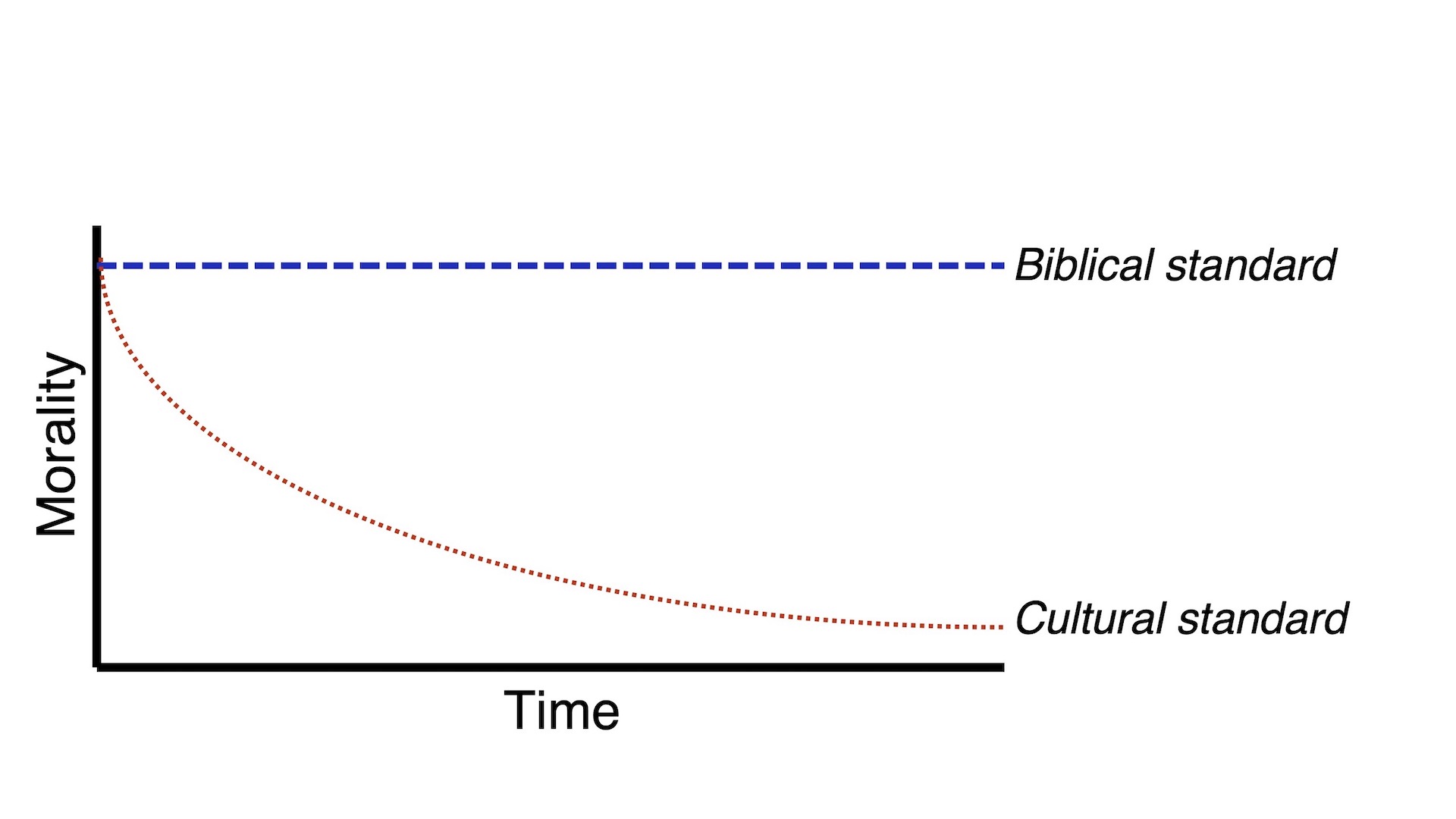
“What a difference it would be if our system of morality were based on the Bible instead of the standards devised by cultural Christians.” 

“The Bible is one of God’s greatest gifts to humanity. It tells us of the greatest gift that men and women have longed for throughout the ages and of which the prophets spoke about for centuries.” 

“Even the majority of professing Christians tend to think that the nature of humanity is basically good and is only thrown off course by the power of temptation. They believe that sin and evil are the exception, not the rule. The Bible paints a much different picture. The language of Scripture is not for the faint of heart. It teaches that man is an apostate creature, fallen from his original innocence, degraded in his nature, depraved in his thinking, prone toward evil, not good, and impacted by sin to the very core of his being.” 

“Not that the Bible needs affirmation, but the world around us demonstrates that there is a kind of sowing and reaping that affirms the destructive nature of ignoring the things the Bible teaches.” 

“When we do not take our problem seriously, we do not seek the solution God offers with the measure of sincerity and intensity that our true condition requires. If we don’t understand how seriously ill we are, we don’t pursue the remedy with the required diligence. If we are slightly ill, we take an aspirin. If we are dying, we passionately pursue a cure. The cure is not forced on us; it is offered to us.” 

“The appropriate response to these facts would be one of great excitement, true humility, hatred of sin, humble hope, firm faith, heavenly joy, ardent love and unceasing gratitude! But here is where we find a problem with the experience of those who hold to a cultural Christianity. … Cultural Christians might talk about religion or church in generic terms, but you will rarely hear them use the name of Jesus or speak of His death on the cross or His resurrection. … Cultural Christians probably have no understanding of the work of the Spirit in the life of the believer. Since they do not strive for effectiveness in their own spiritual lives or attempt to live with character consistent with followers of Christ, they have no experience of their own inability to achieve such things without the Holy Spirit’s help.” 

“Authentic faith will often be accompanied by an appropriate zeal. But zeal can often be devoid of any accurate understanding of authentic faith. The product of such zeal is often justified in the name of Christianity, but in reality it has virtually nothing to do with believing in Jesus Christ.” 

“Our inability is our great asset; it creates a humility that becomes dependent on God’s grace working in us.” 

“It is virtually impossible to get to the place where you recognize your need for the Spirit and depend upon His working when you have created a safe religiosity that is perfectly manageable by means of your own abilities.” 

“Authentic Christianity is a way for the most wayward of men and women to enter into a right relationship with God based solely on the fact that ‘while we were yet sinners, Christ died for us’ (Romans 5:8, KJV). They have confused the outcome of getting right with God with the means of getting right with Him. Only when we have come empty-handed to the foot of the Cross and cried out for God’s mercy and grace, and been reborn by the indwelling of the Holy Spirit, can we even begin to live the life to which God calls us. Some seem to think that Christ has made it possible for them to be right with God because His death has somehow lowered God’s standards to the level of their performance.” 

“It makes no sense to take the name of Christian and not cling to Christ. Jesus is not some magic charm to wear like a piece of jewelry we think will give us good luck.”

The Influence Of Jesus

Listen to the podcast of this post by clicking on the player below, and you can also subscribe on AppleSpotify, or Audible. 

Leadership is influence. 

Influence doesn’t try to get a following, but people naturally follow a leader who quietly, consistently, and effectively shows up for them. 

Jesus saw the needs of people and was moved by compassion to relieve their distress. Peter said He simply went around doing good (Acts 10:38). He gave value to the overlooked, He touched the so-called untouchable, He embraced the rejected. 

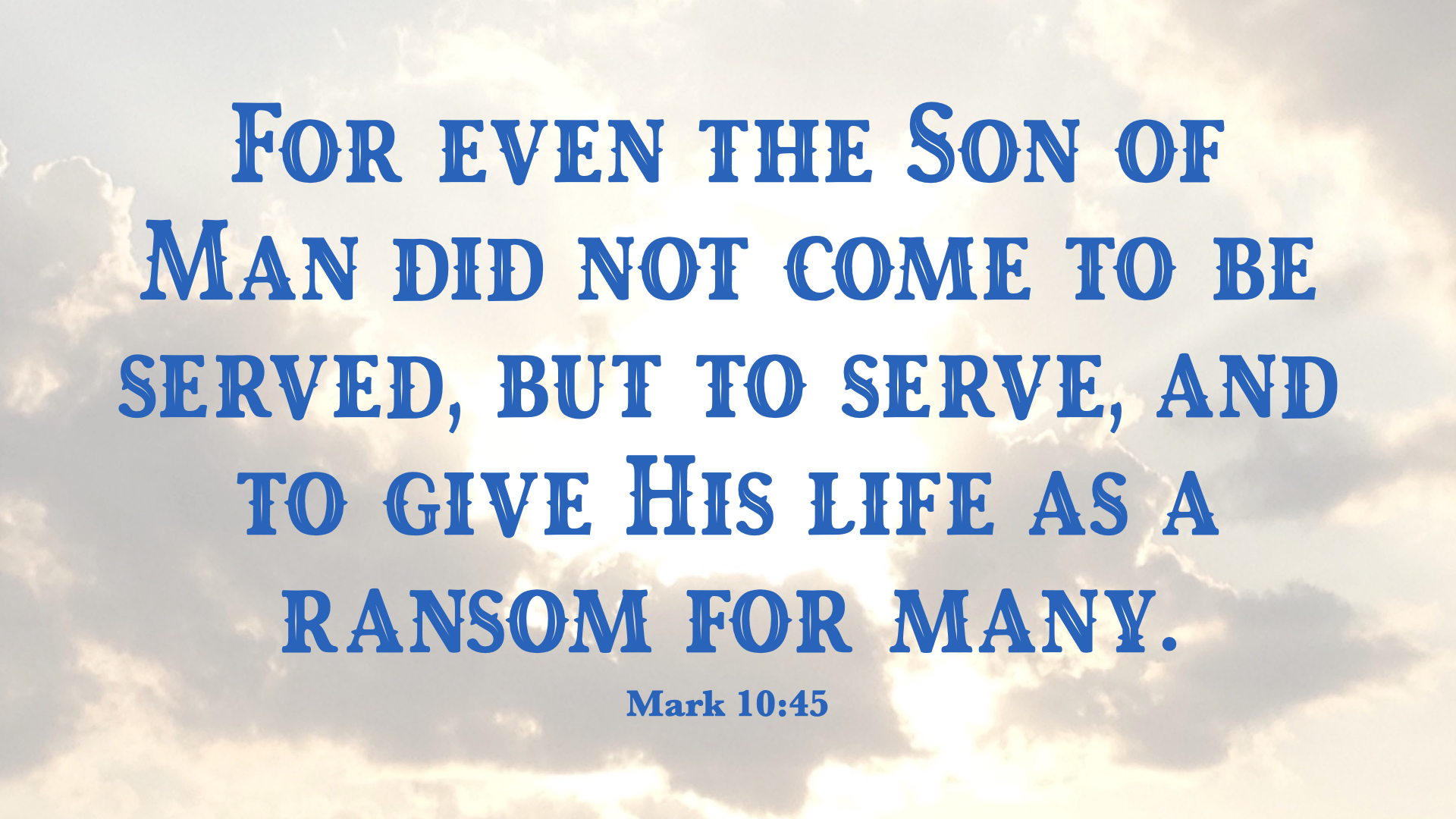
Jesus said, “I didn’t come to be served but to serve and to give My life away” (Mark 10:45).

This commentary from the folks at He Gets Us is spot-on:

   So often our idea of leadership is about asserting dominance and wielding authority; Jesus on the other hand revealed a radically different approach to greatness. 

   Jesus chose a path that seemed almost counterintuitive, especially to many of those around Him. He showed that true influence doesn’t come from throwing your weight around or flexing your authority—it comes from genuine empathy, authentic care, and intentionally seeing people and going toward them. 

   Instead of building a platform or demanding attention, Jesus moved quietly through communities, transforming lives through genuine relationships. 

   He didn’t network with the powerful or chase prestigious connections. 

   He sat with the overlooked. 

   He listened to the ignored. 

   He gave dignity to those society had dismissed. 

   Jesus’ approach to influence and greatness wasn’t about commanding rooms or dominating conversations—it was about creating spaces where others felt seen, heard, and valued, demonstrating great love in those moments. 

   When He had opportunities to grasp power, He chose instead to empower others. 

   His visible leadership wasn’t built on titles or positions, but on authentic relationships He cultivated and the lives He transformed through His genuine care and concern. (‘What is Greatness?’)

True influence loves and serves others like Jesus does. Don’t try to grab the top spot, but grab a towel and serve others. 

I would also humbly recommend that you check out my book Shepherd Leadership, where I explore the leadership of Jesus in greater depth.

►► Would you please prayerfully consider supporting this ministry? My Patreon supporters get behind-the-scenes access to exclusive materials. ◀︎◀︎
Links & Quotes

Greg and I challenge you to take a phrase from our amazing military personnel: Change “I work here” to “I serve here.” Then just as we express our thanks to our active duty and retired service members—“Thank you for your service”—others at our workplaces can say the same thing to us.

I have a lot of new video content on my YouTube channel every week. Please check it out and subscribe so you don’t miss anything.

“The human mind never goes so fast as that except when it has got into a groove.” —G.K. Chesterton

“In the opening paragraph of Revelation, we’re met by the encouragement, ‘Blessed are those . . . who keep what is written in [this prophecy]’ (1:3). Then at the conclusion we’re reminded, ‘Blessed is the one who keeps the words of the prophecy of this book’ (22:7; see also 22:9).” Justin Dillehay then outlines three ways Christians can “keep” the Book of Revelation.

“For it is not so much of our time and so much of our attention that God demands; it is not even all our time and all our attention; it is ourselves. … When we try to keep within us an area that is our own, we try to keep an area of death. Therefore, in love, He claims all. There’s no bargaining with Him.” —C.S. Lewis, The Weight of Glory 

T.M. Moore also wrote about the Intimate Glory we have in Jesus: “The greatness of our great salvation is to be known in the Presence of Jesus, God With Us, and the intimacy of peace, safety, rest, and joy we know in Him. Take away all the outward trappings and benefits of our salvation, and we will still, like Peter, be overjoyed just to be with Jesus. The hope of sharing in His glory—not just then and there but now and here in all we do—refreshes and excites our soul and energizes our bodies for daily obedience.”

Links & Quotes

Even though this father knew his daughter was dead, he kept walking with Jesus and saw the miracle of resurrection! That’s a great lesson for us: don’t stop praying—keep believing!

I have a lot of new video content on my YouTube channel every week. Please check it out and subscribe so you don’t miss anything.

“Swimming lessons are better than a lifeline to the shore.” —C.S. Lewis 

“If we do not transform our pain, we will most assuredly transmit it.” —Richard Rohr 

“The greatness that Jesus demonstrated wasn’t about performative generosity or how we might want to post our good deeds online for others to see. His was about genuine sacrifice that often went unnoticed and unrecorded. He showed up for people in their darkest moments, gave time He didn’t have to spare, and consistently chose others’ needs over His own comfort. This kind of greatness and love isn’t about grand gestures or viral moments of kindness. It’s about the daily choice to put others first, even when it costs you something valuable.” —‘What is Greatness?’ reading plan on YouVersion 

“[The Trinity] is indeed a fathomless mystery of theology. …. This thing that bewilders the intellect utterly quiets the heart.” —G.K. Chesterton

I have always enjoyed studying nature and discovering the unparalleled genius of our Creator! In a report on the complexities of insect eyes, the Institute for Creation Research noted, “God has designed photoreceptor cells, and others cells within the compound eyes and brains of insects, with the coordinated ability to take on several tasks. With this hawkmoth research, biologists have observed something amazing—individual cells are able to undertake diverse tasks and switch between them.”

Love + Perseverance

Listen to the podcast of this post by clicking on the player below, and you can also subscribe on AppleSpotify, or Audible. 

May the Lord direct your hearts into God’s love and Christ’s perseverance. (2 Thessalonians 3:5 NIV)  

God’s love and the patient steadfastness of Jesus is the winning combination, and is the prayer Paul desires us to pray for ourselves and others. 

I like some of the aspects of this verse that are amplified in different translations:

May the Lord direct your hearts into realizing and showing the love of God and the steadfastness and patience of Christ and in waiting for His return. (AMPC) 

May the Lord lead your hearts into a full understanding and expression of the love of God and the patient endurance that comes from Christ. (NLT) 

And check out what Jesus said to the Church at Ephesus about not losing hold of their first love as they patiently endure (Revelation 2:3-4). 

The agape love of our Heavenly Father
+ The patient endurance of Jesus
+ The instruction and encouragement of the Holy Spirit
= My loving endurance which is a testimony to others

You may also want to check out my posts: Learning Perseverance and Sincere Love. 

►► Would you please prayerfully consider supporting this ministry? My Patreon supporters get behind-the-scenes access to exclusive materials. ◀︎◀︎

Strength To Pray

Listen to the podcast of this post by clicking on the player below, and you can also subscribe on AppleSpotify, or Audible. 

In the day when I cried out, You answered me, and made me bold with strength in my soul. (Psalm 138:3 NKJV)

Prayer requires stick-to-it-iveness, which means it takes strength to pray. 

Therefore, being physically or emotionally drained makes it challenging to be alert and attentive in prayer. When we’re tired, our thoughts often drift; it’s hard to stay focused. 

Sometimes one of the most helpful things you can do for your spiritual growth is to get a good night’s sleep (or take a nap). 

Jesus did this (Matthew 14:22-23). He was very aware of His physical and emotional levels. When He was tired, He took a nap; when He was drained from ministry, He got alone with His Heavenly Father for refreshing (Mark 1:35, Luke 5:16). 

(Check out all of the Scriptures I mention here.) 

Jesus told His disciples to pray so they wouldn’t give in to temptation (Luke 22:40, 45-46). Prayer does strengthen us against the enemy’s attack, but physical and emotional stamina helps us too. 

Notice the full cycle—we need physical and emotional strength to pray persistently and consistently, and prayer enhances our physical and emotional reserves to help us pray. So do all three: 

  1. Pray 
  2. Take care of your body 
  3. Take care of your emotions 

Download the graphic → Strong prayer cycle

When all three components of your being—spirit, body, soul—are alert and healthy, you will find your prayer life fully engaged. If one area becomes depleted, listen to the always-practical counsel of the Holy Spirit. Pray, rest, talk to a friend or a counselor so you can return to the optimal position of strength. 

Yes, it takes strength to pray, but in prayer your strength is renewed. 

►► Would you please prayerfully consider supporting this ministry? My Patreon supporters get behind-the-scenes access to exclusive materials. ◀︎◀︎

Prayer Changes My Maturity

Listen to the podcast of this post by clicking on the player below, and you can also subscribe on AppleSpotify, or Audible. 

Prayer can unleash God’s miracles. Sometimes the most visible miracles are the changes that are seen in us—our attitude, our expectation, our focus, and our maturity.  

Maturity is not stuffy and stodgy. Those folks actually become quite childish when others around them don’t “act right,” according to their standards. The most mature people are the most childlike. 

Do you want proof for that last statement? The most mature Person to ever live on earth was Jesus, and He loved being around kids and having children around Him (Mark 10:13-14). 

(Check out all of the Scriptures in this post by clicking here.) 

His teaching examples were frequently quite simple—farmers, birds, flowers, trees, and even going to the bathroom!. He knew their songs (Luke 7:31-32), and many of His interactions with the overly-mature religious leaders were quite playful and childlike (Mark 11:27-33). 

Jesus wants us to come to our Father like children (Mark 10:15-16). “Like a little child” means childlike, which is the exact opposite of childish. Those who think they are too mature for such simplistic things are actually the ones who are childish. 

Jesus uses the Father-child relationship over and over to teach us about praying to a Father who is desirous of giving us the best things (Matthew 6:7-9; Luke 12:32). 

One of the Psalms of Ascent written by David strikes this childlike note (Psalm 131). Verse 1 describes the childishness he’s giving up, and verse 2 describes the childlikeness he is taking on: 

  • “my heart is not proud”—not focused on me (v. 1a) 
  • “my eyes are not haughty”—overly grown up (v. 1b) 
  • “I don’t concern myself with matters too great or too awesome for me to grasp” (v. 1c NLT) 
  • instead I am stilled, quieted, trustingly at peace (v. 2) 
  • and then David calls all of us to this same childlikeness (v. 3) 

Jesus taught about persistent prayer in Luke 18:1-8 and then used a scenario from the temple to illustrate His point (Luke 18:9-17), contrasting the childish pseudo-maturity of the overly-religious man and the childlike maturity the childlike man. And then, as directed by the Holy Spirit, Luke includes the same exchange Mark used about Jesus taking up children in His arms to bless them.  

Childlike is loving dependent; childish is fiercely independent. 

Childlike is trusting someone wise; childish always knows best. 

Childlike is imaginative; childish is realistic. 

Childlike is persistent; childish is whining. 

I love the Henry Wadsworth Longfellow poem called The Children’s Hour. As you read through this, imagine our Heavenly Father as Longfellow and yourself as his three daughters. 

Between the dark and the daylight,
When the night is beginning to lower,
Comes a pause in the day’s occupations,
That is known as the Children’s Hour.

I hear in the chamber above me
The patter of little feet,
The sound of a door that is opened,
And voices soft and sweet.

From my study I see in the lamplight,
Descending the broad hall stair,
Grave Alice, and laughing Allegra,
And Edith with golden hair.

A whisper, and then a silence:
Yet I know by their merry eyes
They are plotting and planning together
To take me by surprise.

A sudden rush from the stairway,
A sudden raid from the hall!
By three doors left unguarded
They enter my castle wall!

They climb up into my turret
O’er the arms and back of my chair;
If I try to escape, they surround me;
They seem to be everywhere.

They almost devour me with kisses,
Their arms about me entwine,
Till I think of the Bishop of Bingen
In his Mouse-Tower on the Rhine!

Do you think, O blue-eyed banditti,
Because you have scaled the wall,
Such an old mustache as I am
Is not a match for you all!

I have you fast in my fortress,
And will not let you depart,
But put you down into the dungeon
In the round-tower of my heart.

And there will I keep you forever,
Yes, forever and a day,
Till the walls shall crumble to ruin,
And moulder in dust away! —Henry Wadsworth Longfellow

We mature by trading childishness for childlikeness. We mature best by coming to God our Father in prayer as a child comes to his father. 

Let prayer change your maturity! 

If you’ve missed any of the other messages in this series on how prayer changes us, you can find them all here. 

►► Would you please prayerfully consider supporting this ministry? My Patreon supporters get behind-the-scenes access to exclusive materials. ◀︎◀︎