Thursdays With Spurgeon—The Greatest Gift

This is a weekly series with things I’m reading and pondering from Charles Spurgeon. You can read the original seed thought here, or type “Thursdays With Spurgeon” in the search box to read more entries.

Listen to this post as a podcast by clicking here:

The Greatest Gift

Come…buy wine and milk without money and without price. … The gift of God is eternal life in Christ Jesus our Lord…. (Isaiah 55:1; Romans 6:23) 

     The free grace of God would be insulted by being put up for auction or set forth for sale. … It is a gift and not a prize. There are heavenly prizes to be run for, to be fought for, and to be obtained by divine help. There is a recompense of reward to which we are to look and a crown for which we are to strive, but the divine grace that forgives sin and works faith is no prize for exertion but rather a gift for those without strength. ‘It is not of him who wills, nor of him who runs, but of God who shows mercy’ (Romans 9:16). … 

     The blessings of salvation are freely given us of God; therefore they are not a loan, handed to us for a time and to be one day recalled. Our heavenly heritage is not held on lease, upon terms of annual payment. It is an unencumbered freehold to every man who has by faith put his foot upon it. … When He has given it, the deed is done outright and can never be reversed. O believer, if your sin is blotted out, it can never be written in again! God has declared that He has forgiven our transgressions. And then He adds, ‘Their sins and iniquities will I remember no more’ (Hebrews 10:17). … 

     God is unchangeable, and therefore what He has given He will give again. ‘Still there’s more to follow’ is a popular way of putting a great truth. The stream that has begun to flow will never cease flowing. The more the Lord gives, the more we may expect. Every blessing is not only in itself a mercy, but it is a note for more mercies.

From Grace For Grace

I shared a series of messages on God’s favor—His free gift that we call grace—that was one of the most downloaded and watched of any series I have presented. It almost seems inconceivable to people that God would give so freely and lavishly without expecting some sort of payment in return. 

Why would God “not spare even His own Son but [give] Him up for us all” (Romans 8:32)? Because if you feel distant from Him, how can you glorify Him? If you feel disconnected from His love, how will you draw others to Him? If you feel like your relationship with Him is hanging by a thread, how can you happily abide in His presence? 

Knowing God’s favor—His free gift—is the key to living the abundant life Jesus purchased for you on the Cross!

Shadows And Light

Have you ever been afraid? Even scared half to death? Once there was the biggest, lumpiest, scariest monster hunched in my room just waiting to pounce on me! My mouth was so dry that I couldn’t even call out for help. Finally, I got enough moisture in my mouth to be able to yell out, “DAD!!” When my Dad came into my room and turned on the light, the monster disappeared. But right where he had been waiting to pounce on me was my desk chair with a hoodie hanging on the back. 

Sometimes we’re scared because of what we don’t see clearly or can’t fully understand because there’s not enough light for us to make out the details. 

On the night Jesus was born, an angel announced the news of His birth to some nearby shepherds. The angel was coming with good news, but Luke writes that the shepherds were terrified! I like the picturesque language of the King James Version that says they were “sore afraid,” as if they shook so much it made them sore!  

Why were they so terrified? I think it’s because they knew that when angels show up that means God Himself is close by! In fact, Luke emphasized that it was an angel of the Lord who shone with the glory of the Lord. 

For their entire lives, these shepherds had been trying to live by the law. They had been told that this is what would make them acceptable to God. The law told them how to live, and how to make things right with God if they broke a law. If they didn’t make things right, God would punish them. So perhaps they were sore afraid because they weren’t ready to meet God. 

But the angel told them something unexpected: Today your Savior has been born! A Savior, not a Judge! 

This is what God promised through one of His prophets: “The days are coming,” declares the Lord, “when I will make a new covenant with the people of Israel. I will put My law in their minds and write it on their hearts. I will forgive their wickedness and will remember their sins no more.”  

The writer of Hebrews said all of the laws were just a “shadow of what is in heaven” (Hebrews 8:5). This shadow was the source of fear, but now Jesus had come as the Light of the world and as our Savior. Jesus came to take away the penalty of sin: Christ died to set them free from the penalty of the sins they had committed under that first covenant (Hebrews 9:15). 

In The Pilgrim’s Progress, Faithful told how a man came and beat him because he had broken the law. Even when Faithful begged for mercy the man said, “I don’t know how to show mercy to anyone.” This man was Moses the Lawgiver. 

Faithful explained what finally gave him relief: “He would have finished me off, but then one came by, and told him to stop. I did not know Him at first, but as He went by, I saw the holes in His hands and in His side and I concluded that He was Jesus.” 

The Advent of Jesus was to let the punishment for breaking the law fall on Him instead of us! 

The Law says, “Clean yourself up first and then you can come to God. But if you miss anything, God will bring down the hammer of His judgment!” Jesus says, “Come to Me just as you are. If you ask Me, I will forgive your sins. I’ll clothe you in My robe of righteousness so you can stand faultless and unafraid before God” (see Romans 8:1; Galatians 3:26-27).  

This is very Good News indeed! It means we can join in the song of the angels: Glory to God in the highest heaven, and on earth peace to those on whom His favor rests. 

Clinging To God’s Words

When it comes right down to it, faith and fear both hinge on our beliefs: Fear believes something bad; faith believes something good. Fear is an invitation for us to evaluate in who or in what we have placed our trust.  

According to the dictionary, fear is a distressing emotion we feel whether the threat is real or imagined. Five hundred years ago, Michel de Montaigne said, “My life has been filled with terrible misfortune; most of which never happened.” Even more recently, an extensive study found that 85 percent of things people feared never happened!

According to the dictionary, faith is trust in something even without proof or evidence. That sounds tremendously close to the biblical definition of faith: Now faith is the assurance—the confirmation, the title deed—of the things we hope for, being the proof of things we do not see and the conviction of their reality—faith perceiving as real fact what is not revealed to the senses. (Hebrews 11:1 AMP) 

Mary is the second person to whom an angel says “Do not be afraid” in the First Advent story. Consider her story alongside Zechariah’s story and especially notice when these words were spoken. The angel Gabriel first tells Mary, “Greetings, you who are highly favored! The Lord is with you.” 

Mary’s initial response is being “greatly troubled.” This Greek word means an internal agitation that today psychologists would call “cognitive dissonance.” In other words, what Mary believed about herself didn’t line up with what God believed about her. Her next response is wondering how she could ever measure up to God’s high standard of her. 

It’s at this point that Gabriel says those key words, “Do not be afraid, Mary, you have already found favor with God.” She didn’t have to make herself worthy of God’s favor because she already had it! Now Mary just had to believe it. 

Fear is overcome by clinging to God’s words instead of the world’s words. 

Mary did indeed choose this. Her song (in vv. 46-55) is loaded with Old Testament references, and she concludes by singing to God, “You have helped Your servant Israel, remembering to be merciful to Abraham and his descendants forever, even as You said to our fathers.” 

Here’s the truth—

  • Your Word, Lord, is eternal; it stands firm in the heavens. (Psalm 119:89) 
  • God is not human, that He should lie, not a human being, that He should change His mind. Does He speak and then not act? Does He promise and not fulfill? (Numbers 23:19) 
  • And Jesus would tell us that clinging to God’s words puts us on the surest of foundations that no storm of life could ever shake (Luke 6:46-49)! 

Clinging to God’s words lets us realize God’s grace toward us. 

If you know Jesus as your Savior, you can insert your name in the same place where Gabriel said to Mary: “Do not be afraid, ____________, you have found favor with God!” 

If you have missed any of the messages in our Advent series Do Not Be Afraid, you can access the full list by clicking here. 

Learning Perseverance

I have shared three lessons I learned going through dark times in my life (you can check them out here, here, and here), but we aren’t even close to exhausting all of the lessons that can be learned in the night. I want to teach you one principle that will allow for lifelong learning and application of these nighttime lessons. 

The apostle Paul shared how he had matured during his times of struggle. He told the Corinthians he realized that God had delivered him in the past, was delivering him now, and would continue to deliver him in the future (see 2 Corinthians 1:3-11). The key is to hang in long enough to actually see how God brings about the deliverance and teaches the lessons. 

Paul told the Corinthians, “No temptation has overtaken you except what is common to mankind. And God is faithful; He will not let you be tempted beyond what you can bear. But when you are tempted, He will also provide a way out so that you can ENDURE it (1 Corinthians 10:13). And the writer of Hebrews said, “So do not throw away your confidence; it will be richly rewarded. You need to PERSEVERE so that when you have done the will of God, you will receive what He has promised” (Hebrews 10:35-36). 

The Greek word translated “persevere” means keeping focused on the goal despite the struggles that it takes to get there. Jesus used this same Greek word at the conclusion of His parable of the sower: “The seed on good soil stands for those with a noble and good heart, who hear the Word, retain it, and by PERSEVERING produce a crop”; a crop that Jesus said was a hundred times more than what was sown (see Luke 8:5-15). 

I love riding my bike on the White Pine Trail by my house. My long rides have a really fun stretch where I am flying downhill! But as fun as that part is, I’m not really building anything of lasting value. However, when I am coming back uphill and I want to quit because my legs are burning and I can hardly breathe, that becomes a valuable struggle. I cannot build endurance by any other way than to push myself just a little bit farther each time. When I want to quit, I pedal just a few more feet. Gradually, the uphill becomes less daunting. 

A friend gave me a t-shirt I like to wear on my rides. When I put it on the blue-lettered message on the shirt says, “Do It!” but as I struggle uphill and the sweat begins to pour off my body, a new message emerges: “Don’t Quit! 

I have learned that easy roads teach very few valuable lessons. 

So here are three thoughts to help you persevere in your struggling times: 

  1. Keep your eyes on Jesus and on His eternal rewards (Hebrews 12:1-3; James 1:2-4, 12) 
  2. Keep persevering friends close by—notice the “let us” phrases the writer of Hebrews uses 
  3. On your worst day, don’t quit but commit to going one day longer (Romans 5:3-4) 

[check out all of the verses by clicking here]

Remember that as you struggle and persevere, you are not only building your own endurance, but you are strengthening yourself to be able to help others. So we can be thankful IN the night because God is building our endurance for the next night, and our endurance for our friend’s next night. 

If you have missed any of the other lessons in this series called Thankful In The Night, you can access the full list by clicking here. 

Learning Empathy

I’m an up-and-at-em, carpe diem kinda guy. Nothing gets me down for very long—I’m resilient and self-motivated. So I used to have a hard time relating to people who weren’t wired the same way. That is until I went through a time in my life where getting up-and-at-em was one of the hardest things I had to do each day.  

In the midst of this dark night, I would ask God, “Why is this happening to me? What did I do wrong?” But I heard the Holy Spirit gently but unmistakably remind me, “This isn’t about you!” 

The dictionary says that empathy is nearly a transliterated word from the Greek word empatheia. It means to be in suffering, but the emphasis is more on imaginative empathy. Something like, “If I was them and I was in that situation, I bet it might feel like this.” 

In the New Testament, a different Greek word is translated sympathy, which is also a transliterated word from the Greek sympatheō. This word means to enter into another’s suffering, but the emphasis is on experiential empathy. In other words, I don’t have to imagine how you might feel, but I know how you feel because I’ve gone through the same thing myself. 

Just as the Holy Spirit taught me this lesson, let me say the same thing to you: the dark night you are going through isn’t about you. It’s about learning empathy SO THAT you can help others persevere all the way to the end! 

Think about the dark night Jesus went through just before His crucifixion. He might have asked His Father, “Why is this happening to Me? What did I do wrong?” But He knew why He was going through this night: it was to prepare Him to be the perfect empathetic High Priest for all of us (check out these verses in Hebrews).  

When we invite Jesus to be our Lord and Savior, we become a part of His Body (1 Corinthians 12:13, 26). 

Dr. Paul Brand was a renowned hand surgeon and missionary who worked with leprosy patients in India for years. He learned that leprosy doesn’t mangle a person’s foot or hand, but their lack of ability to feel pain does. He wrote, “A body only possesses unity to the degree that it possess pain…. We must develop a lower threshold of pain by listening, truly listening, to those who suffer. … The body protects poorly what it does not feel.” 

Sometimes we have to go through the painful, dark nights so that we can learn to feel others’ pain so that we can learn empathy. 

Through those nights we can learn to hear what others aren’t saying, and feel what others aren’t expressing. We don’t have to ask, “Can I help?” but rather, “I’m here to help because I know what you’re going through.” 

You cannot truly empathize until you go through your own dark night. I can be thankful IN the night because God is growing my empathy so that I can help others! 

If you’ve missed any of the other messages in this series, you can check out the full list by clicking here. 

Our Most Effective Shield And (S)word

…with Your mouth You have promised and with Your hand You have fulfilled it… (2 Chronicles 6:15). 

I rest solely on what God says—He says it and He fulfills it. 

I can live on “every Word” He speaks (Deuteronomy 8:3).

“Every Word” of God is flawless and is a protection for me (Proverbs 30:5).

None of God’s Word ever fail (Isaiah 55:11).

God gives us His Word to speak (Jeremiah 26:12; John 12:49; Luke 21:15).

We defeat our enemies by God’s Word in our mouth (Matthew 4:4, 7, 10; Revelation 12:11).

Every Word of God gives life because of the Holy Spirit’s anointing on it (John 6:63).

Every Word of God is a sword (Hebrews 4:12; Revelation 1:16; 2:12, 16; 19:15). Or as my friend Sasha reminds me God’s Word is our S(word)! 

There isn’t a more effective shield against enemies, there isn’t a more deadly weapon against temptation, there isn’t a more sure foundation in storms than the Word spoken and fulfilled by God! 

[check out all of the above passages for yourself by clicking here] 

Thursdays With Spurgeon—Seeing God In Jesus

This is a weekly series with things I’m reading and pondering from Charles Spurgeon. You can read the original seed thought here, or type “Thursdays With Spurgeon” in the search box to read more entries.

Seeing God In Jesus 

For it is the God who commanded light to shine out of darkness, who has shone in our hearts to give the light of the knowledge of the glory of God in the face of Jesus Christ. (2 Corinthians 4:6) 

     Paul knew not merely God, but God in Christ Jesus! Not merely ‘the glory of God,’ but ‘the glory of God in the face of Jesus Christ’ (2 Corinthians 4:6). The knowledge dealt with God, but it was Christward knowledge! He pined not for a Christless theism but for God in Christ! This, beloved, is the one thing that you and I should aim to know. …  

     Even when your thought sweeps round the stars and circumnavigates space, you feel that heaven, even the heaven of heavens, cannot contain Him. Everything conceivable falls short of the inconceivable glory of God! When you come, however, to gaze upon the face of Christ Jesus, how different is the feeling! Now you have a mirror equal to the reflection of the eternal Face, ‘in Him dwells in the fullness of the Godhead bodily’ (Colossians 2:9). His name is ‘Wonderful, Counselor, Mighty God’ (Isaiah 9:6). He is the image of God, ‘the brightness of His glory and the express image of His person’ (Hebrews 1:3). If your conception of Christ is truthful, it will coincide with the true idea of God and you will exclaim, ‘This is the true God and eternal life’ (1 John 5:20). Like Thomas, you will salute the wounded Savior with the cry, ‘My Lord and my God!’ (John 20:28). …  

     How softly breaks the divine glory through the human life of Jesus; a babe in grace may gaze upon this brightness without fear! When Moses’ face shone, the people could not look at him, but when Jesus came from His transfiguration, the people ran to Him and saluted Him! Everything is attractive in God in Christ Jesus! In Him we see God to the fullest, but the Deity so mildly beams through the medium of human flesh that mortal man may draw near and look and live. 

From The Glory Of God In The Face Of Jesus Christ

If you would like to know God more intimately, look more closely at Jesus. 

Read through the Gospels slowly, focusing on what Jesus was saying and doing. Let the Holy Spirit transport you to those dusty Israelite roads, where you can walk with Jesus and get a new glimpse of the majestic glory of God.

Thursdays With Spurgeon—Christ’s Momentary Pain, Your Eternal Gain

This is a weekly series with things I’m reading and pondering from Charles Spurgeon. You can read the original seed thought here, or type “Thursdays With Spurgeon” in the search box to read more entries.

Christ’s Momentary Pain, Your Eternal Gain

After Jesus said this, He looked toward heaven and prayed: “Father, the hour has come. Glorify Your Son, that Your Son may glorify You. (John 17:1) 

     The Son of God was glorified while He was dying, and it was one part of His glory that He should be able to bear the enormous load of human guilt. As a race we lay crushed beneath it.

     A thousand Samsons could not relieve us! Angels and archangels, cherubim and seraphim could never lift the stupendous mass! But this one Man alone, with no help, in weakness of body and in death pains, bore away the enormous load of human guilt! The chastisement of our peace was upon Him. The Lord laid on Him the iniquity of us all! What a load it was! And that He could bear it was, indeed, a display of His glory. The lost in hell cannot bear the wrath of God! An eternity of suffering will not have discharged the dreadful penalty, and yet He bore that burden in an hour! Oh, marvelous strength of the incarnate God! Glorious are You indeed, O Christ, upon Your Cross! …  

     I say He was glorified in His passion and His prayer was heard! The Father did glorify His Son even on the Tree! It was an hour of glory that might dazzle angels’ eyes; that hour when He said, ‘It is finished!’ (John 19:30) and gave up the ghost. What had He finished? He had finished that which saved His people! He had peopled heaven with immortal spirits who will delight in Him forever and had shaken the gates of hell! God indeed glorified His Son in enabling Him to bear, and bear so well, all the weight of sin and the penalty that was due to it. …  

     When He died, He did not render the redemption of His people possible, but He ransomed them completely. By His agonies and death He did not merely give a bare hope of the pardon of sin, but He hurled the sin of all His elect into the depths of the sea in that same moment! He did not merely make the salvation of men a possibility if they would, but He saved His people then and there! He finished the work that He came to do, and proof of it is written that ‘this Man, after He had offered one sacrifice for sins forever, sat down at the right hand of God’ (Hebrews 10:12).

From The Son Glorified By The Father And The Father Glorified By The Son 

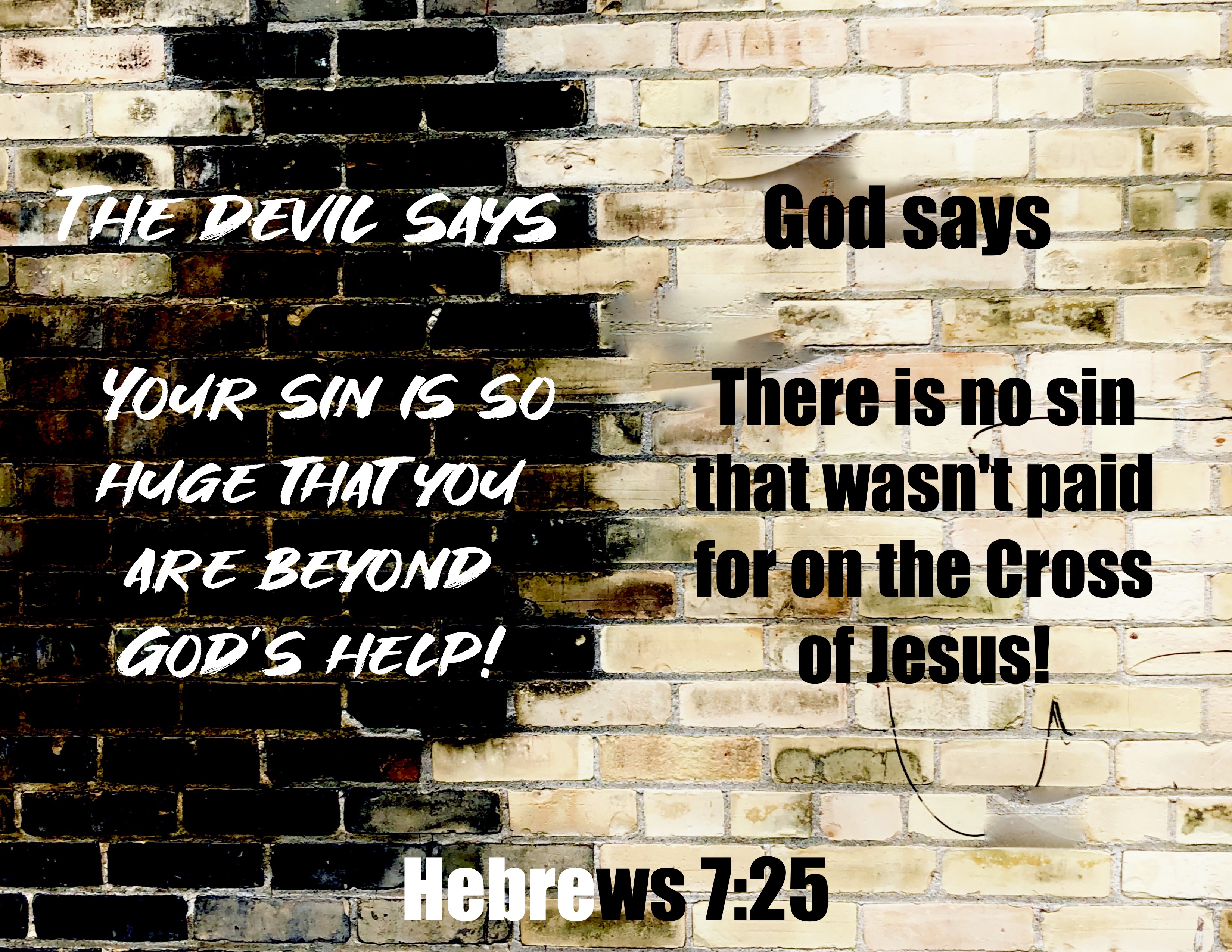
The enemy of your soul would love for you to believe his lies that you have to do something to secure your salvation, or that your most recent sin somehow made your salvation iffy, or that God is angry with you. 

THOSE ARE ALL LIES! 

Jesus didn’t make your salvation possible; He made it yours. This is what glorifies God: when you believe that the death of Jesus is all that is needed for your complete and eternal salvation! 

Jesus paid it all
All to Him I owe
Sin had left a crimson stain
He washed it white as snow

Thursdays With Spurgeon—“The Hour Has Come”

This is a weekly series with things I’m reading and pondering from Charles Spurgeon. You can read the original seed thought here, or type “Thursdays With Spurgeon” in the search box to read more entries.

“The Hour Has Come” 

After Jesus said this, He looked toward heaven and prayed: “Father, the hour has come. Glorify Your Son, that Your Son may glorify You. (John 17:1) 

     Father, the hour is come.’ This is the hour ordained in the eternal purpose. The hour prophesied of which Daniel sought to know. The hour toward which all hours had pointed. The central hour—the hour up to which man dated and from which they will date again if they read time right. The hinge, pivot, and turning point of all human history! The dark yet delivering hour! The hour of vengeance and of acceptance! ‘The hour is come.’ …  

     You and I look into the hour of darkness, as a frequent rule, and see no further, for our eyes are dim through unbelief. But [Jesus] goes on beyond the hour and His prayer is, ‘Glorify Your Son, that Your Son also may glorify You.’ He fixes His eyes upon the glory that was yet to be revealed and for joy of which He counts even His death to be but an hour—looking upon it as soon to be over and lost in the glory of His Father! 

     In all this, brothers and sisters, let us imitate our Lord and let us keep our eyes not on the present, but on the future; not on this light affliction, which is but for a moment, but on the far more exceeding and eternal weight of glory that will come of it. And let us with holy confidence, whenever our hour of darkness arrives, resort to our God in secret. The best preparation for the worst hour is prayer! The best remedy for a depressed spirit is nearness to God! 

From The Son Glorified By The Father And The Father Glorified By The Son 

Solomon became depressed when his gaze went no higher than “under the sun.” We, too, can become quite overwhelmed by our trials if our eyes only look at the present hour of darkness. 

The writer of Hebrews tells us to keep our eyes on Jesus who conquered in His hour of darkness—Fixing our eyes on Jesus, the pioneer and perfecter of faith. For the joy set before Him He endured the Cross, scorning its shame, and sat down at the right hand of the throne of God. Consider Him who endured such opposition from sinners, so that you will not grow weary and lose heart (Hebrews 12:2-3). 

No matter what you are going through, keep your eyes on Jesus. Don’t give in to the darkness because Jesus has made you more than a conqueror if you will remain in Him (Romans 8:37-39). 


Thursdays With Spurgeon—Seeds Of Revival

This is a weekly series with things I’m reading and pondering from Charles Spurgeon. You can read the original seed thought here, or type “Thursdays With Spurgeon” in the search box to read more entries.

Seeds Of Revival 

     How did Jesus Christ save souls in olden times? By the foolishness of preaching. And if you will look down through church history, you will find that, wherever there has been a great revival of religion, it has been linked with the preaching of the gospel! … Ah, my dear friends, the world will never be saved by Methodist doctors, or by Baptist doctors, or anything of the sort! But multitudes will be saved, by God’s grace, through preachers! It is the preacher to whom God has entrusted this great work! Jesus said, ‘Preach the gospel to every creature’ (Mark 16:15). 

     But men are getting tired of the divine plan. They are going to be saved by the priest, going to be saved by the music, going to be saved by the theatricals, and who knows what! Well, they may try these things as long as they like, but nothing can ever come of the whole thing but utter disappointment and confusion—God dishonored, the gospel travestied, hypocrites manufactured by thousands, and the church dragged down to the level of the world! Stand to your guns, brothers, and go on preaching and teaching nothing but the Word of God, for it still pleases God, by the foolishness of preaching, to save those who believe! And this test still stands true: ‘Jesus Christ is the same yesterday, today, and forever.’ …  

     Well, you may try to do without prayer meetings if you like, but my solemn conviction is that, as these decline, the Spirit of God will depart from you and the preaching of the gospel will be of small account. …  

     The Holy Spirit works all the good that is ever done in the world, and as the Holy Spirit honors Jesus Christ, so He puts great honor upon the Holy Spirit. If you and I try, either as a church or as individuals, to do without the Holy Spirit, God will soon do without us. Unless we reverently worship Him and believingly trust in Him, we will find that we will be like Samson when his locks were shorn. He shook himself as he had done before, but when the Philistines were upon him, he could do nothing against them. Our prayer must always be, ‘Holy Spirit, dwell with me! Holy Spirit, dwell with Your servants!’ We know that we are utterly dependent upon Him. Such is the teaching of our Master, and ‘Jesus Christ is the same yesterday, today, and forever.’

From The Unchangeable Christ 

Charles Spurgeon is exactly right. Only the gospel of Jesus Christ can change our world today. For this message to go out in all of its life-changing power requires three things: 

  1. Pastors who will preach the Word of God. Music, opinions, and theatrics will not change lives. 
  2. Prayer. Both those in the pulpit and those in the seats of the church must be praying. 
  3. Reliance on the Holy Spirit. Without the Holy Spirit’s empowerment, we won’t be effective at all. 

Do you want to see a revival? Encourage your pastor to preach well, keep on praying, and keep on asking for the Spirit’s empowerment!