Poetry Saturday—More Grace

Annie Johnson FlintHe giveth more grace when the burdens grow greater,
He sendeth more strength when the labors increase;
To added affliction He addeth His mercies,
To multiplied trials His multiplied peace.

When we have exhausted our store of endurance,
When our strength has failed ere the day is half done,
When we reach the end of our hoarded resources
Our Father’s full giving is only begun.

His love has no limit, His grace has no measure,
His power no boundary known unto men;
For out of His infinite riches in Jesus
He giveth and giveth and giveth again. —Annie Johnson Flint

Charles Spurgeon On Quiet Confidence

C.H. SpurgeonIn quietness and in confidence shall be your strength (Isaiah 30:15).

“It is always weakness to be fretting and worrying, questioning and mistrusting. What can we do if we wear ourselves to skin and bone? Can we gain anything by fearing and fuming? Do we not unfit ourselves for action and unhinge our minds for wise decision?

“We are sinking by our struggles when we might float by faith. Oh, for grace to be quiet!

“Why run from house to house to repeat the weary story which makes us more and more heart-sick as we tell it? Why even stay at home to cry out in agony because of wretched forebodings which may never be fulfilled? It would be well to keep a quiet tongue, but it would be far better if we had a quiet heart. Oh, to be still and know that Jehovah is God!

“Oh, for grace to be confident in God! The holy One of Israel must defend and deliver His own. He cannot run back from His solemn declarations. We may make sure that every word of His will stand though the mountains should depart. He deserves to be confided in; and if we would display confidence and consequent quietness, we might be as happy as the spirits before the throne.

“Come, my soul, return unto thy rest, and lean thy head upon the bosom of the Lord Jesus.” —Charles Spurgeon

John Piper On Defeating Lust

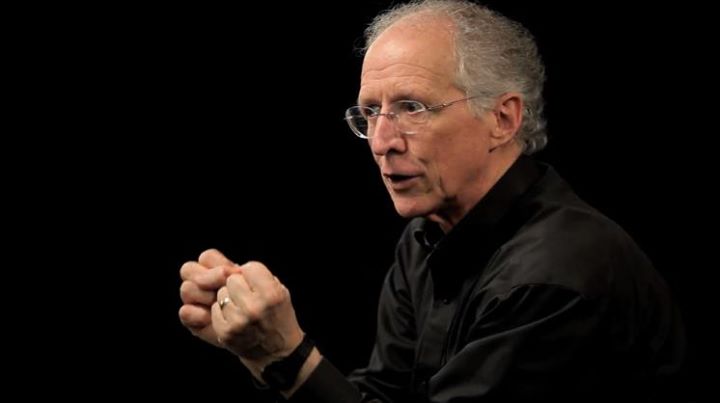
John Piper“Faith is not content with ‘fleeting pleasures.’ It is ravenous for joy. And the Word of God says, ‘In Your presence there is fullness of joy; at Your right hand are pleasures forevermore’ (Psalm 16:11). So faith will not be sidetracked into sin. It will not give up so easily in its quest for maximum joy.

“The role of God’s Word is to feed faith’s appetite for God. And, in doing this, it weans my heart away from the deceptive taste of lust.

“At first, lust begins to trick me into feeling that I would really miss out on some great satisfaction if I followed the path of purity. But then I take up the sword of the Spirit and begin to fight. …

“As I pray for my faith to be satisfied with God’s life and peace, the sword of the Spirit carves the sugar coating off the poison of lust. I see it for what it is. And by the grace of God, its alluring power is broken.” —John Piper

George Whitefield On Developing Godly Attributes

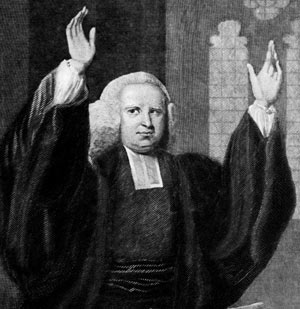
George Whitefield“The fruit of the Spirit (Galatians 5:22-23) do not automatically become evident in our lives. If we are not discerning enough to recognize their availability to us, to desire them, and then to nourish them in our thoughts, they will never become embedded in our nature or behavior. Every further step of spiritual growth in God’s grace must be preceded by acknowledging our lack of a godly attribute and then by exhibiting a prayerful determination to obtain it. …

“Today many people are attempting to use their mental capacity and logical thinking to obtain sanctification, yet this is nothing but a religious fabrication. They believe that if they just mentally put themselves on the altar and believe the altar provides the gift of sanctification, they can then logically conclude they are fully sanctified. Then they go happily on their way, expressing their flippant, theological babble about the ‘deep’ things of God.

“Yet the heartstrings of their old nature have not been broken, and their unyielding character, which they inherited from Adam, has not been ground to powder. Their soul has not throbbed with the lonely, gushing groans of Gethsemane. Having no scars from their death on Calvary, they will exhibit nothing of the soft, sweet, gentle, restful, victorious, overflowing, and triumphant life that flows like a spring morning from an empty tomb.” —George Whitefield

T.M. Moore On Using Time

T.M. Moore“We measure time, from the human perspective, in various ways—seconds, minutes, days, weeks, months, years, and so forth. But these are not true quantitative measurements of some material quantity—like a half gallon jug measures a certain amount of milk. Our measures of time are more on the order of estimates (as we think of the future), experiences (with respect to the present), and records (as we think about the time that is gone by).

“All time comes from the Word of God (John 1:1-3), is sustained by the Word of God (Hebrews 1:3), and returns—like the talents in Jesus’ parable—to its Creator and true Owner (Romans 11:34-36). There is as yet no future time, and the time we’ve used up is gone forever; we cannot return to it. Every moment of your time comes fresh from the Word of God, and returns immediately to Him for His review.

“The only time we ever have is the present moment, and each of those is supplied for us, as an act of free grace, by the eternal God and His Word.” —T.M. Moore

5 Quotes On Grace From “The Seven Laws Of Love”

The Seven Laws Of LoveIn The Seven Laws Of Love, Dave Willis gives us some highly practical, biblically-based counsel for investing in all of our relationships. Normally when I share quotes from books, I share all of them at once, but I felt like it would be good to share these quotes a bit more slowly, to give you time to read them and apply them.

The seven laws Dave identifies are:

  1. Love requires commitment (read the quotes here)
  2. Love selflessly sacrifices (read the quotes here)
  3. Love speaks truth (read the quotes here)
  4. Love conquers fear (read the quotes here)
  5. Love offers grace
  6. Love brings healing
  7. Love lives forever

From law #5, here are some quotes on grace—

“If we deserved forgiveness, it wouldn’t be called grace. If we can earn it, it wouldn’t be real love.”

“Jesus was the perfect embodiment of both love and truth. He never told a lie, but at the same time He was never cruel or judgmental with the truth. Every word He spoke was wrapped in love, so even when the truth hurt, He never broke anyone’s trust. Jesus not only modeled how to speak the truth in love, but He also showed us how to offer grace when trust is broken. … Jesus loved Peter enough to give him the opportunity to be forgiven and rebuild trust. That opportunity for grace wasn’t an exclusive offer for Peter; it’s an opportunity God freely extends to all of us who have broken trust (which is everybody). It’s also a command. We can’t receive God’s grace without being willing to extend grace to others.”

“Some people get stuck in a cycle of grudges and mistrust because they wrongly assume that forgiveness and trust are the same thing. It’s vital that we understand their distinctions. Forgiveness can’t be earned; it can only be given freely. That’s why it’s called grace. Trust, however, can’t be given freely; it can only be earned. When someone breaks your trust, you should give your forgiveness instantly, but give your trust slowly as it is earned through consistency of actions by whoever broke your trust. During this period of rebuilding, fight the urge to punish or retaliate. Those actions won’t do anything to promote healing, and healing always needs to be our ultimate objective. Love, after all, is a healing force. You don’t have to trust someone in order to forgive, but you do have to forgive someone in order to make trust possible again.”

“When you’ve broken trust, you must be willing to take immediate action to rebuild it. When someone has broken your trust, you must be willing to provide that person the opportunity to rebuild. Giving someone the chance to reestablish trust is one of the most loving acts you can do for someone.”

“Our responses to present difficulties will often determine our level of future opportunities.”

Check out my review of The Seven Laws Of Love by clicking here.

Watch for the last few quotes from the other laws of love over the next couple of days.

Week Of Prayer—Wednesday

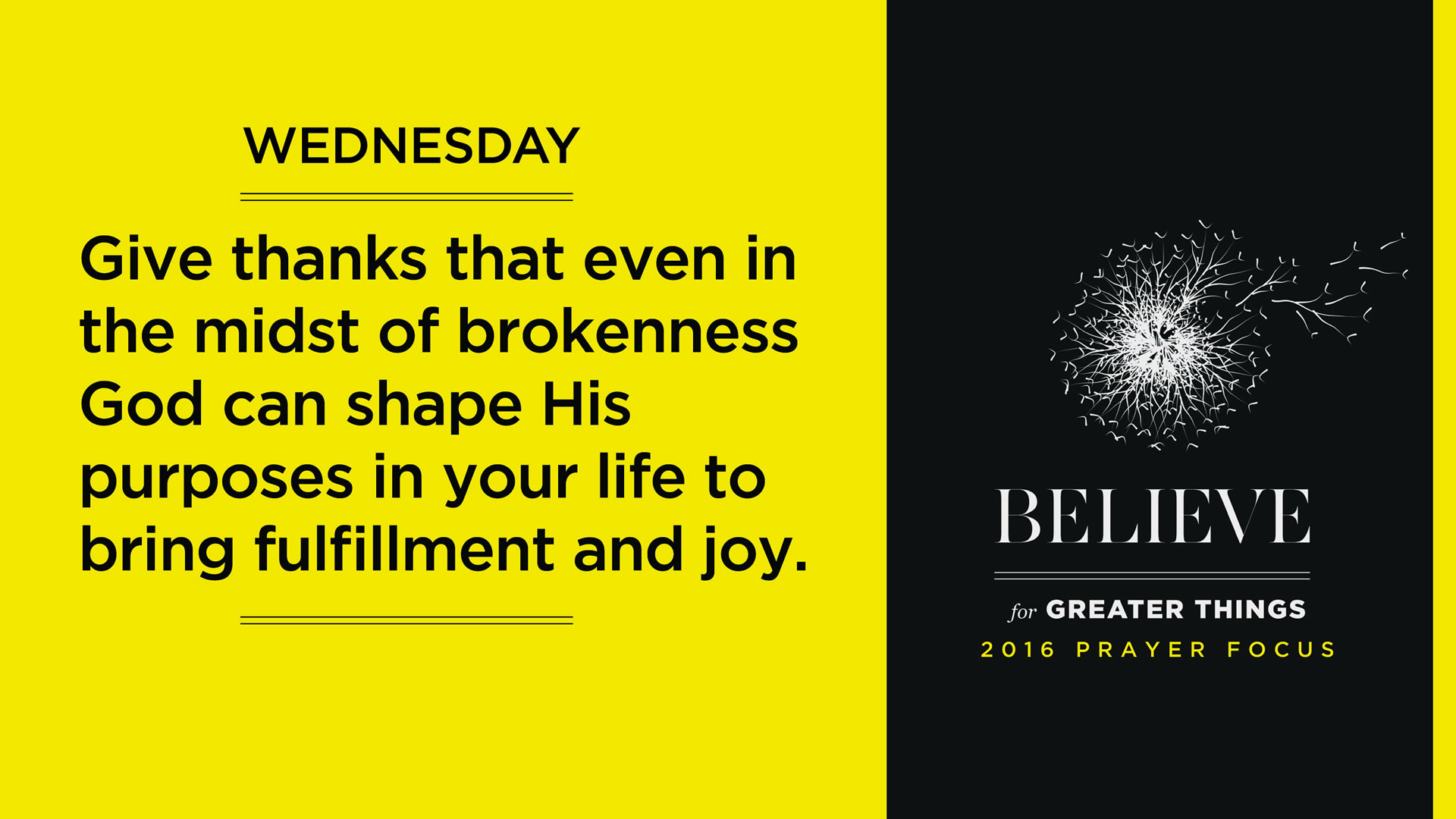
WOP_2016_Slide_WedOur week of prayer continues today with this prayer focus—

Give thanks that even in the midst of brokenness God can shape His purposes in your life to bring fulfillment and joy.

All week long we’ve been praying God’s Word for each of these prayer points. Today, perhaps you could pray something like this:

Heavenly Father, I know that in everything that is happening to me, You are working circumstances for the good. I know that You love me, and that You have a distinct purpose for my life [Romans 8:28]

Sometimes, in order to keep me from becoming too reliant on my own abilities, You send “a thorn in the flesh” to me. But even in the midst of that You say to me, “My grace is sufficient for you, for My power is made perfect in your weakness.” Therefore I will boast about my weaknesses, so that Christ’s power may rest on me. That is why, for Christ’s sake, I delight in my weaknesses, in insults hurled at me, in all my hardships, in my persecutions, in my difficulties. For when I am weak in my own ability, then I am strong in You [2 Corinthians 12:7-10]

Even though this is a difficult time for me, I still rejoice in what You are going to accomplish in my life. I pray this Jesus’ name, Amen.

7 Quotes From “Abolishing Abortion” For The Church

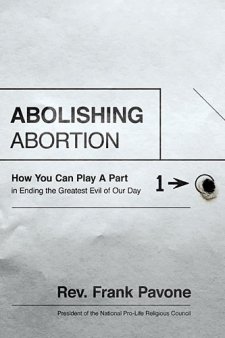
Abolishing AbortionFather Frank Pavone writes persuasively and passionately about the role all of us can play in abolishing abortion throughout the world. One group that definitely needs to step to the forefront of this battle is the Church! Here are some quotes from Father Pavone specifically talking to Christians.

“People need to know that to oppose abortion does not mean to oppose those who have had one. … The Church has the perfect spiritual and psychological balance necessary for those who have been involved in an abortion. The last thing such a person needs to hear is, ‘What you did is no big deal.’ The nature of post-abortion grief is that the individual involved in the abortion has begun to realize precisely what a big deal it was. Now this person needs someone to tell her that she should not feel silly for feeling sad, that there is indeed reason for the grief in her heart, and that what her heart is telling her is true: her child was killed. A great disservice was done both to her and her child when someone convinced her that the abortion would be ‘no big deal.’ Accepting that line was a major act of denial. Healing can begin when she breaks out of denial and calls the evil what it is. … At the same time, the other line she does not need to here is, ‘You are rejected; there is no hope.’ As she realizes the evil that has occurred, she will be tempted to say this to herself. The Church, however, contradicts that despair with the clear message of forgiveness.” 

“Those in the pain of abortion are not helped by silence. Some pastors refrain from preaching about abortion out of the sincere desire to not hurt women who have had abortions. Yet that silence does not interpret itself. The person grieving over abortion can infer from our silence that we do not know her pain, or that we do not care, or that there is no hope. None of this is true. With clear and compassionate messages, pastors can break through the silence that led to a woman to this disastrous choice in the first place.”

“Those who attend church regularly are statistically the most likely to be pro-life and the most likely to be pro-life activists. Within America’s Christian churches there are people enough and resources enough to end abortion, armed as the pro-life movement is with the supernatural gifts of truth and grace. It is clear that the full activation of the Church is a critical step for ending abortion. This does not primarily mean creating new structures. It simply means infusing the existing structure with greater vigor and effectiveness.”

“The pro-life movement is not primarily a response to Roe v. Wade. It is a response to Jesus Christ. His teachings not only show us why we are to be pro-life but also show us how. They give us the virtues we need to have in doing this work.”

“The Church is the only institution that has a divine guarantee that it will prevail over the culture of death. ‘The gates of hell shall not prevail against it,’ the Lord Himself said (Matthew 16:18 KJV). Now, gates do not run out on the battlefield to attack the enemy. Rather, they stand still and defend the city against the enemy attacking it. To say that the gates of hell will not prevail against the Church is to say that it is the Church that takes the offense and storms the gates of hell to win ground for Jesus Christ. Gates of hell cannot withstand the power of heaven. The gates of death fall in the presence of eternal life. Sin melts in the presence of saving grace. Falsehood collapses in the presence of living truth. These are the tools with which Christ has equipped His Church.”

“Love is found on Calvary. Love’s best symbol is not the heart but the Cross. … What Christ revealed to the world through the Cross about the meaning of love, we must also reveal through our own sacrifice for those we love.”

“Abortion is the exact opposite of love. Loves says, ‘I sacrifice myself for the good of the other person.’ Abortion says, ‘I sacrifice the other person for the good of myself.’ And isn’t it amazing that the very same words used by the culture of death to justify abortion are the words used by our Lord to proclaim life and salvation and love: ‘This is My body!’ … ‘This is My body,’ Jesus said, ‘given for you’ (see Luke 22). He did not cling to His body so that we would die but rather gave it away so that we could live. These are the words that define our mission in the world: spouse saying to spouse, parents saying to children, clergy saying to their congregation, all of us saying to our brothers and sisters, ‘This is my body, my time, my efforts, my resources, my life—given for you, that you may live!’”

I have shared other quotes from Abolishing Abortion which you can read here and here.

And be sure to check out my book review of Abolishing Abortion here.

Links & Quotes

link quote

“That which astonishes, astonishes once; but whatever is admirable become more and more admired.” —Joseph Joubert

“Adoption is an act of God’s free grace, whereby we are received into the number, and have a right to all the privileges of the sons of God.” —Westminster Confession

“Adversity is the first path to trust.” —Lord Byron

“Adversity makes men, and prosperity makes monsters.” —Victor Hugo

“God’s corrections are our instructions; His lashes our lessons, and His scourges our schoolmasters.” —John H. Aughey

“Am I getting nobler, better, more helpful, more humble, as I get older? Am I exhibiting the life that men take knowledge of as having been with Jesus, or am I getting more self-assertive, more deliberately determined to have my own way? It is a great thing to tell yourself the truth.” —Oswald Chambers

“Press into God’s promises. When fears surface, respond with this thought: But God said … And when doubts arise, but God said… And when guilt overwhelms you, but God said…  Search the Scriptures like a miner digging for gold and trust the promises you find.” —Max Lucado

John Hendryx points out several similarities between Islamic and secular fundamentalism.

Josh McDowell reminds us that just teaching someone biblical truth is not enough.

If you would like to check out some devotional readings for Advent, click here.

The importance of belief in God for Issac Newton’s scientific discoveries.

[VIDEO] One of the most beautiful arrangements of Amazing Grace I’ve heard—

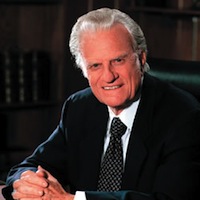
6 Quotes From Billy Graham On Faith

BillyGrahamI recently read The Quotable Billy Graham (you can read my book review here), and I was struck by how relevant his words are, even 50 years after they were spoken. Here are a few quotes on faith.

“I wonder if the church has not failed this generation of young people by failing to make the Christian faith the thrilling, joyful, triumphant experience that it really is.”

“You best demonstrate your faith in a bank by putting your money in it. You best show your faith in the doctor by trusting him in times of illness. You best prove your faith in a boat by getting aboard. You best demonstrate your faith in Christ by trusting Him with your life and receiving Him unconditionally as your Savior.”

“One of the differences I have with some theologians is that they try to reduce the whole content of the Christian faith to an intellectual gymnastic exercise. Christianity cannot be reduced to reason alone.”

“We are rich in the things that perish, but poor and the things of the spirit. We are rich in gadgets, but poor in faith. We are rich in goods, but poor in grace. We are rich in know-how, but poor in character. We are rich in words, but poor in deeds.”

“If you are a Christian, there is no excuse for not having daily victory in your life by renouncing sin and by faith letting the Spirit of God have control of your life.”

“Whenever anyone asks me how I can be so certain about who and what God really is, I am reminded of the story of the little boy who was out flying a kite. It was a very fine day for kite flying, the wind was brisk and large billowy clouds were blowing across the sky. The kite went up and up until it was entirely hidden by the clouds.
‘What are you doing?’ a man asked the little boy.
‘I’m flying a kite,’ he replied.
‘Flying a kite, are you?’ the man said. ‘How can you be sure? You can’t see your kite.’
‘No,’ said the boy, ‘I can’t see it, but every little while I feel a tug, so I know for sure that it’s there!’
“Don’t take anyone else’s word for God. Find Him for yourself, and then you too will know by the wonderful, warm tug on your heartstrings that He is there for sure.”