Do Not Judge?

Listen to the podcast of this post by clicking on the player below, and you can also subscribe on AppleSpotify, or Audible. 

As we learned last week, we are not the judge, nor the jury, nor the prosecution, nor even the sin police in deciding appropriate retribution. With that in mind, let’s consider Statement #15 in our series—Do not judge. Is that in the Bible? 

Yes, those three words are there, spoken by Jesus, in Matthew 7:1. But then again, we need to say, no, because these words don’t mean we are not to make determination about the rightness or wrongness of something. 

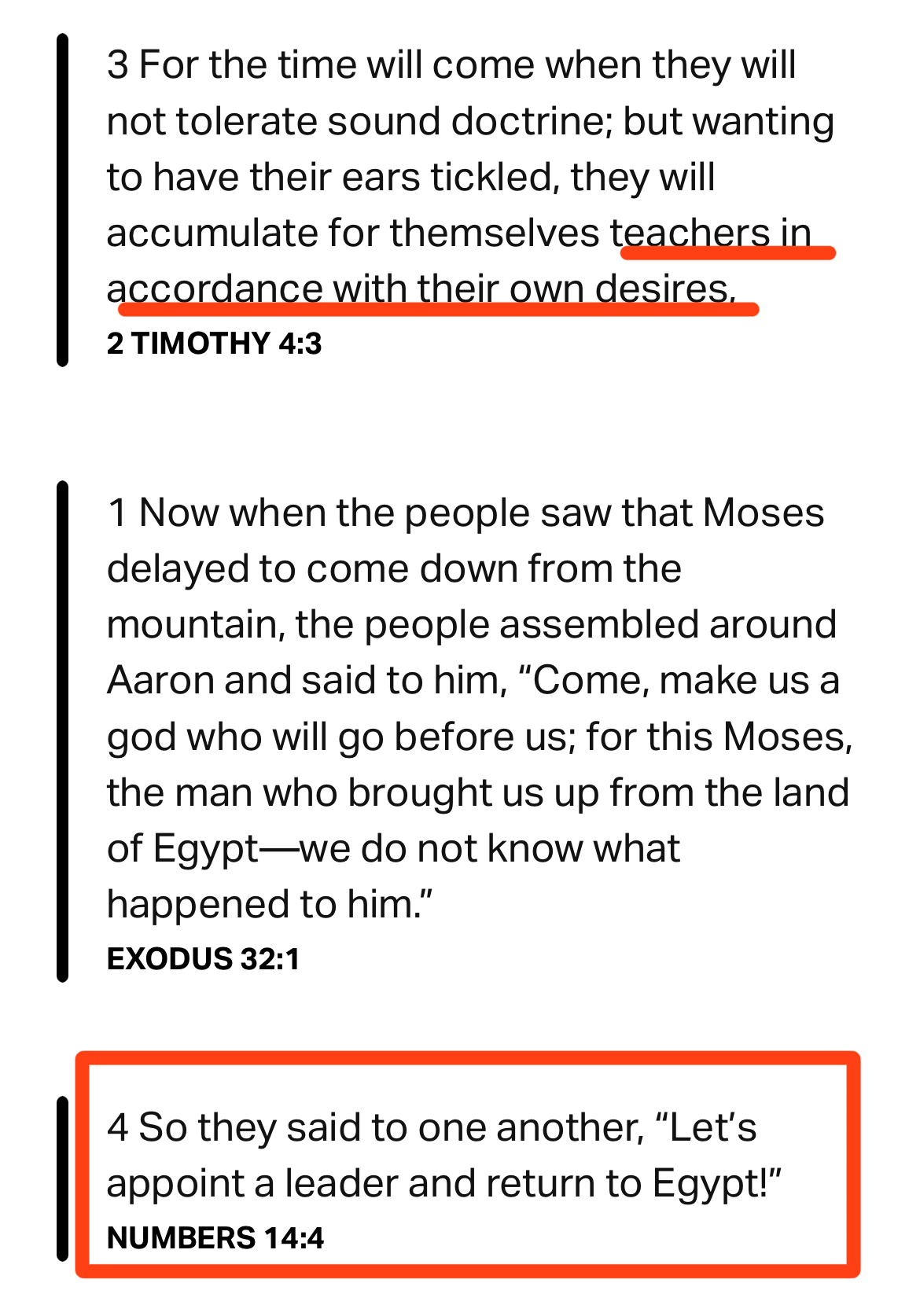
(Check out all of the Scriptures in this post by clicking here.)

Let’s zoom-out a bit get the context of the words Jesus spoke. Who was His audience for these words? This is a part of the Sermon on the Mount (Matthew 5–7). Notice in the opening words, “His disciples came to Him, and He began to teach them” (5:1-2). So Jesus isn’t speaking to the world at-large, but He is talking with His disciples. 

Jesus was very specific in His wording. In talking about the world, He uses words like people (5:11) or men (5:16; 6:1, 5). When talking about His disciples, He uses one word quite frequently: brother (3x in 5:22-24). 

Matthew 7:1 is still in this sermon, and the word brother appears 3x in vv. 3-5. So these are instructions primarily for Christians to use with other Christian brothers and sisters. 

The words judge here in the Greek means, “Those who judge severely (unfairly), finding fault with this or that in others.” To me, “this or that” sounds like a deliberate searching for something wrong, but Jesus assures us that this will boomerang on the judgmental person (v. 2; Luke 6:37). 

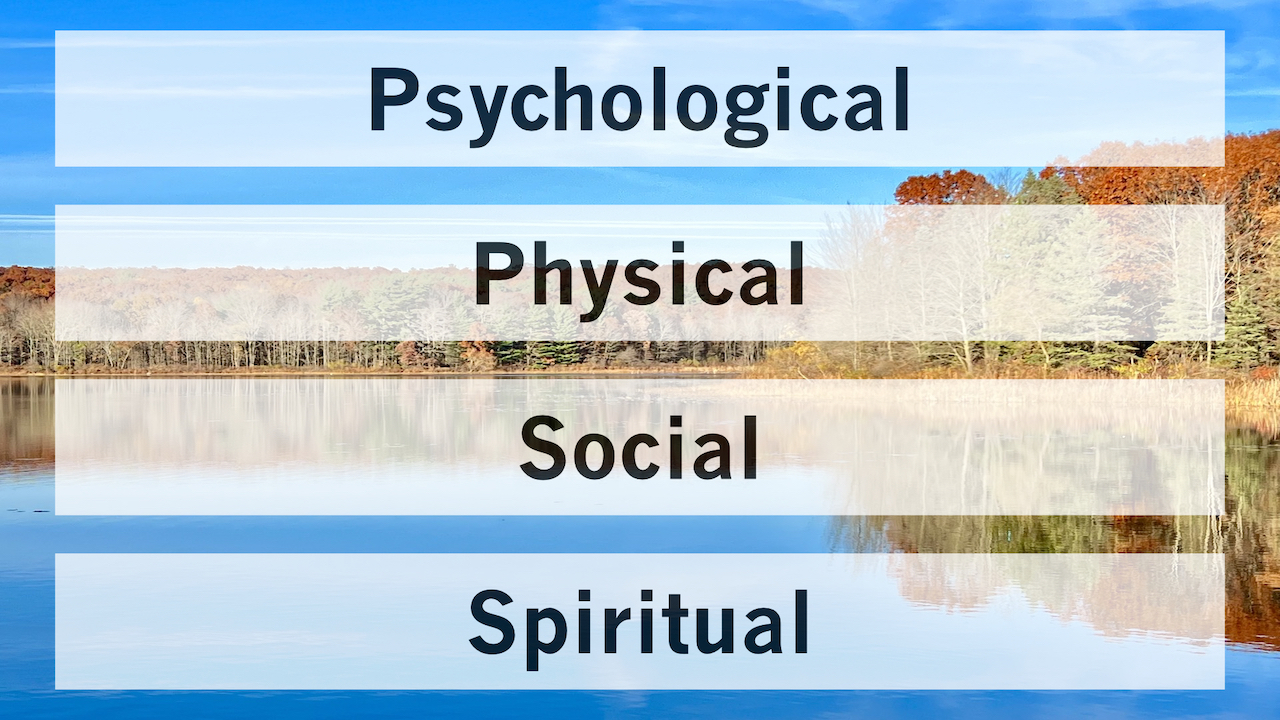
In modern psychology, we find terms like:  

  • mirroring = a psychological term the means quickly seeing what’s in others because it’s in me 
  • projection = taking the negative things in me and projecting them onto others

Paul addresses both of these thoughts in Romans 2:1-3, where the word for judging here is the same Greek word Jesus uses in Matthew 7.

Paul concludes his remarks by reminding us that God treats us kindly (Romans 2:4). David echos this same thought in Psalm 103:8-10, 13-14. 

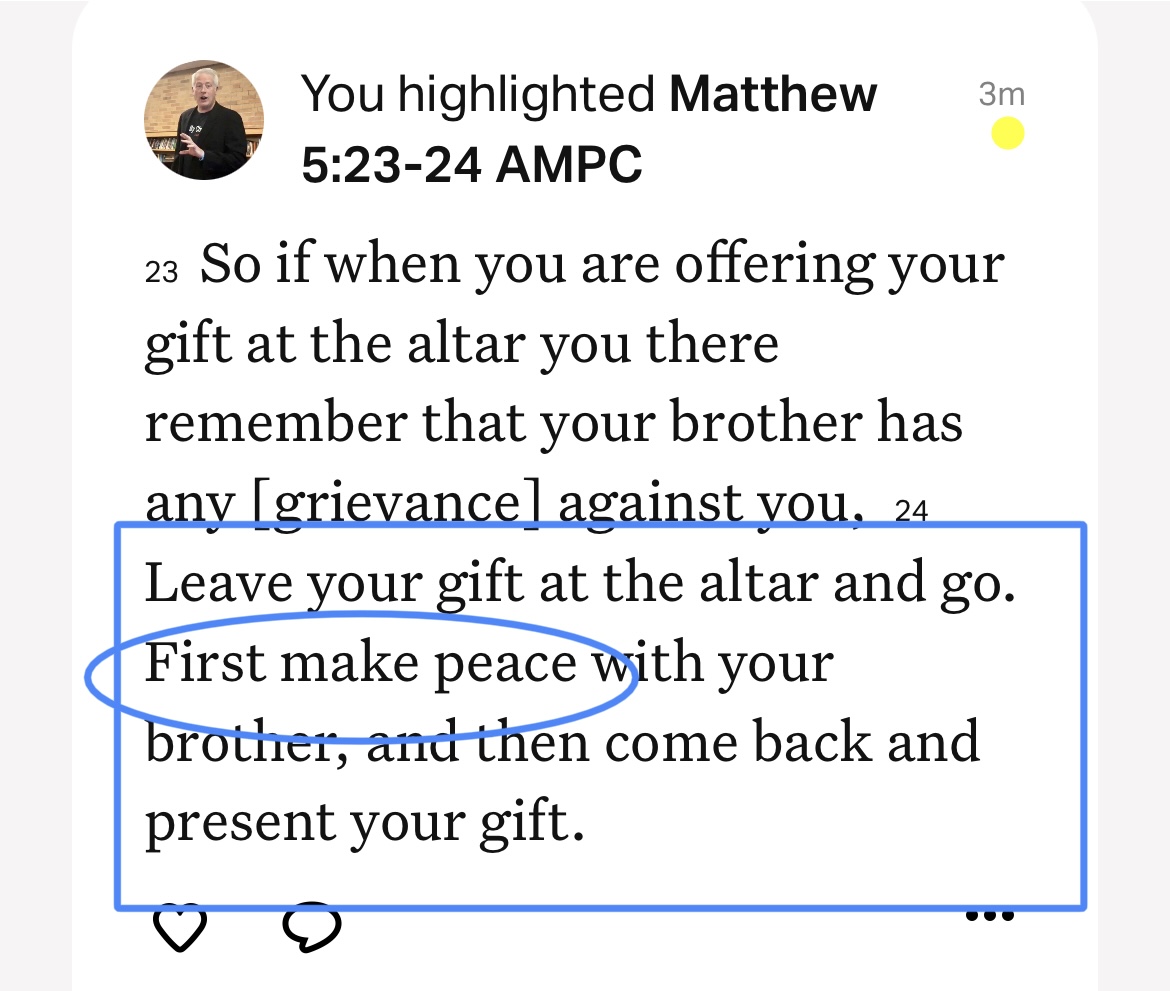
When you read the whole passage in Matthew 7:1-5, please notice the words “brother,”  “first,” and “then.”  

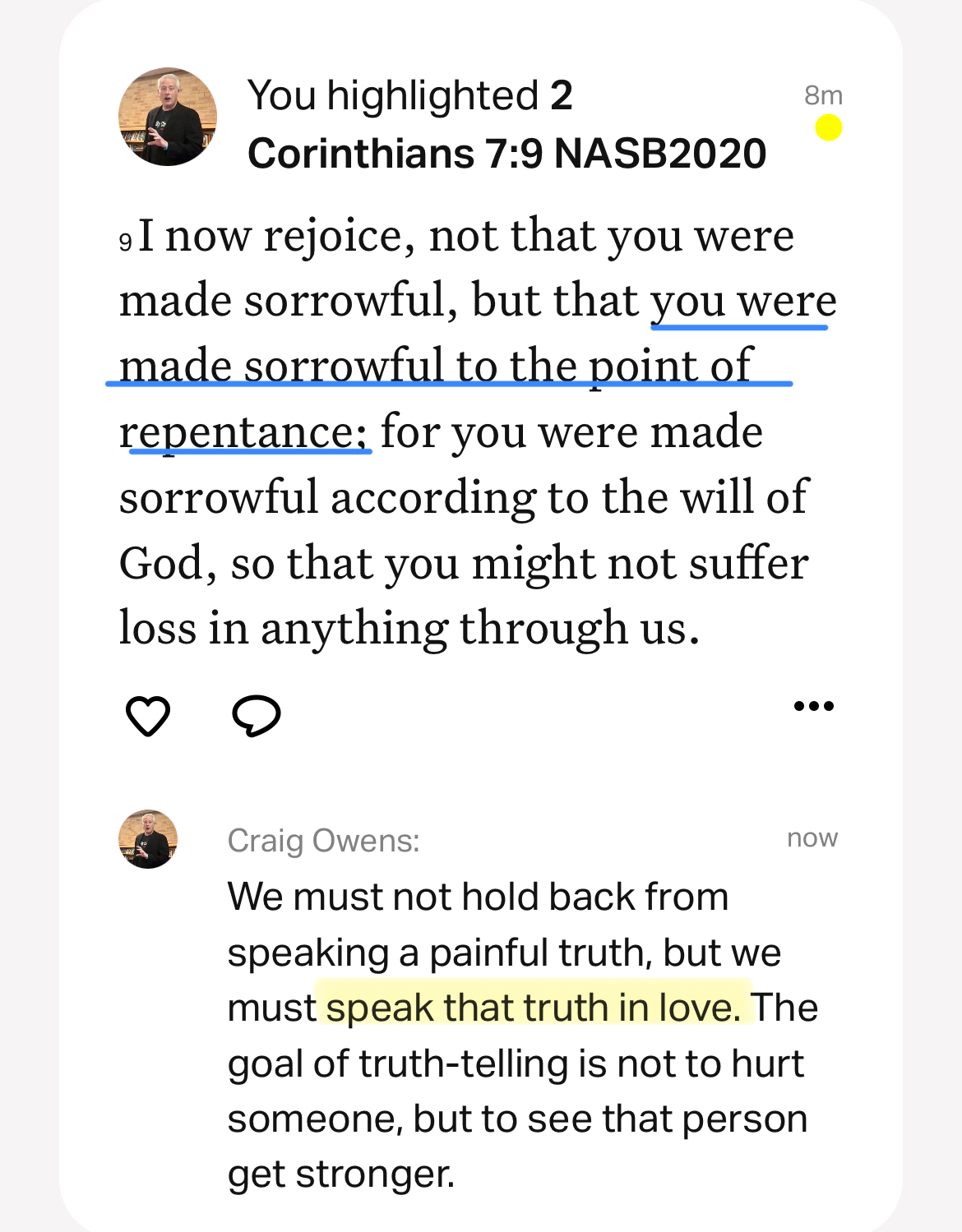
Jesus does not mean that I am not to point out to my brothers and sisters any areas of concern. Jesus did this, as well as nearly every epistle writer. What it does mean is that correction needs to be gentle and never condemning. In other words, I want to lovingly help someone before they have to stand before The Judge. 

That’s why I need to first humbly recognize that what I see in others may be apparent to me because I am afflicted with the same thing. That’s why Jesus says first deal with my own plank. Examine myself  before I try to correct a brother or sister (1 Corinthians 11:28; 2 Corinthians 13:5). 

After I have allowed the Holy Spirit to deal with my plank, I will then have the empathy to help my brother or sister (2 Corinthians 1:3-4). Trying to get someone else to repent of something that still exists in my life is hypocritical. 

If I see something wrong in someone else:

  1. First ask the Holy Spirit to search me. 
  2. If necessary, confess it, repent from it, ask forgiveness, make things right. 
  3. Then lovingly and humbly share with your brother or sister (Ephesians 4:15). 

If someone else sees something wrong in me, I should follow the exact same steps! 

This is not easy, but it is vital for the Body of Christ to grow in a healthy way. 

If you’ve missed any of the other messages in this installment of our series Is That In The Bible?, you can find them all here. 

►► Would you please prayerfully consider supporting this ministry? My Patreon supporters get behind-the-scenes access to exclusive materials. ◀︎◀︎
The Hour, The Power, And The Procedure

Listen to the podcast of this post by clicking on the player below, and you can also subscribe on AppleSpotify, or Audible. 

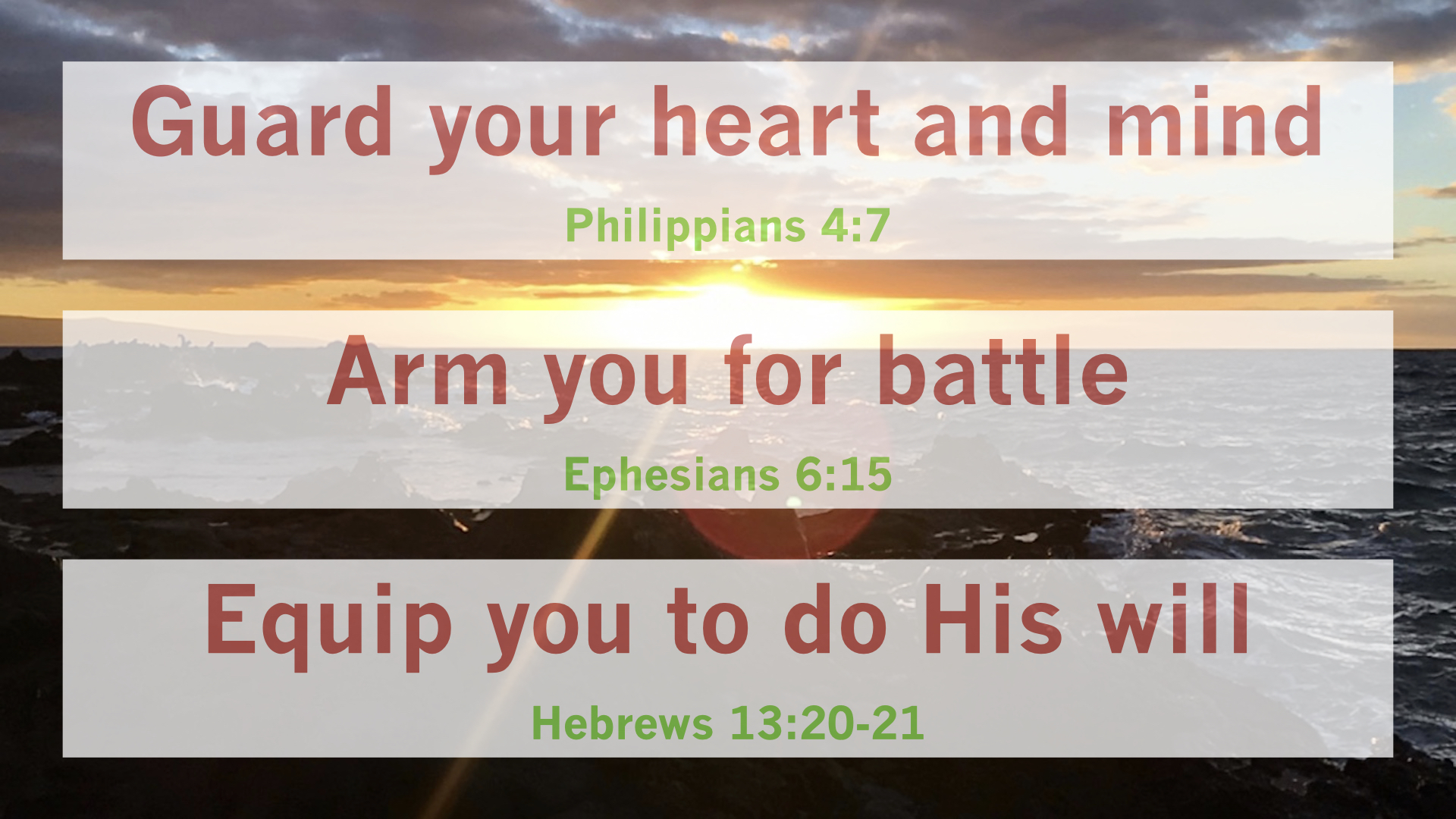
If you’re going through a dark time in your life right now, I’ve got a word of encouragement for you. Well, actually three words of encouragement!

Check out this episode of The Podcast. 

Here are the Scriptures I reference in this video—John 13:1-5, 18:4-11; Matthew 26:51-54; John 17:11-12; Psalm 23:4 

You may also want to check out a couple of related blog posts:

My book When Sheep Bite is for pastors who are going through challenging times in their ministries.

►► Would you please prayerfully consider supporting this ministry? My Patreon supporters get behind-the-scenes access to exclusive materials. ◀︎◀︎
An Eye For An Eye

Listen to the podcast of this post by clicking on the player below, and you can also subscribe on AppleSpotify, or Audible. 

We have to be very attentive when we hear anyone say something that they claim is a word from God. The first question we need to ask is, “Is that in the Bible?” If it is, then the next question is, “Is that statement being used in its proper context—does it conform with the whole counsel of God’s Word?” 

So here is statement #14 in our series—An eye for an eye, and a tooth for a tooth. Is that in the Bible? Yes.  

This first shows up in Exodus 21:24, and it is a part of the legal code God gave through Moses (Exodus 21:1). This code was entrusted to capable men (i.e. judges) in Exodus 18:19-22, 25. 

(Check out all of the Scriptures I reference in this post here.) 

This has been referred to as “the law of exact retribution.” Later on the Romans would name it lex talionis—the law of the tooth. This was to prevent one-upmanship or escalating retaliation, and it also applied to false witnesses who were trying to get someone else in trouble (Deuteronomy 19:15-21). 

By the time of Jesus, this legal maxim was so well known that when Jesus quoted it to His audience, everyone knew what it meant (Matthew 5:38). 

One of the most innate responses that we humans have to threats or to an attack is fight-or-flight. 

In this case, flight would be sweeping it under the run or pretending it didn’t happen. But it did happen, and there is a sense of justice in us that wants to see retribution. If this offense isn’t acknowledged and dealt with appropriately, the desire for retribution will allow unforgiveness to fester. This shows up in all sort of negative ways—physically and emotionally—and often there is a breaking point where the injured party lashes out. 

Fight would be taking the law into our own hands. I want everyone to know that I was wronged by you, and I want you to suffer more than you made me suffer. But the first time this law is given, God calls for precise compensation (Exodus 21:22-25). 

God’s means for carrying our the lex talionis today is exactly the same—a legal code administered by trained judges (Romans 13:1-4). 

This is the law of the land—the natural law—but Jesus calls on us to respond supernaturally. Not to be the judge or jury, but to remember that God perfectly judges and vindicates (Luke 8:17; Deuteronomy 32:35). 

Jesus continually calls us forego the natural reaction for the supernatural response. Notice the repeated pattern of, “You have heard that it was said” and then, “But I tell you…” in Matthew 5:21-22, 27-28, 31-32, 33-37, 43-44 and specifically vv. 38-42. 

If our eyes are on the one who injured us, our eyes are off of the only One who can vindicate and heal us (Romans 12:17-21). 

Natural people merely react out of innate instinct. Supernatural people are able to respond with Christlike love. 

Don’t give in to the merely natural reaction, but submit to the Holy Spirit who can help you respond supernaturally. 

Check out all of the other topics we have covered in our “Is that in the Bible?” series. 

►► Would you please prayerfully consider supporting this ministry? My Patreon supporters get behind-the-scenes access to exclusive materials. ◀︎◀︎
The Serenity Prayer

Listen to the podcast of this post by clicking on the player below, and you can also subscribe on AppleSpotify, or Audible. 

I am a big fan of Alcoholics Anonymous (AA). They are founded on biblical principles. I would paraphrase two of the most important ones as: (1) We need a Savior to set us free and (2) We need friends to lean on. James 5:16 says this as succinctly as any verse: “Therefore confess your sins to each other and pray for each other so that you may be healed. The prayer of a righteous person is powerful and effective.” 

(Check out all of the Scriptures in this blog post by clicking here.) 

AA says: “Often times, a person with substance use disorder may have a need for control that can prevent them from achieving peace of mind. They may feel frustrated that they cannot control the actions of other people and turn to substances like alcohol to control their feelings, even though the control that alcohol provides is a farce. The Serenity Prayer is a gentle reminder that letting go and accepting a loss of control can help put an end to the substance abuse cycle.” 

In light of our series called Is That in the Bible? let’s ask, is the serenity prayer in the Bible. 

No, it’s not, but still there are some very important principles we shouldn’t miss from this prayer. 

The full prayer is—

God grant me the serenity to accept the things I cannot change; courage to change the things I can; and wisdom to know the difference. 
Living one day at a time; enjoying one moment at a time; accepting hardships as the pathway to peace;
Taking, as He did, this sinful world as it is, not as I would have it; trusting that He will make all things right if I surrender to His will;
That I may be reasonably happy in this life and supremely happy with Him forever and ever in the next. Amen.


Should Christians pray a prayer like this? Biblically, there is nothing wrong with Christians praying prayers that have been written by men or women, provided that they don’t contradict the words God has spoken to us. 

Remember James 5:16 that we looked at earlier? The Personalized Promise Bible has a prayer for that verse: 

If I have stumbled in any way, I do not need to fret over it—I can rest in full confidence that the Lord loves me and forgives all of my shortcomings. I also know that sin is a hindrance to my healing. Therefore, if there is any sin in my life I repent of it. I confess my sins to trusted brothers and sisters in Christ, gaining strength and praying in agreement with them so that I will be healed. 

And then they cross-reference about 10 more biblical passages that support this prayer—Psalm 103:1-5; Isaiah 53:4-5; 1 Peter 2:24; Matthew 9:22, 29; 18:19, 20; Mark 11:22-26; 16:18; Hebrews 12:1-3; Galatians 6:1-2. 

In a similar fashion, I see several passages of Scripture that are woven into the serenity prayer. 

“God grant me the serenity to accept the things I cannot change; courage to change the things I can; and wisdom to know the difference.” Proverbs 1:2-3 describes the help God’s wisdom gives us for daily living. 

“Living one day at a time; enjoying one moment at a time.” Jesus taught us to pray each day for our daily bread (Matthew 6:8, 11). 

“Accepting hardships as the pathway to peace.” Jesus also taught us to pray, “Your will be done on earth as it is in Heaven” (Matthew 6:10), and He also prayed a very similar prayer Himself when He was in the Garden of Gethsemane, “Yet not as I will, but as You will” (Matthew 26:39). 

“Taking, as He did, this sinful world as it is, not as I would have it; trusting that He will make all things right if I surrender to His will.” Jesus promised us both trouble in this world and His overcoming power to stand strong in that trouble (John 16:33). 

“That I may be reasonably happy in this life and supremely happy with Him forever and ever in the next. Amen.” Jesus promises eternal rewards that vastly outweigh the trouble we may face in this life (Luke 12:32; Matthew 25:21, 34). 

The bottom line: The Bible is not just a Book to read through but a Book to pray through. ALL Scripture is for ALL servants of God. ALL Scripture is applicable to ALL the circumstances we will ever face in life.  

If something like the serenity prayer—or any other man-made prayer—is based on Scripture and helps give voice to your prayers, use them! But use them as guides to help you begin to form your own prayers from biblical passages you are reading for yourself.

Check out some of the other topics we have covered in this Is That in the Bible? series here.  

►► Would you please prayerfully consider supporting this ministry? My Patreon supporters get behind-the-scenes access to exclusive materials. ◀︎◀︎
Testing In Love

Listen to the podcast of this post by clicking on the player below, and you can also subscribe on AppleSpotify, or Audible. 

God wants us to progress to the next level in our Christian walk, but we need to know what we’re ready for that. Just as a teacher in school prepares us for a test, administers the test, and then gives us the result of the test in order to promote us to the next level, so does our loving Heavenly Father. 

This clip is from a message called Prepared to Pass the Test. All of the messages in this series were an in-depth look at the model prayer Jesus taught us to pray in Matthew 6:9-13. 

►► Would you please prayerfully consider supporting this ministry? My Patreon supporters get behind-the-scenes access to exclusive materials. ◀︎◀︎

Persecution From Religious Leaders

Listen to the podcast of this post by clicking on the player below, and you can also subscribe on AppleSpotify, or Audible. 

The religious leaders who should have known God’s Word the best were the ones who wanted Jeremiah killed for speaking God’s Word boldly. 

     The priests and the prophets and all the people heard Jeremiah speaking these words in the house of the Lord. Yet when Jeremiah finished speaking everything that the Lord had commanded him to speak to all the people, then the priests and the prophets and all the people seized him, saying, “You must die!” … Then the priests and the prophets spoke to the officials and to all the people, saying, “A death sentence for this man! For he has prophesied against this city, just as you have heard with your own ears!” (Jeremiah 26:7-8, 11) 

They did this to Jesus. The religious leaders shouted louder and louder, “Crucify Him!” 

They will do this to me. Jesus said, “Blessed are you when people insult you, persecute you and falsely say all kinds of evil against you because of Me. Rejoice and be glad, because great is your reward in heaven, for in the same way they persecuted the prophets who were before you” (Matthew 5:11-12). And He said, “Be on your guard; you will be handed over to the local councils and be flogged in the synagogues. On My account you will be brought before governors and kings as witnesses to them and to the Gentiles” (Matthew 10:17-18). 

When—not if—this persecution comes, I want to be able to stand before the religious and civil leaders of my time and be able to hear what Jesus heard from Pontius Pilate: “I find no basis for a charge against this Man” (John 18:38; 19:4, 6). 

Holy Spirit, help me to speak only what You tell me to speak and do only what You tell me to do (Matthew 10:19-20). Help me to respond quickly to any wrong thinking, speaking, or action that You point out so that I may just as quickly repent of that. I want my life to point others to Jesus, even as I face persecution. 

(I discuss the persecution flowchart above in more detail in this post.) 

►► Would you please prayerfully consider supporting this ministry? My Patreon supporters get behind-the-scenes access to exclusive materials. ◀︎◀︎
Don’t Stumble In The Homestretch

Listen to the podcast of this post by clicking on the player below, and you can also subscribe on AppleSpotify, or Audible. 

We’re up to Psalm 131. After this step, only three more steps to go until we reach the top! We’re almost there. We started in a dark valley surrounded by enemies that wanted to keep us in the valley, but we persevered, we matured, and now the end it almost in sight! 

Notice that David wrote this Song of Ascent, and I think he may have had a particular instance from his history in mind when he did. 

(Check out all of the verses in this post by clicking here.)

At the height of David’s success, the Bible says that, “David knew that the LORD had established him as king over Israel and that his kingdom had been highly exalted for the sake of His people Israel” (1 Chronicles 14:2). So David used his position to do something very noble: return the ark of the covenant of the Lord to Jerusalem. This was a popular decision that “seemed right to all the people” (13:3). 

But it turned out disastrously! 

One of the priests overseeing the transportation of the ark of the covenant was killed, and as a result David became angry at God and fearful of Him. 

After a cooling off time, David humbled himself. He admitted that he hadn’t “inquired of the Lord” before undertaking this task and then he looked to the Scriptures to find out how to move the ark the correct way (15:12-15). 

It’s quite possible David had this incident in mind when he wrote the Song of Ascent for people coming to worship God in the temple where the ark of the covenant of the Lord would be housed. 

The opening words sound the tone of humility—“my heart is not proud” and “my eyes are not haughty.” I think in the context of this opening verse of Psalm 131, pride can be defined as:

  1. trying to handle things on my own 
  2. concerning myself with things outside my control 

That means that humility is trusting that God is in total control. 

Verse 2 starts with an important word: But. Instead of the fretting of pride, David chooses the trusting of childlike humility. David says that he has “stilled and quieted my soul.” He has chosen childlike humility. 

This is exactly what Jesus told us: “Truly I tell you, unless you change and become like little children, you will never enter the kingdom of heaven.Therefore, whoever takes the lowly position of this child is the greatest in the kingdom of heaven” (Matthew 18:3-4). 

Just look at the differences between childlike and childish! 

The consistent message throughout Scripture—from Creation in Genesis 1 until the realization of our eternal reward in Heaven in Revelation 22—is childlike trust in our Heavenly Father. 

We can trust God to handle…

  • …every care—1 Peter 5:7 
  • …every step—Proverbs 3:5-6 
  • …every reward—Luke 12:32 

Don’t let pride cause you to stumble in the homestretch. The closer we get to the end of the journey, the more childlike we should become. 

If you’ve missed any of the other messages on the Songs of Ascent, you can find them all here. 

►► Would you please prayerfully consider supporting this ministry? My Patreon supporters get behind-the-scenes access to exclusive materials. ◀︎◀︎

Consistency

In my Bible reading plan that is taking me through the whole Bible in chronological order in a year, I’ve been in the Book of Isaiah for the past few days. 

Something stood out to me quite clearly the other day as I highlighted several verses from Isaiah and was reminded of their complementary verses scattered throughout the New Testament. Always remember—

The Old Testament and the New Testament fit together. They enhance each other and show a complete picture that we would miss if we cling to only one of the Testaments. 

Here’s just three quick examples I saw in one day’s reading:

Don’t just read the Bible—meditate on the words God has spoken to you and apply them to your life.

Still Maturing

Listen to the podcast of this post by clicking on the player below, and you can also subscribe on AppleSpotify, or Audible. 

Have you ever said to yourself… 

  • …I should have known better?  
  • …why I am going through this again?  
  • …I thought I was over this hurdle? 
  • …you would think I would have matured enough by now to not have to deal with this?  

Maybe the author of Psalm 129 felt this way: “Here I am on the 10th step and I’m still having to deal with this! When will I finally arrive at the top and be done with these issues?” (compare Psalm 129:1-2 with 124:1-5). 

(Check out all of the Scriptures I use in this post by clicking here.) 

I think those statements—“I should have known better” or “I thought I was over this”—pre-suppose that we will reach a point in our life where we “arrive.” If nothing else, this psalm is a reminder that we are still on the journey, that we are still a work-in-progress, that the saint-ification process is still ongoing. It’s clear from Scripture that we never “arrive” until we arrive in Heaven and hear our Master say, “Well done, good and faithful servant.” 

While we are ascending up toward our heavenly home, these great oppressions and plowings remind us that there is still work to be done in us and through us to bring glory to God (Romans 5:3-4; James 1:2-4, 12). 

Of his Soviet prison, Alexander Solzhenitsyn said, “I bless you, prison—I bless you for being in my life—for there lying on rotting prison straw, I learned the object of life is not prospering as I had grown up believing, but the maturing of the soul.” 

The reality is God is using all of those things for my good and for His glory (Romans 8:28). 

What happens as I am oppressed and plowed? 

(1) I am refined—Psalm 66:8-12, 16-20. God is removing the impurities from my life. 

(2) My prayers are matured. Psalm 129:5-8 is an imprecatory prayer, a prayer that says, “Get ‘em, God!” These have their place, but for us they are to be our emergency release valve (which I discuss in more depth in my book When Sheep Bite). But Jesus calls for our prayers to mature from imprecatory to intercessory (Matthew 5:43-45). In my book I write, “This is the highest level of Christian maturity: To pray like Jesus did for those who insulted Him, slandered Him, and crucified Him, ‘Father, forgive them for they don’t understand what they are doing’ (Luke 23:34)” 

(3) I develop more intimate God-dependence—2 Corinthians 1:8-10. 

(4) I am better equipped to help others—2 Corinthians 1:3-6.  

(5) Others feel more inclined to pray for me—2 Corinthians 1:7, 11.  

“God uses broken things. It takes broken soil to produce a crop, broken clouds to give rain, broken grain to give bread, broken bread to give strength.” —Vance Havner 

Oppressed? Yes! Defeated? No! 

Plowed? Yes! Enslaved by the plow’s cords? No! 

God uses this to bring us closer and closer to Him until He can eventually say to us face-to-face, “Well done, good and faithful servant!” That’s when we truly arrive! Until then, we keep on ascending. 

If you’ve missed any of the other messages in our series looking at these songs of ascent, you can check them all out here. 

►► Would you please prayerfully consider supporting this ministry? My Patreon supporters get behind-the-scenes access to exclusive materials. ◀︎◀︎
God’s Bright Logic

Listen to the podcast of this post by clicking on the player below, and you can also subscribe on AppleSpotify, or Audible. 

“…the Jews there tried to stone You, and yet You are going back?” (John 11:8). 

The disciples were sitting around Jesus contemplating the next steps when they heard the news that Jesus’ friend Lazarus was sick and on death’s doorstep. 

This statement seems to be a very logical thought. At least it is logical from a human perspective. But God sees wider, farther, and deeper than we ever will, so His logic is both perfect and limitless. 

Yes, the Jews had tried to stone Jesus (8:59; 10:31, 39), and for mere men operating and thinking as men, staying away from danger is a logical conclusion. 

(Read of the biblical passages mentioned in this post here.) 

But Jesus was on-mission from His Father (5:19). He had to go to Bethany because the sickness of Lazarus “will not end in death. No, it is for God’s glory so that God’s Son may be glorified through it” (11:4). Later, at the tomb of Lazarus, Jesus prayed, “This is for the benefit of the people standing here, that they may believe that You sent Me” (v. 42). When the dead Lazarus was returned to life and came out of the grave, God indeed was glorified! 

Jesus declares that when we walk with Him, we always walk in the light (v. 9). This is because He IS the light of the world (8:12; 9:5). And as we walk with Him, we too bear the light wherever He calls us to walk (Matthew 5:14). 

To walk in our own logic is to stumble in the darkness (John 11:10). We calculate and plan from a place of scarcity and fear. As a result, we stumble right past—or we sit still out of fear—and miss the opportunities for God’s glory to be displayed. 

My logic always has a dark edge that I cannot see past. But the logic of God has no dark places because He can see from beginning to end perfectly. 

I must daily walk in His light, even into those places where my limited logic would tell me to avoid. It is there that I will be able to witness God’s glory that I wouldn’t have seen had I sat still in my “safe” place. 

►► Would you please prayerfully consider supporting this ministry? My Patreon supporters get behind-the-scenes access to exclusive materials. ◀︎◀︎