The Q Series—The Bible

Our annual Q Series is where folks send their questions to me on a variety of subjects and we do our best to answer them. This week many of the questions were about the Bible. Questions like:

  • What books should be included in the Bible?
  • What about Bible translations?
  • Is it okay for the Bible to have pictures in it?

Here’s what we discussed, along with the time this discussion appears on the video:

  • How was it decided what books would be included in the New Testament? [5:38] **Be sure to check out this post: How We Got The Bible on Biblegateway.
  • J. Warner Wallace’s list of criteria for New Testament books [9:45]
  • Did contemporary sources support or refute the New Testament authors? [11:45]
  • How did the final 27 books of the New Testament make the list? [15:02]
  • How was it decided what books would be included in the Old Testament? [18:22]
  • Evidence presented by the Apostle Paul [20:31]
  • How do we know the Scriptures were accurately transcribed? [22:50] **Be sure to check out this post: Why Trust The Bible? on Biblegateway.
  • The history surrounding the complete Latin Bible and the Dead Sea Scrolls [23:45]
  • What are Bible translations and paraphrases (with references to the Wycliffe Bible and the discovery of the Rosetta Stone)? [25:45]
  • Some cautions about Bible paraphrases [33:23]
  • Is it okay for a Bible to have pictures in it? [35:16]
  • Are icons of the Cross acceptable or a blasphemy? [37:42]
  • How can someone better understand the Bible when they read it for themselves? [41:32]
  • Why ask questions? [48:39]

We’ll be discussing more questions this upcoming Sunday, so be sure to send them my way. For all of the ways you can send questions, please click here.
10 Great Reasons To Go To Church Regularly

Without exception, all human beings have exactly 168 hours in a week. No one gets any bonus time and no one has any hours taken away. We’re supposed to get 8 hours of sleep a night, and most of us work about 40 hours each week. So let’s do the math…

168 hours per week
– 56 hours for sleeping
– 40 hours for work
=72 discretionary hours

In those 72 hours there must be time for eating and taking care of chores. But what about going to church? The problem for many people is looking at church attendance as just another “chore” or item on their “To Do” list.

But instead of thinking of going to church as “I have to,” how about if you looked at all of the “I get to” benefits?

Here are 10 great reasons for going to church regularly. I get to…

  1. …draw closer to my Heavenly Father, just like Jesus did (Luke 2:49)
  2. …be an example to others (1 Timothy 4:12)
  3. …hang out with some really great people (Hebrews 10:24)
  4. …get to know Jesus and my brothers and sisters better (1 John 1:3)
  5. …reaffirm the priority that God is first in my life (Matthew 6:33)
  6. …learn to better understand Scripture (2 Timothy 2:15)
  7. …join with a choir of God worshipers (John 4:23-24)
  8. …grow spiritually (1 Peter 2:2-5)
  9. …complete the Body of Chris (1 Corinthians 12:12)
  10. …avoid becoming isolated and possibly lost (Proverbs 18:1)

“Sometimes we make it sound like we’re making a sacrifice to go to church, but think about the very real sacrifice Jesus made so that we could meet together as brothers and sisters!” —Scott Troost

How about it? Do you think you could invest an hour or two of your 72 discretionary hours in a local church this week?

My thanks to my brother, Scott Troost, for sharing such a timely message!

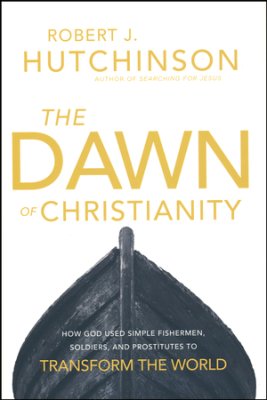
The Dawn Of Christianity (book review)

Sometimes when people are reading the Gospels and the Book of Acts in the New Testament of the Bible they forget what an accurate history is presented at a pivotal time in world events. In The Dawn Of Christianity, Robert J. Hutchinson makes the history behind, surrounding, and after the biblical accounts come to life in a fresh way.

The Dawn Of Christianity tells the history surrounding Jesus of Nazareth and His followers almost in a novel-like format. Hutchinson masterfully puts together the four Gospel accounts and Luke’s history of the early church in chronological order, and then brings in archaeological, geographic, and anthropological resources like a supporting cast to the biblical account. Along the way, we are introduced to extra-biblical characters, places, and customs that add a new depth of understanding to the history presented in Scripture.

Hutchinson notes, “Recent archaeological discoveries are showing that the New Testament in general, and the Gospels in particular, are far more reliable historical sources than previous generations of New Testament experts realized.” Indeed, he makes good use of as many pertinent finds as possible to enhance his storytelling.

The Dawn Of Christianity spans the time from just before the birth of Jesus Christ of Nazareth and then tracks the spread of Christianity for about 20 years following Christ’s ascension into heaven. It’s a fascinating and enlightening story for both Bible aficionados and skeptics alike.

I am a Thomas Nelson book reviewer.

No Room For God?

My friend Scott delivered a right-between-the-eyes message yesterday. Here are my takeaways.

Quite possibly the deadliest of the relationship killers is pride.

Think of all the ugly things surrounding Pride:

  • Always fault-finding
  • Always defensive
  • Constantly craving attention
  • Disregarding advice
  • Saying “I’m better than you!”
  • Saying “I don’t need your help!”
  • Quick to tell others “Here’s how you should do that”
  • Can’t handle any constructive criticism
  • But always critical of others

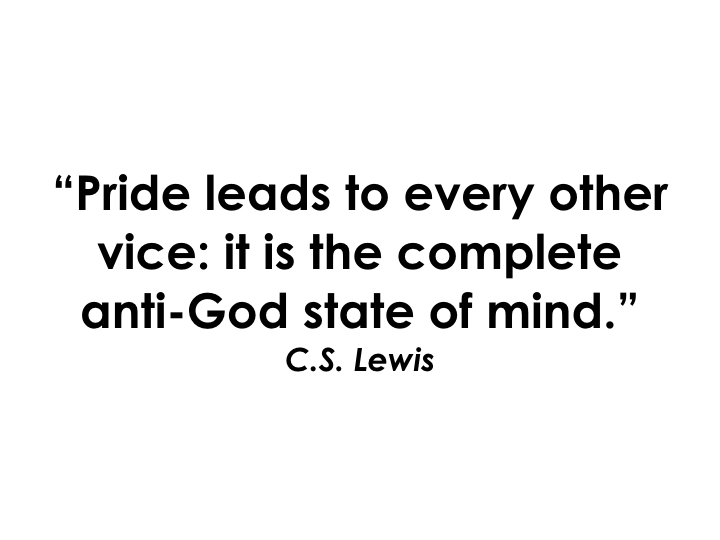
In fact, C.S. Lewis said, “Pride leads to every other vice: it is the complete anti-God state of mind.”

One psalmist got right to the root of the problem of pride when he wrote—

In his pride the wicked does not seek Him; in all his thoughts there is no room for God. (Psalm 10:4)

No room for God?!

The Bible is all about relationships. Adam was first created to be in a relationship with God, and then Eve was created so she and Adam could be in a relationship with each other. Jesus reiterated this when He was asked what the greatest commandment was, and He said, “Love God with all your heart, mind and soul.”

But if Pride rules in my heart, and there is no room for God, how can I love Him with all I’ve got? The simple answer is: I can’t.

Jesus quickly added that the next greatest commandment also revolved around relationships when He said, “And love your neighbor as yourself.”

If my proud heart is filled with prideful love, it cannot be filled with God’s love.

If my pride-filled heart has no room for God’s love, then it has no room to love anyone else.

Pride kills every relationship.

Jesus had absolutely no trace of pride when He set aside all His heavenly privileges and came to earth as a Human (Philippians 2:6-8). The Apostle Paul then tells us that our attitude should be the same as Christ’s attitude.

Humility kills pride!

Are you filled with pride? Ask yourself some of these questions:

  • Do I have a problem submitting to authority?
  • When I get into an argument, do I always have to have the last word?
  • Am I willing to accept blame?
  • Can I ask for forgiveness, or am I always right?
  • Do I sometimes cheat at a game just so I can win?
  • If I lose, is it someone else’s fault?
  • If I win, do I brag about how good I am?
  • Do I think I’m the only one who can solve all my own issues?
  • Do I think I can solve everyone else’s issues too?

If you found yourself saying “yes” to these questions it’s probably time to ask the Holy Spirit to do a heart-check on your level of pride. Make sure that in your heart there is increasingly more room for God.

Thursdays With Oswald—Whose Temple Is My Body?

Oswald ChambersThis is a weekly series with things I’m reading and pondering from Oswald Chambers. You can read the original seed thought here, or type “Thursdays With Oswald” in the search box to read more entries.

Whose Temple Is My Body?

     If you have been laid hold of by the Spirit of God don’t think it strange concerning the spring-cleaning God is giving you, and don’t clamor for anything because it will have to go. … My body is designed to be a “temple of the Holy Ghost,” and it is up to me to stand up for the honor of Jesus Christ in my bodily practices. … 

     The Spirit of God will not allow me to use my body for my own convenience; the whole limit must be God’s. I am not to serve my own ends with my body, I am to serve the ends of Jesus Christ and be a devoted disciple of His. … 

     The historic Temple was twice cleansed by our Lord; and when He came again to Jerusalem He no longer spoke of it as “My Father’s house,” but “Behold, your house is left onto you desolate” [Matthew 23:37-38]. A terrible pronouncement, and a terrible possibility in our own lives. It is appallingly true that we may get to the place where Jesus can no longer say of us, “My Father’s house”; where He can no longer give us the benefit of scourging and cleansing, but can only retire, a weeping Christ, over our willfulness. “How often would I … and ye would not!” … 

     I am responsible before God for conducting my body as the temple of the Holy Ghost. Am I doing it, or is my body dictating to God, telling Him what it must do? … “Let not sin therefore reign in your mortal body, that ye should obey it in the lusts thereof” [Romans 6:12]. 

From The Soul Of A Christian

This is the key question: Is my body my house or is it my Father’s house?

In other words, after becoming a Christian am I saying, “I can do whatever I want with my body” or am I saying, “My body is Yours, God, to do with as You see fit”?

Whose temple is your body?

Five Women; One Amazing Story!

For some of you, it’s hard to put the word “happy” in front of Mother’s Day.

One definition of happy is “favored by fortune; lucky.” In other words, we’re happy IF things happen to be going our way. But we don’t know how things are going to turn out?

In the last Super Bowl, the New England Patriots were down by 25 points early in the 3rd quarter. It didn’t appear that things were going the Patriots’ way … except they won!

So don’t judge “happy” or “not happy” by how things are going in the middle of the story! 

To God, all of History is His Story. He knows every move, every hurt, every fumble, every betrayal, every noble deed, every evil deed … nothing escapes His notice. And it all fits into His Story—We are assured and know that God being a partner in their labor ALL THINGS work together and are fitting into a plan for good… (Romans 8:28).

Check out the stories of these five women—

Tamar had to pretend to be a prostitute in order to get her father-in-law to followthrough on his commitment. As a result, she became pregnant by him and was almost burned at the stake.

Rahab didn’t pretend to be a prostitute; she was a prostitute. She lived in an important city that was about to be defeated by the Israelites. Instead of trying to make things easier on herself, she trusted God and put herself in a very dangerous position.

Ruth was a non-Israelite married to an Israelite man. But when her husband, her brother-in-law, and her father-in-law all died, she took a huge risk in staying with her mother-in-law. She could have moved in with her family in a country she knew, but she went where she was an alien, a widow, and dirt poor.

Bathsheba was married to Uriah, who was a member of the king’s inner circle. But the king took advantage of her when Uriah was away at war, impregnated her, killed her husband, and then married her. Their son from that union died shortly after being born, but Bathsheba trusted God to make something good of her tragedy.

Mary was engaged to be married when she was found to be pregnant. Society could have shunned her, her fiancé could have had her killed for her unfaithfulness, but she trusted God to keep His word.

These five mothers are the ONLY women mentioned in the genealogy of Jesus (Matthew 1:1-6, 16)

God used all of these women. Despite the way they were treated or mistreated; despite their own mistakes; despite the injustices committed against them. God used all of them as irreplaceable parts of His Story.

To God, all of History is His Story! He’s doing things through your life that you can’t possibly imagine. Trust Him—if you do, your name will also be recorded in the best “His Story” ever recorded! 

Whenever you don’t know what’s going on, lean into Him, cry out to Him. But then say with Mary, “I am the Lord’s servant. May it be to me as you have said.” And what does God say? “I am working ALL THINGS together to tell My Story through your life!”

Thursdays With Oswald—A Dangerous (But Vital) Prayer

Oswald ChambersThis is a weekly series with things I’m reading and pondering from Oswald Chambers. You can read the original seed thought here, or type “Thursdays With Oswald” in the search box to read more entries.

A Dangerous (But Vital) Prayer

     No one but a fool or a sincere soul would ever pray this prayer—‘Search me, O God’ [Psalm 139:23-24] … Any soul who prays that prayer will be answered. … 

     If you want to know what the scrutiny of God is like, listen to Jesus Christ: “For from within, out of the heart of man, evil thoughts proceed…” [Matthew 15:19], and then follows a rugged catalog of things few of us know anything about in conscious life, consequently we are apt to be indignant and resent Jesus Christ’s diagnosis—“I have never felt like a murderer, or an adulterer, therefore those things cannot be in me.” To talk in that way is proof that we are grossly ignorant of ourselves. If we prefer to trust our ignorant innocence we pass a verdict on the only Master of the human heart there is, we tell Him He does not know what He is talking about. The one right thing to do is to listen to Jesus Christ and then hand our hearts over to God to be searched and guarded, and filled with the Holy Spirit. … 

     Jesus Christ has undertaken through His Redemption to put into us a heart so pure that God Almighty can see nothing to censure in it, and the Holy Spirit searches us not only to make us know the possibilities of iniquity in our heart, but to make us “unblameable in holiness” in His sight.

From The Soul Of A Christian

Are you willing to really pray this prayer, listen to what the Holy Spirit says, and then allow Christ’s work of redemption to make you unblameable in holiness?

Or, Chambers asks, “Are we willing to let God scrutinize us, or are we doing the worst of all things, trying to justify ourselves?”

It’s your choice.

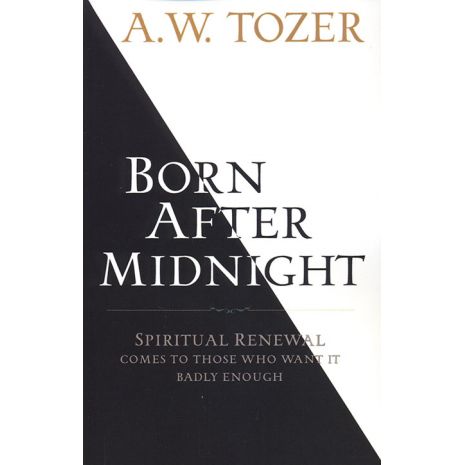
8 Quotes From “Born After Midnight”

A.W. Tozer’s writings are nearly five decades old, but they still ring with prophetic truth for this generation. Check out my book review of Born After Midnight by clicking here. Below are a few of the quotes from this book.

“It may be said without qualification that every man is as holy and as full of the Spirit as he wants to be. He may not be as full as he wishes he were, but he is most certainly as full as he wants to be. … The problem is not to persuade God to fill us, but to want God sufficiently to permit Him to do so.”

“In of book of Acts, faith was for each believer a beginning, not an end; it was a journey, not a bed in which to lie while waiting for the day of our Lord’s triumph. Believing was not a once-done act; it was more than an act, it was an attitude of heart and mind that inspired and enabled the believer to take up his cross and follow the Lamb whithersoever He went.”

“I am afraid we modern Christians are long on talk and short on conduct. … Our Lord and His apostles were long on deeds. The Gospels depict a Man walking in power, ‘who went about doing good, and healing all that were oppressed of the devil; for God was with Him’ (Acts 10:38). The moral relation between words and deeds appears quite plainly in the life and teachings of Christ; He did before He spoke, and all the doing gave validity to the speaking.”

“We settle for words in religion because deeds are too costly. It is easier to pray, ‘Lord, help me to carry my cross daily’ than to pick up the cross and carry it.”

“‘Whoever will be great among you, let him be your minister,’ said our Lord (Matthew 20:26), and from these words, we may properly conclude (and the context strongly supports the conclusion) that there is nothing wrong with the desire to be great provided (1) we seek the right kind of greatness; (2) we allow God to decide what is greatness; (3) we are willing to pay the full price that greatness demands; and (4) we are content to wait for the judgment of God to settle the whole matter of who is great at last.”

“God may allow his servant to succeed when He has disciplined him to a point where he does not need to succeed to be happy. The man who is elated by success and cast down by failure is still a carnal man. … God will allow His servant to succeed when he has learned that success does not make him dearer to God nor more valuable in the total scheme of things.”

“While we cannot determine circumstances, we can determine our reaction to them. And there is where the battle is to be fought and the victory won.”

“To ‘accept the universe’ does not mean that we are to accept evil conditions as inevitable and make no effort to improve them. So to teach would be to cancel the plain teaching of the Scriptures on that point. Where a situation is contrary to the will of God, and there are clear promises concerning it in the Scriptures, it is our privilege and obligation to pray and labor to bring about change.”

More quotes from this book are coming soon…

New Name = New Nature

All throughout the Old Testament we find hints about Jesus. Then as the New Testament dawns, the brilliant light of Jesus makes sense of all the hints we had previously seen.

One of the way God hints at the arrival of Jesus and what He would do for mankind is found in the names of people. Hebrew names are interesting things. Sometimes they are quite literal. For instance…

    • A baby who was born at one of Israel’s lowest points was named Ichabod = God’s glory has departed.
    • A baby who was born with quite a lot of hair was named Esau = hairy baby.
    • Esau’s twin brother was hanging on to his heel when he was born, so they named him Jacob = the one who grabs the heel.

At other times God tells parents what to name their babies before they are born. These names tell a story in themselves of what is coming…

    • After a time of upheaval in Israel’s history, God directed the parents to give their son two names: Solomon (which means peace) and Jedidiah (which means beloved by God). This brought reassurance to the parents and to the country.
    • When God was about to bring a quick answer to a problem, He directed the parents to name their son Maher-Shalal-Hash-Baz, which means God will bring the reward sooner than you think.

But what is most interesting to me is when God changes someone’s name to reflect the new nature in their life.

Abram’s name meant exalted father, but God changed his name to Abraham, which means father of a multitude. His wife’s birth name was Sarai (princess) and it was changed to Sarah (a noble woman).

In these name changes, two things happened (see Genesis 17:1-15):

  1. God put His own name into theirs. God’s name means I AM. We sometimes pronounce it Yahweh, but that is only a guess since the Jews wrote His name without the vowels. That means His name was the unpronounceable YHWH, sort of a breath-sound. So Abram became Abrahaaam and Sarah became Saraaaaah. 
  2. God took the burden off them and put it on Himself. It was no longer Abram’s responsibility to become an exalted father, or Sarai’s responsibility to make herself a princess. God said, “Only with Me in you can you become who I want you to be!”

As you follow Abraham and Sarah’s descendants, you will see time and time again God reminding people: You can’t do it on your own. You must have Me in you in order to live the life I have for you!

Hoshea was born as an Israelite slave in Egypt, yet his parents gave him this name that means deliverer. Before God could use Hoshea to bring the Israelites into the Promised Land, He first changed his name to Joshua, which means God is the ultimate deliverer.

Joshua in the BC Hebrew language is the same as Jesus in the AD Greek language.

Jesus Christ is the ultimate example of being able to fully deliver people not just from physical slavery, but from the eternal consequences of sin. Man cannot save himself, but Jesus Christ can.

That’s why when you surrender to Christ and allow Him to be your Lord and Master, He puts His name in you: CHRISTian! A new name, and a brand new nature because of what it means to have Christ in you.

Check out this video where I explain the cool story behind more name changes—

Thursdays With Oswald—Your Peace Vs. True Peace

Oswald ChambersThis is a weekly series with things I’m reading and pondering from Oswald Chambers. You can read the original seed thought here, or type “Thursdays With Oswald” in the search box to read more entries.

Your Peace Vs. True Peace

     Conviction of sin is the realization that my natural life is based on a disposition that will not have Jesus Christ. The Gospel does not present what the natural man wants but what he needs, and the Gospel awakens an intense resentment as well as an intense craving. … 

     If I am peaceful and happy and contented and living my life with my morality well within my own grasp, why does the Holy Spirit need to come in and upset the balance and make me miserable and unfit for anything? It is time we asked ourselves these questions. God’s Book gives us the answer. Thank God, we are coming to the end of the shallow presentation of Christianity that makes out that Jesus Christ came only to give us peace. Thousands of people are happy without God in this world, but that kind of happiness and peace is on a wrong level. Jesus Christ came to send a sword through every peace that is not based on a personal relationship to Himself. He came to put us right with God that His own peace might reign. …

     If once we have allowed Jesus Christ to upset the equilibrium, holiness is the inevitable result, or no peace forever. …

     Before the Spirit of God can bring peace of mind He has to clear out the rubbish, and before He can do that He has to give us an idea of what rubbish there is.

From The Soul Of A Christian

Jesus said, “Do not suppose that I have come to bring peace to the earth. I did not come to bring peace, but a sword” (Matthew 10:34).

The Apostle Paul also noted that he was perfectly happy living his life as he was, until he read in the Scripture that the way he was happily living was actually sinful. And once he realized that, the sin actually became harder to break (see Romans 7:7-20).

Oswald Chambers reminds us of the same fact: God wants to upset anything on which we have based our peace that is not rooted in Him. He wants to make us aware of our trust in other sources, our wrong beliefs, our human-based equilibrium. In short, He wants to show us the rubbish in our life so that He can help us clear out that rubbish and know true peace!

Will you let Him disturb your peace so you can know true peace?