Christ’s Powerful “I”

“…I…” (Jesus in John 14:2, 3, 6)

The disciples of Jesus, by their words and actions, have made it perfectly clear that they are “troubled” at the thought of being on their own. Jesus assures them with three powerful “I” truths:

  1. I go to prepare a place for youyour future home is secure.
  2. I will come againwe will be with Jesus forever.
  3. I am the way, the truth, and the lifethere is no need to second-guess, no confusion; just perfect, heart-cheering clarity!

The disciple’s job—and therefore our job as well—is simply this: “Believe Me” (v. 11). 

When we believe what Jesus says—I go, I will, I am—then we unleash the power of God in our lives. The power to…

  • … do greater works (v. 12)
  • … pray more powerful prayers (vv. 13, 14)
  • … know the companionship of the Holy Spirit (vv. 16-18)

Whenever fear tries to creep in and paralyze us, may we quickly drive out that fear by believing and reaffirming what Jesus says: I go … I will … I AM!

11 Quotes On The Gospel Of John

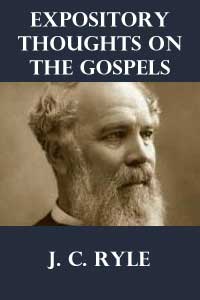
Alongside my daily Bible study time in the Gospels of the New Testament, I have been reading J.C. Ryle’s Expository Thoughts On The Gospels. You can check out my review of this book by clicking here. 

These are a few of the quotes I especially appreciated from Ryle’s comments on the Gospel of John.

“Ignorance of Scripture is the root of every error in religion and the source of every heresy. To be allowed to remove a few grains of ignorance, and to throw a few rays of light on God’s precious Word is, in my opinion, the greatest honor that can be put on a Christian.” 

“It is a real misfortune to Christianity when a Christian cannot smile. A merry heart and a readiness to take part in all innocent mirth are gifts of inestimable value. They go far to soften the prejudices, to take up stumbling blocks out of the way, and to make way for Christ and the Gospel.” 

“We must maintain firmly that God hates wickedness, and that the end of all who persist in wickedness will be destruction. It is not true that God’s love is lower than hell. It is not true that God so loved the world that all mankind will be finally saved, but that He so loved the world that He gave His Son to be the Savior of all who believe. His love is offered to all men freely, fully, honestly, and unreservedly, but it is only through the one channel of Christ’s redemption.” 

“Nothing so defiles Christianity and gives the enemies of truth such occasion to blaspheme as jealousy and party-spirit among Christians. Wherever there is real grace, we should be ready and willing to acknowledge it, even though it may be outside our own pale. We should strive to say with the apostle, ‘If Christ be preached, I rejoice, yes! and will rejoice’ (Philippians 1:18). If good is done, we are to be thankful, though it even may not be done in what we think the best way. If souls are saved, we ought to be glad, whatever be the means that God may think fit to employ.” 

“Well may we be told to pray for the coming of God’s kingdom! Well may we be told to long for the Second Advent of Jesus Christ! Then, and not until then, shall there be no more curse on the earth, no more suffering, no more sorrow, and no more sin. Tears shall be wiped from the faces of all who love Christ’s appearing, when their Master returns. Weakness and infirmity shall all pass away. Hope deferred shall no longer make hearts sick. There will be no chronic invalids and incurable cases when Christ has renewed this earth.” 

“The ‘Scriptures’ of which our Lord speaks are of course the Old Testament. And His words show the important truth which too many are apt to overlook, that every part of our Bibles is meant to teach us about Christ. Christ is not merely in the Gospels and Epistles. Christ is to be found directly and indirectly in the Law, the Psalms, and the Prophets. In the promises to Adam, Abraham, Moses, and David; in the types and emblems of the ceremonial law; in the predictions of Isaiah and the other prophets—Jesus, the Messiah, is everywhere to be found in the Old Testament. How is it that men see these things so little? The answer is plain: they do not ‘search the Scriptures.’ They do not dig into that wondrous mine of wisdom and knowledge, and seek to become acquainted with its contents. Simple, regular reading of our Bibles is the grand secret of establishment in the faith. Ignorance of the Scriptures is the root of all error.” 

“Trial, we must distinctly understand, is part of the diet which all true Christians must expect. It is one of the means by which their grace is proved and by which they find out what there is in themselves. Winter as well as summer—cold as well as heat—clouds as well as sunshine—are all necessary to bring the fruit of the Spirit to ripeness and maturity.” 

“Well would it be for men if they would act upon the truth they know. Instead of saying, as some do, ‘I must first know everything clearly and then I will act,’ we should say, ‘I will diligently use such knowledge as I possess and believe that in the using fresh knowledge will be given to me.’ How many mysteries this simple plan would solve! How many hard things would soon become plain if men would honestly live up to their light and ‘follow on to know the Lord’ (Hosea 6:3). … The plain things in religion are undeniably very many. Let a man honestly attend to them and he shall be taught the deep things of God.” 

“Happy is he who never stifles his conscience, but strives to keep it tender! Still happier is he who prays to have it enlightened by the Holy Spirit and sprinkled with Christ’s blood.” 

“Let us resist procrastination as we would resist the devil. Whatever our hand finds to do, let us do it with our might. ‘The night comes when no man can work.’” 

“It is noteworthy that the resurrection of our Lord in some places is attributed to His Father’s act (Acts 2:24-32), once, at least, to the Holy Spirit (1 Peter 3:18), and here [John 10:18] and in John 2:19 to Christ Himself. All leads to the same great conclusion—that the resurrection of our Lord, as well as every part of His mediatorial work, was an act in which all three Persons of the Trinity concurred and cooperated.” 

You can read Ryle’s quote on The Gospel of Matthew here, on the Gospel of Mark here, and on the Gospel of Luke here.

Sunday In Jerusalem

The Sunday before Christ’s crucifixion is typically called “The Triumphal Entry.” But was it really? One thing’s for sure—Jesus didn’t come to Jerusalem the way the people expected! 

To fully get the picture of what’s happening we need to turn back the calendar several hundred years. Ever since Jerusalem fell to invading armies, the Jews hung on to the promise that God would restore their king and their kingdom. They were awaiting a descendant from the line of King David who would drive out their overlords and restore Jerusalem to its rightful place. 

They clung to a promise in Psalm 118 that included these words—“Lord, save us! Lord, grant us success! Blessed is He who comes in the name of the Lord. From the house of the Lord we bless you. The Lord is God, and He has made His light shine on us. With boughs in hand, join in the festal procession up to the horns of the altar” (vv. 25-27). 

But Jesus was prophesied to come as the Prince of Peace, gentle and unassuming, the Servant of all people (Isaiah 9:6; 42:1-3). Jesus simply didn’t do things the way the crowds expected! He was born in a manger in Bethlehem (not as a king in Jerusalem), and hailing from Nazareth caused people to mock, “Nazareth? Can anything good come from Nazareth?!” 

So on that Sunday as Jesus approached Jerusalem, it wasn’t as a conquering King but as a humble servant. As He came near, He wept a sobbing lament over Jerusalem (Matthew 23:37). 

The crowd took palm branches (as Psalm 118 suggested) and shouted, “Hosanna!” That word means “Save us,” but what they really meant was, “Save us NOW!” Jesus came riding a mule—a lowly work animal, not a war horse—to remove any fear people may have, and to show them His servant’s heart. 

Even His disciples didn’t get this. But the Pharisees sure did: They wanted Jesus to rebuke the crowd for their insolence and blasphemy! Many of the worshippers were eyewitnesses to the resurrection of Lazarus, so Jesus said to the Pharisees, “They have to give praise to God for this!” 

Jesus made His way to the temple but there were no sacrifices, no anointing, no coronation. Mark tells us Jesus simply “looked around at everything and then left.” 

Have you ever noticed that Jesus never rushes? He’s never early. He’s never late. He’s never confused. He’s never trying to catch up. 

This is because Jesus was in complete sync with His Father. Jesus said that everything He did was directed by His Father, and every word He spoke was given to Him by His Father. 

We, too, should be able to move in that same unrushed pace. Because of what Jesus did for us on Calvary, we may have the same “oneness” with our Father as Jesus did (John 14:20). 

Worry creeps into our lives when—like those cheering crowds in Jerusalem—we try to make our agenda happen on our timetable with our own resources. But when we look to Jesus, we see such a perfect peace as He relied on His Father. 

Christ’s passionate journey was out of love for us, so that we could know peace with God as we journey through life with Jesus. 

Join me this Sunday as we take a closer look at the Monday of Christ’s Passion Week. 

One Saturday In Bethany

Six days before His crucifixion and burial, Jesus was prepared for His burial by the most unlikely of people. This story takes place in Bethany, where Jesus spends a lot of time during His earthly ministry. 

As was customary, the most influential men in the village would try to entice visiting guests to join them for dinner. Simon—a Pharisee and a former leper—was the one who extended the invitation to Jesus. Simon is a former leper because one who still had active leprosy wouldn’t have been allowed in his own home, let alone allowed to host guests. I think (as you will see in a moment) that Simon had been healed of his leprosy by Jesus.

Although it was customary for someone like Simon to host visiting guests, in this case, the religious leaders were scheming to arrest Jesus. In other words, there was an ulterior motive for Simon to have Jesus in his home.

Which is probably why Simon neglected his host’s duties: No welcoming kiss, no foot-washing, no anointing. All normal hospitality is ignored. Jesus appears to ignore the snub and simply recline at the table. But another guest takes Simon’s incredible rudeness personally. 

Mary was standing or sitting along the wall in Simon’s house, as many common villagers would in that day. Luke tells us that Mary had lived a sinful life. But while sitting at Jesus’ feet earlier she heard the good news that Jesus could forgive sins, she placed her faith in Him, and her lifestyle changed 180-degrees 

Mary is overcome by emotion at the inhospitable—rude!—way Jesus is being treated and tears began to well up in her eyes. Since Jesus is reclining at the table, His feet would have been pointed in her direction, and she began to use her tears to wash His feet. Then—horror of horrors—she uncovers and lets down her hair in public(!) and begins to dry His feet. 

Simon the Pharisee judges Mary by her past. Simon twice says, “Does Jesus even know what kind of woman she is? Does He know she is a sinner?” Mary is in big trouble: she is publicly pointing out the rudeness of the host, she is touching a man that is not her husband, and she has uncovered and let down her hair in public. 

Jesus responds not to Mary, but to Simon: “Simon, I have something to tell you,” He says and then shares a short but powerful parable of a creditor who had two debtors. One owed him the equivalent of a year-and-a-half’s wages, and the other owed about two months’ wages. Since neither could pay, the creditor forgave both of them. 

Jesus asked Simon, “Which of the two forgiven debtors do you think would be most grateful?” Simon correctly responds, “The one who was forgiven more.” 

Jesus points out that Mary’s acts didn’t bring her forgiveness, but that her acts were a loving response to the forgiveness she had already received. Jesus said things like, “You have been forgiven,” and “Your sins are forgiven,” and “Your faith has saved you.” 

Jesus took the anger that was focused on Mary and redirected it to Himself, as Isaiah prophesied the Messiah would do (see 53:4-5).

At the same time He is also challenging Simon, “Don’t you have something to be grateful for? Weren’t you once a physical leper? Mary was a spiritual leper, but she has been forgiven and is now overwhelmingly grateful. What about you?” 

Mary was forgiven. She gave all she had in worship. Her anointing oil was lavishly poured out. It was worth a year’s wages, but she spent it all on Jesus. She anointed Him for His burial. The aroma of the oil remained on Jesus throughout His Passion Week and through His crucifixion. The aroma remained on Mary’s hands and hair. The aroma remained in Simon’s house. The memory was fixed in the memories of everyone in that room. 

What about Simon? Did he ever acknowledge his gratitude? Or was he more concerned with receiving praise from men? 

Have you received the forgiveness Jesus offers you? Can people tell you’ve been forgiven by your willingness to stand up for Him? Can people tell you’ve been forgiven by your willingness to give up everything for Him? 

I hope you can join me this Sunday as we continue our slow, deliberate walk alongside Jesus on His passionate journey to the Cross and the resurrection. 

No Looking Back

…He steadfastly set His face… (Luke 9:51). 

Jesus wasn’t about to be deterred, delayed, or detoured from fulfilling His Father’s mission. 

Some of the other Bible translations fill in this meaning:

  • resolutely (NLT) 
  • steadfastly and determinedly (AMP) 
  • gathered up His courage and steeled Himself (MSG)
  • “to turn in a certain direction, confirm it, and resolutely follow it” (Strong’s Concordance)

Jesus could do this for at least three reasons—

  1. He knew “the time had come” (see v. 51 and John 13:1, 3) 
  2. He knew the joy at the end of the journey (Hebrews 12:2)
  3. He knew His Father loved Him (John 3:35, 5:20, 10:17)

A mark of a godly leader is one who resolutely follows God. No matter what!

Jesus calls His followers to the same path He walked—“No one who puts a hand to the plow and looks back is fit for service in the kingdom of God” (Luke 9:62)

It’s hard because people reject a resolute man. 

It’s hard because the accommodations along the way are uncertain. 

It’s hard because I have to give up my right to myself. 

But the reward is incomparable—Heaven forever with Jesus!

This is part 33 in my series on godly leadership. You can check out all of my posts in this series by clicking here.

Immeasurable!

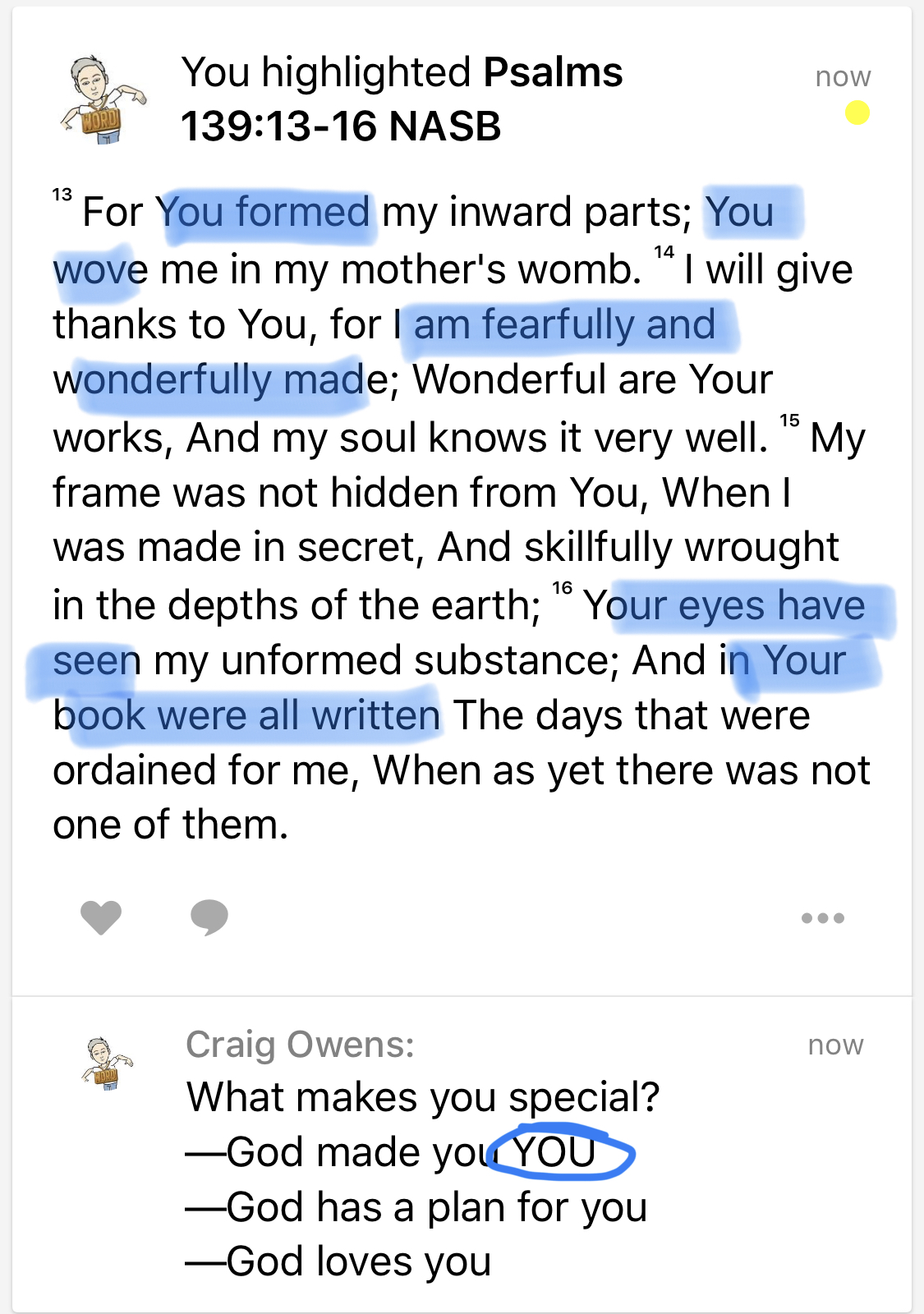
Your value to God is immeasurable!

Jesus called satan the father of lies, that means every word he speaks is false. He uses his falsehoods to constantly slander God’s children, “For the accuser of our brothers and sisters has been thrown down to earth—the one who accuses them before our God day and night” (Revelation 12:10).

But we’re not helpless victims against the devil’s slander. The Holy Spirit reminds us of what the Word of God says, and what the God of the Word has done (John 14:26). That Word becomes our sword and shield against the slanderer, “They triumphed over him by the blood of the Lamb and by the word of their testimony” (Revelation 12:10-11).

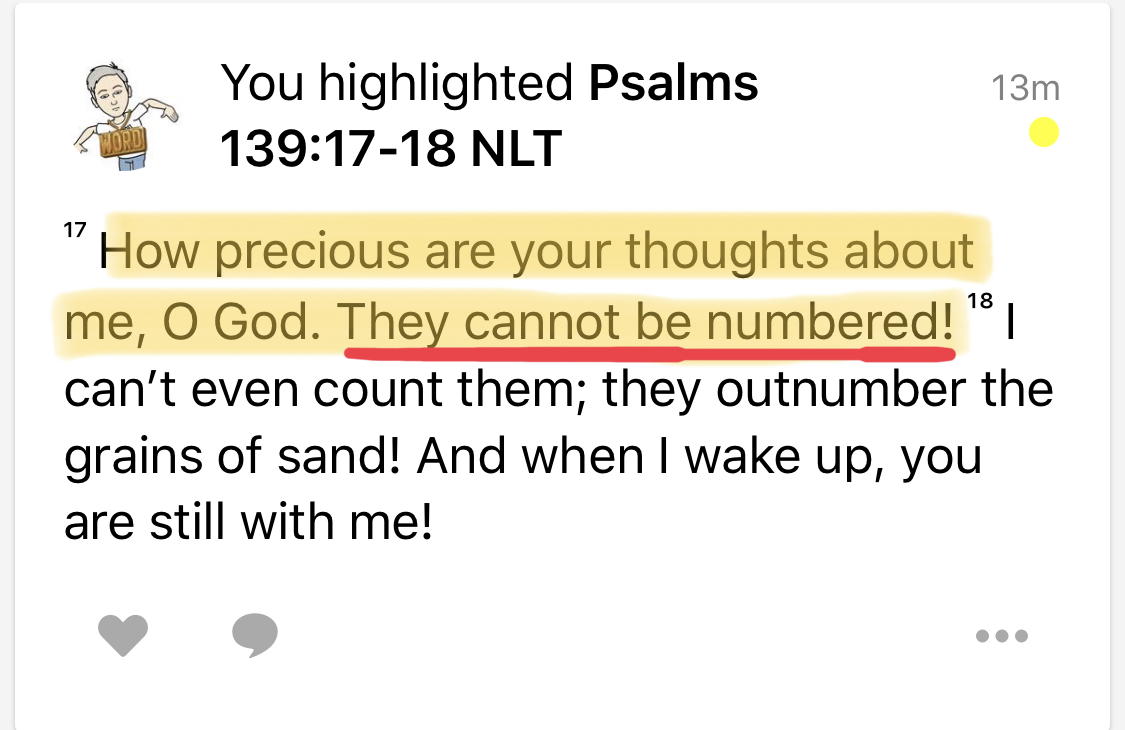
This passage from Psalm 139 is a great weapon to use against the devil whenever he slanderously calls into question your worth in God’s sight. Silence his lies and strike him down with the Truth that your value to God is immeasurable!

No Asterisks

This past Christmas I was quite surprised to receive a package in the mail. It was something I ordered as a Christmas gift for my wife. 

Sort of. 

It was actually half of what I thought I ordered. I went back online and discovered some “fine print” that I hadn’t really noticed earlier. 

You’ve probably experienced that too—asterisksfine print … footnotes … hidden fees … “limits and exclusions may apply” are all so frustrating!

Unfortunately, we get so used to these things that we begin to—consciously or subconsciously—plug them into places where they don’t actually belong. So even when Jesus Himself says something that sounds wonderful like, “I tell you the truth, if you have faith as small as a mustard seed, you can say to this mountain, ‘Move from here to there’ and it will move. Nothing will be impossible for you” (Matthew 17:20), we want to insert an asterisk. 

Or when He says, “And I will do whatever you ask in My name so that the Son may bring glory to the Father. You may ask Me for anything in My name, and I will do it” (John 14:13-14), we think we’re supposed to ask, “What’s the catch?” 

Christians are inserting asterisks where they don’t belong and, as a result, are praying timid prayers. 

Why do we pray this way? Perhaps we are…

  1. …fearful of being too bold. But in telling us how to pray, Jesus says God rewards our bold “shameless persistence” in prayer. 

I tell you, although he will not get up and supply him anything because he is his friend, yet because of his shameless persistence and insistence he will get up and give him as much as he needs. So I say to you, ask and keep on asking and it shall be given you; seek and keep on seeking and you shall find; knock and keep on knocking and the door shall be opened to you. (Luke 11:8-9 AMP) 

  1. …unsure that God hears us, cares for us, or even wants to answer us. But the Bible is quite clear that all of these things are true: He hears us, cares for us, and does want to give us what He has promised (1 John 5:14-15; Romans 8:32; Romans 4:20-21).  
  1. …ignorant of what/how to pray. T.M. Moore reminds us, “God has given us three great helps to assist us in our prayers. His Spirit groans for us; His Word guides us; and His Son governs and intercedes for us.” 
  1. …not looking for God’s answer. David said that after praying, he expectantly watched for God’s answer (Psalm 5:3). Indeed, the Aramaic word for prayer means “to set a trap.” 

“He is the God of limitless resources—the only limit comes from us. Our requests, our thoughts, and our prayers are too small, and our expectations are too low. God is trying to raise our vision to a higher level, call us to have greater expectations, and thereby bring us to greater appropriation. Shall we continue living in a way that mocks His will and denies His Word?” —A.B. Simpson 

Why are you hesitating to ask God for even a tiny amount when such vast resources are available? What would happen if you started to pray more boldly? What if you began to make mountain-moving requests? I dare you to try! 

Stop looking for the asterisks and start taking God at His word!

Join me next week as we continue our series on Boldly Praying, looking at some bold pray-ers in the Bible.

Thursdays With Oswald—Where Does Christian Character Come From?

Oswald ChambersThis is a weekly series with things I’m reading and pondering from Oswald Chambers. You can read the original seed thought here, or type “Thursdays With Oswald” in the search box to read more entries.

Where Does Christian Character Come From?

     Christian character is not expressed by doing good, but by God-likeness. It is not sufficient to do good, to do the right thing, we must have our goodness stamped by the image and superscription of God, it is supernatural all through. The secret of a Christian’s life is that the supernatural is made natural by the grace of God. The way it is worked out in expression is not in having times of communion with God, but in the practical details of life. The proof that we have been regenerated is that when we come in contact with the things that create a buzz, we find to our astonishment that we have a power to keep wonderfully poised in the center of it all, a power we did not have before, a power that is only explained by the Cross of Jesus Christ. … 

     “Be perfect, therefore, as your heavenly Father is perfect” [Matthew 5:48], not in a future state, but—“You shall be perfect as your Father in heaven is perfect if you let Me work that perfection in you.” If the Holy Spirit has transformed us within, we will not exhibit good human characteristics, but divine characteristics in our human nature. … 

     It is not a question of putting the statements of our Lord in front of us and trying to live up to them, but of receiving His Spirit and finding that we can live up to them as He brings them to our remembrance and applies them to our circumstances.

From Studies In The Sermon On The Mount

Jesus said one of the roles of the Holy Spirit was to remind us of everything Jesus said (John 14:26). The Holy Spirit will constantly be working to bring the principles in the Bible to be applied in the real-life circumstances we are in—this is how Christian character is formed in us. 

God’s Word + the Holy Spirit’s application + our obedience = Christian character perfected in us

Are you reading God’s Word? Are you letting the Holy Spirit apply the Word to your life? Are you obeying what He’s showing you? These are the steps to exhibiting our heavenly Father’s divine characteristics in our human nature. 

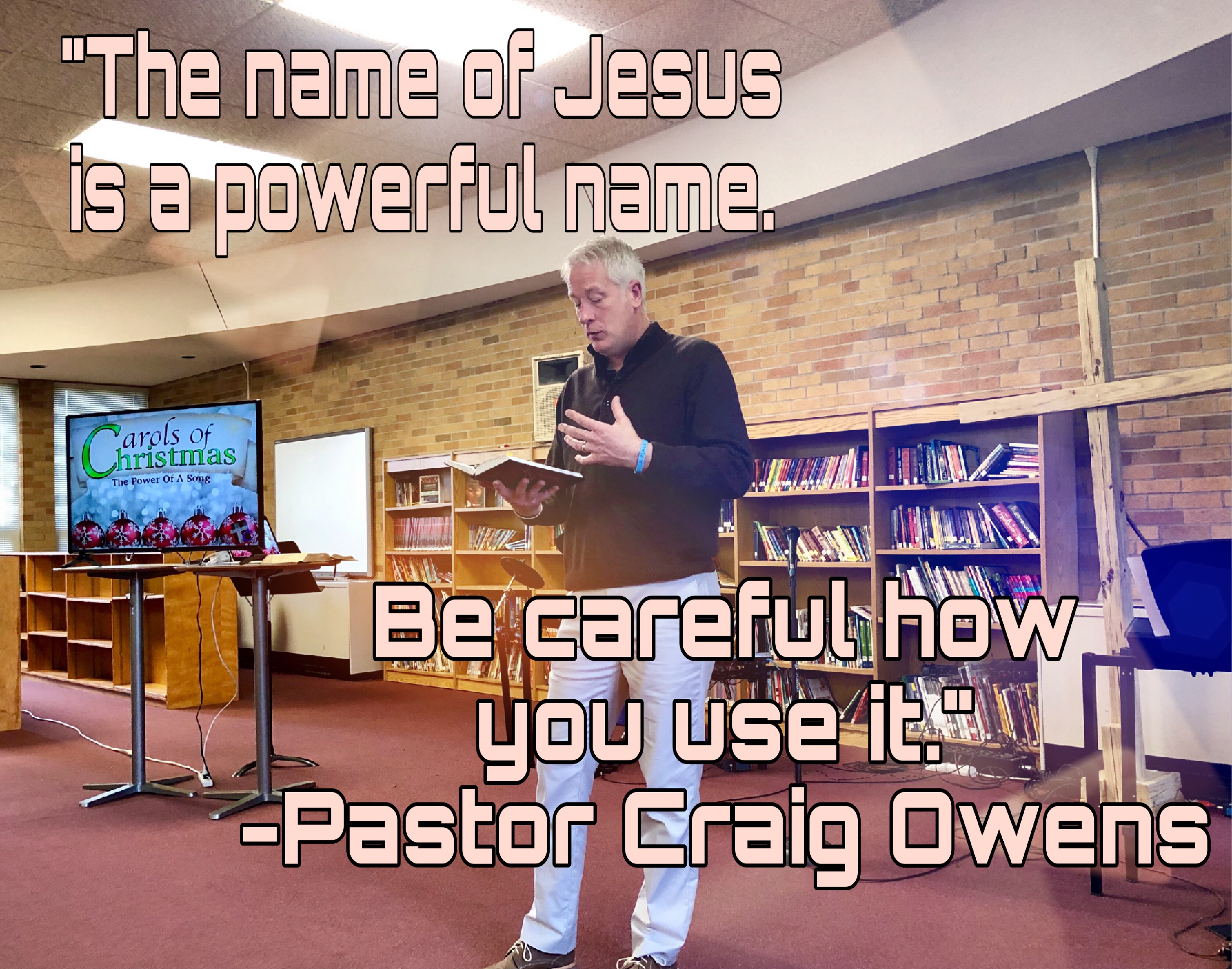
The Powerful Name Of Jesus

As we approach Christmas Day and we think about the First Advent, many times our thoughts go to the scene of a lowly manger, tired parents, and a newborn baby wrapped in cloths. We tend to focus on the Baby. 

And rightly so! 

It is fascinating to think that before He was even born an angel appeared to both Joseph and Mary to tell them that this Baby should be named Jesus (Matthew 1:21 and Luke 1:31). But have you also noticed all of the other names and titles given to the Baby at His birth? 

  • a Savior who is Christ the Lord
  • Immanuel which means “God with us” 
  • Son of the Most High 
  • King of the Jews
  • Ruler of God’s people
  • Son of the Most High God
  • God Himself

What do we do with the name of the Lord? 

When I say “the name of the Lord” I’m not talking about the five letters that spell J-E-S-U-S or even C-H-R-I-S-T. The name of the Lord means all of God’s character, His majesty, His personality, His magnificence, everything that makes God God. 

The Bible clearly tells us how to use God’s name properly. We are to use the name of the Lord for

  • salvation
  • protection
  • batting the enemy
  • preaching
  • praying
  • casting out demons
  • healing the sick

The use of the name of the Lord should distinguish us. CHRISTians bear the name of Christ, so they should represent the character of God accurately, and in a way that causes others to glorify Him and want to approach Him. 

If there is a proper way of using the name of the Lord, that also means there are ways we can misuse the name of the Lord, something God expressly forbids in the third of the Ten Commandments (Exodus 20:7). 

We misuse the name of the Lord when we… 

There is a holy balance—Jesus is both King of kings and a Friend of sinners. God paid an incredibly high price so that we could be reconciled to Him, but not so that you could treat Him ignorantly or carelessly. This calls for some serious searching by the Holy Spirit! Perhaps you could pray a prayer that David penned: Search me, God, and know my heart; test me and know my anxious thoughts. See if there is any offensive way in me, and lead me in the way everlasting.

To take a look at the other stanzas of this Christmas carol, please click here.

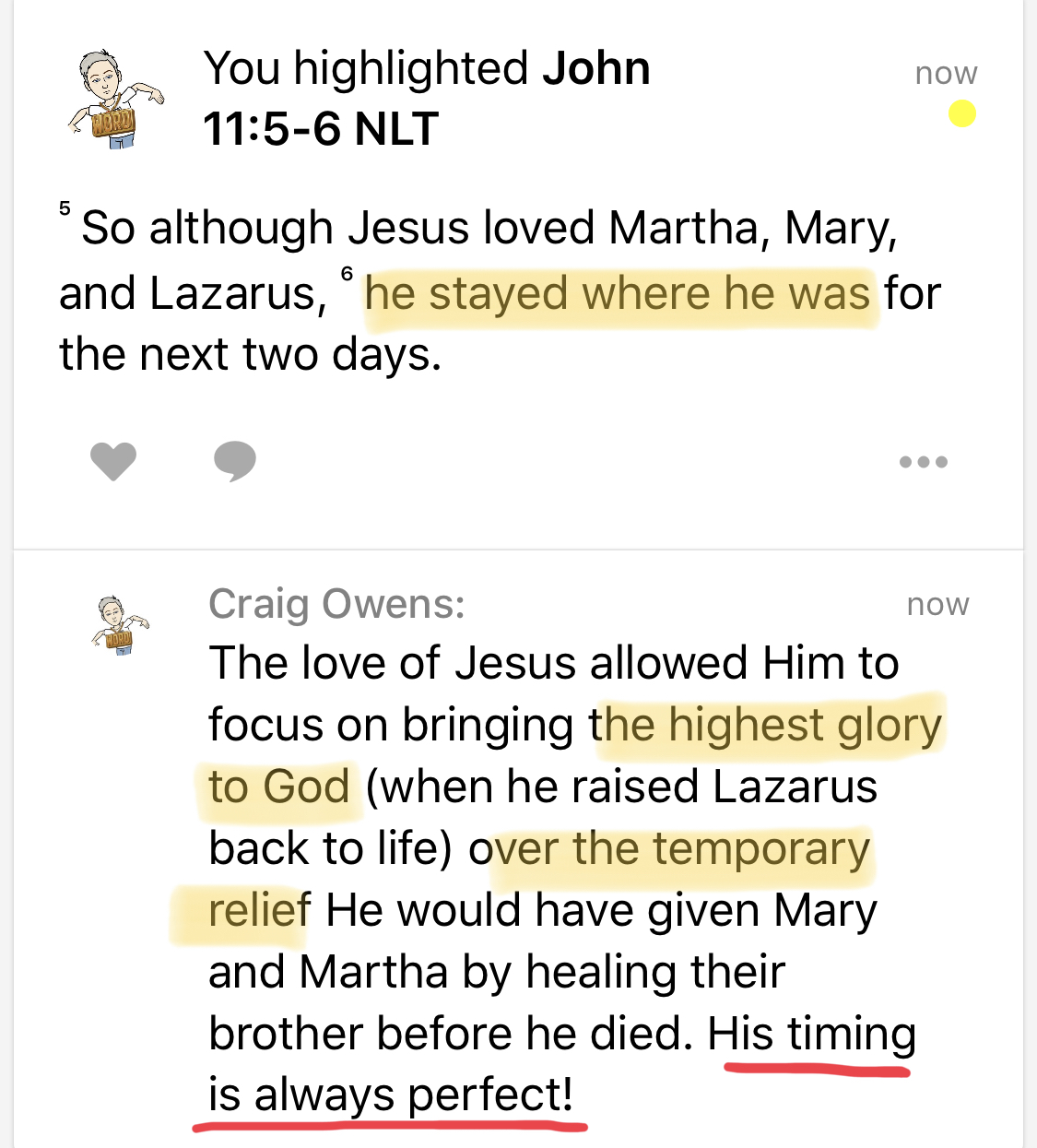
Christ’s Love Has Perfect Timing!