Links & Quotes

link quote

“True revival can never take place without this kind of all-consuming hunger for God’s Word. Indeed, when God’s people grow weary of hearing His Word preached, a spiritual death begins—and the joy of the Lord departs.” —David Wilkerson

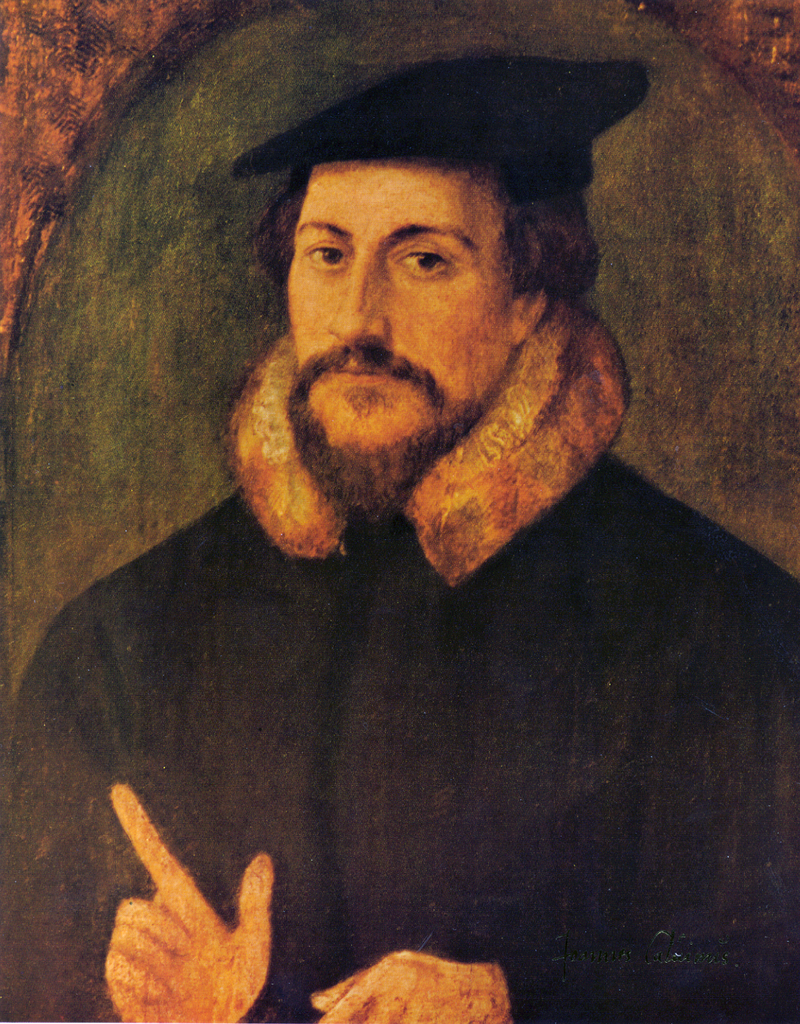
“The Scriptures should be read with the aim of finding Christ in them. Whoever turns aside from this object, even though he wears himself out all his life in learning, he will never reach the knowledge of the truth.” —John Calvin

“Let men see that the world has changed, not you—that man’s opinions and man’s maxims have veered round to another quarter, but that you are still invincibly strong in the strength which trusting in God alone can confer.” —Charles Spurgeon

“The Missionary Spirit of God is ever restless. Where is it dark? Where is it hopeless?  Where is there no church? Where are there no Christians? Where is the Father’s glory not known? Where are their tongues that blaspheme and knees refusing to bow to King Jesus? It is there that we must go, must stay, must live, and must die.” —Dick Brogden

“Have you ever looked up? Have you ever been hugged? Have you ever sat in front of a warm fire? Have you ever walked in the woods, sat by a lake, lain in a summer hammock? Have you ever drunk your favorite drink on a hot day or eaten anything good? Every desire is either a devout or a distorted enticement to the glory of heaven. You say you haven’t tasted God’s glory. I say, you have tasted the appetizers. Go on to the meal.” [Psalm 34:8] —John Piper

“Our Heavenly Father also exhorts us to be men. He wants you to be like Him. When He calls you to ‘be perfect as our Father in heaven is perfect,’ He’s asking you to rise above your sinful tendencies to impure eyes, fanciful minds, and wandering hearts. His standard of purity doesn’t come naturally to you. He calls you to rise up, by the power of His indwelling presence, and be the man He created you to be.” —Steve Arterburn

Supreme Court Justice Antonin Scalia has great insight into what gives Americans their freedom. Check out this post on the United States Constitution.

[VIDEO] Dr. Bobby Conway answers a good question: Do Christians sin?

Links & Quotes

link quote

“The world has put a little letter before the word ‘musing,’ and these are the days, not for musing, but for a-musing. People will go anywhere for amusement; but to muse is a strange thing to them, and they think it dull and wearisome. … Now there is much virtue in musing, especially if we muse upon the best, the highest, and the noblest of subjects. If we muse upon the things of which we hear and read in sacred Scripture, we shall do wisely. It is well to muse upon the things of God, because we thus get the real nutriment out of them. A man who hears many sermons, is not necessarily well-instructed in the faith. We may read so many religious books, that we overload our brains, and they may be unable to work under the weight of the great mass of paper and printer’s ink. The man who reads but one book, and that book his Bible, and then muses much upon it, will be a better scholar in Christ’s school than he who merely reads hundreds of books, and muses not at all.” —Charles Spurgeon

“Patients do not serve their physicians. They trust them for good prescriptions. The Sermon on the Mount is our Doctor’s medical advice, not our Employer’s job description.” —John Piper

“Every time I open my Bible I will read it as the Word of ‘God, that cannot lie;’ and when I get a promise or a threatening, I will either rejoice or tremble because I know that these stand fast.” —Charles Spurgeon

I can use this: 25 habits to get a better night’s sleep.

Rev. Tim Dilena has an amazing reminder of God’s perfect timing in sending Jesus to earth—He Couldn’t Have Timed It Any Better.

“Given the Greek and Roman acceptance of homosexuality, it is difficult to overstate the courage and conviction required by the early Church to write and speak out on behalf of a biblical, sexual ethic.” Read more in the article When Christians Rejected Homosexuality.

Eric Metaxas shares some good news from Baltimore.

17 Final Quotes From “Not Knowing Where”

Not Knowing WhereI’ve been sharing some of the amazing quotes from Oswald Chambers’ book Not Knowing Where. Here is the last set of quotes from this book.

“The natural life is not spiritual, it can only be made spiritual by deliberately casting it out and making it the slave instead of the ruler. … Jesus Christ cannot give me a meek and quiet spirit, I have to take His yoke upon me; that is, I have to deliberately discipline myself. … If we do not resolutely cast out the natural, the supernatural can never become natural in us.”

“Remember, Abraham had to offer up Ishmael before he offered up Isaac. Some of us are trying to offer spiritual sacrifices before we have sacrificed the natural. The only way we can offer a spiritual sacrifice to God is to do what He tells us to do, discipline what He tells us to discipline.”

“Common sense is not faith and faith is not common sense; they stand in the relation of Ishmael and Isaac, of the natural and spiritual, of individuality and personality, of impulse and inspiration. Faith in antagonism to common sense is fanaticism, and common sense in antagonism to faith is rationalism. The life of faith brings the two into right relationship.”

“We have the idea that the body, individuality, and the natural life are altogether of the devil; they are not, they are all of God, designed by God, and it is in the human body and in the natural order of things that we have to exhibit our worship of God. The danger is to mistake the natural for the spiritual, and instead of worshiping God in my natural life to make my natural life God.”

“How am I going to find out what the will of God is? In one way only, by not trying to find out. If you are born again of the Spirit of God, you are the will of God, and your ordinary common sense decisions are God’s will for you unless He gives an inner check. When He does, call a halt immediately and wait on Him. Be renewed in the spirit of your mind that you may make out His will, not in your mind, but in practical living. God’s will in my common sense life is not for me to accept conditions and say—‘Oh well, it is the will of God,’ but to apprehend them for Him, and that means conflict, and it is of God that we conflict. Doing the will of God is an active thing in my common sense life.”

“As Abimelech rebuked Abraham when he was in the wrong (see Genesis 20), and Abraham in his turn rebuked Abimelech, so in the same way the children of men from time to time rebuke the children of God, and the children of God rebuke the politics of natural men. Compromise with each other or unity between them is immoral. Arbitration until He comes Whose right it is to reign is the God-ordained program.”

“The very nature of faith is that it must be tried; faith untried is only ideally real, not actually real. Faith is not rational, therefore it cannot be worked out on the basis of logical reason; it can only be worked out on the implicit line of living obedience.”

“God does not further our spiritual life in spite of our circumstances, but in and by our circumstances.”

“To say ‘Here I am’ when God speaks, is only possible if we are in His presence, in the place where we can obey.” 

“God never fits His Word to suit me; He fits me to suit His Word.”

“True faith does not so much take God at His Word as take the Word of God as it is, in the face of all difficulties, and act upon it, with no attempt to explain or expounded.”

“The path to God is never the same as the path of God. When I am going on with God in His path, I do not understand, but God does; therefore I understand God, not His path.”

“Christ died in the stead of me. I, a guilty sinner, can never get right with God, it is impossible. I can only be brought into union with God by identification with the One Who died in my stead. No sinner can get right with God on any other ground than the ground that Christ died in his stead, not instead of him.” 

“The maturity of character before God is the personal channel through which He can bless others. If it takes all our lifetime before God can put us right, then others are going to be impoverished.”

“The genius of the Spirit of God is to make us pilgrims, consequently there is the continual un-at-home-ness in this world (cf. Philippians 3:20).”

“It is impossible for a saint, no matter what his experience, to keep right with God if he will not take the trouble to spend time with God. In order to keep the mind and heart awake to God’s high ideals you have to keep coming back again and again to the primal source.”

“Bitterness and cynicism are born of broken gods; bitterness is an indication that somewhere in my life I have belittled the true God and made a god of human perfection.”

You can read other quotes I’ve shared from Not Knowing Where by clicking here, here, and here.

And my book review of Not Knowing Where is here.

John Calvin On Prayer

John CalvinSome great quotes from John Calvin on prayer…

“Oh Lord, Heavenly Father, in Whom is the fullness of light and wisdom, enlighten our minds by Your Holy Spirit, and give us grace to receive Your Word with reverence and humility, without which no one can understand Your truth.” —John Calvin

“O grant that we may learn to rely wholly on Your goodness.” —John Calvin

“Prayer is the spade with which we dig up all the promises in God’s garden.” – John Calvin  

“Whenever men are to pray to God concerning any great matter, it would be expedient to appoint fasting along with prayer. Their sole purpose in this kind of fasting is to render themselves more eager and unencumbered for prayer… with a full stomach our mind is not so lifted up to God.” – John Calvin

14 Quotes From “Not Knowing Where”

Not Knowing WhereNot Knowing Where is the first Oswald Chambers book I ever read, and I was instantly hooked. I recently re-read this book and found new gems I hadn’t seen before. You can read my full book review by clicking here, and then enjoy a few of the many, many quotes I highlighted this time around.

“To debate with God and trust common sense is moral blasphemy against God. … When God calls us He does not tell us along the line of our natural senses what to expect; God’s call is a command that asks us, that means there is always a possibility of refusal on our part. Faith never knows where it is being led, it knows and loves the One Who is leading.”

“The call of God only becomes clear as we obey, never as we weigh the pros and cons and try to reason it out.”

“God will never allow you to hold a spiritual blessing for yourself, it has to be given back to Him that He may make it a blessing to others. If you hoard it, it will turn to spiritual dry rot.”

“There is a difference between circumstances and environment. We cannot control our circumstances, but we are the deciders of our own environment. … ‘Circumstances over which I have no control’ is a perfectly true phrase, but it must never be made to mean that we cannot control ourselves in those circumstances.”

“At times it appears as if God has not only forsaken His Word, but has deliberately deceived us. We asked Him for a particular thing, or related ourselves to Him along a certain line, and expected that it would mean the fullness of blessing, and actually it has meant the opposite—upset, trouble and difficulty all around, and we are staggered, until we learn that by this very discipline God is bringing us to the place of entire abandonment to Himself.”

“God holds His children responsible for the way in which they interpret His will. We only discern God’s will by being renewed in the spirit of our minds in every circumstance we are in. We must learn to tell ourselves the truth on the basis of God’s Word.”

“In worship I deliberately give back to God the best He is given me that I may be identified with Him in it.”

“The greatest enemy of the life with God is not sin, but the good that is not good enough. … Many of us do not go on in our spiritual life because we prefer to choose what is our right instead of relying upon God to choose for us.”

“Reality is not found in logic; Reality is a Person.” 

“Spiritual fatigue comes from the unconscious frittering away of God’s time. When you feel weary or are exhausted, don’t ask for hot milk, but get back to God.”

“To say ‘I have got the victory’ is a selfish testimony; the testimony of the Spirit of God is that the Victor has got me.”

“A saint is not an angel and never will be; a saint is the flesh and blood theater in which the decrees of God are carried to successful issues. All of which means that God demands of us the doing of common things while we abide in Him.”

“Self-pity is satanic.”

“There is nothing more heroic than to have faith in God when you see so many better things in which to have faith.”

Attitude Check

Attitude checkWhen we realize that nothing can thwart God’s plan, and that you and I are a part of that plan, I think there could be a couple of attitudes that might pop up: (1) Confidence―not in my abilities, but in God’s; or (2) Humility―not thinking less of myself, but thinking of myself less.

Confidence without humility leads to self-destructive pride, and humility without confidence leads to self-destructive fear. We need confidence with humility, just like Jesus demonstrated in going to the old rugged Cross.

We can see the confidence in Jesus when He claims to be the “I AM” (John 8:54-59). But we can also see the humility of Jesus when He said He would lay His life down (John 10:11, 15:13).

These two attitudes converge powerfully in John 13:1-17 when we read that Jesus knew that God had put all authority under His command (vv. 1, 3), and then He used His confident authority to serve His friends by washing their feet.

Confidence without humility won’t serve because it thinks others must serve them. Humility without confidence won’t serve because it thinks others will take advantage of them. But Jesus was confidently humble (or humbly confident) so He could serve. It’s the only time Jesus said “I have set you an example” (v. 15). Our attitude is to mirror His, and we are to confidently and humbly serve.

A humbly-confident / confidently-humble servant is known by his or her:

  • Heart―E.G.O. (edging God out) or E.G.O. (exalting God only) [*]
  • Head―having his/her thoughts aligned with the Word of God
  • Hands―serving God and others (Matthew 20:25-28)

If you were to honestly reflect on this, where do you rate yourself?

  • Are you confident that God loves you and has a plan for your life, a plan that cannot be thwarted?
  • Are you humble enough to serve others? To give up your own agenda so that God is glorified?
  • Can you honestly say you have the right E.G.O.?
  • Are your thoughts becoming more and more aligned and shaped by God’s Word?

We’ll be continuing our series on The Old Rugged Cross next Sunday, and I would love to have you join us.

[*] My thanks to Kenneth Blanchard for his insightful description of E.G.O. in his book Lead Like Jesus

21 Benefits From Doing Things God’s Way

got wisdom?I was reading Proverbs 3 this morning, and the opening words are, “My son, do not forget my teaching….” As if to emphasize why we shouldn’t forget how God tells us to live, Solomon lists at least 21 benefits that come from doing things God’s way―

  • A life worth living
  • Tranquility
  • Favor
  • Good reputation with God and people
  • God will keep you on track
  • Health and strength
  • Overflowing success
  • God’s discipline
  • Wisdom and understanding
  • Better return on investments
  • Riches and honor
  • Peace
  • Blessing
  • Safety
  • Sweet sleep
  • Fearlessness
  • Confidence
  • God’s friendship
  • A blessed home life
  • Grace
  • Honor

Now that’s a list worth having! And it’s all there for the one who will heed God’s Word and obediently live out what He says.

An Insightful Dozen From Andrew Murray

Andrew MurrayI love the insight of this godly man, and I hope you enjoy these quotes too…

“God, as Creator, formed man to be a vessel in which He could show forth His power and goodness. Man was not to have in himself a fountain of life or strength or happiness. The ever-living and only living One was intended each moment to be the communicator to man of all that he needed.” 

“The blessing of God’s Word is only to be known and enjoyed by obeying it: ‘If you love Me, you will obey what I command’ (John 14:15). Keeping His Word is the only proof of a genuine saving knowledge of God, of not being self-deceived in our faith, of God’s love being experientially known and not merely imagined.”

“The person who reads his Bible with longing and determination to learn and to obey every commandment of God is on the right path to receiving all the blessing the Word is meant to bring.”

“The New Testament standard of Christian commitment is barely realized in the church today. Its whole tone is intensely supernatural. Christian commitment and devotion involves a life totally identified with the life of Christ. It must be a life in the continual presence and under the guidance of the Holy Spirit.”

“Many pray for the Spirit that they may make use of Him and His power for their work. This is an entirely wrong concept. It is He who must use you.”

“Unless we are willing to pay the price, to sacrifice time and attention and seemingly legitimate or necessary tasks for the sake of the spiritual gifts, we need not look for much power from above in our work. God’s call to much prayer need not be a burden or cause for continual self-condemnation. He intends it to be a joyful task. He can make it an inspiration. Through it He can give us strength for all our work and bring blessing to others by His power that works in us.”

“Let our lack of prayer convict us of the coolness in our Christian life that lies at the root of it. God will use the discovery to bring us not only the power to pray that we long for but also the joy of a new and healthy life of which prayer is the spontaneous expression.”

“Our prayers must not be vague appeals to His mercy or indefinite cries for blessing, but the distinct expression of a specific need. It is not that Jesus’ loving heart does not understand our cry or is not ready to hear, but He desires that we be specific for our own good. Prayer that is specific teaches us to better know our own needs.”

“Do you see what holiness is and how it is to be found? It is not something formed in you. It is not something put on you from without. Holiness is the presence of God resting on you. Holiness comes as you consciously abide in that presence, doing all as a sacrifice to Him.”

“The connection between the prayer life and the Spirit life is close and indissoluble. … Learn from our Lord Jesus how impossible it is to walk with God, obtain God’s blessing or leading, or do His work joyously and fruitfully apart from close, unbroken fellowship with the One who is our living fountain of spiritual life and power.”

“His blood is the eternal and undeniable proof that God the Father and Christ will do for you all that is needed, and that they will not forsake you until they have accomplished their work in you from beginning to end.”

“Live your daily life in full consciousness of being righteous in God’s sight, an object of delight and pleasure in Christ. Connect every view you have of Christ in His other graces with this first one: Christ Jesus—our righteousness from God. This will keep you in perfect peace.”

Links & Quotes

link quote

“Hope is not some vague emotion that comes out of nowhere, like a stomachache. Hope is the confidence that the stupendous future promised to us by the Word of the Spirit is going to really come true. Therefore, the way to be filled with the Spirit is to be filled with His Word. The way to have the power of the Spirit is to believe the promises of His Word.” —John Piper

“God never fits His Word to suit me; He fits me to suit His Word.” —Oswald Chambers

Good food for thought: Let’s Bring Conversation Back.

Seth Godin has more great insight in More Trouble Than It’s Worth.

An interesting discussion on the state of the United States Armed Forces: The World Is Becoming More Dangerous.

4 Notes On Haggai

(c) Laura Kranz at The Overview Bible Project (see my note below)

(c) Laura Kranz at The Overview Bible Project (see my note below)

The prophet Haggai wrote one of the shortest books in the Old Testament, and his recorded ministry only spans five months(!) in 520 B.C. But in this short book I find four really cool things—

(1) God uses His people at specific times for specific purposes. All of Haggai’s messages from God have a very precise date stamp on them, so we know exactly when  they were delivered. Also, most of his messages say something like, “The word of God came through Haggai to Zerubbabel [or to Joshua, or to the people, or to the priests].” If God used Haggai like this, isn’t it likely that He is using you or I at specific times and for specific purposes?

(2) God invites us to “give careful thought” to His messages. Five times God says, “Give careful thought to your ways” (1:5, 7; 2:15, 18). This phrase literally means to take a strong hold on each thought and examine it intensely. This thought process is always connected to another phrase: “This is what the Lord Almighty says….” In other words, we are to thoughtfully examine our lifestyle with God’s Word being the standard of measurement (cf. 2 Corinthians 10:5).

(3) Obeying God’s Word brings God’s “stirring.” When God says move and we move, His Spirit will energize our spirit, and empower our lives for action. God never calls us to do something without giving us the empowerment to do it.

(4) I need to act courageously. God calls us to “be strong” (three times in 2:4) “and work, for I am with you.” Courageous action after God has stirred us up drives out fear. On the flip side, inactivity because of fear almost always leads to more fear and more inactivity.

Don’t ever let the category “minor prophet” trick you into thinking God doesn’t have a major message to share with you. Just one word from God is more powerful than we can ever imagine!

(The portrait of Haggai in this post was created by Laura Kranz at The Overview Bible Project. She and her husband Jeffrey do some amazing things that will add insight to your Bible study time. Click here to read my review of their book The Illustrated Guide To The Authors Of The Bible. And while you’re on their website, subscribe to some of the cool guides that regularly get emailed out.)