There the angel of the Lord appeared to Moses in a blazing fire from the middle of a bush. (Exodus 3:2 NLT)
Chris Quilala said, “Throughout history God has revealed Himself in many different ways, leaving those touched by Him forever changed. … God’s miraculous display is never without purpose.”
Even outside the Bible, William Wilberforce was convinced of God’s creative power by watching a spider weave her web; C.S. Lewis believed in God’s presence by watching the wind swirl some leaves; John Newton fell to his knees in surrender on board a ship as he experienced God’s awesome power in a massive storm at sea.
God is always revealing Himself—always speaking to us.
Are you open to hearing His voice in both miraculous and everyday ways?
Listen to the podcast of this post by clicking on the player below, and you can also subscribe on Apple, Spotify, or Audible.
Have you ever heard the phrase “in name only”? For instance, someone might say, “He’s the boss around here in name only, but the one who really calls the shots is someone else.” We might give the title “boss” to someone just for convenience because “The guy who thinks he’s in charge” is probably too awkward to keep saying! We know the true boss by what he or she says or does, and how people respond to him or her.
I think this is true when someone says, “God,” you might wonder just what they mean by that. Sennacherib’s field commander appeared to be confused by this, as he uses both “God” and “god” interchangeably in 2 Kings 18:19-22, 32-35. But the foretelling of the Advent of the Christ makes it perfectly clear to Whom the prophets were pointing (Isaiah 9:6-7).
Let’s consider the title Mighty God. The word God is the Hebrew word el. It is translated many ways, but let’s find out which definition is correct in this foretelling of Jesus.
A god-like person
A mighty hero
An angel
A manmade god
The One True God
We can eliminate “a god-like person” from Exodus 15:11.
We can eliminate “a mighty hero” from Psalm 82:1.
We can eliminate “an angel” from Psalm 29:1 and Isaiah 6:1-3.
We can eliminate “a manmade god” from Isaiah 14:12-15.
So it must mean He is The One True God! One of Isaiah’s favorite phrases is “the Lord Almighty” which he uses 61 times (e.g. Isaiah 47:4)!
Isaiah 40 is one of the most descriptive chapters of the Lord Almighty. In here we see that…
He forgives sin (vv. 1-2)
He is beyond description (v. 12)—holding the world’s 326 quintillion gallons of water in the hollow of His hand, fitting the 10 septillion stars of the cosmos across the breadth of His hand, and carrying the weight of the Earth (1.3 octillion pounds) easily in His basket!
He is distinguished from manmade gods (vv. 18-20, 25)
His strength is absolutely unrivaled (vv. 26, 28)
How do we know these descriptive words in Isaiah point to Jesus? Look at these First Testament Scriptures compared to Christ’s First Advent:
Isaiah 40:3-5 foretells the messenger who would herald Christ’s arrival. Zechariah is inspired by the Holy Spirit to make this connection to his son John (Luke 1:76-77), and then John lives this out (Mark 1:1-3).
Remember that 40:1-2 says that The One True God forgives sins, which is what John the Baptizer sees in Jesus (John 1:29).
In 41:10, 13-14 we read of God shining His light into darkness to set people free, which is another thing that Zechariah connects to Jesus (Luke 1:67-75).
Jesus wasn’t God in name only, but His words and action—and the response of those who saw and heard Him—affirmed that He is the Mighty God that was foretold (John 8:48-59; Mark 14:60-64).
Notice also how the early New Testament saints proclaimed Christ’s unique deity, stating clearly that He is the fulfillment of all of the prophetic words that point to Him as The One True God (Acts 4:8-10, 12, 18; 5:27-32).
Peter and John said, “We are witnesses of this.” We too are witnesses of this if we have accepted Jesus as our Lord and Savior. We get to proclaim His Lordship by our verbal testimony and our lifestyle. As C.S. Lewis said, “A man who was merely a man and said the sort of things Jesus said would not be a great man or a moral teacher. He would either be a lunatic—on the level with the man who says he is a poached egg—or else he would be the devil of hell. You must take your choice. Either this was, and is, the Son of God; or else a madman or something worse. You can shut Him up for a fool…or you can fall at His feet and call Him Lord and God.”
In Philippians 2:9-11, Paul points out that Jesus has the name above every name and that every knee must bow to Him and every tongue confess that He is Mighty God! Today, let us bow our knee to Him and lift our voices proclaiming that He is Lord and God until our One True God takes us home or returns at His Second Advent.
If you’ve missed any of the other message in our Advent series called Jesus Is…, you can find them all here.
Listen to the podcast of this post by clicking on the player below, and you can also subscribe on Apple, Spotify, or Audible.
Jesus made His first appearance as a fully human Man in a stable in Bethlehem. But His Advent—or appearing—had been anticipated for a long time before that.
In fact, one of the darkest chapters in human history takes place shortly after human history began. Mankind sinned and was separated from God because of that sin. The initial separation foretold an eternal separation (Genesis 3:22), but God shines His light of hope in this darkest hour, foretelling the Advent of our rescue (3:15).
Seven hundred years before Christ’s birth in Bethlehem, the setting is still dark and getting darker. Sin is running rampant, God’s people are groping in darkness, and enemies are pressing in from every side.
Out of the darkness, God speaks (Isaiah 8:5-10), giving us a glimpse of the Messiah’s glory. Notice the hope-filled words Immanuel (v. 8) and God with us (v. 10). This darkness is the inevitable result of not gazing on God’s glory (vv. 21-22), and yet there appears another glorious promise in a single word: Nevertheless (9:1-7).
We get a glimpse of Immanuel’s glory in the titles that will describe our Messiah. Let’s look first at Wonderful Counselor.
Wonder can have two definitions:
Something so extraordinary that it is hard for our finite human minds to comprehend—Exodus 15:11; Isaiah 25:1 NLT.
God’s awesome deeds: His works that leave us in absolute awe of His greatness—Jeremiah 32:17 AMPC.
Counselor is someone who gives counsel; not just any counsel, but perfect counsel because He is omniscient (knows it all) and omnipotent (can do it all)—Isaiah 14:26-27; Psalm 139:1-6; Psalm 32:8.
Job got a glimpse of this Awesome Counselor too in Job 42:1-6.
Our First Testament friends only got a glimpse of the Messiah’s glory, but we have the glory revealed to us—Hebrews 1:1-3a; Matthew 1:22-23; John 1:5, 14, 18.
We have His wonderful counsel revealed to us too—Luke 5:20-26; John 7:37-46.
And we look forward to seeing His glory undimmed at His Second Advent—John 1:47-51; Mark 14:61-62.
As we live now between the Advents, we have the joyful privilege and responsibility to proclaim this glory to those still living in darkness—Matthew 28:18; Acts 4:30.
See how the saints proclaimed Christ’s glory, relying on His wonderful counsel in Acts 4:13, 20, 31; 5:12; 6:8, 10; 8:6-8. This is how we are to live too (2 Thessalonians 2:16-17).
As you live between the Advents, I pray that the glory of our Wonderful Counselor will become more real to you and that it will shine out of every word you speak and everything you do!
Check out the other posts in this series Jesus Is…here.
Listen to the podcast of this post by clicking on the player below, and you can also subscribe on Apple, Spotify, or Audible.
I love the Fibber McGee and Molly radio broadcasts! One of the running gags on this show was Fibber’s closet: People who mistakenly opened the closet door got buried under a pile of stuff that Fibber had stashed away.
In one episode, Molly is determined to grow through all of the items that were strewn across the floor before they got shoved back into the closet. One by one Molly asked Fibber about all of the odd knick-knacks and he had a good explanation for every single one justifying why he couldn’t possibly part with it. One of my favorites was this—“What’s this bamboo pole,” Molly asked, and Fibber said, “Why, that pole is very important. If I was ever offered to be Joe Louis’ sparing partner, that’s the ten-foot pole I wouldn’t touch it with!”
I’m afraid that many of us have closets like this in our minds. We’ve accumulated a lot of just-in-case stuff for each and every scenario that may come upon us at some point in our lives.
All of our contingency plans implies that something is going to go wrong and that only the prepared and well-stocked will make it through.
Psalm 107 is the first psalm in Book 5 of the Psalter—the book that focuses mostly on praise. This author is recounting the history of Israel through the times of crisis:
lost and homeless (v. 4)
hungry and thirsty (vv. 5, 9)
trouble and distress (vv. 6, 13, 19, 28)
darkness and deepest gloom (vv. 10, 14)
prisoners in chains (v. 10)
knocking on death’s door (v. 18)
terrorized (v. 26)
at their wits’ end (v. 27)
We quickly go into crisis mode when we forget that God is in control!
In God’s Kingdom there is no emergency, no crisis, no Plan B. God is sovereignly in control—Isaiah 46:10.
God is in control of the macro—Genesis 1:1; Job 38:4-11
God is in control of the micro—Psalm 139:16; Jeremiah 29:11
God will use what we call a crisis to display His glory—Exodus 14:4 NLT
When you feel yourself spiraling into crisis mode—when you feel you’re at your wits’ end—you can get back into contentment mode.
“When a man is at his wits’ end it is not a cowardly thing to pray, it is the only way he can get in touch with Reality.” —Oswald Chambers
That’s what Job finally did—Job 42:1-2.
And that’s also what the psalmist did—Psalm 107:6-8, 13-15, 19-21, 28-31.
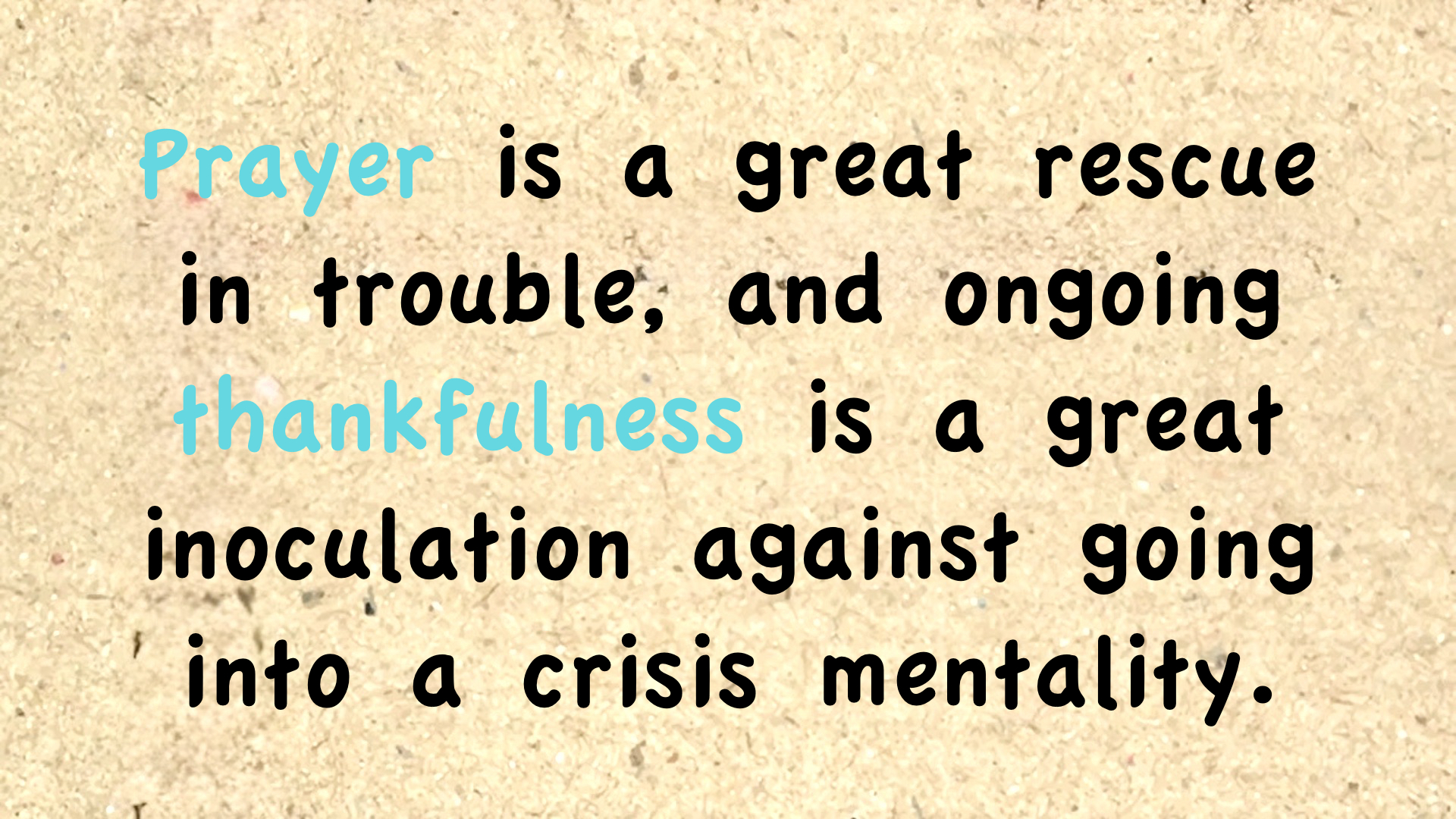
Prayer is a great rescue in trouble, and ongoing thankfulness is a great inoculation against going into crisis mentality. Notice that those four repeated phrases have both cried out to the LordANDLet them give thanks to the Lord for His unfailing love.
Let’s strive to remain aware of His unfailing love by cultivating consistent gratitude. I like v. 2 from the NLT: “Has the Lord redeemed you? Then speak out! Tell others He has redeemed you from your enemies”. When you are preoccupied with telling others and yourself how good God is, there isn’t room in your heart for the worry that leads toward crisis mode.
Remember: We can quickly go from contentment mode to crisis mode when we forget that God is in control, so remain full of thanks. “At all times and for everything giving thanks in the name of our Lord Jesus Christ to God the Father” (Ephesians 5:20 AMPC).
Listen to the podcast of this post by clicking on the player below, and you can also subscribe on Apple, Spotify, or Audible.
The last time we were together, Pastor Caleb mentioned that I was the only one he knew that put hot sauce on my eggs. But then several of you let him know that you do that too. After the service, someone told me that they like Tabasco sauce on their pizza, which isn’t something I enjoy.
We all have different tastes. Our tastebuds are just one of the things that makes us unique creations. Unique means one-of-kind, no one else like me. We don’t need to add something like “very unique” because just by itself the word means that God made a once-in-eternity masterpiece when He made you and me.
It’s a good thing that we are unique. I see what you don’t see, and you see what I don’t see. There are some things I know how to do well, but perhaps you struggle doing them. That’s okay because there are things you can do that I won’t have the opportunity to do. Combined together we saints make an amazing team!
The apostle Paul understood the value of unique individuals.
Titus was probably the one who carried Paul’s letter to the Corinthians and then had the responsibility to teach those saints how to carry out what was in the letter (2 Corinthians 2:12-13; 7:6-7, 13-15; 8:6, 16-17). Titus was the pastor that Paul sent to Crete. Paul quoted a poet who said, “Cretans are always liars, evil brutes, lazy gluttons” (Titus 1:12). Titus was confident and bold to stand his ground for what he believed (Galatians 2:1-3).
Timothy was more soft-spoken and tenderhearted, so Paul had to encourage him more (1 Timothy 4:7, 12), but he was the one who could soothe troubled spots. Timothy stepped in to help behind the scenes (Acts 18:1-5) and he was the one Paul reached out to with his last letter form prison, asking Timothy to come to him (2 Timothy 4:12).
What a great thing it is to have unique saints in our lives!
One person—not matter how gifted—cannot do it all. Look at Moses in Exodus 18:13-18. Even an anointed team like the 12 apostles cannot to it all. Look at Acts 6:1-2.
These leaders recognized the need to other uniquely gifted people to come alongside them. Moses was advised to choose capable men. In other words, those with the ability to judge disputes wisely (Exodus 18:19-25). The apostles chose those who were full of the Holy Spirit and wisdom (Acts 6:3-6). The Greek word for wisdom (sophia) means someone with heaven-sent wisdom that also has the ability to apply that wisdom effectively.
Israel in the Old Testament and the Church in the New Testament would have been constricted if those other people hadn’t agreed to let their God-given abilities be used.
God’s talent + My ability = God-ability
In 2 Corinthians 8-9, Paul is specifically talking about the ability of people to give their offerings to help the growing church, but there is a phrase that I think is appropriate for any application of our gifts: They gave themselves first of all to the Lord (2 Corinthians 8:5).
When what we do is a cheerful “get to” and not an obligatory “got to” it is noticed by everyone. Those two chapters in 2 Corinthians are filled with words like cheerful, eagerness, and enthusiasm.
Deliver-ability to get the needed items to those who need them
But none of these work without availability. This is the attitude that makes our God-ability a blessing and not a chore.
There is a place in ministry for every Christian. When you are available, God will allow the talent that He has given you to be a blessing to the Church. You benefit, the other saints benefit, and the watching world sees a living witness that will draw them to Jesus.
Listen to the podcast of this post by clicking on the player below, and you can also subscribe on Apple, Spotify, or Audible.
I was absolutely fascinated by a Messianic Jew’s insights on the Old Testament Tabernacle, and how every aspect of it pointed to Jesus the Messiah.
The overview of the construction of the Tabernacle starts in Exodus 25 and covers the next fifteen chapters in that book. Here are a few of my main takeaways from my friend’s teaching.
The materials for the Tabernacle are brought as a freewill offering given by freed slaves (Exodus 25:1-2). This gold, silver, bronze, linens, and other materials were gifts from the Egyptians when the Israelites left on the night of the Passover.
The Tabernacle is at the center of the Israelite camp (Numbers 2:1-34), signifying God’s presence in the center of our lives. When the Israelite community moved out, the tribe of Judah went first. Judah means “praise.” What a great reminder to let praise to God be at the forefront of all we do!
In Exodus 27:16, the materials to be used for the curtains compromising the entrance to the Tabernacle are blue, purple, and scarlet. The blue is for sky (Heaven), the purple designates royalty, and the scarlet signifies the blood of the sacrifices. Jesus came to earth as royalty from Heaven, and by His shed blood He opens the way for all of us to be with Him in Heaven forever! Jesus said He was the only way to Heaven (Hebrews 2:14-15; John 14:6).
The bronze altar for cleansing was just inside the entrance (Exodus 27:1-8). The worshiper offered this sacrifice in place of their sin. The priests would then move to the laver to wash off the dirt of the world. It’s important to note that the priests wash at the laver, not in the laver. Jesus is the One who washes us and cleanses us (Ephesians 5:26).
There are four different coverings over the Holy Place. As the priest progresses farther into the Holy Place, the coverings become thicker, so less outside light is visible.
First covering (Exodus 26:1) was blue, purple, and scarlet yarns (like the colors at the entrance) with cherubim woven into the fabric. The priests looking up would see these angels.
Second covering (v. 7) was goat’s hair. Goats were used for sin offerings, reminding the priests that there was a sacrifice to cleanse them so they could approach the presence of God.
Third covering (v. 14) was a red-dyed ram skin, showing the blood that covers us.
Fourth covering (v. 14) was the durable leather of a badger. Now there would have been very little light from outside, but the angels would still be seen for those inside the Holy Place.
In the Holy Place was the showbread (sometimes called the bread of presence) pointing to Jesus as our Bread of Life (Exodus 25:23-30; John 6:35). Also in the Holy Place was the lampstand filled oil (vv. 31-37). Only one stick holds the oil and supplies the other six branches. The priests could only work by the light of God. Jesus is our light (John 8:12). And we also find the altar of incense here (30:1-7). This was a unique perfume that wasn’t used anywhere else. The prayers of the saints that arise before the throne in Heaven as said to rise as incense (Psalm 141:2; Revelation 5:8). Worshipers in God’s presence are saturated with the aroma of Jesus (2 Corinthians 2:14-15).
In the Holy of Holies is the ark of the covenant of the Lord (25:10-22). Inside the ark were the stone tablets that contained the Ten Commandments. On top of the ark, overshadowed by the wings of two huge cherubim angels, was the mercyseat or atonement cover. Notice that mercy is over the Law, and that the blood of the sacrifice of Jesus covers my disobedience and makes me at one with God (the literal definition of atonement).
How beautifully all of these aspects of the earthly Tabernacle point to Jesus (Hebrews 8:5, 10:1)! And even more amazingly, Jesus fulfilled every requirement in this Tabernacle to make it possible for all who put their faith in Him to enter the Heavenly Tabernacle and remain in His presence for ever and ever!
Listen to the podcast of this post by clicking on the player below, and you can also subscribe on Apple, Spotify, or Audible.
There is a cliche people love to quote: “Give a man a fish and you feed him for a day. Teach a man to fish and you feed him for a lifetime.”
Is this how Christians should live?
It sounds like the experienced fisherman may be annoyed at having to catch a fish every day just to give it to someone else. If you want to put a noble spin on the cliche, you could say that the wise and patient fisherman invested his time to teach someone else to provide for themselves, never needing to return to their teacher.
This certainly wouldn’t be the example of Jesus.
As He was teaching the large crowd of people, whom He thought of as sheep without a shepherd, they became hungry. Jesus directed His disciples to feed them. He didn’t tell them to teach the crowd to provide for themselves.
As Jesus miraculously fed thousands of people, notice that He kept on giving until they were all satisfied—
And taking the five loaves and two fish, He looked up to heaven and, praising God, gave thanks and broke the loaves and kept on giving them to the disciples to set before the people; and He also divided the two fish among them all. And they all ate and were satisfied.(Mark 6:41-42 AMPC)
The example in the Old Testament was to look to God for a supply of manna every single day. In the New Testament, Jesus taught us to pray for our daily supply of bread every single day (Exodus 16:14-17; Matthew 6:11; John 6:35).
Jesus never wants us to become self-sufficient. Instead, He wants us to remain steadfastly connected to Himself—as surely as a branch is connected to the vine.
Far from teaching us to provide for ourselves, Jesus says, “If you remain in Me and I in you, you will bear much fruit; apart from Me you can do nothing” (John 15:5).
Jesus is never wearied by our continually coming to Him; rather, He is delighted when we do! He wants to be our supply each and every day for all of eternity!
Listen to the podcast of this post by clicking on the player below, and you can also subscribe on Apple, Spotify, or Audible.
If you’re a shepherd leader, what do you do when the sheep under your care go, “Grrrr!”?
To make sure that you haven’t done anything that caused the murmuring, you should humbly pray, “Search me, O God” (Psalm 139:23-24). And then, if you see you have done something wrong, repent and make things right. You may want to check out my blog post A Leader’s Sincere Apology.
After this, Moses has given us in Exodus 16:8-9 two actions to take with murmuring sheep:
If it wasn’t anything that you did, you need to remind yourself that the people are murmuring against God.
If it wasn’t anything that you did, you need to remind the sheep that they are murmuring against God.
T.M. is beginning a series on the ministry of the apostle Paul. He writes, “Paul was able to accomplish great things against great odds not because he was such an enthralling preacher (he was not) or had so many resources to invest in his work (he did not), but because he had such great confidence in his message and his Lord.” Check out this series.
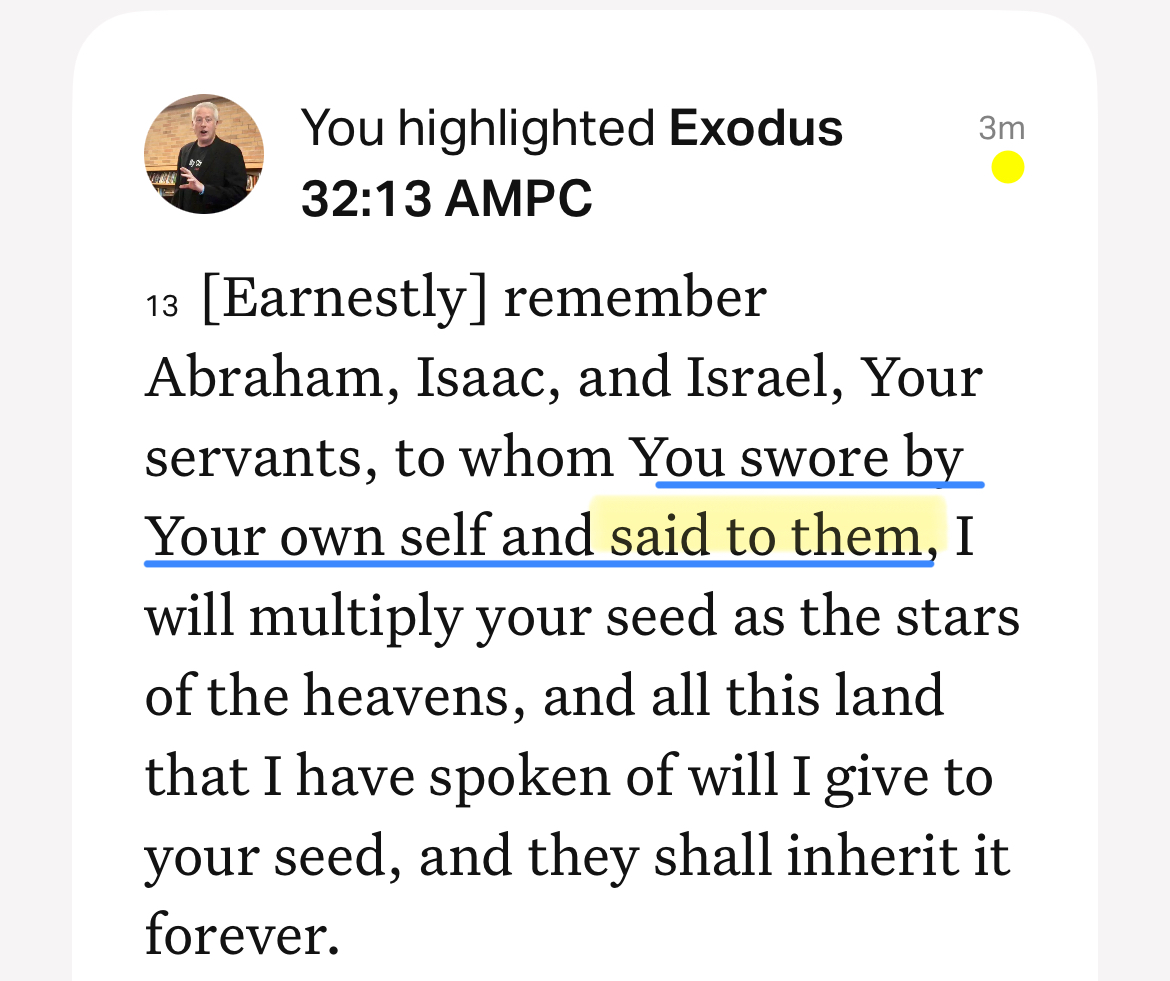
As a father, it always got my attention when my kids would remind me, “Dad, you said….” Not that God ever forgets anything He has promised, but when He hears Moses say, “You swore by Your own self and said to them,” He is pleased because this means that Moses is banking his faith on God’s unchangeable word. Let’s follow this example from Moses and use God’s Word to form our prayers to Him.
The ICR reports, “If the earth is 4.6 billion years old, virtually every square inch of the Earth’s surface would experience a host of erosive events.” But the fact that paleontologists have found so many well preserved foot tracks is a testament to both the Creation and Flood accounts recorded in biblical history.
“When ‘Aunt’ Fanny Lack, a 100-year-old Hoopa Indian woman, accepted Christ and was healed in 1920, she became a local sensation on the Hoopa Indian Reservation in northern California.” This is an amazing story!
“When you hate, the only person that is suffering is you because most of the people you hate don’t know it and the rest don’t care.” —Medgar Evers
Axis’ Culture Translator reported, “A study from World found that 26% of respondents admitted to flirting with a chatbot or AI, either for fun or unknowingly.” I love Axis’ conclusion: “Although social media was initially pitched as a supplement to real-life social interactions, the slope from supplement to replacement is steep. This Valentine’s Day, remind your teens that although real-life relationships can be difficult, we need both the affirmation and pushback that comes with them.”
Greg Morse shares the very real danger of shepherding God’s flock. He writes, “I enlisted to teach, preach, shepherd, and guide—but also to suffer, defend, and die, if the Lord should choose. As a son with his mother, a husband with his wife, a father with his children, so a pastor with his sheep. I am to defend them against all enemies foreign and domestic—spiritual and physical.” Pastors, I encourage you to read this article.
In the Tent of Meeting [of God with His people], outside the veil which sets apart the Testimony, Aaron and his sons shall keep it burning from evening to morning before the Lord…. (Exodus 27:21)
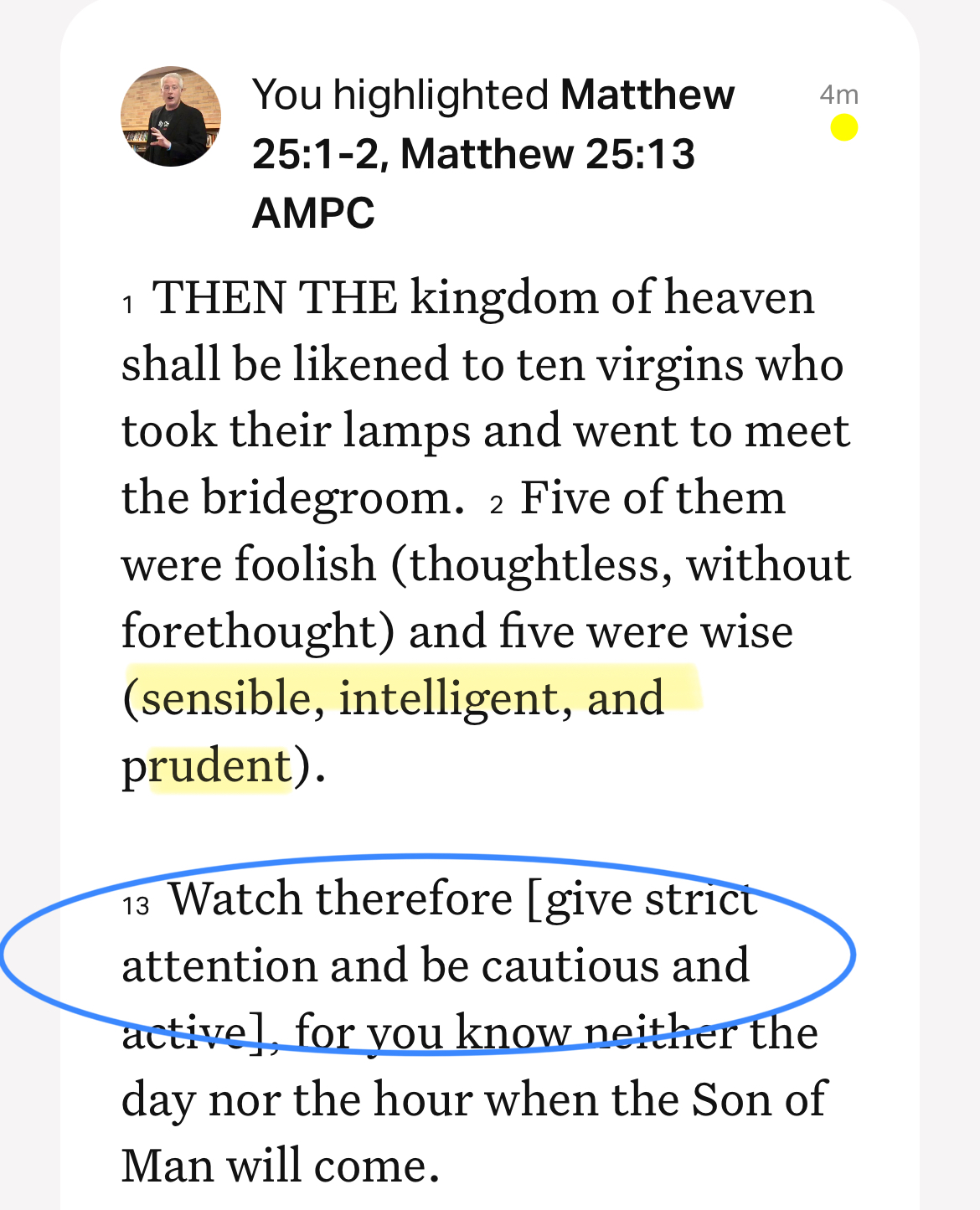
Then the kingdom of heaven shall be likened to ten virgins who took their lamps and went to meet the bridegroom. Five of them were foolish (thoughtless, without forethought) and five were wise (sensible, intelligent, and prudent). … Watch therefore [give strict attention and be cautious and active], for you know neither the day nor the hour when the Son of Man will come. (Matthew 25:1-2, 13)
Just as the lamps in the Tabernacle had to be continually supplied with oil so they never went out, we have to keep our lamps burning. We have the full supply of the Holy Spirit, but we have to make sure we don’t quench the Spirit. That means listening to His voice and responding in quick obedience.
If we want to be shining brightly when Jesus returns, we must “give strict attention and be cautious and active” every single day.














 Craig T. Owens