Thursdays With Spurgeon—The Assurance In Christ’s Ascension

This is a weekly series with things I’m reading and pondering from Charles Spurgeon. You can read the original seed thought here, or type “Thursdays With Spurgeon” in the search box to read more entries.

The Assurance In Christ’s Ascension

     Our Savior descended when He came to the manger of Bethlehem, and further descended when He became ‘a Man of sorrows and acquainted with grief’ (Isaiah 53:3). He descended lower still when He was obedient to death, even the death of the Cross—and further yet when His dead body was laid in the grave. … Long and dark was the descent. There were no depths of humiliation, temptation, or affliction that He did not fathom. …  

     The time came for our Lord to continue His homeward, upward journey and return to the glory from which He had come down. From the Mount of Olives, ‘while they watched, He was taken up, and a cloud received Him out of their sight’ (Acts 1:9). The rest of His upward progress we cannot describe. Imagination and faith step in and conceive of Him as rising beyond all regions known to us, far above all imaginable height. … 

     How high He ascended after He passed the pearly portal Paul cannot tell us, save that he says God ‘seated Him at His right hand in the heavenly places, far above all principality and power and might and dominion’ (Ephesians 1:20-21). He describes our Master as ‘dwelling in unapproachable light’ (1 Timothy 6:16). The Man Christ Jesus has gone back to the place from where His Godhead came! …

     We are sure that the purpose of His love is secure or He would not have returned to His rest. The love that brought Him here would have kept Him here if all things necessary for our salvation had not been finished. …

     Remember that His assent to the Father is representative. Every believer rose with Him and grasped the inheritance. When He rose up, ascending on high, He taught our feet the way. At the last His people will be caught up together with the Lord in the air, and so will they be forever with the Lord. He has made a stairway for His saints to climb to their bliss, and He has traveled it Himself to assure us that the new and living way is available for us. In His ascension He bore all His people with Him.

From Our Lord’s Triumphant Ascension

Jesus told His Father that He had completed everything He was sent to complete (John 17:4). John also says that Christ’s “It is finished” cry from the Cross also marked the completion of everything that had been prophesied about Jesus (John 19:28-30). 

Such amazing love brought Jesus to earth! And His steadfast love also made sure that He left absolutely nothing undone that was needed for our salvation! 

There’s now no reason for us to live fearful or anxious or skeptical about what is coming next. When Jesus says, “I will never leave you nor forsake you” and when He promises that He has gone to prepare a place for us to bring us to be with Him, He has demonstrated His authority to make these claims in His death, resurrection, and ascension. 

Oh my friends, live every day in that glorious assurance!

Where’s God When I Feel Abandoned?

Have you ever felt abandoned by someone? 

You stood up for someone, but when you needed someone to stand up for you they disappeared Or you did what was right, but no one recognized you for it? Or you were the encourager, but when you needed encouragement no one was around for you? Or maybe even you obeyed God down to the very last detail, and yet it seemed God abandoned you when you needed Him most? 

Jesus knows what every single one of these scenarios feel like! He stood up for the downtrodden, but they screamed, “Crucify Him!” He poured His life into teaching and encouraging His friends, but they all ran when the heat was on, leaving Jesus all by Himself. He obeyed God down to the very last detail, and yet it seemed like God abandoned Him when He needed Him most. 

Have you ever felt abandoned by God? 

Jesus did. 

Hanging from the Cross He cried out, “My God, My God, why have You forsaken Me?!” 

I cannot help but notice two things about the state of mind Jesus was in heading to the horrific treatment He would face (see Matthew 26:31-44; 27:27-46). 

  1. Jesus knew all of this was going to happen to Him. Notice the phrases “for it is written” and “so that the Scriptures would be fulfilled” and “so that the writings of the prophets might be fulfilled. Even His cry from the Cross was a literal quotation of Old Testament Scripture (Psalm 22:1).
  2. God was silent. Even though Jesus called out to His Father three times in prayer, “My Father!” there was no heavenly response. 

Why would God remain silent during this trial? God didn’t need to speak to His Son during the trial because He had already spoken to Him before the trial! 

It’s the same in our trials—

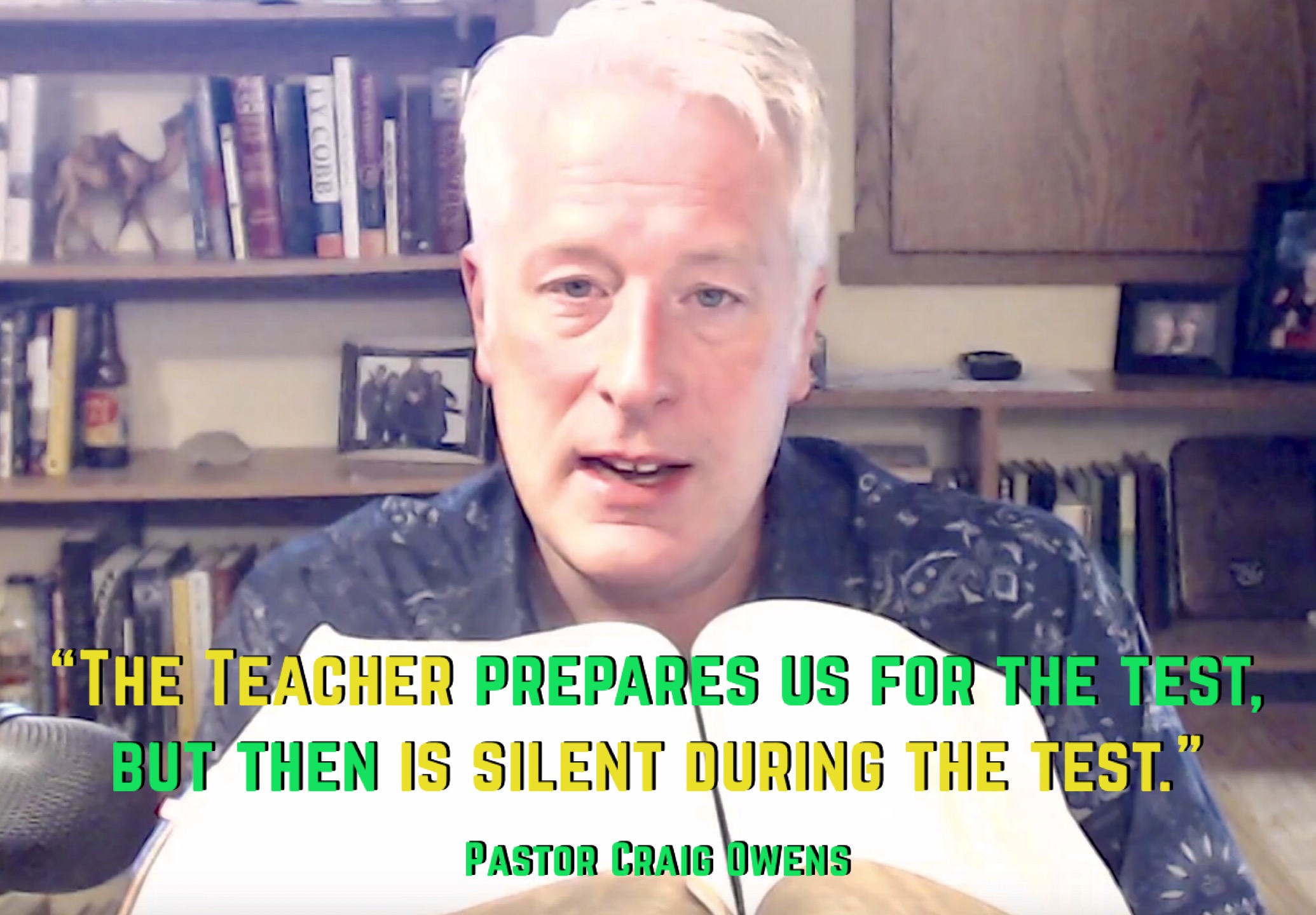
The Teacher prepares us for the test, but then is silent during the test. 

God’s silence is not His rejection or abandonment. Just as God provided for Jesus in His moment of trial, God has provided for us in our trials too—For no temptation (no trial regarded as enticing to sin), [no matter how it comes or where it leads] has overtaken you and laid hold on you that is not common to man [that is, no temptation or trial has come to you that is beyond human resistance and that is not adjusted and adapted and belonging to human experience, and such as man can bear]. But God is faithful [to His Word and to His compassionate nature], and He [can be trusted] not to let you be tempted and tried and assayed beyond your ability and strength of resistance and power to endure, but with the temptation He will [always] also provide the way out (the means of escape to a landing place), that you may be capable and strong and powerful to bear up under it patiently. (1 Corinthians 10:13 AMP) 

So let’s learn three invaluable lessons we can learn from Christ’s time of supreme suffering. 

1. Be honest in God’s presence 

Jesus didn’t hide His feelings, nor did He try to couch His vocabulary in “churchy” sounding words. God already knows what’s in your heart, so pour it out raw and honestly! Go to the Psalms and see raw emotions on full display in prayer. 

2. Lean all your weight on Jesus

Jesus prayed, “My Father!” and He cried out from the Cross, “My God!” His death on the Cross took away the barriers that kept up from coming into God’s presence (see 2 Corinthians 5:21). After His resurrection, Jesus sent this message to His friends: “Go instead to my brothers and tell them, ‘I am ascending to MY Father and YOUR Father, to MY God and YOUR God’” (John 20:17). 

3. Go to the Word of God

This is what Jesus did. In His moment of abandonment, He quoted Psalm 22 from the Cross. Jesus fulfilled ALL of the Scriptures, so now we can pray with greater assurance—For no matter how many promises God has made, they are “Yes” in Christ. And so through Him the “Amen” is spoken by us to the glory of God (2 Corinthians 1:20). 

God’s silence is NOT God’s abandonment. God’s silence is His invitation for us to be honest, to lean on Jesus, and to trust every promise in His Word. Every single promise that is Yes! and Amen! 

If you’ve missed any of the other messages in our Where’s God? series, please check out: 

And join me this Sunday as we take a look at how Jesus has conquered humanity’s ultimate enemy. 

Thursdays With Spurgeon—Why Did Jesus Suffer?

This is a weekly series with things I’m reading and pondering from Charles Spurgeon. You can read the original seed thought here, or type “Thursdays With Spurgeon” in the search box to read more entries.

Why Did Jesus Suffer?

     Think much of all your Lord suffered, but do not overlook the reason for it. If you cannot always understand how this or that grief worked toward the great end of the whole passion, yet believe that it has its share in the grand why. Make a life-study of that bitter but blessed question, ‘Why have You forsaken Me?’ …

     Why, then, did God forsake His Son? I cannot conceive any other answer than this: He stood in our place. There was no reason in Christ why the Father should forsake Him—He was perfect and His life was without spot. God never acts without reason, and since there were no reasons in the character and person of the Lord Jesus why His Father should forsake Him, we must look elsewhere. … 

     He bore the sinner’s sin and He had to be treated, therefore, as though He were a sinner, the sinner He could never be! With His own full consent He suffered as though He had committed the transgressions that were laid on Him. Our sin and His taking it upon Himself are the answer to the question, ‘Why have You forsaken Me?’ …

     So long as the smile of God rests on the man, the law is not afflicting him. The approving look of the great judge cannot fall upon a man who is viewed as standing in the place of the guilty. Christ suffered not only from sin, but for sin. If God will cheer and sustain Him, He is not suffering for sin. The judge is not inflicting suffering for sin if He is manifestly encouraging the smitten one. There could have been no vicarious suffering on the part of Christ for human guilt if He had continued, consciously, to enjoy the full sunshine of the Father’s presence. It was essential to being a victim in our place that He should cry, ‘My God, My God why have You forsaken Me?’ … 

     Beloved, see how marvelously, in the person of Christ, the Lord our God has vindicated His law!

From My God, My God Why Have You Forsaken Me?

The great apostle Paul wrote to the church at Corinth about his singular focus—When I came to you, I did not come with eloquence or human wisdom as I proclaimed to you the testimony about God. For I resolved to know nothing while I was with you except Jesus Christ and Him crucified. (1 Corinthians 2:1-2) 

“Think much of all your Lord suffered, but do not overlook the reason for it,” Spurgeon said. 

That earth-quaking, darkness-inducing, temple-rattling, soul-piercing cry of Jesus—My God, My God, why have You forsaken Me?—could only have been uttered by someone perfect. I know plenty of reasons why God could have forsaken me, but Jesus knew only a single reason. 

Jesus did not suffer because of something He had done wrong, but because of all I had done wrong.

That Cross was stained with His blood for my sin. 

Because He was forsaken, I am now accepted in the Beloved Jesus (Ephesians 1:6-7). Think much on this: Jesus was crucified for you and me SO THAT we wouldn’t have to bear the penalty of our sin. Justice was satisfied. Now, by faith in His sacrifice on the Cross, we can come to God not only with our sins forgiven, but we can be accepted by Him as His children. 

My friend, think much on this. Resolve to know the unspeakable value of Christ crucified for you. And then rejoice greatly that you are accepted in the Beloved. If you would like to know more, please contact me.

10 Quotes From “The Sermons Of Charles Spurgeon”

I share lengthy passages from Charles Spurgeon’s sermons in my weekly Thursdays With Spurgeon feature, along with my short commentaries. But here are some individual quotes from the prince of preachers who were just too good to not share! 

“Would you lose your sorrows? Would you drown your cares? Then go to plunge yourself in the Godhead’s deepest sea—be lost in His immensity. And you will come forth as from a couch of rest, refreshed and invigorated.” 

“Blessed be His dear name, He is unchanged in His love. When He first wrote the covenant, how full His heart was with affection to His people. He knew that His Son must die to ratify the articles of that agreement. He knew right well that He must rend His Best Beloved from His heart and send Him down to earth to bleed and die. He did not hesitate to sign that mighty covenant. Nor did He shun its fulfillment. He loves as much now as He did then. And when suns will cease to shine and moons to show their feeble light, He still will love on forever and forever.” 

“We sweat, we toil, and we fail. How often do we come back weeping because we have toiled, as we think, without success! Yet, Christian man, you have not been without success, for ‘He is still in one mind.’ All this was necessary to the fulfillment of His one purpose. You are not lost; your labor has not rotted under the clod. All, though you see it not, has been working together toward the desired end.” 

“Creation is an arrow from the bow of God, and that arrow goes on, straight on, without deviation to the center of the target that God ordained that it should strike.” 

“Though in the dark hours you and I may slip and often fall, yet His loving-kindness changes not. Your strong arm, O God, will bear us on. Your loving heart will never fail. You will not turn your love away from us or make it cease to pour upon us Your fierce anger, but having begun You will complete the triumphs of Your grace.” 

“God calls upon us, until the world is utterly destroyed with fire, to go on saving men with all our might and main. Every year that passes is meant to be a year of salvation. We rightly call each year the year of our Lord. Let us make it so by more earnest efforts for the bringing of sinners to the Cross of Christ.” 

“The very fact that you are made to groan and cry by reason of God’s long-suffering to guilty men gives you sympathy with Christ and union with Christ, who endured such contradiction of sinners against Himself! … But when, through the long-suffering of God with the ungodly, you are made to suffer, account it to be a mark of your salvation. ‘Rejoice and be exceedingly glad, for great is your reward in heaven, for so they persecuted the prophets who were before you’ (Matthew 5:12).” 

“Blessed be God, the effect of Christ’s medicine does not depend upon the degree to which we can realize how it acts, but if we receive it by faith, if it penetrates into the heart, if it takes possession of the affections, it will work in us that wondrous change by which we will be delivered from the love of sin and saved both from its condemnation and its power! Thank God for a simple gospel!” 

“Although our Lord Jesus Christ is more perfect than any other example—indeed, the only perfect example—yet it is easier to imitate Christ than it is to imitate some of the best of His people.” 

“Because the pill is gilded, you suck down the poison. Because the thing is popular, you patronize it, though it is lustful, it is abominable, it is deceitful!” 

More quotes coming soon, so stay tuned! 

Self-made Or Spirit-led?

“And behold, two men were conversing with Him—Moses and Elijah, who appeared in splendor and majesty and brightness and were speaking of His exit from life, which He was about to bring to realization at Jerusalem.” (Luke 9:30-31)

Jesus was constantly making decisions that kept Him on the path straight toward Calvary’s Cross. He would let nothing deter Him from God’s appointed mission. Even when His own friends and family urged Him to find another route. 

It was at a moment like this—when Jesus had yet another choice to make about what path He would follow—that Moses and Elijah talked to Him, reminding Him of the ultimate outcome of His obedient and correct choices. 

At every crossroads—at every decision point—Jesus chose correctly. He chose to do God’s will for His life. He could have decided to do things His own way, but He leaned into the unmistakable voice of the Holy Spirit pointing Him toward the right path.

What does that mean for us today?

I have failed to make the right choice.
That means that I could have chosen correctly.
Jesus was human just like me.
Which means He had choices too.
He always chose correctly, even though the other possibility was there.
So the question is: Will I try to be a self-made man or a Spirit-led man?
I cannot be both.

Poetry Saturday—The Precious Blood

Before Your Cross I kneel and see
the heinousness of my sin,
my iniquity that caused You to be
‘made a curse,’
the evil that excites the severity of divine wrath.

Show me the enormity of my guilt by
the crown of thorns,
the pierced hands and feet,
the bruised body,
the dying cries.

Your blood is the blood of incarnate God,
its worth infinite, its value beyond all thought.
Infinite must be the evil and guilt
that demands such a price.

Sin is my condition, my monster, my foe, my viper,
born in my birth,
alive in my life,
strong in my character,
dominating my faculties
following me as a shadow,
intermingling with my every thought,
my chain that holds me captive in the empire of my soul.

Sinner that I am, why should the sun give me light,
the air supply breath,
the earth bear my treat,
its fruit nourish me,
its creatures serve my ends?

Yet, Your compassion yearns over me,
Your heart hastens to my rescue,
Your love endured my curse,
Your mercy bore my deserved stripes.

Let me walk humbly in the lowest depths of humility,
bathed in Your blood
tender of conscience,
triumphing gloriously as an heir of salvation. —Arthur Bennett

Thursdays With Spurgeon—Blessed Assurance

This is a weekly series with things I’m reading and pondering from Charles Spurgeon. You can read the original seed thought here, or type “Thursdays With Spurgeon” in the search box to read more entries.

Blessed Assurance

     The Holy Spirit, who enabled me to believe, gave me peace through believing. I felt as sure that I was forgiven as before I felt sure of condemnation. I had been certain of my condemnation because the Word of God declared it, and my conscience bore witness to it; but when the Lord Jesus justified me, the same witnesses made me equally certain. The Word of the Lord in the Scripture says, “He who believes in Him is not condemned” (John 3:18), and my conscience bore witness that I believed, and that God in pardoning me was just. Thus I had the witness of the Holy Spirit and also of my own conscience, and these two agreed in one. …  

     I find the apostle Paul speaking by the Holy Spirit and saying, “Having been justified by faith, we have peace with God” (Romans 5:1). If I know that my trust is fixed on Jesus only, and that I have faith in Him, were it not ten thousand times more absurd for me not to be at peace than for me to be filled with joy unspeakable? It is but taking God at His Word, when the soul knows as a necessary consequence of its faith that it is saved. …  

     Has Jesus saved me? I dare not speak with any hesitation here; I know He has. His word is true; therefore I am saved. My evidence that I am saved does not lie in the fact that I preach, or that I do this or that. All my hope lies in this, that Jesus Christ came to save sinners. I am a sinner, I trust Him, then He came to save me, and I am saved. I live habitually in the enjoyment of this blessed fact, and it is long since I have doubted the truth of it, for I have His own Word to sustain my faith.

From The Autobiography Of Charles Spurgeon

The joy that Spurgeon recounts in his conversion is the same joy that is available to all who call on Jesus in faith. As Spurgeon was prone to quoting passages of hymns in his sermons and books, these words of his remind me of a favorite hymn as well—

Blessed assurance, Jesus is mine;
Oh, what a foretaste of glory divine! 
Heir of salvation, purchase of God,
Born of His Spirit, washed in His blood. 
This is my story, this is my song,
Praising my Savior all the day long!

9 Quotes From “Surprised By Paradox”

Jen Pollock Michel has given us a thought-provoking look into her thoughts of some of the and solutions to the either-or challenges many Christians face. Please be sure to check out my full book review by clicking here. 

“Allowing for paradox does not represent a weakened approach to theological understanding. On the contrary, it allows for a robust theology, one that is filled with the sort of awe that not only regards God as unimaginably wondrous but also awakens in us the same desire Moses had to see Him as He is.” 

“As psychologists have described it, awe is ‘the experience of encountering something so vast—in size, skill, beauty, intensity, etc.—that we struggle to comprehend it and may even adjust our world to accommodate it.’ Awe is our slack-jawed response to natural phenomena like waterfalls and childbirth. To feel awe is to confirm a beautiful, wild universe, a world we neither made nor control. … For those of us inclined to religious belief, awe nurtures our certainty about God.”

“Modernity gave us more certainty than uncertainty—or at the very least certainty in certainty. We’ve come to an unassailable confidence that mystery, by dint of inquiry and scientific effort, can be wrestled and pinned down and made to cry uncle. We are no longer victims of the unknowable: we are masters of our own understanding. The great modern lie is one of infinite human autonomy and control.” 

“It is an old sin seduced by an old lie that we can be like God, perfectly knowing as He knows.… As soon as we think we have God figured out, we will have ceased to worship Him as He is.” 

“I also get tricked into thinking that the world must quiet around me if I mean to meet God. I forget the paradox of the burning bush: that Moses met God at Horeb on an unspectacular day, that his encounter with God was less planned and more happenstance. God did not speak to Moses as the prophet sat cross-legged and silent, his hands folded in reverent to prayer. God blazed up in the landscape of an ordinary Wednesday afternoon. This seems to be how it goes with God: a spiritual life is a material one.” 

“The paradox of God’s story is that He’s chosen to write its timelessness in the ticking heart of His Son and that He’s choosing to write it in our ticking hearts too.” 

“If the kingdom is good news, it surely isn’t safe. Because there is no square inch of our lives Jesus doesn’t intend to rule.” 

“To define grace apart from the Cross would be to say that God is simply given to leniency. It would be to essentially say that there are rules which we break and break badly, but God reassures us kindly that ‘it’s no big deal.’… The Cross speaks a thundering word about the cosmic big deal that is sin.” 

“To receive grace, we need humility. The only prerequisite for grace is empty hands. We have done nothing to make God notice us, and He is not impressed by us.” 

Thursdays With Spurgeon—Keep The Focus On The Savior

This is a weekly series with things I’m reading and pondering from Charles Spurgeon. You can read the original seed thought here, or type “Thursdays With Spurgeon” in the search box to read more entries.

Keep The Focus On The Savior

     I have heard men tell the story of their conversion, and of their spiritual life, in such a way that my heart has loathed them and their story, too, for they have told of their sins as if they did boast in the greatness of their crime, and they have mentioned the love of God, not with a tear of gratitude, not with the simple thanksgiving of the really humble heart, but as if they as much exalted themselves as they exalted God. Oh! When we tell the story of our own conversion, I would have it done with great sorrow, and with great joy and gratitude, remembering how little we deserve these things. … 

     My Master, I cannot understand how You stoop Your awful head to such a death as the death of the Cross, how You could take from Your brow the coronet of stars that from old eternity had shone resplendent there. But how You should permit the thorn-crown to gird Your temples astonishes me far more. That You should cast away the mantle of Your glory, the azure of Your everlasting empire, I cannot comprehend. But how You should have become veiled in the ignominious purple for a while and then be mocked by impious men who bowed to You as a pretended king; and how You should be stripped naked to Your shame, without a single covering, and die a felon’s death. This is still more incomprehensible. But the marvel is that You should have suffered all this for me! … 

     I, a lad, found the Lord of glory. I, a slave to sin, found the great Deliverer. I, the child of darkness, found the Light of Life. I, the uttermost of the lost, found my Savior and my God. I, widowed and desolate, found my Friend, my Beloved, my Husband. Oh, how I wondered that I should be pardoned! It was not the pardon that I wondered at so much; the wonder was that it should come to me. 

From The Autobiography Of Charles Spurgeon

How sad that many times the story of our salvation focuses more on how bad we were, and gives so little glory to how amazing our Savior’s rescue was. 

Just as the Apostle Paul called himself the chief of sinners, and stood in amazement that Christ’s love would reconcile him to God, so Spurgeon stood amazed that Jesus would stoop to die for “the uttermost of the lost.” 

It’s fine to tell people what used to be, but please make sure your story focuses more on how amazing it is that God’s love saved you from those sins. Amazing love! How can it be that You, my King, would die for me? 

Let’s keep the focus on the Savior! 

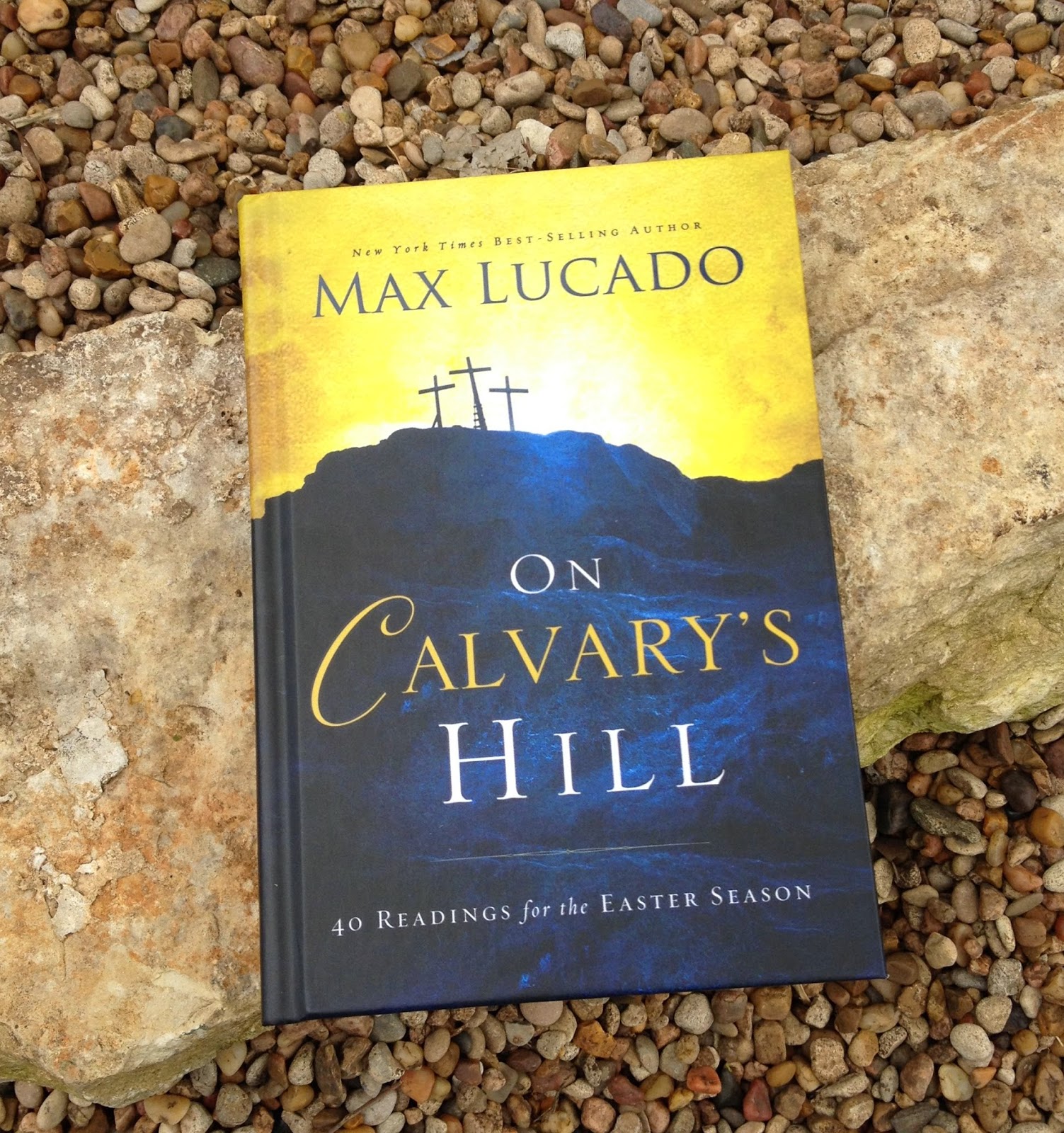
Six Hours, One Friday

“Six hours, one Friday. To the casual observer the six hours are mundane. A shepherd with his sheep, a housewife with her thoughts, a doctor with his patients. But to the handful of awestruck witnesses, the most maddening of miracles is occurring. God is on a Cross. The Creator of the universe is being executed. Spit and blood are caked to His cheeks, and His lips are cracked and swollen. Thorns rip His scalp. His lungs scream with pain. His legs knot with cramps. Taut nerves threaten to snap as pain twangs her morbid melody. Yet, death is not ready. And there is no one to save Him, for He is sacrificing Himself. It is no normal six hours . . . it is no normal Friday. For worse than the breaking of His body is the shredding of His heart. His own countrymen clamor for His death. His own disciple planted the kiss of betrayal. His own friends ran for cover. And now His own Father is beginning to turn His back on Him, leaving Him alone. Let me ask you a question: What do you do with that day in history? What do you do with its claims? If it really happened . . . if God did commandeer His own crucifixion . . . if He did turn His back on His own Son . . . and if He did storm satan’s gate, then those six hours that Friday were packed with tragic triumph. If that was God on that Cross, then the hill called Skull is granite studded with stakes to which you can anchor your soul forever.” —Max Lucado, On Calvary’s Hill