Religious Boredom

“Those Christians who belong to the evangelical wing of the church (which I firmly believe is the only one that even approximates New Testament Christianity) have over the last half-century shown an increasing impatience with things invisible and eternal and have demanded and got a host of things visible and temporal to satisfy their fleshly appetites. Without Biblical authority, or any other right under the sun, carnal religious leaders have introduced a host of attractions that serve no purpose except to provide entertainment for the retarded saints.

“It is now common practice in most evangelical churches to offer the people, especially the young people, a maximum of entertainment and a minimum of serious instruction. It is scarcely possible in most places to get anyone to attend a meeting where the only attraction is God. One can only conclude that God’s professed children are bored with Him, for they must be wooed to meeting with a stick of striped candy in the form of religious movies, games and refreshments. …

“Any objection to the carryings on of our present golden-calf Christianity is met with the triumphant reply, ‘But we are winning them!’ And winning them to what? To true discipleship? To cross-carrying? To self-denial? To separation from the world? To crucifixion of the flesh? To holy living? To nobility of character? To a despising of the world’s treasures? To hard self-discipline? To love for God? To total committal to Christ? Of course the answer to all these questions is no.

“We are paying a frightful price for our religious boredom. And that at the moment of the world’s mortal peril.”

—A.W. Tozer, in Man—The Dwelling Place Of God

A.L.I.V.E.—The “A” Is For Apologetics

This is part 1 of a 5-part series with a simple premise: “I can know Jesus is A.L.I.V.E. because of…” and then I am presenting evidence for each of the five letters. This is a look at the letter A” for Apologetics for the resurrection of Jesus.

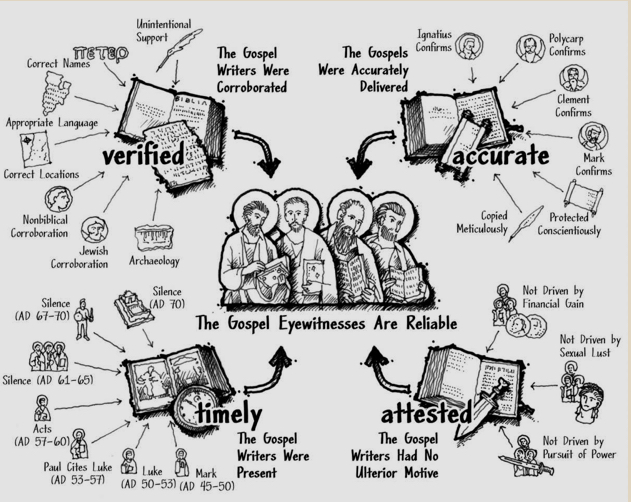
For some of my evidence, I am going to use historical texts from the Bible. When I say “historical” I mean that in the scholarly definition: this Book is attested to by historians and literary critics to be an accurate record of actual historical facts. You can read more of the apologetics for the Bible’s authenticity in a post I previously published here.

I would ask you to weigh the evidence for three possibilities concerning the claims of Christians regarding the death and resurrection of Jesus.

(1) Jesus didn’t actually die.

The Romans didn’t invent crucifixion, but they perfected it to be one of the most gruesome forms of torturous death that history has ever known. This leads one to wonder how could anyone go through the torture Jesus did and survive?

A team of medical examiners, after examining the historical account of Jesus’ death concluded: “The difficulty surrounding exhalation leads to a slow form of suffocation. Carbon dioxide builds up in the blood, resulting in a high level of carbonic acid in the blood. The body responds instinctively, triggering the desire to breathe. At the same time, the heart beats faster to circulate available oxygen. The decreased oxygen (due to the difficulty in exhaling) causes damage to the tissues and the capillaries begin leaking watery fluid from the blood into the tissues. This results in a build-up of fluid around the heart (pericardial effusion) and lungs (pleural effusion). The collapsing lungs, failing heart, dehydration, and the inability to get sufficient oxygen to the tissues essentially suffocate the victim. The decreased oxygen also damages the heart itself (myocardial infarction) which leads to cardiac arrest. In severe cases of cardiac stress, the heart can even burst, a process known as cardiac rupture. Jesus most likely died of a heart attack.”

Besides that, the dead body of Jesus was also thoroughly examined by both the Romans who conducted the crucifixion (see Mark 15:43-45) and His friends who prepared His body for burial (John 19:38-40).  In addition, two contemporary historians who aren’t friendly to the cause of Christianity (Tacitus and Josephus) both attested to Christ’s death by crucifixion.

(2) Jesus didn’t actually rise from the dead.

Some say the disciples were delusional from their intense grief. But Jesus was seen on more than one occasion, sometimes by one person, sometimes by twos, and several times by large groups (see 1 Corinthians 15:3-8). Some of Jesus’ closest friends weren’t convinced by second-hand testimony but had to see Jesus for themselves (John 20:19-20, 24-28). All four biblical accounts record women seeing the resurrected Jesus. This is significant because women were not allowed to serve as “legal witnesses,” so this wouldn’t have helped the “delusional” disciples at all.

Some say the disciples stole the body of Jesus. But this is problematic because of the armed guards at the tomb of Jesus (Matthew 27:62-66; 28:11-15). 

(3) Jesus was crucified and resurrected.

Sir Arthur Conan Doyle’s Sherlock Holmes said, “When you have eliminated the impossible, whatever remains, however improbable, must be the truth.” So after looking at the shortcomings and difficulties of the first two options, let’s consider this third possibility: that it happened just as the historical records in the Bible indicate.

Cold-case detective J. Warner Wallace said of this third possibility, “The last explanation (although it is a miraculous, supernatural explanation) suffers from the least number of liabilities and deficiencies. If we simply enter into the investigation without a pre-existing bias against anything supernatural, the final explanation accounts for all of the evidence without any difficulty. The final explanation accounts for the evidence most simply and most exhaustively, and it is logically consistent…. The final explanation is also superior to all other accounts (given that it does not suffer from all the problems we see with the other explanations).”

Check out the video where I discuss all of these points in more detail, and join me either in person or on Facebook Live for the next four Sundays as we continue looking at the evidence supporting the resurrection of Jesus.

Resurrected From The Dead?! Really?

It is the foundational claim of Christianity: Christ died on a Cross and was raised back to life. It is also the claim many skeptics of Christianity find so difficult to process.

I am going to present a 5-part series of messages on this topic—“I can know Jesus is A.L.I.V.E. because of…” and then I’m going to give evidence for each of the five letters of “ALIVE.”

These messages are specifically designed for those skeptical of the claims of Christianity. The evidence won’t be a bunch of “churchy” platitudes, but court-room-level evidence that will attempt to make the case for what Christians believe about the death and resurrection of Jesus.

If you fall into that skeptical group, I would be honored to have you join me either in person at our church or on Facebook Live at 10:30am for the next five Sundays (March 18-April 15). I’m excited to present this evidence and I am looking forward to interacting with you!

If you missed any of the messages in this series, please check them out here. I can know that Jesus is alive because of…

A.W. Tozer On How To Try The Spirits

“I make available here a little secret by which I have tested my own spiritual experiences and religious impulses for many years. Briefly stated the test is this: This new doctrine, this new religious habit, this new view of truth, this new spiritual experience—how has it affected my attitude toward and my relationship to God, Christ, the Holy Scriptures, self, other Christians, the world and sin.

“Christless Christianity sounds contradictory but it exists as a real phenomenon in our day. Much that is being done in Christ’s name is false to Christ in that it is conceived by the flesh, incorporates fleshly methods, and seeks fleshly ends. Christ is mentioned from time to time in the same way and for the same reason that a self-seeking politician mentions Lincoln and the flag, to provide a sacred front for carnal activities and to deceive the simplehearted listeners. This giveaway is that Christ is not central: He is not all and in all. …

“Whatever originates outside the Scriptures should for that very reason be suspect until it can be shown to be in accord with them. … However high the emotional content, no experience can be proved to be genuine unless we can find chapter and verse authority for it in the Scriptures. …

“The Bible does not teach that there will be new light and advanced spiritual experiences in the latter days; it teaches the exact opposite.

“A growing acquaintance with the Holy Spirit will always mean an increasing love for the Bible. The Scriptures are in print what Christ is in Person.” —A.W. Tozer, in Man—The Dwelling Place Of God

Thursdays With Oswald—Using The Sword For Good And Not Harm

Oswald ChambersThis is a weekly series with things I’m reading and pondering from Oswald Chambers. You can read the original seed thought here, or type “Thursdays With Oswald” in the search box to read more entries.

Using The Sword For Good And Not Harm

     The priest replied, “The sword of Goliath the Philistine, whom you killed in the Valley of Elah, is here.…” David said, “There is none like it; give it to me.” (1 Samuel 21:9)

     Now it seems quite obvious that if you are not David and are trying to use Goliath’s sword, you will do far more harm to yourself than damage to the enemy. You must be in the direct line of succession to David. … What is the same family connection in this dispensation? Why, those who are born again of the Spirit of God, and those who are so identified with the Lord Jesus that they have entered into the experience of entire sanctification. When they use the Word of God they do not damage themselves, nor hurt other souls; but they do great damage to the kingdom of the devil and bring benefit to the souls of men. …

    The Christian worker must rely on the Holy Spirit to direct them as to what to say in the case of every soul that comes. Do not rely on your memory, do not remember how you dealt with cases in the past, but recognize and rely on the Holy Spirit that He will bring to your remembrance the particular verse for you to apply at this time. … Beware of anything that does not fling you straight back in reliance on the Holy Spirit as the most practical factor you know in bringing it to your remembrance the Word of God and how to apply it. … 

     For the word of God is living and powerful, and sharper than any two-edged sword, piercing even to the division of soul and spirit, and of joints and marrow, and is a discerner of the thoughts and intents of the heart. (Hebrews 4:12)

     A remarkable thing about this Book of God is that for every type of human being we come across there is a distinct, clear line laid down here as to the way to apply God’s truth to it. 

From Workmen Of God

If Christians are going to help others, they have to start with helping themselves. They do this by immersing themselves in the Word of God and allowing the Holy Spirit to show them how to live out the biblical principles. This equips us to help others.

Then when someone in need comes to us, don’t be too quick to draw your spiritual sword. Listen to them and listen to the Holy Spirit. The Spirit of God can direct you to the right Word of God for that person’s need. This is the only way to use the sword of the Spirit in a way that will help others, glorify God, and make you unashamed before God of your conduct.

To Know Him (book review)

I am so appreciative of those who have the gift of poetry. There is something about the rhythm and flow of poetic verse that speaks to our hearts in a way that typical writing cannot. I’m even more amazed when the poet happens to be someone who is also a premier theologian, which is exactly what you will find in To Know Him by T.M. Moore.

I have benefitted greatly from the theological and doctrinal insights from Moore. I daily read his posts and always come away with an insight on Scripture that I hadn’t previously considered. Even knowing that I was blown away by the profound truths in To Know Him that were flowing off the pages in poetic verse.

To Know Him leads us through a Christian’s progression in attempting to really know who Jesus is. To help you along the way, Moore has provided endnotes on his poetic verses, as well as ample references to all of the biblical passages which he masterfully wove together in the crafting of his poem.

I know you will find To Know Him as rewarding, heart-warming, and mind-opening as I did!

7 Prayers From “Praying For Muslims”

Throughout 2017, I joined with other prayer warriors around the globe in praying for Muslims every Friday at noon. Our prayer guide was found in Sobhi Malek’s book Praying For Muslims. Here are a few prayer thoughts that may help you in your prayer time.

“As Abraham pleaded for the lost in Sodom and Gomorrah, we ask You to give Muslims a chance to accept Christ. You love them. Jesus died for them. Rescue them from the doom of sin.”

“Lord God, You have been patient with the peoples of Europe and America. They are rich in material goods but poor in spiritual matters. They are advanced in technology but backward in things pertaining to God. Save them from the slippery path they have chosen by turning their back on Christ. Have mercy on them. Help them to repent. By faith I claim many Muslims in the West for Christ. May they become tools in God’s hand to bring many nominal Christians in post-Christian Europe and America to the Cross of Calvary. O God, Supreme and Mighty Potentate, Master of heaven and earth, You can do such feats! In the name of Jesus, I pray for a great revival for your Church in the West. I pray in the name of Jesus. Amen.”

“Compassionate and merciful God, our Father in heaven, glory and majesty belong to You. You have shined Your light into my heart through Jesus Christ my Lord. You have forgiven my sin. Thank You. I am very grateful. That is why I bring Muslims before You.  For although they call You merciful and compassionate, they have never understood the depth of Your great compassion and mercy manifested at the Cross of Christ. Grant them the desire to know Jesus and experience His redemptive power. Fill them with your Holy Spirit. Encourage them to be active in bringing others to your Kingdom. Keep me true to my responsibility to pray for them without ceasing and trust You for miraculous acts among Muslims.”

“Help the church in Europe and America to see the influx of Muslims as a God-given opportunity to bring multitudes of Muslims to Christ the Savior.”

“I pray for the missionaries who have left families, security, and comforts of life to go serve among Muslims. Lord God, You are their reward. Fill their lives with Your presence, and show them Your glory. Empower them with the Holy Spirit. May they speak with boldness and wisdom to proclaim the relevant, eternal message of the Gospel. Grant them a productive and fruitful ministry. May they lead many Muslims to Christ and plant the Church triumphant in countless communities. Make them valiant as they proclaim the truth. O God, stop satan from inflicting disease, discord, and disunity among Your servants. In prayer, I come against satanic attacks on missionaries to Muslims in interpersonal relationships, morals, finances, family, health, and children. May they not become weary in the work they are doing for You (Galatians 6:9).” 

“Father, by Your divine power, tear down the walls that satan has erected to keep people from hearing the Gospel. We look to the Cross where Jesus died to redeem all, including Muslims. We draw our victory from Calvary. And we rest at Your feet in faith with expectation.”

“O God Almighty, be with those who are enduring a nightmare of mistreatment, beatings and abuse. I bring their plight to Your attention, merciful Father. Visit them. Soothe their pain. Comfort their souls. Encourage their hearts. May Your face shine upon them. In prayer I ask You to wake up the Church around the world to pray for persecuted believers and come to their assistance. Christians who occupy influential positions could act to alleviate the pain of our suffering brothers and sisters. Father, help them to not be silent. Move them to respond to the tragedy of the persecuted Church.”

Here are some other resources for you:

5 Quotes From “Praying For Muslims”

Sobhi Malek put together an extremely helpful guide for praying for Muslims. Each week has a prayer, but there are also several helpful insights which Sobhi shares. Here are a few of those insights.

“This warfare is not against people of any religion or affiliation. Christ, who died for all human beings, instructed us to love our neighbors. Rather, this war is against the evil powers which control people and hinder them from seeing the light of the Gospel of Christ (Ephesians 6:12). In other words, we are warring against satan who ‘has blinded the minds of unbelievers.’ His goal is to keep people from seeing ‘the light of the Gospel of the glory of Christ, who is the image of God’ (2 Corinthians 4:4). When we pray and ask others to pray, this does not mean that we feel superior. We do not think we are better than Muslims or any other people.  Rather, we believe we are fallen human beings like all others, but we have been saved by God’s grace.”

“When Muslims say, ‘In the name of God the merciful, the compassionate,’ all Muslims and many Christians do not know that this is taken from the Bible. This phrase demonstrates the early influence of Judaism and Christianity on Muhammad. Here are some occurrences of this combination in the Bible: compassionate and gracious (Exodus 34:6, NIV); compassionate and merciful (Psalm 86:15, GW; 103:8, NLT; James 5:11, GW); merciful and tender (Luke 1:78, TEV).”

“There are many teachings in Islam that we, believers in Christ, can use as bridges to help Muslims draw near to and enter the Kingdom of God. The Qur’an states that God created Adam and Eve, that He sent the flood but rescued Noah, that He spoke to Abraham, that He gave the Torah (Pentateuch) to Moses, that He sent Jesus who was born of a virgin. All these narratives, common to both Muslims and Christians, can be used as bridges to bring Muslims closer to the Gospel of our Lord Jesus Christ. This does not mean that all the details of these stories in Islam are in full agreement with the biblical accounts, but they can work as starting points. It is also rewarding to establish friendships with Muslims as you seek to share with them the Gospel of Christ. Friends trust each other, depend on each other and desire each other’s wellbeing. Building bridges of common narratives and friendship pays dividends.”

“The Qur’an, Islam’s holy book, is a collection of jumbled statements and stories in a random arrangement. Most of its stories are fractured and lack consistency. Subjects and themes are not connected. So fractured are narratives in the Qur’an that only one story has a clear beginning, middle, and end: the story of Joseph. All the other stories pick up in the middle, or else they are never carried to their conclusion. The Qur’an admits that satan sometimes intervened and gave Muhammad ‘inspiration.’ It also states that Muhammad forgot some parts of it. Several chapters start with meaningless three-letter words such as alr, alm, etc. Even great quranic interpreters cannot find a meaning for such words. In one place the Qur’an states that no changes occurred in its text, and in another it says changes to it indeed took place.”

“In the past few decades, millions of Muslims have migrated to the West. Some seek jobs, others pursue freedom and a better living, and still others hope to conquer the West by converting Westerners to Islam or by sheer reproduction and numerical growth! I personally take this migration to mean the Lord wants to help the Church win large numbers of Muslims to Christ by bringing them to her doorstep.”

Next week I will share a few of the prayers Sobhi leads us in each week. I would also recommend that you check out my review of Praying For Muslims.

Book Reviews From 2017

I love reading, and I love sharing my love of good books with others! Here is a list of the books I read and reviewed in 2017. Click on a title to be taken to that review.

#Truth

10 Commitments For Dads

50 Core American Documents

A New Kind Of Apologist

Absolute Surrender

As Kingfishers Catch Fire

Born After Midnight

Brady vs. Manning

Cherish

Everything You Always Wanted To Know About God

Evidence That Demands A Verdict

How Great Is Our God

If

Interpretation Of The Scriptures

Islam Booklets

Joy To Your World

Know Who You Are

Leadership Promises For Every Day

Live Dead Journey

Live Dead Life

Longing For A Changed World

Man—The Dwelling Place Of God

Marching Off The Map

No Limits

On Calvary’s Hill

Ordering Your Private World

Paths To Power

Peace In The Face Of Cancer

Prevailing Prayer

Run Today’s Race

Seeing Jesus

Shade Of His Hand

Take Your Life Back

The Broken Way

The Christian Book Of Mystical Verse

The Christian In Complete Armour

The Christmas Candle

The Dawn Of Christianity

The Servant As His Lord

The World’s Last Night

Transforming Grace

When A Nation Forgets God

Your Next 24 Hours

Here are my book reviews for 2011.

Here are my book reviews for 2012.

Here are my book reviews for 2013.

Here are my book reviews for 2014.

Here are my book reviews for 2015.

Here are my book reviews for 2016.

Thursdays With Oswald—The Powerful Witness Of Your Life

Oswald ChambersThis is a weekly series with things I’m reading and pondering from Oswald Chambers. You can read the original seed thought here, or type “Thursdays With Oswald” in the search box to read more entries.

The Powerful Witness Of Your Life

     Jesus Christ came to do what no human being can do, He came to redeem man, to alter their disposition, to plant in them the Holy Spirit, to make them new creatures. Christianity is not the obliteration of the old, but the transfiguration of the old. Jesus Christ did not come to teach men to be holy: He came to make men holy. His teaching has no meaning for us unless we enter into His life by means of His death. The Cross is the great central point. Jesus Christ is not first a Teacher, He is first a Savior. … 

     To preach the Gospel is to proclaim that God saves from sin and regenerates into His Kingdom anyone and everyone who believes on the Lord Jesus. It means even more—it means to disciple all the nations not only on the authority of Jesus, but on the flesh and blood evidence of entire sanctification in the life of the missionary.

From So Send I You

The Apostle Paul noted, “Then it pleased God to reveal His Son to me so that I would proclaim the Good News about Jesus to the Gentiles” (Galatians 1:15-16).

This is the exact same message Oswald Chambers has for Christians—If you have allowed Jesus to transform your life, that witness of Him in you is an undeniably powerful testimony! Yes, we need to preach what we believe, but this preaching needs to be backed up and amplified by living what we believe.

Christian, can you honestly say that your life is giving clear “flesh and blood evidence of entire sanctification”?