Easter Stories (book review)

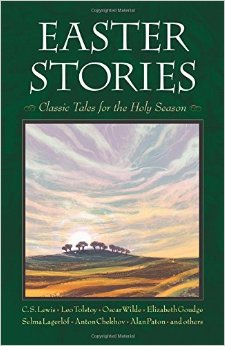
Easter StoriesMiriam LeBlanc has compiled a lovely collection of stories in Easter Stories: Classic Tales for the Holy Season. The stories themselves are not always classics (in the sense of being well known), but the authors are certainly a Who’s Who list.

Some of the better known authors include André Trocmé, Anton Chekhov, C.S. Lewis, The Brothers Grimm, and Oscar Wilde. The stories were collected in this book because they talk about sacrifice, new birth, new beginnings, and new life: all the themes echoed in the biblical story of Christ’s sacrificial death and resurrection.

These are great stories to introduce others to the story of Easter without turning to the passages in the Bible. These stories can introduce the themes of salvation, reconciliation, and new life, which will then allow Christians to lead their family and friends to the foundational stories in Scripture.

This is not only an excellent way to introduce the Easter themes to others, but also to introduce them to some of the more meaningful authors.

I am a Plough Publishing House book reviewer.

The Ministry Of Reconciliation

Ministry of reconciliationWhen couples are divorcing, their most common complaint is summed up in two words: irreconcilable differences. The couple is saying that things have gotten so bad―and the distance between them has gotten so vast―that there is no hope at all of ever patching things up.

Sometimes we might be able to say that both husband and wife shared some of the blame. But this isn’t true in a spiritual divorce. When we are separated from God, it’s all on us. Paul describes us as powerless sinners, unholy enemies of God (see Romans 5:6, 8, 10). We did the leaving; we are the problem.

But in the desire to bring reconciliation, God puts it all on Himself―more specifically, on the death of His Son Jesus on an old rugged Cross. In Romans 5 Paul says our reconciliation was through Christ five times in just three verses (vv. 9-11).

As if it weren’t amazing enough that Christ’s death on the Cross saved us, justified us, and reconciled us, giving us a brand new start (2 Corinthians 5:16-17), God then gave us the same ministry that He undertook through Jesus: the ministry of reconciliation (vv. 18-19)!

What Jesus purchased for us on an old rugged Cross allows us to “become the righteousness of Christ” (v. 21). Not reflect His righteousness, not talk about His righteousness, but actually become His righteousness!

We have the supreme privilege of being able to bring the message of reconciliation to others who used to be where we were: powerless sinners, unholy enemies of God!

We have the awesome joy of being God’s righteousness to people who think their irreconcilable differences will keep them from God!

The greatest act of serving you could ever do for anyone is telling them that they can be reconciled to God through Jesus Christ’s work on an old rugged Cross!

Absolutely amazing!

We’ll continue our look at the Old Rugged Cross next Sunday, and I’d love to have you join me at Calvary Assembly of God.

Links & Quotes

link quote

Fellas, you need to check this out: 5 More Things Men Should Do To Protect Their Marriage.

This is an amazing admission from a medical doctor who is also an abortion provider: “If a woman with a serious illness―heart disease, say, or diabetes―gets pregnant, the abortion procedure may be as dangerous for her as going through pregnancy … with diseases like lupus, multiple sclerosis, even breast cancer, the chance that pregnancy will make the disease worse is no greater than the chance that the disease will either stay the same or improve. And medical technology has advanced to a point where even women with diabetes and kidney disease can be seen through a pregnancy safely by a doctor who knows what he’s doing. We’ve come a long way since my mother’s time…. The idea of abortion to save the mothers’ life is something that people cling to because it sounds noble and pure―but medically speaking, it probably doesn’t exist. It’s a real stretch of our thinking.” ―Dr. Don Sloan, M.D.

“The Word says, ‘Love not the world, neither the things that are in the world’ (1 John 2:15). Jesus warned, ‘Beware of covetousness: for a man’s life does not consist in the abundance of the things which he possesses’ (Luke 12:15). Things—our possessions—can tie us down to this world. While heaven and hell prepare for war, we go shopping. Eternal values are at stake! The end of all we know is near—and we are busy playing with our toys!” —David Wilkerson

“The blood of Christ doesn’t cover your sins, conceal your sins, postpone or diminish your sins.  It takes away your sins, once and for all! So…since you are saved, you can serve!” Read more from Max Lucado in Saved To Serve.

Dr. Tim Elmore writes about 2 essential ingredients to form a young leader. You should read the whole post, but the two ingredients are quite surprising: problems and empowerment.

[VIDEO] An excellent explanation on what sources are used to determine the text of the Bible―

12 Quotes From “The Cross Of Jesus”

The Cross Of JesusWarren Wiersbe’s book The Cross Of Jesus is a very easy read, but that doesn’t mean the subject matter is light. It is a sobering look at what Jesus Christ did for us on the Cross, and it’s something at which we should always take a repeated look. You can read my book review by clicking here. Below are some quotes I especially appreciated.

“The Cross was a divine assignment, not a human accident; it was a God-given obligation, not a human option.”

“The fundamental problem lost sinners face isn’t that they’re sick and need a remedy. The problem is that they’re ‘dead in trespasses and sins’ (Ephesians 2:1) and need to experience resurrection. Religion and reformation may cosmetize the corpse and make it more presentable, but religion and reformation can never give life to the corpse. Only God can do that. ‘But God, Who is rich in mercy, because of His great love with which He loved us, even when we were dead in trespasses, made us alive together with Christ’ (Ephesians 2:4-5).”

“If our faith in Jesus Christ isolates us from those who need Him, there’s something wrong with our faith—and our love.” 

“Respectable religion that rejects the blood of the Cross can’t understand the message of the Bible, and it is powerless to deal with sin and sinful human nature. ‘Comfortable religion’ that avoids bearing the Cross and following Jesus is but a religious facade that knows nothing of true discipleship.”

“The Romans and the Jews ‘by lawless hands’ (Acts 2:23) put Jesus Christ to death, and yet their very actions fulfilled the plan of God. Even the wrath of man praises God (Psalm 76:10), and when sinners are doing their worst, God is giving His best. They were ignorant of their own sin. The enormity of their sins never bothered them. They nailed the Son of God to a Cross and then went about their business celebrating Passover!” 

“God still works providentially to create situations that give people opportunity to meet Christ, trust Him, and be saved. No one is ever saved by accident, for meeting Jesus Christ is a divine appointment.”

“Grace is simply the undeserved favor of God. You can’t earn it, buy it, or work for it. You can only receive grace as a gift. But that demands honesty and humility: honesty in admitting that you need to be saved, and humility in confessing that you can’t save yourself.” 

“The salvation Jesus gave to this man was personal. Jesus spoke to this man personally and saved him personally. ‘Assuredly, I say to you.…’ (Luke 23:43). God loves us personally. Writing about Jesus Christ, Paul said ‘…Who loved me and gave Himself for me’ (Galatians 2:20). The Lord Jesus Christ died for us personally. God’s love is shown to us personally, and God saves us personally. God doesn’t deal with sinners as part of a crowd; He doesn’t save people en masse. God saves people individually, one by one.”

“Salvation is not a process. You don’t receive the forgiveness of sins on the installment plan. Salvation is an instantaneous spiritual experience by the power of God when you put your faith in Jesus Christ.”

“‘Christ died for our sins’ (1 Corinthians 15:3) is a statement so simple that a child can believe it and be saved, but so profound that a theologian can never fully understand it.”

“A Crossless life is a wasted life. No matter how much enjoyment we experience or accomplishment we achieve, without the Cross our lives have been fruitless and in vain.”

“The question today is not, ‘Do you thirst?’ because all mankind has a thirst for reality, a thirst for God, a thirst for forgiveness, whether they realize it or not. The real question is ‘How long will you continue to thirst?’ When you trust Jesus Christ as your Savior, you will never thirst again. If you reject Him, you will thirst forever.”

The Cross Of Jesus (book review)

The Cross Of JesusWarren Wiersbe writes early on in The Cross Of Jesus, “Unless we go back to the Cross, we can’t go forward in our Christian life.” How true this is, and what a wonderful job Rev. Wiersbe does in taking us back to the Cross!

This book is divided into four sections: What Jesus saw in the Cross, why Jesus died on the Cross, what Jesus said from the Cross, and how believers should live by the Cross. In essence we go back to the beginning to learn how we should now live because of the work Christ completed on the Cross.

Wiersbe quotes Charles Spurgeon as saying, “On whatever subjects I may be called to preach, I feel it to be a duty which I dare not neglect to be continually going back to the doctrine of the Cross—the fundamental truth of justification by faith which is in Christ Jesus.”

Whether you are wondering what significance Christ’s death at Calvary has for anything, or if you have been a believer in Christ’s atoning death for decades, or you are anywhere in between, going back for a fresh look at the old rugged Cross―and the Savior Who was sacrificed there―is always beneficial. And The Cross Of Jesus is an excellent book to guide you through your journey.

Attitude Check

Attitude checkWhen we realize that nothing can thwart God’s plan, and that you and I are a part of that plan, I think there could be a couple of attitudes that might pop up: (1) Confidence―not in my abilities, but in God’s; or (2) Humility―not thinking less of myself, but thinking of myself less.

Confidence without humility leads to self-destructive pride, and humility without confidence leads to self-destructive fear. We need confidence with humility, just like Jesus demonstrated in going to the old rugged Cross.

We can see the confidence in Jesus when He claims to be the “I AM” (John 8:54-59). But we can also see the humility of Jesus when He said He would lay His life down (John 10:11, 15:13).

These two attitudes converge powerfully in John 13:1-17 when we read that Jesus knew that God had put all authority under His command (vv. 1, 3), and then He used His confident authority to serve His friends by washing their feet.

Confidence without humility won’t serve because it thinks others must serve them. Humility without confidence won’t serve because it thinks others will take advantage of them. But Jesus was confidently humble (or humbly confident) so He could serve. It’s the only time Jesus said “I have set you an example” (v. 15). Our attitude is to mirror His, and we are to confidently and humbly serve.

A humbly-confident / confidently-humble servant is known by his or her:

  • Heart―E.G.O. (edging God out) or E.G.O. (exalting God only) [*]
  • Head―having his/her thoughts aligned with the Word of God
  • Hands―serving God and others (Matthew 20:25-28)

If you were to honestly reflect on this, where do you rate yourself?

  • Are you confident that God loves you and has a plan for your life, a plan that cannot be thwarted?
  • Are you humble enough to serve others? To give up your own agenda so that God is glorified?
  • Can you honestly say you have the right E.G.O.?
  • Are your thoughts becoming more and more aligned and shaped by God’s Word?

We’ll be continuing our series on The Old Rugged Cross next Sunday, and I would love to have you join us.

[*] My thanks to Kenneth Blanchard for his insightful description of E.G.O. in his book Lead Like Jesus

Poetry Saturday―There Is A Fountain Filled With Blood

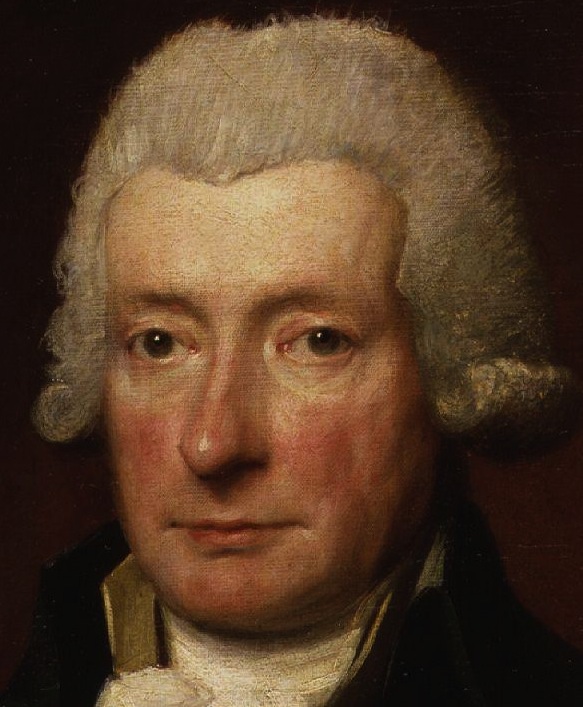
William CowperThere is a fountain filled with blood drawn from Emmanuel’s veins;
And sinners plunged beneath that flood lose all their guilty stains.
Lose all their guilty stains, lose all their guilty stains;
And sinners plunged beneath that flood lose all their guilty stains.

The dying thief rejoiced to see that fountain in his day;
And there have I, though vile as he, washed all my sins away.
Washed all my sins away, washed all my sins away;
And there have I, though vile as he, washed all my sins away.

Dear dying Lamb, Thy precious blood shall never lose its power
Till all the ransomed church of God be saved, to sin no more.
Be saved, to sin no more, be saved, to sin no more;
Till all the ransomed church of God be saved, to sin no more.

E’er since, by faith, I saw the stream Thy flowing wounds supply,
Redeeming love has been my theme, and shall be till I die.
And shall be till I die, and shall be till I die;
Redeeming love has been my theme, and shall be till I die.

Then in a nobler, sweeter song, I’ll sing Thy power to save,
When this poor lisping, stammering tongue lies silent in the grave.
Lies silent in the grave, lies silent in the grave;
When this poor lisping, stammering tongue lies silent in the grave.

Lord, I believe Thou hast prepared, unworthy though I be,
For me a blood bought free reward, a golden harp for me!
’Tis strung and tuned for endless years, and formed by power divine,
To sound in God the Father’s ears no other name but Thine. —William Cowper

No Plan B

The Old Rugged CrossIn my family, what starts off as Plan A at the beginning of the day is highly likely to end up as Plan K-13 by the end of the day! We just try to be flexible and roll with the changes.

But we must be careful about giving the characteristic of “flexibility” to God—He doesn’t need to be flexible and modify His plans. He has no Plan B; everything is His Plan A.

Jesus is described as being the sacrificial Lamb from before the dawn of Creation (1 Peter 1:18-20). And in Heaven Jesus is still known as the Lamb that was slain (Revelation 13:8 and 5:5-6). Jesus coming to earth to die on an old rugged Cross was always God’s Plan A. The whole time Jesus Christ was on earth, He knew what was happening.

Here are 5 things Jesus knew. He knew…

  1. …when His time had come, and that all things were about to be fulfilled through His crucifixion—John 13:1, 3
  2. …the exact sequence of events leading up to His death on Calvary—Matthew 20:17-19
  3. …the immutability of the Scriptures—Matthew 26:53-56
  4. …the infallibility of the Scriptures—Luke 24:25-27
  5. …that God would be glorified in fulfilling His Plan A—John 12:27-28

With this in mind, here are 5 things we should know. We should know…

  1. …that all my days were written down before the dawn of Creation—Psalm 139:16
  2. …God loves me more than I can fathom—Psalm 139:17
  3. …my life was always intended to be a part of God’s Plan A—Ephesians 2:10
  4. …no weapon formed against God’s Plan A for me will succeed—Isaiah 54:17
  5. …that God will be glorified in fulfilling His Plan A in my life—Romans 8:28

The old rugged Cross reminds us that God’s Plan A was always for Christ’s death to make it possible for our lives to make sense!

As Andrew Murray wrote: “God fully relied on His Son to see to it that His honor was respected. And in Jesus we too may bravely enter this covenant without fear that we will not be able to fulfill it. We can rely upon Jesus to see to it that He will bring everything to completion. Jesus has not only discharged our old debt but also undertaken the responsibility for whatever else may be required.”

I’ll be continuing our series on The Old Rugged Cross this Sunday, and I hope you can join me.

The Old Rugged Cross

The Old Rugged CrossThe Apostle Paul traveled the known world preaching and teaching. Luke preserves some of his sermons for us in the Book of Acts, and Paul’s letters reveal the depth of and breadth of his Spirit-inspired thoughts. But of all the doctrines which this eminent apostle taught, there was one truth that stood out as the foundation for all others—

And when I came to you, brethren, I did not come with superiority of speech or of wisdom, proclaiming to you the testimony of God. For I determined to know nothing among you except Jesus Christ, and Him crucified (1 Corinthians 2:1-2).

The work that Jesus Christ did on an old rugged Cross is absolutely the most central message of all others. Without the Cross, no other doctrine makes sense.

Sadly, we spend far too little time looking at the Cross.

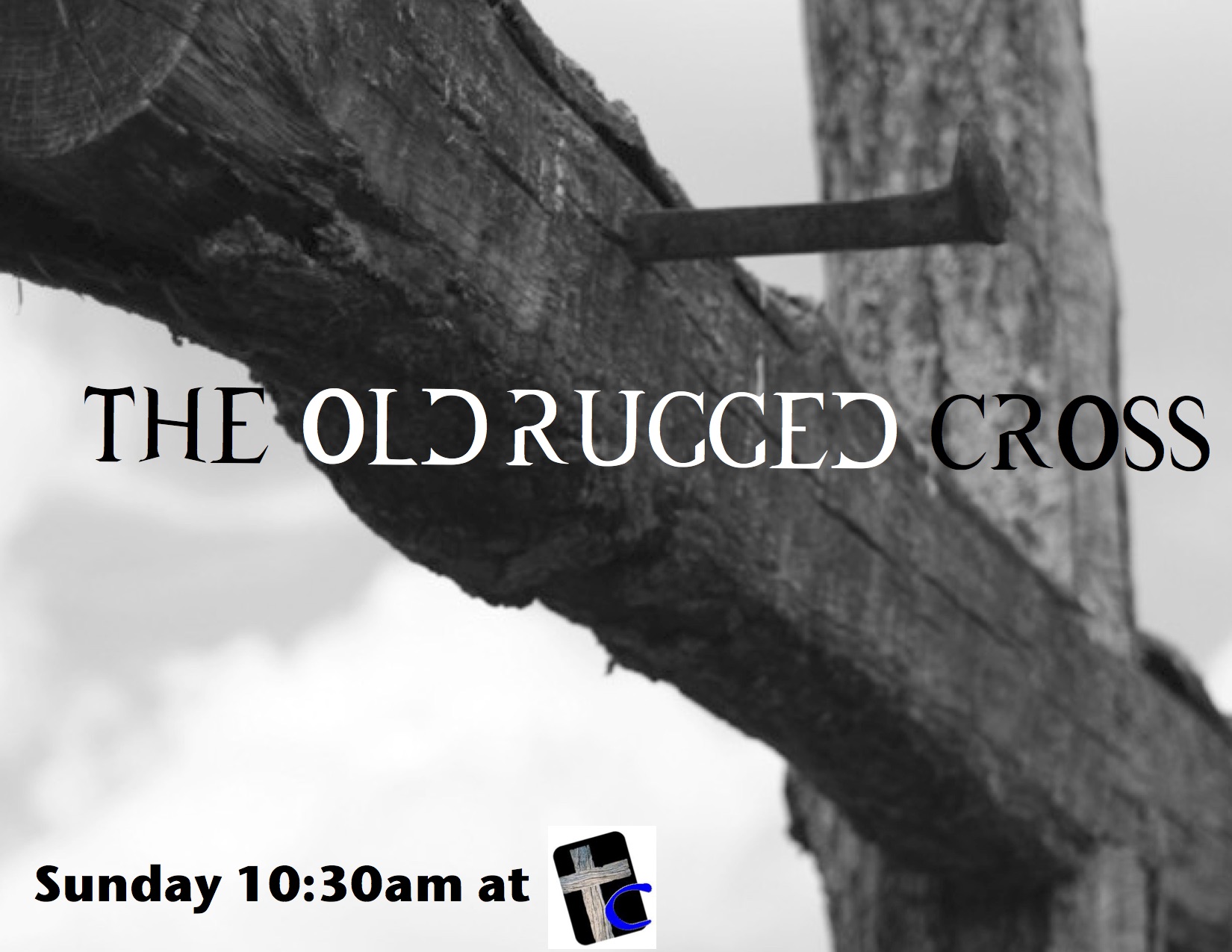
Join me this Sunday as we take a long look at the Cross and the Lamb of God Who was sacrificed on it. Our series is simply called The Old Rugged Cross.

9 More Quotes From “The Blood Of The Cross”

The Blood Of The CrossThere were way too many quotes from The Blood Of The Cross by Horatius Bonar that I wanted to share, so here is the second installment. You can read the first set of quotes by clicking here, and you can read my review of this must-read book by clicking here.

“It is not my looking to the blood in conjunction with my looking to my own act of seeing that brings this peace. It is my simple and direct looking to the blood. It is in looking that I am blessed; not in thinking about my looking. To look to the blood is to be cleansed; to look away from the blood, or too self, or to the world, or to sin, is to arrest the cleansing process and to neutralize the healing power. The more I see of the matchless value of that blood, and understand the substitution of life for life, which that blood proclaims, and to which it is ever pointing, the more will my peace be like a river.”

“The Lamb has been slain, the Lamb of God, as it is written, ‘It pleased the Lord to bruise Him’ (Isaiah 53:10). His blood has been shed, and sprinkled, and accepted; and that shed blood is for the remission of sin, and for reconciling us to God. That blood is intended to set us in the place of the innocent; to bring us nigh to God just as if we had never separated; to be our recommendation to God, so that coming with it as our plea, we may expect to be treated by God as HE is treated Whose blood we thus recognize and rest on.”

“To come with anything else than the blood as our introduction is most certainly to secure or for ourselves rejection; but to come with it alone is to ensure that blessed welcome which the blood has never yet failed to obtain for the vilest sinner that ever went to God with it as his only plea.”

“That blood is valuable enough to answer for yours, and God is willing to accept the exchange. Nay, it was He Who first proposed it; it is He Who is pressing this exchange upon your notice and entreating you to receive it, so that there maybe nothing left for you to pay.”

“It loses none of its efficacy by time or repetition. It is the same in this age as when it was shed at first. It is the same today as when first we applied to it for healing and for cleansing. Nothing can rob it of its potency. It has cleansed millions; it can cleanse millions more; it has washed out stains, in number past calculation, in dye most thoroughly crimson. Yet it is unpolluted. It has taken on no stain. It is still as able to pacify the conscience and to release the soul from guilt.”

“Realizing these things, the saint moves on his joyful course. The blood is ALL to him. It is his peace; it is his medicine; it is his daily comforter. And resting in it he rejoices in hope hope of the glory to be revealed.”

“Thou hast gone near enough to the gates of hell; yet go not in. Turn back. It is not yet too late. Even thou mayest be saved. The gate of light stands as widely open as the gate of darkness. The way of life, the narrow way, is as free to thee as is the way of death. There is still forgiveness. And the glad tidings of it are as glad as ever. No sin of thine has altered that gladness or made the tidings a forbidden joy to thee. We can tell you as truly as ever that ‘these things are written that thou mightest believe that Jesus is the Christ, and that believing thou mayest have life through His name’ (John 20:31).”

“That nonconductor is unbelief. It interposes between the soul and all heavenly blessing, all divine intercourse. It may seem a thing too slight to effect so great result; yet it does so inevitably. It shuts off the communication with the source of all glad tidings. It isolates man, and forbids the approach of blessing. That conductor is faith. In itself it is nothing, but in its connection everything. It restores in a moment the broken communication; and this, not from any virtue in itself, but simply as the conducting link between the soul and the fountain of all blessing above.”

“In Jesus there is salvation—salvation without a price—salvation for the most totally and thoroughly lost that this fallen earth contains. Go and receive it.”