The Blood Of The Cross (book review)

The Blood Of The CrossI have been a Christian for a long time, and over the course of my life I have heard countless sermons about the crucifixion and about the work that Jesus Christ did for us on the Cross. But I don’t think that I’ve ever pondered this subject as deeply or as closely as Horatius Bonar does in his book The Blood Of The Cross.

Rev. Bonar starts with the mindset of the Jews who demanded that Pilate crucify Christ, to show how the same attitude exists in all of us who are separated from Jesus. He then tells us why God the Father has a controversy with a guilty world, and what He thinks of the blood His Son shed on the Cross. Then the remainder of the book goes deep into trying to somehow measure the inestimable value that is associated with Christ’s shed blood.

In a phrase this book is eye-opening, heart-searching, and paradigm-challenging for the one who has never acknowledged Christ as his own Savior, all the way through to the one who has called Jesus Savior for years and years and years.

Especially during this Lent season as we prepare our hearts and thoughts to celebrate Christ’s Passion, this is a great book to ponder.

Links & Quotes

link quote

Some good reading from the last couple of days …

“The blood of Jesus can cover your sins, but it does not make you dependent on Him. Miracles can deliver you from satan’s power, but they can’t make you dependent. You can be led by God and still not lean wholly upon the Lord. God has to strip us of all self-assurance and destroy all that remains of self-righteousness, spiritual pride and boasting. He must (and He does) humiliate all who are destined to inherit His great spiritual blessings.” —David Wilkerson

Fast Company shares why thankful people are happier and healthier. And Dr. Tim Elmore shares 5 ways leaders can show gratitude.

“May God grant that no doctrinal belief may ever dry up the milk of human kindness in our souls! … May we feel that no dogma can be scriptural which is not consistent with a sincere love to men.” —Charles Spurgeon

“The enemy never quite knows how to deal with a humble man; he is so used to dealing with proud, stubborn people that a meek man upsets his timetable. And furthermore, the man of true humility has God fighting on his side—who can win against God?” —A.W. Tozer

The problem with problems is that they always keep us from focusing on opportunities.” Read more of Seth Godin’s post The Problem With Problems.

Links & Quotes

link quote

Some good reading from today…

“Remember that sin must be punished. Any theology which offers the pardon of sin without a punishment, ignores part of the character of God. God is love, but God is also just, as severely just as if He had no love, and yet as intensely loving as if He had no justice. To gain a just view of the character of God you must perceive all His attributes as infinitely developed; justice must have its infinity acknowledged as much as mercy. … Sin must be punished, or God must cease to be. The testimony of the gospel is not that the punishment has been mitigated or foregone, or that justice has had a sop given it to close its mouth. The consolation is far more sure and effectual. Christ has for His people borne all the punishment which they deserved; and now every soul for whom Christ died may read with exultation, ‘The punishment of her iniquity is accomplished’ [Lamentations 4:22].” —Charles Spurgeon

Very interesting reading: Has the war on poverty hurt American marriage rates? Check out this data.

“I think it wise, if possible, to move one’s main prayers from the last-thing-at-night position to some earlier time: give them a better chance to infiltrate one’s other thoughts.” —C.S. Lewis

This Spirit-filled, last-days Church will not hide, but will be on the front lines, fighting a good fight and bringing in a harvest of souls.” Read more from David Wilkerson in his post On The Front Lines.

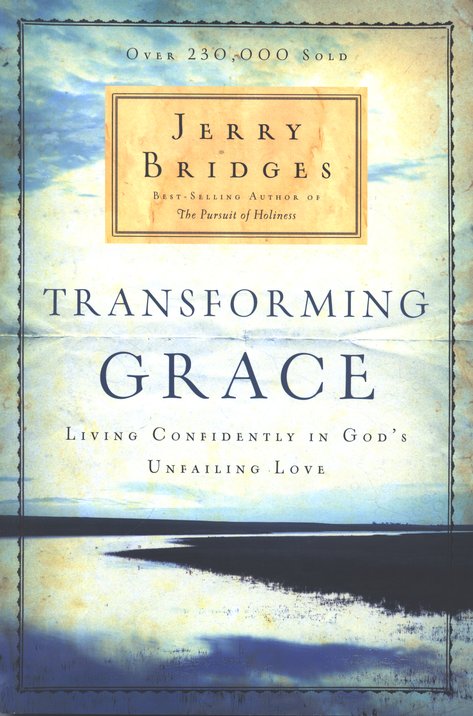
13 Quotes From Jerry Bridges In “Transforming Grace”

Transforming GraceI think Transforming Grace by Jerry Bridges is one of the best books about God’s grace I have ever read! You can read my full book review by clicking here. There are way too many quotes for me to share from this book, so here are a few that really zero-in on grace (I’ll be posting more quotes soon).

“I think most of us actually declared temporary bankruptcy. Having trusted in Christ alone for our salvation, we have subtly and unconsciously reverted to a works relationship with God in our Christian lives. We recognize that even our best efforts cannot get us into heaven, but we do think they earn God’s blessings in our daily lives.” 

“It was because of His grace that God the Father sent His only Son to die in our place. To say it another way, Christ’s death was the result of God’s grace; grace is not the result of Christ’s death.”

“The gospel is addressed to those who have no money or good works. It invites us to come and ‘buy’ salvation without money and without cost [Isaiah 55:1]. But note the invitation to come is addressed to those who have no money—not to those who don’t have enough. Grace is not a matter of God’s making up the difference, but of God’s providing all the ‘cost’ of salvation through His Son, Jesus Christ.” 

“We can never rightly understand God’s grace until we understand our place as those who need His grace.”

“We were dead in our transgressions, but God intervened. We were in bondage to sin, but God intervened. We were objects of wrath, but God intervened. God Who is rich in mercy intervened. Because of His great love for us, God intervened and made us alive with Christ, even when we were dead in our transgressions and sins. All this is summed up in one succinct statement: ‘it is by grace you have been saved.’ Our condition was hopeless, but God intervened in grace.” 

“God’s grace, then, does not supplement our good works. Instead, His grace overcomes our bad works, which are our sins. God did this by placing our sins on Christ and by letting fall on Him the wrath we so richly deserved. … That’s the way His grace operates. It looks not to our sins or even to our good deeds but only to the merit of Christ.”

“The apostle John wrote that Jesus was ‘full of grace and truth,’ and ‘from the fullness of His grace we have all received one blessing after another’ (John 1:14, 16). The idea portrayed in verse 16 is analogous to the ocean waves crashing upon the beach. One wave has hardly disappeared before another arrives. They just keep coming from an inexhaustible supply. So it is with the grace of God through Christ. He is full of grace and truth, and it is from His inexhaustible fullness that we received one blessing after another.” 

“God often does bless people who seem to us to be quite unworthy. But that is what grace is all about, because we are all unworthy.”

“We all want grace, but we cannot enjoy grace when there is an attitude of comparing.” 

“Under a sense of legalism, obedience is done with a view to meriting salvation or God’s blessing on our lives. Under grace, obedience is a loving response to salvation already provided in Christ, and the assurance that, having provided salvation, God will also through Christ provide all else that we need.”

“All Christians look to Christ alone for their justification, but not nearly as many also look to Him for their perfect holiness before God. … Holiness should be an objective for your daily life. But to live by grace, you must never, never look to the work of the Holy Spirit in you as the basis for your relationship with God. You must always look outside of yourself to Christ. You will never be holy enough through your own efforts to come before God. You are holy only through Christ.” 

“When our Father looks at us, He does not see our miserable performance. Instead, He sees the perfect performance of Jesus.”

“We died to the observance of the law as a requirement for attaining righteousness before God. We died to the curse and condemnation that resulted from our inability to perfectly keep the law. … Being under law implies the wrath of God, whereas grace implies forgiveness and favor. Law implies a broken relationship with God, whereas grace implies a restored relationship with Him. So when Paul said we died to the law, he meant we died to that entire state of condemnation, curse, and alienation from God.” 

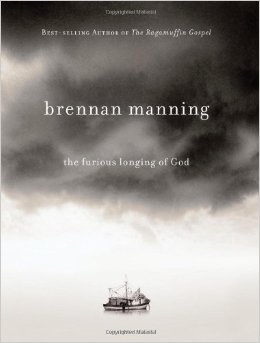
10 Quotes From “The Furious Longing Of God”

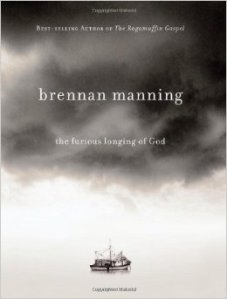
Furious Longing Of GodI love the way Brennan Manning writes! It’s so gut-level real. His words both convict me and encourage me to go deeper into God’s love. You can read my full book review of The Furious Longing Of God by clicking here. Below are some of the quotes I especially appreciated.

“The God I’ve come to know by sheer grace, the Jesus I met in the grounds of my own self, has furiously loved me regardless of my state—grace or disgrace. And why? For His love is never, never, never based on our performance, never conditioned by our moods—of elation or depression. The furious love of God knows no shadow of alteration or change. It is reliable. And always tender.”

“The foundation of the furious longing of God is the Father who is the originating Lover, the Son who is the full self-expression of that Love, and the Spirit who is the original and inexhaustible activity of that Love, drawing the created universe into itself.”

“Pagan philosophers such as Aristotle arrived at the existence of God via human reason and referred to Him in vague, impersonal terms: the uncaused cause, the immovable mover. The prophets of Israel revealed the God of Abraham, Isaac, and Jacob in a warmer, more compassionate manner. But only Jesus revealed to an astonished Jewish community that God is truly Father.” 

“The degree of Abba’s love for me is in direct proportion to His love for Jesus. For example, I can love the mailman with twenty percent and my best friend with ninety percent. But with God, there is no division, no more and no less. God loves me as much as He loves Jesus. Wow!”

“First, if we continue to picture God as a small-minded bookkeeper, a niggling customs officer rifling through our moral suitcase, as a policeman with a club who is going to bat us over the head every time we stumble and fall, or as a whimsical, capricious, and cantankerous thief who delights in raining on our parade and stealing our joy, we flatly deny what John writes in his first letter (4:16)—‘God is love.’ In human beings, love is a quality, a high-prized virtue; in God, love is His identity. Secondly, if we continue to view ourselves as moral lepers and spiritual failures, if our lives are shadowed by low self-esteem, shame, remorse, unhealthy guilt, and self-hatred, we reject the teaching of Jesus and cling to our negative self-image.”

“Healing becomes the opportunity to pass off to another human being what I have received from the Lord Jesus; namely His unconditional acceptance of me as I am, not as I should be. He loves me whether in a state of grace or disgrace, whether I live up to the lofty expectations of His gospel or I don’t. He comes to me where I live and loves me as I am.”

“To affirm a person is to see the good in them that they cannot see in themselves and to repeat it in spite of appearances to the contrary.”

“Jesus said the world is going to recognize you as His by only one sign: the way you are with one another on the street every day. You are going to leave people feeling a little better or a little worse. You’re going to affirm them or deprive them, but there’ll be no neutral exchange.”

“The question is not can we heal? The question, the only question, is will we let the healing power of the risen Jesus flow through us to reach and touch others, so that they may dream and fight and bear and run where the brave dare not go?” 

“How is it then that we’ve come to imagine that Christianity consists primarily in what we do for God? How has this come to be the good news of Jesus? Is the kingdom that He proclaimed to be nothing more than a community of men and women who go to church on Sunday, take an annual spiritual retreat, read their Bibles every now and then, vigorously oppose abortion, don’t watch x-rated movies, never use vulgar language, smile a lot, hold doors open for people, root for the favorite team, and get along with everybody? Is that why Jesus went through the bleak and bloody horror of Calvary? Is that why He emerged in shattering glory from the tomb? Is that why He poured out His Holy Spirit on the church? To make nicer men and women with better morals? The gospel is absurd and the life of Jesus is meaningless unless we believe that He lived, died, and rose again with but one purpose in mind: to make brand-new creations. Not to make people with better morals, but to create a community of prophets and professional lovers, men and women who would surrender to the mystery of the fire of the Spirit that burns within, who would live in ever greater fidelity to the omnipresent Word of God, who would enter into the center of it all, the very heart and mystery of Christ, into the center of the flame that consumes, purifies, and sets everything aglow with peace, joy, boldness, and extravagant, furious love.”

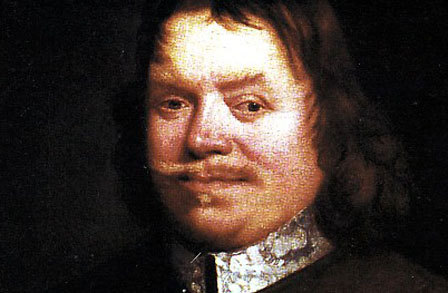
Poetry Saturday—Thus Far Did I Come

John BunyanThus far I did come laden with my sin;
Nor could aught ease the grief that I was in,
Till I came hither: what a place is this!
Must here be the beginning of my bliss?
Must here the burden fall from off my back?
Must here the strings that bound it to me crack?
Blessed Cross, blessed sepulcher! blessed rather be
The Man that there was put to shame for me! —John Bunyan’s Christian in Pilgrim’s Progress, after he lost his burden at Calvary


Links & Quotes

link quote

Some good reading from today…

“Every deadly calamity is a merciful call from God for the living to repent.” —John Piper

“Our Father refreshes us on the journey with some pleasant inns, but will not encourage us to mistake them for home.” —C.S. Lewis

“I ask you, dear Christian friends, to come nearer to it [the blood Jesus shed on the Cross] this morning than ever you have been. Think over the great truth of substitution. Portray to yourself the sufferings of the Savior. Dwell in His sight, sit at the foot of Calvary, abide in the presence of His Cross, and never turn away from that great spectacle of mercy and of misery. Come to it; be not afraid. You sinners, who have never trusted Jesus, look here and live! May you come to Him now.” —Charles Spurgeon

“Our most pressing obligation today is to do all in our power to obtain a revival that will result in a reformed, revitalized, purified church. It is of far greater importance that we have better Christians than that we have more of them.” —A.W. Tozer

Checkmate

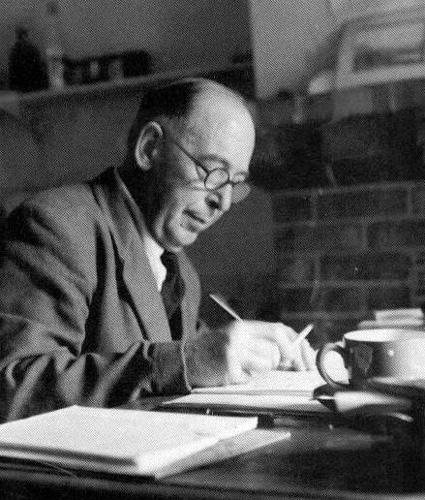
C.S. LewisI recently re-read C.S. Lewis’ book Miracles (you can read my full book review by clicking here). As you may have noticed, after reading and reviewing books on this blog, I also like to share some quotes that caught my attention. Doing this with Lewis is difficult, because in order to get the context of a particular quote, I think I would have to cite almost a full page or more. So over the next few weeks I plan to share some quotes from Miracles that require not as much context, or I will provide a bit of background to set the stage.

Lewis called the Incarnation of Jesus the grandest miracle of all. Here he discusses how God didn’t have to scramble to create an alternative plan because satan tempted Adam and Eve to sin, and thus need a Savior, but that God used satan’s own strong point to defeat him.

“So much for the sense in which human Death the result of sin and the triumph of satan. But it is also the means of redemption from sin, God’s medicine for Man and His weapon against satan. In a general way it is not difficult to understand how the same thing can be a masterstroke on the part of one combatant and also the very means whereby the superior combatant defeats him. Every good general, every good chess player, takes what is precisely the strong point of his opponent’s plan and makes it the pivot of his own plan. Take that castle of mine if you insist. It was not my original intention that you should—indeed, I thought you would have had more sense. But take it by all means. For now I move thus … and thus… and it is mate in three moves. Something like this must be supposed to have happened about Death. … Jesus tasted death on behalf of all others. He is the representative ‘Die-er’ of the universe: and for that very reason the Resurrection and the Life. Or conversely, because He truly lives, He truly dies, for that is the very pattern of reality. Because the higher can descend into the lower He who from all eternity has been incessantly plunging Himself in the blessed death of self-surrender to the Father can also most fully descend into the horrible and (for us) involuntary death of the body.”

 For other quotes from this book see Miracle Or “Cheating”?Miracles And NatureChristianity And PantheismCorrecting The PantheistAbsolute FactThe Central Miracle, and The Miracle of Freewill.

Do You Smell Like Jesus?

Christ's aromaScientists tell us that the sense of smell contributes to more vivid and clear memory recall than any of the other human senses. Have you ever thought about the things Jesus smelled? Or about the memories others recalled about Jesus because of the way He smelled?

Less than a week before His crucifixion, Mary anointed Jesus with a highly-scented spice called spikenard (see John 12:1-8; Mark 14:3-9; and Matthew 26:6-13). Let me rephrase that: Mary didn’t just “anoint” Jesus as we think about that word today, she doused Him in a lifetime supply of this fragrance. Some people complained, but Jesus told those sour people that it was absolutely beautiful what she had done, as Jesus carried this aroma with Him to the Cross.

After He died on the Cross, Joseph and Nicodemus prepared Jesus for burial with 75 pounds of myrrh and aloes (see John 19:38-40). Think about that: seventy-five pounds! In doing so they actually fulfilled a prophesy from the Old Testament about King Jesus’ triumphal return to life—

Your throne, O God, will last for ever and ever; a scepter of justice will be the scepter of Your kingdom. You love righteousness and hate wickedness; therefore God, Your God, has set You above Your companions by anointing You with the oil of joy. All Your robes are fragrant with myrrh and aloes and cassia… (Psalm 45:6-8).

Jesus carried a powerful aroma with Him all the way to the Cross, into the tomb, and when He burst forth alive from the tomb! 

Without Christ, our lives carry the stench of death. We cannot come into our Heavenly Father’s presence because of that putrid smell clinging to us. But when God forgives us of our sins as we place our faith in Jesus, we are wrapped in the robes of Christ: we smell like Him and are welcomed into the Father’s presence.

Easter is a reminder of how a forgiven Christian should now live—

Live a life filled with love, following the example of Christ. He loved us and offered Himself as a sacrifice for us, a pleasing aroma to God (Ephesians 5:2).

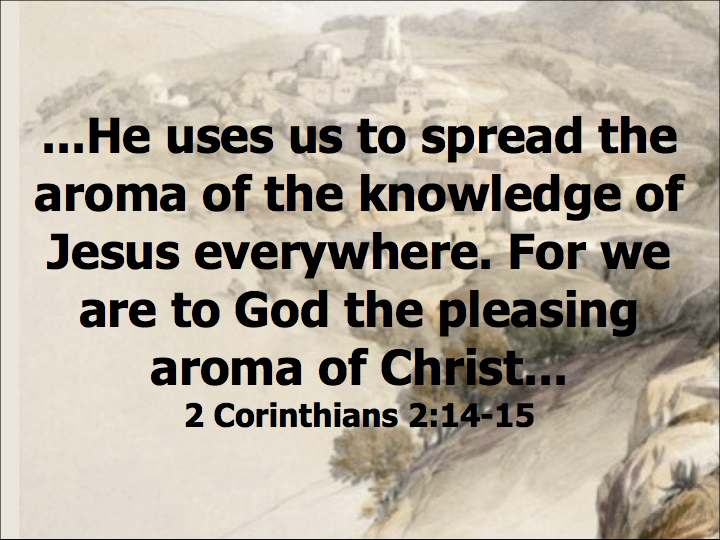
…Now [God] uses us to spread the knowledge of Christ everywhere, like a sweet perfume. Our lives are a Christ-like fragrance rising up to God (2 Corinthians 2:14-15).

How do you smell? Do you smell like Jesus? Are others attracted to the aroma of Christ because of what they smell in you? Smelling good honors the work Jesus did on the Cross and in overcoming the grave.

Poetry Saturday—When I Survey The Wondrous Cross

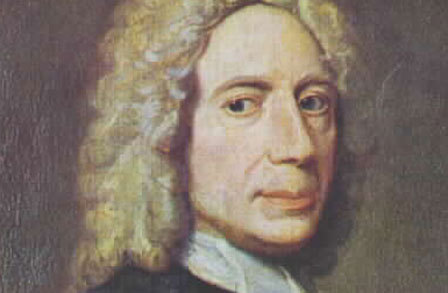
Isaac WattsWhen I survey the wondrous Cross
On which the Prince of glory died,
My richest gain I count but loss,
And pour contempt on all my pride.

Forbid it, Lord, that I should boast,
Save in the death of Christ my God!
All the vain things that charm me most,
I sacrifice them to His blood.

See from His head, His hands, His feet,
Sorrow and love flow mingled down!
Did e’er such love and sorrow meet,
Or thorns compose so rich a Crown?

Were the whole realm of nature mine,
That were a present far too small;
Love so amazing, so divine,
Demands my soul, my life, my all. —Isaac Watts