14 Quotes From “Our Brilliant Heritage”

Our Brilliant HeritageAs I said in my book review of Oswald Chambers’ book Our Brilliant Heritage, it’s hard to come up with enough good words to say about this man’s insights! You can read my review of this book by clicking here, and check out my first batch of quotes below.

“The writer to the Hebrews does not tell us to imitate Jesus when we are tempted; he says—‘Come to Jesus, and He will succor [help] you in the nick of time.’ That is, all His perfect overcoming of temptation is ours in Him. … Jesus Christ does not give us power to work up a patience like His own. His patience is manifested if we will let His life dwell in us.”

“Paul does not say, nor does the Spirit of God say anywhere, that after we are born again of the Spirit of God, Jesus Christ is put before us as an Example and we make ourselves holy by drawing from Him. Never! Sanctification is Christ formed in us; not the Christ-life, but Christ Himself. In Jesus Christ is the perfection of everything, and the mystery of sanctification is that we may have in Jesus Christ, not the start of holiness, but the holiness of Jesus Christ.”

“The very spirit that ruled Jesus in His life now rules us. How has it come about? Read Romans 8:10. ‘And if Christ be in you, the body is dead because of sin; but the Spirit is life because of righteousness.’ John the Baptist said of Jesus—‘He shall baptize you with the Holy Ghost and with fire.’ The Spirit of God who wrought out that marvelous Life in the Incarnation will baptize us into the very same life, not into a life like it, but into His life until the very holiness of Jesus is gifted to us. It is not something we work out in Him, it is in Him, and He manifests it through us while we abide in Him.” 

“Some of us have never allowed God to make us understand how hopeless we are without Jesus Christ.”

“‘Wherefore if any man is in Christ, there is a new creation’! (2 Corinthians 5:17). … Those of us who are in the experience of God’s mighty salvation do not give ourselves half enough prayerful time, and wondering time, and studying time to allow the Spirit of God to bring this marvelous truth home to us.” 

“We are too free from wonder nowadays, too easy with the Word of God; we do not use it with the breathless amazement Paul does. Think what sanctification means—Christ in me; made like Christ; as He is, so are we.

“Men are apt to cry to God to stop—‘If only God would leave me alone!’ God never will. His passionate, inexorable love never allows Him to leave men alone, and with His children He will shake everything that can be shaken till there is nothing that can be shaken anymore; then will abide the consuming fire of God until the life is changed into the same image from glory to glory, and men see that strong family likeness to Jesus that can never be mistaken.”

“The marvelous thing about the inheritance of the saints in light is that when we take our part of the inheritance, everyone else is blessed in the taking; but if we refused to be partakers of the inheritance of the saints in light, we rob others of its glory and its wonder.”

“We cannot do what God does and God will not do what we can do. We cannot save ourselves or sanctify ourselves; God only can do that; but God does not give us good habits, He does not give us character, He does not make us walk aright; we must do all that.” 

“If, when no one is watching us, we are building ourselves up in the Word of God, then, when a crisis comes, we shall stand; but if we are not building on the Word of God, when a crisis comes we shall go down, no matter what our wills are like.”

“With Jesus it is never ‘Do, do,’ but ‘Be, be and I will do through you.’”

“One strong moral man will form a nucleus around which others will gather; and spiritually, if we put on the armor of God and stand true to Him, a whole army of week-kneed Christians will be strengthened.”

“The surest evidence that the nature of God has come into me is that I know I am a sinner.”

“The deepest repentance is not in the sinner, but in the saint. Repentance means not only sorrow for sin, it involves the possession of a new disposition that will never do the thing again.”

Our Brilliant Heritage (book review)

Our Brilliant HeritageSometimes talking about Oswald Chambers’ books, I almost run out of glowing adjectives! Our Brilliant Heritage is no exception: it’s an outstanding book.

Technically it’s three books in one. Our Brilliant Heritage was combined with Grow Up Into Him and As He Walked to create one volume. As you may be able to figure out from the titles of the books, the message in this combined volume is encouraging disciples to look to Jesus in order to live out our brilliant heritage as Christians.

This material all came from lectures that Oswald Chambers delivered, which gives the book a conversational feel. The lectures are short, but packed with challenges that the student needs to spend time unpacking in their own life. Although I cannot verify this, it seemed to me that in these lectures Chambers asked more questions than usual, giving this book even more of an introspective feel.

If you are serious about taking your Christian walk deeper, you can never go wrong reading Oswald Chambers, and Our Brilliant Heritage is as good of a place to start as any!

Links & Quotes

link quote

“Be not satisfied, my dear friends, with being saved; desire to know how you are saved, why you are saved, the method by which you are saved. It is a rock on which you stand, I know, but think upon the questions—how you were put upon that rock, by whose love you came there, and why that love was set on you. I would to God that all the members of this church were not only in Christ Jesus, but understood Him, and knew by the assurance of the understanding whereunto they have attained.” —Charles Spurgeon

“I get the impression that some Christians think there are two kinds of history, two kinds of time. First, there is Bible time, and Bible history. Things happened in the Bible that were unique, and that we don’t expect to see happen in normal time and history, where we live, you know, today. Things like God doing extraordinary acts of deliverance, help, and support, or extraordinary empowerments for witness or service. Like Moses leading the people out of Egypt, or Joshua leading them to subdue the land of promise, or David leading an entire nation to build a glorious temple for the Lord. That was then, many Christians seem to think; this is now. But when we think this way we may be cutting ourselves off from one of the most powerful resources for visionary leadership, and that is the promise of the past … Visionary leaders understand that God has done remarkable, nearly incredible things in the past, and they reach back and recall those mighty works of God in order to encourage His people in the present. They recognize that the straight line of the covenant continues from Scripture through Church history right down to our day.” —T.M. Moore

“The psalmist does not yield. He battles unbelief with counterattack. In essence, he says, ‘In myself I feel very weak and helpless and unable to cope. My body is shot and my heart is almost dead. But whatever the reason for this despondency, I will not yield. I will trust God and not myself. He is my strength and my portion’ [Psalm 73:26]. … God has put these testimonies in the Bible so that we might use them to fight the unbelief of despondency.” —John Piper

Yesterday I posted a book review about our brains. Here is 11 things you need to know to keep your brain healthy.

“If homosexuals are bullied, we need to protect them. If they’re unjustly discriminated against, we need to help them. If they’re treated with contempt, the person hurting them should be stopped. If a family member comes out as gay and then is belittled, harmed, or vilified, then the offending family needs to be corrected. If Christians ridicule people who identify as gay or lesbian, they need to admonished. If a church doesn’t welcome seekers of all stripes (including people who identify as gay, lesbian, or bisexual), then it needs to change. But none of these circumstances are reasons to reinterpret Scripture to affirm homosexuality” (emphasis mine). Read more in Bad Reasons To Adopt Pro-Gay Theology.

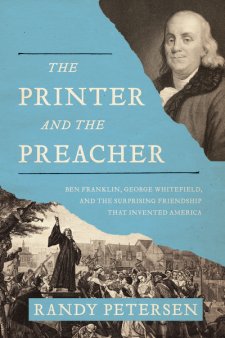
14 Quotes From “The Printer And The Preacher”

The Printer And The PreacherI loved this book! It’s a great historical story of how Benjamin Franklin and George Whitefield’s lives intertwined at such a pivotal time in history. America exists the way it does politically and religiously today because of the influence of these two titans. You can read my full book review here. Below are a few quotes from this remarkable book.

“The Faith you mention has doubtless its use in the world…. But I wish it were more productive of good works than I have generally seen it: I mean real good works, works of kindness, charity, mercy, and public spirit; not a holiday-keeping, sermon-reading or hearing, performing church ceremonies, or making long prayers. … Your great Master thought much less of these outward appearances and professions than many of His modern disciples. He preferred the doers of the Word to the mere hearers…and those who gave food to the hungry, drink to the thirsty, raiment to the naked, entertainment to the stranger, and relief to the sick.” —Benjamin Franklin, in a letter to pastors

There are many who “perhaps fear less the being in Hell, than out of the fashion.” —Benjamin Franklin

“The alteration in the face of religion here is altogether surprising. Never did the people show so great a willingness to attend sermons, nor the preachers greater zeal and diligence in performing the duties of their function. Religion is become the subject of most conversations. No books are in request but those of piety and devotion; and instead of idle songs and ballads, the people are everywhere entertaining themselves with Psalms, hymns and spiritual songs. All of which, under God, is owing to the successful labors of the Reverend Mr. Whitefield.” —Benjamin Franklin, in a newspaper article

The Body of
B. Franklin
Printer;
Like the Cover of an old Book,
Its Contents torn out,
And stript of its Lettering and Gilding,
Lies here, Food for Worms.
But the Work shall not be wholly lost:
For it will, as he believ’d, appear once more,
In a new& more perfect Edition,
Corrected and Amended
By the Author. —Benjamin Franklin, the Epitaph he wrote for himself at age 22

“I have seen your Epitaph. Believe on Jesus, and get a feeling possession of God in your heart, and you cannot possibly be disappointed of your expected second edition finally corrected, and infinitely amended.” —George Whitefield 

“You blame me for weeping, but how can I help it when you will not weep for yourselves, though your immortal souls are on the verge of destruction?” —George Whitefield

Those who hear the gospel “have more need of heat than light. Would to God we had as much warmth in our hearts, as light in our understandings!” —George Whitefield

“If we are truly converted, we shall not only be turned and converted from sinful self, but we shall be converted from righteous self. That is the devil of devils: For righteous self can run and hide itself in its own doings, which is the reason self-righteous people are so angry with gospel preachers.” —George Whitefield

“Let your practice correspond to your profession.”—George Whitefield

“Oh pray, dear Mr. H., that God would always keep me humble, and fully convinced that I am nothing without Him, and that all the good which is done upon earth, God doth it Himself.” —George Whitefield, in a letter to Gabriel Harris, when his popularity was growing

“Will it not in the end destroy brotherly love, and insensibly take from us that cordial union and sweetness of soul, which I pray God may always subsist between us? … How glad would the enemies of the Lord be to see us divided? How many would rejoice, should I join and make a party against you? And in one word, how would the cause of our common Master every way suffer by our raging disputes about particular points of doctrines? … I write not this, honored Sir, from heat of spirit, but out of love. At present, I think you are entirely inconsistent with yourself, and therefore do not blame me, if I do not approve of all that you say.” —George Whitefield, in correspondence with John Wesley over doctrinal differences

“I find that you grow more and more famous in the learned world. As you have made a pretty considerable progress in the mysteries of electricity, I would now humbly recommend to your diligent unprejudiced pursuit and study the mystery of the new-birth. It is a most important, interesting study, and when mastered, will richly answer and repay you for all your pains. One at Whose bar we are shortly to appear, hath solemnly declared, that without it, ‘we cannot enter the kingdom of heaven.’ You will excuse this freedom. I must have aliquid Christi [something of Christ] in all my letters.” —George Whitefield, in a letter to Benjamin Franklin

“satan is angry. I am now mimicked and burlesqued upon the public stage. All hail such contempt! God forbid that I should glory, save in the Cross of Jesus Christ.” —George Whitefield, in a letter after a play was produced in London making fun of him

“Whitefield and Franklin were not just the two most famous people in America in their time—they were also the most significant. The effects of their lives and their work are still being felt today … If America was born as a Christian nation, it’s because many of its people were genuinely, powerfully Christians. It had less to do with the language in any founding documents and more to do with the fact that George Whitefield had been tromping from town to town, inviting people to hear the call of God. It had even less to do with church membership. God was grabbing lives. People’s hearts were flying open. No one was imposing Christianity on society. The power came from within.” —Randy Peterson

The Printer And The Preacher (book review)

The Printer And The PreacherRandy Peterson has written an amazing story of the unlikely friendship between two men who loom large in history: Benjamin Franklin and George Whitefield. The book is called The Printer And The Preacher: The Surprising Friendship That Invented America.

These men were arguably the first celebrities in the American colonies. They each achieved their level of fame in totally different professions, and yet their paths continue to cross time and time again, until a 30-year-long friendship ensued. Each of them was instrumental in sharpening the other in their craft, promoting their pursuits, and defending each other’s reputations. And perhaps most notably, together they became pivotal in the build-up to America’s independence both politically and religiously.

In concluding this very enjoyable book, Peterson writes—

“Like George [Whitefield], we are, as a nation, very religious. Like Ben [Franklin], we like to make up our own beliefs. About half of Americans call themselves evangelical, children of the Great Awakening. Many even use George’s favorite term: born again. But others do not share this faith. Many, like Ben, are scientific in their outlook. They take an ‘enlightened’ approach to life, focusing on the natural world, not the supernatural.

“We are George and Ben.

“Thanks to Ben and others, we have religious liberty carved into our Constitution. We have freedom to be religious or not to be. We can be Methodists, Calvinist, Catholic, deist, Pietist, or all of the above. No authority can coerce us to believe anything or force us to say we do. Spiritual life is a personal matter, a transaction between us and God. George and Ben both taught us this.

“We are still figuring out how religious freedom works. As a nation, we seem to vacillate between Ben and George, skeptic and zealot, the right to doubt and the right to believe. The question in our deeply divided country is how to preserve the freedom to live without a vibrant Christian faith as well as the freedom to choose something else. The relationship between these two forefathers points to an answer.”

This book will appeal to so many people: history buffs, pastors, scientists, leaders, politicos, and biography readers. I highly recommend it!

I am a Thomas Nelson reviewer.

A Brief Bio Of Smith Wigglesworth

WigglesworthTo say that Smith Wigglesworth was a unique minister of the Gospel is an understatement! I doubt that you can find anyone else in history quite like Wigglesworth, but what an amazing example he left for us of someone totally sold-out to God!

This video biography by Roberts Liardon is a fairly accurate picture of this great man’s life. You can also get to know Smith Wigglesworth by reading his sermons. I have posted several reviews of books which contain his sermons, as well as extensive quotes from his those sermons:

You may also be interested in checking out my family’s connection to this amazing evangelist.

Enjoy this video—

Forgive Me (book review)

Forgive MeIf you see a book entitled Forgive Me, you might think that it is a book extolling the virtue of asking forgiveness. Although author David Kirkwood is asking forgiveness from his family, friends, and neighbors, this isn’t a book telling us how or why to forgive.

David Kirkwood’s apology is to those he interacts with on an everyday basis. His sin: not telling them the simple truth about how much God loves them!

Forgive Me is an excellent book for Christians to buy in bulk, and then hand out to people they care about. David will lead the reader through a logical progression of why we are here, the futility of trying to find purpose or a lasting legacy on our own, and how God’s love led to Jesus purchasing the forgiveness from our sins.

This isn’t a deep doctrinal book, nor is it a “preachy” book. It’s loving, and kind, and easy for anyone to read. Please share this book with any of your family or friends who haven’t yet experienced the joy of knowing Jesus as their Savior.

The Kirkwood family graciously provided me with a copy of this book so I could read it and review it for you.

11 Quotes From “Liquid Leadership”

Liquid LeadershipLiquid Leadership by Brad Szollose was a bit “light” on leadership development content for my tastes, but I still found a few good quotes to share with you. Check out my review of this book by clicking here.

“Baby boomers tend to isolate themselves from younger people and treat them as expendable kids, while Gen Yers to undervalue the experience of Boomers and ignore them. Either attitude is a mistake and insulting.”

“Innovation cannot thrive in environments where anxiety is too high; but in environments where anxiety is low, creativity is high. Fragile thoughts need time to survive and thrive.”

“Something remarkable took place over the past twenty-five years: People stop worshipping the companies they work for and begin instead to see themselves as value added to the bottom line, partners in success. Today’s workforce has amazingly high self-esteem and won’t look up to you just because you’ve ‘earned’ the corner office.”

“It is easy to be a leader when times are good. But when times are tough, these are the moments that make a leader great.”

“Leaders who are more involved in the day-to-day process can easily see what is creating the status quo environment, which enables them to change it. And when they make changes, they can make them organically, because they are viewed as a trusted ally instead of an intruder.”

“Your job is to be the best shepherd possible of ideas and implementation.”

“In an environment that allows truth telling, you must make sure each team member understands how to present a sticky subject without destroying a fellow colleague’s contribution. In other words, speak properly and respectfully when critiquing. Speaking the truth should not be used as a way to get even or to make a coworker look bad. Making someone feel as if they are under attack leaves angry feelings and creates a hostile environment. But when everyone is supportive and nurturing, people feel safe to admit their weaknesses. The common goal is to get better.”

“When people have a sense of purpose built into what they do, you don’t just get an employee—you get a person’s talent, passion, and full attention. … But real engagement—real, 100 percent commitment—requires a workplace that isn’t just making stuff but, in someway, changing the world.”

“Make sure each and every member of your organization understands the company’s mission, where the company is going, and how it plans on getting there. Try to make the vision exciting for everyone. Team members need to be crystal clear as to goals, purposes, and intentions for the group. Keep the mission of each team front and center, and they’ll stay on target, and your employees will understand how to earn their place on the team. High standards will guarantee greater output.”

“You never change the existing reality by fighting it. Instead, create a new model that makes the old one obsolete.” —Buckminster Fuller

“I am going to share with you the key to success in any business: the secret, in a word, is ‘heart-power.’ Capture the heart, and you’ve captured the person.” —Vince Lombardi

Liquid Leadership (book review)

Liquid LeadershipIn Liquid Leadership, Brad Szollose proposes to teach leadership principles for those who have younger employees, or for those who lead organizations that need to relate to a younger demographic. Brad says that liquid leaders are able to flow effortlessly between older and younger generations.

Brad’s seven laws say that a liquid leader…

  1. …places people first.
  2. …cultivates an environment where it is free and safe to tell the truth.
  3. …nurtures a creative culture.
  4. …supports reinvention of the organization.
  5. …leads by example.
  6. …takes responsibility.
  7. …leaves a lasting legacy.

I agree with all of these points: not just for “liquid leaders” but for all leaders. If leadership principles (or laws, as Brad calls them) are true, then they are also applicable in every setting: Gen Y or Baby Boomer, for-profit or charity, Western or Eastern.

The “meat” of Liquid Leadership comes in the opening chapter, with the remaining chapters consisting primarily of Brad’s personal experiences, or his observations of other success/failure stories, to help bolster his point.

If you are looking for a book with good stories to make your case for leadership, check this out. But if you are looking for a book about serious leadership development, look elsewhere.

9 More Quotes From “Mentoring 101”

The Complete 101 SeriesJohn Maxwell always includes the best quotes from other authors in his books. Here are some of the quotes he shared in Mentoring 101.

“We exist temporarily through what we take, but we live forever through what we give.” —Douglas M. Lawson

“When people are made to feel secure and important and appreciated, it will no longer be necessary for them to whittle down others in order to seem bigger in comparison.” —Virginia Arcastle

“Some of us tend to think, ‘I could have been a success, but I never had the opportunity. I wasn’t born into the right family, or I didn’t have the money to go to the best school.’ But when we measure success by the extent were using what we’ve received, it eliminates that frustration.” —Fred Smith

“A true measure of your worth includes all the benefits others have gained from your success.” —Cullen Hightower

“Always help people increase their own self-esteem. Develop your skills in making other people feel important. There is hardly a higher compliment you can pay an individual than helping him be useful and to find satisfaction from his usefulness.” —Donald Laird

“There are a lot of coaches with a good ball clubs who know the fundamentals and have plenty of discipline but still don’t win the game. Then you come to the third ingredient: If you’re going to play together as a team, you’ve got to care for one another. You’ve got to love each other. Each player has to be thinking about the next guy and saying to himself: ‘If I don’t block that man, Paul is going to get his legs broken. I have to do my job well in order that he can do his.’ The difference between mediocrity and greatness is the feeling these guys have for each other.” —Vince Lombardi

“There is no future in any job. The future lies in the person who holds the job.” —Dr. George W. Crane

“The reason so many people never get anywhere in life is because when opportunity knocks, they are out in the backyard looking for four-leaf clovers.” —Walter P. Chrysler

“The greatest leader is willing to train people and develop them to the point that they eventually surpass him or her in knowledge and ability.” —Fred A. Manske, Jr.

To read the quotes from John Maxwell that I shared from this book, please click here.