The Printer And The Preacher (book review)

The Printer And The PreacherRandy Peterson has written an amazing story of the unlikely friendship between two men who loom large in history: Benjamin Franklin and George Whitefield. The book is called The Printer And The Preacher: The Surprising Friendship That Invented America.

These men were arguably the first celebrities in the American colonies. They each achieved their level of fame in totally different professions, and yet their paths continue to cross time and time again, until a 30-year-long friendship ensued. Each of them was instrumental in sharpening the other in their craft, promoting their pursuits, and defending each other’s reputations. And perhaps most notably, together they became pivotal in the build-up to America’s independence both politically and religiously.

In concluding this very enjoyable book, Peterson writes—

“Like George [Whitefield], we are, as a nation, very religious. Like Ben [Franklin], we like to make up our own beliefs. About half of Americans call themselves evangelical, children of the Great Awakening. Many even use George’s favorite term: born again. But others do not share this faith. Many, like Ben, are scientific in their outlook. They take an ‘enlightened’ approach to life, focusing on the natural world, not the supernatural.

“We are George and Ben.

“Thanks to Ben and others, we have religious liberty carved into our Constitution. We have freedom to be religious or not to be. We can be Methodists, Calvinist, Catholic, deist, Pietist, or all of the above. No authority can coerce us to believe anything or force us to say we do. Spiritual life is a personal matter, a transaction between us and God. George and Ben both taught us this.

“We are still figuring out how religious freedom works. As a nation, we seem to vacillate between Ben and George, skeptic and zealot, the right to doubt and the right to believe. The question in our deeply divided country is how to preserve the freedom to live without a vibrant Christian faith as well as the freedom to choose something else. The relationship between these two forefathers points to an answer.”

This book will appeal to so many people: history buffs, pastors, scientists, leaders, politicos, and biography readers. I highly recommend it!

I am a Thomas Nelson reviewer.
A Brief Bio Of Smith Wigglesworth

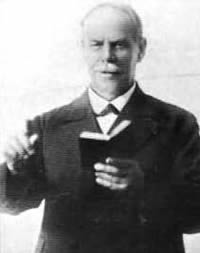
WigglesworthTo say that Smith Wigglesworth was a unique minister of the Gospel is an understatement! I doubt that you can find anyone else in history quite like Wigglesworth, but what an amazing example he left for us of someone totally sold-out to God!

This video biography by Roberts Liardon is a fairly accurate picture of this great man’s life. You can also get to know Smith Wigglesworth by reading his sermons. I have posted several reviews of books which contain his sermons, as well as extensive quotes from his those sermons:

You may also be interested in checking out my family’s connection to this amazing evangelist.

Enjoy this video—

Forgive Me (book review)

Forgive MeIf you see a book entitled Forgive Me, you might think that it is a book extolling the virtue of asking forgiveness. Although author David Kirkwood is asking forgiveness from his family, friends, and neighbors, this isn’t a book telling us how or why to forgive.

David Kirkwood’s apology is to those he interacts with on an everyday basis. His sin: not telling them the simple truth about how much God loves them!

Forgive Me is an excellent book for Christians to buy in bulk, and then hand out to people they care about. David will lead the reader through a logical progression of why we are here, the futility of trying to find purpose or a lasting legacy on our own, and how God’s love led to Jesus purchasing the forgiveness from our sins.

This isn’t a deep doctrinal book, nor is it a “preachy” book. It’s loving, and kind, and easy for anyone to read. Please share this book with any of your family or friends who haven’t yet experienced the joy of knowing Jesus as their Savior.

The Kirkwood family graciously provided me with a copy of this book so I could read it and review it for you.

11 Quotes From “Liquid Leadership”

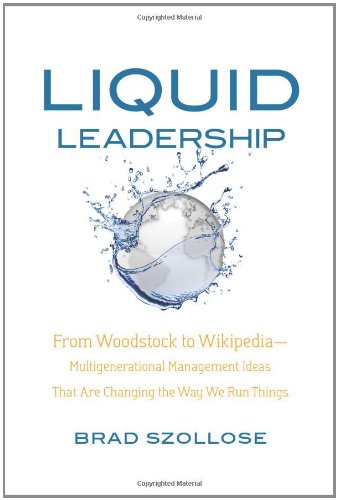
Liquid LeadershipLiquid Leadership by Brad Szollose was a bit “light” on leadership development content for my tastes, but I still found a few good quotes to share with you. Check out my review of this book by clicking here.

“Baby boomers tend to isolate themselves from younger people and treat them as expendable kids, while Gen Yers to undervalue the experience of Boomers and ignore them. Either attitude is a mistake and insulting.”

“Innovation cannot thrive in environments where anxiety is too high; but in environments where anxiety is low, creativity is high. Fragile thoughts need time to survive and thrive.”

“Something remarkable took place over the past twenty-five years: People stop worshipping the companies they work for and begin instead to see themselves as value added to the bottom line, partners in success. Today’s workforce has amazingly high self-esteem and won’t look up to you just because you’ve ‘earned’ the corner office.”

“It is easy to be a leader when times are good. But when times are tough, these are the moments that make a leader great.”

“Leaders who are more involved in the day-to-day process can easily see what is creating the status quo environment, which enables them to change it. And when they make changes, they can make them organically, because they are viewed as a trusted ally instead of an intruder.”

“Your job is to be the best shepherd possible of ideas and implementation.”

“In an environment that allows truth telling, you must make sure each team member understands how to present a sticky subject without destroying a fellow colleague’s contribution. In other words, speak properly and respectfully when critiquing. Speaking the truth should not be used as a way to get even or to make a coworker look bad. Making someone feel as if they are under attack leaves angry feelings and creates a hostile environment. But when everyone is supportive and nurturing, people feel safe to admit their weaknesses. The common goal is to get better.”

“When people have a sense of purpose built into what they do, you don’t just get an employee—you get a person’s talent, passion, and full attention. … But real engagement—real, 100 percent commitment—requires a workplace that isn’t just making stuff but, in someway, changing the world.”

“Make sure each and every member of your organization understands the company’s mission, where the company is going, and how it plans on getting there. Try to make the vision exciting for everyone. Team members need to be crystal clear as to goals, purposes, and intentions for the group. Keep the mission of each team front and center, and they’ll stay on target, and your employees will understand how to earn their place on the team. High standards will guarantee greater output.”

“You never change the existing reality by fighting it. Instead, create a new model that makes the old one obsolete.” —Buckminster Fuller

“I am going to share with you the key to success in any business: the secret, in a word, is ‘heart-power.’ Capture the heart, and you’ve captured the person.” —Vince Lombardi

Liquid Leadership (book review)

Liquid LeadershipIn Liquid Leadership, Brad Szollose proposes to teach leadership principles for those who have younger employees, or for those who lead organizations that need to relate to a younger demographic. Brad says that liquid leaders are able to flow effortlessly between older and younger generations.

Brad’s seven laws say that a liquid leader…

  1. …places people first.
  2. …cultivates an environment where it is free and safe to tell the truth.
  3. …nurtures a creative culture.
  4. …supports reinvention of the organization.
  5. …leads by example.
  6. …takes responsibility.
  7. …leaves a lasting legacy.

I agree with all of these points: not just for “liquid leaders” but for all leaders. If leadership principles (or laws, as Brad calls them) are true, then they are also applicable in every setting: Gen Y or Baby Boomer, for-profit or charity, Western or Eastern.

The “meat” of Liquid Leadership comes in the opening chapter, with the remaining chapters consisting primarily of Brad’s personal experiences, or his observations of other success/failure stories, to help bolster his point.

If you are looking for a book with good stories to make your case for leadership, check this out. But if you are looking for a book about serious leadership development, look elsewhere.

9 More Quotes From “Mentoring 101”

The Complete 101 SeriesJohn Maxwell always includes the best quotes from other authors in his books. Here are some of the quotes he shared in Mentoring 101.

“We exist temporarily through what we take, but we live forever through what we give.” —Douglas M. Lawson

“When people are made to feel secure and important and appreciated, it will no longer be necessary for them to whittle down others in order to seem bigger in comparison.” —Virginia Arcastle

“Some of us tend to think, ‘I could have been a success, but I never had the opportunity. I wasn’t born into the right family, or I didn’t have the money to go to the best school.’ But when we measure success by the extent were using what we’ve received, it eliminates that frustration.” —Fred Smith

“A true measure of your worth includes all the benefits others have gained from your success.” —Cullen Hightower

“Always help people increase their own self-esteem. Develop your skills in making other people feel important. There is hardly a higher compliment you can pay an individual than helping him be useful and to find satisfaction from his usefulness.” —Donald Laird

“There are a lot of coaches with a good ball clubs who know the fundamentals and have plenty of discipline but still don’t win the game. Then you come to the third ingredient: If you’re going to play together as a team, you’ve got to care for one another. You’ve got to love each other. Each player has to be thinking about the next guy and saying to himself: ‘If I don’t block that man, Paul is going to get his legs broken. I have to do my job well in order that he can do his.’ The difference between mediocrity and greatness is the feeling these guys have for each other.” —Vince Lombardi

“There is no future in any job. The future lies in the person who holds the job.” —Dr. George W. Crane

“The reason so many people never get anywhere in life is because when opportunity knocks, they are out in the backyard looking for four-leaf clovers.” —Walter P. Chrysler

“The greatest leader is willing to train people and develop them to the point that they eventually surpass him or her in knowledge and ability.” —Fred A. Manske, Jr.

To read the quotes from John Maxwell that I shared from this book, please click here.

4 Quotes From “41”

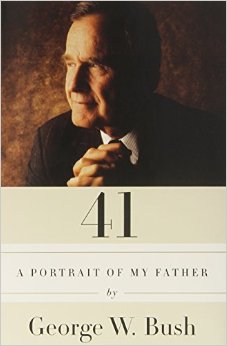
41I truly enjoyed the unique way George W. Bush (US president #43) told the story of his Dad’s life (George H.W. Bush was president #41). It was so refreshing to see the relationship this father and son have with each other. You can read my full book review by clicking here. Below are some of the quotes that caught my eye.

“Listen to your conscience. Don’t be afraid not to join the mob—if you feel inside it’s wrong. Don’t confuse being ‘soft’ with seeing the other guy’s point of view. … Avoid self-righteously turning on a friend, but have your friendship mean enough that you would be willing to share with your friend your judgment. Don’t assign away your judgment to achieve power.” —George H.W. Bush, in a letter to his sons during the Watergate scandal 

“America is never wholly herself unless she is engaged in high moral principle.” —George H.W. Bush, in his inauguration speech

“President Bush was a man who entered the political arena and left with his integrity intact. President Bush was a leader who stared tyranny in the face and never blinked. George Bush was a great president of the United States of America, because he is first and foremost a great man—a man who through it all knew exactly what is most important in life: faith and family. Through four years of world crises and enormous demands on his time, a phone call from me or one of my brothers and sister never went unanswered. The world knows George Bush as a master of personal diplomacy. We know George Bush as the worlds best dad.” —George W. Bush, at the opening of the George H.W. Bush Presidential Library

“At some point both of you may want to say, ‘Well, I don’t agree with my Dad on that point’ or ‘Frankly I think Dad was wrong on that.’ Do it. Chart your own course, not just on the issues but on defining yourselves. No one will ever question your love of family—your devotion to your parents.” —George H. W. Bush, in a 1998 letter to Jeb and George, who were both running for governor in their states

14 Quotes From John Maxwell In “Mentoring 101”

The Complete 101 SeriesI recently reviewed The Complete 101 Collection by John Maxwell. These are a great introduction to many of his more in-depth books (you can read my review by clicking here). Here are some quotes from Dr. Maxwell in Mentoring 101.

“Most people who desire success focus almost entirely on themselves, not others, when they start to make the journey. They usually think in terms of what they can get—in position, power, prestige, money, and perks. But that’s not the way to become truly successful. To do that, you have to give to others.”

“A person consumed with himself never considers spending time raising others up.”

“I believe that innate sense of motivation continues to exist in adults, but for too many people it has been beaten down by lack of support, busyness, stress, bad attitudes, lack of appreciation, scarce resources, poor training, or faulty communication. To get people excited about growing to their potential, you need to re-motivate them. Once you help them overcome the old things that knocked them down, they often motivate themselves.”

“As you develop people, remember that you are taking them on the journey towards success with you, not sending them. Stay with them until they’re ready to fly. And when they are ready, get them on their way.”

“The people closest to me determine my level of success or failure. The better they are, the better I am. And if I want to go to the highest level, I can do it only with the help of other people. We have to take each other higher.”

“When we examine ourselves, we naturally give ourselves the benefit of the doubt. Why? Because we see ourselves in the light of our intentions. On the other hand, when we look at others, we usually judge them according to their actions. Think about how much more positive our interaction with others would be if we believed the best in them and gave them the benefit of the doubt, just as we do for ourselves.”

“A study of 105 executives determined many of the characteristics shared by successful executives. One particular trait was defined as the most valuable: they admitted their mistakes and accepted the consequences rather than trying to blame others.”

“You can hire people to work for you, but you must win their hearts by believing in them in order to have them work with you.”

“Encouragement helps them reach their potential; it empowers them by giving them an energy to continue when they make mistakes. Use lots of positive reinforcement with your people. Don’t take acceptable work for granted; thank people for it. Praise a person every time you see improvement. And personalize your encouragement any time you can.”

“When you equip people, you teach them how to do a job. Development is different. When you develop people, you are helping them improve as individuals. You are helping them acquire personal qualities that will benefit them in many areas of life, not just their jobs.”

“There is no development without hard lessons. Almost all growth comes when we have positive responses to negative things.”

“When you don’t want to have a difficult conversation, you need to ask yourself: Is it because it will hurt them or hurt me? If it is because it will hurt you, then you’re being selfish. Good leaders get past the discomfort of having difficult conversations for the sake of the people they lead and the organization. The thing you need to remember is that people will work through difficult things if they believe you want to work with them.”

“Experience alone isn’t a good enough teacher—evaluated experience is. As the leader, you need to evaluate what looks like a win to make sure it is actually teaching what your employee needs to learn in order to grow and develop.”

“There is no greater accomplishment for mentors than when people they develop pass them by!”

41 (book review)

41It’s only happened twice in American history: A father and son both serving as President. The first was John Adams and John Quincy Adams, then George H.W. Bush and George W. Bush. But only once has the son written a memoir about his father, and that is 41: A Portrait Of My Father.

In the book’s preface, President George W. Bush writes, “Over the years, I suspect there will be many books analyzing George Herbert Walker Bush, the man and his presidency. Some of those works may be objective. This one is not. This book is a love story—a personal portrait of the extraordinary man who I am blessed to call my dad.” What a perfect description of this book, for indeed it is a love story, and a very moving one.

President Bush (the 43rd President) does an amazing job showing the “stuff” that went into making President Bush (the 41st President) the man that he is. It also helps us to then understand the decisions that 41 made throughout his extensive political career. I also appreciated reading how 43 used his personal, eye-witness experience with his Dad as material for his presidential decision-making.

This was a unique way to write a biography, and I found it very engaging and heartwarming. A truly great read!

The Complete 101 Collection (book review)

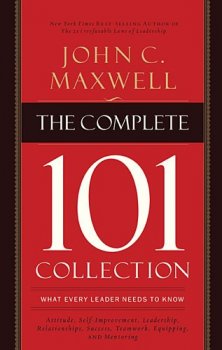
The Complete 101 SeriesI am a huge John Maxwell fan! Most of his books are quite in-depth, and feel like a graduate-level class in leadership. For those that are ready to go on a leadership development journey with Dr. Maxwell, The Complete 101 Collection would be a great place to start.

In college, the 101-level classes are intended to be the introduction to a subject. This is the class that will educate you, but more than that, it should whet your appetite to move on to the 201- 301, and 401-level classes in that subject. John Maxwell’s 101 books will do exactly the same thing.

When you read the books in this collection on attitude, self-improvement, leadership, relationships, success, teamwork, equipping, and mentoring, you will be able to see (a) which subject peaks your interest for more, and (b) which subject is calling you to more improvement. Then you can move on to other Maxwell books which will be the higher level classes in that subject.

This is an excellent book for anyone wanting to improve their interactions with others.

I am a Thomas Nelson book reviewer.