12 Quotes From “JumpStart Your Growth”

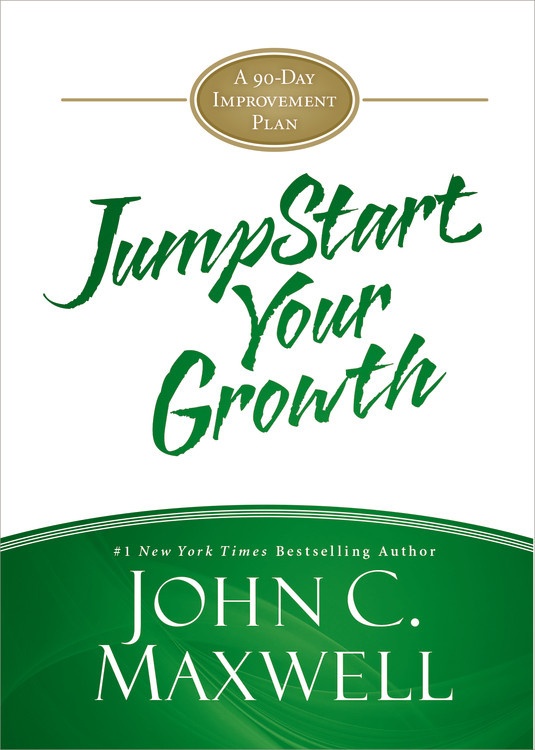
JumpStart Your GrowthJumpStart Your Growth is a companion book to The 15 Invaluable Laws Of Growth by John Maxwell. Check out my review of both of these books by clicking here. These are some of the quotes I appreciated from JumpStart.

“The time comes when you need to stop waiting for the man you want to become and start being the man you want to be.” —Bruce Springsteen

“Growing involves admitting you don’t have the answers, and it requires that you get over any fear you may have of making mistakes or looking foolish. And I found that I had to get started if I wanted to find the best way. That is the price of admission if you want to improve.” —John Maxwell

“If you want to get from where you are to where you want to be, you have to start by becoming aware of the choices that lead you away from your desired destination.” —Darren Hardy

“No factor is more important in people’s psychological development and motivation than the value judgments they make about themselves. Every aspect of their lives is impacted by the way they see themselves.” —Nathaniel Branden

“You need to learn to become your own encourager. Every time you do a good job, don’t just let it pass; give yourself a compliment. Every time you choose discipline over indulgence, don’t tell yourself that you should have anyway; recognize how much you are helping yourself. Every time you make a mistake, don’t bring up everything that’s wrong with yourself; tell yourself that you’re paying the price for growth and that you will learn to do better next time. Every positive thing you can say to yourself will help.” —John Maxwell 

“Act as if what you do makes a difference. It does.” —William James

“If there is an area in your life that seems overwhelming to you—health, work, family, or something else—try chipping away at it a little bit every day instead of trying to tackle it all at once. … Discipline is a morale builder. Boost yours by taking small steps that will take you in a positive direction.” —John Maxwell 

“At the end of each day, you should play back the tapes of your performance. The results should either applaud you or prod you.” —Jim Rohn

“There are two primary choices in life: to accept conditions as they exist, or to accept the responsibility for changing them.” —Denis Waitley 

“Rarely does a haphazard approach to anything succeed, and if it does, it’s not repeatable.” —John Maxwell

“Train yourself to fight for positive changes. Remember that your choices will lead to either the pain of self-discipline or the pain of regret.” —John Maxwell

“You can’t improve and avoid change at the same time.” —John Maxwell

13 Quotes From “Seeking Allah, Finding Jesus”

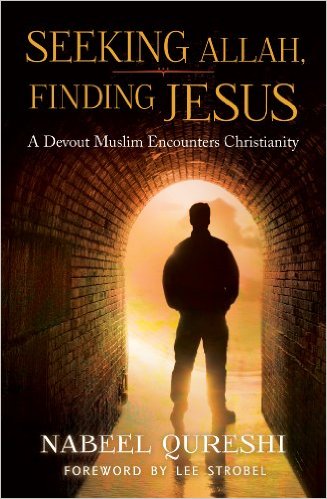
Seeking Allah Finding JesusIf you want to know about Islam from an insider’s perspective, Seeking Allah, Finding Jesus by Nabeel Qureshi is simply a phenomenal book! Check out my book review by clicking here. Below are just a few of the quotes I found quite educational.

“There is much division in Islam. The best determination of whether a man is Muslim is if he exclusively declares that Allah is God and Mohammad is Allah’s messenger. Beyond this point, there is great diversity in Islam.”

“There is no book of sharia. We must derive the law from a hierarchy of sources using a process of jurisprudence called fiqh. The first and greatest source is the Quran. Nothing can supersede the Quran because it is the word of Allah. But the Koran is not comprehensive. As Muslims, there is much we must do and believe that is not found in the Quran. For this, we go to the second source, hadith. The hadith elaborate and clarify what is found in the Quran, but they never contradict. There is no contradiction in Islam. If a hadith is found in any way to contradict the Quran, then it is inauthentic and must be disregarded. If no hadith can be found to clarify an issue, then we must turn to the third source of sharia: the ulema, Muslim scholars who are wise and experienced in Islam.”

“Muftis from different schools of thought have different precedents and therefore provide different fatwas. Each denomination differs on what hadith they consider accurate. Since the hadith are the second rung of sharia, these differences of opinion have real consequences. Many of the differences between the ways Sunnis and Shias practice Islam are over this very matter. Their books of hadith are disparate. This difference, combined with the Shia position regarding the authority of imams, results in a significantly different view of sharia. … Most Muslims do not know these things. They know Islam to the extent that they practice it, and these are matters for the learned.”

“Christians believe Jesus is God incarnate, and this is a necessary belief for orthodox Christianity. Muslims believe that Jesus is no more than a prophet, and to consider Him God incarnate would be blasphemy and would cause one to be condemned to hell eternally, according to the Quran.”

“Regarding Jesus, there are two issues on which Muslims particularly disagree with Christians: that Jesus died on the Cross and that Jesus claimed to be God. The Quran specifically denies both of these beliefs.” 

“Sahih Bukhari…is the most trustworthy book of hadith, compiled by Imam Bukhari. The hadith were not collected into the books until a long time after Mohammad’s death. Many false hadith had been fabricated, and it was difficult to determine which ones were accurate. Imam Bukhari sifted through five hundred thousand hadith and pick out the five thousand most accurate.”

“The earliest historical records show that Mohammad launched offensive military campaigns and used violence at times to accomplish his purposes. He used the term jihad in both spiritual and physical contexts, but the physical jihad is the one Mohammad strongly emphasizes. The peaceful practice of Islam hinges on later, often Western, interpretations of Mohammad’s teachings, whereas the more violent variations of Islam are deeply rooted in orthodoxy and history.”

“The Bible and the Quran were nothing alike. Not in the slightest. … Mohammad dictated the contents of the Quran to his scribes over a period of twenty-three years. Only after his death was the Quran collected into a book. Verses that had been dictated years or decades apart are frequently found side-by-side in the Quran, often with no obvious connection. The result is that Muslims placed relatively little weight on surrounding passages when trying to interpret sections of the Quran.”

“Almost everything Muslims know about Mohammad comes to them orally, rarely from primary sources. Unlike Christians learning about Jesus from the Bible, the Quran has very little to say about Mohammad.”

“Mohammad’s first biography, Sirat Rasul Allah by Ibn Ishaq, comes down to our date only through the transmission of a later biographer, Ibn Hisham. In his introduction, Ibn Hisham explains that he altered the story of Mohammad’s life. ‘Things which it is disgraceful to discuss, matters which would distressed certain people, and such reports as [my teacher] (sic) told me he could not accept as trustworthy—all these things I have omitted.’”

“According to the hadith, Mohammad named four men as the best teachers of the Quran. The first one was Abdullah ibn Mas’ud, whome Mohammad distinguished as the foremost expert of the Quran. The last one was Ubay ibn Ka’b, whom Sahih Bukhari identifies as the best reciter of the Quran. These were the men that Mohammad hand selected as the best teachers of the Quran, but as I studied the early sources, I found that they did not agree with the final Quran, which has been passed down as today’s version. They did not even agree with each other. … Ubay is known to have had 116 chapters in his Quran, two more than Zaid’s edition. Ibn Mas’ud had only 111 chapters in his Quran, insisting that the additional chapters in Zaid’s Quran and Ubay’s Quran were just prayers, not Quranic recitation.”

“In Islam, there is only one unforgivable sin, shirk, the belief that someone other than Allah is God. Shirk is specifically discussed in the context of Jesus in 5:72. He who believes Jesus is God, ‘Allah has forbidden Heaven for him, and his abode will be the Hellfire.’”

“All suffering is worth it to follow Jesus. He is amazing.”

Seeking Allah, Finding Jesus (book review)

Seeking Allah Finding JesusI have a family member who works in predominately Muslim areas of the world. I recently asked him how I could learn more about Muslims and the Islamic belief system, and he highly recommended Seeking Allah, Finding Jesus by Nabeel Quereshi. I am so glad he did!

This book is told in the narrative style of an autobiography, as Nabeel walks us through his devout Muslim upbringing, and the conversations and confrontations that got him thinking about his religion in contrast to Christianity. The book has a “documentary” feel to it, as Nabeel takes us inside his home, school and mosque to let us see his life portrayed almost in real-time. Many of the conversations include Arabic phrases, which Nabeel footnotes at the beginning of the book, and then continues to use without the footnoted translation later, allowing the reader to become more immersed in his world.

Nabeel states his three main purposes for his book:

  1. To tear down walls by giving non-Muslim readers an insider’s perspective into a Muslim’s heart and mind. The mystical beauty of Islam that enchants billions cannot be grasped by merely sharing facts. But it is my prayer that by entering my world, you will come to understand your Muslim neighbor, so you can love him as yourself.
  2. To equip you with facts and knowledge, showing the strength of the case for the gospel in contrast with the case for Islam.
  3. To portray the immense inner struggle of Muslims grappling with the gospel, including sacrifices and doubts.

In my mind, he accomplished all three of these purposes beautifully. In addition, I discovered a whole new way to pray for my Muslim friends, as well as feeling like I may now carry on a more intelligent conversation with them about their cherished beliefs.

I too highly recommend this book to anyone who wants to learn more about what Muslims believe.

18 Quotes From Wise People In “15 Invaluable Laws Of Growth”

15 Invaluable Laws of GrowthJohn Maxwell always shares great quotes in his books! This is the hallmark of a true servant leader, who doesn’t hoard what he reads or hears, nor is he concerned about getting all the credit. Here are some of the quotes I enjoyed from Maxwell’s book The 15 Invaluable Laws Of Growth.

“Character is a quality that embodies many important traits such as integrity, courage, perseverance, confidence, and wisdom. Unlike your fingerprints that you were born with and can’t change, character is something that you create within yourself and must take responsibility for changing.” —Jim Rohn

“I’ve concluded that while nobody plans to mess up their life, the problem is that a few of us plan not to. That is, we don’t put the necessary safeguards in place to ensure a happy ending.” —Andy Stanley

“I bless you, prison—I bless you for being in my life—for there lying on rotting prison straw, I learned the object of life is not prospering as I had grown up believing, but the maturing of the soul.” —Alexander Solzhenitsyn

“Character cannot be summoned at the moment of crisis if it has been squandered by years of compromise and rationalization. The only testing ground for the heroic is the mundane. The only preparation for that one profound decision which can change a life, or even a nation, is those hundreds of half-conscious, self-defining, seemingly insignificant decisions made in private. Habit is the daily battle ground of character.” —Senator Dan Coats

“If you plan on being anything less than you are capable of being, you will probably be unhappy all the days of your life.” —Abraham Maslow

“It’s never too late to be what you might have been.” —George Elliot

“A sign of wisdom and maturity is when you come to terms with the realization that your decisions cause your rewards and consequences. You are responsible for your life, and your ultimate success depends on the choices you make.” —Denis Waitley

“When we are no longer able to change a situation, we are challenged to change ourselves.” —Viktor Frankl

“The great secret of success is to go through life as a man who never gets used up.” —Albert Schweitzer

“All meaningful and lasting change starts first in your imagination and then works its way out.” —Albert Einstein

“It’s better to look uninformed than to be uninformed.” —Richard Thalheimer

“When average people ask themselves, ‘Can I do this?’ they base it on the circumstances they see. … An abundant thinker asks different questions. An abundant thinker asks, ‘How can I?’ This simple twist of semantics changes everything. It forces your mind to create a solution.” —Brian Klimmer

“It is not wise, or even possible, to divorce private behavior from public leadership…. By its very nature, true leadership carries with it the burden of being an example.” —Gordon B. Hinckley

“Never confuse the giftedness of a person with the person. Their gifts allow them to do amazing things but the person may be flawed, which will eventually cause harm.” —Fred Smith

“Great things happen whenever we stop seeing ourselves as God’s gift to others, and begin seeing others as God’s gift to us.” —James S. Vuocolo

“Your doubts are not the product of accurate thinking, but habitual thinking. Years ago you excepted flawed conclusions as correct, begin to live your life as if those warped ideas about your potential were true, and ceased the bold experiment in living that brought you many breakthrough behaviors as a child.” —Price Pritchett

“If you send a rocket to the moon, about 90 percent of the time it’s off course—it ‘fails’ its way to the moon by continually making mistakes and correcting them.” —Price Pritchett

“Self-fulfillment thinks of how something serves me. Self-development thinks of how something helps me to serve others. With self-fulfillment, feeling good is the product. With self-development, feeling good is the by-product.” —Fred Smith

I have shared a lot of other content from this book:

5 Quotes On Problem Solving From “Brain-Savvy Leaders”

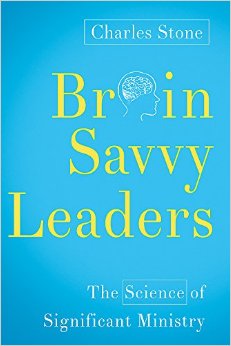
Brain-Savvy LeadersCharles Stone’s book Brain-Savvy Leaders is chockfull of helpful information! When you understand more how your brain works, you can leverage its power more efficiently. Here are some quotes he shared about problem solving.

“Only in the mystery of the incarnate Word does the mystery of man take on light.” —Pope Paul VI 

“As a part of the C-system, the prefrontal cortex processes bits of information one after the other (serial) instead of several at the same time (parallel). … When we try to process too much information at once, the prefrontal cortex’s serial processing nature can result in mental processing bottlenecks that in turn can lead to unfinished thoughts and tasks. … When we attempt many mental tasks at once, our thinking degrades, accuracy drops, we focus on the urgent instead of the important, we forget things, and the quality of future decisions gets muddied.”

Coffee, caffeinated drinks (but not too many), exercise, and novelty can increase the amount of these neurotransmitters and get us into a more productive and focused state.”

“Charlan Nemeth, a psychology professor at the University of California-Berkeley, performed a creativity study in 2003. She divided 265 female students into groups of five and asked them to generate as many ideas as possible on how to decrease traffic congestion in the San Francisco Bay area. Each team received one of three conditions and was given twenty minutes to complete the task. Either they used the traditional ‘no criticism’ brainstorming technique, or they generated as many ideas as possible but could debate and criticize each one, or they received no instructions. The ‘debate and criticize’ teams generated 20 percent more ideas than the other two groups. … Debate…adds the element of surprise that engages the brain.”

“When trying to solve problems, encourage your team to imagine themselves a year from now instead of imagining themselves tomorrow. Studies show that this time perspective fosters more creativity.”

You can read my book review of Brain-Savvy Leaders by clicking here.

I have also shared other quotes from this book on learning, brain health, and emotional health.

A Sketch Of The Life And Labors Of George Whitefield (book review)

A Sketch of the Life and Labors of George WhitefieldI recently read a fascinating book about the intertwining lives of Benjamin Franklin and George Whitefield. In some follow up reading, I was somewhat shocked to discover how many people in the church vilified Whitefield! In less than a century following Whitefield’s death, many pastors in the Church of England were badmouthing him.

J.C. Ryle, and eminent scholar, theologian and pastor, decided to take another look at Whitefield’s life and ministry, to try to offer an unbiased view. Whitefield died in 1770, and just 77 years later Ryle presented a paper, later turned into the book A Sketch Of The Life And Labors Of George Whitefield, which explored the evangelist’s life and lasting impact.

Ryle was no Whitefield apologist, but when he calmly and rationally presented the facts of what God had accomplished through Whitefield’s tireless ministry, Ryle concluded: “After calm examination, I have come to the conclusion that Whitefield was one of the most powerful and extraordinary preachers the world has ever seen. My belief is, that hitherto he has never been too highly estimated, and that, on the contrary, he does not receive the credit he deserves.” And, “The plain truth is, the Church of England of that day was not ready for a man like Whitefield. The church was too much asleep to understand him.”

This is not a very lengthy book, but it is a very enjoyable read. History buffs—especially those who enjoy church history—will find much to like in this brief study.

10 Quotes On Emotional Health From “Brain Savvy-Leaders”

Brain-Savvy LeadersOur emotions start in our brain. Charles Stone wrote a very helpful book called Brain-Savvy Leaders, in which he covers a lot of ground inside our heads. One aspect is our emotional health. I encourage you to read my review of this book by clicking here. Below are some quotes Charles shared on our emotional health.

“Gratefulness is actually good for brain and body health.” 

“When the emotionality of leaders takes over, they compromise their ability to lead well in these ways:

  • impulse can overwhelm intention
  • imagination gets pushed aside by instinct
  • defensiveness stifles healthy positions
  • automatic behavior shuts down reflective thought
  • emotionality gets in the way of intentionality.”

“Fear, conscious and unconscious, is prompted by the amygdala. The brain naturally focuses on problems and the negative. It overestimates threats and underestimates opportunities. In fact, two-thirds of the brain cells in our amygdala are primed for negativity and fear. Negative networks in our brain outweigh positive ones by five to one. And negative emotions are more easily consolidated (made more permanent) into our long-term memory than positive emotions.”

“Fear can even be subconscious, especially if we’re surrounded by bad news, critical people, or if our self-talk is constantly negative.”

“Neuroscientists have found that stuffing, denying, or a ignoring our emotions reinforces them, affects short-term memory, increases blood pressure, and robs our brain’s prefrontal cortex of the mental energy it needs.”

“Although it may seem counterintuitive, tagging your emotions, through labeling and naming them by putting feelings into words, actually recruits our impulse break and dampens activity in our panic alarm.”

“Anger is the wind that blows out the lamp of the mind.” —Chinese Proverb

“Since our brains process and remember bad events more thoroughly than good ones…it’s vital that we develop the discipline of being aware of our thoughts. … Thinking about our thinking is called ‘metacognition.’”

“Emotions play a significant role in decision-making and influence how well your team will embrace change. Just presenting facts without engaging positive and hopeful emotions will seldom move your team forward. The brain can only handle so much change at once. Trying to create too much change too quickly can engage the brain’s fear center and cause an away response, thus hindering change.”

“In one research study in Israel, Dr. Tal Shafir looked at the impact of movement on the brain of twenty-two young male and female participants. They looked at video clips of actors performing various emotions that corresponded to sad, fearful, happy, or neutral. Happy movements included raising their arms in the air, skipping, and jumping. Sad movements included closing their chests and slumping forward. The participants then either mimicked the movements or imagined themselves doing them. The emotions they reported mirrored the corresponding movements. So, if you need a mood boost, keep a good posture or throw your arms up and out into the air.”

Previously I shared some other quotes from this book on how we learn, and on how to keep our brain healthy. Please check these out too.

12 Quotes From “In Light Of Genetics”

Dr. John SanfordDr. John Sanford’s ebook In Light Of Genetics is fascinating reading. It’s a bit technical in certain places, but I think Dr. Sanford does a good job making the genetic concepts accessible to almost anyone. Check out my book review by clicking here. Below are some quotes from this work.

“Forensic evidence is never conclusive, and so scientific claims about the distant past must always contain an element of belief. The direction of genetic change is down, not up. Humanity is devolving due to mutation.”

“We feel biological similarities between different kinds of life are better explained by a Common Designer than by common descent.”

“We are unique and alone now in the world. There is no other animal species that truly resembles our own. A physical and mental chasm separates us from all other living creatures. There is no other bipedal mammal. No other mammal controls and uses fire, writes books, travels in space, paints portraits, or prays. This not a question of degrees. It is all or nothing; there is no semi-bipedal animal, none that makes only small fires, writes only short sentences, builds only rudimentary spaceships, draws just a little bit, or prays just occasionally.” —Juan Arsuaga, writing in The Neanderthal’s Necklace

“Man is a singular creature. He has a set of gifts which make him unique among the animals: so that, unlike them, he is not a figure in the landscape—he is a shaper of the landscape.” —Jacob Bronowski

“From a genetic point of view, the genes that enable our unique capabilities, gifts, and talents (i.e., science, art, love, relation to God) could not arise by any series of random mutations filtered by natural selection—not in any amount of time. There is no credible mechanism that could lead to spontaneous origin of mind, consciousness, intelligence, soul, or spirit. Indeed, while these human traits are found within a biological context (i.e., within an animal-like body/brain), they clearly transcend mere biology. We are exquisitely programmed to be more than animals, and our bodies are well-designed vessels that house our immaterial being: mind, soul, and spirit.”

“Leading human geneticists agree that in mankind deleterious (bad) mutations are accumulating faster than they are being selected away, and so the human genome is degenerating. … The data are highly consistent. The coefficient of determination (matching the curve to the data) is very high: 0.96. Due to the consistency of the decay rate, we can also rule out the idea that there were hundreds (or thousands) of missing generations that were not recorded. We conclude that the genealogical record must either be complete or very nearly complete. This validation of the genealogical record very powerfully points to the historicity and reliability of the book of Genesis.”

“Mounting evidence shows that natural selection is not a creative force, but is a stabilizing force that helps preserve the various kinds of life (i.e., it culls out the most dysfunctional individuals). It is very clear that natural selection cannot create our genome, let alone our mind and soul. At best, natural selection can only slow down the rate of genetic degeneration. … Because of the great abundance of deleterious mutations and the extreme rarity of beneficial mutations, it is not possible for mankind to achieve a net gain of genetic information.”

“Our latest numerical simulations show that in the type of pre-human population that supposedly gave rise to modern man, billions of years would be required just to create and establish a new genetic text string as small as six or seven letters, such as ‘GTCGCT’ or ‘GAGTTCA.’ Yet such a string would be just a drop in the ocean of new information needed to transform an ape into a man.”

“In the biblical model, humanity begins with Adam and Eve, who descendants rapidly multiply, and then, went through a one-generation bottleneck at the time of the Flood, then the population once again rapidly increased, followed by rapid divergence at the Tower of Babel event, creating today’s people groups.”

“If Adam’s genome was intelligently designed, it would obviously have had a great number of designed genetic variants. Otherwise all people would essentially be clones of Adam and Eve, which would be bad design, for many obvious reasons. … Even though many mutations have accumulated in the genome during human history, it is reasonable to conclude that most observable human genetic variation was created by God. The biblical perspective has unique explanatory power in terms of giving a credible explanation for the amazing range of human traits and abilities. There is no single ‘superior genotype.’ We all have unique sets of gifts and talents, which very reasonably reflect good design, and for which we can give thanks to God.”

“We have statistically analyzed over 800 human mitochondrial sequences and have been able to reconstruct and publish a very close approximation of Eve’s mitochondrial sequence. We found that the average human being is only about 22 mutations removed from the Eve sequence, although some individuals are as much as 100 mutations removed from Eve. Can we account for this amount of mutation in a biblical timeframe? Easily. The most recent estimate of the mutation rate in human mitochondria is about 0.5 per generation. Thus, even for the most mutated sequences, it would only require 200 generations (less than 6,000 years) to accumulate 100 mutations.”

“Now, by God’s grace, we do not have to choose between faith in God’s Word vs. faith in science, we can embrace both. There is now very strong genetic evidence that strongly supports Scripture and refutes evolution.”

23 Other Quotes From “15 Invaluable Laws Of Growth”

15 Invaluable Laws of GrowthJohn Maxwell is extremely well-read! It is obviously that he uses many sources to sharpen and refine the teaching principles he shares in his books. I recently finished reading 15 Invaluable Laws Of Growth, and as usual, Dr. Maxwell shared several quotes from others which I found very highlighter-worthy. Here are a few of them…

“What great accomplishments we’d have in the world if everybody had done what they intended to do.” —Frank Clark

“A mistake is simply another way of doing things.” —Warren Bennis

“You cannot change your destination overnight, but you can change your direction overnight.” —Jim Rohn

“Can there be a more insidious word? Later, as in ‘I’ll do it later.’ Or, ‘Later, I’ll have time to write that book that’s been on my mind for the past five years.’ Or, ‘I know I need to straighten out my finances… I’ll do it later.’ ‘Later’ is one of those dream-killers, one of the countless obstacles we put up to derail our chances of success. The diet that starts ‘tomorrow,’ the job hunt that happens ‘eventually,’ the pursuit of the life dream that begins ‘someday’ combine with other self-imposed roadblocks and lock us on autopilot.’ —Jennifer Reed

“No one can produce great things who is not thoroughly sincere in dealing with himself.” —James Russell Lowell

“Probably the most honest self-made man ever was the one we heard say: ‘I got to the top the hard way—fighting my own laziness and ignorance every step of the way.’ —James Thom

“It’s impossible to consistently behave in a manner inconsistent with how we see ourselves. We can do very few things in a positive way if we feel negative about ourselves.” —Zig Ziglar

“Follow effective action with quiet reflection. From the quiet reflection will come even more effective action.” —Peter Drucker

“The wise man questions himself, the fool others.” —Henri Arnold

“The successful person has the habit of doing the things that failures don’t like to do. The successful person doesn’t like doing them either, but his dislike is subordinated to the strength of his purpose.” —E. M. Gray

“Where many people go wrong in trying to reach their goals is in constantly looking for the big hit, the homerun, the magic answer that suddenly transforms their dreams into reality. The problem is that the big hit never comes without a great deal of little hits first. Success in most things comes not from some gigantic stroke of fate, but from simple, incremental progress.” —Andrew Wood

“A bad habit never goes away by itself. It’s always an undo-it-your self project.” —Abigail Van Buren

“The great composer does not set to work because he is inspired, but becomes inspired because he is working. Beethoven, Wagner, Mozart, and Bach all settled down, day after day, to the job at hand. They didn’t waste time waiting for inspiration.” —Ernest Newman

“Do not wait for a change of environment before you act. Cause a change of environment through action. You can act upon your present environment so as to cause yourself to be transferred to a better environment.” —Wallace D. Wattles

“Whatever course you decide upon, there is always someone to tell you that you are wrong. There are always difficulties arising which tempt you to believe that your critics are right. To map out a plan of action and follow it to the end requires some of the same courage which a soldier needs. Peace has its victories, but it takes brave men to win them.” —Ralph Waldo Emerson

“Someone’s opinion of you does not have to become your reality.” —Les Brown

“If you don’t design your own life plan, chances are you’ll fall into someone else’s plan. And guess what they may have planned for you? Not much.” —Jim Rohn

“An idealist believes the short run doesn’t count. A cynic believes the long run doesn’t matter. A realist believes that what is done or left undone in the short run determines the long run.” —Sydney J. Harris

“Every problem introduces a person to himself.” —John McDonnell

“Experience isn’t really the best teacher but it sure does serve as the best excuse for not trying to do the same silly thing again.” —Frank Hughes

“You will never stub your toe standing still. The faster you go, the more chance there is of stubbing your toe, but the more chance you have of getting somewhere.” —Charles F. Kettering

“Not everything that is faced can be changed. But nothing can be changed until it is faced.” —James Baldwin

“No pain, no palm; no thorns, no throne; no gall, no glory; no cross, no crown.” —William Penn

You can read my book review of 15 Invaluable Laws Of Growth and its companion book JumpStart Your Growth by clicking here.

To read quotes from John Maxwell in 15 Invaluable Laws, click here.

P.S. And watch for more quotes coming soon!

In Light Of Genetics (ebook review)

Dr. John SanfordWhen I went to college, I went as a biomedical chemistry major. I began my collegiate education at a Christian liberal arts university, and then transferred to a very secular state university. Ever since that time, I have always been deeply interested in the scientific fields, especially biology. So I was excited to read Dr. John Sanford’s paper In Light Of Genetics: Adam, Eve and the Creation/Fall.

In my Christian education experience, the scale was slightly weighted in favor of a biblical view of Creation. In my state university experience, the scale was overwhelming tipped toward an evolutionary paradigm. At both universities, I had rather intense conversations with my professors and classmates about hard science viewed through a biblical paradigm. Dr. Sanford’s paper was an encouraging study to read because of its balance between science and the Bible.

You can read Dr. Sanford’s full paper by clicking here, but here are a few highlights for me:

  • Genetic evidence is pointing more and more toward the biblical description of Creation.
  • The “junk DNA” claim that Darwinists need to support their theories of evolution are being proven invalid.
  • There is clearly a “Mitochondrial Eve” whose DNA sequence is evident in living human beings today.
  • There is also a “Y Chromosome Adam” whose DNA sequence is equally as evident.
  • Molecular clocks point to a young genome for biological life.
  • The Y chromosomal differences between man and chimp are far greater than evolutionist theories predicted.
  • The genetic differences/similarities seen today fit perfectly with the account of the biblical Flood.

For all my geeky science friends, I will post some quotes from this paper soon.

Whether you are a geek or not, this is fascinating reading! I encourage my friends who hold Darwinist views to read this, and then let’s talk. I also encourage my Creationist friends to read this too, and use these studies to strengthen your apologetics.

Read more about Dr. Sanford and his work here.