Social Justice

Scales of social justiceThere is a lot of talk about “social justice”—speaking out and acting on behalf of those who are oppressed, marginalized and disenfranchised. This is close to God’s heart, too, as He describes “pure religion” in terms of caring for orphans and looking after widows (see James 1:27).

But we hinder our attempts at social justice if it’s not tied to God’s righteousness. Because without righteousness, we don’t have God’s unlimited help and are simply operating under our own limited power.

Surely the arm of the Lord is not too short to save, nor His ear too dull to hear. But your iniquities have separated you from your God; your sins have hidden His face from you, so that He will not hear. (Isaiah 59:1-2, emphasis added)

Justice is mentioned four times in this 59th chapter of Isaiah, but always in close proximity to righteousness

The opening verse is the perfect conclusion: God has the ability to help us (justice), but our lack of righteousness prevents Him from hearing our pleas and moving to action.

The single-best way to make social justice maximally effective is for each of us to pursue God’s righteousness. 

All efforts at social justice apart from God’s help will bring small, temporary gains at best. But even our smallest attempts at social justice with God’s help will bring lasting results for the greatest number of people.

Links & Quotes

link quote

Some good reading & watching from today…

“James has in his mind a picture of people who use prayer to try to get from God something they desire more than God [James 4:2-4]. He calls these people—men and women—‘adulteresses.’ Why? Because in his mind God is like our Husband who is jealous to be our highest delight. If we then try to make prayer a means of getting from Him something we want more then we want Him, we are like a wife who asks her husband for money to visit another lover.” —John Piper

“The greatest outward troubles and calamities that we meet with…must needs appear very little things to the misery which we have deserved.” —Jonathan Edwards

“Our Enemy is a hedonist at heart. All those fasts and vigils and stakes and crosses are only a facade. Or only like foam on the sea shore. Out at sea, out in His sea, there is pleasure, and more pleasure. He makes no secret of it; at His right hand are ‘pleasures for evermore.’ Ugh! Don’t think He has the least inkling of that high and austere mystery to which we rise in the Miserific Vision. He’s vulgar, Wormwood. He has a bourgeois mind. He has filled His world full of pleasures. There are things for humans to do all day long without His minding in the least—sleeping, washing, eating, drinking, making love, playing, praying, working. Everything has to be twisted before it’s any use to us. We fight under cruel disadvantages. Nothing is naturally on our side.” —C.S. Lewis, Screwtape writing to Wormwood in The Screwtape Letters. (In case you didn’t know, The Screwtape Letters are letters from an older demon [Screwtape] to his young apprentice demon [Wormwood]. So the “Enemy” in their correspondence is God.) 

Since I just reviewed Beyond IQ, I have been reading more about the workings of the human brain. This post—How To Rewire Your Brain For Greater Happiness—is interesting. Even though they are quoting scientific findings, everything they have “discovered” was already in the Bible!

Philip Nation has a great list of how God reveals Himself in every book of the Bible.

I love John Piper’s latest project called Look At The Book, which shows Piper teaching the Scripture. Check out this video—

7 Bible Study Ideas From D.L. Moody

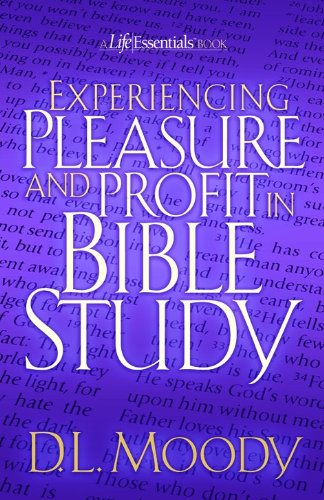
Pleasure & ProfitAs I read D.L. Moody’s book Pleasure & Profit In Bible Study, I made note of several ideas that could stimulate a great Bible study. Check out my review of this book by clicking here, then check out these great study-starters:

“If you are impatient, sit down quietly and commune with Job. If you are strong-headed, read of Moses and Peter. If you are weak-kneed, look at Elijah. If there is no song in your heart, listen to David. If you are a politician, read Daniel. If you are getting sordid, read Isaiah. If you are chilly, read of the beloved disciple. If your faith is low, read Paul. If you are getting lazy, watch James. If you are losing sight of the future, read in Revelation of the promised land.” —Richard Baxter 

“Every chapter [of Mark] but the first, seventh, eighth and fourteenth begins with ‘And,’ as if there was no pause in Christ’s ministry.”

“Matthew begins with Abraham; Mark with Malachi; Luke with John the Baptist; but John with God Himself. Matthew sets forth Christ as the Jew’s Messiah. Mark as the active worker. Luke as a man. John as a personal Savior.”

“[In John’s Gospel] the word repent does not occur once, but the word believe occurs ninety-eight times.”

“Dr. A. T. Pierson says: Let the introduction cover five P’s; place where written; person by whom written; people to whom written; purpose for which written; period at which written.” 

“Some time ago a man wanted to take my Bible home to get a few things out of it, and when it came back I found this noted in it:

  • Justification, a change of state, a new standing before God.
  • Repentance, a change of mind, a new mind about God.
  • Regeneration, a change of nature, a new heart from God.
  • Conversion, a change of life, a new life for God.
  • Adoption, a change of family, new relationship towards God.
  • Sanctification, a change of service, separation unto God.
  • Glorification, a new state, a new condition with God.”

“I was wonderfully blessed by taking the seven ‘Blesseds’ of the Revelation. … Or you may take the eight ‘overcomes’ in Revelation…. I have been greatly blessed by going through the ‘believings’ of John. Every chapter but two speaks of believing. … Take the six ‘precious’ things in Peter’s Epistles. And the seven ‘walks’ of the Epistle to the Ephesians. And the five ‘much mores’ of Romans 5. Or the two ‘receiveds’ of John 1. Or the seven ‘hearts’ in Proverbs 13, and especially an eighth. Or ‘the fear of the Lord’ in Proverbs.” 

“No scripture is exhausted by a single explanation. The flowers of God’s garden bloom, not only double, but seven-fold: they are continually pouring forth fresh fragrance.” —Charles Spurgeon

Rewards For Faithfulness

NunI unabashedly tell anyone who asks me what my favorite book is … It’s the Bible. I have yet to find such a collection of writings that work every single time they’re applied.

Two summers ago we began a series of messages on the 119th Psalm. It appears that the psalmist shares my passion for God’s Word, as he writes time and time again the difference Scripture makes in his life.

The other thing that makes this psalm so cool to me is the organization of the 176 verses into twenty-two 8-verse segments, with each verse in a segment beginning with the the same Hebrew letter as its title. In the Hebrew language, the letters in the alphabet had their own meaning. In English an “n” is simply spelled “n.” It has no other definition or meaning. But in Hebrew the letter nun has both a spelling and a meaning. Nun is spelled nun-vav-nun (final), and it means both faithfulness and the reward for faithfulness.

Look at the three Hebrew characters that spell nun. Reading right to left it tells a story and gives the meaning of the letter/word—the one who is humbled in faithfulness will be the one who stands in righteousness. The perfect example of this is Jesus, Who humbled Himself when He came to earth and to the Cross, and then was exalted by the Heavenly Father to wear the crown of righteousness (see Philippians 2:5-11 and Revelation 14:14). Paul starts this passage by calling on us to “have the same attitude as that of Jesus” (v. 5), and concludes with the call to stick with it all the way to the end (see vv. 12-13).

RewardsThe psalmist calls us to this same thing in nun (Psalm 119:105-112). The “bookend” verses say, “Your Word is a lamp for me… so my heart is set on keeping Your Word” (vv. 105 and 112). In between the psalmist commits himself to a life of humbly persevering to God’s ways, and reaps the rewards of a changed heart, the joy of the Lord, and a heritage to pass on to others.

I have fought the good fight, I have finished the race, I have kept the faith. Now there is in store for me the crown of righteousness, which the Lord, the righteous Judge, will award me on that day—and not only to me, but also TO ALL who have longed for His appearing (2 Timothy 4:7-8).

Humble yourself before the Lord, and He will lift you up (James 4:10).

My heart is set on keeping Your decrees to the very end (Psalm 119:112).

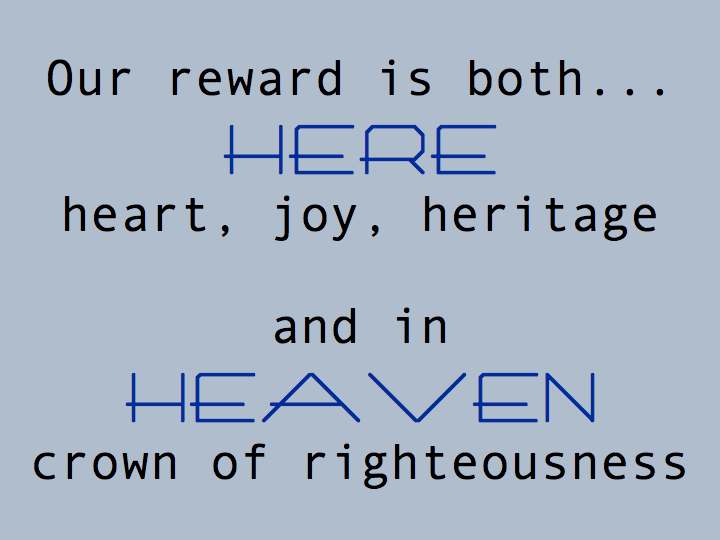
Rewards here (new heart, joy, heritage) AND rewards in Heaven (a crown of righteousness). How awesome is that!!

If you have missed any of the messages in our P119 series, you can access them all by clicking here.

In Desperate Need Of A Physician

Here’s a really simple statement: You cannot give what you do not have. Even if I really want to give my friend the $20 he is asking for, I can’t give it to him if my wallet is empty. And yet pastors are guilty of trying to do this spiritually frequently.

Somehow we’ve forgotten that Peter denied Jesus, that Paul persecuted Christians and called himself the chief of sinners, that James at one time thought Jesus was out of His mind. We hold these men up as “saints” and “perfect” pastors. But all of these men knew that they were were in desperate need of The Physician who could restore them and fill them for service.

Pastor, do you feel the need to look “perfect” to your congregation? Are you leery of ever mentioning any of your shortcomings? Do you think you have to have what everyone else needs? Do you think you have to answer every call?

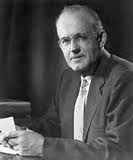
Read carefully these words from A.W. Tozer—

Tozer

“Human nature being what it is, the man of God may soon adopt an air of constant piety and try to appear what the public thinks he is. The fixed smile and hollow tones of the professional cleric are too well known to require further mention. All this show of godliness, by the squeeze of circumstances and through no fault of the man himself, may become a front behind which the man hides, a plaintive, secretly discouraged and lonely soul. Here is no hypocrisy, no intentional double living, no actual desire to deceive. The man has been mastered by the circumstances. He has been made the keeper of other people’s vineyards but his own vineyard has not been kept. So many demands have been made upon him that they have long ago exhausted his supply. He has been compelled to minister to others while he himself is in desperate need of a physician.” (emphasis added)

My dear pastor, please drop the pretense: you are not super-human.

  • It’s okay to say “no” to another request so you can spend time at home.
  • It’s important to make the time to “keep your own vineyard”—read the Bible for you (not for sermon prep), spend time with your spouse and children, get a good night’s rest, take a vacation.
  • You need to find a friend who can hold you accountable, and listen to your struggles, and pray for you.
  • You must take all the time you need to get filled up with God’s presence, to meet with The Physician of your soul.

Remember: you cannot give what you do not have. So make sure you’ve got it before you try to give it!

Keep The Questions Coming

The Q SeriesEvery year I look forward to our Q Series, where I field questions folks have about spiritual matters. Not that I’m an expert, but I’m following the example of The Expert.

Jesus never tired of answering people’s longing questions. Sometimes He gave them a direct answer; sometimes He asked them a question in reply to their question; sometimes He answered their question with a story or parable. But one thing was always consistent: Jesus answered every question in a way that pointed people to His Heavenly Father.

That’s what I am attempting to do in our Q Series.

Yesterday I fielded questions about creation/evolution; Christ’s passion week and His death, burial, and resurrection; the names given to God; and even suicide. I pray each answer created a desire for others to dig deeper in Scripture and learn more about God.

In the book of Proverbs, Wisdom is personified as one calling out to those who want help to come to her with their questions. In the New Testament, James writes, “If anyone lacks wisdom, let him ask God for help.” So we need to keep asking The One who is The Truth.

If you would like to participate in our Q Series, please join us next Sunday at Calvary Assembly of God, or submit your question in the comments below and I’ll do my best to answer it. But even if I can’t, you know where to go!

16 Quotes From “Firsthand”

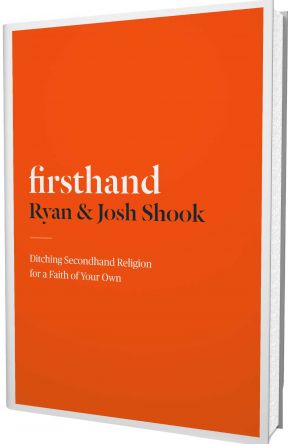
FirsthandI strongly encourage Christian parents to put a copy of Firsthand into the hands of their children, high school age and older. This book will help them think through making their faith in Jesus something personal to them. You can read my book review by clicking here. Below are some quotes that stood out to me. All of these quotes are by the authors, unless otherwise noted.

“You must be emptied of that of which you are full, so that you may be filled with that of which you are empty.” —Augustine

“One of the most liberating and powerful statements of all time comes from the lips of Jesus: ‘You will know the truth, and the truth will set you free’ (John 8:32). And we’re writing this chapter to tell you something that will set you free. The only way we’ve been able to experience freedom is by making the choice to get completely gut-level honest with God and others.

“God can use you and me through our brokenness, but first we have to get real and vulnerable with Him and with others. I think this powerful ‘get real’ dynamic works for a few reasons. First of all, being real with God and those around us invites us to drop the pride and pretense and to walk in humility. Second, honesty invites us to live every day in gratitude for the incredible grace that Lord has shown us. And third, since now we know we can’t make it on our own—and that’s okay—we’re ready to invite God’s power to do for us what we can’t do for ourselves. Paul said in 2 Corinthians 12:9, ‘I will boast all the more gladly about my weaknesses, so that Christ’s power may rest on me.’ This turns the concept of weakness and vulnerability on its head. We are saying that God makes up for our weaknesses. We are admitting that He is ready to work through them. Our weaknesses can actually become our greatest assets because they draw us closer to the Lord. And once we see how God can use them, we have all the more reason to be open about our struggles.”

“When all you see is a life in pieces, remember: the Remodeler wants to change you from the inside out. And He’s at work building your character to match His great calling and purpose for your life.”

“We have to decide, moment by moment, if we want to act changed or be changed.”

“It is more important to live one word of Scripture than it is to memorize volumes.” —Tim Hansel

“When our faith looks like a long list of things we should do, it’s usually a sign we’re not really focused on knowing God today for ourselves. Firsthand faith is all about a relationship with the God who is always faithful.”

“God is no less with you in your doubts that He is with you in your certainties.”

“Firsthand faith means we’re not afraid to bring our burning questions directly to God. But it also means that we’re not afraid to simply relax in His love. Even when all our questions haven’t yet been answered.”

“The needs of this world are endless. So whenever we feel a divine disturbance, it’s essential that we respond with firsthand action. If we don’t, it will quickly turn into secondhand bitterness.”

“James tells us that faith without works is dead (James 2:26). The most certain way to go back to living a secondhand faith is to refuse to act upon the Holy Spirit’s movement in your heart…. When you do not respond to a divine disturbance of the Holy Spirit, you get bitter and you criticize. That helps no one. … When you don’t respond to a divine disturbance in your life, you become the greatest obstacle between an unbelieving world and a loving God—a judgmental Christian.”

“Your eternal footprint—the impact you make on this earth—will be determined by whether you respond to the calling of the Spirit of the Lord in your heart to love a broken world, to step into the gifts and passions the Lord has blessed you with yo meet the needs that others overlook.”

“When we set out to discover our own firsthand faith, we were disillusioned with church. We had seen how imperfect the church could be, and we were certain that church was the problem. Coming full circle with our firsthand faith, we now realize that church was not the problem. The problem was out view and definition of the church itself. It took us a long time to understand that church wasn’t a building or a pastor or a sermon series. It’s easy to point out everything wrong with the church when you stand outside it and approach it with a consumer mentality. We thought the church had given us a secondhand faith, when in reality we had chosen to avoid a firsthand relationship with the community of Christ follower we claimed to care about.”

“The church is messy and imperfect because it is made up of broken and imperfect people. Are you sitting on the sidelines because the people in your church are imperfect or ‘just not like you’? … God designed you to be in community with your local church. He designed you to have firsthand relationships not only with Him but also with the people in your church. You can come up with plenty of excuses not to get involved and reasons that your church has it wrong, but when was the lat time you looked inside yourself and really searched your own heart for issues?”

“You can try to live out a firsthand faith on your own for as long as you want, but until you live out that faith in a community, you will never realize your full potential in Christ.”

“As a Christian, you are part of a movement that will outlast you, and you are part of the Firsthand Generation. As communities of believers rise up, we will gain momentum and create a movement that is stronger than anything we could ever accomplish on our own. Perhaps God is calling you to gather people and become a leader in the Firsthand Generation. Take up the challenge.”

My Brothers

My brothersPastor, I love how the Apostle James consistently addresses his audience in his epistle. Over a dozen times in his five short chapters, Pastor James addresses his congregation as my brothers (sometimes the phrase is even my dear brothers).

The word brothers is always the Greek word adelphos, which means from the same womb. James didn’t elevate himself, nor put down others in the church; he constantly put himself on the same plain. He was saying, “Look, I struggle with what you struggle with—we all have the same issues. I’m not immune to these things because I’m the so-called leader of the Jerusalem church. I have to keep alert and keep on working in these areas too!”

Sometimes James adds the adjective dear (or as the KJV says, beloved). This word is from the root word which means to be fond of someone, to love dearly, or to be well pleased. James, in essence, is saying, “I like you! You’re not just someone that goes to church with me, but you’re a dear friend.”

As the adage goes—People don’t care how much you know until they know how much you care. So almost every point James covers in this epistle is introduced by the my brothers tag. It’s his way of reminding them, “I’m sharing this with you because I really like you, and I want us to grow closer to God together.”

Wow! What a great example for me as a pastor. I’m not immune to struggles. I’m not in a separate category. I’m in this with my dear brothers and sisters, and I want us to all overcome and grow in our level of intimacy with God together.

UPDATE: This is one of the major themes in my book for pastors called Shepherd Leadership. I hope you will check it out!

Furious Longing

Furious longingThere is a passage of Scripture in the Book of James which has caused many people to propose many different explanations. I’m not a theologian, but here’s my take on this—

Or do your think the Scripture says without reason that the spirit He caused to live in us envies intensely? (James 4:5)

Envy in the Greek is a neutral word; it becomes a virtue or a vice depending on its context. I could long for a deeper relationship with my wife (virtue), or I could long for a drug that gives me a temporary escape (vice).

The Greek word for envy can mean pursue with love (virtue), or lust after forbidden desires (vice).

“The spirit [God] caused to live in us” came from a loving Creator, and was intended for us to long for Him. When God created man in His image, He said, “Let Us create man like Us” (Genesis 1:26). In the Triune God there is a furiously intense longing among Father, Son, and Spirit. Each part of the Godhead longs for the entire Godhead to be glorified—this makes the Godhead indivisibly and gloriously One. This is the same spirit God placed in man.

Of man God said, “It is not good for man to be alone” (Genesis 2:18). The God-implanted spirit of man longs to give love and to receive love. Our God-implanted spirit longs to connect.

But for what do we long? We were made to long for intimacy with God. If we substitute or exchange this with a longing for temporary worldly things, we are rightly called by James “adulterous people” and “an enemy of God” (James 4:4).

“But God gives more grace” (James 4:6) that we will turn from our temporary longings to long after Him. James almost seems to be saying that those in the church have their hearts hanging in the balance. Of the other eight times this Greek word for envy is used in the Bible, they are in the positive (or virtuous) connotation.

James is imploring us—longing for us—to not be the exception. Longing for us to humbly admit our need for God and to receive even more divine grace. Longing for us to tip our hearts toward God and renew the passionate, furious longing for which we were created.

O God, I want my passion to burn furiously for You alone. Jesus, may I follow Your example to only do what pleases the Father. Holy Spirit, may I hear Your voice if my heart ever begins to turn toward anything but my Beloved.

(I explored this idea further in a whole series of messages called Craving.)

And, And, And

AndIt’s a great question that the apostle James asks: What good is it if a man claims to have faith but has no deeds? (James 2:14)

It simply doesn’t work!

In fact, it’s a waste of time if all I do is…

  • …speak a blessing over someone’s life
  • …claim a promise in Scripture
  • …pray
  • …walk with God for years
  • …provide outstanding hospitality

“Faith by itself, if it is not accompanied by action, is dead, James says a couple of verses later (v. 17).

No matter the language—and, y, en, et, und, ve, kai—we need to add the “and” of action to our faith-filled belief.

I need faith AND action

  • …speak the blessing AND be the blessing
  • …claim a promise AND act on it
  • pray AND do
  • …walk with God AND bring others along with me
  • …entertain AND get out in the streets

“I will show you my faith by what I do!” (v. 18).

Faith and, and, AND works.

Heavenly Father, help me to get this right. I don’t want to preach it well or believe it strongly, unless I’m going to live it consistently, too.